
Aion I60 Export Buying Guide for Dealers and Fleets
Plan an Aion I60 export purchase with practical guidance on trims, new or used condition, pricing factors, MOQ, shipping, homologation and rivals.
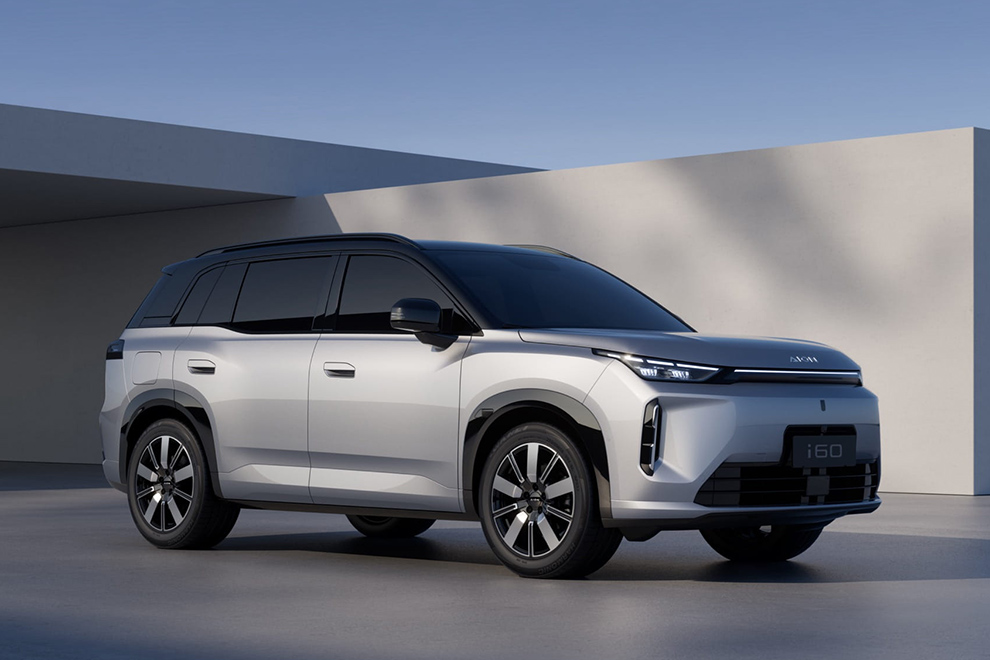
At a glance
- The Aion I60 combines pure-electric and extended-range choices within a compact SUV family.
- Model 210, 530 and 650 designations and Standard or Advanced trims require configuration-level verification.
- New units suit consistency and warranty planning, while used units require battery, repair and history checks.
- Export pricing depends on the exact vehicle, its condition, destination charges and the agreed Incoterm.
- RHD availability, homologation and after-sales support must be confirmed before ordering.
Why the Aion I60 matters for export markets
The Aion I60 matters to overseas buyers because it brings two energy paths into one compact SUV family: a pure-electric version for routes with dependable charging and an extended-range version for operations that cannot wait for a full recharge. That choice is commercially important in export markets where distributors are moving beyond one-size-fits-all electrified lineups. It lets fleet managers match powertrain to duty cycle instead of treating every vehicle identically. The platform is therefore relevant to fleet tenders as well as distributor launches, subject to local operating conditions and aftersales support.
For an importer, the I60 is not simply a specification sheet. It is a product-program decision around electricity access, duty routes, driver training, charging installation, resale positioning and after-sales support. The same vehicle can be compelling for urban delivery fleets yet awkward for remote operations without dependable charging. Overseas demand therefore depends less on headline trims than on whether the powertrain fits the customer's environment and the importer's service capability. The I60 is relevant to distributors building a mixed portfolio rather than importing one demonstrator for a narrow launch.
The model also offers a way into the Chinese new-energy SUV segment without choosing immediately between full battery dependence and a combustion-powered range extender. Its export case is conditional: the unit must match steering configuration, destination approvals, charging standards, software expectations and local after-sales requirements. Buyers should treat the I60 as a compact platform, then validate the landed operating proposition rather than assuming Chinese-market availability creates a ready-to-register vehicle. That discipline matters in fleet contracts, where registration delays or unavailable parts can erase an attractive acquisition comparison for the importing fleet operator.
- Powertrain follows duty cycle.
- Charging support decides fit.
- Verify homologation first.
Model range, trims and powertrain variants: how the lineup is structured and how to choose
Aion I60 specs should be read as a trim matrix, not a single vehicle. The visible lineup includes Model 210, Model 530 and Model 650 designations, with Standard and Advanced trims, plus separate Extended Range Base Model and Pure Electric Base Model listings. Those names establish the buying choices, but a buyer should not infer battery capacity, rated range or charging time from a model number alone. The live listing and original sales specification must confirm what each label represents, especially when similarly named units have different destination specifications or equipment packages.
The central choice is between the pure-electric and extended-range branches. A pure-electric I60 is most rational where charging can be scheduled, route lengths are predictable and the operator can manage energy use efficiently. The extended-range option can reduce range anxiety for mixed charging availability, but it adds a fuel system, servicing requirements and a different emissions and incentive profile. It should not be called zero-emission simply because everyday driving can be electric. For fleet tenders, compare the energy source with destination configuration availability and the support plan before the final order.
Within each branch, Standard and Advanced labels help organize the hierarchy, but they are not a substitute for an equipment list. An importer should request the battery variant, motor output, charging interface, dimensions, tyre specification, infotainment and driver-assistance equipment for each candidate. Fleet buyers should prioritize repeatable equipment and serviceability, while retail distributors may balance those basics against comfort features. The strongest choice is the trim whose verified specification can be supported after delivery; a higher trim label must not conceal a less suitable energy or charging configuration for the destination market.
- Verify model-number meaning.
- Match energy to charging.
- Compare equipment lists.
New vs used Aion I60: how export inventory is structured and how buyers choose
A used Aion I60 and a new example serve different procurement priorities. New inventory is attractive when the buyer values known specification, factory warranty availability, consistent paint and interior condition, and a straightforward handover. Used export inventory can be equally practical when a particular unit is documented, inspected and priced competitively. The channel may contain vehicles from demonstration, rental or corporate use, but every history must be verified rather than inferred from mileage. A low recorded distance is not, by itself, proof of gentle use, battery health or repair quality.
For a used I60, condition should be assessed across several layers: exterior panels and paint, tyres and suspension, cabin wear, accident history, software and account status, charging equipment, and battery state of health where measurable. Ask for VIN-based service records, inspection photographs, diagnostic output and a clear statement of repainting or battery replacement. For an electric or range-extended vehicle, a clean body can still conceal costly battery degradation or module repairs. Those findings belong in the commercial negotiation, not merely in a technical report the buyer never sees before shipment.
New and used units should be compared on total risk rather than asking price alone. A new purchase may reduce uncertainty but can include options and taxes the buyer does not need; a used purchase may reduce acquisition cost but transfer more uncertainty to the importer. The right choice depends on route economics, financing, residual-value expectations and workshop availability. Use live inventory to compare like-for-like configurations, then make condition and service history part of the written offer. For wholesale orders, require the same inspection standard for every unit before release.
- New: consistency and warranty.
- Used: inspect battery and history.
- Compare total risk.
How export pricing works: the factors behind a live listing price, and how to read one
An Aion I60 export price is a negotiated outcome, not a permanent model attribute. The starting point is the vehicle's year, exact trim, energy and range version, mileage, condition, service history and factory options. For a used unit, battery health, accident repair, paint condition and remaining consumable life can change value. Seller margin, currency movements and vehicle-preparation costs influence the final figure, so two units carrying the same model name may not be economically equivalent. The relevant number is the delivered cost for a specification, not a broad headline for the I60.
To read a listing correctly, first confirm whether the displayed amount is the vehicle asking price or a destination-inclusive quote. Then identify the currency, tax treatment, payment terms, warranty position and Incoterm. Freight, marine insurance, handling, export documentation, destination duties, registration fees and inland delivery may sit outside the vehicle page. Model year, trim and condition must be matched before two listings can be compared, and an FX-neutral or buyer-rate guarantee may be preferable for a multi-unit order. Ask which charges are fixed and which may change with exchange rates or carriers.
The reliable approach is a written, unit-specific quotation with a validity period. It should separate the vehicle price from inland transport, export handling, freight, insurance and destination charges, and state the deposit and balance conditions. Buyers can request both the full delivered figure and the vehicle-only figure for comparison with rival quotes. The live ChinaCarDirect inventory shows the current per-unit price, MOQ and availability, but binding commercial terms belong in the RFQ and seller confirmation. Treat a marketplace figure as a starting point for that unit, not as a guaranteed landed budget.
- Match trim and condition.
- Separate vehicle and landed costs.
- Use a written quote.
MOQ, ordering and payment: single units vs consolidating a container
MOQ is a commercial condition attached to the seller or listing, not a fixed promise for every Aion I60 transaction. Some importers accept a single vehicle to test the market, while others require a larger lot. A container buyer should confirm the MOQ on each live listing before budgeting freight. The key questions are whether mixed trims can share one order, who owns the units before shipment, and whether payment, inspection and title documents are separate. Do not assume that many listings mean every seller will release a single unit.
Ordering begins with a specification brief, selection of live units or factory allocation, seller verification, deposit, inspection and balance payment before release. A sound process links vehicle identity to the contract: VIN or production identity, trim, condition, options, documents and price should match. Payment methods and escrow should be independently verified, while refund, cancellation and delay terms should be written down rather than negotiated through informal messages. For a new vehicle, add production and delivery timing; for a used vehicle, make the inspection report part of the release condition in writing.
Consolidating several I60s can improve freight planning, but it should be driven by confirmed dimensions, loading method and destination demand rather than a fixed container-volume assumption. Grouping one powertrain branch and similar trims is usually easier to allocate, service and resell than a highly mixed shipment. Each unit still needs its own commercial file and condition record. The importer should compare the freight saving against demurrage, insurance, damage exposure and slower inventory turnover caused by carrying less-demanded configurations. A smaller confirmed order may therefore carry less risk than an unverified full-container target.
- Check each listing's MOQ.
- Lock identity and condition.
- Consolidate confirmed configurations.
Shipping, homologation and market compliance caveats: LHD/RHD and import rules by country
Shipping begins with verified vehicle dimensions, weight, destination port, route and loading method. These details determine whether a unit is handled as a standard vehicle, on a ro-ro carrier, in a container or on other approved equipment; the I60's dimensions should not be guessed from model class. Chinese-market vehicles are commonly prepared for left-hand-drive use, but left- and right-hand-drive availability must be checked for each listing. Steering conversion is not an automatic substitute for factory RHD, homologation and local equipment requirements. The freight quotation should state origin, destination, Incoterm and included services.
Homologation is destination-specific. Depending on the country, an importer may need local type approval, VIN and plate documentation, safety and emissions compliance, battery or charging rules, software and data treatment, network-equipment approval, user manuals, warranty support and importer or dealer registration. Electric incentives can depend on battery chemistry, local value-added rules, tax status or origin, so a vehicle eligible in China may receive different treatment elsewhere. Obtain a broker or homologation specialist's written assessment before placing non-refundable funds. Do not treat approval in one region as universal proof of destination-market acceptance.
The pre-shipment file should reconcile the VIN, model designation, powertrain, battery version, color, options and documents shown on the invoice. Confirm whether the vehicle will arrive with charging cables, tools, spare wheel, manuals and any required software or language settings. Inspection should cover loading security, fluid levels, battery state, warning lights and basic operation where accessible. Destination receiving, customs clearance and registration should be scheduled before release, leaving time to correct mismatches rather than discovering them at the port. A local broker remains essential even when the exporter provides complete paperwork.
- Verify dimensions and loading.
- Factory RHD differs from conversion.
- Use local homologation advice.
Who should buy the I60 — and who should pick a different vehicle
The I60 is a strong candidate for an importer or fleet operator that can combine the right powertrain with charging access, technical staff and an after-sales plan. It is relevant to mixed fleets where some routes have reliable charging and others need the operational buffer of an extended-range unit. Dealers may use it to offer buyers a choice between battery-electric operation and a range-extended alternative, provided each configuration is quoted with its own verification and support obligations. It can suit early-market pilots when one standardized platform simplifies training and parts planning.
It is a weaker fit for a buyer with no charger deployment, local workshop, warranty pathway, or a market whose homologation rules make an unverified Chinese specification impractical. It may also be unsuitable where fleet policy requires a proven resale record, specific emissions classification or an established brand network. A range-extended I60 does not remove the need for fuel logistics, and a pure-electric I60 does not remove the need for reliable charging. Evaluate those constraints before negotiating price. A lower acquisition figure is not a reason to ignore operating infrastructure.
A sound decision should compare total operating and deployment cost, not vehicle price alone. Build a route-by-route case for charging time, electricity and fuel use, utilization, maintenance, insurance, registration downtime and resale. Apply different assumptions to new and used units because downtime and reliability risk affect fleet economics. If the I60 cannot be supported in the destination market, a mature rival may be cheaper over the full ownership period despite a less attractive initial quotation. The best vehicle is the one whose operating assumptions remain credible under the buyer's actual conditions.
- Best fit: infrastructure aligns.
- Reconsider without service support.
- Assess lifecycle cost and downtime.
Main rivals and how the I60 compares
The closest Chinese-export comparison is the BYD Seal U DM-i, which offers a similar compact SUV and electrified powertrain proposition. Buyers comparing the I60 should look beyond badges and consider battery version, range-testing method, charging provision, equipment, warranty and local service support. BYD's international recognition can simplify some market-entry conversations, although actual support varies by country. The I60 may be attractive where its configuration, condition or commercial terms are more suitable, but it should not be presented as automatically better. A controlled specification comparison is more useful than a headline range contest.
For battery-electric buyers, the BYD Atto 3 is another relevant benchmark, while the Geely Galaxy L7 competes more directly in the range-extended segment. These vehicles expose different parts of the I60 proposition: established-brand support, charging and software ecosystems on one side, and direct competition from another Chinese new-energy range on the other. For a distributor, the deciding factor may be spare-parts continuity, model familiarity, residual demand or the ability to standardize several models rather than one vehicle name. Availability must be checked locally because export names and specifications can change between markets.
Against more established hybrids and plug-in hybrids, the I60 may provide a newer design and a clearer new-energy identity, but brand trust, certification familiarity and resale support can still favour the incumbent. The sensible comparison includes homologated range and charging data, usable payload, safety equipment, service intervals, parts lead time, insurance and warranty treatment. Run an apples-to-apples landed-cost and support analysis for each shortlisted vehicle, then verify the chosen I60 configuration directly on its live listing before signing. Do not compare a range-extended I60 only with a battery-electric rival, or the reverse.
- BYD Seal U DM-i benchmark.
- BYD Atto 3 electric alternative.
- Geely Galaxy L7 range-extended rival.
Live Aion I60 export inventory
View all listings →Real units currently on ChinaCarDirect with per-unit asking prices and MOQ. Availability updates live from the catalogue.
How to buy a Aion I60 from China
-
1
Define the operating requirement
Map routes, daily distance, payload, charging access, fuel requirements and left- or right-hand-drive needs before selecting a powertrain.
-
2
Shortlist Aion I60 units to buy from China
Use the live inventory to compare energy type, model designation, trim, condition and steering configuration. Do not treat 210, 530 or 650 as confirmed range figures without the vehicle specification.
-
3
Request complete vehicle documentation
Ask the seller for the specification sheet, VIN or production identity, battery version, dimensions, equipment list, ownership history and available service records.
-
4
Build a unit-specific landed quotation
Request separate figures for the vehicle, inland transport, export handling, freight, insurance, destination charges and taxes. State the intended Incoterm and quote validity.
-
5
Inspect and document the selected unit
For a used Aion I60, verify accident history, paint, tyres, cabin condition, diagnostics, charging accessories and battery health where measurable. Make the report part of the contract and payment-release condition.
-
6
Complete destination compliance checks
Use a local broker to confirm homologation, import permits, taxes, charging requirements, software, documentation, registration and any destination-specific EV incentives.
-
7
Pay, release and ship with controls
Use a verified payment method, reconcile the VIN and invoice, complete a pre-shipment inspection and confirm insurance, loading, tracking and customs-clearance arrangements.
I60 vs rivals
| BYD Seal U DM-i | A direct compact-SUV benchmark for buyers considering an electrified model with a plug-in hybrid or extended-range proposition. The I60 may offer a different configuration mix, while BYD's wider international recognition can be an advantage where local support is stronger. |
|---|---|
| BYD Atto 3 | A relevant battery-electric alternative for importers prioritizing an established global model name and support network. The I60 offers the additional choice of an extended-range branch, but buyers should compare verified specifications and destination support rather than assume equivalence. |
| Geely Galaxy L7 | A close range-extended SUV competitor from the Chinese export market. It is particularly relevant to buyers focused on range-extender packaging, with the decision turning on verified range, charging provision, equipment, parts continuity and aftersales support. |
Frequently asked questions
How is the Aion I60 export price determined?
The price depends on model year, exact trim, energy and range version, mileage, condition, service history, battery condition, options, exchange rates, freight, insurance, duties and the agreed Incoterm. Exact per-unit pricing and MOQ are shown in the live ChinaCarDirect inventory, while binding terms should appear in a written RFQ.
What powertrain and range options does the Aion I60 have?
The visible lineup includes Pure Electric Base Model and Extended Range Base Model entries, together with Model 210, Model 530 and Model 650 designations and Standard or Advanced trims. These model numbers should not be treated as confirmed range figures without the homologated specification sheet, so battery, range, motor and charging details must be checked in the live listing.
What are the trade-offs between a new and used Aion I60?
A new unit offers greater consistency, known equipment and a clearer factory-warranty path, although it may include unwanted options or charges. A used unit can offer better acquisition value, but the buyer assumes more condition risk and should investigate battery health, repairs, ownership history and remaining service life.
What is the MOQ for buying an Aion I60 from China?
MOQ is set by the seller and shown on each live listing rather than being a universal model rule. Single-vehicle orders may be available for market testing, while container buyers may consolidate several confirmed units; always check the current listing and include the MOQ in the written quotation.
How long does shipping take and what affects the cost?
There is no universal shipping time or landed cost for the I60. Origin and destination ports, carrier schedule, season, route, loading method, verified dimensions, freight rate, insurance, handling, customs clearance and inland delivery all affect the result, and the shipment quotation should state the Incoterm.
Are spare parts available for the Aion I60?
Parts availability depends on the destination, model variant and whether the importer has a workable channel with Aion or an approved supplier. Before ordering, request a parts list, warranty procedure, indicative lead time and the expected import route for common service items; local stock should not be assumed.
Is a right-hand-drive Aion I60 available for export?
Chinese-market vehicles are commonly left-hand drive, so RHD availability must be checked for each unit rather than inferred from the model name. Ask whether factory RHD is available, and do not treat a steering conversion as an automatic substitute for local approval, equipment and after-sales requirements.
How do I order an Aion I60 for export?
Shortlist verified live listings, submit an RFQ with the required configuration and destination, request a unit-specific landed quotation and complete any pre-shipment inspection. The purchase process should then cover verified payment, VIN and document matching, production or inspection milestones, insurance, loading and destination customs clearance.
Ready to source the Aion I60?
Review the live Aion I60 inventory and request a unit-specific RFQ covering specification, MOQ, Incoterm and destination charges.
Request a quote