
Aion N60 Export Buying Guide for Overseas Buyers
Compare Aion N60 trims, range variants, LiDAR-equipped models and export pricing factors, then plan compliance and shipping before buying from China.
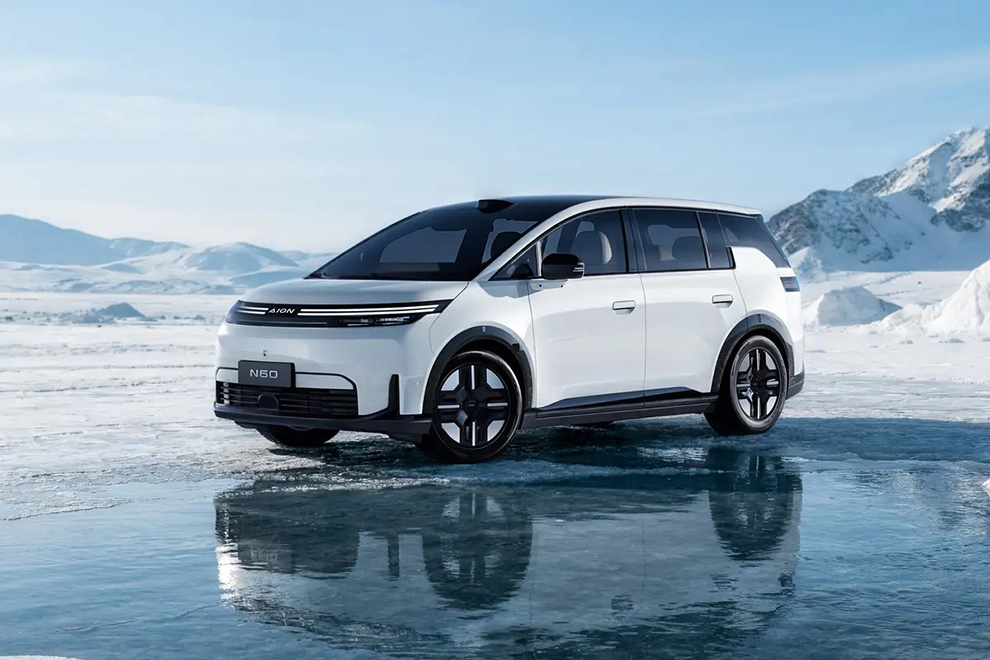
At a glance
- The Aion N60 for export is positioned as a compact battery-electric SUV for urban, peri-urban and selected fleet use.
- Its trim structure includes Base Model, Model LIDAR Edition, 510 LiDAR Ultra and 610 LiDAR Ultra.
- The 510 and 610 designations separate range-oriented configurations, but official certified range must be checked for each destination.
- LiDAR-equipped versions can support a technology-led dealer proposition, but approved feature content varies by market and vehicle.
- For buyers purchasing an Aion N60 from China, current per-unit price, condition, MOQ and availability must be confirmed in live inventory.
Why the Aion N60 matters for export markets
The Aion N60 matters to overseas buyers because it combines a practical compact-SUV format with the kind of range segmentation and sensor-focused equipment that Chinese electric vehicles increasingly use to compete beyond price alone. Its Aion badge brings an established Chinese EV identity, while the N60 name gives importers a model that can be positioned to both urban customers and professional fleet operators without moving into a large, costly SUV class. That middle ground is important where charging networks are expanding faster than long-distance infrastructure, and where importers need a versatile model for mixed private and corporate use.
Global demand for compact electric SUVs is driven by practical constraints: buyers want easier parking and urban maneuverability, but they also expect enough range for regional trips and a cabin suitable for five occupants or a small business fleet. The N60's importance is not that it solves every market, but that it gives distributors another China-manufactured EV option with modern styling and trim differentiation. That can broaden a showroom without requiring a separate commercial-vehicle platform. Its relevance is strongest where importers value a single model that can cover private sales, ride-hailing pilots and staff fleets.
Buyers should also assess where the N60 sits against established European, Japanese and Korean nameplates. Chinese vehicles are not automatically better or worse for export; the decision depends on local incentives, charging access, software support, spare-parts logistics and the importer's ability to service a relatively new model. For dealers, a test-and-learn shipment can be more sensible than a full-container commitment if demand is still being validated. This makes the N60 particularly relevant for distributors seeking a modern EV proposition while carefully retaining control over inventory risk in unfamiliar destination markets.
- Treat the N60 as a compact BEV suited to urban, peri-urban and fleet use where charging access is adequate.
- Use LiDAR-equipped variants as a technology-positioning differentiator, but verify destination-market feature approval.
- Start with a controlled import and validate demand before committing to wholesale volume.
Model range, trims and powertrain variants: how the lineup is structured and how to choose
The lineup is organized around a straightforward hierarchy: Base Model, Model LIDAR Edition, 510 LiDAR Ultra and 610 LiDAR Ultra appear in the Aion N60 range. For an importer, these names are more useful than generic equipment badges because they flag the central commercial decision—equipment level and the choice between two range-oriented specifications. Always confirm the exact vehicle, not merely the marketing name, before comparing quotations or arranging payment. The same title can coexist with differences in production date, usage, software and market-specific hardware, so VIN-level verification remains essential. That discipline prevents costly comparison errors.
The 510 and 610 LiDAR Ultra versions should be treated as the two principal range choices for many buyers. The numbers identify distinct configurations, but Chinese-market range figures are generally based on a domestic test cycle and should not be copied directly into a destination-market advertising claim. Compare the official battery capacity, rated motor output, curb weight and charging specification for each VIN. If one configuration is lighter or has different tires, its real-world consumption and usable range may diverge. Ask for a range sheet separating regulatory, homologated and advertised figures.
LiDAR branding is the N60's clearest technology differentiator, especially for dealers marketing higher levels of driver assistance. It can strengthen the model's appeal where consumers associate advanced sensing with safer convenience features. It does not, however, guarantee that every function is identical worldwide. Hardware, software, feature activation, data services and regulatory approval can vary by production batch and destination, so buyers should request a written equipment list and clarify whether the quoted version includes the sensor, the associated computational hardware and the expected driver-assistance functions on delivery in the destination market.
- Choose among Base Model, Model LIDAR Edition, 510 LiDAR Ultra and 610 LiDAR Ultra based on equipment and range needs.
- Compare each vehicle's certified range, battery, motor, charging and weight before relying on the 510 or 610 designation.
- Request a written LiDAR, camera and driver-assistance equipment list; sensor presence does not prove feature legality.
New vs used Aion N60: how export inventory is structured and how buyers choose
New and used Aion N60 vehicles should be evaluated as separate procurement channels rather than as interchangeable discount tiers. A new vehicle normally offers the cleanest ownership chain, current production specification and the most straightforward basis for warranty discussions, although the warranty's export portability must be confirmed. A used vehicle can make a narrower fit financially possible for an importer with a specific trim target, but its value depends on verified condition, remaining battery capacity and whether its history is fully documented. It may also arrive with an earlier software or sensor configuration.
For a used N60, the battery is not the only wear item that matters, although it is often the most expensive unknown. Request the vehicle's service history, current odometer reading, accident and flood records, title or registration documents, tire condition, charging-cycle information where available, and a battery state-of-health report. Also verify whether the LiDAR sensor, cameras and driver-assistance electronics have been replaced, repaired or recalibrated after an impact. Unexplained software or hardware differences can make a seemingly cheaper listing expensive to standardize. Ask for evidence tied to the vehicle identification number.
The decision should follow the importer's operating plan. A dealer testing a new model may prefer a low-mileage demonstrator or another new unit to protect customer perception and simplify preparation, while a fleet buyer may accept a used vehicle if uptime is more important than warranty presentation. For either, create one acceptance checklist and apply it to every candidate. Reject documents that cannot be reconciled, photographs that do not match the VIN, or savings that disappear once repairs, freight, compliance and financing are included. This is more reliable than relying on the words new or used in a listing title.
- New vehicles: verify the current production specification, ownership chain and export warranty.
- Used vehicles: demand a battery health report, service records, odometer evidence and impact history.
- Standardize every unit with the same acceptance checklist before calculating the real saving.
How export pricing works: the factors behind a live listing price, and how to read one
An Aion N60 export price is not a fixed factory figure. It is the result of the unit's model year, trim, range version, condition, mileage, battery condition, visible or confirmed options, ownership documents, seller terms and the currencies used in the transaction. The same trim can therefore produce different quotations. For a used vehicle, battery health and repair history may matter as much as nominal mileage, while a new vehicle's value can shift with factory campaigns or production timing. Current exchange-rate movements also change the buyer's landed comparison after freight.
Logistics then convert the vehicle's commercial value into a landed cost. Freight, marine insurance, origin handling, destination port charges, customs brokerage, inspection, storage, taxes and duties may sit inside or outside the quoted amount depending on the Incoterm. The same N60 can therefore appear cheaper under one quotation and more expensive under another without any change to the vehicle. Ask the seller to identify the named place or port, the exact Incoterm, the charge inclusions and the expected payment currency before treating the displayed figure as comparable for the same destination market.
Read each live listing as an invitation to request a binding quote, not as a complete landed-cost statement. Check the displayed price against the trim and condition, then ask whether it is FOB, CIF, EXW or another basis. Review the unit identifier, production year, odometer, battery information, equipment list and seller notes, and ask for recent photographs or a walk-around video where the marketplace provides one. The current per-unit price and availability should always be confirmed through the live Aion N60 listings because catalogue data changes. Do not rely on a cached quote.
- Separate vehicle price, freight, insurance, port charges, taxes and duties in every quote.
- Confirm the Incoterm, named place or port, payment currency and all charge inclusions.
- Use live Aion N60 listings as the starting point, then request a written unit-level quotation.
MOQ, ordering and payment: single units vs consolidating a container
MOQ should be understood as a transaction condition, not a permanent model attribute. The seller's consignment terms, vehicle ownership, production allocation and willingness to mix trims can determine the minimum order. Some vehicles may be available to individual professional buyers, while a container purchase naturally carries a much larger commitment. Because terms are set for the specific listing and seller, the buyer should request the MOQ in writing before paying a deposit and should never infer it from a marketplace filter or an old enquiry without confirmation before any deposit.
A single-unit purchase is best treated as a controlled test shipment. It can reveal the vehicle's fit in the local market, simplify homologation exposure and limit capital at risk, but it often leaves the buyer paying proportionally more for freight, documentation and fixed handling than a consolidated purchase would. Before proceeding, ask who arranges export declaration, which documents are included, how long vehicle storage is allowed before sailing, and what happens if the vessel schedule slips. These issues can be as important as the vehicle price. There is no substitute for written clarity.
Consolidating several N60s into one container can improve freight economics and support a fuller launch, but it introduces matching and allocation risk. Different range versions, LiDAR equipment levels, production dates and condition categories may appeal to different customers, so assign stock before loading rather than after arrival. Agree how inspection failures, missing accessories, document discrepancies and claims for damage in transit will be handled. For a first order, an experienced consolidator or freight forwarder should review the loading plan against the final sales mix before the vehicle is committed to export.
- MOQ can vary by listing, seller, vehicle ownership and the selected purchasing arrangement.
- For a single unit, settle storage, inspection, documentation and vessel-delay terms before paying a deposit.
- For a consolidated container, assign trims and conditions before loading and define discrepancy claims.
Shipping, homologation and market compliance caveats: LHD/RHD and import rules by country
Shipping begins with ownership and destination rules, not simply booking a vessel. Determine whether the vehicle is exported under the seller's or buyer's entity, identify the importer of record, and confirm the documents required for customs clearance: invoice, export declaration, vehicle identification documents, ownership or sale records, and any other certificates demanded in the destination country. Electric vehicles also require battery transport documentation, including the applicable safety test summary and shipment paperwork. Confirm these requirements before committing. The freight forwarder should review them against the VIN and the final documents. Match every entry to the unit.
Steering configuration is a make-or-break issue. Chinese-market N60 examples may be left-hand drive, while some export destinations require right-hand drive; the two cannot be treated as interchangeable without local approval and may involve substantial parts, labor and safety consequences. RHD availability, seat layout, instrumentation, lighting and equipment activation must be confirmed for the exact vehicle and destination. Do not advertise a left-hand-drive conversion as a routine export solution, and never convert a vehicle before checking type approval, insurance and local inspection requirements and obtaining written approval from the relevant authority.
Market compliance extends beyond customs entry. Check VIN and type-approval rules, locally permitted charging connectors and voltages, electric-vehicle incentive eligibility, connected-service activation, data and cybersecurity requirements, and the legal status of assisted-driving functions. LiDAR hardware does not automatically mean a feature can be used or marketed locally. The importer should also plan aftersales support, diagnostic software access, spare-parts stocking and technician training. A model that is easy to import but difficult to diagnose after warranty can create a much higher total cost of ownership for the importing dealer and its workshop network.
- Confirm LHD or RHD configuration, VIN consistency, type approval and importer-of-record responsibilities.
- Obtain battery transport paperwork and destination-specific charging, incentive and data requirements.
- Budget for parts, diagnostics, software and technician training before launching customer deliveries.
Who should buy the N60 — and who should pick a different vehicle
The N60 is best suited to overseas dealers and fleet buyers with access to dependable charging, a clear route to spare parts and enough demand to justify developing EV service capability. It is particularly credible for urban and peri-urban customers who value a modern compact SUV, useful technology and the choice between shorter- and longer-range specifications. The LiDAR-led versions can help a retailer distinguish the model in a crowded showroom, provided the advertised assistance features are approved and demonstrable in the destination market. It also suits pilot programs with measured risk.
For fleet use, the case should be based on route reality rather than headline range. Map daily distance, charging dwell time, payload, climate and the proportion of vehicles parked overnight at controlled sites. Compare energy consumption, maintenance, residual-value assumptions and local incentives against the best alternative. A fleet with predictable depot charging may obtain strong utilization from the shorter-range option, while vehicles covering regional routes may justify the longer-range version. Confirm towing limits and load ratings before assigning the N60 to demanding work and verify the locally certified configuration.
The N60 is less suitable for buyers without reliable charging, those needing long-distance travel beyond the local charging network, or operators whose work requires heavy towing, severe off-road capability or a model already supported by a mature global service network. It may also be a poor first Chinese-EV import for a distributor unable to handle parts, high-voltage diagnostics, software configuration and destination-specific approvals. Used-example buyers with a strict certified-warranty requirement should choose only after a technical inspection and written warranty terms have eliminated uncertainty from the selected candidate vehicle.
- Strong fit: EV-oriented dealers and fleets with dependable charging and service capability.
- Conditional fit: regional users should compare actual duty cycles and homologated range before selecting a version.
- Weak fit: buyers without charging access, heavy towing duties or high-voltage workshop support.
Main rivals and how the N60 compares
BYD Yuan Plus, sold as the Atto 3 in many markets, is a benchmark compact electric SUV for international buyers. Its stronger global recognition and broader dealer familiarity can reduce perceived resale and service risk in some destinations. The N60 competes through a more visibly range-segmented and LiDAR-focused lineup, which may appeal where advanced equipment is a marketing priority. The choice should turn on certified range, charging, safety rating, warranty, parts availability and local incentives—not on brand familiarity alone. Both still require full local compliance, including destination-market certification and ongoing service.
The Geely Geometry E is a closer China-market alternative for price-sensitive compact-EV buyers, but its buyer profile differs. It is generally chosen for efficient urban transport and straightforward specification rather than for a LiDAR-led premium proposition. The N60 may be more relevant where a dealer wants to showcase newer driver-assistance hardware and a broader trim ladder. Conversely, an importer already familiar with Geometry E channels, parts and residual demand may obtain better economies from that model. Compare real operating costs and support, not brochure positioning, under local market conditions and ownership realities.
The Leapmotor B10 is another relevant compact electric SUV rival from China, with a similarly technology-conscious image. It can compete for buyers who want a modern EV crossover without moving into a larger vehicle. N60 selection should focus on verified specification, range test results, safety equipment, after-sales network, homologation and the distributor's ability to source parts. A live N60 listing should therefore be benchmarked against the rival actually offered in the destination market, including local warranty terms and charging access, before the importer commits to launch stock or fleet planning.
- Atto 3 or Yuan Plus: often the stronger global-familiarity and service benchmark for international buyers.
- Geometry E: a value-oriented China-market alternative with a different equipment proposition.
- B10: a technology-led compact-SUV rival; compare parts support as closely as onboard equipment.
Live Aion N60 export inventory
View all listings →Real units currently on ChinaCarDirect with per-unit asking prices and MOQ. Availability updates live from the catalogue.
How to buy a Aion N60 from China
-
1
Define the market and use case
Map charging access, daily mileage, route pattern, load requirements and local EV incentives before choosing a range version.
-
2
Compare the trim structure
Review the live Aion N60 listings and compare Base Model, Model LIDAR Edition, 510 LiDAR Ultra and 610 LiDAR Ultra against the intended customer.
-
3
Request a unit dossier
Ask for the VIN, production year, battery information, certified range, odometer, equipment list, ownership documents and clear photographs.
-
4
Build a landed-cost quotation
Request an itemized quote showing the vehicle price, Incoterm, named port, freight, insurance, handling charges, taxes and payment currency.
-
5
Confirm MOQ and payment terms
Obtain the listing-specific MOQ, deposit and balance requirements, cancellation terms, inspection conditions and refund procedure in writing.
-
6
Complete destination compliance checks
Confirm LHD or RHD requirements, VIN and type approval, charging compatibility, battery transport documents, insurance and importer-of-record responsibilities.
-
7
Inspect, allocate and ship
Complete a pre-shipment inspection, confirm the loading plan and accessories, then release payment against verified documents and agreed shipping terms.
N60 vs rivals
| BYD Yuan Plus / Atto 3 | The Atto 3 often benefits from stronger international brand recognition and dealer familiarity, while the N60 offers more visibly range-segmented and LiDAR-focused versions. The better choice depends on homologated equipment, warranty, local service and certified range rather than brand image alone. |
|---|---|
| Geely Geometry E | The Geometry E is a value-oriented compact-EV alternative suited to straightforward urban use, whereas the N60 provides a stronger technology-led proposition through its LiDAR versions. Importers should compare operating costs, parts access and the ability to sell higher-option vehicles in their market. |
| Leapmotor B10 | The B10 is a direct China-market compact electric SUV alternative for technology-focused buyers. The N60 should be selected by comparing verified range, charging, safety equipment, homologation and aftersales support rather than assuming either model has a decisive advantage. |
Frequently asked questions
How is the export price for an Aion N60 determined?
The price reflects trim, range version, condition, mileage, battery state, production year, confirmed options, exchange rate, freight and the selected Incoterm. Ask for an itemized quote with the named port, payment currency and all charge exclusions. Use the live Aion N60 listings for the current per-unit price, then request a binding quotation for the selected vehicle.
What powertrain and range options does the Aion N60 use?
The N60 is a battery-electric SUV, with 510 LiDAR Ultra and 610 LiDAR Ultra representing the two range-designated configurations in the named range. Official battery capacity, motor output, charging specification and certified range should be checked for each vehicle and destination because the designations should not be treated as a universal real-world range promise.
Should I buy a new or used Aion N60?
A new vehicle generally offers a cleaner ownership chain, current production specification and simpler warranty preparation, subject to export coverage. A used vehicle can suit a targeted buyer, but battery health, mileage, service records, accident history and sensor condition must be verified. Apply the same acceptance checklist and total-cost calculation to both channels.
How does MOQ work when ordering an Aion N60?
MOQ is determined by the specific listing, seller, vehicle ownership and purchasing arrangement rather than by the model alone. Confirm it in writing before paying a deposit, including any restrictions on mixing trims or condition categories. A single-unit request and a consolidated wholesale order should each receive their own written commercial terms.
What affects Aion N60 shipping time and cost?
Shipping time depends on origin and destination ports, sailing schedules, customs clearance, inspections and document readiness. Cost is influenced by freight, insurance, handling, storage, port charges, brokerage, taxes and duties, as well as whether these are included in the seller's Incoterm. Obtain an itemized destination-specific freight quotation.
Are spare parts available for the Aion N60?
Parts access depends on the importer's established service network and the destination's Aion support structure, so it should be confirmed before launch. Ask for body, battery, charging and sensor part identifiers, diagnostic-tool access, expected lead times and warranty procedures. A low purchase price is less attractive if critical components cannot be sourced locally.
Is a right-hand-drive Aion N60 available for export?
RHD availability is market-specific and must be confirmed for the exact vehicle rather than inferred from the model name. A Chinese left-hand-drive example cannot automatically be treated as an RHD export vehicle. Check local approval, lighting, instruments, insurance and inspection requirements, as conversion may add substantial cost and compliance risk.
How do I order an Aion N60 from China?
Review the live Aion N60 listings, select the closest trim and condition, and request a unit dossier and landed quotation. Confirm the MOQ, payment schedule, inspection standard, export documents and destination compliance requirements in writing. Release funds only after the vehicle identity, ownership chain and shipping terms have been verified.
Ready to source the Aion N60?
Request a current Aion N60 quote with unit details, landed-cost basis and export documentation from ChinaCarDirect.
Request a quote