
Aion Rt Export Buying Guide for Overseas Dealers
Aion Rt export buying guide for overseas dealers, covering 520 and 650 range grades, trim selection, used-unit checks, pricing, MOQ, shipping and homologation.
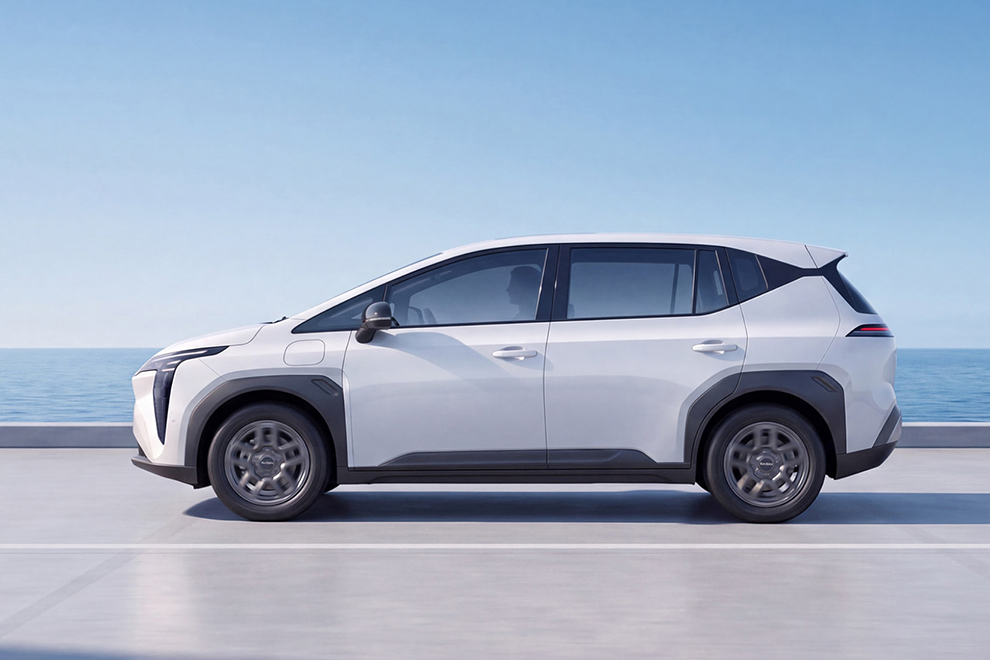
At a glance
- The Aion Rt is a compact battery-electric crossover suited to urban buyers and fleets with dependable charging.
- China-spec versions use 520 and 650 km CLTC range grades with different battery and motor configurations.
- Trim choices include Smart, luxury and LiDAR-focused versions, but exact export equipment varies by unit.
- A used Aion Rt requires battery, service-history, mileage and high-voltage condition checks.
- When sourcing an Aion Rt for export, use live listings for current per-unit price, MOQ and availability, then request a formal landed quote.
Why the Aion Rt matters for export markets
The Aion Rt matters for export markets because it combines everyday packaging, two clear range grades and increasingly sophisticated driver-assistance hardware in a compact battery-electric SUV. Its export case is not simply “more equipment for less”; it is the combination of an EV drivetrain, a 520 or 650 km CLTC-oriented China-spec range ladder and a choice that includes a LiDAR-branded variant. For dealers, that creates a credible product for city-focused customers, company fleets and buyers who want crossover styling without a combustion powertrain. It is that positioning, rather than any single specification, that makes it worth evaluating.
Demand for this type of vehicle depends on market conditions, not on global adoption of the name. Where electricity is reliable and charging is easy, a compact EV can suit urban commuters and short-distance fleets with low running costs and straightforward depot refuelling. Where long routes dominate, charging access is weak, or buyers tow heavy loads, the same vehicle can be harder to justify. Overseas buyers should therefore test the Rt against their own duty cycle, charger power and annual mileage rather than treating the headline CLTC range as a universal sales argument.
For export planning, the Rt’s attraction also has to survive scrutiny outside China. Parts availability, diagnostic software, battery warranty handling, charger compatibility and the ability to obtain local type approval can matter more to a dealer than a higher equipment list. A vehicle that is easy to sell but difficult to support can create an expensive aftersales problem. The sensible approach is to treat the Rt as a strong candidate for markets with suitable infrastructure, then verify the exact export build, service pathway and compliance route before committing to fleet volume or a container programme.
- Assess the Rt against actual route length, charger access, payload and annual mileage.
- Check local Aion parts, diagnostics, high-voltage repair and battery-warranty support before launch.
- Treat right-hand-drive availability and destination homologation as separate sourcing conditions.
Model range, trims and powertrain variants: how the lineup is structured and how to choose
The China-spec Rt line is organised around two range grades: 520 and 650. Within them, names such as Smart, Smart Luxury, LiDAR and Zhijihao signal progressively different equipment and driver-assistance positioning rather than a simple base-to-top price ladder. The 520 versions use the smaller battery and are the logical choice when the vehicle will cover routine local routes with dependable charging. The 650 versions add range and can include the LiDAR-focused derivative, making them more relevant to regional travel or buyers who place greater value on highway capability and electronic assistance.
The mechanical specification for China-market Rt versions pairs the 520 grade with a 62.27 kWh battery and a 165 kW front-mounted motor, while the 650 grade uses a 76.18 kWh battery and a 180 kW motor; both drive the front wheels. These are China-spec figures and their quoted 520 km or 650 km maximum ranges follow CLTC, a Chinese test cycle. A European WLTP or US EPA figure is not interchangeable with CLTC, so an exporter should request the destination homologation data instead of converting one rating directly into another.
Choose the trim by working from operating need to optional equipment. First compare usable charging time, route length and payload against the battery grade; then decide whether the 520 configuration is sufficient or the 650 version better protects operating flexibility. Treat LiDAR and more advanced assistance functions as market-specific assets: they may increase appeal where the systems are homologated, supported and correctly calibrated, but they can also add repair cost or become unavailable to local service partners. Ask for the exact equipment list, software state and warranty rather than relying on a translated trim badge.
- 520 grade: the smaller-battery option for predominantly local routes.
- 650 grade: the larger-battery option for additional operating flexibility.
- LiDAR-focused trim: compare assistance functions, software, repair support and local approval.
New vs used Aion Rt: how export inventory is structured and how buyers choose
Export inventory for the Rt can include both new vehicles and used examples, and the right source depends on the buyer’s objective. A new unit is easier to standardise across a fleet, often offers clearer warranty and delivery documentation, and avoids inheriting an unknown charging or battery history. A used vehicle can make a more attractive demonstration or lower-cost entry vehicle, but the discount is justified only after the unit’s history and condition have been independently checked. The live inventory changes as vehicles are sold, so availability should always be read from the current unit-level listing rather than a remembered stock position.
For a used Rt, mileage is only the first screen. Request the vehicle identification number, production date, service history, battery state-of-health report, evidence of DC fast charging, and photographs of the underbody, wheels, cabin and charging port. Check for warning messages, uneven tyre wear, suspension noise, accident repair, flood exposure and incomplete warranty transfers. An in-person inspection by an independent China-based inspector is particularly valuable because a clean exterior can conceal battery, thermal-management or high-voltage problems. For a vehicle intended for resale, also verify that diagnostic access and owner data can be transferred cleanly to the importing dealer.
New vehicles suit buyers who need known configuration, consistent software, factory warranty support and predictable handover documents. They are also the safer choice when the vehicle will join a branded rental or company fleet with strict maintenance standards. Used Rt units can make more sense for a dealer’s own demonstration pool, a controlled local sales project or a buyer comfortable with inspection and limited residual-value risk. In either case, do not treat the listing title as proof: reconcile the VIN, trim badge, battery capacity, production date and option list against the physical vehicle.
- Used unit: obtain the VIN, service history, battery state-of-health report and an independent inspection.
- New unit: verify production date, factory warranty, software and the standard handover pack.
- Either condition: reconcile the trim badge, battery capacity, options and physical vehicle.
How export pricing works: the factors behind a live listing price, and how to read one
An Aion Rt export price is not a fixed manufacturer-style list price. The headline attached to a live vehicle is shaped by model year, trim, battery and range grade, mileage and condition for used cars, ownership history, visible option content, seller terms and the currency in which the quote is made. Exchange rates, freight method, destination charges and the selected Incoterm also change the amount a buyer ultimately pays. Two units carrying similar trim names can therefore be separated by condition, age, equipment and transaction structure. A disciplined buyer compares those elements rather than treating the largest visible number as the complete landed cost.
Read each live listing line by line. Confirm whether the quoted amount is the vehicle price, a deposit, or a vehicle-plus-some-export-services price; identify the currency; and ask what is excluded. Check the production year, exact trim, battery grade, mileage wording, ownership status, warranty and documents shown. For a used vehicle, ask whether the price is tied to the physical unit and its inspection findings. Then request a pro forma invoice that separates vehicle cost, domestic charges, inland transport, port handling, freight, insurance and destination expenses. This makes comparisons across dealers and destinations meaningful.
Your purchasing comparison should be a landed-cost worksheet, not a ranking of search-result prices. Add the quote validity period, payment-method charges, inspection, export documentation, port fees, freight, insurance, taxes, customs duty, registration, charger adaptation and the cost of financing the inventory. Obtain competing quotes on the same Incoterm and destination so that freight is not hidden inside one seller’s vehicle figure while appearing separately for another. ChinaCarDirect’s live Rt listings are the authoritative place for each unit’s current price and availability; a formal quotation should confirm them at the moment of order.
- Compare vehicle cost and landed cost separately, using the same destination and Incoterm.
- Check quote currency, validity, included export services, payment conditions and exclusions.
- Use the live listings for the current per-unit figure, then obtain a formal quotation before paying.
MOQ, ordering and payment: single units vs consolidating a container
MOQ, payment terms and wholesale ordering mechanics for the Aion Rt must be separated from shipping economics. A single-unit evaluation may be possible, but the minimum order and payment conditions shown for each live listing must always be confirmed in the quote. Consolidation may require several vehicles from different sellers, so it is not automatically cheaper once handling, storage, inspection and transport are included. Decide whether the objective is a sample, a small stock rotation or a full import programme before requesting commercial terms.
Payment terms should mirror the sequence of performance. A normal structure may involve a deposit to reserve the unit, inspection and export-document completion, then settlement of the balance before loading or against a shipping milestone. The exact percentages, accepted methods, refund conditions and title-transfer point are commercial terms, not universal Aion policies, so put them in the written agreement. Verify the seller’s legal identity and account details independently, clarify who bears bank charges, and avoid releasing funds solely from photographs or a chat message. For larger orders, define the inspection remedy before any balance is due.
Container consolidation requires additional control. Confirm whether the seller acts as the exporting entity or merely coordinates vehicles from several sources, and require a clear packing list linking every VIN to its allocation. Agree loading and damage responsibility, provide for a pre-loading inspection where practical, and check whether insurance covers damage during consolidation. Freight quotations should distinguish full-container and less-than-container options, include origin and destination charges, and account for roll-on/roll-off or container capacity. For a new-market launch, staged purchases can reduce the risk of filling a container before homologation, parts planning and demand are proven.
- Confirm the MOQ for the selected listing rather than assuming a model-wide rule.
- Put deposit, balance, title transfer, inspection remedy and refund conditions in writing.
- For consolidation, require a VIN-level packing list and written damage responsibility.
Shipping, homologation and market compliance caveats: LHD/RHD and import rules by country
Left- and right-hand-drive availability is a market question, not a free conversion. Chinese-origin Rt examples are commonly supplied with left-hand drive, so an importer serving a right-hand-drive country should ask for a genuine right-hand-drive build rather than assume one is available. Steering-wheel, pedal, instrument-cluster, lighting, mirror and infotainment changes must be factory-consistent and correctly set for local traffic. A conversion can affect safety, warranty, software, spares and resale value; it should be treated as a specialist engineering project, not a cosmetic steering-wheel swap. The local homologation file should identify the actual configuration being approved.
Import compliance must be planned vehicle by vehicle and market by market. Depending on the destination, the importer may need whole-vehicle type approval, conformity documentation, customs clearance, vehicle identification or registration, and evidence covering EMC, battery safety, software and cybersecurity. UN 38.3 transport documentation and dangerous-goods handling can also be required for the lithium battery. Driver-assistance functions may need separate regulatory approval or disabling, and the charging cable or onboard charger may not match local voltage and plug standards. Confirm the exact requirements with a qualified customs broker and local type-approval specialist.
Transport planning for an EV differs from a combustion car mainly because of the battery and high-voltage equipment, but normal cargo controls still apply. The vehicle must be secured for the chosen roll-on/roll-off or container method, protected from moisture, and handled with suitable lifting points rather than improvised contact near the underbody. The shipping quote should cover vehicle handling, battery-related documentation, insurance, port charges, delivery and any special equipment. Transit can expose tyres, suspension, charging sockets and bodywork to damage, so photograph the vehicle at collection and loading, retain records, and inspect it promptly after arrival.
- Prefer a factory RHD build; treat a conversion as an engineering and compliance project.
- Confirm type approval, customs, battery transport, software and driver-assistance rules locally.
- Record vehicle condition at collection, loading and arrival, and retain transport evidence.
Who should buy the Rt — and who should pick a different vehicle
The Rt best suits a buyer who can exploit electric driving and can charge predictably. It is particularly relevant to urban dealers, mixed urban fleets, ride-hailing or company-car programmes with controlled mileage, and customers who prefer a modern crossover with good range-headroom. The 520 grade may be sufficient for shorter routes, while the 650 grade offers more flexibility where occasional longer travel matters. Fleet economics should be calculated with realistic electricity prices, charger availability, insurance, maintenance and residual-value assumptions, not with the CLTC maximum alone. In-house charging can also make energy costs easier to control.
The Rt is a poor match when the operating requirement is heavy towing, sustained high-speed travel without reliable charging, severe cold-weather operation without confirmed thermal management, or unusually high payloads. A buyer in that category should prioritise a larger-battery vehicle with a proven cold-weather strategy, or a hybrid and combustion alternative suited to the route. Also reconsider it where local approval, repair training or battery warranty is immature. The compact EV advantage can disappear if a disabled vehicle requires international diagnosis, expensive body or high-voltage parts, or a long wait for a replacement.
Within Aion’s own range, the Rt should also be compared with the Y and V families rather than treated as the only electrified option. A buyer prioritising cabin space, a different body format or a lower-cost platform may find a sibling model a better fit, while the Rt’s appeal lies in its particular balance of range grades and equipment. For fleets without dedicated charging, a plug-in hybrid, strong hybrid or efficient combustion model may deliver less operational disruption. The decision is not “EV versus petrol”; it is which energy and vehicle architecture best matches the route, charging estate, duty cycle and aftersales coverage.
- Strong fit: urban fleets and private buyers with dependable depot or home charging.
- Weak fit: heavy towing, remote routes, unverified cold-weather operation or weak local EV support.
- Compare the Rt with Aion Y/V and hybrid alternatives on duty-cycle total cost.
Main rivals and how the Rt compares
The BYD Yuan Plus, sold in many markets as the Atto 3, is one of the most relevant global benchmarks for the Rt. Both are compact electric crossovers aimed at mainstream buyers rather than luxury niches. The Atto 3 benefits from a widely established international name and a simpler global comparison set, while the Rt offers a distinctive 520/650 CLTC range ladder and China-market trims that can include LiDAR hardware. The deciding factors are destination-market specification, software maturity, parts support, battery warranty and the landed cost of the exact version being compared.
The Hyundai Kona Electric is a closer size-and-use-case alternative for buyers who prioritise a recognised global platform, established right-hand-drive supply in relevant markets, and a familiar dealer proposition. It may be a lower-friction choice where local Aion support is limited. The Aion Rt counters with a broader China-spec range structure and more conspicuous driver-assistance positioning, especially in LiDAR-equipped cars. Neither advantage is decisive on its own: buyers should test charging performance, software language, service procedures and parts pricing locally, then compare fully homologated vehicles rather than relying on headline specifications alone.
The MG ZS EV is another direct compact electric SUV alternative, particularly familiar to European and other right-hand-drive buyers. It can be attractive to a dealer seeking a conventional small-SUV sales proposition, whereas the Rt differentiates through its longer 520/650 specification ladder and more advanced technology narrative. Again, the correct comparison is market-specific: verify battery capacity, real-world range, charging, assistance features, warranty and service parts for the exact imported version. Across all three rivals, the winning vehicle is the one with the lowest compliant total cost of ownership and the strongest local support—not automatically the model with the longest published range.
- Atto 3: more globally established; Rt: broader 520/650 ladder and LiDAR-focused positioning.
- Kona Electric: familiar in mature Hyundai markets; verify RHD supply and local service support.
- MG ZS EV: direct small-SUV benchmark; compare homologated battery, charging and assistance specifications.
Live Aion Rt export inventory
View all listings →Real units currently on ChinaCarDirect with per-unit asking prices and MOQ. Availability updates live from the catalogue.

How to buy a Aion Rt from China
-
1
Set the destination and duty cycle
Define the destination country, route length, payload, charging infrastructure and local support requirements before selecting a vehicle. Confirm that the proposed Rt configuration can receive the required type approval and registration.
-
2
Choose the range grade and trim
Compare the 520 and 650 grades against realistic operating routes rather than CLTC maxima. Review the exact equipment list, including whether LiDAR and other driver-assistance functions are present and approved for the destination.
-
3
Review live Aion Rt listings
Compare unit-level photographs, production year, trim, battery grade, mileage wording, ownership status, documents, MOQ and the current per-unit price. Treat the live listing as the starting point for a formal quotation, not as the complete landed cost.
-
4
Commission unit verification
Use an independent China-based inspection for used vehicles and a pre-delivery inspection for new stock. For an EV, include battery condition, charging function, diagnostic messages, underbody condition, tyres and evidence of repair history.
-
5
Agree price, MOQ and payment
Request a pro forma invoice showing the vehicle price, export services, freight, insurance, taxes, Incoterm, quote validity and payment milestones. Verify the legal seller and put inspection remedies, title transfer and refund conditions in writing.
-
6
Complete compliance and shipping
Confirm RHD or LHD suitability, type-approval documents, battery-transport paperwork and export records before loading. Photograph the vehicle during collection and loading, insure the shipment and arrange an arrival inspection.
Rt vs rivals
| BYD Yuan Plus / Atto 3 | A like-for-like compact electric SUV benchmark that may be easier for buyers prioritising a globally established brand and service proposition. The Aion Rt is more distinctive where buyers want its 520/650 range grades, LiDAR-focused versions and a different China-market technology package. |
|---|---|
| Hyundai Kona Electric | A direct compact electric crossover alternative that can offer lower sourcing friction in markets with mature Hyundai distribution and right-hand-drive supply. Choose the Rt for its broader China-spec range ladder and more prominent driver-assistance positioning, subject to local support. |
| MG ZS EV | A familiar small electric SUV competitor, particularly for buyers in right-hand-drive markets. The Rt differentiates through its longer 520/650 structure and technology focus, while MG may be preferable where local MG service and parts arrangements are stronger. |
Frequently asked questions
How is Aion Rt export pricing determined?
Price is built from unit-specific factors such as year, trim, battery grade, mileage and condition, ownership history, exchange rate, freight, insurance, taxes and Incoterm. The current per-unit price is shown in the live Aion Rt listings, and the seller’s formal quotation should state validity, inclusions and exclusions. Compare a fully landed quote rather than using the listing headline as the amount payable.
What powertrain and range does the Aion Rt use?
The Aion Rt is a front-wheel-drive battery-electric vehicle. China-spec 520 versions use a 62.27 kWh battery, 165 kW motor and 520 km CLTC maximum, while 650 versions use a 76.18 kWh battery, 180 kW motor and 650 km CLTC maximum. Request destination-certified range because CLTC is not directly equivalent to WLTP or EPA figures.
Is a used Aion Rt worth buying?
Used Aion Rt units can suit a controlled demonstration or local sales programme if battery condition, mileage, service history and repair history are verified. They carry more uncertainty over wear, warranty transfer and residual value than a new vehicle. An independent pre-shipment inspection is particularly important.
What is the MOQ for Aion Rt orders?
MOQ is a commercial term shown for the particular live listing and order, not a fixed property of the model. Ask whether a single-unit pilot is accepted and whether consolidation changes the minimum, price or payment schedule. Put the confirmed quantity, MOQ and exceptions in the pro forma invoice.
How long does shipping take and what affects the cost?
Shipping time and cost depend on origin and destination, sailing or roll-on/roll-off schedule, vehicle count, container or consolidated handling, port charges, insurance, documentation and destination fees. EV battery-transport rules and vehicle condition can add controls. Ask the forwarder for a written schedule and all-in quote for the selected route.
Are spare parts available for exported Aion Rt vehicles?
Spare-part support is trim and VIN specific, especially for battery, high-voltage, charging and LiDAR-related components. Before ordering, ask a local Aion service partner or parts distributor to confirm availability, lead time and import path for the exact vehicle. Do not assume a generic Aion parts catalogue guarantees immediate overseas availability.
Is a right-hand-drive Aion Rt available?
Right-hand-drive availability varies by source and market, so it must be confirmed for each live unit rather than assumed from the Rt model name. Factory RHD is generally preferable to a conversion because it can affect safety approval, software, warranty and resale. If only LHD is available, assess whether local conversion and re-registration are lawful and economically sensible.
How do I buy an Aion Rt from China?
Start with the live Aion Rt listings, shortlist the grade and trim that match the destination, and send an RFQ for a unit-specific landed quotation. Confirm the MOQ, inspection standard, payment milestones, export documents, homologation and shipping plan before paying. After the balance and shipment conditions are satisfied, use insured transport and inspect the vehicle on arrival.
Ready to source the Aion Rt?
Request current Aion Rt unit pricing, trim availability and a destination-specific landed quotation through the RFQ desk.
Request a quote