
Aion S Max Export Guide for Dealers and Fleet Buyers
Buy an Aion S Max from China with clear guidance on trims, battery options, export pricing, compliance, shipping and the rivals worth comparing.
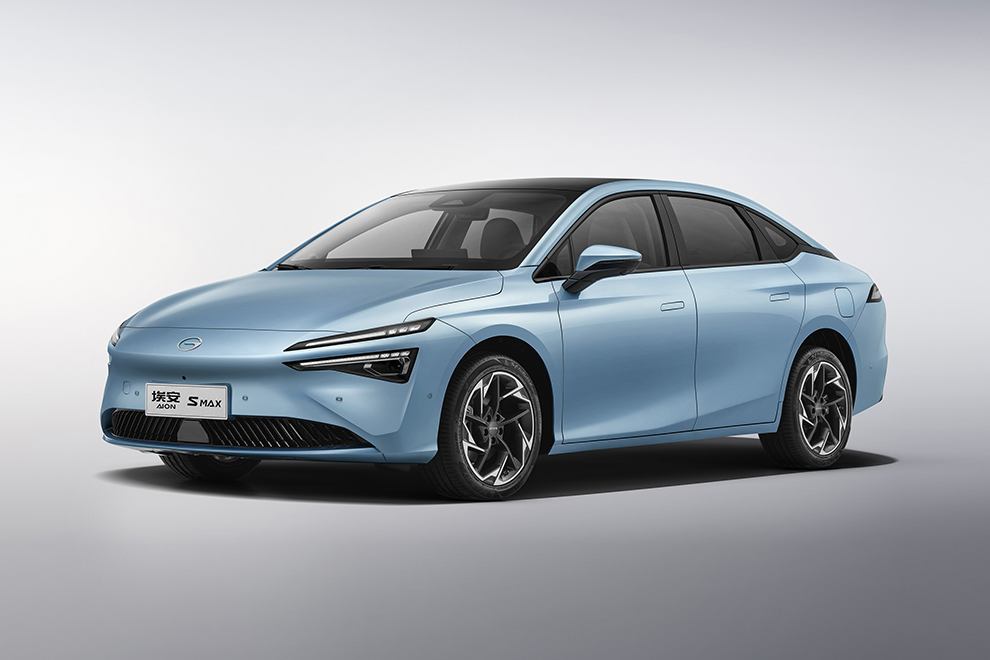
At a glance
- A battery-electric compact sedan suited to overseas dealer and fleet evaluation, subject to local approval and charging access.
- Lineup naming spans 70 and 80 families, Star, Starlight and Xinghan editions, with several battery and chemistry references.
- Choose the version from usable range, charging, condition and duty cycle—not from the trim badge alone.
- Single-unit and consolidated-container routes are negotiable; confirm the MOQ and payment terms in writing.
- Right-hand-drive availability, parts support and homologation can outweigh nominal vehicle advantages.
Why the Aion S Max matters for export markets
The Aion S Max matters to export buyers because it combines a familiar compact-sedan footprint with a battery-electric powertrain and a broad 70/80 family structure. That combination suits importers looking for a left-hand-drive alternative to combustion sedans without moving into a larger premium segment. It is particularly relevant to dealer groups, ride-hailing operators, company fleets, and urban distributors that need a practical EV whose final specification can be matched to local charging and tax rules. The model should be assessed as a sourcing candidate, however, not as an automatic compliance or homologation solution.
Demand for this kind of vehicle is driven less by a single export market than by a repeatable use case: daily mileage within charging reach, predictable operating costs, and a vehicle size familiar to local drivers. In markets where public charging is expanding, an electric sedan can fill the gap between small urban EVs and larger premium models. In fleet applications, the decisive questions are usually range consistency, turnaround time, residual-value assumptions, and whether technicians can service the brand. A buyer should also confirm that spare-parts channels and diagnostic support will remain viable after import.
The S Max is therefore most compelling as an adaptable Chinese-built EV for markets that value compact dimensions, electrified operation, and a choice between 70- and 80-badged variants. It is less compelling as a shortcut into certification, financing, or residual-value guarantees. Before placing an order, overseas buyers should treat local homologation, charger access, insurance classification, and after-sales support as part of the vehicle decision. Those external factors can determine real operating value as much as the trim name or published test range when vehicles are sold without adequate local support.
- Match charging access to routes.
- Budget for homologation and service.
- Validate range claims per configuration.
Model range, trims and powertrain variants: how the lineup is structured and how to choose
Available Aion S Max naming is easiest to understand as a two-level choice. Buyers first encounter 70- and 80-badged families, then Star, Starlight, and Xinghan editions. These labels help separate versions, but they are not a substitute for a specification sheet. Model naming also uses battery references such as 53.7 kWh and 54.6 kWh on 70 Star descriptions, while the 80 family includes ternary-lithium, NMC, and lithium-iron-phosphate references. Because chemistry and usable capacity can change the charging and range proposition, each candidate should be matched to its exact VIN and trim.
Within the 70 family, Star and Starlight names may point to different equipment or cosmetic positioning, but buyers should not infer standard equipment from the badge alone. The 53.7 kWh and 54.6 kWh labels should likewise be checked against usable capacity, rated capacity, and the seller’s battery report. For the 80 family, ternary/NMC versions may suit buyers prioritizing energy density or cold-weather operating confidence, whereas an LFP version may appeal to buyers focused on cycle life, thermal stability, and routine charging once charger power and destination climate are considered.
Range selection should follow duty cycles rather than badge size. A city fleet with controlled depot charging may prioritize efficient consumption, usable capacity, and fast turnaround; a mixed-route operator may need more realistic range margin and verified charging access. Ask for the official test-cycle range, AC/DC charging ratings, battery warranty, and real-world consumption evidence for the exact vehicle. Then repeat the comparison under local temperature, traffic, load, and charging conditions, because a single laboratory range figure cannot represent every market. Plan charging downtime and reserve margin accordingly for daily operations.
- Verify usable capacity by VIN.
- Compare versions by duty cycle.
- Request official range and charging data.
New vs used Aion S Max: how export inventory is structured and how buyers choose
The Aion S Max export market can include both new vehicles and previously registered cars. For a new vehicle, the buyer should focus on production year, exact trim, battery and chemistry labels, factory configuration, warranty transfer, and whether the unit has never been registered for local use. For a used vehicle, mileage and condition become central because the same model name can conceal a different battery history. Neither status should be inferred from a listing title alone; the documents and vehicle inspection must support the classification before any binding payment is made.
New Aion S Max units are generally easier to align with a buyer’s preferred specification because trim, battery version, and factory options can be selected before delivery. They also reduce uncertainty about wear and battery degradation. The trade-off is a higher acquisition commitment and potentially less flexibility if the destination requires a different steering position, charger interface, or equipment set. Fleet buyers should include modification and homologation work in the budget rather than assuming a China-market configuration can be sold unchanged. That distinction is especially important for multi-market distributor networks.
Used vehicles can be attractive where the buyer values known operating history, a lower acquisition budget, or immediate availability. A thorough inspection should cover body and chassis repair, cabin condition, tires, suspension, software and fault memory, high-voltage safety, charging performance, and battery state of health. Request the vehicle identification number, registration history, service records, battery report, inspection photographs, and independent inspection access. For either condition, retain a contingency for rectification because Chinese-market vehicles may have different software, radio, or charging conventions from the destination market before final payment and vehicle release.
- Confirm condition from official documents.
- Obtain battery health reports.
- Inspect software and high-voltage safety.
How export pricing works: the factors behind a live listing price, and how to read one
An Aion S Max export price is not one fixed factory figure. It starts with the live vehicle price and is then adjusted by the commercial terms attached to it. Year, trim, battery capacity label, chemistry, mileage, condition, and availability all affect value. Currency movements matter too, especially when the vehicle is priced in Chinese yuan but quoted in dollars, euros, or another currency. A buyer should therefore treat every displayed amount as a dated transaction input, not a permanent model price, and confirm the quotation currency, tax status, and validity period.
The most important pricing distinction is the Incoterm. An ex-works quotation may exclude inland transport, export clearance, port charges, insurance, ocean freight, and destination import costs. FOB normally shifts responsibility and cost at the named origin port. CIF can add freight and minimum insurance to the port of destination. A DDP-style quote attempts to include more landed costs, but the inclusions still need to be itemized. Ask whether the price includes the vehicle, documentation, loading, transport, insurance, taxes, and destination charges, and obtain a written breakdown for every quoted vehicle.
To compare listings fairly, put every candidate on the same basis: identical trim and battery, equivalent condition, the same currency, the same named port, and the same Incoterm. Then add likely freight, insurance, customs, taxes, compliance work, charging adaptation, and inland delivery to calculate landed cost. Request a binding quote for the specific vehicle rather than relying on a similar listing or an automatically generated search result. ChinaCarDirect’s live Aion S Max inventory should be treated as the source for the current unit price, MOQ, and availability at order date.
- Compare quotes under one Incoterm.
- Separate vehicle price from landed cost.
- Request validity-dated, itemized quotations.
MOQ, ordering and payment: single units vs consolidating a container
Minimum order quantity is a negotiation and fulfilment condition, not a permanent attribute of the Aion S Max. A dealer buying one vehicle may be able to purchase a single unit, while a distributor filling a container may obtain better freight economics but carry more inventory risk. Ask the seller how MOQ applies to a particular trim and whether a one-unit order is accepted. Do not assume that the availability of an individual listing guarantees mixed-model consolidation into the same shipment. The live listing and seller confirmation remain controlling for that order.
Container consolidation changes the buying task. Instead of judging one vehicle, the buyer must align trim mix, colour, production timing, battery specification, condition, and destination demand before releasing funds. It can reduce per-vehicle freight and simplify vehicle handling, but a mixed shipment can complicate allocation, customs descriptions, insurance, and later parts ordering. If several buyers share capacity, agree in advance on the selection rules, inspection standard, allocation method, charge for delay, and responsibility if one vehicle does not pass inspection because the shipment cannot pause indefinitely without creating storage and handling exposure.
A practical order process is to define the required specification, request a written quote, place an agreed deposit, inspect or authorize inspection, confirm documents, and pay the balance against the agreed shipping milestone. The purchase contract should identify the exact vehicle or selection rules, Incoterm, payment schedule, inspection standard, document list, cancellation terms, and dispute process. For a single unit, insist on VIN-level confirmation before final payment. For a consolidated order, use a signed vehicle-allocation sheet so each buyer can match its invoice to the physical unit delivered and records.
- Confirm MOQ for each listing.
- Define consolidation and allocation rules.
- Tie final payment to inspection and documents.
Shipping, homologation and market compliance caveats: LHD/RHD and import rules by country
Most finished Aion S Max vehicles would move by Ro-Ro shipping, with some buyers using containerized transport where vehicle dimensions, loading method, and carrier rules permit. Sea freight is only one element of cost and time. Booking availability, origin and destination ports, transshipment, vessel selection, roll-on/roll-off handling, terminal charges, insurance, customs clearance, and inland trucking can materially change the result. Battery-powered vehicles may also attract carrier-specific documentation or safety requirements, so the freight forwarder should confirm acceptance before payment. Securing the unit before the booking is finalized can prevent costly schedule changes.
Left-hand drive is the normal export starting point for vehicles sourced from China, but right-hand-drive availability must be confirmed for the exact variant rather than assumed. Steering conversion is not automatically acceptable because it can affect homologation, safety systems, warranty, and parts supply. Likewise, verify lighting, indicators, seat belts, charging equipment, radio and data functions, voltage compatibility, and local-language requirements. Import rules differ by country: European buyers may need whole-vehicle type approval, while markets in Asia, the Middle East, Latin America, and Africa have their own certification and inspection regimes.
Compliance should be handled before the vehicle ships. Identify the destination authority, approved technical service, required test documentation, customs category, battery documents, liability insurance, and any local registration or emissions requirements that apply to an electric vehicle. EV status does not remove every approval obligation. For fleet use, also check telematics, cybersecurity, and data-location rules. Have the importer or local compliance specialist confirm requirements in writing, and keep original documents with the vehicle so customs, registration, resale, and insurance checks remain traceable through the vehicle’s ownership, export, and service history.
- Confirm LHD or RHD first.
- Complete type approval before shipment.
- Verify carrier, battery, and customs papers.
Who should buy the S Max — and who should pick a different vehicle
The S Max fits an overseas buyer who wants a compact, battery-electric sedan, can charge the vehicle reliably, and can support it with appropriate homologation and servicing. It is a sensible candidate for urban company fleets, airport and hotel operations, municipal or ride-hailing pilots, and independent dealers seeking an electrified model with several trim and battery references to compare. The strongest business case comes from routes with predictable daily mileage, predictable charging windows, and a local total-cost model that recognizes residual value rather than assuming a new EV will hold value like an established combustion sedan.
It is a weaker choice for buyers whose routes extend well beyond dependable charging, who operate in severe cold or remote terrain without validated battery and suspension performance, or who need a commercial-duty tow rating. Families requiring a large luggage area may also find a compact sedan less practical than an SUV or MPV. Dealers should be cautious if the brand has no local parts warehouse, diagnostic access, technician training, or credible warranty support. In those markets, a more established rival may offer lower operational risk even if its purchase price or powertrain does not match the S Max exactly.
The S Max may also be a better fit than a larger premium EV for a buyer who values a simpler sedan format, a lower-cost entry into electrified fleets, or a smaller logistics footprint. That advantage weakens when the business case depends on long-distance touring, high payload, extensive towing, or premium resale expectations. Before approving a fleet order, model charging downtime, peak and off-peak electricity costs, driver training, replacement vehicles during maintenance, and the residual-value scenario after the first registration wave. The vehicle should win on total operating suitability, not only on catalogue positioning.
- Suit controlled-charge urban fleet use.
- Reconsider remote routes without charging.
- Compare service coverage before commitment.
Main rivals and how the S Max compares
The BYD Qin Plus EV is a close China-market benchmark because it targets a practical electric sedan buyer who compares equipment, range, and operating economics rather than premium branding. It can be attractive where a buyer already has BYD service and distribution support. The S Max should be judged on its exact battery, trim, software, and local approval package; neither name guarantees the better choice for every route. Where the Qin Plus EV has broader dealer familiarity, that may outweigh minor differences in a catalogue comparison for that particular market.
The BYD Seal is a closer alternative for buyers who want a more premium electric sedan and are willing to assess a different design and equipment proposition. It may be more relevant to buyers whose priority is brand positioning and higher-grade cabin or driver technology. The Aion S Max can be more rational for an importer focused on the 70/80 family and fleet value. The comparison should remain evidence-based: verify battery capacity, tested range, charging, warranty, and homologation for the exact imported vehicle rather than comparing badge names alone in practice.
The MG4 EV is another relevant compact electric-car rival, especially where its hatchback format and established brand recognition may have greater appeal. It gives the buyer a different body-style and packaging choice, so cargo volume, visibility, and family usability may matter as much as range. The S Max may suit those seeking a conventional three-box sedan and the specific 70/80 version structure. Final selection should account for local servicing, charger compatibility, software support, residual values, and homologation, because the strongest rival is the one already supported in the destination market.
- Qin Plus EV: practical sedan benchmark.
- Seal: more premium sedan alternative.
- MG4 EV: compact hatchback alternative.
Live Aion S Max export inventory
View all listings →Real units currently on ChinaCarDirect with per-unit asking prices and MOQ. Availability updates live from the catalogue.
How to buy a Aion S Max from China
-
1
Define the destination and duty cycle
Record route length, daily mileage, payload, charging locations, local taxes, and applicable import rules before selecting a vehicle.
-
2
Shortlist exact Aion S Max units
Use the live listings to compare year, trim, battery label, chemistry, condition, mileage, and VIN-level details. Confirm the current price and availability directly on each unit.
-
3
Verify specifications and compliance
Request the official range, usable battery capacity, motor output, charging ratings, warranty, and equipment list. Have the destination-market specialist check lighting, charging, steering position, software, and type-approval requirements.
-
4
Request comparable export quotes
Ask for the same currency, named port, and Incoterm across candidates. Request an itemized breakdown of the vehicle, documentation, freight, insurance, customs, taxes, and destination charges.
-
5
Agree MOQ and payment terms
Confirm whether the order is for a single unit or a consolidated shipment, and document the deposit, balance milestone, inspection standard, cancellation terms, and vehicle-allocation method.
-
6
Inspect and complete the documents
Use an independent inspection and verify the VIN, registration, ownership, service, warranty, and export papers. Resolve discrepancies before the final payment milestone.
-
7
Book freight and delivery
Confirm carrier acceptance, battery documentation, insurance, customs clearance, port handling, and inland delivery. Track the handover against the agreed inspection and payment conditions.
S Max vs rivals
| BYD Qin Plus EV | It is a practical electric-sedan benchmark for buyers focused on equipment and operating economics. The S Max may be more attractive where its specific 70/80 configuration fits the fleet, while Qin Plus EV familiarity may reduce service risk in established markets. |
|---|---|
| BYD Seal | The Seal offers a more premium electric-sedan proposition, while the S Max is generally more relevant to fleet-value and version-focused importers. Compare the exact battery, charging, warranty, and local support rather than relying on brand positioning. |
| MG4 EV | The MG4 EV provides a compact hatchback alternative with different packaging and visibility characteristics. The S Max suits buyers seeking a conventional three-box sedan, but both require local charging, homologation, and after-sales support. |
Frequently asked questions
How is the Aion S Max export price determined?
A live listing price reflects the vehicle’s year, trim, battery and chemistry labels, mileage or condition, and the seller’s commercial terms. Currency movements, freight, insurance, customs, taxes, and local compliance work can change the landed cost. ChinaCarDirect’s live Aion S Max listings show the current per-unit price and availability, and an itemized RFQ should state the currency, Incoterm, inclusions, and validity period.
What powertrain and range should I expect?
The Aion S Max is a battery-electric compact sedan. Its naming includes 70 and 80 families, Star, Starlight, and Xinghan editions, with labels identifying 53.7 kWh or 54.6 kWh batteries and ternary/NMC or LFP chemistry on particular versions. Do not infer a universal range from the model name: check the exact listing for test-cycle range, usable battery capacity, motor output, and AC/DC charging specifications.
Is a new or used Aion S Max better for export?
A new vehicle is easier to align with a chosen specification and carries less uncertainty about wear, while a used vehicle may offer a lower acquisition cost and documented operating history. Used examples require closer scrutiny of battery state of health, high-voltage safety, repairs, software, and service records. For both, verify registration and ownership documents and obtain an independent inspection before final payment.
What is the MOQ for an Aion S Max order?
MOQ is set by the listing and seller negotiation rather than by the model itself. A buyer may request one vehicle, while a container order may require a specified number or mix. Confirm the current per-listing MOQ in the live inventory and in writing before paying a deposit, including any rules for consolidating vehicles with different trims.
How long does shipping take, and what drives the cost?
Transit time and freight cost depend on carrier availability, origin and destination ports, transshipment, vessel schedule, handling, insurance, customs, and inland delivery. A binding booking quote from a forwarder is more useful than a generic estimate. Battery-powered vehicles also need carrier and customs documentation confirmed before shipment.
Can spare parts be ordered after importing an Aion S Max?
Parts ordering depends on the seller or distributor being able to identify the vehicle and supply compatible components for the destination. Buyers should confirm parts availability, diagnostic software, high-voltage service support, warranty handling, and lead times before ordering. Record the VIN and original trim and battery specification in every parts request to reduce mismatches.
Is a right-hand-drive Aion S Max available for export?
Vehicles sourced from China are generally left-hand drive, but right-hand-drive availability varies by exact model and must be confirmed for the chosen unit. Do not assume a steering conversion will satisfy local type approval, warranty, or safety requirements. Check the VIN-level configuration and destination-market approval before paying.
How do I buy an Aion S Max from China?
Start with the live Aion S Max listings, shortlist the exact trim and battery, and send an RFQ requesting a unit price, MOQ, Incoterm, lead-time basis, and landed-cost breakdown. Agree the deposit, inspection standard, documents, balance-payment milestone, and dispute terms in writing. Complete compliance review, inspection, freight booking, and payment only against those confirmed terms.
Ready to source the Aion S Max?
Send an Aion S Max RFQ with your destination, trim and battery preference, route profile, and required Incoterm to request a vehicle-specific quote.
Request a quote