
Aion S Plus Export Buying Guide for Overseas Dealers
Export buying guide for the Aion S Plus, covering trims, battery variants, used EV checks, pricing logic, shipping, compliance and sourcing from China.
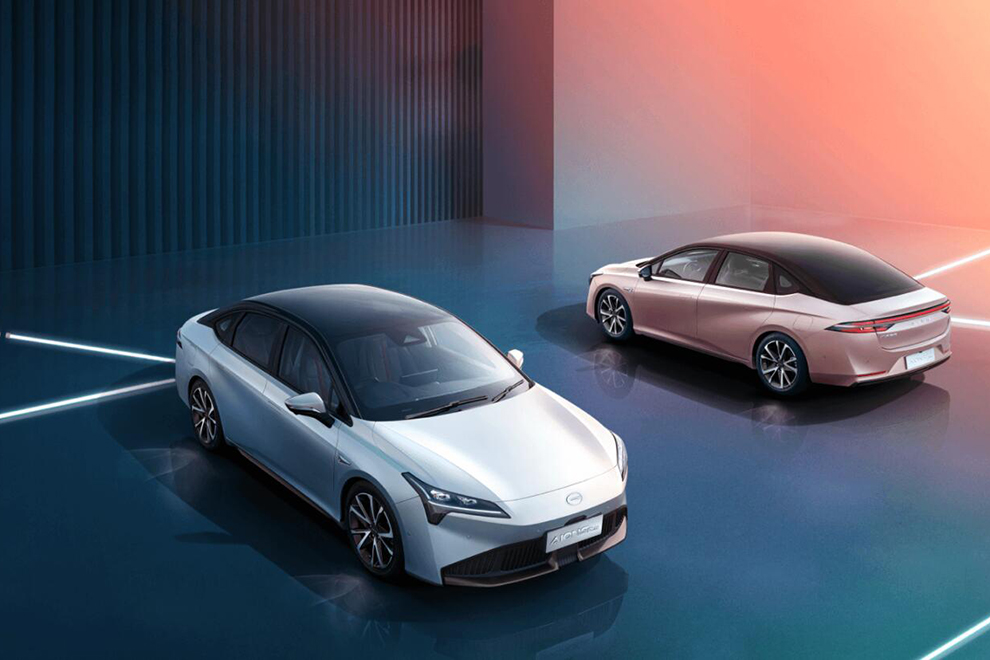
At a glance
- The Aion S Plus is a compact battery-electric sedan suited to fleet, dealer and cost-conscious private-buyer programs.
- The 70 and 80 designations organize range-oriented trim choices but do not guarantee a certified range in every market.
- Battery options include 52.998 kWh and 53.241 kWh versions in LFP or NCM chemistry.
- Used units require VIN, history, battery-health and pre-shipment inspection checks.
- Current vehicle prices, MOQs and availability must be confirmed on live ChinaCarDirect listings.
Why the Aion S Plus matters for export markets
The Aion S Plus is a compact battery-electric sedan positioned for buyers who want a practical Chinese EV without moving to a large premium model. Its export relevance comes from a straightforward proposition: a familiar four-door layout, multiple 70- and 80-designated trims, and battery options that let importers match equipment to duty cycles. For overseas dealers, it can broaden an affordable EV range without requiring the space and logistics of an SUV. It is better viewed as a volume product than a halo model, and its value depends on disciplined fleet and market checks.
Demand for this kind of model comes from the overlap between urban mobility and fleet procurement. Ride-hailing companies, regional distributors, employer shuttles and cost-conscious private buyers often need a sedan that is easier to park and manage than a crossover. The S Plus also offers a useful bridge for dealers serving markets where Chinese brands are established but buyers still associate new-energy vehicles with premium pricing. Its appeal is strongest where reliable charging access exists and local incentives favor zero-emission vehicles because lower operating costs can matter more to a fleet than headline acceleration or luxury equipment.
Global demand should not be confused with automatic cross-border readiness. A vehicle assembled for China may differ from an LHD or RHD export specification, and charging, software, connected services and warranty support can vary by source and destination. Importers should therefore judge the S Plus on total suitability, not on the attractive model name alone. The most credible export case is a market where a dealer can document homologation, maintain a parts pipeline, support the battery warranty and price the vehicle against local alternatives after all landed costs are included in the assessment.
- Compact electric sedan format
- 70 and 80 range-led trims
- Fleet and distributor relevance
Model range, trims and powertrain variants: how the lineup is structured and how to choose
The lineup is organized around 70- and 80-designated families, with naming that can vary by source. The trim vocabulary includes 70 Enjoy, Intelligent and Tech editions, alongside 80 Tech, Ultra-Long Range, Intelligent Driving and Executive-type versions. These labels are trim identifiers, not a substitute for the homologated range table. A buyer comparing two apparently similar cars should match the exact Chinese trim, battery chemistry, capacity and equipment rather than relying on the number alone. This prevents a low-mileage used car from being compared with a newer specification under a misleadingly similar name in the export market.
Two nominal battery-capacity identifiers appear in the model range: 52.998 kWh and 53.241 kWh. Some listings also distinguish lithium iron phosphate from ternary lithium, the latter commonly described as NCM. Chemistry can influence charging habits, usable capacity and replacement strategy, but it does not tell the importer the final range, charging curve or resale value by itself. For fleet economics, request the certified range for the destination configuration, then compare energy consumption under the routes and climate the vehicle will face. Hot climates, stop-start traffic and rooftop charging can change real operating results over time.
Choice should follow workload. A 70-series buyer may prioritize purchase efficiency and a conventional fleet specification, while an 80-series selection merits examination when maximum-range positioning, additional technology or executive equipment matters. Intelligent-driving trims need attention because hardware, software activation, data services and local legality may not transfer in the same form. Before ordering, request a trim-by-trim equipment sheet, motor and drivetrain data, charging specifications and documented battery warranty terms, then compare those documents with the intended resale market. Do not assume a higher trim number guarantees a longer certified range in every market.
- Match exact trim, chemistry and capacity
- Use destination-certified range figures
- Check smart-driving support locally
New vs used Aion S Plus: how export inventory is structured and how buyers choose
An export program can assemble factory-new allocations and dealer-owned used vehicles, so units are not interchangeable. New cars reduce uncertainty about wear and battery history, but buyers should still check production date, warranty, delivery mileage and the difference between listed and installed equipment. Used vehicles can make the model more accessible for price-sensitive buyers, yet each unit requires a condition-specific review. The correct route depends less on a general preference and more on the risk tolerance of the importer and its customers rather than on what happens to be available when a search is opened.
For a used Aion S Plus, request the VIN, registration or service history, odometer photographs, battery state-of-health report, and dated images of the body, cabin, wheels and charging port. Inspect for accident repair, flood exposure, replaced trim panels, software faults and inconsistent key or charging equipment. The battery is central to residual value: obtain an authenticated health reading and clarify whether the original warranty remains valid after export. A lower acquisition price can be offset by battery uncertainty, corrective work or weaker customer confidence. That changes the true cost of ownership.
New inventory is preferable where the buyer needs predictable colours, trim combinations, connected features or a warranty package designed for a known delivery condition. Used inventory can be preferable where a unit has documented history, demonstrable range and an inspection that supports the intended use, such as airport staff, hotel shuttles or short urban routes. Treat condition, battery health and title history as separate value judgments. A live listing should reveal the unit-specific facts, but any description should be confirmed with documents, photographs and an independent pre-shipment inspection before funds are released.
- New: predictable delivery condition
- Used: verify VIN and battery health
- Inspect before final payment
How export pricing works: the factors behind a live listing price, and how to read one
An Aion S Plus export price is a moving commercial calculation, not a permanent model-level figure. The starting reference is the seller's asking price for the specific vehicle, but the amount a buyer ultimately pays can change with model year, trim, battery version, mileage, condition, production date, exchange rates and negotiation. For used cars, repair history and battery condition can be as influential as the nominal trim. For new cars, factory timing and standard-equipment differences can matter. Compare like with like, and keep a clear record of which quoted items are included.
Freight and trade terms can move the landed cost as much as the vehicle quote. Ro-Ro shipping may suit a small rollout, while a container shipment can improve control for a larger batch, although the loading method, securing points and space must be confirmed with the carrier. EXW places more responsibility on the buyer, while FOB, CIF and DAP-style terms assign different portions of charges, transport, insurance and destination responsibility. Ask suppliers to state the currency, tax status, document set, battery documents and exact Incoterm rather than comparing headline numbers alone.
The best way to read a live listing is to separate four layers: vehicle price, seller terms, transport cost and destination charges. Confirm whether the displayed amount is an asking price, negotiated export price or landed estimate, and identify any deposit, service fee or payment surcharge. Then add estimated freight, insurance, handling, duties, taxes, port charges and local registration or compliance work. ChinaCarDirect's live inventory is where to check the current per-unit price, MOQ and availability; confirm the binding terms in writing. Do not rely on an older article for those changing figures.
- Compare year, trim, battery and condition
- Separate vehicle, freight and destination costs
- Use live listings for current figures
MOQ, ordering and payment: single units vs consolidating a container
For a wholesale order, the minimum quantity should be established in the quotation rather than assumed from a model category. A seller may accept a single vehicle, particularly for a used unit or trial shipment, while factory-new allocations and container consolidation can involve different commercial conditions. The MOQ shown on each live unit is the relevant starting point, but it is not a universal promise for every seller or trim. Ask whether it applies per model, specification, condition or consolidated order, and whether mixed units can share a shipment and destination.
For a single-unit order, define the sequence carefully: reserve the vehicle against a written specification, pay an agreed deposit, complete inspection, settle the balance against agreed evidence, and release the unit only after shipping documents and export authorization are checked. For several units, a spreadsheet should identify each VIN or SKU, year, trim, battery, condition, mileage, equipment and agreed price. Consolidation may reduce unit-level freight pressure and simplify inspection, but mixed-year or mixed-trim loading requires clear responsibility for damage, short shipment or non-conformance, including who bears storage or demurrage if a document is delayed.
Payment structure should protect both sides without relying on informal promises. Use a verifiable payment method, name the beneficiary in the contract, and tie each milestone to a deliverable such as inspection, documents or vessel booking. Confirm refund, cancellation and dispute terms for a used vehicle whose condition is agreed by photographs and a report. Freight arrangements also need clarity: carrier deposits, terminal charges and inspection fees may fall outside the vehicle invoice. Keep every quotation, invoice, specification sheet and inspection result together as the final acceptance record for both sides.
- Confirm the unit-specific MOQ
- Match deposits to clear deliverables
- Track each VIN or SKU
Shipping, homologation and market compliance caveats: LHD/RHD and import rules by country
Left- and right-hand-drive availability is a source-level question, not something a buyer should infer from the model name. A Chinese-market listing may be LHD, while a dealer may source an RHD export conversion or market-specific version. Ask for the steering-wheel side, pedal arrangement, lighting, mirrors, charge-port access and conversion documentation. Local type approval may reject modified equipment or require a certificate for a right-hand conversion, so a lower vehicle quote can become expensive if the destination cannot accept it. Confirm acceptance before paying a non-refundable balance directly to the supplier.
Homologation is country-specific and should be treated as a project, not a checkbox. The importer may need a certificate of conformity, local VIN or registration treatment, emissions and safety approvals, cybersecurity or software requirements, and evidence for the charging system and radio equipment. Duties, VAT, customs valuation and environmental or fleet incentives can change the effective cost, and used vehicles may attract different documentary or inspection requirements. Build a compliance budget and timeline before committing, then appoint a broker or compliance specialist where the rules are unfamiliar locally.
EV transport also requires battery documentation and careful handling. Obtain the battery safety data, UN 38.3 test summary or equivalent transport documentation, declared battery condition, charging-cable information and any declaration required for the route and carrier. The vehicle must be secured for Ro-Ro or container movement, with charging state managed according to the carrier's instructions. For a used unit, explain prior flood, accident or thermal events transparently because such history can affect insurer acceptance, port clearance, battery testing and the credibility of warranty claims or resale positioning in the destination market.
- Confirm LHD or RHD before payment
- Check country-specific type approval
- Obtain battery transport documents
Who should buy the S Plus — and who should pick a different vehicle
The S Plus fits dealers and fleet operators seeking a compact electric sedan with a practical price-and-equipment structure rather than a premium flagship. It is relevant where charging infrastructure is adequate, road conditions are moderate and vehicle downtime can be reduced through accessible servicing. Ride-hailing, hotel and staff transport operators can value its combination of sedan usability and range-oriented trims. Private buyers may suit it when they understand the Chinese software, parts and residual-value environment. That includes bilingual support, maintenance planning and a clear battery-warranty process in their destination market.
A different vehicle is wiser when requirements exceed what the available specification can substantiate. Buyers needing a larger cargo area, seven seats, off-road capability or a proven global aftersales network should compare a suitable crossover or another class. Drivers frequently covering long distances without dependable charging should prioritize verified range and charging access over trim branding. Organizations that require advanced driver assistance as a standard, fully localized function should only choose a smart-driving version after confirming hardware coverage and legal activation in the destination, with local liability fully understood in writing.
The buyer's decision should also account for long-term ownership, not only the vehicle in the first invoice. Compare expected battery warranty coverage, availability of common wear parts, diagnostic capability, software support, charging-cable standards and the resale prospects of each trim. A fleet with high daily mileage may prefer the simplest configuration that meets range needs, while a mixed-use importer may value an upper trim as a showroom demonstrator. The strongest choice is the version whose verified costs, compliance path and support requirements can be explained to the end customer clearly in writing.
- Best for compact EV sedan programs
- Strong for urban and light-duty fleets
- Choose another class for heavy cargo
Main rivals and how the S Plus compares
The closest alternatives depend on whether the buyer wants a direct sedan rival, a smaller international EV or a Chinese-brand crossover. BYD Seal is the most direct product comparison: it also competes in the battery-electric sedan segment, but its market positioning, equipment hierarchy and brand-service profile differ. An overseas buyer should compare certified range, charging, dimensions, warranty and landed cost rather than assume one badge is automatically more suitable. The S Plus may appeal where its trim hierarchy and acquisition equation fit the local market better than a rival's overall proposition in practice.
The MG4 is a useful alternative for buyers who prefer a compact EV from an internationally established marque, while accepting a different body shape and country-specific equipment logic. The Leapmotor C10 sits nearby as a Chinese-brand alternative, offering a crossover format that may be easier for some fleets to operate. Neither label establishes superiority: compare the exact vehicle delivered to the destination, including warranty service, charging hardware, software, safety approval and total cost after freight, taxes and compliance, using the same local basis for both rather than relying on badge reputation.
Use a structured comparison sheet rather than headline badge or trim names. Put the certified range and battery capacity for the destination configuration in one column, then charging capability, seating and cargo practicality, safety and driver-assistance equipment, dimensions, warranty, parts support, homologation effort and landed cost in the others. For the S Plus, pay particular attention to the exact 70 or 80 edition, LFP or NCM battery, equipment fitted to that unit and whether software functions remain supportable. The winner is the vehicle whose complete ownership case survives the buyer's destination checklist.
- BYD Seal: direct electric sedan rival
- MG4: compact international-brand alternative
- Leapmotor C10: Chinese-brand crossover alternative
Live Aion S Plus export inventory
View all listings →Real units currently on ChinaCarDirect with per-unit asking prices and MOQ. Availability updates live from the catalogue.
How to buy a Aion S Plus from China
-
1
Define the destination and operating profile
Record the destination's charging network, route length, climate, load and local registration rules before choosing a trim. This prevents a range-oriented label from being mistaken for a usable operating-range guarantee.
-
2
Build a configuration shortlist
Compare the 70 and 80 designations, 52.998 kWh or 53.241 kWh capacity, and LFP or NCM chemistry. Verify motor, drivetrain, charging and destination-certified range on the live unit listing.
-
3
Verify the exact vehicle
Request the VIN or SKU, production or registration date, mileage, title records, service history and battery state-of-health report. For a used unit, require dated condition photographs and an independent pre-shipment inspection.
-
4
Ask for a landed quotation
Specify quantity, destination, Incoterm and required documents in the RFQ. Ask the seller to separate unit price, deposit, freight, insurance, tax status and any destination charges not included.
-
5
Make inspection the release condition
Tie the balance payment to satisfactory inspection and verified documents rather than only to dispatch. Keep quotations, invoices, specification sheets and inspection reports in one acceptance file.
-
6
Plan compliance and transport
Confirm local type approval, LHD or RHD acceptability, customs treatment, battery records and UN 38.3 documentation. Select Ro-Ro or container transport with the carrier, insurance, secure loading and tracking in writing.
S Plus vs rivals
| BYD Seal | The Seal is the closest direct battery-electric sedan alternative. The S Plus may be more attractive when its exact trim hierarchy and sourcing terms offer a better fit for a Chinese-brand export program, while the Seal may suit buyers prioritizing a different brand and service proposition. |
|---|---|
| MG4 | The MG4 is a compact, internationally known marque alternative, usually selected where brand familiarity and a different hatchback format matter more than the S Plus's sedan layout. Compare the exact destination specification, warranty and landed cost rather than relying on segment labels. |
| Leapmotor C10 | The C10 provides a Chinese-brand crossover route for buyers needing more cargo and SUV packaging. The S Plus is the better fit for a sedan-focused fleet, but the C10 may be more versatile for mixed passenger and luggage duties. |
Frequently asked questions
How is Aion S Plus export pricing determined?
A live export quote combines the specific vehicle's year, trim, battery version, condition, mileage and seller terms with variable inputs such as exchange rates, freight, insurance and Incoterms. Read ChinaCarDirect's live Aion S Plus listings for the current per-unit reference, then request a written quotation stating currency, taxes, charges and included documents. Exact price, MOQ and availability are unit-specific and can change.
What powertrain, battery and range options should buyers expect?
The Aion S Plus is a battery-electric sedan, and its trim vocabulary includes 70 and 80 designations, 52.998 kWh and 53.241 kWh battery versions, and LFP or NCM chemistry. The 70 and 80 labels are not substitutes for certified range, and final motor, drivetrain, charging and range data depend on the exact unit and destination. Check the live listing and homologation documents.
Is a new or used Aion S Plus more suitable for export?
New vehicles are easier to standardize and may carry clearer factory warranty terms, while used vehicles can suit buyers seeking a lower acquisition cost or a specific configuration. A used car should be evaluated through its VIN, service history, mileage, battery state of health, accident or flood history and an independent inspection. Do not let the trim label replace unit-level evidence.
How does MOQ work when buying an Aion S Plus?
MOQ is set by the seller, model, specification, condition and shipment plan, so it is not a fixed rule for the S Plus. Some listings may be available as single units, while consolidation can require a larger batch; confirm the unit-specific MOQ shown live and get it written into the quotation. Ask whether mixed trims or conditions can be combined.
What determines shipping time and cost from China?
Shipping time and cost depend on origin and destination ports, carrier capacity, vessel or Ro-Ro schedules, container availability, vehicle dimensions, battery documentation, insurance and terminal handling. A small rollout may use Ro-Ro, while a consolidated container shipment can suit larger purchasing programs. Obtain a carrier quotation using the confirmed vehicle configuration and Incoterm.
Are spare parts available for the Aion S Plus?
Do not assume every wear part or electronic module is immediately available in the destination market. Before purchase, ask the seller or distributor for common wear-part references, diagnostic capabilities, software support and warranty process, then verify lead times and import requirements with a local service partner. For a used EV, confirm that battery-related and electronic repairs are covered by the agreed warranty.
Is a right-hand-drive Aion S Plus available for export?
RHD availability depends on the source vehicle and whether it is a factory-market version or a documented conversion. Ask the seller to state the steering side, equipment configuration and conversion records, then confirm with the destination authority that the vehicle can be registered. Do not assume a Chinese LHD unit can be converted or registered without separate approval.
How should an overseas buyer order an Aion S Plus from China?
Start with the live Aion S Plus listings, select the closest configuration and send an RFQ with the destination, quantity, condition, preferred battery or trim and Incoterm. Before paying, obtain the unit's full specification, live price, MOQ, title records, battery report, inspection terms and shipping documents. Use milestone payments tied to inspection and documentation, then arrange freight and destination compliance.
Ready to source the Aion S Plus?
Send an RFQ with your destination, quantity, preferred battery or trim and Incoterm to request a current Aion S Plus export quotation.
Request a quote