
Aion V Export Buying Guide for Dealers and Fleet Buyers
Buy an Aion V from China with clear guidance on trims, battery options, live export pricing, MOQ, shipping, homologation, compliance and key market rivals.
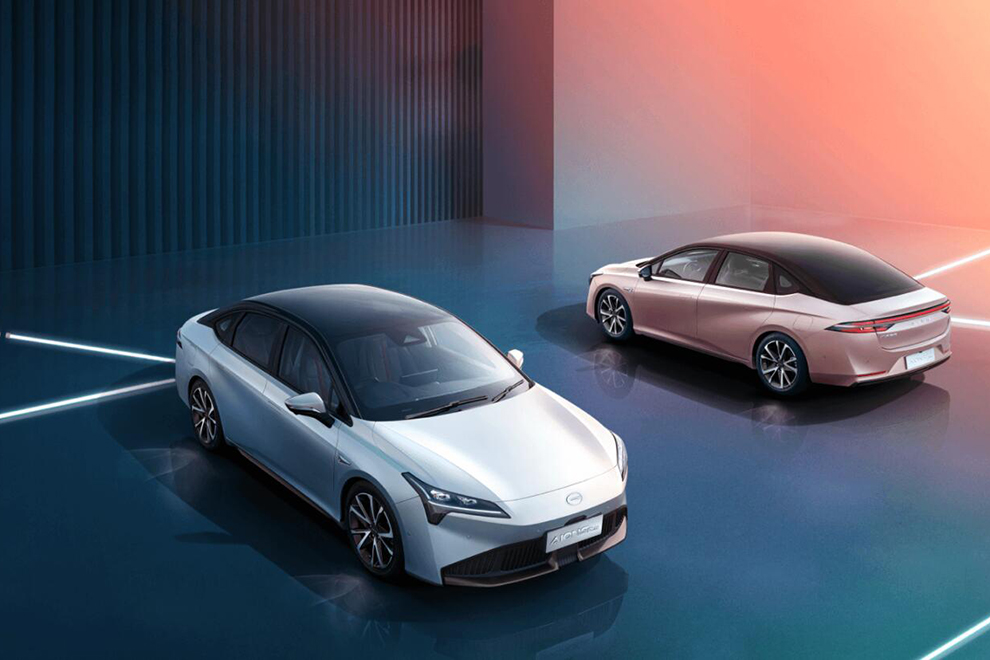
At a glance
- The Aion V is a compact battery-electric SUV suited to importers, dealers and fleet pilots.
- Documented Plus and Tyrannosaurus versions include 70 kWh LFP, 80 kWh NCM and several range-family labels.
- A Tyrannosaurus 650 LiDAR Edition offers higher-assistance hardware, subject to local certification and software support.
- New vehicles favour specification consistency; used vehicles require VIN-level battery, mileage and condition checks.
- Current vehicle pricing, availability and MOQ must be checked on each live ChinaCarDirect listing.
Why the Aion V matters for export markets
The Aion V matters in export markets because it combines a compact electric-SUV format with richer equipment and battery-choice flexibility that can make a China-sourced vehicle commercially interesting. Its relevance is not based on universal global demand, but on a clear buyer proposition: an importer or dealer can compare multiple electric versions, including LiDAR-led and battery-chemistry alternatives, without moving to a larger premium model. For fleet operators, the platform may suit routes with dependable charging access. It should therefore be evaluated as a channel product, not merely as a one-off retail purchase.
The model's export appeal comes from breadth rather than a single universal specification. Documented Aion V trim names include Plus, Tyrannosaurus and other named editions, with identifiers such as 520, 530, 580, 630 and 650, plus battery references including 70 kWh lithium iron phosphate, 80 kWh nickel manganese cobalt and a 53.241 kWh Comfort designation. A Tyrannosaurus 650 LiDAR Edition also demonstrates a higher-assistance positioning. Buyers should see these labels as a starting point for comparison, not assume every version shares the same range, charging equipment or driver-assistance functions after homologation.
Demand still depends on whether the vehicle can be made familiar and serviceable in the destination market. Chinese-market software, charging connectors, driver-assistance calibration, parts references and left- or right-hand-drive configuration cannot simply be assumed to transfer unchanged. A dealer with an established EV workshop and import team can manage those gaps more easily than a first-time importer. The strongest export case therefore comes from pairing the Aion V with a clear homologation budget, a parts plan and a charging network—not from brochure features alone. A phased launch can contain the risk.
- Pilot before scaling.
- Check homologation needs.
- Verify LiDAR support.
Model range, trims and powertrain variants: how the lineup is structured and how to choose
Aion V naming is fragmented, so a disciplined selection process is essential. The export catalogue includes Plus versions, Plus 70 and Plus 80 battery-labelled editions, 520 and 650 Tyrannosaurus families, a 530 Advanced designation and several Meizu-associated names. It may also return adjacent Aion products in broad searches, so the model name on a result is not enough: verify that the listing is an Aion V, then reconcile the trim, battery, production year and VIN. This avoids buying a visually similar SUV under the wrong product assumptions before contracting or paying.
The battery and version labels require careful reading. A Plus 70 Smart Tech Edition is explicitly identified as lithium iron phosphate, while an AION V Plus 80 Leader Edition is identified as nickel manganese cobalt; another Comfort trim carries a 53.241 kWh battery description. Catalogue numbers such as 510, 520, 530, 580, 630 and 650 may function as edition or range-family identifiers, but they should not be converted into laboratory range promises. The unit document should state usable capacity, rated voltage, chemistry, test-cycle range, motor output and charging specification before shipping.
Choice should follow operating priorities rather than the largest number in the name. Lithium iron phosphate is valued for cycle life and thermal robustness, while nickel manganese cobalt packs emphasize energy density; the real decision depends on climate, charging pattern, payload and warranty. Fleet buyers should compare usable range, DC charging, energy consumption, tax treatment and service support. Dealers may prefer two differentiated versions: a lower-complexity fleet model and a higher-feature car for customers who value cabin technology or LiDAR-based assistance. Local certification of any assistance system remains a separate requirement.
- Verify model and VIN.
- Treat range labels carefully.
- Compare range and charging.
New vs used Aion V: how export inventory is structured and how buyers choose
Export inventory for the Aion V can come from new-stock channels, dealer trade-ins, fleet disposals and privately used vehicles, so condition and provenance may vary even within the same trim. A new vehicle normally offers a more consistent specification, current production and a clearer manufacturer warranty path. A used vehicle can offer an established configuration at a different capital outlay, but its commercial value depends on more than the model year. The relevant structure is therefore condition-led: factory-new, dealer-prepared ex-fleet, or privately used, with clear supporting evidence for each category.
For a used Aion V, pre-purchase due diligence should treat the battery as a separate asset. Request the VIN, registration or import history, odometer reading, battery state-of-health report, DC fast-charge record, service invoices and accident or flood evidence. Inspect tyres, brake components, suspension, underbody, cabin wear and all warning messages under power. An exterior can reveal battery degradation, software faults or high-speed DC charging limitations, so an independent inspection is more valuable than photographs. It also helps to confirm that the seller can provide the keys, service records and export documents needed for release.
New versus used should be decided on total operating risk, not simply acquisition cost. A buyer entering a new market may prefer factory-new vehicles for specification consistency, warranty administration and a simpler parts baseline. A used unit can suit a dealer confident in its condition or a fleet able to absorb battery uncertainty. Compare residual-value assumptions, warranty transfer, repair access, software support and expected downtime; a lower purchase outlay can be offset by higher inspection, repair and remarketing risk. This calculation belongs in the landed-cost worksheet before a vehicle is reserved.
- Obtain battery records.
- Match warranty to condition.
- Include downtime risk.
How export pricing works: the factors behind a live listing price, and how to read one
Export price is not a fixed catalogue value. The vehicle-side factors include production year, exact trim, battery and range version, mileage, condition, ownership history, colour or equipment demand and the seller's commercial terms. Currency movements can alter the displayed amount even when the underlying vehicle is unchanged. Freight, insurance, inspection, documentation, port charges and import duties may sit outside the listing price or be bundled according to the Incoterm. Buyers should therefore separate the vehicle quote from the landed-cost estimate before comparing suppliers on a like-for-like specification and currency basis.
A live listing should be read line by line, not reduced to its headline amount. Check the exact model, year, trim, battery chemistry, advertised range test, mileage, condition, VIN availability, photographs, seller location, currency, payment terms and stated Incoterm. Confirm whether the price covers the vehicle only or also domestic transport, export preparation, shipping and insurance. A listing that omits the drive side, charger or battery specification is incomplete for export evaluation. Use the Aion V inventory search to review each unit, then request a written quotation tied to a specific SKU.
A practical comparison should model two landed scenarios: one vehicle sold under an agreed Incoterm, and a consolidated shipment with freight, insurance, customs, taxes and destination handling shown separately. For a dealer, that reveals the working capital tied up in each unit; for a fleet, it clarifies the cost per vehicle and the effect of a mixed specification. Ask the supplier to state quote validity, payment milestones, document fees and what happens if an inspection or shipping amendment changes cost. Current binding amounts belong on the live unit pages, not in a static guide.
- Compare identical trims.
- Clarify freight scope.
- Check live unit amounts.
MOQ, ordering and payment: single units vs consolidating a container
Some Aion V sellers may offer vehicles one at a time, while Aion V wholesale programmes or factory orders may use different purchasing conditions. Do not assume a marketplace-wide minimum order quantity from a general product page: the live listing and supplier quotation must state the MOQ, whether it applies per model or shipment, and whether mixed trims are allowed. A one-unit purchase gives low initial exposure and is useful for testing demand, but it leaves the buyer with less influence over consolidation, documentation and freight terms than a group order.
The ordering sequence should create a link between the chosen vehicle and the payment obligation. Select a live listing or agree a factory specification; request a pro forma invoice showing vehicle description, VIN or production identity, price, currency, Incoterm, destination, validity and payment milestones. Confirm who is the seller, who owns the vehicle, which documents are included and the inspection or rejection process before funds are released. For ready stock, many buyers structure payment around document review and pre-shipment inspection; the exact sequence must be agreed in writing rather than presumed.
Consolidating several units into one shipment can improve freight purchasing and may simplify customs handling, but it converts vehicle selection into a larger commitment. Mixed battery versions, drive sides or equipment packages complicate compliance and spare-parts planning; identical specifications are generally easier to document and support. Buyers should model the full container mix, not just the average unit cost, and reserve enough time for every VIN, charger, accessory and document to be reconciled. If demand is uncertain, a staged order can test the market before committing to a larger consolidated programme.
- Confirm listing MOQ.
- Link payment to inspection.
- Reconcile VINs and chargers.
Shipping, homologation and market compliance caveats: LHD/RHD and import rules by country
Shipping an Aion V is a battery-sensitive operation, and cost or time should be quoted only after the route and Incoterm are known. The main variables are origin and destination ports, sea, rail or road carriage, sailing availability, container or vehicle-handling method, vehicle dimensions and weight, insurance, inland haulage, customs brokerage and destination charges. EV-specific requirements can include secure stowage, approved battery transport documentation, charger packing and instructions for the vehicle's state of charge. A faster route may cost more; the cheapest method may create more handling or schedule risk.
Drive-side configuration is a first-order export issue. A left-hand-drive vehicle cannot simply be treated as right-hand drive, and an RHD conversion can affect steering, pedal and console layout, lighting, display logic, parking systems, safety equipment, noise insulation and driver-assistance calibration. It may also affect whether the manufacturer warranty remains valid. Some markets accept particular imported configurations while others require local type approval. Confirm the hand-drive, connector, voltage, charger and software region on the VIN before shipping, then obtain destination-specific approval rather than assuming Chinese road legality transfers automatically to the importing buyer.
Import compliance is country-specific and must be checked before the vehicle is loaded. Depending on the destination, authorities may require vehicle identification, type approval, safety and electromagnetic-compatibility evidence, customs classification, duties and taxes, registration, insurance, environmental or battery documentation, and restrictions on vehicle age or previous registration. Local charging standards and emergency-response information also matter to fleet acceptance. Treat the broker, manufacturer documentation and local authority as three separate information sources, and record who bears the cost, delay and liability if approval conditions are not satisfied before the final purchase order.
- Confirm drive side.
- Secure early approval.
- Inspect before release.
Who should buy the V — and who should pick a different vehicle
The Aion V is a strong candidate for importers and dealers seeking a compact electric SUV with several specification paths, especially where the local market values cabin technology, driver-assistance hardware and a distinctive visual product. It can also suit company fleets with controlled routes and reliable charging, provided the operator can manage Chinese interfaces, parts and software. A pilot fleet is often more sensible than an immediate large commitment: it exposes charging, maintenance and user-interface issues while preserving the option to adjust trim mix or deployment strategy before scaling up.
The V is less suitable for buyers who require a factory-homologated RHD model, a mature residual-value network, comprehensive local warranty coverage or a simple parts system. Those requirements favour established global marques, even if the Chinese alternative offers a more extensive specification list. It may also be a poor fit where duty, charging infrastructure or fleet policy makes a locally certified compact EV easier to justify, or where towing, payload, cold-weather operation and uptime must meet local standards without extra engineering. A used purchase without battery diagnostics should be avoided unless the risk is accepted.
Before committing, score the Aion V against the actual operating route, not against a showroom brochure. Compare usable range under local weather and load, charging connector availability, energy cost, insurance, servicing access, software support, replacement-part lead times and expected resale. Confirm who handles recalls, warranty claims and telematics or data questions. If the V wins on purchase value, charging compatibility and parts planning, its additional import work may be justified; if those foundations are weak, a rival with stronger local certification and support is usually the lower-risk decision for the buyer.
- Best for EV pilots.
- Weaker without local support.
- Test charging and software.
Main rivals and how the V compares
BYD Atto 3, also known as the Yuan Plus in many markets, is one of the Aion V's closest global rivals. Both are compact battery-electric SUVs aimed at private buyers and company fleets, but the Aion V catalogue presents a broader mix of battery-labelled trims and a LiDAR-equipped higher-assistance edition. The Atto 3 generally benefits from greater international brand recognition and a more established support expectation. Choose the Atto 3 when proven residual value and simpler market familiarity matter more; choose the V when its equipment mix and import economics justify additional homologation work.
MG ZS EV is another direct competitor in the compact electric-SUV class and may be especially familiar to buyers in right-hand-drive markets. Its established sales channels can reduce uncertainty around parts, resale and service. The Aion V offers a more complicated version landscape, with LFP and NCM-labelled Plus variants, Tyrannosaurus editions and a LiDAR option, giving importers more ways to shape a range. The trade-off is diligence: MG may be easier for a mainstream dealer, while the V rewards a buyer who can verify configuration, homologation and support in the country.
The Hyundai Kona Electric represents the lower-dilution route into the same broad segment. A buyer who prioritises factory homologation, a settled dealer network and established residual-value expectations may find the Kona easier to justify. The Aion V can counter with a more elaborate Chinese-market feature set and greater trim differentiation, but that advantage carries administrative and aftersales work. There is no universal winner: the V is more relevant where its specification value and sourcing economics are strong, while the Kona is more relevant where certification and local support dominate the buying decision.
- Atto 3: global familiarity.
- MG ZS EV: RHD channels.
- Kona Electric: certification.
Live Aion V export inventory
View all listings →Real units currently on ChinaCarDirect with per-unit asking prices and MOQ. Availability updates live from the catalogue.
How to buy a Aion V from China
-
1
Set the destination brief
Define the destination country, drive-side requirement, charging connector, duty rules, route and fleet duty cycle before choosing a trim. This prevents a technically attractive vehicle from becoming an unapprovable or unusable import.
-
2
Shortlist the live inventory
Review Aion V listings for year, trim, chemistry, range label, condition and location. Because broad Aion searches may include adjacent models, confirm that each shortlisted result is an Aion V and matches the intended drive side.
-
3
Verify the unit and documents
Request the VIN or production identity, battery specification, range test, motor output, charger, mileage, condition report, ownership history and available warranty. For used vehicles, seek battery state-of-health and DC fast-charge evidence, and treat missing records as a risk rather than proof of condition.
-
4
Request a written landed quotation
Ask for a quotation tied to the selected SKU or factory specification, stating currency, Incoterm, MOQ, payment milestones, validity, freight, insurance, inspection and destination charges. Keep vehicle cost separate from customs duty and taxes until the broker confirms the treatment.
-
5
Inspect before releasing payment
Use an agreed pre-shipment inspection to verify VIN, exterior, interior, tyres, battery warnings, charging function, software region, keys, charger and export documents. Agree the rejection remedy and evidence required before the final payment milestone.
-
6
Book compliant transport
Select the carrier and route only after the battery transport documents, state-of-charge handling, charger packing, insurance and security arrangements are agreed. Confirm the actual loading date, vessel or vehicle booking, delivery terms and what happens if damage occurs in transit.
-
7
Coordinate approval and aftersales
Use a local broker to confirm customs classification, type approval, registration, taxes, insurance and charging compatibility before dispatch. At handover, complete a commissioning check, driver familiarisation, software setup, service contacts and a spare-parts plan using the VIN-specific parts references.
V vs rivals
| BYD Atto 3 / Yuan Plus | The Atto 3 is a direct compact BEV rival with stronger international recognition and usually a more familiar service proposition. The V's broader trim mix and LiDAR-led option can suit feature-focused importers, but its homologation and support work may be greater. |
|---|---|
| MG ZS EV | MG ZS EV competes directly and is often the lower-friction choice in established RHD markets. The Aion V offers more version differentiation, including LFP and NCM-labelled Plus variants, but buyers must manage more configuration and parts complexity. |
| Hyundai Kona Electric | Kona Electric offers established factory homologation and support expectations in markets where it is officially sold. The Aion V can offer more Chinese-market equipment differentiation, but local certification, residual value and aftersales execution carry more uncertainty. |
Frequently asked questions
How is Aion V export pricing determined?
A live price reflects the specific unit: model year, trim, battery or range version, mileage, condition, ownership history, seller terms and the currency used. Freight, insurance, inspection, port charges, duties and taxes depend on the Incoterm and destination, so they may sit outside the vehicle amount. Check the current amount on the ChinaCarDirect live Aion V listings and request a written landed quote for the selected unit.
What Aion V specs should I verify before importing?
The Aion V is battery electric. Catalogue trim names identify 70 kWh lithium iron phosphate and 80 kWh nickel manganese cobalt versions, plus a 53.241 kWh Comfort designation; identifiers such as 520 and 650 should not be treated as homologated range without the source test cycle. Confirm usable battery capacity, motor, charging connector, drive side, dimensions and equipment on the specific listing.
Should I buy a new or used Aion V?
A new vehicle normally offers stronger specification consistency, warranty administration and a simpler parts baseline. A used unit can reduce initial capital exposure but requires battery, mileage, accident and service-history checks. Compare total operating risk, residual value and expected downtime rather than acquisition cost alone.
How does MOQ work on ChinaCarDirect?
MOQ depends on the individual listing and supplier quotation; do not infer a catalogue-wide requirement from a general product page. Some ready-stock sellers may offer one vehicle at a time, while wholesale or factory-order programmes may use different terms. Confirm whether the MOQ applies per model or shipment and whether mixed trims are permitted before paying.
What affects Aion V shipping time and cost?
The route, origin and destination ports, carrier availability, container or vehicle-handling method, dimensions, weight, insurance, inland haulage and customs charges all affect the result. EV requirements such as battery transport documents, secure stowage and charger packing can add operational steps. Request a route-specific quote under a clearly stated Incoterm.
Can I obtain spare parts for an Aion V?
Parts availability depends on the seller, destination and the exact vehicle configuration. Before ordering, request VIN-specific parts references, catalogue availability, lead times and a local service or distributor plan. Do not assume that every cabin, charging or electronic component can be supplied directly from China at short notice.
Is a right-hand-drive Aion V available?
RHD availability depends on the source, model year and configuration, so it must be checked on each live listing rather than assumed. A left-hand-drive conversion may be possible, but it can affect safety, software, warranty and homologation. Only proceed after the converted configuration is inspected and approved for the destination market.
How do I order an Aion V for export?
Choose a specific live vehicle or agree a factory specification, then request a written quotation with Incoterm, currency, MOQ, payment milestones and document scope. Complete the agreed inspection and document checks before the final payment release, followed by compliant transport, customs clearance and destination registration. Use the RFQ channel to submit the destination and operating requirements for a unit-specific response.
Ready to source the Aion V?
Request a current Aion V quotation with VIN-level specifications, Incoterm and a complete landed-cost breakdown.
Request a quote