
AITO Wenjie M5 Export Guide for Dealers and Fleet Buyers
AITO Wenjie M5 export guide for overseas dealers: compare BEV and range-extended trims, pricing factors, MOQ, shipping, compliance, and key rivals.
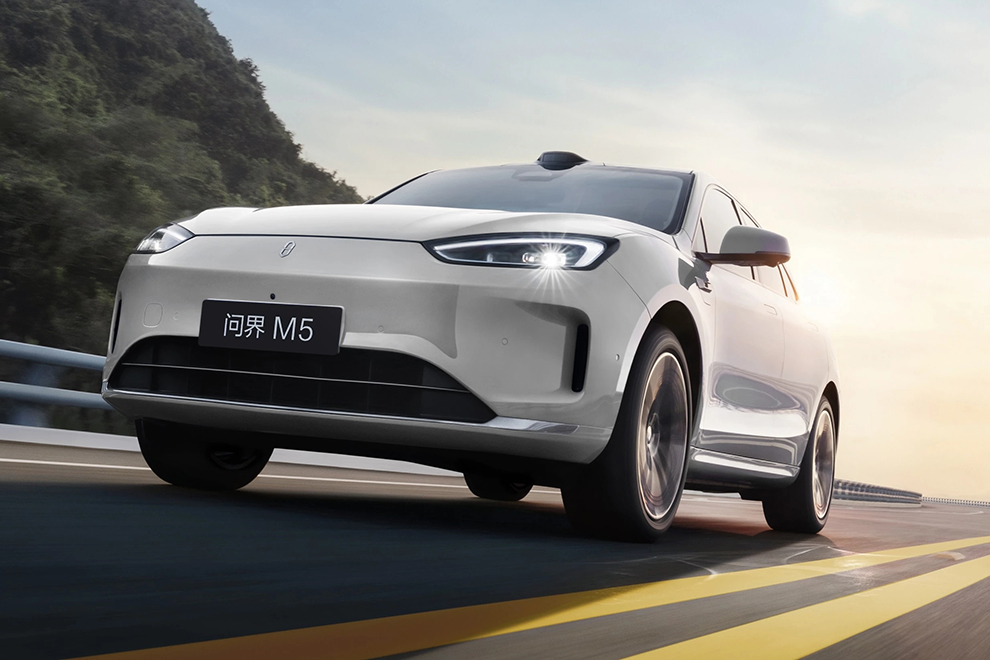
At a glance
- The M5 is a compact SUV offered with Pure Electric and Extended Range powertrains.
- RWD and AWD choices allow buyers to match traction and fleet-role requirements.
- BEV suits dependable charging, while EREV reduces reliance on full-charge availability.
- New units support standardization; used units require condition and ownership due diligence.
- Export comparisons must normalize Incoterm, freight, duties, taxes, and local charges.
- Current per-unit price, MOQ, and availability must be checked in live M5 listings.
Why the AITO Wenjie M5 matters for export markets
The AITO Wenjie M5 gives overseas buyers a compact SUV proposition that combines battery-electric driving with an extended-range alternative. That dual architecture is commercially useful: one vehicle family can address buyers with dependable charging access as well as those who want electric motoring but cannot rely on a full charge. For dealers, the attraction is not simply a badge or a headline configuration, but a broader trim ladder that can support different budgets and fleet duties without leaving the model family. That common model identity also simplifies homologation and after-sales planning.
For an overseas buyer, the M5 occupies a compact-SUV position that competes with both mainstream utility vehicles and more expensive technology-led models. It appeals to importers seeking a modern vehicle presentation, advanced driver-assistance options, and the flexibility of rear- or all-wheel-drive configurations. Extended-range editions add a combustion generator for longer journeys, while pure-electric editions remove the engine entirely. This makes the M5 relevant to both urban company-car programs and cross-border fleet proposals. Local rules, charging infrastructure, and fuel policies must be confirmed for the destination market rather than assumed from the export listing.
Global demand should be evaluated by operating environment rather than by copying sales assumptions from another country. A fleet operator with controlled depot charging may favor the pure-electric M5 for routine urban duty. A dealer serving long-distance customers or regions with uneven charging networks may prefer an extended-range version for operational resilience. Before buying AITO Wenjie M5 from China, importers should model energy availability, duty cycles, serviceability, and residual-value expectations. The best export candidate is the variant that fits those duties after total landed cost, rather than the version with the most equipment on paper.
- BEV and EREV serve different duties.
- RWD and AWD widen fleet fit.
- Infrastructure guides version choice.
Model range, trims and powertrain variants: how the lineup is structured and how to choose
The lineup is organized around two energy paths: Pure Electric and Extended Range. Within each, the names Standard, Performance, Ultra, Max RS, Smart Drive, Advanced Smart Driving, Ultimate, and Flagship indicate different equipment or positioning, but they should not be read as a universal equipment list. The decisive commercial fields are energy type, driven wheels, model year, and the attached specification sheet. Buyers should compare the exact listing because similarly named editions can differ in hardware, software, and market equipment. Confirm those details in writing before requesting a final freight and compliance quotation.
Rear-wheel-drive pure-electric versions form the simpler baseline, while all-wheel-drive versions, including Performance-oriented names, suit buyers who prioritize traction or response. Extended-range variants also appear with rear- or all-wheel-drive layouts and span Smart Drive, Performance, Ultra, Max RS, Ultimate, and Flagship positions. For fleet buyers, the choice should follow route length, charging access, payload, towing needs, and cold-weather duty rather than badge hierarchy. A higher trim may be desirable to drivers but can add purchase, insurance, and spare-parts costs. It should also be checked for local homologation and software support before it is shortlisted for a tender.
A sensible selection process starts with energy architecture, then narrows the drivetrain and trim. Choose Pure Electric when charging time, charger compatibility, and duty-cycle range are dependable. Choose Extended Range when electric-only travel is insufficient but local fuel availability is strong. Then compare seating and cargo utility, driver-assistance hardware, infotainment language, warranty terms, and replacement-part lead times. Because these variables can change by model year and destination, the buyer should treat the unit specification, not the trim name alone, as the controlling document for procurement and compliance evidence in writing.
- Choose energy path first.
- Drivetrain follows duty cycle.
- Specifications override trim labels.
New vs used AITO Wenjie M5: how export inventory is structured and how buyers choose
New AITO Wenjie M5 inventory is the natural choice when a buyer wants model-year consistency, an identifiable factory configuration, and a clear manufacturer warranty position. Used units can be financially interesting, but any discount cannot be separated from age, mileage, condition, service history, and remaining warranty cover. For export, a used vehicle should be treated as a separate technical due-diligence project. Ask for the VIN, title or ownership documents, repair records, battery or engine condition evidence, detailed photographs, and an independent inspection before any payment. Keep a unit-level file for every candidate.
Export inventory structure matters because vehicles may sit under different ownership, customs, or listing arrangements. A new unit normally offers the cleanest chain from factory to buyer, whereas a used export unit may have one or more prior owners and may not carry the same new-vehicle warranty or local homologation position. The buyer should not infer condition from photographs or a new badge in the title. Instead, verify whether the listing is factory-new, demonstrator, fleet-used, or privately used, and reconcile the production date, VIN, odometer reading, and documentation for each vehicle.
The best used-unit discounts are those that remain after risk-adjusted costs are deducted. A lower asking price can be offset by battery degradation on a pure-electric car, generator or engine condition on an extended-range car, accident repair, missing equipment, software locks, or difficult parts sourcing. New inventory may be easier to standardize for fleet delivery, while used stock can fill a narrow need at a lower acquisition cost. Wholesale buyers seeking used AITO Wenjie M5 should compare condition reports and total ownership assumptions, not only headline purchase economics or dealer margins.
How export pricing works: the factors behind a live listing price, and how to read one
An AITO Wenjie M5 export price guide should be read as a set of variables rather than a fixed market value. The vehicle year, energy version, drivetrain, trim, production specification, mileage, condition, and ownership history all influence the amount a supplier can ask. Export-facing cost also reflects exchange-rate movement, finance, inspection, documentation, inland transport, and freight. A listing price is therefore a starting point for comparison, not proof of the final landed cost in your destination market. Confirm which charges are included and which remain the importer’s responsibility in the written quotation.
To read a live listing, first match the full model name and production year, then confirm Pure Electric versus Extended Range, driven wheels, and trim. Next, check whether the displayed amount is an FOB-style vehicle price, an export price, or an all-inclusive quote; compare like with like. For a used unit, request mileage, condition disclosures, inspection evidence, and a repair history. For a new unit, ask about factory options, warranty start, delivery date, and any dealer or export preparation charges. These checks explain listing differences; current price, MOQ, and availability must be confirmed on each ChinaCarDirect live inventory record.
The final landed comparison should add only costs that are missing from each quote: ocean or air freight, insurance, terminal and handling fees, port charges, customs duty, taxes, registration, local delivery, and dealer margin. Payment terms can also change the effective cost because a supplier financing balance is not identical to paying in full. Buyers should use one worksheet for every candidate vehicle, specify the Incoterm, and timestamp the currency rate used. That method makes price movements explainable instead of forcing an unreliable universal benchmark.
- Compare Incoterms.
- Year, trim, and condition move price.
- Use one cost worksheet.
MOQ, ordering and payment: single units vs consolidating a container
MOQ means the smallest quantity a supplier will sell under the stated terms. A single-unit purchase may suit a dealer testing demand, a company-car buyer, or an importer consolidating several orders, but the MOQ shown on each live listing must be treated as the controlling commitment. Do not infer a universal MOQ from the model name, the marketplace, or another seller. Before placing an order, ask whether the price and terms change with quantity, whether the unit can be mixed with other compatible vehicles, and what constitutes a completed order.
Container consolidation can reduce freight and handling cost per vehicle, but it adds coordination, storage, and risk. Vehicles bought by separate buyers should be grouped only when dimensions, weight, destination, documentation, and delivery timing are compatible. One party may need to act as consignee or importer of record, while another handles customs clearance. The supply agreement should state who pays duties, when title transfers, how claims are handled, and what happens if one buyer defaults. Consolidation is therefore a logistics decision, not simply a way to meet a larger order.
A sound ordering sequence begins with a written specification and commercial invoice, followed by the supplier’s order acknowledgment. The buyer should verify the seller’s legal identity and payment beneficiary, use a traceable payment method, and avoid transfers based only on informal messages. Inspection can occur before loading, with agreed standards for exterior panels, interior condition, tires, charging equipment, mileage, and visible mechanical faults. The balance should be linked to contractual milestones, and original title, export, conformity, and maintenance documents should be reviewed before release or shipment from the agreed origin.
- Treat listing MOQ as binding.
- Clarify consolidation and importer roles.
- Tie payments to inspection milestones.
Shipping, homologation and market compliance caveats: LHD/RHD and import rules by country
Chinese-market vehicles are not automatically approved for resale in the destination country, and homologation is separate from ordinary export clearance. The importer must check local type approval, emissions rules, noise limits, cybersecurity and software-update requirements, crash-safety rules, warranty registration, and importer responsibilities. Pure-electric vehicles may also face charging-connector or voltage requirements, while extended-range vehicles must satisfy fuel, emissions, and engine-related rules. Obtain a market-entry opinion from a local compliance specialist before paying a non-refundable balance. The same applies to insurance, road tax, registration categories, and any modification required for local use by the vehicle.
Steering configuration is a destination-specific choice. A left-hand-drive M5 is not automatically suitable for a right-hand-drive market, and a right-hand-drive conversion can affect homologation, warranty, parts availability, and resale value. Some importers source LHD vehicles for markets where they are accepted; others require RHD units built or officially converted for local use. Buyers should specify the required configuration before contract, then match it to the VIN, production documentation, and inspection report. Never rely on a photograph or trim badge to confirm the steering side or an unverified local conversion.
Shipping method should follow urgency, route, cargo value, and charging or fuel infrastructure at destination. Sea freight is generally the economic choice for standard vehicle programs; air or rail can be relevant when time matters, although each adds cost or handling considerations. The quote should state the Incoterm, named port or terminal, insurance coverage, inspection point, loading photos, estimated sailing window, and customs responsibility. On arrival, allow for terminal charges, inspections, registration, and local transport. A low vehicle price can still produce an unattractive landed cost if these elements are omitted.
- Homologation differs from export clearance.
- Specify steering before contract.
- Separate vehicle and freight costs.
Who should buy the M5 — and who should pick a different vehicle
The M5 is a strong candidate for dealers and fleet buyers who want a modern compact SUV, a choice between battery-electric and range-extended operation, and a broad selection of driver-assistance-oriented trims. It is especially relevant where a company policy supports electrified vehicles and where charging or fuel infrastructure can support the chosen version. It may also suit importers looking for a distinctive alternative to the large family of conventional crossovers. The purchase is strongest when the buyer can support the technology, source parts, and manage residual risk over an ownership cycle.
The M5 may be the wrong choice for a buyer whose priority is maximum proven towing capacity, rugged off-road capability, a large seven-seat cabin, or a simple commercial vehicle with minimal software complexity. It may also fail a tender that requires pre-certified emissions, a type approval already held in the destination country, or specific fleet functions unavailable on an imported configuration. A used unit with unclear history is a poor fit for safety-critical fleet deployment. These are reasons to adjust the specification, not necessarily reasons to reject the model; they are reasons to verify before contracting.
Use a weighted decision matrix rather than choosing the most expensive or most highly named edition. Give the greatest weight to energy availability, range confidence, payload, safety and driver assistance, warranty, homologation, parts support, and total cost of ownership. The M5’s two powertrain paths are especially useful because they support different operating assumptions, but neither removes the need for route planning and charging analysis. For a pilot fleet, one mixed configuration can test employee demand and charging behavior before a larger rollout. That staged approach limits technology risk while preserving negotiating leverage.
Main rivals and how the M5 compares
The Tesla Model Y is the clearest pure-electric comparison because it competes for the same technology-minded compact-SUV buyer. Its established brand and charging network can reduce perceived adoption risk, while the M5 offers both rear- and all-wheel-drive trims plus an extended-range option. Model Y may appeal where brand familiarity dominates; the M5 may appeal where broader trim choice or range-extender flexibility matters, so compare local warranty, software, and parts support before committing stock.
The BYD Seal U is a close alternative for buyers comparing a modern electric SUV with plug-in-hybrid capability. The M5 instead offers a full battery-electric or extended-range architecture, together with rear- and all-wheel-drive and performance, ultra, and smart-driving trims. Both can suit different market strategies, so compare verified range, charging, warranty, and local service rather than assuming one powertrain or badge is superior.
The Leapmotor C10 is another relevant rival because it also combines battery-electric and extended-range versions in the same SUV family. That makes it useful for buyers who want to compare range-management strategies directly rather than switch between fundamentally different vehicle types. The M5 competes through its AITO positioning, broad rear- and all-wheel-drive selection, and performance, ultra, and smart-driving edition naming. A careful dealer test should compare actual duty-cycle efficiency, software usability, parts availability, warranty treatment, and resale prospects. No badge guarantees the better business case in your destination market alone.
- Model Y offers EV brand familiarity.
- Seal U covers plug-in-hybrid and BEV.
- C10 directly compares range-extended SUVs.
Live AITO Wenjie M5 export inventory
View all listings →Real units currently on ChinaCarDirect with per-unit asking prices and MOQ. Availability updates live from the catalogue.
How to buy a AITO Wenjie M5 from China
-
1
Define the operating brief
Set route length, payload, charging or fuel access, steering side, budget, and target approval before selecting a powertrain.
-
2
Filter the live M5 inventory
Compare model year, energy type, drivetrain, trim, MOQ, and unit-level availability in the live listings, retaining several candidates rather than relying on one.
-
3
Request a full specification
Ask for VIN or production details, battery or range-extender data, charging specifications, dimensions, fitted equipment, warranty, and applicable original documents.
-
4
Build the landed quote
State the destination, port, Incoterm, insurance, inspection, payment terms, and required timing. Separate vehicle price from freight, duties, taxes, registration, and local delivery.
-
5
Check market compliance
Use local rules and an importer or compliance adviser to confirm type approval, emissions, charging or fuel rules, RHD or LHD needs, cybersecurity, insurance, and registration.
-
6
Verify and inspect
Validate the legal seller and payment beneficiary, use traceable payment, inspect against written condition criteria, and link balance release to documents and vehicle acceptance.
-
7
Arrange freight and release
Confirm the loading point, photographs, terminal, customs responsibility, consolidation, and importer-of-record role before shipment, then reconcile documents on arrival.
M5 vs rivals
| Tesla Model Y | The Model Y is a direct pure-electric alternative with strong brand recognition and charging familiarity. The M5 differentiates itself through broader rear- and all-wheel-drive trim choice and an extended-range option for buyers who need greater operational flexibility. |
|---|---|
| BYD Seal U | The Seal U competes with modern electric SUVs and plug-in-hybrid programs seeking broad market familiarity. The M5 instead provides full battery-electric and extended-range architectures, making it more relevant where range management and drivetrain variety drive fleet selection. |
| Leapmotor C10 | The C10 is a close structural rival because battery-electric and range-extended versions sit within one SUV family. Buyers should compare duty-cycle efficiency, software, parts access, warranty, and resale prospects, with the M5 competing through its AITO positioning and detailed trim ladder. |
Frequently asked questions
How is AITO Wenjie M5 export pricing determined?
Export pricing is driven by model year, trim, BEV or EREV version, drivetrain, condition and mileage, together with exchange rates, freight, documentation, and the selected Incoterm. The per-unit asking amount is a starting point for vehicle comparison, not necessarily the landed cost. Check the live M5 inventory for the current price and request a written quotation showing included and excluded charges.
What powertrain and range options does the M5 have?
The lineup includes Pure Electric and Extended Range versions, with RWD and AWD configurations appearing across the range. A BEV relies on battery charging, while an EREV combines electric driving with an onboard combustion generator. Battery capacity, rated range, motor output, charging details, and EREV engine data vary by unit and market, so verify the model-year specification sheet.
Are new or used AITO Wenjie M5 vehicles better for export?
New units are generally easier to standardize by model year, factory specification, and warranty terms. Used units may cost less but require added scrutiny of the VIN, mileage, service and repair history, battery condition for BEVs, and engine or generator condition for EREVs. Base the decision on risk-adjusted lifecycle cost and the documentation each vehicle can support.
What is the MOQ for an AITO Wenjie M5 order?
MOQ is stated in each live listing and may differ by seller, vehicle, quantity, and commercial terms. Do not assume one marketplace-wide rule. Ask whether single-unit orders are accepted, whether compatible orders can be consolidated, and how the supplier treats deposits, title, and importer-of-record responsibilities before paying.
How long does shipping take and what does it cost?
Transit time and cost depend on the origin and loading port, destination, sea, air, or rail method, vehicle condition, insurance, terminal handling, customs, and Incoterm. Obtain a written freight schedule and charge schedule with inspection and loading milestones. The vehicle price alone does not establish the landed cost.
How are spare parts handled for an imported M5?
Before ordering, request the brand, model, powertrain, and production-year references for lamps, body panels, tires, charging equipment, and service items. Confirm authorized and aftermarket channels, expected lead times, and whether a repair near the port is sensible. For a used vehicle, matching its existing equipment is especially important because parts can differ by model year.
Is a right-hand-drive AITO Wenjie M5 available?
RHD availability depends on how the unit was produced or converted and whether the destination accepts that configuration. LHD vehicles are not automatically eligible for RHD markets, and a conversion can affect approval, warranty, and resale. State the required steering side in the RFQ and request VIN and homologation evidence before contracting.
How do I order an AITO Wenjie M5 from China?
Select a candidate in the live listings, then request its full specification, commercial invoice, Incoterm, MOQ, payment milestones, and delivery estimate. Verify the supplier and beneficiary, inspect the vehicle against the agreed standard, and release the balance only under the contract. Submit an RFQ to obtain the current per-unit figures and export arrangements.
Ready to source the AITO Wenjie M5?
Request an RFQ for current per-unit price, MOQ, availability, and export terms for the AITO Wenjie M5.
Request a quote