
Audi A3 Export Buying Guide for Dealers and Importers
Compare Audi A3 trims, engines, export pricing, MOQ and compliance considerations, then review live listings and request a tailored quotation for your market.
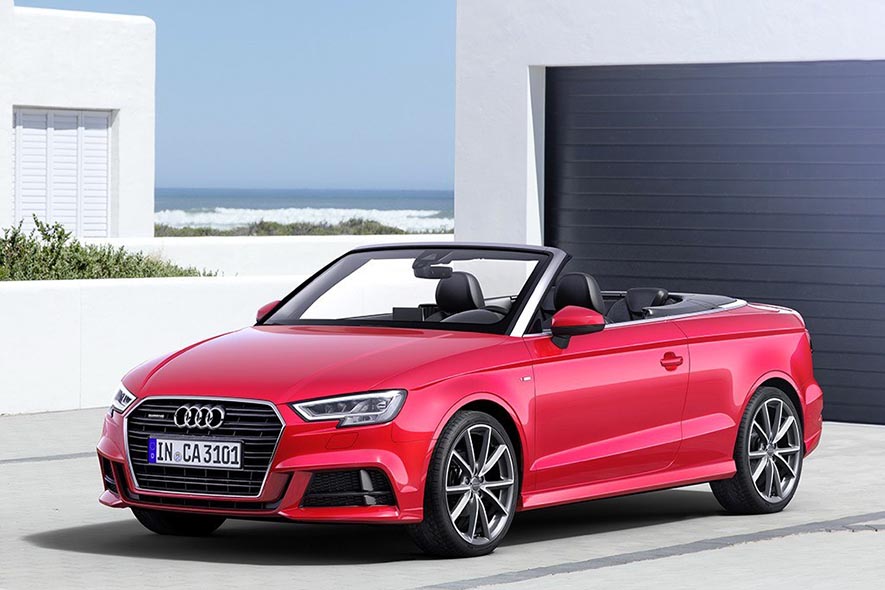
At a glance
- The export-relevant range spans the A3L Limousine, five-door Sportback and Cabriolet.
- Core limousine and Sportback trims use 35 TFSI gasoline power, while Cabriolet examples include 40 TFSI.
- China VI wording and Chinese-market equipment require destination-market homologation checks.
- Export quotations depend on the exact vehicle, condition, exchange rates, freight method and Incoterm.
- Single-unit requests and multi-vehicle consolidation require separate MOQ, payment and allocation planning.
Why the Audi A3 matters for export markets
The Audi A3 occupies the premium compact segment: a small car that combines Audi's brand image with dimensions practical for urban use, dealer demonstrations and smaller fleets. For export buyers, its attraction is not extreme performance or cargo capacity, but a credible premium identity in a manageable footprint. It offers an alternative to mainstream compact cars when a buyer wants a prestigious badge and higher-grade cabin technology without moving into a substantially larger premium model. It suits urban distributors and executive-contract fleets that value design and brand presence more than maximum cargo capacity.
Internationally, the A3 benefits from being a familiar premium compact rather than a niche model. Its established badge, recognizable design and long-running use in hatchback and sedan formats help importers explain it to local customers. The China-linked range deserves particular care: an A3L Limousine is a lengthened four-door derivative, while the Sportback is a five-door hatchback and the Cabriolet is a two-door convertible. These bodies should be positioned as distinct products, not interchangeable labels for one global configuration. Check body designation and dimensions rather than relying on the A3 name alone.
The A3 makes most sense for an importer when its premium positioning can support both resale value and a manageable operating footprint. Compact dimensions help with parking, urban congestion and freight, but the vehicle still needs to be insured, serviced and supported in a way its buyers expect from a premium marque. That makes local Audi dealer coverage, parts access and residual-value evidence important before committing. A cheap acquisition cost alone is not decisive if post-sale repair, software support or compliance work erodes the commercial margin. Demand transparent condition, documents and a service plan.
- A3L, Sportback and Cabriolet choices.
- Premium urban and executive positioning.
- Check local service support.
Model range, trims and powertrain variants: how the lineup is structured and how to choose
The China-linked A3 range is structured around three body choices. The A3L Limousine is a four-door, extended-wheelbase sedan; the Sportback is a five-door hatchback with a liftback-style tailgate; and the Cabriolet is a two-door convertible. Trim naming is unusually rich, including Fashion, Style, Progressive, Fashion Sport, Style Sport, Progressive Sport, Leadership and anniversary editions. Because generation and body style affect cabin space and equipment, buyers should treat trim labels as useful clues but verify the exact vehicle specification. A request should identify body, model year, engine badge and the options that matter to the destination market.
The 35 TFSI badge appears across the principal limousine and Sportback trims, while the Cabriolet listings include a 40 TFSI version. These are gasoline, turbocharged Audi powertrains; the numbers are Audi engine-family identifiers, not a complete specification or a promise of identical output across markets. Some trim names also carry China VI wording. That label describes the Chinese emissions basis of a particular vehicle, but it does not establish that the car is approved for a European, Middle Eastern, African or other target market. Check the vehicle's production specification and local homologation separately before purchase.
Choosing among trims should start with operational needs rather than cosmetic naming. Compare Progressive, Fashion, Style, Leadership and Sport-badged versions by their actual equipment, because the labels do not create a universal equipment map. For fleet use, prioritize driver aids, upholstery, climate equipment, infotainment compatibility and serviceability. For private buyers, rear-seat room, luggage capacity and the availability of Sportback or Cabriolet formats may outweigh a single trim advantage. Confirm local radio, phone and software support rather than assuming imported equipment will function without configuration. Do not assume imported factory options are locally equivalent.
- A3L adds length; Sportback adds utility.
- 35 TFSI core; 40 TFSI Cabriolet.
- China VI needs destination approval.
New vs used Audi A3: how export inventory is structured and how buyers choose
Export inventory for the A3 can contain different commercial propositions. New China-spec examples are typically sold as current or recent model-year vehicles, with factory condition and a clearer relationship between trim, specification and delivery. Used and imported examples may cover earlier model years, different mileage histories and equipment sets. This structure is useful because it lets a dealer compare a ready-to-sell new unit with a lower-entry used car, but it also means that two units carrying the same model name may not be equivalent products. Condition, provenance and documents remain decisive.
New units suit buyers who want predictable presentation, current equipment and a warranty position that can be traced to the seller. Used units can make more financial sense where the buyer accepts an earlier model year or a different lifecycle of depreciation, and can provide access to body styles or editions that are no longer represented by new stock. The trade-off is uncertainty: visible wear, prior repairs, aging electronic components and incomplete service history may not be fully disclosed in a listing. A lower purchase figure does not remove those risks.
For a used A3, the inspection should focus on the car's story, not only mileage. Check whether the VIN, production date, trim and equipment match the listing; look for structural repair evidence, paintwork, cabin wear, warning messages and a road test; and ask for maintenance records and a recent independent inspection. Also examine rubber, brakes, tyres and visible underbody condition, because replacement work can materially change landed cost. For a new unit, verify production date, factory status, transport damage, warranty start and any factory or dealer preparation before dispatch in writing.
- New cars align specifications.
- Used cars need VIN inspection.
- Compare warranty and repairs.
How export pricing works: the factors behind a live listing price, and how to read one
An export listing price is the starting point of a transaction, not a universal value for every A3. The main drivers are model year, body style, engine badge, trim, equipment, mileage and condition for used cars, and whether the vehicle is new, factory-prepared or imported. External variables also move the final amount: the renminbi-to-buying-currency exchange rate, freight method, insurance, port handling, destination taxes and the Incoterm that defines where responsibility transfers. Two similar-looking A3 units can therefore have materially different totals. Always request the quotation basis and exclusions in writing.
Buyers should distinguish the vehicle price from the landed cost. The live listing may show an asking figure with a defined Incoterm, while import duty, value-added tax, customs brokerage, inland haulage, registration and local inspection are often outside that figure. Whether those charges are legally assessed on the transaction price or another customs value must be confirmed locally. An Incoterm such as FOB or CIF changes the split of cost and risk but does not remove import compliance. Ask for a written breakdown and keep the final budget separate from the advertised number.
To read a live A3 listing, first identify the exact SKU or unit reference, then check the model year, body, engine, trim, transmission, drivetrain, mileage, condition and option list. Treat attractive photography as supporting evidence rather than a specification. Confirm whether the displayed price changes with your destination, chosen Incoterm, payment method or shipping instruction, and whether the seller will hold the unit. Current, binding figures should come from the live inventory entry or a written quotation, not from a cached catalogue or an assumed historical price band for this model.
- Year, trim and condition drive price.
- Vehicle price differs from landed cost.
- Use live pages and written quotes.
MOQ, ordering and payment: single units vs consolidating a container
MOQ means the smallest order a seller will accept, and its practical effect depends on how the vehicle is being sold. For a specific A3 already listed, the relevant question is whether that unit can be purchased individually or whether the seller groups it into a batch. For a dealer consolidating several vehicles, each model can carry separate terms. ChinaCarDirect provides a live route to review the vehicle and applicable ordering requirement, but the seller's confirmation and the written quotation are the binding terms. Do not infer a universal MOQ from a catalogue screen.
Single-unit ordering suits importers, workshop specialists and fleet pilots who want to test demand before taking a larger position. It reduces inventory exposure but gives less freight leverage and may leave the buyer paying more per vehicle through separate documentation and transport arrangements. For wholesale buyers consolidating several vehicles, container consolidation can reduce unit freight and support better vehicle allocation, but it increases capital, inventory and timing risk: every vehicle must match the intended market, and one damaged or non-compliant unit can affect the whole shipment. Model the scenarios separately rather than assuming bulk buying automatically lowers the total cost.
Payment mechanics should follow the sales contract and shipping milestones. A typical sequence may involve a deposit to reserve the unit, verification of identity and ownership, payment of the balance before release, and payment to the carrier or logistics provider for freight and handling. The exact sequence is seller-specific, so request the currency, payment method, beneficiary, invoice or receipt, refund terms and fee-bearing charges in writing. Avoid transferring funds against an informal description. The buyer should also confirm who holds the export licence or sales authority and which party signs vehicle handover and transport documents.
- Check MOQ by unit and seller.
- Single units limit exposure.
- Containers improve freight leverage.
Shipping, homologation and market compliance caveats: LHD/RHD and import rules by country
Steering configuration is one of the first checks for an overseas buyer. China-market A3 examples are commonly left-hand drive, while some markets require or strongly favor right-hand drive. A live listing should state the configuration; if it does not, request confirmation before finalizing the vehicle. Converting a left-hand-drive car to right-hand drive is not simply moving the steering wheel: it can involve dashboard components, wiring, lighting, instruments, safety hardware and certification. For markets with an established right-hand-drive industry, sourcing an appropriate example is generally cleaner for homologation and safer for operation.
Import rules are determined by the destination country, not by the car's China VI label or global Audi branding. Customs authorities may compare the VIN, engine code, emissions documentation, vehicle category, age, value and steering configuration with local rules. Duties and taxes can also depend on the importer's status, homologation route and whether the vehicle is classified as new or used. Some markets permit direct imports; others require type approval, individual approval, local testing or a dealer-supported importer. Obtain written pre-clearance from a customs broker familiar with the vehicle and destination.
Shipping should be planned around the vehicle's condition and the route, not treated as a routine cargo movement. Confirm whether the car is containerized, roll-on/roll-off or otherwise secured, and whether the carrier accepts used vehicles. Before loading, agree on a condition report, photograph the body and interior, check for electrical battery isolation procedures where relevant, and preserve evidence of existing damage. Have the export documents, ownership proof, VIN and customs papers prepared consistently. Freight time and cost depend on origin and destination ports, sailing or trucking schedule, consolidation, insurance, port charges, congestion and customs clearance.
- Confirm steering configuration.
- China VI needs local approval.
- Match VIN and condition records.
Who should buy the A3 — and who should pick a different vehicle
The A3 is a strong candidate for an overseas buyer who wants a premium compact car with a recognised badge, a driver-focused layout and manageable logistics. It can work for urban dealerships, company-car programmes, hotel and executive fleets, and niche convertible or Sportback marketing. The strongest business case is where local demand already understands premium compacts and the importer can support them properly. Dealers should test the proposition against their own customer base, not assume that a lower transport burden alone will move buyers from mainstream hatchbacks or online channels.
A different vehicle is usually better when the mission prioritises maximum cargo volume, large-family accommodation, low operating cost or zero-emission compliance. A business needing many vehicles for a price-led fleet should compare the A3 with locally supported combustion or hybrid models. Buyers entering a zero-emission fleet need a model certified and supported for their charging and regulatory environment rather than treating the A3 as an alternative. Buyers prioritizing family practicality may prefer a larger estate or crossover, while those seeking maximum open-air appeal should budget carefully for Cabriolet inspection, weather protection, luggage security and specialist maintenance.
A disciplined buyer should compare total operating value rather than sticker appeal alone. Include import charges, financing, insurance, fuel, maintenance, workshop labor, parts lead time, warranty handling, residual risk and the cost of correcting non-local equipment. For fleet use, test the A3 against employee driveability, rear-seat needs and image policy. For retail use, examine whether the A3L's added length helps with comfort but creates a parking or logistics penalty. A test-drive, independent inspection and written cost-per-vehicle model will reveal more than trim badges or appearance alone before funds are committed.
- Suits premium urban fleets.
- Weak for price-led fleets.
- Compare total operating cost.
Main rivals and how the A3 compares
The Volkswagen Golf is the most straightforward benchmark for a compact hatchback buyer. Depending on the destination, it may offer a lower purchase position, strong fuel-efficiency choices and a straightforward service proposition, though equipment and engine availability vary by market. The A3 counters with a more premium cabin, stronger brand presentation and a broader selection of body styles in the China-linked range, including the extended A3L. If resale cost, payload or low operating expense dominates, the Golf deserves close consideration; if premium identity matters, the A3 can justify careful evaluation.
The BMW 1 Series competes more directly on driver involvement and the premium-brand proposition. Its rear-wheel-drive tradition and broad model history give some versions a distinct handling character, while the A3 typically emphasizes cabin refinement, ease of use and the availability of sedan, hatchback and convertible forms in this export range. Exact engines, transmissions and equipment depend on the destination, so comparisons should use like-for-like cars. BMW ownership, servicing and insurance can be more expensive in some markets, making total cost and local support as important as the badge itself.
The Mercedes-Benz A-Class is the closest premium-lobby alternative for buyers who place a high priority on dashboard design, passenger technology and status. Its hatchback and sedan presentations overlap with the A3's practical roles, while the A3L offers a notably different length-and-space proposition and the Cabriolet creates a more specialized use case. The deciding factors are usually equipment, engine choice, local service cost, residual prospects and the price of the exact imported specification. Do not compare a fully equipped A3 with a basic rival car; compare equivalent trims and ownership packages.
- Golf emphasizes value and utility.
- BMW emphasizes driver appeal.
- A-Class emphasizes technology.
Live Audi A3 export inventory
View all listings →Real units currently on ChinaCarDirect with per-unit asking prices and MOQ. Availability updates live from the catalogue.
How to buy a Audi A3 from China
-
1
Define the destination and use case
State the destination country, steering requirement, body style and passenger or load needs before filtering. This prevents a locally unsuitable A3 from entering the shortlist.
-
2
Find Audi A3 units to buy from China
Review live A3 entries by body style, model year, engine badge and condition. Use each unit's live page for its applicable specification, availability and ordering requirement.
-
3
Request the unit dossier
Ask for the VIN, production details, transmission, drivetrain, equipment list, condition photographs, ownership and service documents. For used cars, request an independent inspection.
-
4
Build a dealer or wholesale quotation
Specify the destination, Incoterm and shipment method. Ask for the vehicle price, payment schedule, freight, insurance, port charges and exclusions to be stated separately.
-
5
Check homologation early
Give the VIN, engine and emissions information to a customs broker or local compliance specialist. Confirm steering configuration, import category, duty and tax treatment, and any inspection or type-approval needs.
-
6
Complete inspection and payment
Review the inspection and contract, verify the beneficiary and refund terms, then pay only against the agreed milestones. Retain the signed sale, handover and export documents.
-
7
Release and track the shipment
Agree condition evidence at loading, confirm that documents match the VIN, and track transport to the destination. Complete customs clearance, registration and local handover before resolving any discrepancy.
A3 vs rivals
| Volkswagen Golf | The Golf is the practical benchmark for buyers focused on value, fuel economy and a straightforward hatchback proposition. The A3 offers a more premium cabin and distinct A3L and Cabriolet options in this export range, making it more relevant when brand presentation and body variety are priorities. |
|---|---|
| BMW 1 Series | The BMW competes on driver involvement and premium-brand dynamics, with some rear-wheel-drive versions offering a distinct character. The A3 favors cabin refinement, ease of use and a broader choice of sedan, hatchback and cabriolet forms, so compare like-for-like equipment and local ownership costs. |
| Mercedes-Benz A-Class | The A-Class is a close premium-lobby competitor, especially for buyers prioritizing dashboard design and passenger technology. The A3L changes the space proposition and the Cabriolet adds specialization; equipment, servicing and residual outcomes should be compared for the exact destination-market versions. |
Frequently asked questions
How is the Audi A3 export price determined?
The live figure reflects the selected vehicle's year, body, engine, trim, condition, mileage and seller terms. Exchange rates, freight, insurance, port handling, destination taxes and the Incoterm can change the landed total. Check the current per-unit figure in the live A3 listings and request a written quotation for your destination.
What engine and powertrain options are available?
This A3 range is gasoline-powered, with 35 TFSI versions across limousine and Sportback applications and 40 TFSI examples in the Cabriolet. Exact displacement, output, transmission and drivetrain can vary by unit, so consult the live listing rather than infer them from the badge. The range shown here is not a BEV or PHEV export offering.
Should an overseas buyer choose a new or used Audi A3?
A new example generally offers clearer factory condition, more predictable equipment and a more traceable warranty position. A used car may offer better access to a particular body style or edition, but it requires closer scrutiny of condition, service history, repairs and ownership documents. Current unit-specific availability should be checked in the live inventory.
How does MOQ work when buying an Audi A3?
MOQ is the seller's minimum acceptable order and may differ between individual vehicles, model groups and consolidated shipments. For an already listed A3, ask whether it can be purchased separately and whether any batch condition applies. Rely on the per-listing requirement and the seller's written confirmation rather than assuming a catalogue-wide rule.
What determines A3 shipping time and cost?
The main factors are the origin and destination, transport mode, consolidation, vehicle condition, insurance, port charges, congestion and customs clearance. A quote should state whether freight is based on FOB, CIF or another Incoterm and which handling costs are included. Ask for the route, planned vessel or truck, and documentation requirements before paying.
Are spare parts available for an imported Audi A3?
Parts compatibility should be checked by VIN because Chinese-market trims, equipment and electronic components may not match overseas versions exactly. The local Audi network may support common mechanical items, while other components may require regional or specialist sourcing. Before purchase, confirm likely service needs and the expected parts route with the seller.
Is a right-hand-drive Audi A3 available from China?
China-market A3 examples are commonly left-hand drive, so a right-hand-drive requirement must be checked against each live listing and confirmed in writing. Converting steering and related systems can involve cost, documentation and safety implications. Where possible, select an appropriately configured example or obtain local approval for the proposed conversion.
How do I order an Audi A3 for export?
Browse the live listings, shortlist the required body and powertrain, and request a unit dossier with VIN, condition and document details. Send an RFQ stating the destination, quantity and shipping preference, then complete compliance checks, inspection and payment under a written contract before arranging release and freight.
Ready to source the Audi A3?
Send ChinaCarDirect your destination, body-style preference and required quantity for a tailored live quotation and export-document review.
Request a quote