
Audi A4 (Import): Export Buying Guide for Overseas Buyers
Compare Audi A4 (import) trims, powertrains, export pricing, MOQ and compliance, then check live listings and request a tailored wholesale quote for your market.
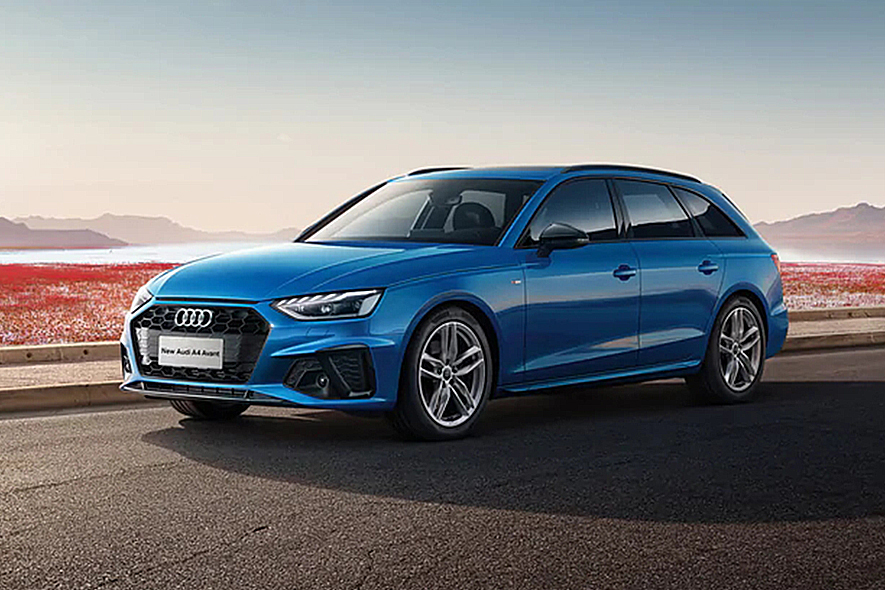
At a glance
- The A4 (import) range spans sedan, Avant estate and allroad quattro choices for executive and fleet use.
- The 40 TFSI and 45 TFSI versions provide different performance and equipment positioning within Audi's turbocharged petrol family.
- New cars favor standardized fleet and dealer programmes, while used cars require unit-specific condition and history checks.
- Export pricing is vehicle-specific and should be separated from freight, duty, taxes and other landed costs.
- Destination-market homologation, steering configuration and local service support can determine whether an imported A4 is viable.
Why the Audi A4 (import) matters for export markets
The Audi A4 sits in the premium compact executive segment, combining a four-door saloon footprint with the comfort and equipment expected by business buyers. Its appeal in export markets comes from a recognizable premium badge, a practical passenger layout and a choice of saloon or estate body styles. For overseas dealers, the model offers a way to serve customers who want an understated executive car without moving into a full-size luxury sedan. The A4 also benefits from Audi service networks in many destination countries, although parts and homologation need vehicle-specific checks.
The model's export relevance is strongest with buyers who prioritize restrained styling, a premium cabin and everyday usability rather than headline performance. The 40 TFSI and 45 TFSI badgings in the range provide a clear performance split, while quattro all-wheel-drive versions add traction-oriented positioning for regions with variable road conditions. That combination allows a dealer to cover executive fleets, company-car customers and premium private buyers without creating an overly broad product ladder. It suits importers needing body and drivetrain choice within one model family for coherent marketing and parts planning.
Global demand is not uniform, so success depends on matching the A4 to local expectations rather than assuming the badge will sell. Mature markets often emphasize emissions rules, tax bands, driver assistance and residual values; markets with less-developed premium retail channels may place more weight on equipment, condition and imported warranty support. Before committing to stock, an importer should test the model against local competitors, service capacity and the total cost of keeping each car on the road. This avoids turning an attractive export model into an unsold compliance liability.
- Fleet-oriented premium executive positioning.
- Distinct saloon, Avant and allroad use cases.
- Compare TFSI, quattro and equipment.
Model range, trims and powertrain variants: how the lineup is structured and how to choose
The lineup should first be read by body style, because the saloon and Avant are not simply trim variations. The A4 saloon prioritises rear-seat comfort and a lower, more conventional profile, while the Avant trades some visual formality for a larger cargo opening and greater load-carrying flexibility. The allroad quattro versions add raised-look equipment and all-wheel-drive positioning, giving importers a distinct option for buyers who need extra visual and traction versatility. Drivers should confirm ride height, equipment and luggage figures in the listing, since model-year variations can change the practical result.
Within each body style, the 40 TFSI and 45 TFSI labels provide the main powertrain decision point. They indicate different output and equipment positioning within Audi's turbocharged petrol family, so a buyer should not treat them as cosmetic badges. The correct choice depends on performance expectations, tax treatment, fuel availability, insurance costs and whether quattro all-wheel drive is required. Exact engine output, gearbox type, emissions data and market-specific equipment must be checked on the individual vehicle rather than inferred from the trim name. That verification matters for fleet taxation and registration.
Trim names also reveal the intended buyer. Labels such as Fashion, Luxury, Dynamic, Sport and Explorer signal different combinations of comfort, styling and driver assistance, but naming conventions vary by model year and source market. An importer should build a requirements sheet covering upholstery, climate control, infotainment, safety systems, roof rails, tow equipment and service history, then match each feature against photographs and the vehicle identification number. This prevents a high-sounding trim from obscuring a missing item that matters to the target customer. It also supports cleaner customer quotations and fewer disputes.
- Choose body style by cargo and road use.
- Select TFSI output by tax and performance.
- Verify equipment against photos and VIN.
New vs used Audi A4 (import): how export inventory is structured and how buyers choose
Export inventory can include factory-new cars, demonstrator vehicles, parallel-imported examples and used cars, but the right category depends on the buyer's risk tolerance and cash cycle. A factory-new unit offers a more predictable specification and condition, while a used example can make sense when lower acquisition cost matters more than latest model-year features. The crucial point is that availability changes continually, so buyers should review the live A4 (import) listings rather than rely on an old market summary or assume every unit shares one condition. Confirm status directly with the seller.
Factory-new sourcing is generally the cleaner route for dealers that need standardized vehicles for fleet delivery, staff programmes or showroom display. It allows the importer to define the trim, finish, factory options and delivery condition before ordering, which reduces disputes caused by mismatched advertising. Used units require a different diligence process: inspect the chassis, accident history, service records, tyres, electronic modules, software status and the condition of interior trim. A lower purchase price can be offset by refurbishment, unforeseen repairs or a weaker warranty position. The evaluation should be vehicle by vehicle.
The purchase structure should follow the sales channel. For fleet or dealer programmes, consistent specification and finish support cleaner handover and marketing. For a test-market order, one selected unit may be more informative than a large batch, because local feedback on size, technology and fuel costs will shape later purchases. Whichever route is chosen, distinguish ex-works vehicle cost, preparation, inland transport, export handling, freight, insurance, duty and taxes. That separation allows fair comparison across body styles and trim levels in a landed-cost file that every stakeholder can audit before ordering.
- New cars suit fleet programmes.
- Used cars need history and condition checks.
- Test orders limit market exposure.
How export pricing works: the factors behind a live listing price, and how to read one
An export price is not a fixed market value for the badge; it is a quote tied to a specific vehicle and defined commercial terms. The starting point can move with model year, body style, trim, 40 TFSI or 45 TFSI output, drivetrain, options, mileage, condition, service history and whether the unit is new or used. Currency movements also matter between quotation and settlement. Sellers may recalculate pricing when exchange rates, freight capacity or vehicle status changes, so request a written quote tied to a SKU or vehicle identification number.
To read a live listing correctly, separate the vehicle's advertised export price from the buyer's total landed cost. The listing may show the asking price for the car, while port charges, inland haulage, export documentation, marine or air freight, insurance, destination handling, customs duties, taxes and registration sit elsewhere in the chain. The Incoterm determines where responsibility transfers and which party arranges each stage. Compare quotations only when they use the same currency, destination, named place, transport mode and Incoterm; otherwise a seemingly cheaper offer can carry a materially different obligation.
Buyers should also use a consistent comparison sheet. Record the quoted vehicle price separately from exchange-rate assumptions, optional accessories, dealer charges, preparation, freight and taxes, then note whether those charges are fixed or estimates. Ask what happens if the vehicle is not ready as described, whether the quote is valid for a stated period, and which party bears delay or damage risk. The current, binding figures for each A4 (import) unit are shown in the live inventory on ChinaCarDirect, so a saved enquiry should be refreshed in writing before approval or payment.
- Quote by vehicle, trim and term.
- Compare currency, destination and Incoterm.
- Refresh live quotes before payment.
MOQ, ordering and payment: single units vs consolidating a container
MOQ should be treated as a negotiation and logistics parameter, not a universal promise. Some export suppliers will release one vehicle for a dealer test order, while factory or container programmes may require a larger commitment. The minimum may depend on the shipping plan, stock position, trim allocation and willingness to mix configurations. Ask for the MOQ in writing for the exact A4 configuration and delivery term, including same-model, deposit or allocation requirements. Confirm applicable per-unit MOQ and availability on the live listing rather than inferring them from this guide.
Single-unit buying and container consolidation serve different purposes. A single unit minimizes capital exposure and allows a dealer to validate trim appeal, logistics and local compliance before scaling. Consolidating several vehicles may reduce some per-unit handling costs and improve freight planning, but it locks more money into one market, destination, specification set and shipping schedule. Mixed body styles or engine versions can also complicate allocation, customs descriptions and downstream marketing. A container plan should therefore be based on demonstrated demand and realistic sell-through, not merely on the nominal capacity of the vehicle carrier.
The ordering workflow should separate reservation, payment, documentary approval and release. Shortlist units, request a formal quotation and ask for cancellation, refund and inspection terms before transferring funds. Verify payment routes, beneficiary identity and bank charges independently, and ensure the contract names the exact vehicle and agreed Incoterm. Before loading, reconcile the vehicle list, packing plan, keys, manuals, invoices and export documents. Use ChinaCarDirect's RFQ channel for current unit details and a written order proposal rather than an informal message. This creates a clear audit trail for the buyer, seller and forwarder.
- Confirm MOQ for trim and term.
- Single units test before scaling.
- Contract payment and release terms.
Shipping, homologation and market compliance caveats: LHD/RHD and import rules by country
Shipping begins with the Incoterm and ends only when the importer can register and support the vehicle. From China, an exporter may arrange road movement to the origin port, export clearance and booking, while the buyer or a forwarder handles main carriage, destination clearance and delivery under the chosen terms. Container, roll-on/roll-off, sea or air choices affect cost, speed and damage exposure. Transit time is not simply the sailing schedule; origin handling, customs responses, port congestion, documentation quality and inland delivery can all extend the route from factory release to local stock.
Steering configuration is a major sourcing issue. Vehicles produced for the Chinese market are commonly left-hand-drive, so a buyer needing right-hand drive should ask whether a genuine RHD example exists or whether conversion is permitted in the destination country. Conversion adds cost and can affect parts, warranty, insurance and resale value; it is not equivalent to factory RHD. Obtain the VIN, production-market details and steering position for each candidate, then confirm with local authorities and an inspection specialist before paying. General import homologation is not the same as local type approval.
Compliance is destination-specific and should be checked before the vehicle moves. Questions may include emissions and type approval, customs valuation and tariff classification, age restrictions, VAT or sales tax, insurance categories, local inspection, cybersecurity rules, and access to manufacturer data and warranty support. Requirements differ by country and can change, so use current information from the destination authority, customs broker, insurer or a qualified compliance specialist. Record the result for the exact model year and specification, and do not assume a Chinese-market A4 can be registered merely because it carries the Audi badge.
- Set Incoterm before comparing freight.
- Confirm LHD or RHD per vehicle.
- Check current local approval rules.
Who should buy the A4 (import) — and who should pick a different vehicle
The A4 (import) fits a buyer who wants a premium compact executive car with a broad choice of saloon, estate and all-road positioning, and who can support its ownership cycle. It is especially relevant to company-car departments, airport and executive chauffeur fleets, premium ride-hailing operations and dealers seeking a familiar German marque at a manageable size. The trade-off is that imported premium sedans carry more administrative complexity than lower-volume fleet models. Fuel use, insurance, parts planning, residual values and local repair capability should be assessed before the vehicle enters a fleet policy.
Choose a different vehicle when payload, towing, durability or minimal running costs dominate. The A4's strengths are passenger comfort, prestige, technology and body-style choice, not a van load floor or the lowest operating cost. A wagon from another marque may offer more cargo volume, while a Chinese-market premium model with simpler service arrangements may be easier for a fleet to support. If maximum electric range or charging compatibility matters more than the A4's petrol format, an electrified competitor may be more suitable. The decision should follow the duty cycle, not the badge.
A buyer should be honest about the import proposition. If the goal is the lowest acquisition cost in the executive segment, local production, strong residual values and straightforward aftersales may outweigh an imported specification. If the goal is a Chinese-market trim or estate and allroad choices that may not be locally available, the imported A4 becomes more compelling. Before ordering, total landed cost, depreciation, insurance, servicing and compliance work, then compare it with an equivalent locally sourced model. The right answer depends on operating priorities, not merely whether the car is imported.
- Strong fit for premium company-car fleets.
- Estates suit heavier cargo and towing duty.
- Compare local and electrified alternatives.
Main rivals and how the A4 (import) compares
The BMW 3 Series is the closest mainstream rival by size, premium status and global dealer familiarity. A buyer attracted to the A4's restrained design and Avant/allroad availability may prefer the 3 Series for a broader local lineup or more familiar ownership network in some markets. Against it, the A4 offers a distinct identity and, where the imported specification is competitive, useful equipment and body-style choice. Compare exact trims because the same model name can carry different engines, features and tax treatment across production markets, making local dealer support a decisive ownership factor.
The Mercedes-Benz C-Class is the other direct executive alternative, with comparable premium positioning and a sedan-focused global identity. Its appeal often lies in brand familiarity, cabin presentation and established resale channels, while the imported A4 may offer a more attractive specification or body-style mix for certain buyers. Mercedes variants available locally may simplify parts and service planning. Conversely, the A4 may better suit an importer seeking specific 40 TFSI or 45 TFSI configurations and allroad quattro options. Local dealer strength remains decisive when resale and uptime are priorities for the destination market.
The Volvo S60 provides a credible third comparison for buyers focused on a compact premium saloon with a safety-led reputation. It may be locally sourced in more markets, simplifying taxation, servicing and parts procurement, but it does not offer the A4's Avant and allroad quattro format. The A4 can therefore be more versatile for fleet and luggage use, while the Volvo may be easier to support where its network is stronger. No rival wins automatically: compare the actual quotation, warranty position, equipment, fuel use and projected resale value for the destination market.
- BMW 3 Series: closest size rival.
- Mercedes C-Class: direct executive rival.
- Volvo S60: saloon-focused alternative.
Live Audi A4 (import) export inventory
View all listings →Real units currently on ChinaCarDirect with per-unit asking prices and MOQ. Availability updates live from the catalogue.
How to buy a Audi A4 (import) from China
-
1
Define the vehicle brief
Choose between the sedan, Avant and allroad quattro, then select 40 TFSI or 45 TFSI according to performance, tax, insurance and equipment requirements.
-
2
Review live inventory
Compare current A4 (import) listings by body style, trim, model year, condition and equipment. Use each live listing and the RFQ process to confirm the exact per-unit price, MOQ and availability.
-
3
Request a written quotation
Specify the destination, transport mode and preferred Incoterm. Ask the seller to separate the vehicle price from preparation, freight, insurance, duties, taxes and destination charges.
-
4
Verify vehicle identity
Request the VIN, factory options, equipment list, production market, steering position, mileage, condition and service history for the exact vehicle being considered.
-
5
Clear destination compliance
Confirm local type approval, customs classification, age restrictions, tax, insurance and inspection requirements with current authorities or qualified specialists.
-
6
Agree the order and payment
Record the selected vehicle, price, Incoterm, payment method, inspection rights, refund terms and release conditions in a written contract after independently verifying the beneficiary details.
-
7
Reconcile and dispatch
Before loading or shipment, match vehicle identities, keys, documents, invoices and packing records. Confirm insurance, tracking responsibilities and the agreed delivery process.
A4 (import) vs rivals
| BMW 3 Series | The 3 Series is the closest size-and-brand alternative and may offer broader local production or stronger familiarity in some markets. The imported A4 differentiates itself through its specification, Avant estate and allroad quattro options, making it more relevant when those body choices matter. |
|---|---|
| Mercedes-Benz C-Class | The C-Class is a direct premium saloon rival with a strong reputation for cabin presentation and established resale channels. The A4 may be more attractive to an importer seeking particular TFSI configurations or the wider choice of estate and allroad derivatives. |
| Volvo S60 | The S60 is a credible compact premium saloon alternative for buyers who prioritize a restrained design and locally supported ownership. The A4 has the advantage for luggage and mixed-road applications because its range includes Avant and allroad quattro formats. |
Frequently asked questions
How is the export price of an Audi A4 (import) determined, and where can I see it?
The live export price is set for the individual vehicle after considering model year, body style, trim, engine version, drivetrain, condition, options and market movements. Freight, insurance, duties, taxes and the chosen Incoterm may sit outside the vehicle's advertised price. Check current per-unit prices in the live A4 (import) listings and request a written landed-cost quote before approval.
What engine and powertrain options are available in the Audi A4 (import) range?
The range centers on turbocharged TFSI petrol engines, with 40 TFSI and 45 TFSI versions providing different output and equipment positioning. Body choices include the A4 sedan, Avant estate and allroad quattro variants, with front-wheel drive or quattro depending on configuration. Verify the exact engine, transmission, output and equipment for each VIN on the live listing.
Should an overseas buyer choose a new or used Audi A4 (import)?
The decision should balance predictable condition against capital exposure. Factory-new cars are easier to standardize for fleet and dealer programmes, while used cars may cost less but require vehicle-specific inspection of history, condition, mileage and warranty. Because the inventory mix changes, review the condition stated on each live listing rather than relying on a general market assumption.
How does MOQ work when ordering an Audi A4 (import)?
MOQ is negotiated for the seller's specific vehicle, trim allocation and shipping plan; it is not a universal number for the A4 model. Some suppliers may accept a single-unit test order, while larger factory or container allocations can carry higher minimums. Confirm the applicable per-unit MOQ in the live listing and in a written quote before contracting.
What determines shipping time and cost from China?
Shipping cost and transit time depend on the Incoterm, origin handling, transport mode, route, congestion, customs workload, documentation and destination delivery. Main carriage is only one part of the total; insurance, port charges, inland haulage, duties and taxes may be separate. Request an all-in quotation or a clear cost schedule naming the destination and delivery term.
How should an importer plan spare-parts support?
Parts planning should begin with the exact VIN and Chinese-market production specification, because parts catalogues and part numbers can differ between Audi markets. Confirm whether the seller can supply common service items, expected lead times and export documentation for replacement parts. Local Audi service coverage and parts availability should be checked before committing a fleet volume.
Is right-hand-drive availability an issue for the Audi A4 (import)?
Vehicles produced for China are commonly left-hand-drive. A buyer who requires RHD should ask whether a genuine RHD car is available or whether local conversion is lawful and technically acceptable; a converted car should not be represented as factory RHD. Confirm steering position, VIN and model-year details on each listing, then check local registration and inspection rules.
How should a buyer order an Audi A4 (import) from China?
Start by shortlisting the appropriate body, powertrain and trim in the live inventory, then request a written quotation naming the vehicle or SKU, condition, Incoterm, destination, payment terms and expected readiness. Verify the beneficiary, contract, inspection and refund terms before payment. Use the RFQ process for current unit details, then reconcile identities and export documents before shipment.
Ready to source the Audi A4 (import)?
Send ChinaCarDirect your destination, required body and trim, quantity and Incoterm preference for a current unit-level export quote.
Request a quote