
Audi A8 Export Buying Guide for Dealers and Fleets
Buy an Audi A8 from China with guidance on trims, export pricing, MOQ, shipping, compliance, rivals, and checks for overseas dealers before ordering.
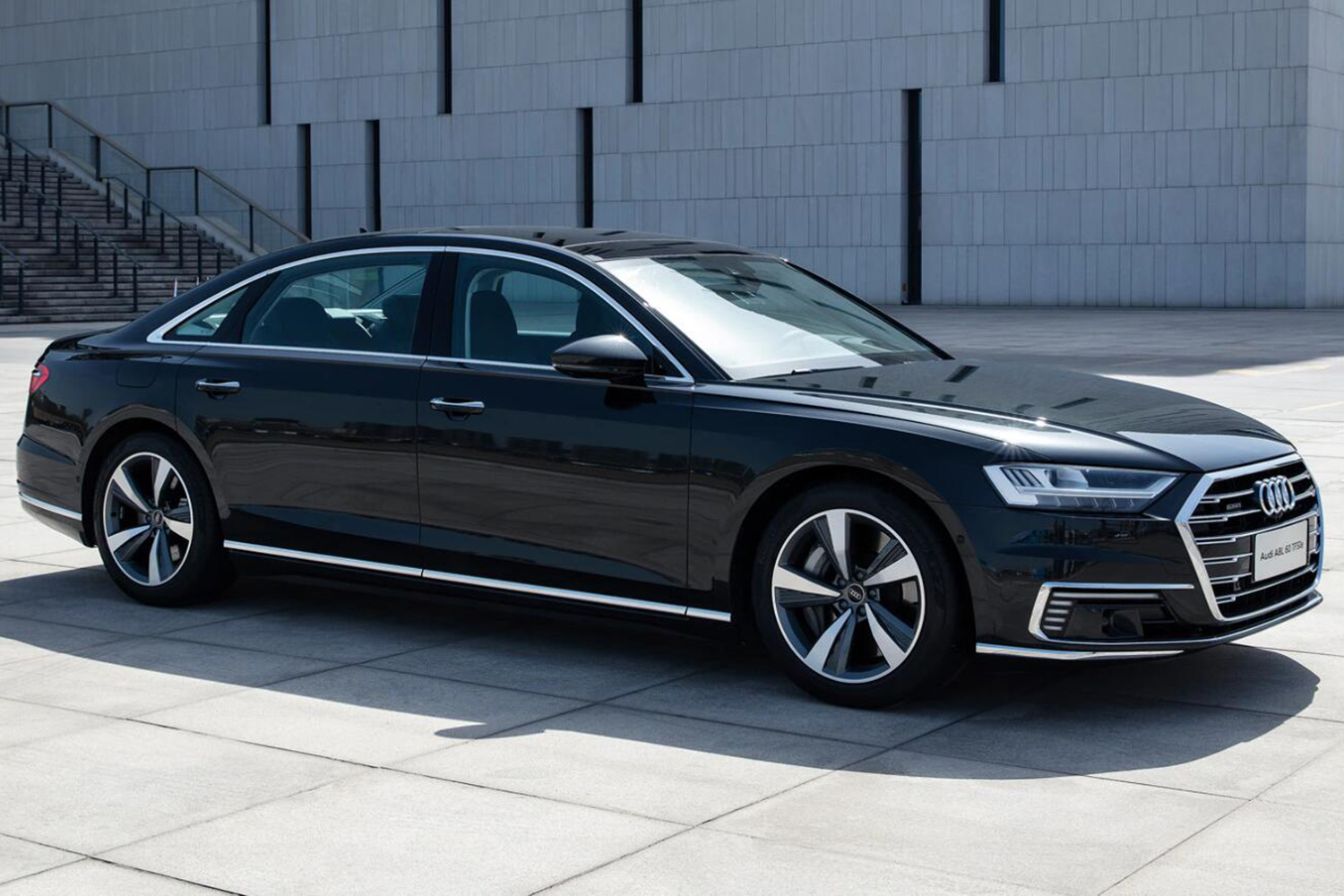
At a glance
- The A8 is Audi’s full-size luxury sedan, with A8L and Horch versions focused on rear-seat space.
- Because the A8 is gasoline-powered, buyers should assess TFSI output, quattro traction, and fuel use rather than battery range.
- Trim choice should follow duty cycle, equipment, passenger space, and local operating costs—not badge hierarchy alone.
- Compare live unit prices using identical condition, options, freight, tax, and Incoterm assumptions.
- Confirm MOQ, steering configuration, destination compliance, and documents before paying.
Why the Audi A8 matters for export markets
The Audi A8 matters in export markets because it gives buyers Audi’s flagship full-size luxury sedan in a segment where comfort, prestige, and long-distance usability matter more than urban maneuverability. It is particularly relevant to chauffeur operators, executive transport fleets, premium hotels, and corporate buyers seeking a formal rear-seat car. The A8L long-wheelbase versions emphasize rear accommodation, while the standard-wheelbase car can be easier to place in tighter markets. Its understated design also suits buyers who want executive presence without the visual assertiveness of some alternatives, a balance useful in daily operations.
Demand for the A8 is not uniform across countries. It is strongest where large luxury sedans remain practical, where buyers value all-wheel-drive traction, and where imported premium vehicles are accepted without excessive registration penalties. China is relevant as an export source because domestic production gives overseas buyers access to trim labels and factory configurations that some home markets do not carry. However, Chinese-market specification is not automatically identical to European, Middle Eastern, or North American specification, so equipment and homologation must be checked vehicle by vehicle before any purchase commitment is made.
For an overseas buyer, the A8’s value proposition is a balance of prestige, cabin space, technology, and the practicality of quattro traction. It can deliver a more restrained ownership experience than more conspicuous luxury flagships, which matters for corporate and hotel fleets where discretion matters. The trade-off is that a full-size sedan can be expensive to insure, fuel, park, and maintain, and changing local emissions rules can narrow its usable life. Buyers should therefore assess the vehicle against local taxes, road rules, and fleet policy rather than purchase it only on appearance.
- Prioritize chauffeur rear space.
- Check luxury taxes and parking.
- Verify destination-market specification.
Model range, trims and powertrain variants: how the lineup is structured and how to choose
The range is organized around body length, output designation, and equipment tier. A8L denotes the extended-wheelbase sedan, and Horch-branded A8L cars represent the most chauffeur-oriented expression of the model. Listing names in the market include 45, 50, 55, and 60 TFSI versions, generally moving from six-cylinder-oriented to V8-oriented variants on the generations represented here. The exact engine and output must be confirmed because model-year and market updates can change specifications. Treat the trim name as a starting point, not a substitute for the build sheet, VIN check, and photographed equipment.
Within the A8L range, Comfort, Luxury, Premium Selection, Exclusive, Flagship, Launch Premium, Launch Elite, Collector’s Edition, and Horch Founder Edition names appear in export listings. They are market-facing packages rather than a single global hierarchy: some identify comfort and convenience, others luxury presentation, special-edition character, or top-level positioning. Compare the same named trim across model years, because a badge can look identical while standard equipment and electronics differ materially. For fleet buyers, request a written matrix covering upholstery, infotainment, driver assistance, wheels, paint, and optional systems before selecting a purchase order.
The A8 is a gasoline-powered luxury sedan rather than an electric model, so range and charging specifications do not form part of the buying case. TFSI identifies the turbocharged gasoline family, while quattro in the listing names indicates the all-wheel-drive system normally paired with an automatic transmission. Buyers choosing among 45, 50, 55, and 60 TFSI cars should balance performance and fuel consumption against local fuel taxes, tolling, and expected resale. A less powerful version may suit high-mileage chauffeur use; a higher-output model may suit executive buyers who prioritize effortless acceleration.
- Confirm VIN-matched output.
- Compare equipment, not badge.
- Match TFSI tier to duty.
New vs used Audi A8: how export inventory is structured and how buyers choose
Export inventory should be read by vehicle condition and provenance, not by a generic new-versus-used label. A new unit may be a current-production Chinese-market car, an unregistered parallel import, or a demonstrator presented under a seller’s own classification. A used A8 may have a Chinese registration history, have arrived from another export market, or be described as a low-mileage unit. The VIN, manufacture date, registration record, odometer reading, warranty status, and title documents are therefore more informative than the category label alone. Ask the seller to reconcile every discrepancy in writing.
Choosing a new A8 reduces uncertainty around wear, deferred maintenance, and the early-life reliability of high-mileage luxury components. It can also make the buyer’s model-year and equipment comparison cleaner, especially for a mixed fleet. The trade-off is depreciation and a higher acquisition commitment, while imported-market specifications may not match local preferences for infotainment, assistance systems, emissions equipment, or regional warranty support. Confirm that the seller’s warranty is international and transferable, rather than assuming a Chinese domestic warranty will cover the importing dealer or the final operator in the destination market.
Used A8 inventory can offer better value where the buyer accepts uncertainty and has the ability to inspect it properly. The decision should center on documented service history, accident repair, chassis and suspension condition, cooling system, electrical electronics, leather and trim wear, tire age, and remaining manufacturer support. Older cars may also carry software, parts, or calibration constraints in the destination country. A pre-purchase inspection should be a condition of purchase, with the VIN, odometer, and visible condition recorded in the sales contract so the buyer has a dated evidence trail.
- Reconcile category, VIN, and odometer.
- Inspect used A8 independently.
- Confirm destination warranty cover.
How export pricing works: the factors behind a live listing price, and how to read one
Audi A8 export pricing is not a fixed wholesale number. It moves with model year, body length, TFSI output version, trim, paint, wheels, factory options, condition, mileage, registration history, and the seller’s commercial terms. Currency movements also matter because the vehicle cost is calculated in China and may be settled in another currency. For fleet buyers, two vehicles with nearly identical badges can have materially different landed values if their equipment and provenance differ, so option-level comparison is essential for procurement teams managing several vehicles, mixed fleets, or complex briefs.
A live listing should be read as the starting point for a specific vehicle, not as a guaranteed landed cost. Confirm whether the displayed amount includes export documentation, inland handling, port charges, freight, marine insurance, duties, taxes, registration, and destination delivery. These may sit outside the vehicle price depending on the Incoterm and the exporter’s scope. Ask for a written quotation with exclusions identified; otherwise two apparently comparable quotes can conceal very different acquisition costs and delivery obligations. This is especially important when comparing an A8L against a shorter car or a high-option special edition.
To compare offers, normalize each vehicle in the same sequence: establish the exact model year and VIN, verify the trim and factory options, classify condition and registration history, then add the same logistics and tax assumptions. Review the live A8 inventory each time rather than relying on a saved quotation or an old market average. The binding figures for the car actually available are shown on its current ChinaCarDirect listing, but a written seller quotation remains necessary before funds are committed. This approach also makes reseller margin and fleet discounts visible.
- Normalize quotes to one landed scope.
- Separate vehicle and logistics costs.
- Recheck the live listing.
MOQ, ordering and payment: single units vs consolidating a container
Minimum order quantity is set by the individual seller and can differ between a single-car exporter and a vehicle wholesaler. An overseas buyer should therefore check the MOQ field on each live unit rather than infer a marketplace-wide rule. Many A8 transactions are naturally one-vehicle orders, but a fleet purchase may qualify for consolidation or volume terms. MOQ should be separated from physical container capacity: a buyer can often source several vehicles from different owners and consolidate them with a freight forwarder where permitted, subject to agreed allocation terms in writing.
Container consolidation can make small-volume purchasing commercially practical, especially for dealers serving the same destination market. It requires a clear agreement on vehicle condition, documentation owner, consignee, payment allocation, inspection sequence, and responsibility if one vehicle is rejected or damaged. The same VIN and buyer details must be reflected consistently across the commercial invoice, packing list, and export declaration. Buyers should appoint a customs broker or freight forwarder early enough to confirm whether mixed cargo, prior registration, or used-vehicle declarations create restrictions under the destination country’s import regime before contracting.
A disciplined order normally progresses from vehicle selection and seller verification to a written pro forma invoice, deposit, stock confirmation, inspection, balance payment, release of original documents, and freight booking. The payment beneficiary should match the named seller or a disclosed, verified intermediary, and every amendment should be reissued rather than handled through informal messages. Payment milestones should be tied to objective events, and the buyer should understand cancellation, storage, demurrage, and document-delay terms before paying. For a single A8, these protections are as important as the discount negotiated in writing.
- Check each seller’s MOQ.
- Define consolidation ownership in writing.
- Tie payments to verified milestones.
Shipping, homologation and market compliance caveats: LHD/RHD and import rules by country
Most Chinese-market A8s are left-hand-drive, while right-hand-drive cars must be sourced as market-specific examples or through specialist import channels. The steering configuration should be read from the VIN and listing, not inferred from Chinese origin. If the destination requires right-hand drive, do not assume a used unit can be converted; components, electronics, immobilizers, safety systems, and homologation can make conversion uneconomic or non-compliant. State the required configuration before requesting quotations so the seller checks the correct vehicle rather than a superficially similar one, with matching factory equipment and documents confirmed.
Import permission is a country-by-country decision. Before ordering, confirm whether the model year is eligible for passenger-car import, whether used vehicles face an age restriction, and which emissions, safety, roadworthiness, VIN, and type-approval evidence is required. Duties, VAT or GST, registration taxes, luxury taxes, port fees, and broker charges can materially change the landed result. A vehicle that is legal and well equipped in China may still require local certification or modification before first registration, so obtain a written local compliance view before releasing final payment under the applicable import regime.
Freight method should match the vehicle and urgency. Enclosed container carriage offers greater protection from handling and weather but can limit how many vehicles fit; roll-on/roll-off handling is common for finished vehicles and allows efficient loading, with securing requirements determined by the carrier. Compare freight quotations using the same port pair, vehicle dimensions, Incoterm, insurance, and delivery scope. Book after VIN and paperwork are confirmed, inspect loading and lashing where practical, photograph the vehicle at handover, and define the claim process for damage found after departure under the agreed policy.
- Specify LHD or RHD first.
- Obtain local import advice early.
- Compare identical Incoterms.
Who should buy the A8 — and who should pick a different vehicle
The A8 is a strong fit for buyers who need a formal, comfortable full-size sedan for executive transport, chauffeur service, premium hospitality, or a mixed fleet that benefits from quattro traction. The long-wheelbase A8L and Horch-badged versions make sense when rear-seat space and presence are primary, while other A8 configurations may offer a more balanced footprint for markets with narrower roads. Its understated cabin and exterior can support corporate use where overt opulence is undesirable. The vehicle rewards buyers who value a calm, premium driving character and long-distance comfort consistently.
It is a weaker choice for buyers focused on low operating cost, emissions compliance, easy parking, or carrying commercial payloads. The size, fuel use, insurance category, and maintenance requirements can be disproportionate in markets with high taxation or congested cities. It also makes little sense for an EV-mandate fleet, where a battery-electric executive sedan would avoid local tailpipe restrictions, or for a buyer wanting a smaller executive car with lower acquisition and service exposure. Used examples add age-related maintenance risk, so ownership cost must be assessed over the intended service life.
The most rational A8 purchase matches the body, output, and trim to a defined duty cycle. A hotel group running frequent airport transfers may prioritize rear comfort, luggage capacity, uptime, and service support over acceleration. A company car program may prioritize residual value, fuel efficiency, driver assistance, and standardized options across a mixed fleet. Before approval, run a total-cost assessment covering purchase, taxes, fuel, insurance, maintenance, depreciation, and resale, then ask the seller for a VIN-specific condition and options report as the basis for a documented and internally approved procurement decision.
- Best for formal executive transport.
- Weak for low-cost urban fleets.
- Assess full ownership cost.
Main rivals and how the A8 compares
Against the closest full-size luxury sedans, the A8 competes on a combination of restrained design, rear-seat usability, quattro traction, and a broad mix of output and equipment tiers. It is not automatically the cheapest, most fuel-efficient, or most opulent choice. Buyers should compare the exact rival configuration rather than brand averages, because wheelbase, engine, options, and tax treatment can change the result. Local service access, parts supply, and residual-value support often matter as much as the brochure when vehicles will operate across several years in the destination market and region.
The Mercedes-Benz S-Class is the closest benchmark for buyers prioritizing luxury-brand recognition, comfort, and a broad international dealer proposition. It may suit chauffeurs or corporate guests who value a more prominent identity, while A8 buyers may prefer Audi’s understated presentation and quattro emphasis. The BMW 7 Series is an alternative for drivers who value steering response, roadholding, and a sportier luxury character. For either rival, compare rear headroom, ride specification, boot usability, running costs, and local parts support rather than assuming the newest badge is the best business choice.
The Lexus LS is a credible alternative for buyers who value a calm powertrain character, cabin refinement, and a reputation for durability, particularly where Lexus support is stronger than Audi support. Its model and trim availability can be more limited in some export destinations, so a complete vehicle, service plan, and parts pathway must be verified before commitment. The practical choice among A8, S-Class, 7 Series, and LS is rarely the fastest car; it is the one whose specification, compliance, aftersales network, residual outlook, and operating cost suit the fleet’s actual routes.
- Compare exact configurations.
- Include aftersales and residuals.
- Select for routes and tax.
Live Audi A8 export inventory
View all listings →Real units currently on ChinaCarDirect with per-unit asking prices and MOQ. Availability updates live from the catalogue.
How to buy a Audi A8 from China
-
1
Define the operating case
Record the destination market, LHD or RHD requirement, passenger and luggage priorities, preferred TFSI tier, and body length before comparing prices.
-
2
Shortlist live A8 units
Read the current per-unit price, MOQ, condition, trim, equipment, and photographs on each live listing, then compare like-for-like vehicles rather than matching badges alone.
-
3
Request a VIN-specific dossier
Ask for the VIN, build sheet, factory options, title and registration history, odometer evidence, warranty terms, and detailed photographs before reserving a vehicle.
-
4
Normalize the written quotation
Separate the vehicle price from documentation, inland handling, freight, insurance, duties, taxes, registration, and destination delivery, and state the applicable Incoterm.
-
5
Verify the seller and payment terms
Confirm the contracting seller and payment beneficiary, then use a pro forma invoice with milestones tied to stock verification, inspection, document release, and freight readiness.
-
6
Clear compliance and inspect
Use a destination-based customs broker or compliance adviser to check import eligibility and homologation. Make the vehicle condition report and pre-shipment inspection part of the sales agreement.
-
7
Release the balance and track shipment
Release final payment only after the vehicle and original documents are confirmed. Record loading condition, secure the transport booking, and track document and vehicle handover separately.
A8 vs rivals
| Mercedes-Benz S-Class | The closest luxury-sedan benchmark, with strong brand recognition and broad luxury positioning. Choose it where presence and international brand familiarity matter most; the A8 may appeal to buyers seeking a more discreet cabin and quattro emphasis. |
|---|---|
| BMW 7 Series | A credible alternative for buyers who prioritize driver engagement and a sportier luxury character. Compare the exact rear-seat, ride, options, and ownership packages because badge-level conclusions can be misleading. |
| Lexus LS | Suits buyers seeking a calm luxury character and established durability reputation, but destination-specific vehicle availability and service coverage must be checked. It can be a practical alternative where local Lexus support is stronger. |
Frequently asked questions
How is Audi A8 export pricing determined?
Export pricing combines the vehicle’s year, trim, output version, options, condition, mileage, and provenance with currency, freight, insurance, duties, taxes, and the chosen Incoterm. Compare like-for-like units and ask the seller to state what the quotation includes. The current per-unit price and availability are shown on the live ChinaCarDirect A8 listings, while the written quotation governs the individual transaction.
What engine and range does the Audi A8 have?
The A8 is a turbocharged gasoline sedan with TFSI output tiers and quattro all-wheel drive; it is not a battery-electric model, so battery range and charging figures do not apply. Engine displacement and output depend on the version and model year. Confirm the VIN, engine, transmission, drivetrain, fuel type, and dimensions in the live listing before ordering.
Should I buy a new or used Audi A8 for export?
A new A8 generally minimizes uncertainty about wear and deferred maintenance, but imported specifications and warranty transfer need checking. A used A8 can reduce acquisition exposure, but buyers should examine service history, accident repair, odometer evidence, electronics, tires, and remaining parts support. Treat condition and documentation—not the new or used label—as the decisive factors.
How does MOQ work for an Audi A8 order?
MOQ is set on each seller’s listing and may be negotiated for a fleet order, so check the live unit rather than assuming a marketplace-wide quantity. One-vehicle purchasing and multi-vehicle consolidation may both be possible. If consolidating, define ownership, payment allocation, documentation, inspection, and shipping responsibility for every car in writing.
What determines shipping time and cost for an Audi A8 from China?
Shipping time and cost depend on origin and destination ports, carrier schedule, vessel space, vehicle dimensions, handling method, insurance, customs clearance, and delivery terms. Enclosed-container and roll-on/roll-off options have different protection and loading characteristics. Quote freight against the same route and Incoterm, and confirm whether charges are per vehicle or consolidated.
How are Audi A8 spare parts handled?
Parts support should be checked by VIN, model year, and market because an A8 part number or electronic component may not be interchangeable across generations or destinations. Ask the seller or service partner about availability, lead time, shipping, returns, and local installation support. Keep the vehicle’s build record and identify likely service parts before shipment to reduce delays.
Can I buy a right-hand-drive Audi A8 from China?
Right-hand-drive A8 availability is market-specific and should not be inferred from a Chinese-origin listing. State LHD or RHD before requesting a quotation and have the seller confirm the VIN and factory configuration. Do not assume a conversion is legal, economical, or complete.
How do I order an Audi A8 from China?
Start with the live A8 listings, shortlist suitable units, and request a VIN-specific dossier and written quotation. Verify the seller and beneficiary, agree inspection, payment milestones, export documents, Incoterm, and cancellation terms, then complete destination compliance checks. Release the balance only after the vehicle and paperwork are confirmed, and track the released documents and freight handover.
Ready to source the Audi A8?
Send ChinaCarDirect your destination, steering configuration, body and trim preference, and fleet requirement to request a VIN-specific A8 export quotation.
Request a quote