
Audi E5 Sportback Export Buying Guide
Buy an Audi E5 Sportback from China with clear guidance on trims, battery verification, export pricing, MOQ, shipping, homologation, and market fit.
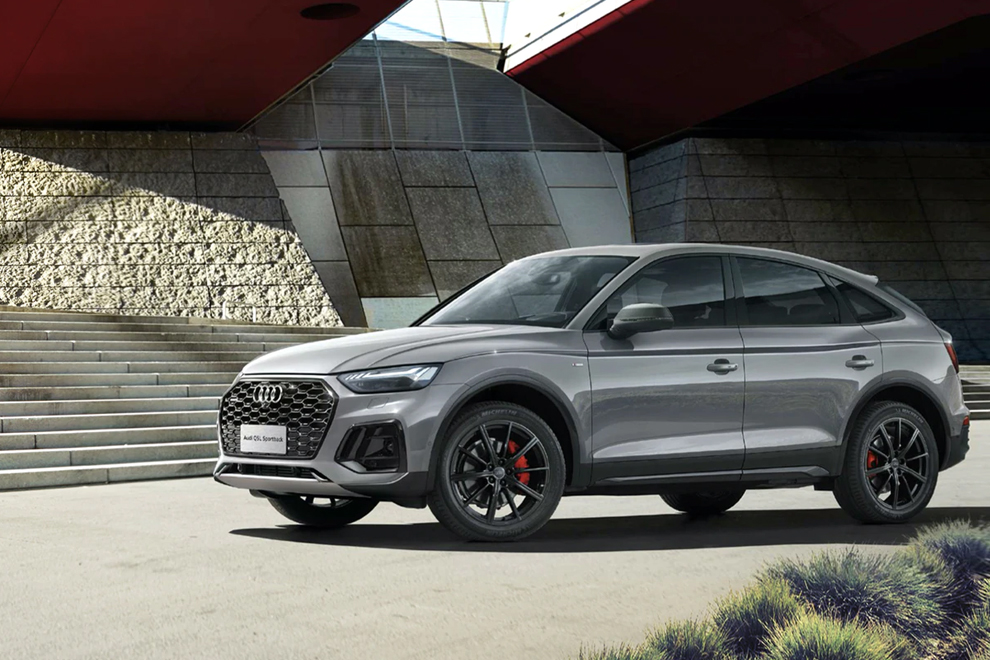
At a glance
- The E5 Sportback positions Audi in the premium electric fastback segment with a more practical hatch-style rear.
- The central mechanical choice is 220 kW 2WD for operating simplicity or 386 kW 4WD for output and traction.
- Battery capacity, usable energy, range test cycle, charging limits, and dimensions must be verified per VIN.
- New vehicles reduce condition uncertainty; used vehicles require documented history and independent inspection.
- Export cost must be built from the live unit price, Incoterm, freight, exchange rates, duty, tax, and compliance work.
Why the Audi E5 Sportback matters for export markets
The Audi E5 Sportback occupies a distinctive export position: a premium battery-electric Sportback combining the low, streamlined profile of a fastback with a practical hatchback-style rear. For overseas dealers, it is an executive EV alternative to a conventional luxury sedan, with recognizable Audi design and a choice of rear-wheel-drive or four-wheel-drive versions. Its appeal is strongest where buyers want premium-brand identity, electric running costs, and a versatile body without moving to a larger SUV. The result is a car that can broaden a premium fleet without defaulting to the SUV format.
Demand for this model should be understood as segment-specific rather than universal. It makes sense in markets with meaningful premium-EV demand, reliable charging access, and enough Audi recognition to support resale. Fleet and company-car buyers may value its restrained design, rear-seat usability, and electric drivetrain, while dealer groups can use it to reach customers who want an executive liftback rather than another compact electric crossover. In less mature EV markets, however, service coverage and charging compatibility may matter more than the badge or body shape for a first importer program.
The export case therefore rests on fit rather than volume assumptions. Before ordering, a distributor should ask whether local Audi technicians can service the model, whether spare modules and charging parts can be obtained, and whether the vehicle's software and owner manual will be usable after export. The [Audi brand hub](https://chinacardirect.com/car-brands/audi) is a useful starting point for the wider marque, but a successful E5 program still depends on local homologation, transparent unit inspection, and a credible after-sales plan. Buying the model for the wrong market can leave an attractive car immobilized.
- Premium electric Sportback positioning
- 2WD or 4WD choices
- Local Audi support is essential
Model range, trims and powertrain variants: how the lineup is structured and how to choose
The Chinese-market lineup combines technical designations with equipment-focused trims. Listing names include a Model Base Version, a 220 kW 2WD Version, a 386 kW 4WD version, Pioneer, Flagship Quattro, and Designated Performance Quattro. Those labels help define the broad hierarchy, but they should not be translated into another market's trim logic without the vehicle's build sheet. For export purchasing, request the VIN-linked specification, standard equipment list, and option codes; visually similar cars can differ in motor output, charging equipment, wheels, infotainment, and driver-assistance hardware before agreeing on a premium or discount.
The clearest mechanical split is between the 220 kW rear-wheel-drive version and the 386 kW four-wheel-drive version. The former is the simpler fleet and efficiency proposition: fewer driven axles, no need to pay for a flagship drivetrain, and potentially more consistent behavior after curb and lane changes. The 386 kW car is the stronger choice for buyers prioritizing acceleration, wet-road confidence, and a more premium Quattro-led image. Do not infer usable range from output alone; a larger battery, heavier wheels, roof equipment, and a high-output drivetrain can change consumption materially.
Range should drive final selection, yet it cannot be generalized safely from the trim name alone. Check the live listing and build documentation for battery capacity, net usable energy, the test cycle behind the displayed range, and whether any figure is China-specific. For fleet use, compare energy consumption and charging assumptions under local conditions, not just headline range. Also verify connector format, onboard charger capability, DC peak rate, and charge time. These checks matter more than cosmetic differences between equipment trims or assumptions made in another market by local dealers.
- VIN-linked trim comparison
- 2WD efficiency versus 4WD output
- Verify battery and charging data
New vs used Audi E5 Sportback: how export inventory is structured and how buyers choose
New and used E5 Sportback inventory serve different commercial purposes, and the available mix changes over time. A new vehicle is easier to describe because its history should be short and its condition standardized, although delivery timing, factory specification, and warranty transfer still need confirmation. A used vehicle can be attractive when the buyer knows what is being purchased, but its value depends on mileage, prior ownership, accident repair, battery condition, and the completeness of maintenance records. Neither category should be treated as automatically cheaper or automatically easier to export.
For a used car, request the VIN, registration documents, service history, odometer reading, and photographs of every exterior panel, wheel, and interior surface. The inspection should cover accident evidence, panel alignment, tire age, brake condition, suspension, underbody exposure, and warning lights. Ask for a battery state-of-health report and evidence that the high-voltage system, charging ports, and onboard electronics operate correctly. A listing labelled used is only a starting point; an independent inspection is the best control against an unseen repair, warranty restriction, degraded battery, or missing service record before shipment.
Commercial buyers should choose the route that matches their sales visibility. New stock suits a distributor preparing launch vehicles or a dealer needing predictable specification and easier buyer assurance; it also carries exposure to factory allocation and model-year changeovers. A known used unit can suit a demonstrator, replacement vehicle, or buyer who values a particular configuration and accepts more condition risk. Compare total ownership cost rather than asking only which category is cheaper, and state the intended use in the [RFQ](https://chinacardirect.com/contact) so the seller can provide relevant documents; confirm current availability in the [live E5 Sportback listings](https://chinacardirect.com/products?q=E5%20Sportback&brands%5B%5D=14).
- New-car specification checks
- Used-car history and inspection
- State the intended use
How export pricing works: the factors behind a live listing price, and how to read one
There is no defensible fixed export price for the E5 Sportback because the same model can be quoted under materially different conditions. The vehicle's model year, exact trim, motor version, battery or range specification, mileage, condition, and documented history affect its starting point. Export costs then move with the renminbi-to-buyer-currency exchange rate, Chinese inland transport, port handling, freight, marine insurance, and selected Incoterm. Local duty, tax, registration, compliance work, and dealer margin belong in a destination-cost calculation rather than being hidden inside an unexplained vehicle figure for comparison by buyers.
A live listing is a starting quotation, not the landed cost of doing business. Read trim and condition first, then establish what the displayed price includes: documentation, clearance, inland haulage, terminal charges, freight, insurance, and destination fees may sit under Incoterms. Check whether the seller can provide the VIN, battery specification, export documents, and condition report before treating the price as firm. Because exchange rates, freight, and inventory can change, use the [live E5 Sportback listings](https://chinacardirect.com/products?q=E5%20Sportback&brands%5B%5D=14) for the per-unit figure, then request a quote tied to your destination and vehicle.
The most useful comparison is a written all-in worksheet using the same assumptions for every candidate. Start with the seller's vehicle price, then add or exclude inland transport, export paperwork, origin-terminal charges, freight, insurance, destination handling, duty, VAT or GST, registration, charging adaptation, and dealer margin. State whether the quote is FOB, CIF, or another term, and who bears risk at each transfer point. Comparing a lower vehicle price with a higher landed quote can reverse the apparent ranking, while comparing two quotes with different scope is worse than comparing nothing.
- Compare identical Incoterms
- Live price starts the calculation
- Use VIN-linked quotations
MOQ, ordering and payment: single units vs consolidating a container
Minimum order quantity is a commercial term attached to a seller's offer, not a fixed characteristic of the E5 Sportback. Wholesale buyers should not infer a universal MOQ from the model or assume that every distributor requires a full container. Open the [live E5 Sportback listings](https://chinacardirect.com/products?q=E5%20Sportback&brands%5B%5D=14), read the MOQ, and ask the seller to confirm whether one unit can be purchased for a pilot order. The inquiry should identify the destination, trim, condition, currency, and Incoterm, because those details determine whether the seller can accept a single-unit transaction or needs a consolidated shipment plan.
Single-unit purchasing suits dealers testing demand, importers validating service capability, or company-car buyers filling a small allocation. The trade-off is straightforward: one vehicle avoids tying up capital in slow-moving stock, but receives none of the freight consolidation available to a multi-vehicle order. A container shipment can reduce unit transport cost and simplify allocation, yet it spreads that saving across several VINs with different trims, finishes, and expectations. It also concentrates risk: one damaged, late, or mismatched vehicle can disrupt a launch schedule while the rest of the cargo continues onward.
Payment terms should be written around milestones rather than implied by a listing. The purchase contract should identify the vehicle or VIN allocation, currency, deposit, balance trigger, Incoterm, document set, inspection right, title transfer, and remedy if the vehicle fails the agreed inspection. Confirm what happens if the unit is unavailable, the exchange rate moves before settlement, or a customs hold prevents loading. For volume buying, request a pro forma invoice and freight quotation separately from the vehicle price so costs can be audited before the balance is fully released.
- Confirm listing-specific MOQ
- Request one named vehicle
- Consolidation adds concentration risk
Shipping, homologation and market compliance caveats: LHD/RHD and import rules by country
Chinese type approval does not automatically make an E5 Sportback road-ready in another country. The importer must confirm local vehicle, safety, battery, electromagnetic-compatibility, software-update, cybersecurity, and language requirements, plus VIN, registration, road-tax, and insurance procedures. Used-vehicle imports may face additional age or condition restrictions, while local incentives can depend on the exact homologated specification. Treat the destination's relevant authority, not the seller's assurance, as the source of truth, and budget for testing, documentation, software updates, or modifications before the vehicle can be offered to customers or placed in fleet service.
Steering configuration is another early filter. Chinese-market vehicles are commonly left-hand drive, but each listing must be confirmed rather than assumed; this matters especially for the United Kingdom, Australia, New Zealand, Japan, and other right-hand-drive destinations. A steering conversion does not automatically cure lighting, parking-sensor, emissions-equipment, or type-approval issues, and it can affect warranty and resale. If right-hand-drive and locally certified cars are required, specify that before payment. In regulated markets, use an importer experienced with electric passenger vehicles rather than assuming a private-sale route is available for direct import.
Battery transport adds documentation and handling requirements to every shipment. The exporter should provide applicable battery safety documentation, test summary, dangerous-goods declaration, and packing information required for the chosen carrier, while the buyer confirms how the vehicle and battery are declared for sea, road, or rail movement. Shipping time and cost depend on origin and destination ports, sailing availability, container allocation, vehicle dimensions, battery handling, insurance, customs clearance, and inland delivery. At handover, photograph the vehicle, charger, keys, mileage, body condition, and VIN, and preserve records until release from custody.
- Obtain destination approval first
- Confirm LHD or RHD
- Check battery transport records
Who should buy the E5 Sportback — and who should pick a different vehicle
The E5 Sportback fits dealers and fleet buyers that want a premium electric fastback with a more practical hatch shape than a conventional saloon. It is relevant where company-car policies favor electrified executive vehicles, charging is dependable at home or depot, and buyers value a restrained Audi design without needing SUV ride height. The rear-wheel-drive version may suit fleets prioritizing operating simplicity, while the four-wheel-drive version better serves buyers focused on performance and all-weather traction. Local Audi service capability should be considered part of the vehicle's value, not an afterthought.
It is a weaker choice for buyers whose priority is the lowest purchase cost, the broadest charging ecosystem, or the simplest import. A buyer needing rear-seat space, larger touring range, or a higher cargo opening may prefer another body style, but dimensions and luggage figures should be checked rather than assumed. Fleet managers with no local Audi technician or parts pathway should not proceed until support, diagnostic access, and emergency repairs are documented. In those circumstances, a mainstream electric model or a locally serviced brand can be the safer decision.
The decision should rest on total cost of ownership and resale support, not styling alone. Build a cash-flow model covering acquisition and landed charges, insurance, charging, energy, maintenance, software support, residual value, and duplicate-trim inventory. For an importer, a pilot can reveal whether customers understand the E5 nameplate, which specifications convert best, and whether service demand matches assumptions. For a fleet, test vehicles through a duty cycle before committing at scale. Tax and incentive rules can change the outcome, so obtain destination advice rather than relying on a sales brochure.
- Premium EV fleet fit
- 2WD simplicity; 4WD traction
- Pilot before scaling
Main rivals and how the E5 Sportback compares
The Tesla Model 3 is a direct practical alternative for buyers focused on electric efficiency, familiar charging, and a simpler fleet proposition. It competes for the same premium-electric fastback consideration and may be easier for some organizations to value because the model is established in many export markets. The E5 counters with a more traditional Audi luxury presentation, an available four-wheel-drive high-output version, and a distinctive Sportback rear. The deciding issue is local support: compare homologated range, insurance, service, charging access, and residual-value assumptions rather than treating the brands as interchangeable.
The BMW i4 is the closest rival because it presents a four-door electric fastback format with a premium badge. Its appeal may be stronger in destinations with BMW dealer coverage, while the E5's differentiator is its Audi cabin and exterior design plus 2WD and 4WD powertrain choices. That does not make the decision automatic: compare whether the i4 variant is locally homologated, its charging and range documentation, service arrangements, and parts access against the same criteria for an E5 vehicle. Dealer buyers should compare quotation scope, not headline trim images.
The Mercedes-Benz EQE is an alternative for buyers who prioritize luxury-car presence and a comfort-led sedan format. It may suit a market whose customers prefer a traditional model, whereas the E5 Sportback offers a sporting fastback silhouette and the option of a high-output 4WD derivative. Model-level checks matter more than badges: confirm dimensions, luggage practicality, certification, charging hardware, software support, and parts supply for the variant. If no imported E5 can be supported properly, the best rival may be the premium EV that a local dealer network can maintain confidently.
- Model 3 EV familiarity
- BMW i4 fastback alternative
- EQE luxury-sedan alternative
Live Audi E5 Sportback export inventory
View all listings →Real units currently on ChinaCarDirect with per-unit asking prices and MOQ. Availability updates live from the catalogue.
Used Audi E5 Sportback 2026 Designated Performance Quattro Model
How to buy a Audi E5 Sportback from China
-
1
Set the operating brief
Name the destination, import route, LHD or RHD requirement, charging standard, intended volume, and whether the vehicle is for resale, demonstration, or fleet use.
-
2
Shortlist a VIN-level configuration
Use the live inventory to compare output, trim, condition, and visible options. Treat each unit listing as the starting point and request the build sheet and range test cycle.
-
3
Request a pre-purchase file
Ask for the VIN, battery capacity, usable energy, rated range, charging limits, equipment list, ownership history, and high-voltage condition report.
-
4
Inspect before commitment
For a used vehicle, use an independent inspection and verify service records, accident history, tires, brakes, underbody condition, and battery state of health.
-
5
Build the landed quote
Ask for the vehicle price, export documents, inland haulage, origin charges, freight, insurance, destination charges, duty, tax, Incoterm, and listing-specific MOQ.
-
6
Clear destination compliance
Confirm local type approval, import eligibility, charging connector and language, software support, and whether the unit's steering configuration is acceptable.
-
7
Contract, pay, and ship
Tie the deposit and balance to the named vehicle, inspection result, document set, and shipping terms; retain handover photographs and condition records through customs clearance.
E5 Sportback vs rivals
| Tesla Model 3 | The Model 3 is a close electric-fastback alternative for buyers who value established EV familiarity and fleet simplicity. The E5 differentiates itself through Audi design and a 386 kW four-wheel-drive option, making local service and homologated range the deciding checks. |
|---|---|
| BMW i4 | The i4 is the closest conceptual competitor, matching the premium four-door fastback format. The E5 offers distinctive Audi styling and both 2WD and 4WD choices, while local BMW coverage may be the stronger reason to choose the i4. |
| Mercedes-Benz EQE | The EQE is a credible luxury-sedan alternative for buyers prioritizing traditional premium presence and comfort. The E5 has a more sporting Sportback profile and a high-output 4WD option, but dimensions, certification, and aftersales support should decide. |
Frequently asked questions
How is the export price for an Audi E5 Sportback determined?
The live price reflects the specific unit's year, trim, output, battery or range version, mileage, condition, and market movement. Freight, insurance, exchange rates, Incoterm, duty, tax, and compliance costs can change the landed total. Check the [live E5 Sportback listings](https://chinacardirect.com/products?q=E5%20Sportback&brands%5B%5D=14) for the current per-unit price, then request a destination-specific written quote.
Which Audi E5 Sportback specs should an overseas buyer verify?
The range includes 220 kW 2WD and 386 kW 4WD versions, with equipment-oriented trims such as Pioneer and Flagship Quattro. Battery capacity, usable energy, claimed range and its test cycle, charging capability, and dimensions should be checked against the VIN-linked live listing rather than inferred from the trim name.
Is a used Audi E5 Sportback suitable for export?
A used unit can be suitable when its VIN, title, service history, mileage, condition, battery state of health, and charging function are documented. It offers more condition and warranty risk than a new vehicle, so independent inspection and clearer repair history should influence the decision.
What is the MOQ for an Audi E5 Sportback?
MOQ is set on each commercial offer and can differ by seller, configuration, and shipment plan. Read the MOQ shown for the relevant live listing and ask the seller to confirm whether a one-unit pilot order is accepted; do not assume a universal wholesale MOQ.
What affects shipping time and cost?
Origin and destination ports, sailing and container availability, vehicle collection, freight route, battery handling, marine insurance, customs clearance, inland delivery, and local port charges all affect the result. Weather, congestion, documentation holds, and regulatory inspections can add time, so a shipment window should be confirmed in writing.
Are spare parts available for an imported E5?
Parts should be sourced through the importer's Audi channel or another documented specialist channel, with VIN and build-sheet identification. High-voltage modules, software tools, charging components, and electronic parts may require specialist sourcing or coding, so confirm parts and diagnostic support before ordering.
Is a right-hand-drive Audi E5 Sportback available for export?
Chinese-market vehicles are commonly left-hand drive, and each unit must be checked rather than assumed. A right-hand-drive destination may require a locally compliant car or a conversion and fresh approval; specify steering configuration and certification requirements before payment.
How do I order an Audi E5 Sportback from China?
Start with the [live listings](https://chinacardirect.com/products?q=E5%20Sportback&brands%5B%5D=14), shortlist a VIN or an acceptable configuration, and send the destination, condition, quantity, and Incoterm requirements in an RFQ. Confirm the listing-specific MOQ, landed quote, payment milestones, document set, inspection rights, and shipping plan before releasing the balance.
Ready to source the Audi E5 Sportback?
Send ChinaCarDirect your destination, required trim, condition, and quantity to request a current quote to buy an Audi E5 Sportback from China.
Request a quote