
Audi Q2l E-tron Export Guide for Dealers and Fleets
Buy an Audi Q2l E-tron from China with practical guidance on trims, used vehicles, export pricing, MOQ, shipping, homologation and market fit.
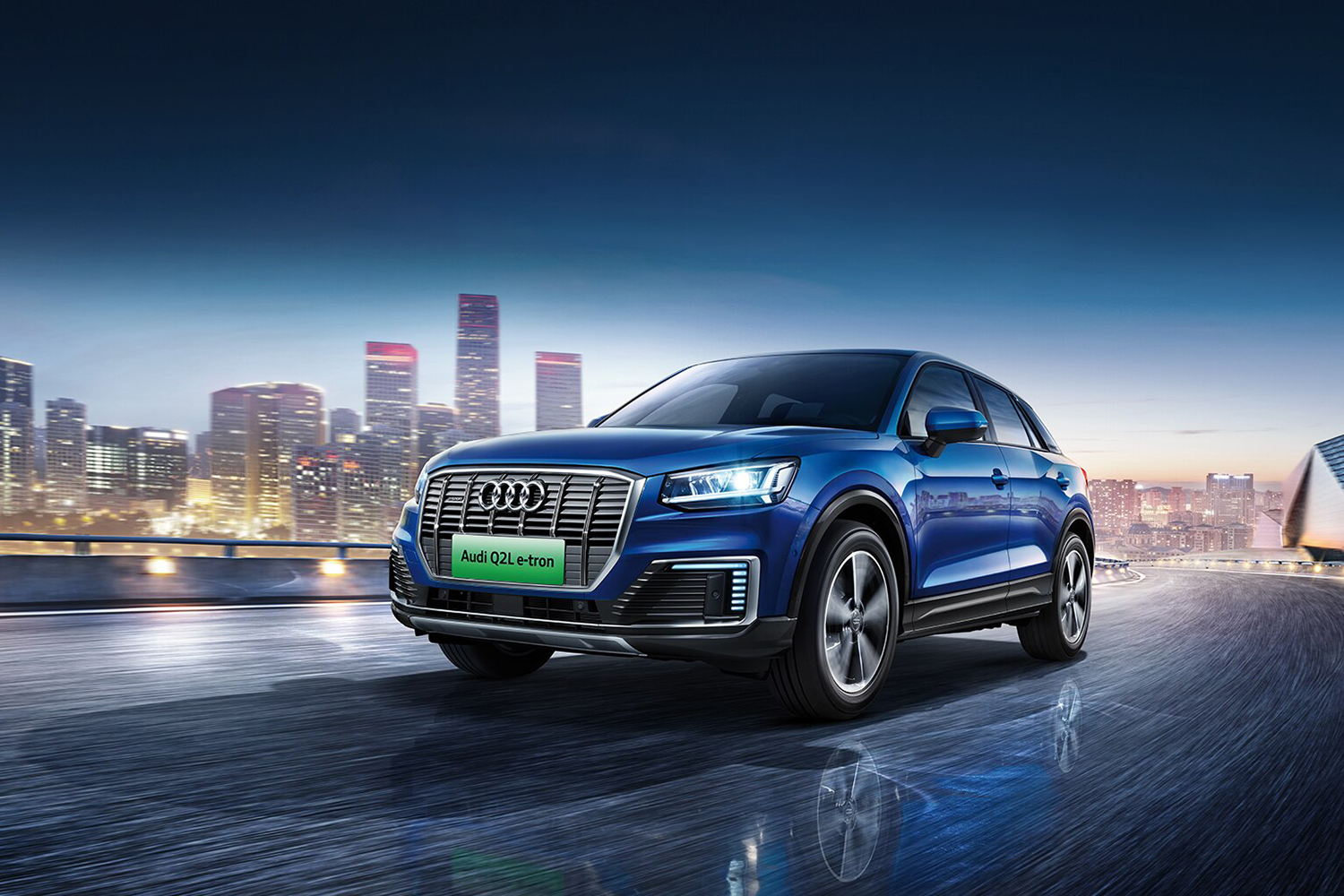
At a glance
- The Audi Q2l E-tron is a compact, China-built BEV crossover with premium-brand appeal for urban and fleet use.
- Translated equipment trims should be checked against VIN-linked specifications because battery, range, charging and equipment can vary.
- New units emphasize documented factory condition, while used units require battery, charging, structural and software checks.
- Export pricing must be assessed on a landed basis, with live per-unit quotes, Incoterms, freight, tax and compliance separated.
- The strongest buyers have local charging, workshop and homologation support; others should compare better-established rivals.
Why the Audi Q2l E-tron matters for export markets
Audi Q2l E-tron is a China-built compact battery-electric crossover that gives overseas buyers a premium badge in a practical EV package. It is intended primarily for urban use rather than as a large seven-seat or off-road model, and its appeal comes from combining familiar Audi styling and cabin identity with the sourcing advantages of China’s new-energy vehicle market. Buyers should not confuse the China-specific Q2l name with the European-badged Audi Q2; documentation, equipment and homologation must be checked against the exact vehicle offered for sale rather than assumed from another model.
Demand for this model is uneven across markets because charging infrastructure, import rules, driving side and after-sales support differ more than the badge alone suggests. The strongest fit is for Chinese-EV importers, independent used-vehicle dealers and urban fleet operators that can support an electric crossover locally. For these buyers, the Q2l can be an attractive way to serve premium-conscious customers without relying only on domestic used imports. For a conventional Audi dealer, however, its value depends on whether spare parts, diagnostics, software and battery service can be handled profitably over the vehicle’s ownership life.
Treating the Q2l as a standalone export product, rather than simply a discounted premium SUV, is essential. The vehicle may offer buyers a more distinctive choice than a mass-market electric crossover, but its total proposition must survive freight, tax, certification, charging adaptation and residual-value uncertainty. A dealer that cannot supply those services should compare the model’s landed business case with alternatives already homologated for the destination. A fleet buyer that can charge vehicles at depots and maintain a defined replacement cycle is better placed to realize its strengths than a buyer entering the segment without local EV support.
- Confirm the exact China-market vehicle.
- Compare landed cost with supported rivals.
- Require local charging and workshop access.
Model range, trims and powertrain variants: how the lineup is structured and how to choose
The Audi Q2l E-tron range is structured around a pure-electric powertrain and several named equipment grades. Export listings may describe trims as Q2L e-tron Pure Electric Smart Enjoyment Model, Smart Enjoyment, Smart Cool Edition, Smart Style and Smart Intelligent. Those translated labels help identify a seller’s stock, but they do not reliably reveal every feature, option or regional specification. Treat the trim name as a starting point rather than a complete build sheet, especially because equipment can change between production batches and when a vehicle is prepared for export. Written confirmation remains essential.
The most important technical variables are the battery version, usable energy, rated range, motor output, charging capability, drivetrain and standard equipment. Because these values are not safely inferred from a translated trim label, ask for the vehicle specification sheet, VIN, production date and photographs of the driver-information display and charging-port label. A seller should also state whether the displayed range is a Chinese test-cycle figure and whether export preparation includes changes to charging equipment or software. Comparing only the headline range can conceal a material difference in real-world suitability for the destination.
Choose the trim by use case rather than by the most elaborate name. An urban commuter or fleet buyer should prioritize verified range, charging compatibility, air conditioning, cabin durability and serviceability. A buyer focused on presentation should inspect wheels, lighting, infotainment, driver-assistance functions and material finish against a written equipment list. For any transaction, confirm whether options are factory-fitted, locally added or absent, and whether removing a market-specific function could affect warranty, software stability or future resale. The right variant is the one whose verified configuration fits the operating country and supports a realistic ownership plan.
- Request VIN-linked battery and charging data.
- Treat translated trims as identifiers, not build sheets.
- Match equipment to the operating mission.
New vs used Audi Q2l E-tron: how export inventory is structured and how buyers choose
Export channels for the Audi Q2l E-tron include both newer vehicles and used examples from earlier ownership cycles. That structure gives importers different ways to serve the market: a new unit may offer cleaner handover documentation and more predictable factory condition, while a used vehicle can make a particular trim accessible or suit a buyer comfortable with established depreciation. The correct comparison is not new versus used in the abstract. Compare the same model year, equipment grade, battery specification, condition and expected local compliance route whenever possible, before reserving substantial capital.
For a new vehicle, verify the production date, VIN, factory status, option code, warranty commencement and delivery condition. Also establish whether the seller is an authorized distributor, a parallel exporter or a used-vehicle dealer, because the party’s status affects the documents and warranty available. A nominally new unit may have traveled as demonstration stock or sat in storage, so ask for tire wear, paint measurement, underbody photographs and a current scan of all onboard diagnostics. Confirm that no later import, salvage or structural-damage history is hidden behind the condition label.
A used Audi Q2l E-tron demands a more technical inspection because low running use of an EV does not prove battery health or collision-repair quality. Request a battery state-of-health report, clarify whether it reflects the high-voltage pack or the vehicle’s displayed range estimate, and test both slow and rapid charging where safe. Inspect tires, brake discs, suspension bushings, underbody corrosion, cabin water ingress, accident repairs and software stability. Independent inspection is most valuable when the unit is positioned as a desirable trim, because cosmetic condition can conceal a costly battery, chassis or thermal-management issue.
How export pricing works: the factors behind a live listing price, and how to read one
An export listing price is the starting point for a vehicle transaction, not the buyer’s complete landed cost. The same Q2l can carry different values according to production year, trim, battery specification, mileage, exterior condition, service history and whether the unit is new or used. Export preparation, inspection, storage and documentation may also be embedded differently by the seller. Compare units on a like-for-like basis and ask for every charge stated in the quotation; do not treat a lower vehicle number as a lower acquisition cost until freight, tax and compliance work are added.
Currency movements also matter because the vehicle may be priced in one currency while freight, insurance, customs charges and the buyer’s local purchase are calculated in another. The Incoterm determines where responsibility passes, but it does not remove every cost: port handling, documentation, inland haulage, taxes, registration and dealer preparation may still sit with one party or another. Request both the vehicle price and the complete delivered or landed estimate, with a clear list of exclusions. This is particularly important when comparing an individual ChinaCarDirect listing with a locally sourced premium EV.
To read a live listing correctly, start with the year, exact trim, battery or range description, condition, mileage, VIN availability and stated minimum order quantity. Then ask whether the displayed amount includes export handling and which Incoterm applies. A useful written quote should reconcile the live unit price, vehicle options, payment milestones, freight assumptions, destination charges and delivery timeline. ChinaCarDirect’s live inventory is the authoritative place for current per-unit prices and availability, while an RFQ is the practical way to obtain a binding quote for the chosen vehicle and route.
- Read current per-unit prices on live listings.
- Request a named Incoterm and exclusions.
- Add destination charges to the vehicle price.
MOQ, ordering and payment: single units vs consolidating a container
Minimum order quantity is a seller and listing term, not a permanent feature of the Q2l model. A live record may allow a single-unit purchase, while another seller or container program may impose a batch quantity. Buyers should read the MOQ shown on each record and confirm it in the pro forma invoice rather than assuming that every marketplace vehicle follows the same rule. For an importer testing demand, one unit can limit exposure and provide useful data on customer acceptance, charging, parts demand and delivered cost before a larger wholesale commitment is made.
Consolidating several compatible units can improve the commercial logic of freight, inspection and inland handling because those fixed tasks are spread across more vehicles. It can also improve importer negotiating leverage and simplify fleet launch planning. The trade-off is inventory risk: a large order locks capital into several similar cars before local demand is proven, and mixed trims, conditions or documentation standards complicate inspection and resale. Evaluate savings on a fully landed, per-vehicle basis, then include warehousing, insurance, unsold-stock carrying cost and possible model-year change in the comparison before final approval.
The ordering sequence should be controlled by a written sales contract and a VIN-linked vehicle record. After selecting a live listing, request the specification sheet, vehicle photos, document status, payment schedule and an itemized quotation. A typical workflow then reserves the unit or batch, records a deposit, passes payment, completes an independent pre-shipment inspection, and balances against the handover documents. The exact sequence should follow the seller’s terms and the buyer’s payment protection arrangements; never rely on a chat message alone when the vehicle identity, ownership and export eligibility are material.
- Confirm listing-specific MOQ in the invoice.
- Pilot demand with a single-unit order.
- Consolidate only compatible vehicles and documents.
Shipping, homologation and market compliance caveats: LHD/RHD and import rules by country
Driving configuration is the first check. The Q2l e-tron is commonly encountered in left-hand-drive form, and a listing’s steering-wheel position does not by itself make the vehicle road-legal in a right-hand-drive market. Importers for the United Kingdom, Australia, New Zealand, Japan and other RHD destinations should request explicit confirmation of the steering position, pedals, lighting, indicators and any market conversion. Local conversion adds cost and risk and may affect warranty or resale, so a genuinely RHD, homologated example is normally preferable to an improvised conversion by a workshop without supporting documentation.
National approval extends well beyond steering position. The importer may need to address vehicle identification, safety and electromagnetic compatibility, battery and charging requirements, type approval, software and cybersecurity rules, local-language materials, customs classification and local tax or incentive eligibility. The exact requirements depend on the destination and whether the vehicle will be registered privately, sold through a dealer or used in a fleet. Because a China-market approval does not automatically satisfy another jurisdiction, engage a local compliance adviser and customs broker before committing the vehicle to a sailing or final sale.
Electric-vehicle freight also requires attention to dangerous-goods documentation for lithium batteries, suitable packaging, labeling and carrier acceptance. Insurance, port security, inspection holds and delayed customs release can affect both cost and timing. At the vehicle level, check the title or ownership status, VIN consistency, finance or lien release, export permission, service history and evidence of flood or accident damage. The importer of record remains responsible for accurate declarations and local registration, even if the seller or freight forwarder prepares the file. These checks protect more than compliance; they protect the vehicle’s future resale value.
- Confirm factory LHD or RHD before shipping.
- Obtain destination-specific homologation advice.
- Verify VIN, title, lien and battery papers.
Who should buy the Q2l E-tron — and who should pick a different vehicle
The Audi Q2l E-tron fits buyers who want a compact, premium-styled BEV and can support it with local charging, maintenance and parts arrangements. Strong candidates include importers already working with Chinese vehicle programs, dealers serving price-conscious premium customers, and urban fleets with controlled routes and depot charging. It is also a logical used-car candidate when the buyer values the Audi badge and compact format more than factory warranty certainty. The decision becomes stronger when the same vehicle has verifiable history, clear ownership documents and a battery report that supports its asking position.
It is a weaker choice for drivers who need an assured right-hand-drive factory build, broad international service coverage, very fast charging, long-distance range confidence, a large boot or seven-seat flexibility. Buyers requiring a predictable residual value may also hesitate because local Audi EV support and model recognition can be limited. A vehicle from an unsupported region can become expensive to maintain if modules, screens, cameras or electronic control units need overseas sourcing. These are not reasons to reject the model automatically, but they should be priced and planned for before the purchase and reflected in any fleet residual assumption.
A disciplined buyer should score the Q2l against two locally viable alternatives on the same basis: verified vehicle specification, delivered cost, compliance effort, charging needs, expected service expense and likely resale demand. The Q2l is most compelling when its Audi identity and sourcing economics create a clear advantage after all those factors are included. It is least compelling when the buyer pays for imported-premium positioning but receives weak local support or no advantage over a better-supported rival. For fleet use, run a small pilot and monitor uptime, energy consumption, maintenance triggers and residual interest before scaling.
Main rivals and how the Q2l E-tron compares
The closest comparison depends on how the buyer defines the segment: compact dimensions, premium branding, China sourcing and electric-crossover utility. The Audi Q2l competes less with every inexpensive city EV than with vehicles offering a similar badge, footprint and commercial proposition. That makes model age, verified range, charging capability and after-sales reach more important than headline trim names. It also makes a direct comparison of the exact export specification essential, because names and equipment can differ across factories, markets and production years, and terminology can be translated inconsistently between sales channels.
BYD’s Yuan Plus, sold in many markets as the Atto 3, is a useful China-built compact electric-crossover benchmark and may appeal where brand breadth and a different model program matter more than Audi presentation. The Hyundai Kona Electric is another realistic compact-EV alternative for buyers who prioritize an established global model program and the availability of factory RHD in the destination market. The BMW iX1 is the closer premium-brand comparison: it carries a similar upscale positioning, but buyers should expect to compare acquisition, import and support costs carefully rather than assume either brand is automatically cheaper to operate.
The Audi’s strongest argument is the combination of a recognizable premium badge, a practical compact body and access to China-sourced new or used inventory. Its strongest counterargument is that an overseas buyer may inherit more homologation and support work than the specification sheet suggests. Choose the Q2l when local preparation is resolved and the importer can protect service quality. Choose the Atto 3, Kona Electric or iX1 when a better-established destination-market program, charging ecosystem or warranty structure carries greater business value. The correct rival is the one that best satisfies the buyer’s real operating market, not the one with the most attractive brochure claim.
- Compare homologated specifications, not brochure labels.
- Weigh service reach and resale alongside price.
- Treat charging access as a core criterion.
Live Audi Q2l E-tron export inventory
View all listings →Real units currently on ChinaCarDirect with per-unit asking prices and MOQ. Availability updates live from the catalogue.
Audi Audi Q2L e-tron 2019 Q2L e-tron Pure Electric Smart Enjoyment
Audi Audi Q2L e-tron 2019 Q2L e-tron Pure Electric Smart Cool Edition
Audi Audi Q2L e-tron 2019 Q2L e-tron Pure Electric Smart Cool Edition
Audi Audi Q2L e-tron 2019 Q2L e-tron Pure Electric Smart Cool Edition
How to buy a Audi Q2l E-tron from China
-
1
Set the operating brief
Define the destination, required driving side, route profile, charging pattern, passenger and cargo needs, preferred condition and support capacity.
-
2
Shortlist live vehicles
Review the current Q2l E-tron listings and compare like-for-like year, trim, battery description, condition, mileage and listed MOQ.
-
3
Verify identity and specifications
Request the VIN, production date, equipment sheet, charging details, ownership documents and service or battery inspection records for each shortlisted unit.
-
4
Build the landed quote
Ask for an itemized quotation that separates the vehicle price, export preparation, freight, insurance, destination charges, taxes and the selected Incoterm.
-
5
Clear destination compliance
Use a local compliance adviser and customs broker to confirm driving configuration, type approval, charging requirements, customs treatment and importer responsibilities.
-
6
Confirm MOQ and payment
Record the permitted quantity, mixed-model rules, reservation terms, deposit, balance milestones, title transfer and refund conditions in the written contract.
-
7
Inspect, release and ship
Complete an independent pre-shipment inspection, verify vehicle identity and export documents, release payment under the agreed milestones and retain shipping and customs records.
Q2l E-tron vs rivals
| BYD Atto 3 (Yuan Plus) | The Atto 3 is a direct China-built compact electric-crossover benchmark and can suit buyers prioritizing a different model program and broader brand recognition. The Q2l offers stronger appeal for customers seeking Audi presentation, but homologated range, charging and warranty terms should be compared rather than assumed to travel unchanged. |
|---|---|
| Hyundai Kona Electric | The Kona Electric is a credible compact-EV alternative, particularly where Hyundai has an established destination-market program and factory RHD availability. The Q2l is more attractive to importers already aligned with Chinese vehicle channels and buyers who place greater value on its Audi identity. |
| BMW iX1 | The iX1 is the closest premium-brand comparison, giving fleet and retail buyers another compact electric SUV option with recognizable upscale positioning. Buyers should compare acquisition, import, support and residual costs carefully, since the Q2l may offer a different sourcing route without automatically matching the iX1’s market support. |
Frequently asked questions
How is the export price of an Audi Q2l E-tron determined?
The live vehicle price reflects factors such as year, trim, battery version, mileage, condition, seller terms and currency movements. Freight, insurance, customs, local taxes, registration and dealer preparation can change the landed cost, while the Incoterm decides which party bears them. Check the current per-unit amount in the live listings and request an itemized quotation for your destination and route.
What powertrain and range should I expect?
The Q2l E-tron is a pure battery-electric vehicle. Battery capacity, motor output, test-cycle range and charging capability depend on the exact production year and specification, so a trim label alone is not enough. Request the VIN-linked specification sheet and charging details for the unit you intend to buy.
Should I buy a new or used Audi Q2l E-tron?
New inventory can provide a clearer factory condition and more coherent warranty history, but it may have been demonstration or storage stock and its warranty may not transfer internationally. Used units can offer a lower acquisition hurdle and established depreciation, while carrying battery degradation, repair history and condition uncertainty. Choose from verified condition, service history and destination support rather than from the new or used label alone.
What is the MOQ when buying from China?
MOQ is set by the seller and shown on each live vehicle or batch record; it is not a fixed model-wide rule. Some records may accept a single unit, while others may require a batch. Confirm the quantity, mixed-model rules and payment milestones in the pro forma invoice before paying.
How long does shipping take and what affects the cost?
Transit time and cost depend on origin and destination ports, transport mode, vehicle dimensions and weight, route, season, carrier capacity, insurance, port charges and customs clearance. Battery cargo rules and inspection holds can add time. Ask the freight provider for a current schedule and all-in quote under a named Incoterm.
Can spare parts be sourced for an imported Q2l E-tron?
Parts may be available through the seller, Chinese Audi channels or specialist exporters, but availability, lead time and price depend on the exact module, screen, trim and software version. Before buying, obtain a parts list, diagnostic support plan and realistic estimate for likely repairs. Local Audi support may be limited in some markets, making this especially important for fleet buyers.
Is a right-hand-drive Q2l E-tron readily available?
Do not assume: many China-origin examples are left-hand-drive, and RHD availability changes by source and destination. The live listing should state the driving configuration, and the importer must confirm local approval, charging and safety requirements. Factory RHD is generally safer than a late conversion, so request documentary proof before ordering.
How do I order an Audi Q2l E-tron from China?
Choose a live listing, send the seller or ChinaCarDirect the destination, desired trim, vehicle condition, Incoterm and quantity request, and ask for a VIN-linked specification sheet and itemized quotation. After identity, title, compliance and payment terms are confirmed, arrange independent inspection, release the balance under the agreed milestones and complete the export and freight documentation.
Ready to source the Audi Q2l E-tron?
Send ChinaCarDirect your destination, required specification and preferred Incoterm to request a current unit-level export quotation.
Request a quote