
Audi Q3 Export Buying Guide for Overseas Dealers
Buy an Audi Q3 from China with guidance on trims, used versus new stock, export pricing, MOQ, shipping, homologation and compliance for overseas buyers.
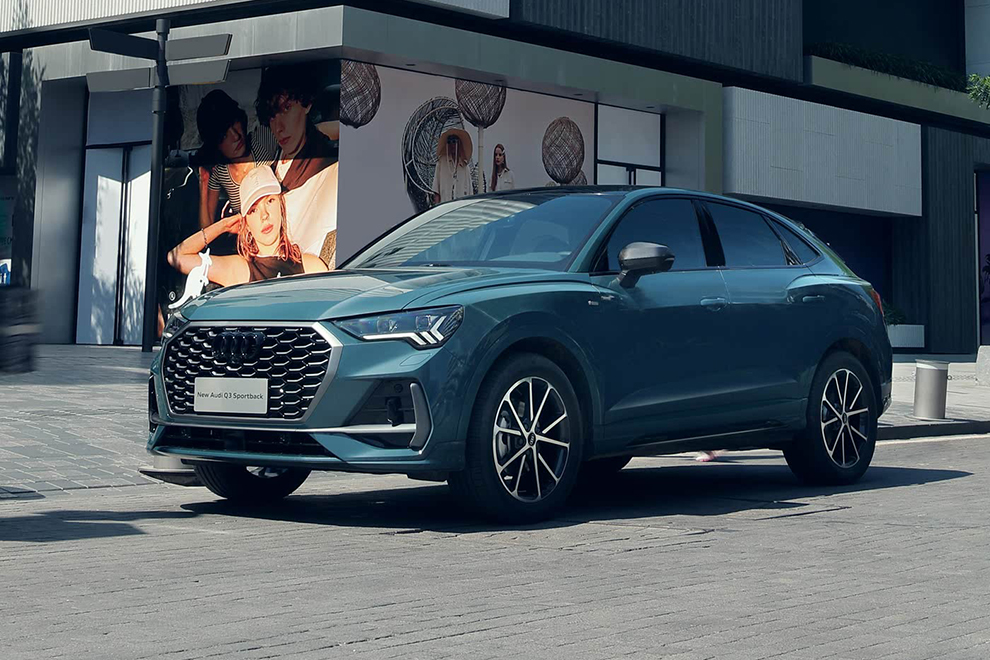
At a glance
- The Q3 combines Audi premium positioning with compact-SUV packaging suited to overseas dealers and fleet buyers.
- The export range includes 30, 35, 40 and 45 TFSI applications, quattro options and regular-body or Sportback configurations.
- New vehicles suit standardised fleet programmes, while used units require detailed inspection and history checks.
- Live export quotes vary with the exact vehicle, year, trim, condition, logistics, taxes and Incoterm.
- Buyers should compare fully landed costs and confirm destination-country compliance before committing funds.
Why the Audi Q3 matters for export markets
The Audi Q3 occupies a useful position in the premium compact SUV segment: it combines Audi’s premium badge and driver-focused design with the higher seating position, practical cabin and easier urban footprint associated with an SUV. That balance makes it relevant to overseas dealers serving customers who want a prestige vehicle without moving into a larger, heavier and generally more expensive class. It is especially attractive where buyers need a second vehicle that handles everyday commuting and family travel with a manageable footprint for dense roads, parking, and comparatively restrained operating costs.
Export demand is not based on trim badges alone. China’s Q3 range provides several 30, 35, 40 and 45 TFSI designations, with some configurations offered in front-wheel drive and others in quattro all-wheel drive. Regular-body and Sportback versions also create distinct appearance and packaging choices. For overseas dealers, that breadth can cover several market roles, from efficient urban fleet vehicles to premium versions for executive or company-car customers, but only after local tax, emissions and homologation rules have been assessed for the destination country and each precise vehicle specification.
The Q3 also suits buyers who recognize Audi but do not need the size or cost of a larger SUV. Its car-like dimensions can simplify parking, while the raised body improves visibility and everyday usability. For importers, however, product strength must be matched by an aftersales plan: verify that the selected engine, electronic features and service procedures are supported in the destination market. A vehicle that is easy to source but difficult to maintain can be a poor fleet choice. Dealers should assess parts lead times and workshop familiarity before committing.
- Premium compact SUV with a manageable footprint
- Multiple TFSI and quattro configurations
- Regular-body and Sportback choices
Model range, trims and powertrain variants: how the lineup is structured and how to choose
Q3 trim names combine equipment, styling and drivetrain rather than forming a simple ladder from least to most expensive. The export range includes labels such as Fashion, Fashion Dynamic, Fashion Sport, Progressive, Comfort and quattro Technology, plus anniversary editions. These names can change by model year and market. Treat the exact trim as a configuration code: compare seat upholstery, infotainment, driver assistance, wheels, lighting and standard options before deciding whether one grade offers better fleet value than another. The same visual model may therefore carry different content across production periods.
Engine choice is equally important. The listed 30 and 35 TFSI versions correspond to smaller turbocharged petrol engines, including 1.4T and 1.5T applications, while 40 and 45 TFSI denote the larger 2.0T family. These labels do not guarantee identical power figures across years. For a fleet buyer, select the unit that meets local tax and emissions rules, matches expected load, and offers the drivetrain support needed on the road rather than choosing solely by output. Fuel economy, insurance class and real-world maintenance should enter the same fleet calculation before award.
Most Q3 applications pair the petrol engine with an automatic dual-clutch transmission, commonly called S tronic, although the exact gearbox and options must be confirmed for every unit. Front-wheel-drive versions may suit urban buyers who prioritise efficiency and lower mechanical complexity; quattro can add traction and appeal where wet, hilly or variable surfaces are common. A Sportback has a different roof and tailgate profile, so cargo access, rear visibility and customer preference should be checked separately. Because dimensions and equipment vary by generation, use the live unit record rather than assuming a generic Q3 specification.
- Fashion, Progressive and Sport trims
- 30/35 and 40/45 TFSI families
- Confirm gearbox and drivetrain per unit
New vs used Audi Q3: how export inventory is structured and how buyers choose
A live Chinese export catalogue can mix factory-new vehicles, low-mileage former demonstration or fleet stock, parallel-imported vehicles and used cars. Labels such as “new,” “used” or “import” are only the starting point. Buyers should establish the vehicle’s production date, registration history, prior use and documentary trail. For wholesale planning, the important distinction is not simply age, but whether the unit is mechanically standard, correctly declared and capable of being registered in the destination country. Registration status and history can materially affect acceptance and value after arrival in the destination market.
Used Q3 units can reduce the initial acquisition cost and provide access to older equipment tiers at a lower entry point. The trade-off is greater uncertainty around wear, accident repair quality, software updates, warranty and future residual value. Inspect the VIN, service records, tyres, brake condition, body geometry, enginebay and transmission operation, and obtain an independent report. A lower purchase price can be offset by a major repair, a failed inspection or expensive local parts if the specification is poorly supported. That makes due diligence more important than chasing the lowest advertised amount.
New inventory is generally easier to standardise for fleet buyers because model year, engine, trim and factory options can be documented more consistently. It may also reduce immediate refurbishment risk, although age alone does not guarantee suitability. The best route depends on the buyer’s objective: a rental company may prioritise predictable handover and maintenance, while a dealer can profitably source selected used units. Compare total acquisition cost, expected downtime, financing and resale—not just the vehicle price shown in the live listing. Exact availability and the commercial terms attached to each unit must be checked live.
- Compare age, history and declared status
- Used units require condition verification
- New units simplify fleet standardisation
How export pricing works: the factors behind a live listing price, and how to read one
An export listing price is the starting commercial value of a specific vehicle, not automatically its landed cost. The main drivers are model year, trim, engine and drivetrain, body style, mileage and condition for used units, plus whether equipment is standard or optional. Market-specific variables also matter: exchange rates, shipping method, route distance, port charges, insurance, customs duty, taxes, registration and the chosen Incoterm. Comparing two Q3s is only meaningful when those variables are aligned. A lower asking price can still produce a higher delivered cost for the importing dealer.
When reviewing a live ChinaCarDirect listing, confirm the VIN or stock identity, model year, exact trim, engine, transmission, drivetrain, mileage, condition and listed equipment. Then establish whether the displayed amount includes inland transport, export documentation, sea freight, insurance, duty and taxes. Review the quotation basis and Incoterm explicitly, and ask for every charge that will fall outside the vehicle line. Use the live listings page for the binding per-unit amount and terms, because both can change with the individual vehicle and seller. Do not assume a marketplace screenshot remains valid after negotiation.
A practical comparison can be built without relying on headline discounts. Take two otherwise similar Q3 candidates, normalise engine, trim, condition and destination, then add the same quoted logistics and compliance costs to each. Next adjust for expected fuel use, insurance category, service parts, likely downtime and residual value. This reveals whether the lower vehicle amount is genuinely better or merely excludes charges. The same worksheet helps a dealer prepare a tender, because assumptions are visible and every quotation can be updated against the live unit. It also separates vehicle choice from transport assumptions.
- Vehicle amount is not landed cost
- Normalise trim, condition and destination
- Use binding live listing terms
MOQ, ordering and payment: single units vs consolidating a container
Minimum order quantity is a commercial condition attached to each offer, not a universal characteristic of the Q3. Some vehicle sellers or inventory lots may require more than one unit, while a single-vehicle purchase may be available on other listings. Buyers should check the MOQ field in the live inventory and have the supplier confirm it in the written quotation or pro forma invoice. For a trial order or test vehicle, state the required quantity, destination and delivery terms early so that availability, payment milestones and documentation are aligned before funds are committed.
Single-unit purchasing suits dealers testing demand, importers adding a niche trim or fleet buyers needing a specific configuration. Consolidation suits buyers able to spread freight and handling across several vehicles, provided each unit has a confirmed buyer or plan. Container economics cannot be judged by dividing freight by vehicle count alone: port charges, insurance, inland haulage, customs, storage, demurrage and last-mile delivery also matter. Model-year consistency may simplify parts and resale planning, whereas mixed stock can offer flexibility but increases administration and inspection. A written allocation list prevents the wrong unit entering a shipment.
The ordering cycle should move from specification to written commitment, not from a verbal promise. Confirm the individual vehicle, serial identifiers, condition report, exact price basis, MOQ, deposit, balance trigger, refund terms, invoice contents, export documents and estimated sailing schedule. Use a traceable payment channel and match the beneficiary to the verified contracting party. Then place the vehicle under a formal logistics booking only after the release conditions are clear. For larger purchases, independently recheck every unit rather than assuming photographs and names are interchangeable. This sequence reduces the risk of paying for the wrong specification.
- Check MOQ on every offer
- Consolidation can improve freight efficiency
- Put payment milestones in writing
Shipping, homologation and market compliance caveats: LHD/RHD and import rules by country
Steering configuration is the first destination check. Q3 vehicles sourced from China are commonly left-hand drive, while some markets require right-hand drive. A left-hand-drive vehicle cannot simply be assumed acceptable in a right-hand-drive jurisdiction, and converting steering, dashboard, lighting or controls is not a substitute for proper homologation. Ask for the steering side and relevant build information, then check local type-approval and registration rules. If right-hand-drive supply is essential, make that a written sourcing requirement rather than a preference. Availability may be limited, so early confirmation protects the buying plan.
Import rules differ by country and can change, so no cross-border checklist can substitute for current destination guidance. Buyers commonly need a valid VIN or chassis identity, customs documentation, proof of ownership, age limits, emissions conformity, safety and equipment approvals, and evidence that any duty or exemption applies. Local authorities may also inspect roadworthiness, catalytic systems, software settings or modifications. Confirm requirements with the importer, customs broker and relevant authority before contracting, and budget for local registration, plates and taxes that are not part of the vehicle price before shipment.
Once the vehicle clears compliance, logistics still determine whether the commercial deal works. Q3s may move in containerised or roll-on/roll-off arrangements depending on origin, carrier and destination; the mode affects the freight quote and handling exposure. A pre-shipment inspection should verify identity, condition, keys, documents, fluids and visible damage, followed by photographic evidence and appropriate cargo insurance. After arrival, allow for customs clearance, port charges and inland delivery. A late or damaged vehicle can consume the margin assumed in a seemingly attractive Q3 price. Timing and risk allocation should therefore appear in the quotation.
- Confirm steering side before contracting
- Check destination-country homologation rules
- Inspect and insure before shipment
Who should buy the Q3 — and who should pick a different vehicle
The Q3 is a strong candidate for an overseas dealer or fleet buyer that wants a premium compact SUV with a manageable footprint. It suits urban customers who value a recognisable luxury badge, a practical raised seating position and a choice of efficient front-drive or traction-oriented quattro configurations. Company-car and rental programmes can work when the selected engine, equipment and trim are supported locally. The decisive test is not whether the model looks desirable, but whether the dealer can service it, source parts and resell it without hidden operating friction. A local service agreement can close that gap.
A different vehicle is usually more sensible when the operating requirement outweighs the Q3’s premium positioning. Buyers needing seven seats, a large commercial load, serious off-road capability or an electric powertrain should look elsewhere; the Q3 range represented here is petrol-powered and is not a substitute for a BEV. Those prioritising the lowest running cost may prefer a non-premium compact SUV, while buyers needing more passenger or cargo space should assess a larger Audi model. High towing demand also calls for a vehicle approved for the intended load and payload.
Choose through total cost and use case rather than badge alone. Build a local cost model that includes purchase and transport, taxes, insurance, fuel, scheduled service, tyres, downtime and expected resale. For a used Q3, add a larger contingency for wear and possible repairs. For a new unit, consider whether the buyer will actually pay for higher trim equipment. Test-drive the exact live vehicle where possible, inspect its steering and equipment, and confirm parts availability. A Q3 that fits the market and service network can be a strong choice; one that does not can become an expensive static asset.
- Strong for premium urban and company fleets
- Weak fit for BEV, cargo or seven-seat needs
- Model local parts and service support
Main rivals and how the Q3 compares
The closest premium compact-SUV rivals are the BMW X1, Mercedes-Benz GLA and Volvo XC40. Each addresses a similar customer with its own brand character, packaging and powertrain strategy. Audi’s case rests on a distinctive design, a well-equipped premium cabin and the availability of front-wheel drive or quattro depending on specification. The X1 may appeal to buyers focused on road manners and space, the GLA to those prioritising visual presence and luxury, and the XC40 to buyers seeking a simpler, safety-led premium alternative. None is automatically superior. Local tax bands and residual values can alter the result.
Compare rivals on the factors an importer can control: exact size, seat and cargo usability, engine choice, drive system, fuel and compliance burden, service coverage, parts logistics and resale acceptance. The X1 can be a rational alternative when packaging and driving dynamics lead the brief. The GLA may win where design and brand presentation dominate. The XC40 may suit a buyer who values a distinctive Scandinavian identity without requiring Audi-specific service arrangements. For fleet buyers, standardisation and parts consolidation often matter more than the strongest individual showroom image. Total ownership evidence should decide.
A useful export comparison is therefore unit-specific. Place the intended Q3 alongside the equivalent rival trims on the same destination worksheet, including freight, duty, taxes, insurance and expected service. Check whether the Q3’s quattro advantage is genuinely needed; if not, a front-drive version may offer a simpler proposition. Conversely, buyers using the vehicle as a premium company car may value the Q3 image enough to justify the comparison. Always verify the live specification, because trim names, equipment and model-year changes can make two vehicles that share a badge materially different.
- BMW X1: packaging and driving focus
- Mercedes-Benz GLA: design-led premium alternative
- Volvo XC40: safety-led compact premium option
Live Audi Q3 export inventory
View all listings →Real units currently on ChinaCarDirect with per-unit asking prices and MOQ. Availability updates live from the catalogue.

How to buy a Audi Q3 from China
-
1
Define the destination and use case
Confirm the country, steering-side requirement, tax category, typical road conditions and passenger or cargo needs before selecting a Q3 configuration.
-
2
Shortlist live inventory
Review the live Audi Q3 listings and compare the exact vehicle amount, MOQ and availability shown for each unit.
-
3
Build a landed-cost comparison
Normalise trim, engine, condition and destination, then include inland transport, freight, insurance, duty, taxes, port charges and local delivery.
-
4
Request documents and inspection
Ask for the VIN, production and registration history, service records, option list, photographs and an independent condition report before commitment.
-
5
Verify the exact configuration
Confirm gearbox, drivetrain, body style, factory options and steering side against the written quotation and physical vehicle.
-
6
Approve terms and complete payment
Record the unit identity, price basis, MOQ, deposit, balance trigger, refund policy, invoice details and verified beneficiary in the order documents.
-
7
Arrange export and destination compliance
Use a qualified broker, complete the pre-shipment inspection, insure the shipment and confirm customs, homologation, registration and delivery requirements.
Q3 vs rivals
| BMW X1 | The X1 is a close alternative for buyers who prioritise packaging and driving dynamics. The Q3 may be more appealing where distinctive styling, quattro availability and a broader choice of equipment-led trims strengthen its market proposition. |
|---|---|
| Mercedes-Benz GLA | The GLA competes directly for design-conscious premium compact-SUV buyers and company-car fleets. The Q3 offers a different design and trim strategy, so the better choice depends on local taxation, service support and the exact equipment selected. |
| Volvo XC40 | The XC40 provides a more compact Scandinavian premium alternative and may appeal to buyers focused on efficiency and distinctive branding. The Q3 is the stronger option when Audi’s design language, quattro configurations or broader premium equipment range are priorities. |
Frequently asked questions
How is Audi Q3 export pricing determined?
The live amount reflects the specific vehicle and seller, with year, trim, engine, drivetrain, body style, mileage and condition influencing its position. Exchange rates, freight, insurance, duties, taxes, registration and the selected Incoterm determine the landed cost. Check the live ChinaCarDirect listings for the current binding price and commercial terms.
Which Audi Q3 engines and powertrain options are available?
The export range represented here is petrol-powered and includes 30, 35, 40 and 45 TFSI applications, with selected 1.4T and 1.5T badging in the smaller-engined range. Front-wheel drive and quattro configurations are represented, while exact transmission and equipment depend on the model year. Confirm the engine and drivetrain for each live unit.
Are used Audi Q3 vehicles better value than new ones?
Used units can reduce the initial acquisition outlay and provide access to desirable trims at lower cost, but they carry more uncertainty over wear, repairs, history and residual value. New vehicles are generally easier to standardise for fleets and may reduce immediate refurbishment risk. Compare total ownership cost rather than the advertised vehicle amount alone.
What is the MOQ for an Audi Q3 order?
MOQ is attached to the individual listing or commercial offer rather than being a fixed characteristic of the model. Some inventory lots may require multiple vehicles, while other offers may accept a single unit. Read the MOQ shown in the live inventory and have it confirmed in the written quotation or pro forma invoice.
What determines Audi Q3 shipping time and cost?
Origin, destination, transport mode, vessel or carrier schedule, consolidation, port charges, insurance, customs and inland delivery all affect the result. A late or damaged vehicle can erase the expected margin, so risk allocation and timing should be stated in the quotation. Allow for inspection and clearance before treating the vehicle as available for sale.
Are spare parts available for exported Audi Q3 vehicles?
Parts availability depends on the destination market, exact engine, model year and local Audi service network. Before buying, identify a local parts counter and confirm lead times for wear items, electronic modules and body components. Critical safety and electronic parts should be sourced through an approved route with traceable part numbers.
Is right-hand-drive Audi Q3 availability limited?
Q3 vehicles sourced from the Chinese domestic market are commonly left-hand drive, so right-hand-drive supply can be more restricted. Make the steering-side requirement explicit when requesting a vehicle and check local type-approval rules before contracting. Do not assume a steering conversion will make the vehicle compliant.
How do I order an Audi Q3 from China?
Start with the live listings, shortlist the exact configuration and request a unit-level RFQ with the destination, quantity and Incoterm stated. Review the VIN, documents, condition, MOQ, payment milestones and refund terms before paying. After approval, arrange inspection, export documentation, insured shipping, customs clearance and destination registration.
Ready to source the Audi Q3?
Send ChinaCarDirect your destination, target year and trim, quantity and Incoterm requirement for a current unit-level quote.
Request a quote