
Audi Q3 Sportback Export Guide for Overseas Buyers
Compare Audi Q3 Sportback trims, engines, export pricing, MOQ and shipping factors, then learn how overseas buyers verify compliance and source vehicles.
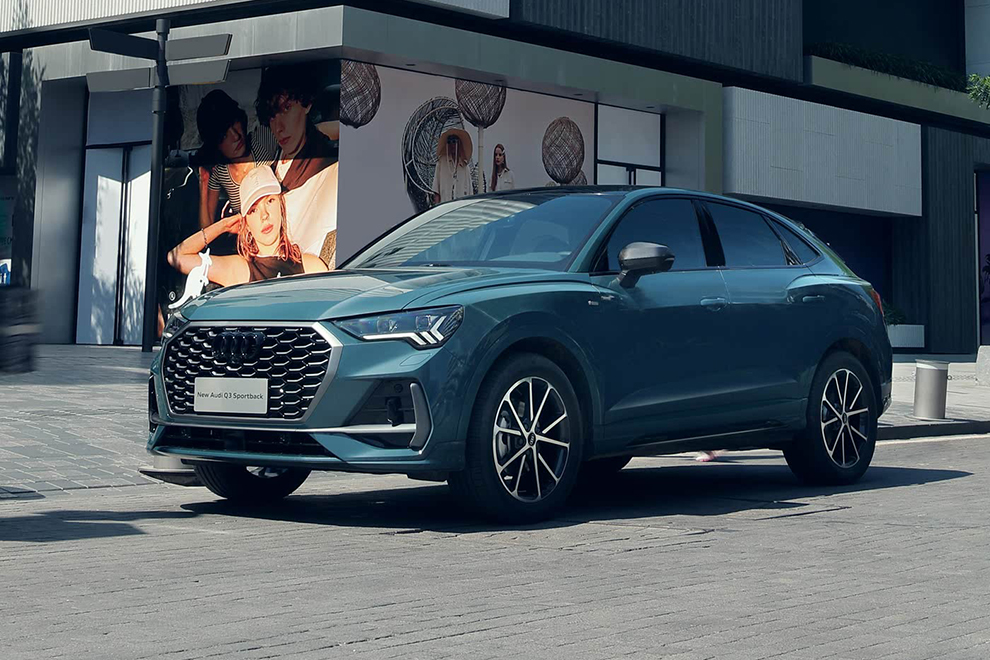
At a glance
- The Audi Q3 Sportback combines compact-SUV packaging with a coupé-style profile and five-door usability.
- Relevant export versions use turbocharged TFSI gasoline powertrains, including the 1.4T-labelled 35 trim, 40 TFSI and 45 TFSI quattro variants.
- Trim choice should follow the required engine, quattro traction and equipment level rather than appearance alone.
- New and used vehicles demand different evidence: factory specification and delivery status versus mileage, service and structural history.
- Export price and MOQ are unit- and supplier-specific, so current figures must be checked on live listings.
- LHD/RHD configuration, homologation and destination charges must be settled before an import order.
Why the Audi Q3 Sportback matters for export markets
For export buyers, the Audi Q3 Sportback occupies an unusual place in the compact premium SUV market: it combines the raised stance and practical cabin of a small SUV with a coupé-like roofline and a more visual, urban-oriented character. For overseas dealers, that makes it useful when customers want premium badges and everyday usability but do not need the size or cost of a larger Audi. It is especially relevant to launch fleets, company-car programs and retail buyers who value design and maneuverability over maximum rear-seat or luggage room in daily use, or towing capacity.
Demand for this model in export markets should be understood as segment demand rather than a universal sales ranking. Emerging-market customers often use compact SUVs to gain visibility, air-conditioning usefulness and a higher seating position, while European-style buyers tend to value compact dimensions, modern technology and brand prestige. A China-origin Q3 Sportback can broaden that choice, but local preferences for fuel economy, software, spare-parts support and homologation may matter more than the model’s global image. Dealers should therefore validate demand with their own market before committing to fleet inventory at scale.
The model’s strongest export case is also its clearest trade-off. The Sportback shape is more distinctive than a conventional small SUV, which can help a dealer differentiate showroom stock. At the same time, the sloping rear roof and liftback-style tailgate should be assessed for headroom, stroller loading and luggage capacity under real family-use conditions. A buyer importing for resale should compare the Chinese specification with the Q3 Sportback versions already sold in the destination country, because equipment, badges, software and safety content can differ even when the model name is identical.
- Compact premium coupé-SUV positioning.
- Urban dealers and fleet buyers.
- Check rear headroom and cargo.
Model range, trims and powertrain variants: how the lineup is structured and how to choose
Audi Q3 Sportback trims should be read as three layers: the engine designation, the equipment grade and the drivetrain package. For this export context, relevant trims include 35 TFSI Progressive, 40 TFSI Fashion, 40 TFSI RS Kit Speed Edition, 45 TFSI quattro Fashion, 45 TFSI quattro Luxury and 45 TFSI quattro Launch Special Edition. Listings may also carry a facelift designation. That naming can look complex, but it gives a disciplined comparison: first choose the power and traction requirement, then assess equipment, then review condition and documentation for each individual vehicle.
The powertrain choices represented in these export records are turbocharged TFSI gasoline engines, not battery-electric variants. The 35 TFSI Progressive is identified with a 1.4T engine, while 40 and 45 TFSI denote the other engine families; exact engine codes and outputs should still be confirmed from each unit. Some 45 versions explicitly carry quattro, which points to all-wheel drive; front-wheel-drive versions also occur within the broader TFSI range. Buyers should request the VIN, engine code, gearbox type, tire specification and drive layout on the live listing before calculating vehicle-specific tax, insurance or performance expectations.
Choosing among trims is easier when tied to the buyer. Progressive and Fashion trims may suit fleet or mainstream retail customers focused on usable equipment and operating costs. RS Kit Speed Edition cars carry a specific appearance and equipment identity that should be verified unit by unit, not assumed uniform. quattro versions can suit buyers prioritizing traction and all-weather confidence, while Luxury or Launch Special Edition labels may alter the comfort package. Compare the option list, not only the badge, and check destination-market equipment expectations before the vehicle is committed to an import order.
- 35 TFSI Progressive: 1.4T.
- 40 TFSI: Fashion or RS Kit.
- 45 TFSI quattro: traction-led.
New vs used Audi Q3 Sportback: how export inventory is structured and how buyers choose
ChinaCarDirect export inventory is structured around individual listings. A dealer seeking to buy an Audi Q3 Sportback from China should first identify whether a unit is presented as new, used or otherwise conditioned. For Q3 Sportback purchases, the condition label is the starting point, not proof of mechanical state. A new vehicle may carry delivery-protection mileage and a standardized factory specification, whereas a used vehicle can offer model-year or trim variety but requires evidence of ownership, service, accident history and wear. The live inventory record must remain the authority for each vehicle. Never infer condition solely from the model-year field or photographs.
A new-car buyer should focus on model year, facelift status, trim, factory options, paint, production date and delivery status. These details affect expected depreciation, part compatibility, software and the buyer’s ability to present a coherent specification. Ask for a build plate, VIN, option code, photographs of every panel and wheel, and confirmation that the vehicle has not been damaged in transit. For fleet buyers, also check warranty start dates, infotainment and driver-assistance functions, and whether multiple units genuinely match rather than merely sharing the same listing title at the VIN level.
A used Audi Q3 Sportback requires a risk-based inspection rather than a simple mileage comparison. Ask for a current odometer photo, service invoices, recall and diagnostic status, accident or structural-repair evidence, title documents and photographs of the underbody, wheels, glass and cabin. Low mileage can be less valuable if the vehicle was stationary or had a severe incident, while higher mileage may be attractive with a complete service history. For any used unit, verify that the VIN, trim description and condition report match the physical car before balance payment is released to the seller.
- New: verify build and options.
- Used: verify VIN and history.
- Check each live condition field.
How export pricing works: the factors behind a live listing price, and how to read one
An Audi Q3 Sportback export price should be treated as a structured quotation, not a universal model price. The vehicle figure will normally reflect model year, trim, engine, drivetrain, factory options, paint, condition, mileage if used, and the seller’s commercial terms. Market conditions also move: exchange rates affect cross-border cost, while shipping, insurance, port handling, customs clearance, destination taxes and dealer margin sit outside or alongside it. Because these variables differ by vehicle and route, compare like with like and record the Incoterm rather than focusing on the headline figure alone.
To read a live listing correctly, separate the vehicle price from the landed cost. Check whether the displayed amount is an asking price, a promotional price or a condition requiring a deposit or dealer approval, and identify what export documents, inspection, inland transport and terminal charges are included. The model year can materially affect value, especially when a facelift or a different trim is involved, but a lower badge does not automatically mean lower ownership cost. Review the VIN, options list and condition evidence before deciding whether the quoted vehicle is genuinely comparable.
Buyers should build a repeatable comparison sheet for each shortlisted vehicle. Record the unit price, currency, exchange-rate date, Incoterm, named port, freight method, insurance, inspection fee, export documents, delivery estimate, and destination charges the seller will quote. Then add known import duty, VAT or equivalent, registration and inland delivery as separate lines. A transparent quotation may be higher than a low headline but easier to budget and contract. Conversely, an incomplete quote can become materially more expensive after arrival. Current per-unit prices and availability should be confirmed on live ChinaCarDirect listings.
- Compare year, trim and condition.
- Itemize freight, tax and fees.
- State currency, port and Incoterm.
MOQ, ordering and payment: single units vs consolidating a container
MOQ is a supplier and transaction rule, not an inherent property of the Q3 Sportback. A marketplace listing may permit a one-unit purchase, while a factory-program vehicle, color-constrained allocation or export batch can carry a larger supplier minimum. Because the applicable minimum can change with trim and sourcing route, read the MOQ field and sales confirmation for each unit rather than assuming a marketplace-wide quantity. A dealer testing demand can begin with a mixed basket of target trims, while a fleet buyer may consolidate units to improve freight efficiency and reduce per-unit fixed costs.
Single-unit ordering is usually the better test for a new importer because it limits exposure to model-year depreciation, unsold trim variants and destination-compliance corrections. For an Audi Q3 Sportback wholesale order, consolidation is more attractive when several buyers or branches need the same specification, the seller can provide consistent VIN-level photos and documents, and the delivery date is critical. Before combining units, agree the allocation method, permitted substitutions, inspection standard, payment schedule, document deadline and treatment of a rejected vehicle. A container is efficient only if every assigned vehicle is acceptable; otherwise one problem unit can delay the whole group.
Payment mechanics should be settled in writing before funds are sent. A pro forma invoice should identify the vehicle, price, currency, Incoterm, deposit, balance trigger, payment beneficiary and refund conditions, while the sales contract should define inspection, delivery deadlines, document requirements and remedies for non-conforming vehicles. Use the payment channel and beneficiary specified by the seller after independently verifying the legal entity and vehicle details; avoid informal third-party accounts. Keep the inspection result and agreed corrections linked to the balance-payment release, and understand whether the vehicle is released only after export clearance and terminal handover.
- Confirm MOQ on each listing.
- Single units: test with low exposure.
- Consolidate matching specifications.
Shipping, homologation and market compliance caveats: LHD/RHD and import rules by country
Chinese-market Q3 Sportbacks are not automatically equivalent to every overseas version sold under the same name. Exporters should verify VIN identity, manufacturing source, engine and emissions documentation, factory equipment, software region, safety equipment, axle weights, tire markings and local recall or immobilizer requirements against destination rules. Import approval can depend on vehicle age, engine capacity, emissions standard, customs classification, local taxes and whether the model was type-approved for that market. A broker or compliance specialist should review the exact documents before shipment, because availability in another country does not prove homologation there.
Steering configuration is a critical sourcing question. Left-hand-drive cars are the usual China-origin configuration, but right-hand-drive availability depends on production version, model year and market allocation; it should not be inferred from the badge. Converting steering from one side to the other adds parts, labor, electronics and safety checks and may affect authenticity and warranty. For an RHD destination, first look for a factory RHD car or another compliant source, then have the local authority or broker confirm steering, lighting, braking and equipment requirements. State the configuration in the VIN-level quotation.
Shipping method should follow urgency, consolidation level and cargo economics. Ro-ro or enclosed-vehicle transport may suit complete vehicles, containerization can suit grouped consignments, and roll-on/roll-off or other specialist arrangements should be confirmed by the freight forwarder for the actual vehicle and port. Transit time depends on origin and destination ports, sailing or vehicle schedule, customs clearance, congestion, documentation and final-mile delivery; cost depends on freight, insurance, handling, storage, duties and destination charges. Ask for a door-to-door cost schedule, realistic departure and arrival windows, and the party responsible for each step before paying.
- Validate VIN and emissions papers.
- Confirm factory LHD or RHD.
- Itemize door-to-door freight costs.
Who should buy the Q3 Sportback — and who should pick a different vehicle
The Q3 Sportback fits overseas buyers who want a premium compact SUV with a distinctive exterior, a practical five-door body and a more style-led presentation than a conventional crossover. It is a sensible candidate for urban retail programs, executive and company-car fleets, and customers who prefer Audi’s compact dimensions without choosing a larger, more expensive model. It also suits dealers seeking a recognizable coupé-SUV category rather than another conventional small SUV. The strongest case is a buyer who values design, brand image and everyday usability in roughly equal measure throughout the ownership decision.
It is a weaker choice for buyers whose priorities are maximum cargo volume, easy rear-seat access, a flat load floor, extensive off-road capability or the lowest possible operating cost. The coupé-like roofline can reduce rear headroom and complicate bulky-item loading, and the sloping tailgate may not match a squared-off family SUV. The 35 TFSI label may suit cost-conscious users, but the 40 and 45 TFSI variants should be considered where stronger performance or quattro traction is justified by actual use rather than badge appeal. Fuel, insurance, tax and maintenance still need market-specific calculations.
Buyers should also consider whether a premium compact SUV is the right ownership concept for their market. If the priority is lowest acquisition and running cost, a non-premium compact crossover may offer a simpler business case. If space is the priority, a conventional premium SUV or estate may be easier to live with. If low running costs and charging access are decisive, an electric alternative should be evaluated on real routes rather than assumed from the badge. The Q3 Sportback is strongest when its design and premium positioning solve a customer need that more utilitarian alternatives do not.
- Choose for premium urban style.
- Skip for maximum cargo.
- Compare local tax and parts.
Main rivals and how the Q3 Sportback compares
The BMW X2 is the closest conceptual rival because it also places a coupé-like roof over a compact premium crossover body. For an overseas buyer, the decision is less about silhouette alone and more about powertrain availability, equipment, local service support and the exact unit badge. The Q3 Sportback’s TFSI range includes front-driven and quattro-labelled choices in the export context, while the X2’s specification varies by market and generation. Neither brand guarantees lower ownership cost without a local quotation. Compare options and test-drive each shortlisted vehicle rather than assuming the newest-looking car is better value.
The Mercedes-Benz GLA is another direct premium-compact alternative, with a similarly raised, coupé-influenced profile and an emphasis on comfort and brand presence. Its appeal may be stronger where Mercedes-Benz has deeper aftersales coverage or where a specific GLA offer fits the buyer’s budget. Conversely, the Audi’s TFSI and quattro-labelled Q3 Sportback options may align better with a fleet policy built around familiar engine and traction labels. Because equipment, software and service economics change by model year, compare serviceability, parts lead times and warranty treatment in the destination country rather than relying on brand reputation.
The Volvo XC40 represents the premium-compact alternative for buyers who prioritize a distinctive design, efficient powertrains and a more Scandinavian approach to cabin presentation. It may appeal where Volvo has stronger local awareness or where the buyer considers electrified options more readily than a combustion-only Q3 Sportback brief. It may be less suitable if fleet policy specifically requires quattro traction or the Q3 Sportback’s model identity and Audi service network. The fairest comparison uses the same destination, tax assumptions, warranty expectations and service plan; otherwise, showroom character can obscure the difference in whole-life cost.
- BMW X2: closest design rival.
- Mercedes GLA: direct premium rival.
- Volvo XC40: design-led alternative.
Live Audi Q3 Sportback export inventory
View all listings →Real units currently on ChinaCarDirect with per-unit asking prices and MOQ. Availability updates live from the catalogue.
How to buy a Audi Q3 Sportback from China
-
1
Define the destination and specification
Confirm the destination country, port, required steering side, model year, trim, engine and budget before shortlisting vehicles.
-
2
Review the live inventory
Compare the current per-unit price, availability, condition, trim and listing reference for each candidate on ChinaCarDirect.
-
3
Verify vehicle-level evidence
Request the VIN, build plate, engine and gearbox details, factory options, current mileage, condition photographs and ownership or service records.
-
4
Request an itemized landed quote
Ask for the vehicle price, currency, exchange-rate basis, Incoterm, freight method, insurance, inspection, export documents and known destination charges.
-
5
Complete the compliance review
Have a local broker check homologation, emissions, VIN requirements, LHD/RHD suitability, taxation, software compatibility and parts support.
-
6
Contract and pay safely
Use a written pro forma invoice and sales contract covering the VIN or allocation, payment milestones, inspection rights, documents, refunds and delivery obligations.
-
7
Inspect before release and shipment
Confirm the physical vehicle and paperwork match the agreement, record any agreed corrections, release the balance and provide the approved shipping instructions to the forwarder.
Q3 Sportback vs rivals
| BMW X2 | The X2 is the nearest silhouette and segment rival; Q3 Sportback may appeal to Audi and quattro-led fleets, while X2 buyers should compare local engine, service and equipment offers. |
|---|---|
| Mercedes-Benz GLA | The GLA is a direct premium-compact competitor with a similarly coupé-influenced profile. Compare service coverage, comfort equipment, tax treatment and the availability of suitable powertrain variants. |
| Volvo XC40 | The XC40 offers a more design-led and electrified alternative for buyers who do not require quattro traction or a combustion-only Q3 Sportback brief. |
Frequently asked questions
How is Audi Q3 Sportback export pricing determined, and where can I see the live price?
Live export prices reflect the individual vehicle’s year, trim, engine, options, condition and mileage, together with the seller’s commercial terms. Freight, insurance, port charges, import duty, taxes and inland delivery determine the landed cost and should be itemized separately. Check the current per-unit figure on the live Audi Q3 Sportback listings and request a destination-specific written quote.
What engine and powertrain options are available?
The relevant Q3 Sportback export versions are turbocharged TFSI gasoline cars, not battery-electric vehicles. The 35 TFSI Progressive is labelled 1.4T, while 40 and 45 TFSI denote other engine families; some 45 trims explicitly include quattro. Verify the engine code, transmission, drive system and VIN because trim names alone do not capture every unit’s specification.
Is a new or used Audi Q3 Sportback better for export?
New vehicles are generally easier to compare by factory specification, production date and delivery status. Used vehicles can offer model-year or trim variety but add uncertainty around mileage, service, accident repair and wear. Choose based on documented evidence and target-market demand rather than an assumed availability advantage.
How does MOQ work for an Audi Q3 Sportback order?
MOQ is set by the seller, allocation and transaction rather than by the model name. A live unit may be offered individually, while a batch or constrained allocation may require several. Read the unit’s MOQ field and have quantity, substitutions, payment and delivery terms written into the quotation or contract.
What determines shipping time and cost?
Transit time and cost depend on the origin and destination ports, vehicle or sailing schedule, freight method, insurance, handling, customs clearance, congestion and inland delivery. A freight forwarder should quote the route and Incoterm, while the importer should separate destination duty and taxes from the vehicle price. Request realistic windows and an itemized door-to-door schedule.
Are spare parts readily available?
Check parts availability using the VIN, model year, trim, engine code and build date before buying. Chinese-market equipment and software may not match another country’s specification, so confirm that required service parts and electronic components can be sourced through the local Audi network or a specialist. A low acquisition price does not remove parts, diagnostic or software compatibility risk.
Is right-hand-drive availability guaranteed?
RHD availability depends on production source, model year and market allocation, so it must be confirmed on the individual listing rather than assumed for China-origin cars. Factory RHD is preferable where available; conversion adds parts, labor, electronics and inspection requirements and may affect warranty. Give the destination and required steering side before requesting a quote.
How do I order an Audi Q3 Sportback from China?
Start with the live Q3 Sportback inventory, select a vehicle and send its listing reference, destination, desired Incoterm and inspection requirements through the RFQ process. Ask for a VIN-level pro forma invoice, payment milestones, document list, refund terms and shipping plan. Confirm the physical vehicle and documentation before releasing the balance and handing the vehicle to the nominated forwarder.
Ready to source the Audi Q3 Sportback?
Request a current unit-level quote from ChinaCarDirect with your target trim, model year, destination and preferred Incoterm.
Request a quote