
Audi Q5l Sportback Export Buying Guide
Plan an Audi Q5l Sportback export from China with clear guidance on trims, live pricing, MOQ, shipping, homologation, rivals and buyer checks.
At a glance
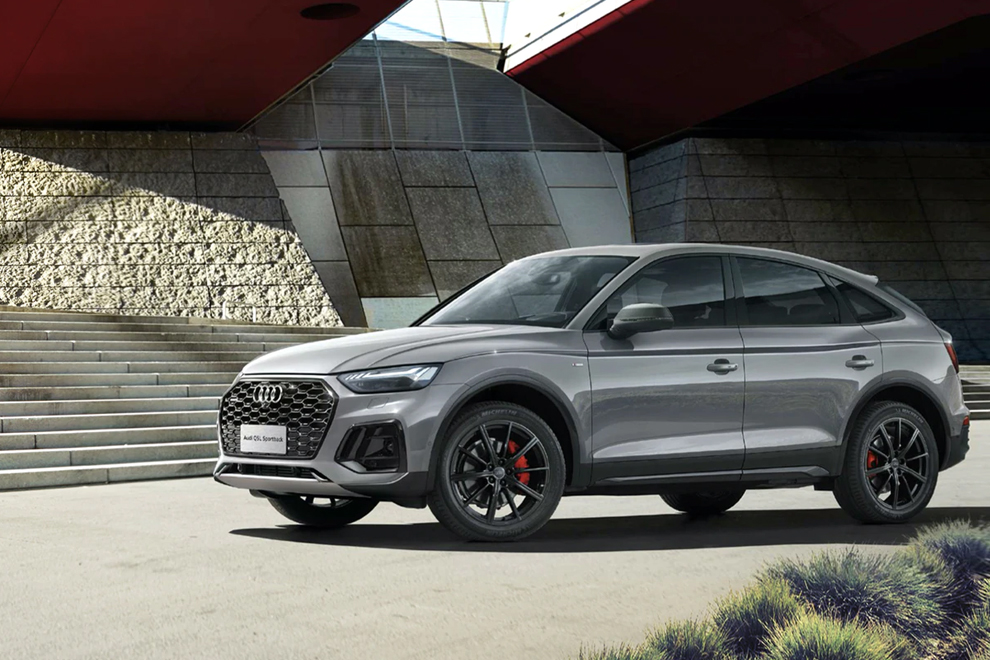
- The Q5l Sportback combines Q5-family SUV practicality with a lower, coupe-like profile and extended-wheelbase emphasis.
- The range is organized around 40 TFSI and 45 TFSI petrol grades, with Luxury, Fashion, Style and Premium Selection equipment labels.
- New and previously registered examples require different checks, including registration, warranty, mileage, service-history and VIN evidence.
- Export pricing depends on trim, year, condition, configuration, exchange rates, freight, Incoterms and destination charges.
- Current per-unit prices and seller MOQs must be checked on live listings before an order is placed.
Why the Audi Q5l Sportback matters for export markets
The Audi Q5l Sportback occupies an unusual export niche: it combines the raised body and cargo usability of a Q5-family SUV with a sloping Sportback roofline, while the China-market Q5l name denotes a longer-wheelbase proposition. That combination gives importers a recognizable premium Audi product without copying the standard European Q5 Sportback sold in many destinations. For overseas dealers, the appeal is differentiation rather than universal volume: buyers who want a luxury SUV silhouette, generous rear accommodation and a more distinctive profile than a conventional off-road-shaped model on familiar European roads while retaining family-car practicality.
Demand for this model should be understood as market-specific, so global demand is selective rather than universal. Because the Q5l Sportback is tied to China and is not distributed identically across global regions, it tends to suit importers already familiar with Chinese-spec premium vehicles, specialist dealers seeking exclusive stock and buyers who value design and rear-seat space over the lowest purchase price. A conventional Q5 or Q5 Sportback may have a clearer resale proposition in countries with dense Audi networks, so the Q5l should be positioned on its long-wheelbase comfort, Chinese-market specification and import economics rather than advertised as an interchangeable global trim.
For fleet and corporate buyers, the model can work as an executive or premium mixed-use vehicle when fuel availability, emissions rules and local tax treatment align with a petrol powertrain. Dealers should test demand with one carefully chosen specification, but should also confirm that the longer wheelbase, sloping roof and available luggage capacity suit the target customer. The model may also be relevant to a distributor testing a distinctive product for design-conscious urban customers, provided local approval, servicing and residual-value support are credible. Its extended wheelbase can improve passenger legroom, but buyers should balance that against the sloping roofline, luggage capacity, parking length and parts support.
- Extended-wheelbase rear space.
- Lower roof, distinct profile.
- China-specific import niche.
Model range, trims and powertrain variants: how the lineup is structured and how to choose
The export-facing range is organized around two visible powertrain grades, 40 TFSI and 45 TFSI, plus named equipment or appearance tiers such as Luxury, Fashion, Style and Premium Selection. These names help identify the high-level configuration, but they are not enough to establish the exact car. Model-year updates and special editions can change standard equipment, wheels, lighting, cabin trim and infotainment. The safest comparison is therefore trim name plus year plus VIN, not a brochure-style assumption based only on the headline. VIN-level verification also prevents assumptions about factory equipment before purchase.
Q5l Sportback units use a turbocharged petrol powertrain family and a dual-clutch automatic transmission in the mainstream market. The 40 and 45 designations distinguish the output class, while the selected version can determine whether the car is front-wheel drive or uses Audi quattro all-wheel drive. Because drivetrain and tune details may not appear consistently in an advertisement, request the vehicle specification sheet and verify the engine designation, gearbox, drivetrain and axle load before issuing a firm order. The same check should cover emissions, fuel consumption and market-specific electrical equipment before shipment.
Choosing a trim becomes a balance between performance class and local running costs. A 40 TFSI car may be easier to justify where fuel use, insurance and taxation matter; a 45 TFSI car may suit buyers who prioritize stronger performance and premium positioning. Equipment labels alone do not prove superiority. Build a line-by-line comparison of safety kit, upholstery, audio, navigation, climate controls and wheels, then confirm each item visually and by document rather than accepting “Luxury” or “Style” as shorthand. Keep the signed comparison attached to the purchase file for later reference.
- 40 and 45 TFSI grades.
- “Facelift” is not output.
- FWD or quattro varies.
New vs used Audi Q5l Sportback: how export inventory is structured and how buyers choose
For export buyers, “new” describes a vehicle’s condition and registration status, not necessarily the latest model year. A new China-spec car should have documented delivery status, factory warranty coverage and a verifiable identity that matches the invoice, chassis plate, VIN and shipping documents. Where first registration has occurred, its date should also be stated. Ask whether the car has been registered for demonstration, staff use or display, and whether that status affects the warranty or its classification in the destination country. Also confirm that any hold or finance arrangement is settled before the vehicle is treated as available for export.
Used Q5l Sportback units can make sense for buyers seeking a lower acquisition cost, a particular depreciated specification or an immediate vehicle for a proven market. The trade-offs are uncertainty: mileage, service history, accident repair, paint condition, tire age, software state and wear can be harder to assess than on a new unit. Require an independent inspection, odometer and VIN checks, title and registration documents, service records, diagnostic scan and photographs of the underbody, engine bay and luggage compartment before the vehicle is committed to an export booking or freight.
New inventory generally offers the simpler ownership story: standardized specification, known delivery history and easier comparison between units. Used inventory can be more attractive only when the condition evidence is stronger than the apparent discount. Do not infer a price reduction from the word “used,” and do not infer suitability from model year alone. The current search should show condition, registration and asking price on each unit, while the seller’s RFQ should confirm which documents and warranty can accompany the vehicle. It should also state whether any repair or remarketing history is disclosed.
- New means registration status.
- Used needs history checks.
- Inspect before payment.
How export pricing works: the factors behind a live listing price, and how to read one
An export listing price is a starting commercial reference, not automatically the buyer’s landed cost. The confirmed vehicle price responds to model year, exact trim, 40 TFSI versus 45 TFSI output class, front-wheel-drive or quattro configuration, equipment, mileage and condition for used units, and the seller’s commercial terms. Market factors also matter, especially the exchange rate applied when the contract is settled and whether the quoted currency can move before payment or shipment. Tax treatment, factory status and dealer margin also affect the price a buyer ultimately accepts and should be confirmed in writing.
Freight belongs in the comparison only when its treatment is clear. Read the Incoterm and identify what the seller includes: vehicle only, export preparation, documentation, inland movement to the origin port, sea freight, insurance and onward delivery can all sit on different sides of the quotation. Charges for roll-on/roll-off handling, container or slot booking, securement, inspection, storage, terminal fees and destination clearance may be separate. A lower vehicle price can therefore produce a higher landed cost. Ask for each charge in writing and identify the currency, payer and risk-transfer point for every line.
Use a landed-cost worksheet rather than comparing headline numbers. At minimum, add the confirmed unit price to export handling, freight, insurance, destination duty and tax, customs brokerage, port and documentation charges, inland delivery, and a contingency for repairs or compliance work. For any project, request a written quotation tied to a specific listing or vehicle, destination port, Incoterm and payment schedule. The live ChinaCarDirect inventory displays the current per-unit asking position; a binding quote should supersede any general market estimate. This keeps freight and tax assumptions separate from the vehicle negotiation.
- Price is not landed cost.
- Incoterm sets scope.
- Use written quotations.
MOQ, ordering and payment: single units vs consolidating a container
Minimum order quantity is a seller-level commercial term, not a permanent feature of the model. A dealer may accept an individual vehicle, while another seller may require a batch for a particular production or release program. On ChinaCarDirect, check the MOQ shown against the chosen listing and confirm it directly in the RFQ, along with whether mixed trims or model years can share one shipment. Never infer availability or MOQ from a cached search result. The quantity, allocation and permitted configuration should all be written into the final order confirmation.
A single-unit order is useful for testing demand, validating the specification and securing an attractive, readily identifiable vehicle for a dealer or fleet. Its weakness is commercial efficiency: one vehicle still needs export preparation, documentation, freight, insurance and destination clearance, so fixed logistics costs are spread across a small consignment. If several buyers need similar cars, consolidation can reduce unit freight and handling costs, but every vehicle must still be separately identified, inspected and reserved. Agree at the outset which party owns each unit and the sequence in which they are loaded.
For a wholesale order, consolidated container or multi-vehicle booking, agree the allocation sequence, deposit percentage, balance trigger, inspection standard and release conditions before payment. Confirm the beneficiary account, invoice party, contract names, cancellation terms and refund mechanism, and use payment milestones tied to documentary and physical progress rather than an informal promise. A written pro forma invoice should identify each VIN or allocation rule, the agreed Incoterm, delivery scope and who is responsible if a unit fails inspection. Keep the inspection standard and acceptance process consistent across the batch before releasing funds.
- MOQ is seller-specific.
- Single-unit market tests.
- Compatible consolidation.
Shipping, homologation and market compliance caveats: LHD/RHD and import rules by country
Start with destination-country approval, not the vehicle booking. China-spec Q5l Sportbacks are commonly associated with left-hand-drive production, so buyers in right-hand-drive markets must confirm whether factory right-hand-drive availability exists or whether a conversion and local inspection would be required. Do not treat a steering-wheel swap as sufficient: conversion can affect parts compatibility, safety inspection, insurance, residual value and certification. The importer should obtain a written homologation opinion from a local vehicle agent or broker before paying. The agent should also identify which documents and modifications the conversion would require locally.
Type approval can cover emissions, lighting, braking and occupant protection, noise, radio equipment, software and cybersecurity, or vehicle-age and import-document rules, depending on the country. Chinese-market digital services, infotainment functions and connectivity may not behave like locally sold Audis, even when the mechanical specification is suitable. Confirm fuel, emissions and equipment requirements; local insurance and financing may also require a recognized model designation. Use the exact VIN and homologation documents when obtaining clearance rather than relying on the Chinese trim name alone. The VIN must also match the shipping and customs files.
Choose transport after confirming compliance and delivery volume. Ro-ro can suit a small consignment, while a vehicle carrier or container arrangement may suit consolidated shipments; the better route depends on origin handling, sailing schedule, cargo security, insurance terms and destination infrastructure. Photograph and inspect the car before loading, record fuel level and mileage, review the bill of lading and condition record, and insure the vehicle through the agreed risk-transfer point. Destination charges and inland delivery should be named before shipment rather than left to the carrier for the consignee directly.
- Check type approval.
- Verify factory RHD.
- Record loading condition.
Who should buy the Q5l Sportback — and who should pick a different vehicle
The Q5l Sportback fits an importer that wants a premium badge, a coupe-like SUV profile and the Q5l’s extended-wheelbase passenger emphasis. It is also relevant to a distributor testing a distinctive model for design-conscious urban customers, provided local approval, servicing and residual-value support are credible. For company-car or executive-fleet use, compare tax treatment, fuel availability, insurance class and expected resale before choosing a specific trim. These checks are usually more decisive than whether the vehicle wears the newest Audi design. The model’s strongest market case is differentiation, not badge recognition alone.
It is a weaker choice for a buyer whose priority is the simplest global service network or immediate compatibility with a right-hand-drive market. The sloping roof and longer body may be less convenient for tight parking, maximum luggage capacity or frequent use with bulky cargo. Pure-electric fleets or markets with strict local-emission rules should not select a petrol model by default. Operators focused only on acquisition cost may also find that insurance, fuel, compliance work and specialist parts make a more mainstream model easier to operate over the long term.
Before committing, score each candidate on five axes: homologation certainty, right- or left-hand-drive suitability, parts and diagnostic support, expected resale in the destination market, and fully landed cost per vehicle. If one of these is unresolved, secure a sample inspection or local broker opinion rather than placing a large order. The strongest case for this model is a market where its design and rear-seat proposition are valued and its China-specific nature is treated as a managed import advantage. The importer should document each score against a specific vehicle before contracting.
- Design-led import fit.
- RHD and EV limits.
- Assess total operating cost.
Main rivals and how the Q5l Sportback compares
The BMW X3 is the closest conceptual rival: a premium midsize SUV with a conventional upright roof, broad international recognition and established service familiarity in many export markets. The Q5l Sportback differentiates through its longer-wheelbase packaging and coupe-like profile, but the locally sold X3 may be easier for buyers and workshops to understand, so compare landed cost, exact derivative, homologation, parts, warranty support and resale before deciding which model suits the market. An importer should confirm the exact imported derivative rather than compare general nameplates or assume equivalent equipment across markets.
The Mercedes-Benz GLC is a direct premium-SUV rival with a more globally standardized identity and an established network in many destinations. The Q5l Sportback offers greater visual differentiation and an extended-wheelbase emphasis, but the GLC may be easier for local buyers and workshops to understand, so compare destination rules, local familiarity, landed cost and residual value. For fleet buyers, confirm whether the locally approved derivative simplifies servicing and ownership transfer before selecting either model. The comparison is meaningful only for approved, supportable derivatives with traceable local parts and warranties available.
The Volvo XC60 is a relevant premium five-seat SUV alternative, especially in markets offering its electrified powertrains and a broad international service presence. The Q5l Sportback has a lower, coupe-like profile and longer-wheelbase emphasis, while the XC60 is more family-focused; compare the exact imported derivative, parts availability, software support and resale before final selection. No rival should be shortlisted from styling alone, because homologation and local operating evidence can outweigh a small difference in appearance or equipment. This principle applies even when paper specifications appear closely matched in a destination market.
- X3: upright alternative.
- GLC: global identity.
- XC60: family layout.
Live Audi Q5l Sportback export inventory
View all listings →Real units currently on ChinaCarDirect with per-unit asking prices and MOQ. Availability updates live from the catalogue.
How to buy a Audi Q5l Sportback from China
-
1
Set the destination requirements
Define the destination country, steering configuration, homologation route, fuel needs, tax treatment and expected annual volume before selecting a vehicle.
-
2
Shortlist exact vehicles
Open the live Audi Q5l Sportback listings and compare the 40 or 45 TFSI grade, trim, model year, drivetrain, condition, current asking price and stated MOQ for each unit.
-
3
Request documents and images
Ask for the VIN, registration and invoice documents, factory warranty details, complete equipment list and clear photographs. For a used vehicle, also request service records, odometer evidence and diagnostic information.
-
4
Run a local compliance check
Seek a written homologation assessment from a local vehicle agent or broker covering emissions, safety, software, lighting, radio equipment, import documents and any steering conversion.
-
5
Build a landed-cost quotation
Request a vehicle-specific quote showing the unit price, Incoterm, freight, insurance, export fees, duty and tax, customs brokerage, port charges, inland delivery and contingency.
-
6
Confirm the order and payment terms
Verify the listing-specific MOQ, vehicle allocation, beneficiary account, deposit, balance trigger, inspection standard, cancellation terms and refund process in a written pro forma invoice.
-
7
Book shipping and pre-delivery inspection
Select the transport method, record condition, mileage and fuel level before loading, confirm insurance and the bill of lading, and track customs clearance through final delivery.
Q5l Sportback vs rivals
| BMW X3 | The BMW X3 is a close premium-SUV rival with an upright roof and broad international recognition. The Q5l Sportback offers a longer-wheelbase, coupe-like profile, but the locally sold X3 may be easier to resell and support in established markets. |
|---|---|
| Mercedes-Benz GLC | The Mercedes-Benz GLC competes with a more standardized global identity and established dealer familiarity. The Q5l Sportback provides greater visual differentiation and rear-seat emphasis, so buyers should compare local approvals, parts support and residual value. |
| Volvo XC60 | The Volvo XC60 is a relevant premium five-seat SUV alternative with a more upright layout and electrified options in some markets. The Q5l Sportback prioritizes a sloping roof and long-wheelbase character, making destination-market suitability and support the decisive comparison points. |
Frequently asked questions
How is Audi Q5l Sportback export pricing determined?
The final vehicle price reflects trim, powertrain class, drivetrain, equipment, year, condition and commercial terms, while freight, insurance, duties and exchange rates determine the landed cost. A live ChinaCarDirect listing shows the current per-unit asking position. Request a written quote tied to a specific vehicle, destination and Incoterm for the binding price.
What engine and powertrain does the Audi Q5l Sportback use?
The Q5l Sportback is a petrol model, generally using a 2.0-litre turbocharged inline-four with a seven-speed dual-clutch automatic. The 40 and 45 TFSI labels distinguish output classes, while front-wheel drive and quattro availability depend on the exact configuration. Because it is not a battery-electric vehicle, there is no CLTC battery range; confirm the live listing’s tank capacity, consumption and emissions data.
Can I buy a new or used Audi Q5l Sportback?
Availability depends on the seller’s current inventory and the condition of each vehicle. New examples generally provide clearer delivery history and warranty terms, while used examples may cost less but require mileage, service, accident and VIN checks. Review the condition and registration fields on live listings rather than assuming either category is available.
How does the MOQ work for wholesale orders?
MOQ is set by the seller and the individual listing rather than by the model itself. A dealer may accept an individual vehicle or require a batch, and the terms can differ between export programs. Check the MOQ displayed against the chosen listing and confirm permitted mixed configurations, allocation and payment terms in the RFQ.
What affects shipping time and cost for an Audi Q5l Sportback?
Shipping time and cost depend on the origin and destination ports, transport method, sailing schedule, cargo volume, insurance, Incoterm and handling arrangements. Roll-on/roll-off may suit a small consignment, while consolidated vehicle-carrier or container options may suit larger volumes. The quotation should separate vehicle, freight, insurance, customs and inland-delivery costs.
Are spare parts available for a China-spec Audi Q5l Sportback?
Spare-part availability depends on the destination, model year and whether the required parts remain supported by regional Audi channels. China-specific lighting, electronics, software and trim components may take longer to source than common mechanical items. Request part numbers and diagnostic compatibility before shipping, and consider ordering likely service items with the vehicle.
Is a right-hand-drive Audi Q5l Sportback available?
Factory right-hand-drive availability should not be assumed for a China-spec Q5l Sportback. A conversion may be possible, but it can complicate type approval, safety inspection, insurance, parts compatibility and resale value. Confirm the steering configuration and obtain a local regulatory opinion before placing a firm order.
How do I order an Audi Q5l Sportback from China?
To buy an Audi Q5l Sportback from China, shortlist an exact unit or submit an RFQ with the required trim, destination, quantity and Incoterm. Review the specification, vehicle documents, listing-specific MOQ, landed-cost quote, pro forma invoice and payment milestones before paying. After inspection and document approval, proceed to booking, loading, customs clearance and delivery.
Ready to source the Audi Q5l Sportback?
Request a current Q5l Sportback specification, landed-cost quote and export checklist through the ChinaCarDirect RFQ.
Request a quote