
Audi Q6 for Export: Specs, Trims and Buying Decisions
Compare Audi Q6 trims, combustion and electric options, export pricing logic, MOQ, shipping, homologation and rivals before buying from China.
At a glance
- The China export range spans 40, 45 and 50 TFSI quattro combustion Q6 versions and Q6L e-tron battery-electric editions.
- Six- and seven-seat combustion packages broaden the Q6's family and executive-fleet role.
- Used Q6 units require condition, mileage, service, EV battery and document checks, while new units offer easier fleet standardisation.
- Export pricing moves with model year, trim, powertrain, range edition, condition, exchange rates, freight and Incoterm.
- MOQ, steering side, charging compatibility, homologation and warranty must be confirmed before an order is placed.
Why the Audi Q6 matters for export markets
For overseas buyers, the Audi Q6 is notable because the China export range is not limited to one powertrain. Live examples include Q6 variants identified as 40 TFSI, 45 TFSI and 50 TFSI quattro, alongside Q6L e-tron battery-electric editions. This gives distributors a single model family that can address premium family transport, executive fleets and buyers who need a larger rear cabin. It also creates a practical need to compare the configurations separately rather than treating every Q6 badge as an interchangeable product. Compliance, charging and resale support can differ sharply between those choices.
The commercial appeal is strongest where a buyer wants Audi presentation with either an established petrol refuelling network or access to electric transport. The combustion Q6 appears in six- and seven-seat package configurations, while the Q6L name denotes the long-wheelbase electric form. For an importer, that means the decision may be as much about infrastructure and passenger use as about trim: a fleet needing frequent long-distance deployment may favor combustion, while a company with controlled charging may focus on the e-tron editions after local homologation has been confirmed for the intended destination market.
Demand still has to be tested against each destination's operating and regulatory realities. A China-built Q6 may not share the type approval, charging connection, software functions, warranty coverage or parts network of a Q6 officially sold in another region. Buyers should therefore separate aspiration from importability: a desirable badge and cabin cannot compensate for an unapproved vehicle, an incompatible connector or an unsupported repair base. Shortlist genuine candidates from the live inventory, then validate the exact configuration before committing to a wholesale programme for that specific country and use case.
Model range, trims and powertrain variants: how the lineup is structured and how to choose
The combustion line is structured around three visible TFSI tiers: 40 TFSI, 45 TFSI and 50 TFSI, all shown with quattro in the relevant listing names. The badges indicate different engine and output positions, but the live unit—not the badge alone—must confirm displacement, output, transmission, equipment and standard drive arrangement. Yulin, Cloud View, Black Warrior and similar package names add seat-count and equipment combinations. Buyers should treat them as a configuration map, then check which features are standard, optional or absent on the proposed car. Build-sheet evidence is better than package translation alone.
The electric branch is presented as Q6L e-tron, with listing names for Pioneer Edition, Extended Range Edition and an Ultra Long Range Edition. These labels help a buyer separate the supplier's range-oriented variants, but they do not replace certified technical data. Battery capacity, motor output, drive layout, charging architecture and the applicable CLTC range must be checked for the exact vehicle. Also verify whether its charging connection and onboard equipment are export-ready; a long-range description in a Chinese listing does not itself establish usability in another country for local charging and operating conditions.
A disciplined choice starts with operating requirements, then narrows to trim and equipment. Specify daily distance, charging access, passenger count, luggage needs, towing expectations and the destination's tax and approval regime before comparing badges. A six-seat package may suit an executive fleet where the third row is rarely used, while seven seats add flexibility for family or group transport. If two configurations remain equivalent, verify charging, homologation and after-sales support; those external factors can outweigh a small difference in trim or appearance. Put the final choice into the RFQ, not a model name.
- Match powertrain to charging access
- Confirm engine output per unit
- Decode package and seat count
- Verify export charging compatibility
New vs used Audi Q6: how export inventory is structured and how buyers choose
Live export inventory separates vehicles described as new and used, while also identifying model year and trim. A used Audi Q6 should not automatically be dismissed: it may be a more realistic way to enter a premium SUV niche, preserve a known specification or reduce acquisition exposure. Conversely, a unit described as new may be recent dealer stock rather than factory-fresh stock, so age, delivery status and condition still need confirmation. The useful question is whether the condition, documents and total ownership cost suit the importer and the target resale market.
For a used combustion vehicle, request VIN, registration or import-history documents, service records, odometer evidence, tyre condition and a body inspection. For a used Q6L e-tron, add battery state-of-health information, charging tests, software status and confirmation that high-voltage repairs have been documented. None of these checks should be inferred from attractive photographs or the trim name. A pre-purchase inspection should be performed by a party able to test the specific configuration, ideally before the balance payment is released, with findings recorded in a written report before loading begins or dispatch occurs.
New inventory is usually easier to standardise across a fleet because colour, specification and handover condition can be controlled, but it ties up more capital and may offer less flexibility on model year. Used units can close specification gaps or suit a cautious distributor, yet they add uncertainty around wear, service history and residual value. Build a like-for-like comparison sheet using the same year, trim, seats, powertrain, condition and destination costs. Only then will the headline listing figures become commercially comparable. Any mixed fleet should be disclosed to the buyer upfront.
- Treat condition labels as starting points
- Inspect every used vehicle independently
- Compare landed ownership costs
How export pricing works: the factors behind a live listing price, and how to read one
An Audi Q6 export price guide should start with the vehicle itself. Model year, TFSI or e-tron route, TFSI output tier, electric range edition, seating layout and named package all affect the amount a supplier seeks. Used pricing is also shaped by mileage, condition, service history, colour, remaining warranty and whether the unit is already released for export. These are legitimate commercial distinctions, but a buyer should never infer them from a model badge alone; the live unit specification must clearly support the quoted value and be comparable across candidates.
Logistics can move a headline price just as much as the vehicle. Relevant variables include the origin and destination port or city, container type, route, insurance, export documentation, inland haulage, terminal charges, customs valuation and the chosen Incoterm. Exchange-rate movement matters because the vehicle is priced in China while the buyer may settle in another currency. A quoted figure is therefore incomplete until the parties state what it includes, where risk transfers, who arranges customs and which charges can still change at the time of booking or before final dispatch.
To read a live ChinaCarDirect listing correctly, open the specific vehicle rather than relying on a search result. Confirm the title, model year, trim, powertrain, seating, condition, mileage where relevant and seller location. Then request a written quotation that separates vehicle cost from domestic charges, export fees, freight, insurance, tax and destination charges. Check quote validity and the currency, because a live vehicle can be repriced or withdrawn. Treat only the current per-unit listing and the supplier's confirmed landed quotation as binding for the units and services being purchased.
- Compare like-for-like configurations
- Separate vehicle and freight costs
- Confirm currency and quote validity
MOQ, ordering and payment: single units vs consolidating a container
Minimum order quantity is a supplier and transaction decision, not something a buyer should infer from the Audi Q6 model name. Some live offers may accept a single vehicle, while other sellers, consolidated shipments or special package orders may require several units. Read the MOQ shown on the live listing, but also ask for it in the quotation because it may depend on trim, specification, payment method or shipping plan. A low unit requirement helps a trial importer but does not guarantee lower freight cost or easier compliance for the buyer.
Container consolidation can improve logistics economics when several Q6 units share compatible documentation and destination requirements. A buyer may group similar trims, or combine Q6 units with other approved models if the supplier permits it and the vehicle mix is disclosed. The gain is better space utilisation; the trade-offs are more complex loading plans, separated handover records and greater inventory risk. Compare the quoted per-vehicle freight with the additional handling, inspection and administrative cost of a mixed cargo rather than assuming consolidation is automatically cheaper for every buyer at either end.
The safest ordering workflow is to align the commercial and inspection milestones before paying. Request a pro forma invoice showing the vehicle, options, destination, Incoterm, payment currency, deposit and balance conditions, then nominate the party responsible for pre-shipment inspection. Use an appropriate holding arrangement and release the balance only after the vehicle identity, condition and export documents match the agreed specification. Payment methods, bank charges, title transfer and refund terms vary, so all of them should appear in writing rather than being agreed verbally before any production or dispatch begins.
- Confirm MOQ in writing
- Disclose mixed-model consolidation
- Tie balance to inspection
Shipping, homologation and market compliance caveats: LHD/RHD and import rules by country
Steering configuration is the first hardware question. China-produced vehicles are commonly left-hand drive, and the Q6 examples in this export channel should be treated as LHD unless the supplier proves otherwise. A right-hand-drive requirement cannot be met merely by changing the listing wording. Ask for the steering position, then have the destination importer confirm whether an RHD example exists, can be converted correctly, or must be sourced from an RHD market. An unofficial conversion can affect safety approval, warranty, insurance and parts availability for the exact vehicle and ongoing service.
National approval rules differ, so buyers should avoid assuming that a road-ready vehicle in China is automatically road-ready elsewhere. The importer may need to verify VIN and type approval, emissions or electric-drive compliance, safety equipment, software and cybersecurity requirements, charging connector and voltage, battery documentation, labelling, tax treatment and local warranty arrangements. For combustion Q6 units, inspect engine emissions and fuel-system requirements; for Q6L e-tron units, focus additionally on high-voltage safety, charging compatibility and battery conformity. An adapter does not replace local type approval or sign-off by the relevant authorities.
Shipping method should follow the cargo and destination. Enclosed or roll-on/roll-off options, full containers, less-than-container service and specialist vehicle transport each carry different cost and protection assumptions. Secure the vehicle correctly, control moisture exposure and specify inspection points during loading and discharge. The freight file should include the vehicle identification, commercial invoice, export declaration, packing list and any battery or dangerous-goods documents required for the route. Marine cargo insurance, customs inspection and inland delivery can add cost and delay, so include them in the landed-cost and delivery plan from origin onward.
- Verify LHD or RHD before order
- Use a destination-specific compliance review
- Confirm charging and battery documentation
- Inspect loading and discharge
Who should buy the Q6 — and who should pick a different vehicle
The Q6 suits an importer or fleet buyer who wants a premium Audi SUV with a relatively broad powertrain choice. It is particularly relevant where six- or seven-seat combustion packages address executive or family transport, or where Q6L e-tron editions align with controlled charging and a need for long-wheelbase space. It can also make sense for a distributor testing a premium Chinese-built Audi programme, provided homologation, parts support and residual-value assumptions are solved before stock is committed. The strongest business case is operational, not simply badge appeal alone for the buyer.
A buyer should choose something else when the operating environment contradicts the selected version. Frequent urban use with limited charging may favour a smaller EV or efficient combustion SUV; a compact parking requirement may make a large-wheelbase Q6 inconvenient; and an RHD market with no compliant RHD supply may require another source. Buyers seeking a hybrid rather than full BEV, extensive off-road capability, a commercial cargo platform or a low-cost fleet vehicle should compare other categories instead of stretching the Q6's premium positioning to fit the actual duty cycle well.
Within the Q6, the right-hand test is whether the specification can be operated and resold in the destination. A company with reliable charging, strong homologation support and a clear need for premium space can justify the e-tron route; a distributor serving long-distance petrol customers may choose a quattro combustion version. Compare total cost per kilometre or per seat, downtime, insurance, servicing and registration—not only trim badges or appearance. If those operational numbers do not create a clear advantage, a rival with simpler homologation or broader service support may be the better wholesale choice overall.
Main rivals and how the Q6 compares
The closest comparison depends on the branch. For the Q6L e-tron, the Tesla Model Y and BMW iX3 are meaningful premium electric-SUV benchmarks; for a combustion Q6, a Mercedes-Benz GLC may be more relevant. These are not badge-equivalent vehicles, and their exact ranges, equipment and approvals vary by market. The comparison should focus on usable space, charging or refuelling, software, safety support, service access and the total cost of getting the vehicle approved and delivered rather than headline pricing or badge prestige alone. Compare homologated versions in each destination market.
Against the Tesla Model Y, the Q6 offers a more traditional Audi cabin and, in Q6L form, a long-wheelbase packaging proposition that may appeal to chauffeur or executive fleets. Model Y buyers may value a simpler brand proposition and widely understood electric usability, but should compare the certified range, charging interface, rear-seat layout and local service support for the exported Q6 rather than assume equivalence. The Tesla also gives fleet managers an alternative with a different manufacturer support network and after-sales model in its destination market, with different operating assumptions.
The BMW iX3 and Mercedes-Benz GLC provide relevant premium-brand alternatives, although they sit in different powertrain branches. Against the iX3, the Q6 offers a broader China-specific lineup and long-wheelbase Q6L choice; against the GLC, it presents newer-looking package and seating options, including six- or seven-seat combustion configurations. Neither rival removes the need to compare usable space, charging or refuelling, software, local service and compliance for the exact exported specification. Ask for a like-for-like quotation, including destination charges, rather than allowing attractive badges to obscure a weaker operating case for the buyer.
- Match rivals by powertrain
- Compare usable space and charging
- Assess local approval and service
Live Audi Q6 export inventory
View all listings →Real units currently on ChinaCarDirect with per-unit asking prices and MOQ. Availability updates live from the catalogue.
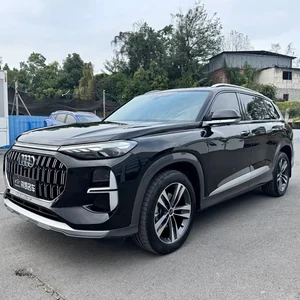
Audi Audi Q6 2025 40 TFSI quattro Commemorative Edition Yulin Package 7-Seater
How to buy a Audi Q6 from China
-
1
Set the destination requirements
Record the destination country, required steering side, charging or refuelling access, passenger count, homologation constraints and delivery deadline. This prevents a visually attractive but unusable import from entering the shortlist.
-
2
Build a comparable shortlist
Open the live Audi Q6 listings and compare vehicles using the same model year, trim, powertrain, seating and condition. The current per-unit price, availability and stated MOQ appear on each live vehicle record.
-
3
Request a written RFQ
Send the selected vehicle identifiers, destination and required options for a written quotation. Ask for the vehicle price, export charges, freight basis, Incoterm, currency, validity period and any documents not yet provided.
-
4
Confirm MOQ and payment terms
Confirm the supplier's MOQ, deposit, balance, bank charges, title-transfer process and refund conditions in the pro forma invoice. Do not rely on a verbal assurance that a single-unit or mixed-model shipment will be accepted.
-
5
Inspect before final payment
Use an independent pre-shipment inspection matched to the configuration, including body, mileage, documents and EV battery or charging checks where applicable. Tie the balance payment to written inspection results and correction of any material discrepancy.
-
6
Book compliant transport
Agree the shipping method, insurance, loading supervision, customs responsibility and delivery terms before dispatch. Ensure the freight file includes the required vehicle, commercial, packing and battery-related documentation for the route.
-
7
Complete export handover
Reconcile the vehicle identity, condition and export documents with the approved specification, then release payment and release the vehicle for loading. Preserve inspection, customs, insurance and delivery records for the importer and destination service partner.
Q6 vs rivals
| Tesla Model Y | For Q6L e-tron buyers, the Model Y is a direct BEV benchmark with different cabin and software choices. The Q6 counters with Audi positioning, long-wheelbase packaging and multiple editions, but exported buyers must verify charging, certified range and local service support. |
|---|---|
| BMW iX3 | The iX3 is a close premium electric alternative for Q6L e-tron evaluations, with a different manufacturer proposition and established model identity. The Q6 offers broader petrol-and-electric choice and distinctive China-specific packaging, making like-for-like homologated comparisons essential. |
| Mercedes-Benz GLC | The GLC is a more relevant benchmark for the combustion Q6 than for the e-tron, competing in the premium SUV and fleet-use segment. The Q6 adds varied package and six- or seven-seat choices, but buyers should compare approval, servicing and parts support before choosing. |
Frequently asked questions
What does an Audi Q6 wholesale buyer need to know about export pricing?
Pricing moves with model year, trim, powertrain, range edition, seating, packages, condition, mileage, exchange rates, freight, insurance and the selected Incoterm. Current per-unit prices and availability are shown in the live ChinaCarDirect listings. Request a written landed quotation because destination charges and freight can change independently of the vehicle price.
Which Audi Q6 engine and electric range options are available?
The visible range includes 40 TFSI, 45 TFSI and 50 TFSI quattro combustion versions, plus Q6L e-tron Pioneer, Extended Range and Ultra Long Range editions. Exact displacement, motor output, battery capacity, CLTC range, drive configuration and charging details must be confirmed in the live listing for the specific vehicle.
Is a used Audi Q6 better than a new one?
A used Q6 can reduce acquisition exposure and may suit a distributor entering the segment cautiously, but condition and service history require independent verification. A new vehicle is easier to standardise across a fleet and may simplify handover, yet it carries more capital exposure. Compare equivalent configurations on condition, warranty, ownership cost and expected resale positioning.
What is the MOQ for Audi Q6 orders?
MOQ is set by the supplier and transaction rather than by the model itself. Some live offers may accept one vehicle, while consolidated or special-configuration shipments may require more. Check the stated MOQ on each live listing and have the final requirement repeated in the quotation and pro forma invoice.
What affects Audi Q6 shipping time and cost?
Origin and destination, transport mode, container or specialist-carrier choice, route, handling, insurance, customs clearance and inland delivery all affect the result. Freight quotations have a validity period, so booking conditions and exchange-rate exposure should be confirmed at the time of order. No universal delivery time should be assumed for a particular route.
How are Audi Q6 spare parts handled for export?
Parts should be ordered against the exact model year, trim and powertrain, with part-number compatibility confirmed before shipment. EV and high-voltage components require especially careful handling and qualified service support. Check packaging, customs treatment and destination availability; do not assume domestic stock or donor-part dismantling will solve an overseas repair.
Can the Audi Q6 be supplied in right-hand drive?
China-produced Q6 examples should generally be treated as left-hand drive unless the supplier confirms otherwise. For an RHD market, ask whether a compliant example exists, whether a properly approved conversion is possible or whether sourcing from an RHD market is more appropriate. Steering-side changes can affect approval, warranty, insurance and parts support.
How do I buy an Audi Q6 from China?
Start with the live inventory, compare equivalent vehicles and submit an RFQ for the chosen configuration and destination. After confirming documents, MOQ, payment milestones and Incoterm, arrange independent inspection before the balance payment. Then complete customs, shipping and destination handover using the agreed freight and compliance plan.
Ready to source the Audi Q6?
Send ChinaCarDirect your destination, powertrain, seating and quantity requirements for a tailored Audi Q6 quotation and export checklist.
Request a quote