
Audi Q6l E-tron Export Buying Guide for Dealers
Buy an Audi Q6l E-tron from China with clear guidance on editions, range checks, export pricing, MOQ, shipping, homologation and key rivals for dealers.
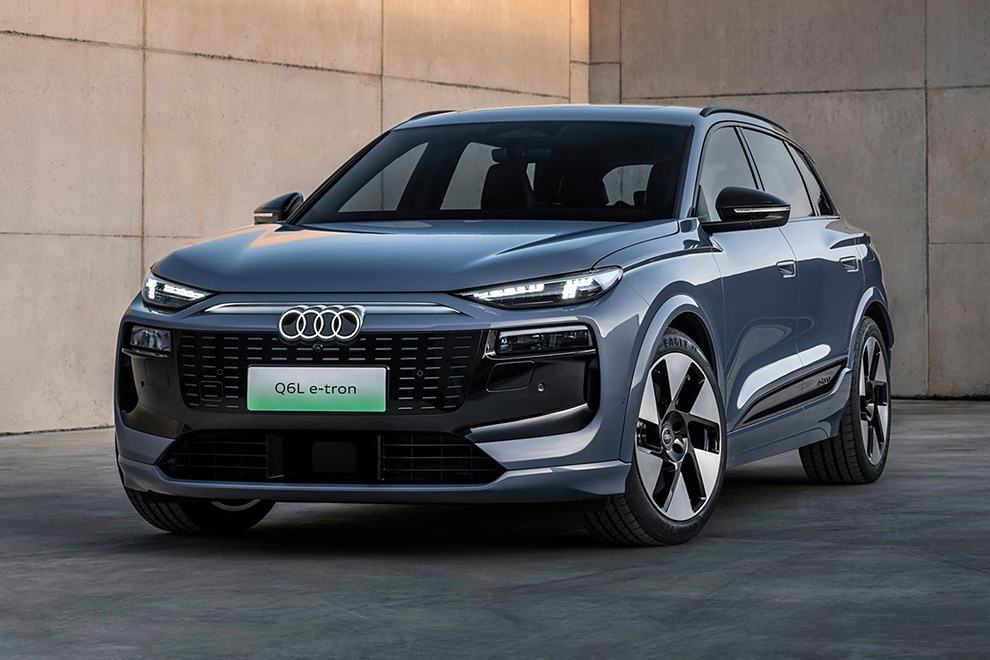
At a glance
- The Q6L E-tron is a China-built Audi electric SUV suited to premium dealer and fleet programs.
- Model Pioneer Edition and Extended Range Edition are the key edition names to compare, but neither label establishes technical capability by itself.
- Edition choice should be based on VIN-confirmed battery, range, charging and equipment data.
- Export cost must be assessed on a landed basis, including freight, insurance, duties, taxes and local preparation.
- Single-unit testing, container consolidation, LHD/RHD availability and homologation all require written confirmation before commitment.
Why the Audi Q6l E-tron matters for export markets
The Audi Q6l E-tron for export combines a globally recognized premium marque and a familiar electric-SUV format with the sourcing logic of a China-market model. For overseas dealers and fleet buyers, that combination can be attractive when the objective is a premium EV without importing an unfamiliar brand. It is also a vehicle that demands market planning: the Q6L name, equipment and service assumptions may differ from Q6 models sold in Europe or North America. An export decision should therefore start with destination compliance and aftersales support, not only with the catalogue badge.
Demand for this model should be understood at segment level rather than through unsupported sales forecasts. Premium electric SUVs appeal to company-car programs, dealer groups and fleet operators that want a recognizable badge, practical body style and zero tailpipe emissions. The Q6L’s long-wheelbase positioning can suit families and executive transport where rear-seat space matters, although buyers should verify dimensions and luggage capacity for the export unit. For importers, the opportunity lies in matching the vehicle to charging patterns, service capacity and residual-value expectations rather than assuming European or North American demand transfers directly to China.
The model also illustrates why a China export purchase should be treated as a cross-border vehicle program, not a retail transaction. Local taxes, charging standards, software connectivity, parts cataloguing and imported-EV rules can materially change operating economics. A dealer that can arrange pre-delivery inspection, charging support, warranty administration and rapid parts sourcing will extract more value than one competing only on acquisition cost. Fleet buyers should evaluate total ownership cost across residual assumptions and duty treatment. Smaller importers may find a single-unit test and transparent local conversion plan more realistic than an immediate container commitment.
- China-built Audi badge meets global EV demand.
- Long-wheelbase space suits family and executive use.
- Compliance and service readiness determine export viability.
Model range, trims and powertrain variants: how the lineup is structured and how to choose
The export-facing Q6L e-tron range is organized around two named editions: Model Pioneer Edition and Extended Range Edition. This structure gives buyers a useful first split, but the labels alone are not a substitute for a VIN-specific specification sheet. Model Pioneer Edition should be assessed against the equipment actually fitted, while Extended Range Edition should be evaluated through its battery capacity, rated range, charging specification and associated hardware. Request the build sheet and option list for every shortlisted vehicle because same-named cars can differ in production date, market equipment and cosmetic specification.
The Q6L e-tron is a battery-electric model, so fleet planning should be built around an electric powertrain. The relevant checks are usable battery capacity, electric motor output, drive configuration, AC and DC charging capability, rated test-cycle range, curb weight and towing limits where the market version is approved. Several values are not safely transferable between domestic and export configurations, so the live listing should be the starting point and the manufacturer or seller build record as confirmation. Never estimate range from the word Extended alone; use the corresponding build-sheet evidence.
Choice should follow duty cycle. For urban commuting, mixed fleets and depot charging, the Model Pioneer Edition may be adequate if usable range covers the route with a conservative reserve. Long-distance operations should examine the Extended Range Edition’s certified and real-world behavior, charging stops and weather correction rather than rely on a laboratory figure. Compare rear accommodation, boot volume and standard equipment against rivals. Because range, motor and charging figures are unit-specific, buyers should check the live listing and obtain written confirmation before reserving funds or presenting the vehicle to customers.
- Compare Model Pioneer and Extended Range editions.
- Verify battery, rated range, motor and charging by VIN.
- Select editions around route length and charging reality.
New vs used Audi Q6l E-tron: how export inventory is structured and how buyers choose
For the Audi Q6l E-tron, export inventory should be read as individual vehicles rather than a standardized batch. Condition, mileage or non-usage status, model year, edition, options, exterior finish and location can differ materially between listings. A new vehicle offers a clearer comparison basis and latest factory configuration; it also carries early depreciation and the highest acquisition outlay before freight and taxes. An importer with a defined launch market can use that clarity, while a fleet buyer may prefer a lower initial capital commitment if the unit meets operational and compliance needs.
A used Audi Q6l E-tron can make sense when the brief values residual suitability more than factory-new presentation. The decisive checks are battery health, charging and thermal-management evidence, accident or flood history, software status, warranty transfer and whether the odometer reflects genuine use. A used import may also require additional local approval work, and replacement parts or calibration could be harder to source than for a factory-new car. Ask for a battery-state report, service records, VIN photos and a condition inspection; do not treat a clean cabin as evidence of mechanical health.
Because availability changes continually, do not assume a used Q6L E-tron will be present when your order is placed. Use the live inventory for current condition and availability, then reserve the selected unit before committing shipping funds. For a new vehicle, define acceptance criteria in the purchase contract, including panel condition, matching VIN labels, mileage, tire condition, charging accessories and absence of unresolved warning messages. For a used vehicle, add battery-health and repair-history terms. These controls matter more than a generic new-versus-used label because two examples can present very different risks.
- Condition, mileage, year, options and edition vary.
- New vehicles simplify comparison but accelerate depreciation.
- Used units require battery and history evidence.
How export pricing works: the factors behind a live listing price, and how to read one
This Audi Q6l E-tron export price guide starts with a principle: there is no fixed wholesale number. The live listing price begins with the vehicle’s identity and commercial baseline, then may be adjusted for model year, Model Pioneer or Extended Range specification, factory options, color, condition, mileage, seller location and demand. Currency movements also affect the quote. For a fleet buyer, the relevant comparison is not the asking figure but landed cost per vehicle after inland transport, export handling, freight, insurance, destination charges, duties, taxes, registration and local dealer preparation.
Read the Incoterm before comparing offers. One quote may cover the vehicle only to the named domestic handover point, while another may extend through port or door-to-door stages. Confirm what is included for the electric powertrain: onboard charging equipment, export documentation, battery transport requirements, pre-delivery inspection, warranty documents and tools. A lower catalogue number can become more expensive if the quote excludes transport, insurance or destination charges. Conversely, a higher inclusive quotation may be easier to budget. Ask for each charge to be itemized and state the currency, quotation validity and payment milestones.
Exact price and availability are shown per unit in ChinaCarDirect’s live Q6L E-tron listings, and those current figures should replace any remembered benchmark. Before issuing an RFQ, record the listing reference, VIN or SKU, edition, visible condition and requested Incoterm. Then build a spreadsheet that separates vehicle cost, inland logistics, freight, insurance, customs, duty, VAT or GST, registration and local handover. This method creates a true landed-cost comparison across editions and rivals, and it makes clear whether a change in the quotation comes from the vehicle, exchange rates or logistics.
- Check model year, edition, options, condition and mileage.
- Separate vehicle cost from freight, insurance and taxes.
- Use live per-unit listings for current figures.
MOQ, ordering and payment: single units vs consolidating a container
MOQ for the Audi Q6l E-tron should be treated as a unit-specific commercial term, not an assumption based on the brand or marketplace. Check the MOQ field on the selected live listing and include it in the RFQ. Some offers may be structured for a single-unit sale, while others require a batch or mixed-model container. If a dealer wants one vehicle for market testing, ask the seller to confirm that exact unit can be released without a larger allocation, and state whether the MOQ applies per SKU, model or color.
Container consolidation changes the economics but not the need for precise vehicle control. A dealer may combine Q6L E-tron editions or other compatible vehicles in one shipment, subject to dimensions, axle loads, securing points, battery handling and carrier acceptance rules. Ask for the proposed packing plan, gross weight, vehicle mix and allocation sequence before paying. Do not assume every SKU shown in the catalogue can be placed in one container. Clarify which party is responsible for export customs, terminal handling, insurance, damage survey and release of funds; these roles should match the selected Incoterm.
A sound ordering workflow starts with written specification, continues through a pro forma invoice and clear payment schedule, and ends only after inspection and transport documents align with the contract. Payment methods, deposits, milestone triggers and documentary conditions vary, so request them rather than relying on marketplace conventions. Verify legal ownership, VIN continuity, lien status where applicable and correct importer or consignee details. Use an independent pre-shipment inspection, document discrepancies before release, and keep the report with the final commercial invoice, packing list, export documents and transport booking for the record.
- Read the unit-specific MOQ before ordering.
- Single-unit purchases support controlled market testing.
- Tie deposits and release to documents and inspection.
Shipping, homologation and market compliance caveats: LHD/RHD and import rules by country
Vehicle shipping can use roll-on/roll-off or container transport, but an electric model adds battery-specific handling. The carrier and forwarder should confirm how the traction battery is isolated, its permitted state of charge, terminal protection, securing method and destination documentation. Transit time and cost depend on origin and destination ports, sailing availability, terminal congestion, carrier capacity, insurance, fuel surcharges and customs efficiency. Obtain an all-in freight quotation and understand the route. The vehicle’s homologated charging equipment must match the destination market’s electrical system, plug standard and charging rules approved for local use.
Steering configuration is an export check. China-origin inventory may be presented in left-hand-drive form, while some buyers need right-hand drive for local registration, fleet practice or expectation. Availability is not uniform, and a steering change can create delay and cost. State LHD or RHD at the RFQ stage and require the seller to confirm it from the VIN and an independent physical inspection before any deposit is paid. Do not assume a conversion is acceptable; electrical, safety and homologation implications differ by jurisdiction, and a converted vehicle may affect warranty, insurance and resale.
Local market compliance is country-specific. Depending on the destination, the importer may need VIN identification, type approval, safety and electromagnetic-compatibility checks, software and cybersecurity approval, radio compliance, charging-system rules, customs classification, evidence of origin and tax or duty payment. Zero tailpipe emissions do not remove the need for vehicle approval, and a Chinese-market certificate is not automatically valid elsewhere. Before contracting, place the model and exact variant with a local vehicle-compliance specialist or broker. Confirm who is importer of record, which documents are required and whether warranty coverage remains valid after export.
- Specify LHD or RHD before the deposit.
- Battery handling rules affect transport arrangements.
- Confirm importer-of-record and warranty coverage.
Who should buy the Q6l E-tron — and who should pick a different vehicle
The Q6L E-tron fits buyers who want a premium Audi badge, an electric SUV format and a China-sourced vehicle with a potentially spacious long-wheelbase cabin. It is relevant to dealers testing a premium EV category, company-car specialists serving business customers, and fleets able to install dependable charging and support aftersales. The commercial case improves when local tariff and tax treatment are understood, spare-parts access is credible, and the residual-value assumption is conservative. A Q6L purchase makes more sense within a managed vehicle program than as an unsupported local inventory experiment.
It may be the wrong choice for a budget buyer focused on the lowest acquisition cost, an operator without reliable charging, or a customer who prioritizes service-network certainty over Audi familiarity. Long-distance fleet users should not buy on range alone; they need route-specific charging access, realistic weather-adjusted consumption and a credible residual plan. Buyers needing a hybrid or combustion alternative may prefer another powertrain, while off-road, heavy-towing or maximum-load applications require verified limits and local certification rather than assumptions based on SUV size. Exact seating and equipment should be checked by VIN.
The Q6L is less suitable when the destination has no homologation path for the China-market version, when RHD supply cannot be secured, or when parts and software support is too slow for operator. A small importer should compare it with locally homologated alternatives after calculating total delivered cost, not merely the China export quote. Conversely, a buyer seeking a premium family EV with more space may find the Q6L more relevant than a compact crossover, provided the wider body does not create parking, charging or service-bay constraints. Complete these checks before a deposit.
- Best for premium dealers and managed EV fleets.
- Requires dependable charging and credible parts support.
- Weak fit without homologation or RHD supply.
Main rivals and how the Q6l E-tron compares
The Tesla Model Y is the most direct high-volume benchmark for a premium electric SUV. It can appeal to buyers who prioritize a straightforward model range, strong brand recognition and access to a familiar charging ecosystem in some markets. The Audi Q6L E-tron differentiates through traditional premium-car presentation, long-wheelbase family orientation and established Audi service identity where that network is strong. A fair comparison uses homologated range, usable cargo space, software, warranty and delivered cost, since headline figures from different countries may not be equivalent. Check local charging access and parts support.
BMW iX3 is a close alternative for drivers who prioritize BMW’s driver-focused positioning and established premium-brand service experience. The Q6L’s case rests more on EV packaging, cabin space and family usability, while the iX3 may suit a buyer focused on the marque’s road-car character. Compare destination versions for range, output, charging, rear-seat comfort and software; these attributes vary by market. For fleet evaluation, neither badge substitutes for local residual-value evidence, insurance terms, downtime planning and parts availability. The less common either model is, the more local operating factors should dominate.
Polestar 4 is a closer China-built, design-led rival that competes for premium EV SUV buyers who accept a less conventional badge and minimalist ownership proposition. The Q6L may be easier to place with mainstream Audi customers and offers a more conventional luxury-SUV presentation, but buyers should not assume its service and parts channels are broader. Compare the exact homologated versions, software functions, ride, cargo practicality, warranty and charging access. Across these matchups, the Q6L is strongest when its cabin proposition, dealer readiness and local compliance outweigh any clear rival advantage.
- Tesla Model Y prioritizes volume-brand familiarity.
- BMW iX3 emphasizes driver-focused premium character.
- Polestar 4 offers a design-led alternative.
Live Audi Q6l E-tron export inventory
View all listings →Real units currently on ChinaCarDirect with per-unit asking prices and MOQ. Availability updates live from the catalogue.
How to buy a Audi Q6l E-tron from China
-
1
Define the destination requirement
Identify the destination country, required LHD or RHD configuration, charging system and importer-of-record structure. Have a local compliance specialist confirm the homologation route before selecting vehicles.
-
2
Shortlist the live inventory
Review the live Audi Q6l E-tron listings and compare edition, condition, model year, options, seller location and visible equipment. Request the specific listing reference for each candidate.
-
3
Validate the VIN build sheet
Request the VIN-specific battery, rated range, test cycle, motor, drivetrain, charging, dimensions, equipment list and service-history documents. Treat listing names and edition labels as prompts for verification rather than final specifications.
-
4
Request a landed quotation
Ask for a written quotation showing the vehicle cost, Incoterm, inland transport, freight, insurance, customs, duties, taxes, registration and local handover charges separately. Confirm the currency and quotation-validity period.
-
5
Confirm MOQ and payment mechanics
State whether the order is for a single unit or a consolidated container, and ask how the MOQ applies. Align deposits, documentary release conditions, ownership checks and inspection requirements in the pro forma invoice.
-
6
Inspect, ship and complete import
Use an independent pre-shipment inspection, confirm battery-compliant transport and securing, and reconcile the VIN across commercial and shipping documents. Appoint an experienced importer or freight forwarder to manage customs and destination registration.
Q6l E-tron vs rivals
| Tesla Model Y | The Model Y is a direct high-volume premium EV SUV benchmark, with straightforward trim logic and a familiar charging ecosystem in some markets. The Q6L E-tron offers a more traditional Audi presentation and long-wheelbase family orientation, so the better fit depends on brand preference, cargo needs and local service support. |
|---|---|
| BMW iX3 | The BMW iX3 is a close premium-brand alternative for buyers who prioritize a driver-focused identity and established service experience. The Q6L places more emphasis on EV packaging and family usability, with the final decision depending on the destination version’s range, output, comfort and software. |
| Polestar 4 | The Polestar 4 is a closer China-built rival for buyers attracted to design-led vehicles and a less conventional ownership proposition. The Q6L may be easier to place with mainstream Audi customers, but buyers should compare homologated versions, parts support, warranty and charging access rather than assume either brand has broader coverage. |
Frequently asked questions
How is Audi Q6l E-tron export pricing determined?
A live quote reflects the individual vehicle, model year, edition, options, condition, mileage, seller location and currency movement, plus any freight, insurance, tax and destination charges included by the Incoterm. Compare the written quote line by line rather than relying on a remembered catalogue figure. Current per-unit price and availability are shown in the live Q6L E-tron listings.
What powertrain and range details should I confirm?
The Q6L e-tron is a battery-electric SUV, with the export catalogue structured around Model Pioneer Edition and Extended Range Edition. Confirm the VIN-specific battery capacity, rated range and test cycle, motor output, drivetrain, charging system and curb weight because these values are not interchangeable across markets. The edition name alone is not a substitute for the build sheet.
Should I buy a new or used Audi Q6l E-tron?
A new unit gives clearer configuration and condition comparability but usually requires more capital and begins depreciating sooner. A used unit can fit a lower-capital brief, but buyers should inspect battery health, accident and flood history, mileage, software, warranty transfer and repair records. Check live availability because a suitable used example may not be present when the order is ready.
What is the MOQ for Audi Q6l E-tron wholesale orders?
There is no safe blanket MOQ: check the MOQ stated on each live listing and ask the seller whether it applies per SKU, model or color. A single-unit structure may suit market testing, while a container order may require an allocation or a mixed-vehicle plan. The binding quantity, deposit and release conditions should appear in the written quotation and pro forma invoice.
How long does shipping take and what affects cost?
Transit time and cost depend on the route, port and carrier availability, RoRo or container method, terminal handling, battery compliance, insurance, fuel surcharges and customs clearance. Because several variables sit outside the seller’s control, request an all-in freight quote and a written delivery estimate rather than rely on a generic timetable.
Can spare parts be ordered for an exported Q6L E-tron?
Parts should be identified by VIN and the China-market parts catalog, then checked against the vehicle’s production and equipment specification before ordering. Ask the supplier about availability, lead time, shipping restrictions, warranty and whether an equivalent part can be used; some alternatives may require calibration or affect warranty. If local service support is limited, include the spare-parts strategy in the purchase decision.
Is right-hand-drive Audi Q6l E-tron availability assured?
No. State LHD or RHD in the RFQ and require the seller to confirm the configuration from the VIN and an independent inspection. RHD supply can be limited, and an unapproved late conversion can affect homologation, warranty, insurance and residual value.
How do I buy an Audi Q6l E-tron from China?
Start with the live listings, shortlist a unit and send an RFQ containing the destination, steering requirement, edition preference and requested Incoterm. Ask for a VIN build sheet, all-in landed quotation, unit-specific MOQ, payment schedule and expected documents, then inspect the vehicle before release. Use a specialist importer or freight forwarder to manage customs, battery transport and destination registration.
Ready to source the Audi Q6l E-tron?
Send an RFQ with your destination, steering requirement and preferred Q6L E-tron edition for a current unit-level quotation.
Request a quote