
Audi Rs 5 Export Buying Guide for Dealers and Fleets
Buy an Audi Rs 5 from China with clear guidance on trims, export pricing, MOQ, shipping, compliance, spare parts, and rival performance models.
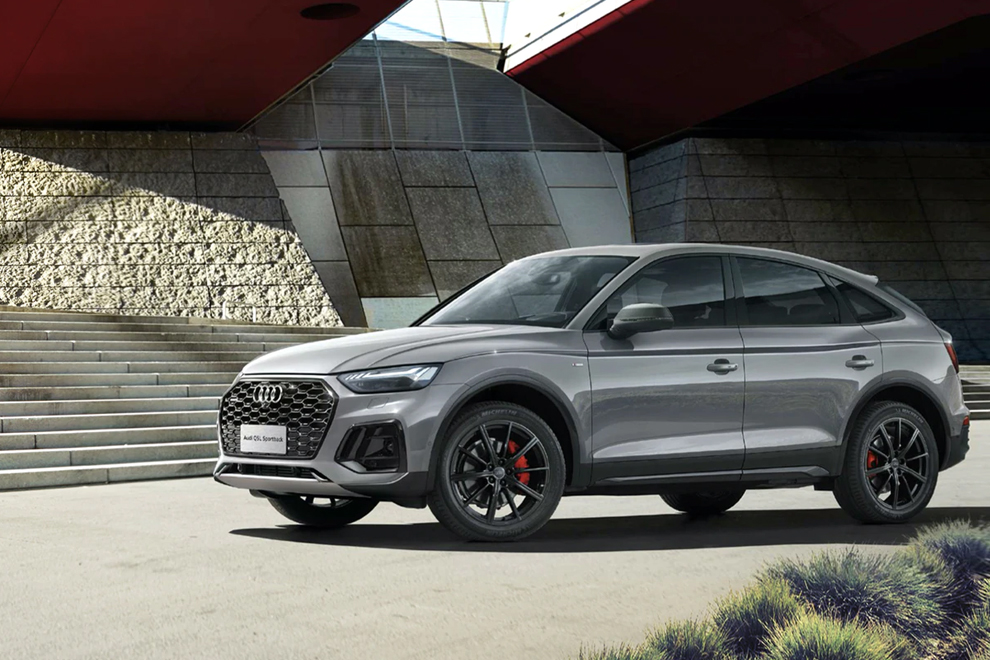
At a glance
- The RS 5 is a premium petrol performance coupe or Sportback, positioned between regular Audi models and far more exotic machinery.
- The Sportback is the more practical choice for fleets and luggage, while the Coupe emphasizes a traditional two-door profile.
- Compare model year, edition, equipment, condition, mileage, and steering side because RS 5 listings are not interchangeable.
- Export prices depend on the unit, logistics, Incoterm, exchange rates, taxes, and compliance costs, so current written quotes are essential.
- Confirm destination rules, inspect the selected vehicle, and secure payment and shipping terms in writing before committing.
Why the Audi Rs 5 matters for export markets
The RS 5 occupies a distinctive niche in the premium performance segment: it combines coupe proportions with the everyday usability of Audi's Sportback format, while the two-door version caters to buyers who prefer a traditional body. Its 2.9-litre turbocharged petrol engine and quattro all-wheel-drive identity place it well above a regular A5 or S5. For overseas dealers, that middle ground can attract customers who want an exotic-looking performance model without the cost and ownership complexity of a full supercar. It also offers fleet buyers a more premium image than a standard executive saloon, provided local running-cost and insurance policies permit it.
Demand for the RS 5 is strongest among performance-focused dealers, premium company-car programs, and affluent private buyers who need a daily-usable car. The Sportback version is particularly relevant where buyers want rear-seat access and luggage flexibility without abandoning a high-performance badge. Its appeal also depends on local fuel availability, taxation, insurance categories, and the credibility of Audi servicing. A model can be desirable in one market yet awkward in another where performance cars attract heavier duties, restrictions, or high operating costs. That makes market-specific research more useful than relying on a global demand assumption.
For export planning, the important distinction is that the RS 5 is a petrol performance model rather than an electric product. Buyers therefore evaluate engine servicing, fuel consumption expectations, tyre supply, insurance, and residual-value confidence instead of battery range or charging compatibility. The model's relative practicality is a genuine strength, but only if the destination has the infrastructure and service network to support it. A live ChinaCarDirect listing should therefore be read together with the buyer's destination rules, not treated as an automatically transferable specification and importer documents before any funds are committed.
- Positioned between a conventional coupe and a premium performance five-door.
- The 2.9T petrol powertrain makes fuel and servicing central to ownership.
- Market fit depends on tax, insurance, steering-side demand, and local Audi service access.
Model range, trims and powertrain variants: how the lineup is structured and how to choose
The export-facing RS 5 range is organized around two core body styles: the RS 5 Coupe and the RS 5 Sportback. Listings also use edition names such as Ignition, Dark Gold, Obsidian, Standard, Ultimate, and Special Edition. These labels can indicate original-market appearance and equipment packages, but they should not be treated as proof of identical power or drivetrain. The prudent approach is to compare the complete listing specification, including year, edition, transmission, steering side, and factory options, before treating two cars as equivalent. A name-only comparison can be misleading in practice.
The Sportback is the more versatile choice for fleet and dealer use because its five-door liftback layout can improve access and luggage flexibility while retaining the low, performance-led profile. The Coupe gives buyers a more traditional two-door silhouette and a clearer visual distinction from ordinary A5 models, but its packaging is less suited to carrying bulky items or serving as a high-usage company vehicle. Neither body style automatically makes a vehicle more or less exportable; the better choice depends on local customer demand, loading requirements, and the exact equipment buyers expect.
The 2.9T designation identifies the petrol powertrain family used across these RS 5 listings. RS 5 cars are generally associated with a performance automatic gearbox and quattro all-wheel drive, but export specifications and listing details should still be checked rather than assumed from the model name. Unlike an EV or plug-in hybrid, the RS 5 has no battery capacity or electric range to compare; selection should focus on engine output, transmission behavior, driven wheels, fuel type, and whether the destination accepts the exact variant. Confirm these points on the live unit before negotiating.
- Choose Sportback for five-door access or Coupe for traditional proportions.
- Treat edition names as package identifiers, not proof of mechanical equivalence.
- Verify engine output, gearbox, drivetrain, equipment, and steering side per unit.
New vs used Audi Rs 5: how export inventory is structured and how buyers choose
Export inventory for a performance nameplate is usually organized by model year, body style, and edition rather than by one uniform specification. That makes the catalogue useful for finding a target configuration, but it also means that similarly named RS 5 units may differ in age, equipment, finish, and market specification. Buyers should read each live record as a separate vehicle, not as evidence that every car carries the same options. Model-year age is especially relevant to depreciation, software, service requirements, and the availability of replacement parts in the destination country.
A new RS 5 is attractive when the buyer wants a current model-year vehicle, documented delivery condition, and the option of specifying a preferred body and package before registration. It also avoids uncertainty about accumulated wear, although registration can create an immediate depreciation step. A used example can reduce acquisition cost and may suit a buyer comfortable with inspection, but the lower entry price may be offset by age, mileage, service gaps, accident repair, or more difficult parts sourcing. Neither condition should be judged by a badge or model-year label alone.
For either condition, request the VIN, production or delivery date, odometer reading, service history, title and import documents, tyre status, and photographs of the body and underbody. For a used car, an independent inspection should cover cold starting, fluid leaks, brake condition, suspension noise, accident evidence, and verification that the displayed mileage is credible. For a new vehicle, confirm that it has not been damaged in storage or transport and that protective films, paint condition, and factory accessories match the order. These checks are more reliable than an edition badge.
- Compare model year, body, edition, equipment, condition, and mileage separately.
- New vehicles reduce wear uncertainty; used vehicles demand documented inspection.
- Check the VIN, service history, title records, tyres, bodywork, and underbody.
How export pricing works: the factors behind a live listing price, and how to read one
An RS 5 export price is a negotiated outcome, not a permanent model price. The vehicle-side variables include model year, Coupe or Sportback body, edition, factory equipment, condition, mileage, steering side, and whether the car is new or previously registered. Transaction variables then add exchange-rate movement, freight, insurance, port charges, taxes, duties, documentation, and the chosen Incoterm. Two listings with similar names can therefore carry materially different totals, especially when one is older, has a different specification, or requires more destination-side work. Reviewing those variables is essential before comparing offers.
To read a live listing correctly, first establish whether the displayed amount covers only the vehicle or also includes an export service and transport. Then identify the Incoterm, which party arranges freight, which costs are included, and which remain with the importer. A buyer comparing offers should normalize the scope, currency, exchange assumption, insurance, port charges, and expected inspection or documentation fees. Also check whether the quoted price is reserved for a specific unit or subject to reconfirmation; only a written quotation tied to a VIN is commercially binding for both parties.
A sound export-price exercise works backward from the destination budget. Start with the live unit price, add the agreed logistics and compliance costs, then assess import duty, tax, registration, and local preparation before reaching a landed cost. Add expected fuel, insurance, maintenance, and depreciation to compare it with alternative performance cars. ChinaCarDirect's live RS 5 inventory is the place to verify current per-unit figures, while an RFQ should state the destination, body style, year, edition, and required terms so that the response can be compared consistently rather than estimated by model.
- Normalize every quote to the same currency, cost scope, and Incoterm.
- Separate vehicle cost from freight, insurance, port charges, duties, and taxes.
- Request a unit-specific written quotation tied to the VIN and its validity period.
MOQ, ordering and payment: single units vs consolidating a container
There is no universal catalogue MOQ for the RS 5; the minimum and allocation rules must be read from each live listing and confirmed in the quote. Some buyers can purchase a single vehicle, while dealers or fleet programs may be able to combine several units into one shipment. The practical MOQ can also be shaped by the selected specification, export documentation, production allocation, and the carrier's loading plan. A seller who cannot state the minimum in writing should not be treated as offering a firm order commitment before payment.
Ordering usually begins with a live unit and written specification, followed by a pro forma invoice that identifies the vehicle, price, payment schedule, Incoterm, delivery scope, and validity period. The buyer should verify the seller's payment beneficiary and understand bank charges, cancellation terms, and when the balance becomes due. A deposit may reserve the unit, while the final payment is commonly linked to agreed inspection or shipping milestones. Those mechanics vary by seller and market, so the RFQ and invoice—not an assumed platform process—must define the sequence in clear terms.
Consolidating a container can improve freight efficiency when several RS 5 units share a destination, but it also concentrates risk: one damaged car, missing document set, or loading issue can affect the whole group. Mixed body styles and editions can complicate allocation and resale planning, so dealers should map each unit to a buyer before committing. For a single-car purchase, ask for the same level of unit identification, insurance, inspection, and secure-loading detail that a fleet shipment receives. The best route depends on volume, destination, handling requirements, and the seller's released allocation.
- MOQ and allocation rules vary by listing and seller; confirm both in writing.
- Use a pro forma invoice to define the unit, payment milestones, and cancellation terms.
- Container consolidation can improve freight efficiency but concentrates vehicle risk.
Shipping, homologation and market compliance caveats: LHD/RHD and import rules by country
Steering configuration is one of the first checks for an RS 5 export. Left-hand-drive and right-hand-drive cars may be offered for different markets, and availability changes by country and production period. A buyer must confirm the hand of drive shown on the specific unit; changing it later is not a routine specification request and can add cost, delay, and compliance work. Local expectations also affect demand, so a familiar-market RHD car may move more easily than an LHD example, while fleet requirements may point the other way for that country.
Import rules are determined by the destination, not by the vehicle's RS badge. Authorities may impose age limits, emissions or exhaust testing, roadworthiness and lighting checks, VIN inspection, customs valuation, duty, tax, and local type-approval requirements. Insurance classification, company-car rules, fuel taxation, and parking or emissions policies can affect ownership even after the car clears customs. Buyers should obtain a destination-specific import and registration check before paying, and should confirm which documents the border agency and insurer will accept. Professional advice may be necessary where emissions, age, or vehicle-classification rules are complex.
Shipping adds a separate layer of risk because a high-value performance car can be damaged by poor loading, lashing, water, or handling. Compare enclosed-container, roll-on/roll-off, and specialist vehicle-transport options where available, and ask who arranges loading, insurance, customs, port handling, and the final inland delivery. Transit time and cost depend on origin and destination ports, sailing or vehicle schedule, congestion, insurance coverage, documentation readiness, and season. Obtain a door-to-door cost and timeline tied to the chosen Incoterm rather than relying on a generic route estimate from the named ports or terminals.
- Confirm LHD or RHD on the exact vehicle before ordering.
- Check destination rules for age, emissions, roadworthiness, VIN, tax, duty, and type approval.
- Confirm insurance classification and any company-car, fuel-tax, or parking restrictions.
Who should buy the Rs 5 — and who should pick a different vehicle
The RS 5 suits a dealer or buyer who wants unmistakable performance-car image, quattro all-wheel-drive appeal, and more daily usability than a conventional two-door sports car. The Sportback can be especially persuasive when the customer still needs passenger access and usable luggage space. It may suit an executive demonstrator or a premium private buyer who values design and driving character but accepts petrol operating costs, performance-oriented insurance, and regular specialist servicing. The purchase is strongest when local Audi support and parts supply are credible and have been independently verified before shipment.
It is less suitable for buyers whose priorities are lowest running cost, minimal servicing, cargo efficiency, emissions compliance, or predictable residual values. A company fleet with strict emissions or total-cost rules may prefer an electrified model, while a buyer focused on track capability may prefer a lighter, more purpose-built sports car. Buyers wanting Audi design at lower ownership pressure may prefer a standard A5 or S5, although those are different performance tiers. An RS 5 should be chosen for the combination of performance and usability, not simply for the badge.
Before committing, compare the RS 5 against the alternatives on the same worksheet: vehicle price and finance, fuel or energy, insurance, servicing, tyres, depreciation, homologation, and likely resale demand. For a dealer, also test whether the Sportback broadens the customer pool enough to justify holding a slower-moving specialist model. For a fleet, assess utilization, passenger needs, charging or fuel access, and policy fit. If the business case depends on optimistic savings or residual assumptions, the more conservative choice is usually a less extreme performance vehicle for the same operating duty.
- Best for performance buyers who also need everyday usability.
- Sportback is usually the more flexible fleet and luggage option.
- Poorer fit for lowest-cost, zero-emission, heavy-cargo, or minimal-maintenance priorities.
Main rivals and how the Rs 5 compares
The closest direct alternatives are the BMW M4 Competition and Mercedes-AMG C 63 S, because they pair high-performance engines with premium-brand engineering and coupe-focused ownership experiences. The M4 Competition is a strong alternative for buyers who prioritize a two-door driver's-car format and a broad performance ecosystem. The C 63 S competes through high power and a character-focused image, while the RS 5 counters with quattro all-wheel drive and, in Sportback form, a more practical five-door body. The correct comparison depends on the body style and buyer priorities, not badge prestige.
The BMW M5 is a useful third reference for buyers considering more performance and executive-car space. It is larger and normally positioned as a high-performance four-door saloon, so it can suit drivers who prioritize cabin room, long-distance use, and an even more substantial road presence. The RS 5 is more compact and offers a distinctive coupe or Sportback alternative, but it should not automatically be assumed cheaper to own. Insurance, servicing, depreciation, and local tax can narrow or reverse the expected cost differences between these high-performance nameplates on a local basis.
A practical test-drive and ownership review should compare seat comfort, visibility, ride quality, boot flexibility, infotainment, service access, and the driver's confidence in the drivetrain. Check whether local dealers can support each model and whether spare parts and insurance are available at sensible terms. For a dealer order, track buyer acceptance rather than assuming enthusiasts are the only audience. The RS 5 is strongest for buyers who value its all-wheel-drive-led, practical performance role; choose the M4 for driver focus, the C 63 S for its alternative character, or the M5 for a larger saloon.
- BMW M4 Competition: the closest two-door, driver-focused alternative.
- Mercedes-AMG C 63 S: a premium-performance rival with a different character.
- BMW M5: a larger executive-saloon reference for buyers prioritizing cabin space.
Live Audi Rs 5 export inventory
View all listings →Real units currently on ChinaCarDirect with per-unit asking prices and MOQ. Availability updates live from the catalogue.
How to buy a Audi Rs 5 from China
-
1
Set the target specification
Choose Coupe or Sportback, identify the preferred model-year range and edition, and specify LHD or RHD. Include the destination, expected use, and required factory options so unsuitable vehicles can be screened quickly.
-
2
Review the live unit
Examine the current listing, photographs, VIN, factory equipment, body finish, mileage, condition, and market designation. Treat every vehicle separately because similarly named RS 5 units may carry different packages.
-
3
Check destination compliance
Ask the destination importer or broker about age, emissions, roadworthiness, VIN, duty, tax, registration, and type-approval requirements. Confirm that the specified steering side and fuel configuration are acceptable before committing funds.
-
4
Request an itemized quotation
Request a unit-specific quote stating the vehicle, currency, Incoterm, freight scope, insurance, port charges, documentation, inspection, and validity period. Normalize competing quotations on the same cost basis.
-
5
Verify terms and make payment
Review the pro forma invoice, payment beneficiary, deposit, balance milestones, bank charges, and cancellation terms. Pay only after the vehicle identity and contractual scope are clear in writing.
-
6
Approve a pre-shipment inspection
Have the selected vehicle inspected for VIN, mileage, paint, panels, glass, tyres, fluids, leaks, underbody condition, and included accessories. Resolve discrepancies against the invoice before authorizing the balance or shipment.
-
7
Book and track the shipment
Confirm the carrier, secure-loading procedure, insurance, export documents, customs process, port handling, and final delivery responsibility. Retain the invoice, transport records, inspection evidence, and VIN for registration and future servicing.
Rs 5 vs rivals
| BMW M4 Competition | The closest two-door alternative for buyers who prioritize a driver-focused BMW performance car. The RS 5, particularly in Sportback form, differentiates through quattro all-wheel drive and greater luggage flexibility. |
|---|---|
| Mercedes-AMG C 63 S | A close premium-performance rival offering a distinct coupe character and a different drivetrain proposition. Choose the C 63 S for its alternative driving character or the RS 5 for all-wheel-drive-led usability and Sportback practicality. |
| BMW M5 | A larger high-performance saloon reference for buyers prioritizing executive space and long-distance usability. The RS 5 offers more compact coupe or Sportback packaging, but total ownership should be compared locally. |
Frequently asked questions
How is the Audi Rs 5 export price determined?
The price combines the specific vehicle's year, body, edition, equipment, condition, mileage, and steering side with exchange rates, freight, insurance, port charges, documentation, taxes, duties, and Incoterm. Compare every quote on the same landed-cost basis. Current unit-level prices are shown in the live ChinaCarDirect listings and should be confirmed through an RFQ tied to a specific vehicle.
What engine and powertrain does the RS 5 use?
The RS 5 listings in the range use a 2.9-litre turbocharged petrol engine, identified by the 2.9T designation. RS 5 models are generally associated with a performance automatic transmission and quattro all-wheel drive, but buyers should verify the exact gearbox, output, and drivetrain on the live listing. It is not an EV, so there is no battery capacity or charging range to compare.
Is buying a new or used Audi Rs 5 from China better?
A new vehicle can reduce uncertainty about wear and offer more current equipment, while a used example may offer a lower acquisition cost but require careful verification of mileage, service history, accident repair, and condition. The correct choice depends on the buyer's budget, depreciation expectations, and tolerance for inspection risk. Read the condition stated on each live listing and have the selected unit inspected before payment.
What is the MOQ for an Audi Rs 5 export order?
There is no universal MOQ shown for the model; minimums and allocation terms can differ by seller, listing, specification, and shipment plan. A single-unit purchase may be possible, while container orders can consolidate several vehicles when supply and payment arrangements permit. Ask for the applicable MOQ, allocation policy, and cancellation terms in the written quotation.
How long does shipping take and what does it cost?
Transit time and cost depend on the origin and destination, carrier schedule, port congestion, container or specialist-vehicle option, insurance, documentation, and delivery scope. The same route can differ depending on whether the quote stops at port or includes inland delivery and customs steps. Request a destination-specific, door-to-door quotation with an estimated schedule and the Incoterm clearly stated.
Are spare parts available for an exported Audi RS 5?
Parts support depends on the destination's Audi dealer network, the car's model year and edition, and whether the required components are identifiable from the VIN. Common service items may be easier to source than edition-specific exterior or trim parts, so buyers should confirm availability before committing. Obtain the VIN and exact equipment list early and clarify who handles ordering, shipping, duties, and returns.
Can I buy a right-hand-drive Audi Rs 5 for export?
RHD availability depends on the source market, production period, and destination; it should not be assumed from the model name. Check the steering-side field and photographs on the live unit, and state LHD or RHD in the RFQ. If no suitable RHD vehicle is available, the importer should assess the legal and practical implications before considering any conversion.
How do I order an Audi Rs 5 from China?
Start with the live RS 5 inventory, select the closest body style and specification, and send the destination, steering preference, year range, Incoterm, and quantity in an RFQ. Review the unit-specific pro forma invoice, beneficiary details, payment milestones, inspection conditions, and shipping scope before paying. Keep the VIN, invoice, transport documents, and inspection evidence together for customs, registration, and later servicing.
Ready to source the Audi Rs 5?
Request a current Audi Rs 5 export quote with your preferred body style, model year, edition, steering side, destination, and Incoterm.
Request a quote