
Audi RS Q8 Export Guide for Dealers and Fleet Buyers
Plan an Audi RS Q8 export purchase with verified trim guidance, pricing methodology, MOQ, payment, shipping, homologation and importer due-diligence advice.
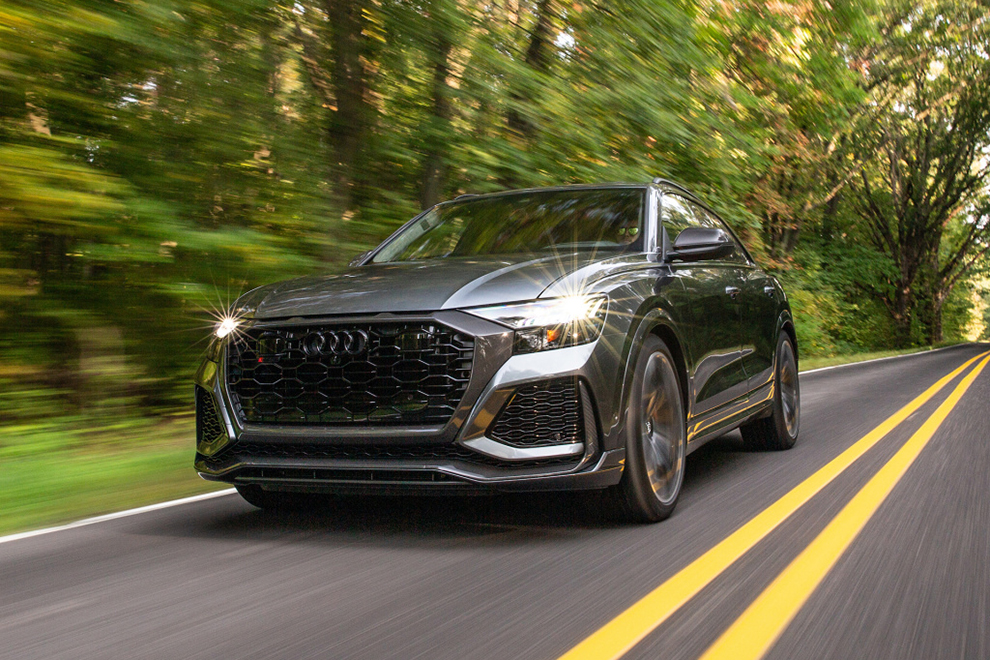
At a glance
- The RS Q8 pairs high performance with a usable luxury-SUV body, making it a natural halo model for premium importers.
- A 4.0 TFSI V8, eight-speed automatic and quattro all-wheel drive define its petrol powertrain; EV range figures do not apply.
- Trim labels can differ by market and year, so the VIN-linked build record and physical vehicle should guide comparison.
- New and used RS Q8s serve different budget and risk profiles, but both need VIN, condition, service and ownership checks.
- Live unit pricing, MOQ and availability must be confirmed in current listings and a destination-specific written quotation.
Why the Audi Rs Q8 matters for export markets
Audi positions the RS Q8 as a high-performance luxury SUV: it combines SUV road presence and raised seating with the pace and driver focus of a performance coupe. For overseas buyers, that combination matters when a customer wants a prestigious model that remains usable on normal roads, not a track-only exotic. Dealers can therefore position it as a flagship halo vehicle rather than as a volume model. Its appeal is particularly relevant in markets where imported premium SUVs already have an established customer base, although local fuel costs, road taxes and insurance will shape the ownership case.
A China-based export channel gives buyers access to RS Q8 inventory described by model year, trim and vehicle condition. The relevant question is not whether the model carries a China-market price advantage, because no fixed export value can be assumed; it is whether the vehicle, documents and specifications can be matched to a buyer’s market. A dealer should also verify where the vehicle originated rather than assuming that a vehicle offered through China was manufactured there. Origin affects certification, homologation, parts support, and how the vehicle should be described to end customers.
Demand should be assessed through consumer appeal and dealer economics. The RS Q8 can attract buyers seeking exclusivity, strong acceleration and road presence, while also fitting premium chauffeur or executive fleets that value image over fuel economy. For a dealer, servicing capability, parts lead times, insurance categories and expected resale support determine whether that attention translates into a sustainable export opportunity. It is a specialist purchase, not a generic high-volume SUV sourcing decision. The strongest candidates specify the buyer, destination and required homologation before discussing a vehicle or committing export funds.
- Performance-led coupe SUV.
- Premium halo positioning.
- Verify origin and support.
Model range, trims and powertrain variants: how the lineup is structured and how to choose
The RS Q8 range is organized around the 4.0 T performance identity, with marketplace listings using labels such as RS Q8 4.0T, RS Q8 4.0T Premium and RS Q8 4.0T performance. These labels are useful for locating comparable vehicles, but they should not be treated as complete trim sheets. Equipment, paint, interior, chassis and market-year changes can differ, so the VIN-linked specification and the physical vehicle take priority over the listing title. A buyer comparing quotations should normalize every candidate by model year, trim label, options and condition before drawing a conclusion.
The powertrain family is straightforward: a 4.0-litre turbocharged V8 petrol engine, an eight-speed automatic transmission and Audi quattro all-wheel drive. This is a combustion-powered performance SUV, so there is no battery pack, electric-only range or charging specification to compare. Performance output, calibration and emissions equipment can vary by model year and destination, making the live vehicle documents and manufacturer references more reliable than assumptions based only on the RS badge. For fleet calculations, ask for the certified fuel-consumption figure applicable to that exact configuration rather than borrowing another model year’s number.
Choose by market-year specification and then by equipment. The Premium and performance labels may imply different standard content, but the listing should be checked against original build information before a buyer assumes a faster, more luxurious or more expensive version. A practical shortlist should also consider tyre and wheel size, suspension, brake specification, infotainment and the availability of servicing. These factors affect usability, authenticity and replacement-part planning. Because the RS Q8 is not a battery-electric range decision, fuel capability and all-weather traction matter more than range anxiety in the destination market.
- 4.0 TFSI V8.
- Quattro all-wheel drive.
- Verify trim equipment.
New vs used Audi Rs Q8: how export inventory is structured and how buyers choose
Export inventory can include both new and used RS Q8 vehicles, and the two categories should be compared on total delivered economics rather than by age alone. Newer examples may offer a later specification and simpler initial condition; used examples may create a lower entry point while carrying more history. Because the mix changes continually, buyers should review the live RS Q8 listings rather than rely on a remembered stock profile or assume every seller follows the same condition standard. Seller descriptions may also reflect different inspection, reconditioning and documentation practices.
A new vehicle reduces uncertainty about prior damage, wear and incomplete servicing, although new does not by itself confirm factory status, warranty coverage or local homologation. A used RS Q8 can make sense when its documented condition justifies the saving, especially for buyers familiar with the model. The saving must be weighed against maintenance, tyres, brake wear, software or parts needs, and the risk of an undisclosed issue. An independent inspection remains valuable for either category, but essential when warranty rights are limited.
The best way to compare is to build one specification and one compliance profile, then request condition evidence for each candidate. Check VIN consistency, production year, service records, accident indications, odometer reading, tyre date codes, warning indicators and the condition of the underbody and paint. For a used vehicle, obtain the ownership and import documents before committing, and confirm that the seller’s description matches what an inspector observes. A buyer should also test that every service entry, title document and listing image reconciles with the same vehicle rather than being copied from another listing.
How export pricing works: the factors behind a live listing price, and how to read one
An RS Q8 export price is built from several changing inputs rather than one permanent model price. Model year, trim, factory options, mileage, condition, ownership history and the exact vehicle’s specification establish its base value. The commercial quote can then be affected by currency movements, freight, insurance, port charges, inland transport, taxes and the selected Incoterm. A lower vehicle acquisition figure may therefore produce a higher landed cost if it needs more freight, repair or compliance work. Buyers should ask whether duty and VAT are included before treating any displayed figure as comparable.
To read a live listing correctly, start with the vehicle-level quote and then identify what it covers. Confirm the model year, trim text, condition, mileage, VIN availability and whether the seller is quoting the vehicle only, export handling, or a broader delivery package. Check for a quote-validity period and any buyer-specific charges. Exact current pricing and availability should be taken from the live listings on ChinaCarDirect, while a written quotation should become the commercial reference for the selected unit. Treat a photographed price tag as an indication, not a binding landed-cost estimate.
A useful comparison works like an audit: place two vehicles with the same trim and model year side by side, then list every difference that could change cost. Equipment, paint condition, mileage, service status and documentation can all affect the eventual commercial position. Freight is also not a fixed fee because route, vehicle readiness, port congestion, insurance and the seller’s loading location can change it. Request the quote in writing, state the destination and Incoterm, and recalculate the landed total before approval. That sequence prevents a headline figure from hiding the expensive items.
- Normalize vehicle specification.
- Separate landed cost.
- Use written unit quotes.
MOQ, ordering and payment: single units vs consolidating a container
Minimum order quantity is set by the seller and the transaction, not automatically by the model. Some vehicle listings can be purchased as a single unit, while an importer, distributor or shipping consolidator may require several units to release a booking or obtain a suitable rate. Buyers should read the MOQ field on each live listing and confirm it directly. A catalogue-level assumption is unsafe because the same RS Q8 trim can be offered under different commercial terms. The relevant question is whether one unit is commercially and legally shippable. Confirm it before reserving funds.
Single-unit buying gives an importer flexibility over specification, timing and destination demand, but the vehicle may move through freight consolidation rather than a dedicated booking. Consolidated handling can improve routing efficiency, yet it adds stages and requires coordination of release documents, inspections and pickup. Buyers should confirm who arranges transport, when risk passes, what insurance covers, and whether origin delay or damage affects condition. A clear allocation of responsibility prevents an origin issue from becoming an international dispute. Consolidation here means combining vehicle shipments under one logistics arrangement, not placing an RS Q8 inside a standard freight container.
For wholesale purchasing, the ordering sequence should be explicit from quotation to shipment. Select a VIN, agree the specification, condition report and MOQ in writing, then clarify deposit terms, payment milestones, cancellation rules and the document package. Balance payment and release should be tied to agreed milestones, not vague assurances. Currency choice, bank fees, taxes and the shipping scope should also appear in the contract, with any refund or cancellation condition stated for both parties. A purchase order alone is not enough if the vehicle remains unidentified or the export scope is ambiguous.
- Check listing MOQ.
- Consolidate freight if needed.
- Contract VIN and scope.
Shipping, homologation and market compliance caveats: LHD/RHD and import rules by country
RS Q8 movement is normally planned as a finished vehicle rather than broken down for standard freight, with RoRo or another approved vehicle-carrier option depending on lane and operator. Transit time depends on origin and destination ports, sailing frequency, congestion, weather, customs clearance and terminal availability. Freight cost also reflects distance, insurance, handling, documentation and inland delivery. Buyers should request a door-to-door or port-to-port scope and identify every charge, rather than treating the sea leg as the whole shipment. Vehicle preparation, inspections and securing can affect both departure timing and condition.
Steering configuration is a critical first check. Vehicles sourced from left-hand-drive markets may not suit a right-hand-drive destination, and a listing’s location does not guarantee that a matching steering configuration is available. Import rules also vary by country and can include local type approval, emissions and safety requirements, VIN checks, insurance, road tax and registration. A Chinese-market or Chinese-export vehicle is not automatically road-legal elsewhere, so the destination authority or a qualified customs broker should confirm the route. The homologation file may also need translation, certification or modification before registration before contracting.
For a used vehicle, the export file should reconcile the VIN, title, registration records, bill of sale where applicable, export declaration and service history. Import age restrictions, emissions categories or inspection requirements can affect eligibility, while duties may be calculated using vehicle value, engine characteristics, age and the destination’s tariff classification. Ask the broker to confirm the classification and tax treatment in writing, and ensure the seller provides originals or certified copies early enough to prevent a vessel departure without the necessary papers. Insurance should begin at the point stated in the contract.
- Confirm steering side.
- Plan RoRo carefully.
- Complete local approval.
Who should buy the Rs Q8 — and who should pick a different vehicle
The RS Q8 is a strong fit for a buyer who values performance, prestige and SUV presence in one package. It can suit an affluent private customer, a premium dealer’s demonstration fleet, or an executive chauffeur operation that wants a distinctive road car without giving up a high seating position and usable load area. The purchase should be tested around use: parking dimensions, ride comfort, tyre cost, luggage capacity, service access and parts support should all match the owner’s expectations. Test drives and an independent inspection prevent badge appeal from hiding practical compromises.
A different vehicle is usually more rational when the priority is low operating cost, maximum cargo utility, predictable fleet uptime or simple homologation. An RS Q8’s performance character does not automatically create fleet savings; insurance, tyres, maintenance and fuel use can be substantial. Buyers focused on practicality may prefer a conventional premium SUV, while fleets with suitable charging infrastructure may find an electric model easier to justify where taxes and range suit the market. A specialist importer should not carry performance halo risk into every segment of its sales plan locally.
A decision compares the RS Q8 with the customer’s driving pattern and resale market, not with a generic specification sheet. Consider annual distance, urban congestion, road quality, parking limits, towing needs, chauffeur privacy, driver training and access to authorized service. Then model the landed purchase, recurring operating costs, compliance work and holding period. If the model’s image and performance justify those costs, the RS Q8 is a compelling halo purchase; if not, a less demanding SUV will usually be easier to operate. This discipline protects margin from an attractive but unsuitable vehicle.
Main rivals and how the Rs Q8 compares
The RS Q8’s closest alternatives occupy the same performance-SUV proposition but emphasize it differently. The Lamborghini Urus leans on dramatic design and exotic-brand theatre, making it attractive for buyers focused on presence. The Porsche Cayenne Turbo GT blends sporting capability with a road-focused SUV format and may appeal to drivers who prioritize chassis engagement. The BMW X5 M presents a familiar performance-SUV alternative for buyers who value a broad service footprint or a different ownership ecosystem. Exact equipment, performance and ownership costs still require model-year-specific comparison. Compare actual cars, not brand images.
For an importer, the choice is not simply whichever badge is strongest. Compare the specification actually offered, dimensions that affect parking and cargo, local homologation, expected parts support and the service network in the destination market. The Urus may create the strongest visual impact but can be less practical for a broad dealer inventory. The Cayenne Turbo GT and X5 M may be easier to place with customers who prioritize driving or a more familiar premium-SUV proposition, depending on the market. Tax bands, insurance classes and resale demand can alter the commercial ranking.
The RS Q8 remains a choice when the buyer wants a practical-looking luxury SUV with performance credentials and a distinctive specification proposition. The strongest purchase decision comes from placing it against the Urus, Cayenne Turbo GT and X5 M using the same destination, tax assumptions, service checks and vehicle condition. Review the live inventory for current RS Q8 configurations, request unit-specific documents, and test-drive before final approval. That process turns a tempting model name into a defensible export purchase. It also prevents a rival’s stronger badge appeal from substituting for proper vehicle-level diligence.
- Urus emphasizes image.
- Cayenne favors road focus.
- X5 M feels familiar.
Live Audi Rs Q8 export inventory
View all listings →Real units currently on ChinaCarDirect with per-unit asking prices and MOQ. Availability updates live from the catalogue.

How to buy a Audi Rs Q8 from China
-
1
Define the destination and use case
Identify the destination country, required steering configuration, import rules, customer type and operating profile. This determines which RS Q8 specifications are commercially relevant.
-
2
Review the live RS Q8 inventory
Compare current units by model year, trim label, condition, mileage and documented equipment. Use the live listing as the source for current per-unit pricing, availability and MOQ.
-
3
Verify the exact vehicle
Request the VIN, factory build information, service records, ownership documents and clear photographs. Confirm that the physical vehicle matches the quoted specification.
-
4
Request a destination-specific quotation
State the destination, currency, Incoterm and required services in the RFQ. Ask for a written quote showing inclusions, exclusions, quote validity, payment stages and any buyer-specific charges.
-
5
Inspect and reconcile documentation
Use an independent inspection for the selected vehicle and reconcile the VIN across the listing, title, registration records and service history. Resolve discrepancies before paying the balance.
-
6
Agree MOQ and payment terms
Confirm the listing-specific MOQ and whether single-unit or consolidated freight applies. Tie deposits, balance payment, release, cancellation and refund conditions to written milestones.
-
7
Book compliant transport
Confirm the carrier, RoRo or approved vehicle route, insurance, risk-transfer point and delivery scope. Work with a destination broker on customs classification, taxes, inspection and registration.
Rs Q8 vs rivals
| Lamborghini Urus | The Urus places greater emphasis on dramatic styling and exotic-brand presence, making it compelling for image-led buyers. The RS Q8 is the more conventional luxury-SUV proposition and may be easier to present to customers who prioritize usability alongside performance. |
|---|---|
| Porsche Cayenne Turbo GT | The Cayenne Turbo GT is a close alternative for buyers who want a road-focused performance SUV with a different manufacturer ecosystem. It is worth comparing against the RS Q8 on exact specification, chassis preferences, service access and local tax treatment. |
| BMW X5 M | The X5 M offers a more familiar performance-SUV route and may appeal where an established BMW service network reduces ownership friction. The RS Q8 provides a distinct Audi proposition, so the final choice should reflect equipment, homologation, parts support and expected resale demand. |
Frequently asked questions
How is the Audi RS Q8 export price determined?
The export price is calculated from the exact vehicle’s model year, trim, options, mileage and condition, then adjusted for exchange rates, freight, insurance, port charges, taxes and the selected Incoterm. Current unit-level prices and availability should be checked in the live RS Q8 inventory on ChinaCarDirect. An accepted written quotation for the selected vehicle should form the basis of the purchase contract.
What engine and powertrain does the Audi RS Q8 use?
The RS Q8 uses a 4.0-litre turbocharged V8 petrol engine with an eight-speed automatic transmission and quattro all-wheel drive. It is not a battery-electric model, so electric range and charging figures do not apply. Output and emissions equipment can differ by model year and market, so confirm them against the VIN-linked documents.
Should an overseas dealer buy a new or used Audi RS Q8?
New vehicles reduce uncertainty about wear and prior damage, while used vehicles can offer a lower entry cost but carry service, condition and documentation risk. The best choice depends on the budget, vehicle history and local resale market. Do not rely on the new or used label alone; reconcile the VIN, mileage and service records with an independent inspection.
How does MOQ work when buying an RS Q8 from China?
MOQ is seller- and listing-specific, not a permanent property of the RS Q8. A single-unit purchase may be possible when the listing and seller permit it, while consolidation can be required for a particular freight rate or booking. Check the MOQ field on the live unit and confirm it in the written quotation before placing funds.
How long does RS Q8 shipping take, and what drives the cost?
Transit time and freight cost depend on origin and destination ports, carrier schedule, congestion, weather, customs clearance, insurance, handling and inland delivery. The RS Q8 normally moves as a finished vehicle, commonly through RoRo, but the route and carrier must be confirmed. Request a port-to-port or door-to-door quote and check every included and excluded charge.
Can spare parts be sourced for an imported Audi RS Q8?
Spare parts should be ordered by VIN and exact model-year specification through an authorized Audi channel or a specialist supplier. Some parts may need to be imported, adding lead time and freight cost, and counterfeit risk rises with poorly documented alternatives. Confirm electrical, software and mechanical parts availability before selling the vehicle into a market with limited service coverage.
Is a right-hand-drive Audi RS Q8 available for export?
RHD availability cannot be inferred from a China-based listing because the vehicle’s original steering configuration matters. Ask specifically for a right-hand-drive example and confirm its VIN, documents and local homologation before paying. Converting a left-hand-drive vehicle solely to meet the destination is not automatically acceptable or economical.
How do I order an Audi RS Q8 from China?
Start with a live RS Q8 listing, review the unit details, request an RFQ with the destination, Incoterm and desired specification, and obtain a written price and MOQ. Then verify the VIN, arrange inspection, reconcile title and export documents, agree payment milestones and book compliant transport. Final acceptance should follow inspection and confirmation that destination import requirements are understood.
Ready to source the Audi Rs Q8?
Send a destination-specific RFQ for your preferred RS Q8 and request a unit-specific price, MOQ, document list and freight options.
Request a quote