
Audi S3 Export Price and Buying Guide for Dealers
Audi S3 export buying guide for overseas dealers: compare 2.0T specs, trims, new and used options, live pricing factors, MOQ, shipping and compliance.
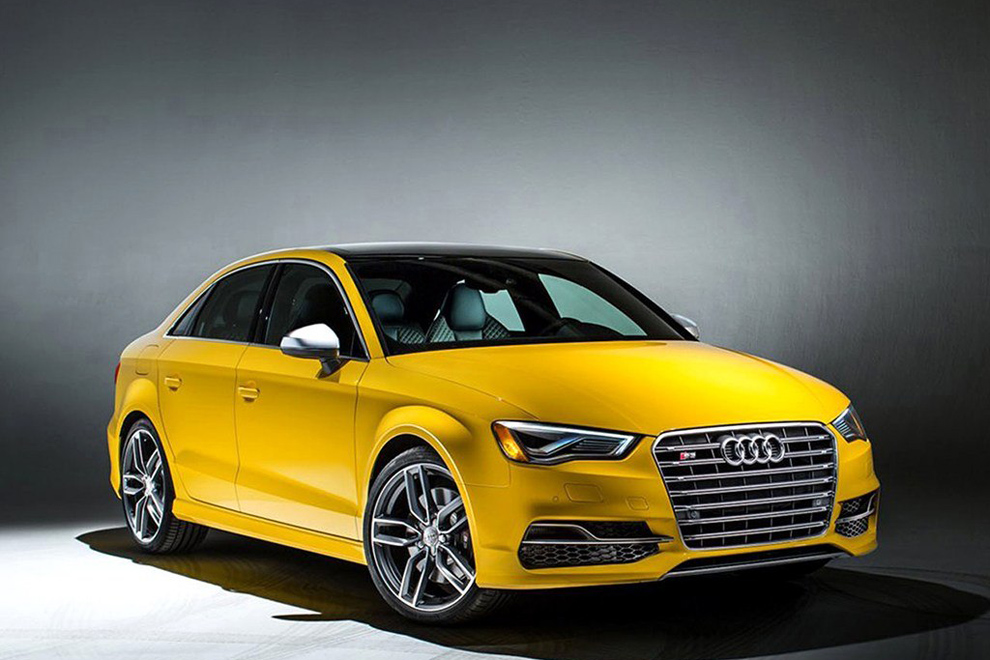
At a glance
- The Audi S3 for export combines a four-door Limousine body with a 2.0T petrol powertrain and quattro all-wheel drive.
- It is best suited to premium buyers seeking compact performance rather than maximum cargo space or the lowest operating cost.
- New-designated and used vehicles demand different checks covering condition, history, documentation and destination-market eligibility.
- Export pricing varies with year, trim, mileage, condition, exchange rates, freight, insurance and the agreed Incoterm.
- Current per-unit price, MOQ and availability must be confirmed in the live Audi S3 inventory before an order or budget is committed.
Why the Audi S3 matters for export markets
The Audi S3 for export occupies a useful middle ground in the export market: a compact premium sedan with performance credentials, a four-door Limousine body, a 2.0-liter turbocharged petrol engine and quattro all-wheel drive. It gives overseas buyers a recognizable model without the size of a full-size luxury sports car. The saloon format suits enthusiasts who still need everyday usability. For dealers, it can serve as a halo product in the compact performance segment, appealing to buyers who value acceleration, all-weather traction and badge prestige rather than maximum practicality or low operating costs.
Demand for the S3 is global in name but selective in practice. It tends to make sense in countries with established demand for premium compact cars, sporty sedans and usable performance models, particularly where buyers want an Audi without moving to a larger sedan. It is less naturally suited to markets dominated by SUVs, strict electrification incentives or low-emission urban policies. Planning should start with local preferences and tax bands, not the assumption that a performance badge guarantees volume. Fuel costs, road tax and insurance classification can materially change the proposition.
For an overseas buyer, the S3’s value rests on a balanced proposition rather than a single headline specification. Its combination of turbocharged performance, all-wheel drive, four doors and a contained footprint can support dealer marketing, test drives and selective fleet use. Before committing, confirm the exact production version, steering side, equipment and regulatory status. The same model name can cover facelift changes and market-specific specifications, so a VIN-level comparison is more reliable than brochure assumptions. Careful inspection protects against paying for features or condition the local market does not value.
- Four-door compact performance saloon.
- 2.0T petrol powertrain with quattro.
- Best assessed against local tax and homologation.
Model range, trims and powertrain variants: how the lineup is structured and how to choose
The export-relevant lineup is built around the S3 2.0T Limousine, with listings distinguished by production year and pre-facelift or facelift designation. This matters because cosmetic updates are only the first layer: cars can differ in factory options, equipment, software and market origin. Buyers should use the vehicle name as a starting point, then obtain the VIN, build plate or manufacturer data plate before deciding whether two vehicles are genuinely equivalent. That evidence also verifies whether a listing omits an option material to local pricing and resale in the destination market before purchase.
The S3 2.0T uses a turbocharged 2.0-litre petrol inline-four, normally paired with Audi’s S tronic dual-clutch transmission and quattro permanent all-wheel drive. That combination gives the model its characteristic mix of rapid power delivery, efficient cruising and strong launch traction. Exact rated output, torque figures and equipment can vary by market and production year, so they should be checked against the vehicle’s documentation rather than inferred from the 2.0T label alone. There is no battery capacity or electric range to compare on this petrol model; charging equipment is not a selection criterion.
Choosing among trims should begin with the buyer’s use case rather than cosmetic status. A dealer serving performance-oriented private customers may prioritize the facelift designation, desirable factory equipment and documented condition; a fleet buyer may prioritize purchase economics, warranty support and serviceability. Review the engine bay, transmission behavior, brake condition, underbody, wheels and cabin, while also checking whether the car has been modified or repaired. Originality can affect both confidence and future resale. For a first purchase, request a pre-purchase inspection that includes a road test and verification of warning indicators.
- Compare VIN-level equipment, not trim names.
- Facelift status does not prove market equivalence.
- Document service history and modifications.
New vs used Audi S3: how export inventory is structured and how buyers choose
ChinaCarDirect’s export inventory can contain seller-classified new vehicles and used Audi S3 cars from several earlier production periods. That mixed structure gives dealers different objectives: a newer-designated car for broader fleet suitability, or a lower-entry used example for focused performance sales. The classification is only a starting point. A new marketplace label does not by itself prove factory delivery status, so ask for the production date, registration history and supporting documents. A used listing can be attractive when its history is complete and its condition matches the description in full.
A used Audi S3 can reduce initial capital committed while preserving the model’s core appeal, and a documented example may be easier to evaluate through physical inspection. The trade-offs are condition uncertainty, accumulated wear, deferred maintenance and fewer factory warranty protections. Used-car import rules, minimum-age restrictions and inspection standards also vary by destination. Buyers should request service records, title documents, an odometer statement and independent inspection before treating a listing as comparable. For a dealer, ask whether predictable condition and obtainable parts justify a lower purchase outlay in that market.
Newer-designated inventory can reduce age-related concerns and may be easier to place with buyers who equate low mileage with low risk. It may simplify a fleet launch, although higher acquisition cost, financing requirements and depreciation can offset those benefits. Whichever route is chosen, compare total cost rather than the displayed vehicle amount alone: freight, taxes, certification, insurance, maintenance and expected resale all belong in the calculation. Confirm current units and per-unit terms in the live listings, avoiding plans built around a vehicle that may already have been sold or reclassified before ordering.
- Verify condition beyond marketplace classification.
- Used imports require age-rule checks.
- Compare landed cost and resale assumptions.
How export pricing works: the factors behind a live listing price, and how to read one
For Audi S3 wholesale buyers, a quote is the result of several interacting variables, not a universal rate for the model. Production year, facelift status, exact equipment, mileage, condition, ownership evidence and market origin can all move the vehicle amount. Currency exchange, freight mode, destination charges, insurance and the selected Incoterm affect the landed total. A buyer comparing quotations should therefore hold specification and condition constant before judging which offer is commercially better. Live-market supply can also influence a seller’s position, but it should not substitute for vehicle-level due diligence and inspection before contracting.
On ChinaCarDirect, read the live S3 listing as a starting document, not a complete landed quotation. Check the displayed per-unit amount together with the stated year, trim, condition, mileage, seller location and any MOQ or transaction terms shown. Confirm whether freight, export handling, insurance, taxes and destination charges are included. If a field is absent or ambiguous, ask for it in writing; do not infer an Incoterm from a photograph or vehicle name. Current per-unit price, availability and MOQ are shown for each vehicle on ChinaCarDirect’s live inventory before ordering.
A practical comparison uses a fixed checklist: identify the exact vehicle, obtain a condition report, request a written quote with the named Incoterm, and recalculate the same landed-cost assumptions for every candidate. Ask whether the quote is firm for a particular VIN and how long it remains valid, because exchange rates and shipping costs can move. The final decision should reflect what the importer must pay, when title and documents transfer, and what condition dispute process applies after delivery. This matters especially for a used car whose defects may not appear in listing photographs.
- Compare like-for-like year and condition.
- Request an itemized quote and Incoterm.
- Use live per-unit terms for decisions.
MOQ, ordering and payment: single units vs consolidating a container
MOQ is a transaction term attached to the seller’s offer, not a permanent characteristic of the Audi S3. A live listing may permit a single-unit order, while another offer may require more; check the exact condition there or confirm it before payment. Overseas buyers should ask whether one vehicle can be ordered and whether the stated MOQ applies to this trim and condition. Do not build a procurement plan around a general model-page assumption. For a dealer, a pilot purchase can be sensible if resale economics are tested before a larger commitment.
A single S3 may be shipped as an individual vehicle or through a less-than-container load, depending on the carrier and destination. Multiple units can improve freight efficiency, but filling a container with one model increases exposure to a narrow resale market and ties up more capital. Dealers may consolidate S3 orders with other suitable vehicles where the seller or logistics provider permits it. Loading plans must account for axle weight, securement, damage prevention, port handling and delays. The cheapest freight rate is not always the cheapest delivered outcome if claims handling becomes more difficult.
The ordering sequence should be controlled in writing. Select a specific unit, agree its condition and equipment, issue a pro forma invoice naming the VIN, confirm the payment method and milestones, and obtain a sales contract covering title, export documents, cancellation and delivery terms. The balance should not be released merely because a photograph or deposit receipt has been sent. For a container order, define the vehicle list before release; for one unit, complete the inspection and document checklist before shipment. A named contact and documented handover reduce ambiguity at the origin terminal.
- Read MOQ on each live listing.
- Name the VIN in the order documents.
- Define inspection and balance-payment triggers.
Shipping, homologation and market compliance caveats: LHD/RHD and import rules by country
Shipping an S3 from China is a vehicle-freight operation, not simply parcel cargo. Finished cars are commonly moved on roll-on/roll-off vessels, although container or break-bulk arrangements depend on origin and destination. Transit time and cost are shaped by sailing frequency, available space, port pairs, transshipment, terminal charges, insurance and customs clearance. Remote or smaller destinations can add handling legs. Buyers should ask for an origin-to-destination quote that separates freight, documentation, port, insurance and destination charges. The delivery estimate should also state what is included, including responsibility and liability at each handover point.
Import compliance must be settled before the vehicle moves. Depending on the destination, authorities may scrutinize the VIN, emissions, noise, safety equipment, software features, road tax class and the age or condition of a used car. Rules vary by country and sometimes by state or province. A Chinese-market S3 should not be assumed to carry every approval required elsewhere. The importing dealer or local compliance specialist should confirm the rule set for the model year, specification and market origin. Modifications should wait until a written approval path is understood, especially where engine approvals or electronic systems differ from China.
Steering configuration is a commercial as well as a mechanical issue. Chinese-market examples are commonly left-hand drive, while some destination markets expect or favor right-hand drive. A genuine RHD car is preferable to a late conversion where one is available, because conversion can affect parts supply, safety assessment, insurance, registration and resale value. Buyers should confirm the steering side from the VIN and photographs, not only the listing title. If conversion is unavoidable, use an approved specialist and recalculate timing and cost. Inspect steering, lights, instruments and safety equipment afterward.
- Verify steering side by VIN.
- Confirm destination homologation in writing.
- Insure the vehicle throughout transit.
Who should buy the S3 — and who should pick a different vehicle
The Audi S3 fits buyers who want a premium compact car with a performance emphasis, four-door access and all-weather traction from quattro. It suits specialist dealers serving enthusiasts, company-car programs focused on driver appeal, or fleets that value a strong image without moving to a large performance saloon. Its compact format should be easier to position internationally than larger Audi performance models, although local parking, tax and road-size rules still determine practicality. It rewards buyers who value a coherent performance package rather than the lowest possible operating cost or risk.
A different vehicle is more sensible when the priority is maximum rear-seat room, cargo capacity, minimal fuel expense, towing capability or a low purchase outlay. Families may prefer a larger premium sedan or crossover, while high-mileage fleet managers should compare hybrid, plug-in or efficient combustion alternatives against total running cost. Buyers needing off-road ability should select an SUV. The S3’s four doors improve practicality, but they do not transform its compact-sedan seating and luggage compromises into those of a larger model. A business buyer may prefer lower financing and predictable residual values.
The purchase decision should be tested against a realistic utilization and ownership plan. For a dealer, one carefully sourced unit can reveal how quickly the S3 converts against local competition, what buyers pay for specific equipment and which service issues arise. For a fleet, compare acquisition, compliance, fuel, maintenance, insurance, downtime and residual value over the holding period. If the S3’s performance image earns a premium the business cannot recover, a less demanding model is the stronger commercial choice. Private importers should include registration and modification costs before fully committing.
- Best for performance-led premium buyers.
- Consider alternatives for cargo or economy.
- Pilot demand before scaling inventory.
Main rivals and how the S3 compares
The BMW 3 Series is the closest conceptual rival because it also combines a premium badge, compact-sedan proportions and a driver-focused image. Depending on the exact derivative, a 3 Series may emphasize rear-wheel-drive balance, comfort or a broader engine mix, while the S3 centers on turbocharged performance and quattro traction. For an importer, the comparison should be local rather than generic: compare homologated engines, equipment, service support, expected residual values and the price delivered to the destination. A driver who prioritizes all-wheel-drive traction may find the S3 more compelling in variable conditions.
The Mercedes-Benz C-Class is another credible premium-sedan alternative, with the AMG C 43 providing a more direct performance comparison than comfort-oriented derivatives. Mercedes generally places greater emphasis on cabin luxury, ride isolation and brand presentation, whereas the Audi S3 is more overtly driver focused. The relevant test is what the destination customer values and what the importer can support. A C-Class may command stronger demand in some markets, while the S3 may deliver a better performance-to-cost proposition where quattro and the four-door S3 identity matter. Neither should be assumed compliant before local homologation.
The Volkswagen Golf GTI is the lower-formality performance alternative: a hot hatch with a strong enthusiast following, compact dimensions and typically a simpler value proposition than a premium saloon. It may be easier to serve where buyers care chiefly about driving engagement and ownership cost, but it offers less prestige and a different cabin and cargo layout. The S3 better fits a buyer seeking premium branding, four-door access and quattro traction; the GTI may be better when value and engagement outrank badge appeal. Final selection should follow local demand, not a universal performance hierarchy.
- BMW 3 Series: broader premium-sedan choice.
- Mercedes C-Class: stronger luxury emphasis.
- Golf GTI: value-led hot-hatch alternative.
Live Audi S3 export inventory
View all listings →Real units currently on ChinaCarDirect with per-unit asking prices and MOQ. Availability updates live from the catalogue.
How to buy a Audi S3 from China
-
1
Define the destination requirements
Set the destination, preferred steering side, import route, budget framework and any local tax, emissions or registration constraints before selecting a vehicle.
-
2
Review the live S3 inventory
Use the live listings to compare year, facelift status, trim, condition, mileage, seller location and the current per-unit price, MOQ and availability shown for each vehicle.
-
3
Request identity and ownership documents
Ask for the VIN, build plate, registration or title documents, service records and odometer information. Verify that the seller’s description matches the named vehicle.
-
4
Confirm technical condition
Check the engine, transmission, brakes, underbody, wheels, cabin, warning systems and modifications. Use an independent inspection for a used vehicle or one purchased without physical viewing.
-
5
Request an itemized export quote
Ask for a written quote tied to the VIN, with the Incoterm and freight, insurance, export handling, tax, duty and destination charges identified separately.
-
6
Agree MOQ and payment terms
Confirm whether the selected listing accepts a single unit, then document the pro forma invoice, deposit, balance-payment trigger, title transfer, cancellation terms and release conditions.
-
7
Arrange shipping and final handover
Complete destination homologation, insure the vehicle, verify export and customs documents, complete the pre-shipment inspection and retain delivery evidence for condition claims.
S3 vs rivals
| BMW 3 Series | A direct premium-compact rival with a broader choice of comfort- and performance-oriented derivatives. Buyers prioritizing rear-drive balance, model variety or established service familiarity should compare it closely with the S3’s quattro-led proposition. |
|---|---|
| Mercedes-AMG C 43 | A closer performance alternative to the S3, with a stronger emphasis on Mercedes luxury and AMG character. It may suit buyers prioritizing cabin sophistication, although destination availability, homologation and parts support must be checked locally. |
| Volkswagen Golf GTI | A hot-hatch alternative suited to buyers prioritizing driving engagement and value over premium prestige. The S3 offers a larger four-door saloon format, stronger brand presentation and standard quattro traction. |
Frequently asked questions
How is the Audi S3 export price determined?
There is no fixed model-wide export price because year, facelift status, equipment, mileage, condition, ownership documents, exchange rates, freight, insurance, taxes and Incoterms all affect the total. Current per-unit price and available terms can be seen in the live Audi S3 inventory. For a decision, request an itemized written quote tied to the specific VIN and confirm how long it remains valid.
What engine and drivetrain does the exported Audi S3 use?
The S3 2.0T is a petrol model using a turbocharged 2.0-liter inline-four, normally paired with an S tronic dual-clutch transmission and quattro all-wheel drive. Exact output, torque and equipment vary by production year and market, so confirm the build sheet and VIN. It is not an electric vehicle and therefore has no battery capacity or electric range to compare.
Is a used Audi S3 better value than a newer-designated car?
A used example can reduce initial capital committed and is attractive when its service history, title documents and physical condition are clear. A newer-designated vehicle may reduce age-related concerns and suit fleet buyers better, but it can carry higher financing and depreciation costs. Compare landed cost, warranty position, maintenance exposure, import eligibility and expected resale rather than relying on the marketplace classification alone.
Can I order one Audi S3, and how does MOQ work?
MOQ is set by the individual seller or transaction, not by the S3 model itself. A live listing may accept a single vehicle, while another offer may require more, so the current per-unit MOQ must be checked before ordering. Treat a pilot purchase as a separate commercial decision and record the agreed quantity in the pro forma invoice and sales contract.
What determines shipping time and cost from China?
Vehicle-freight time and cost depend on sailing frequency, available space, port and transshipment points, terminal handling, insurance, customs clearance and the destination. Finished vehicles commonly travel by roll-on/roll-off vessel, with the exact routing and available arrangements confirmed by the logistics provider. Request an origin-to-destination quote that separates freight, documentation, port, insurance and destination charges.
Can spare parts be sourced for an imported Audi S3?
Parts should be identified by VIN, model year, facelift status and original market because mechanically similar cars may use different service components. Audi networks or specialist suppliers may cover many wear items, while electronic modules, body parts and regional configurations can take longer to source. Confirm supplier access, lead time and price before including maintenance and repair downtime in the ownership plan.
Is right-hand-drive Audi S3 availability a problem?
Chinese-market S3 examples are commonly left-hand drive, while genuine right-hand-drive availability depends on the live inventory for the destination. Verify the steering side by VIN before paying a deposit, and do not assume that every S3 listing can be exported to a right-hand-drive market without modification. A late conversion can add cost, delay, safety, insurance and residual-value risks.
How do I buy an Audi S3 from China?
Select a vehicle from the live inventory, request its VIN and supporting documents, verify condition and obtain a written quote with the stated Incoterm. Then confirm the listing-specific MOQ, pro forma invoice, payment milestones, export documents, insurance and pre-shipment inspection. The balance and shipment release should be linked to the agreed documentation and condition checks.
Ready to source the Audi S3?
Request a vehicle-specific ChinaCarDirect quote for your destination, including condition documents, landed-cost assumptions and shipping options.
Request a quote