
Audi S7 Export Buying Guide for Overseas Dealers
Compare Audi S7 trims, used versus new options, export pricing, MOQ, shipping and homologation before buying from China as an overseas importer.
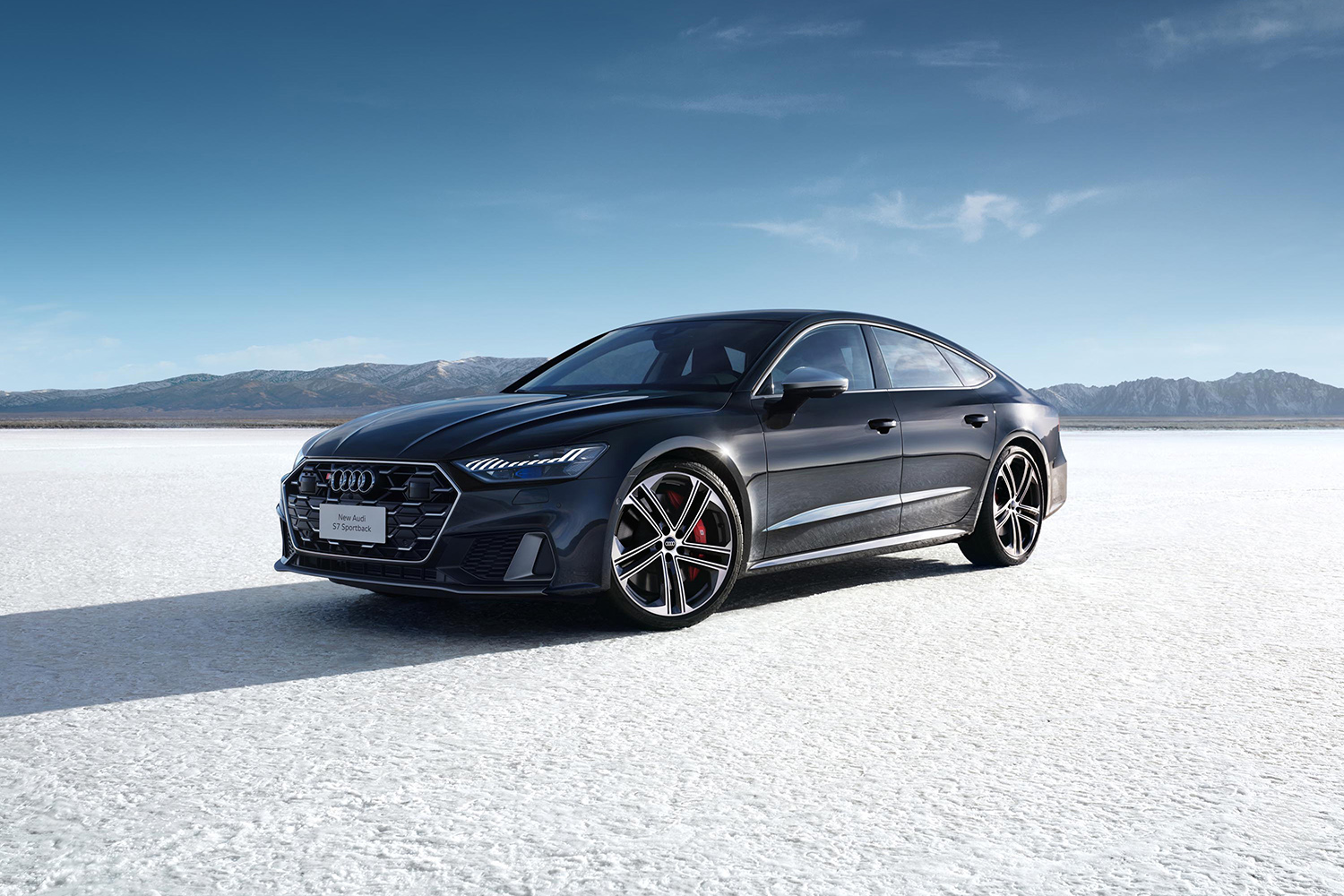
At a glance
- A four-door luxury liftback combining executive-car space with a sporty fastback profile.
- Quattro all-wheel drive is central to the S7 identity.
- Engine choices include 4.0 TFSI V8 and 2.9 TFSI V6 offerings.
- New and used sourcing require different checks on history, condition and documentation.
- Export quotes must separate vehicle price from freight, duties and other landed costs.
Why the Audi S7 matters for export markets
The Audi S7 occupies a distinctive middle ground: it combines the executive-car space and refinement of a luxury sedan with the coupé-like profile, rear hatch and high-performance character of a sporty fastback. For overseas dealers, that combination gives the model a clear showroom story beyond ordinary luxury sedans. An S7 can attract buyers who want four-door usability without settling for the conservative appearance of a conventional premium saloon. It is therefore especially relevant to premium importers seeking a halo product that can be shown alongside sports cars yet sold to clients who still require a practical second row and generous luggage capacity.
Global demand is not driven simply by speed. The S7’s appeal comes from identity: quattro all-wheel drive, an S-model powertrain and a design that remains recognizable from a distance. That makes it useful for performance-focused dealers, executive-fleet specialists and affluent private buyers who want a prestigious daily car. For distributors, the model can raise showroom credibility, but its specialist character means demand should be tested against local fuel costs, road conditions and service capability. The relevant export question is not whether the badge travels well; it is whether this body style and powertrain fit the destination market.
ChinaCarDirect’s Audi S7 for export proposition should be evaluated as a specialist sourcing channel rather than a mass-market fleet program. The model has appeared with both 4.0 TFSI quattro and 2.9 TFSI quattro designations, giving buyers a meaningful choice between the larger-engined and earlier V6 character. However, a vehicle assembled or sold for China may not match every option, steering layout or emissions document expected by an overseas importer. The attractive proposition is therefore access to specific cars, provided each unit is verified rather than treated as a generic regional equivalent.
- Four-door liftback with coupé-like styling.
- Premium halo model for specialist retailers.
- Regional equipment and documents need verification.
Model range, trims and powertrain variants: how the lineup is structured and how to choose
For Audi S7 specs, the lineup is best understood through its engine choices. A 4.0-litre TFSI unit is the V8-led, higher-output end of the range, while the 2.9-litre TFSI designation identifies the earlier V6 configuration. Both are paired with the quattro designation in the export mix. Exact output, torque figures, accelerator response and equipment can vary by model year and specification, so those figures should be confirmed from the VIN and original homologation documents rather than inferred from the trim badge alone. A listing that includes those documents is generally easier to compare and import.
Choose the 4.0 TFSI quattro when the brief is maximum S7 character, effortless performance and the strongest visual appeal for an imported flagship. The V8 badge also tends to make the car easier to merchandise to buyers who equate displacement with prestige, although that assumption should not replace an objective inspection. Choose the 2.9 TFSI quattro when lower acquisition cost, a different maintenance profile or an earlier design is more important. Neither engine choice automatically tells you which vehicle is cheaper after freight, duty and registration in the destination market.
Powertrain matching should also reflect the car’s transmission, chassis, steering arrangement and market equipment. Earlier and later S7 generations use different automatic transmission architectures, while options such as adaptive suspension, driver-assistance packages, wheels and cabin trim can materially change a car’s character and value. For fleet or dealer resale, prioritize a complete, original specification with evidence of service history. For private export, compare weight and wheel sizes, braking specification and availability of parts before committing, because local familiarity with a particular generation can be as important as headline engine output.
- 4.0 TFSI quattro: V8-led flagship choice.
- 2.9 TFSI quattro: earlier V6 alternative.
- Verify transmission and options by VIN.
New vs used Audi S7: how export inventory is structured and buyers choose
Export inventory can be presented as new, used or factory-new, but those labels need interpretation. A vehicle registered in China and never driven may be new in the practical sense, yet it may have been parallel imported, prepared for display or registered before shipment. A used Audi S7 may offer lower entry cost and established depreciation, but it also carries condition, service-history and aging risks. Buyers should ask for registration dates, invoices, odometer evidence, inspection reports and photographs rather than relying on a categorical condition label for the exact vehicle.
Newer S7 cars generally offer more contemporary cabin technology, safety assistance and exterior detailing, while an older used car may deliver the same basic four-door performance format at a lower acquisition point. Those benefits must be balanced against the possibility that an apparently newer vehicle has hard-wearing fleet use, or that an older car has been carefully maintained. For an overseas buyer, a documented service history is often more valuable than a simple year label, especially where diagnostic software, parts availability or electronic repair options are limited for that model.
The practical selection method is to compare like with like. Begin with the engine designation, model year, body specification and VIN, then review mileage and condition only within that subgroup. A lower asking figure can be misleading if it reflects a different generation, a less complete specification or repair work that has not been disclosed. Dealers seeking Audi S7 wholesale consistency should request batch-level photographs and compare several individual units, but every export contract should identify the exact vehicle by VIN. That discipline prevents a blended fleet description from substituting for the condition of the car actually being sold.
- Confirm whether “new” means factory-new.
- Compare condition within matched VIN groups.
- Contract should name the exact vehicle.
How export pricing works: the factors behind a live listing price, and how to read one
An Audi S7 export price guide should separate the seller’s vehicle price from the buyer’s complete landed cost. The live vehicle figure is shaped by model year, engine and trim, specification, production history, mileage and condition for used cars, and the number of vehicles available from that supplier. Currency movements can also alter the displayed amount. Freight method, insurance, port charges, inland transport, destination duties, taxes and registration belong in the landed-cost calculation, even when they are not included in the listing headline or itemized separately in the written offer.
The Incoterm determines where responsibility and cost transfer. An ex-works arrangement leaves the buyer to arrange collection, export clearance and every onward movement, whereas a delivered or CIF-style arrangement may give more visibility but can still exclude local charges that the importer must settle. Compare offers on the same basis: same vehicle specification, same destination, same shipping method and the same document package. Also check whether “deposit,” “sale price,” “FOB price,” and “landed price,” are being used consistently, because labels alone do not reveal what is included in writing.
The most useful live quote is one that can be reproduced. Record the VIN or SKU, model year, trim, mileage, condition, currency, Incoterm, destination port, payment schedule and what each party will handle. Then model the landed cost line by line and retain a contingency for port inspection, storage, demurrage, repairs or registration surprises. ChinaCarDirect’s live Audi S7 listings are the binding source for current per-unit availability and price, while this guide provides the framework for deciding whether a quote is comparable and commercially sensible for your market and channel.
- Compare identical vehicles under the same Incoterm.
- Itemize freight, duty, tax and port charges.
- Use live listings for current unit pricing.
MOQ, ordering and payment: single units vs consolidating a container
Minimum order quantity is a commercial term set for a particular offer, not a universal property of the S7. A live listing may permit a single-unit purchase, while a seller arranging several cars or a customized shipment may impose different terms. The correct question is whether the stated MOQ applies to that exact trim, condition grade and shipping plan. Buyers wanting to buy an Audi S7 from China should obtain the quantity, unit price, deposit and production deadline in one written quotation, rather than assuming that one vehicle implies immediate dispatch or a particular consolidation schedule.
For a dealer testing demand, a single-unit order offers lower inventory commitment but exposes the buyer to a less favorable freight rate and may leave handling, documentation and compliance costs concentrated on one car. Consolidating several S7 units can improve shipping efficiency, but it also concentrates capital, delays the sale of slower-moving trims and increases exposure if one vehicle is delayed or fails inspection. Model the cash requirement, carrying cost and expected selling time for every car separately before choosing a container size. Consolidation should follow a firm sales plan, not replace one.
Payment and release mechanics should be tied to verifiable milestones. A typical sequence begins with a commercial invoice and vehicle description, followed by a deposit, production or stock confirmation, third-party inspection if required, payment of the balance, and release against shipping documents. The exact sequence depends on the seller and transaction. Avoid transfers based only on a model name or photograph: require the VIN, engine number, option list and ownership documents to match the contracted unit. International payment, currency, bank charges and refund terms also need review, particularly for used vehicles whose condition is agreed by detailed written report.
- Confirm MOQ for the exact listing.
- Name the VIN in every contract.
- Link release to inspection and documents.
Shipping, homologation and market compliance caveats: LHD/RHD and import rules by country
Shipping begins with the correct vehicle, not merely the correct model name. Confirm whether the S7 is left-hand-drive or right-hand-drive, and whether its original market specification is acceptable for the destination. Conversion of steering, lighting, emissions equipment or other components can affect safety, legality, insurance and warranty, so it should never be treated as a routine fix. The importer should check local rules for used vehicles, minimum age restrictions, emissions categories, roadworthiness tests, VIN checks and the recognition of foreign manufacturer plates before committing funds in the destination country.
Chinese-market documentation may differ from the paperwork expected by a European, Middle Eastern, African or North American importer. Ask for the original vehicle invoice, registration or customs documents, VIN and engine-number photographs, emission and conformity records, service records, keys, manuals and a complete equipment list. Check that the seller’s legal entity can export the car and that the description on every invoice agrees. A clean, legible document set reduces customs queries, but only the destination authority can determine admissibility, duty and registration status for a particular vehicle and its documents.
Shipping method affects cost, transit risk and vehicle condition. Roll-on/roll-off shipping suits standard wheeled vehicles and can simplify loading, while container or consolidated freight may suit buyers who want shared handling with other vehicles. The S7’s low, wide performance-liftback profile deserves particular attention during lashing, under-deck clearance and height checks; the loading plan should follow the manufacturer’s handling instructions. Sea freight, insurance, port fees, inland delivery and destination charges all depend on route and Incoterm. Allow time for export clearance, booking, vessel space, customs, inspection and final delivery, and never treat an estimated transit window as a guaranteed handover date.
- Verify steering and equipment before shipment.
- Match documents to the contracted VIN.
- Use manufacturer-approved loading guidance.
Who should buy the S7 — and who should pick a different vehicle
The S7 suits a buyer who values design, strong performance and premium-car presence more than minimum running cost or maximum practicality. It is a good fit for an established performance-luxury dealership, a specialist importer seeking a distinctive flagship, or an executive customer who wants coupé-like style with usable rear seats and a large hatch opening. It also suits a fleet buyer only where driver prestige, long-distance comfort and a strong residual proposition matter more than fuel economy, maintenance simplicity or high-volume operational efficiency across the target fleet or company program.
Choose a different vehicle when the requirement is a low-cost daily commuter, minimal downtime, easy servicing in a remote market or the lowest possible operating footprint. An S7 is a large, powerful luxury car, so fuel use, tyre cost, brake wear and specialist servicing can outweigh benefits for some fleets. A conventional premium sedan may be easier to place and more familiar to technicians. An electric car may fit a company’s charging and emissions policy better, provided charging infrastructure, range assumptions and payload needs are realistic rather than based only on headline efficiency figures.
A used Audi S7 requires a more conservative decision than a general used luxury sedan. Inspect paint and bodywork, interior wear, wheel condition, braking components, engine bay, chassis, underbody and service evidence, with an independent report wherever possible. Confirm that electronically controlled systems, air-suspension components where fitted, service intervals and parts are locally supportable. For track-focused use, road-biased tires and repeated hard driving can be costly; for executive use, rear-seat comfort and privacy may matter more. The best purchase is the car whose specification can be supported, serviced and resold in the destination market.
- Best for premium, performance-led buyers.
- Weaker for cost-first fleet use.
- Used examples need independent inspection.
Main rivals and how the S7 compares
The closest alternatives depend on whether the buyer prioritizes the S7’s four-door body, its performance, or the prestige of the badge. BMW’s M5 is the most direct performance-sedan rival: it offers a similarly focused high-performance four-door format, but buyers should compare engine character, cargo access, cabin appointments, local service familiarity and total ownership requirements rather than treating it as a badge-for-badge substitute. The M5 may appeal to buyers who place greater emphasis on conventional sedan practicality, while the S7 retains a more distinctive hatchback silhouette in international premium retail settings.
Mercedes-AMG’s E63 S sedan is another relevant rival for buyers seeking luxury, strong performance and executive usability in a four-door car. Its positioning is more traditional and formal than the S7’s, so cabin comfort, brand preference and the buyer’s need for a conventional trunk should influence the choice. In a country where AMG support and resale recognition are stronger than Audi’s, that can outweigh styling preference. As with every comparison, verify the precise generation and equipment because engine output, suspension, transmission and standard features vary across model years and markets.
Porsche’s Panamera is the closest conceptual rival because it combines a four-door cabin, hatchback access and high performance, but it sits more directly in the shooting-brake and luxury-sport-car conversation. A Panamera buyer may prioritize the model’s profile, cargo concept and driving character, whereas an S7 buyer may prefer the Audi S identity and a more understated presentation. For any rival, calculate the same landed cost, homologation workload, servicing plan and residual-value case. The strongest choice is not the model with the most attractive specification on paper; it is the one your technicians, customers and target market can support profitably.
- BMW M5: direct performance-sedan alternative.
- Mercedes-AMG E63 S: formal executive rival.
- Porsche Panamera: closest hatchback concept.
Live Audi S7 export inventory
View all listings →Real units currently on ChinaCarDirect with per-unit asking prices and MOQ. Availability updates live from the catalogue.
How to buy a Audi S7 from China
-
1
Define the vehicle brief
Decide whether the priority is the 4.0 TFSI V8, the 2.9 TFSI V6, a specific model year, executive use or performance-led resale. Set a target specification and identify local requirements for steering, equipment and homologation.
-
2
Review live export candidates
Use the live Audi S7 inventory to identify vehicles matching the engine, body, age and condition criteria. Treat each listing as a vehicle-specific opportunity and note its VIN or SKU before requesting commercial terms.
-
3
Request identity and history documents
Ask for the VIN, engine number, registration dates, invoice, odometer evidence, service records, options list and photographs. Confirm whether a nominally new car is genuinely factory-new, parallel-imported or previously registered.
-
4
Build comparable quotations
Request the unit price, MOQ, deposit, balance terms, currency, Incoterm, destination port and shipping method in writing. Compare several vehicles on the same specification and landed-cost basis rather than relying on headline listing figures alone.
-
5
Inspect before releasing the balance
Use an independent inspection for the contracted VIN, with particular attention to bodywork, wheels, engine bay, chassis, service history and electronic options. Make the inspection result and any required corrections part of the payment-release conditions.
-
6
Clear compliance and arrange shipping
Confirm LHD or RHD configuration, import eligibility, emissions requirements, age restrictions, duties, taxes and local registration rules. Agree the carrier, loading method, insurance, port responsibilities and required export documents before dispatch.
-
7
Contract, pay and track the shipment
Ensure the commercial invoice, VIN, condition statement and agreed price match the contract. Track export clearance, loading, customs, storage and final delivery, while keeping payment records tied to inspection and document milestones.
S7 vs rivals
| BMW M5 | The M5 is the closest conventional performance-sedan benchmark, with a more traditional trunk profile. Choose it when BMW service familiarity, a specific configuration or local dealer demand outweighs the S7’s distinctive liftback character. |
|---|---|
| Mercedes-AMG E63 S | The E63 S competes for buyers seeking high performance, luxury and executive usability in a formal four-door sedan. The S7 offers a more expressive hatchback alternative, while the Mercedes may have stronger local recognition and support in some markets. |
| Porsche Panamera | The Panamera is the closest conceptual rival because it combines a four-door cabin, hatchback access and a performance focus. Buyers should compare driving character, cargo concept, service requirements and projected resale demand alongside landed cost. |
Frequently asked questions
How is Audi S7 export pricing determined?
A live export price is influenced by model year, engine and trim, equipment, condition, mileage, supplier terms, currency movements and freight arrangements. It may not include destination duties, taxes, port charges, inland delivery or registration costs. Check the live Audi S7 listings for the current per-unit price, then ask for a vehicle-specific landed-cost quotation.
What engine and drivetrain does the Audi S7 use?
The export range includes the 4.0 TFSI quattro V8 and the earlier 2.9 TFSI quattro V6 configuration. Exact output, transmission, suspension and equipment can differ by generation and market, so the VIN and original specification documents should determine the final configuration.
Is a used Audi S7 better value than a newer example?
A used S7 can reduce acquisition cost and depreciation, but it requires closer scrutiny of wear, service history, accident repair, electronics and aging components. A newer car may offer more contemporary equipment, although its prior use and registration history still need verification. Compare vehicles within the same engine, year and specification group.
What is the MOQ for an Audi S7 export order?
MOQ is set by the particular seller, trim, condition grade and shipping arrangement rather than by the model itself. Some live offers may permit a single vehicle, while other quotations may set a different minimum. Confirm the MOQ, unit allocation and consolidation deadline in the written quotation.
How long does shipping take and what drives the cost?
Transit time and cost depend on origin and destination ports, carrier schedule, vessel space, shipping method, insurance, fuel surcharges, port charges, customs and inland delivery. Export clearance, inspections, documentation issues and congestion can extend the schedule. Agree responsibilities and a realistic delivery window under the selected Incoterm.
Are spare parts available for an exported Audi S7?
Parts availability depends on the exact generation, engine, market specification and the importer’s access to Audi channels or independent specialists. Before ordering, identify common service items such as brakes, tires, filters, sensors and electronic modules using the VIN. Confirm whether parts can be sourced locally or must be imported with the vehicle.
Can I buy a right-hand-drive Audi S7 from China?
Right-hand-drive availability varies by the individual vehicle and the source market, so it must be confirmed rather than assumed from the S7 badge. Review steering position, lighting, equipment and documents before purchase. A steering conversion should be considered only with approval from the relevant authority because it can affect legality, insurance and homologation.
How do I order an Audi S7 from China?
Start with the live listings, select matching vehicles and request a vehicle-specific quotation with the VIN, condition, price basis, MOQ and payment schedule. Verify the identity and history documents, arrange independent inspection and destination compliance checks, then execute a contract that names the exact vehicle. Payment and release should follow the agreed inspection and shipping-document milestones.
Ready to source the Audi S7?
Request a vehicle-specific RFQ with the VIN, trim, condition, Incoterm, destination and document checklist attached.
Request a quote