
Audi Sq5 Export Buying Guide for Overseas Buyers
Buy an Audi Sq5 from China with clear guidance on 3.0 TFSI quattro trims, used versus new choices, export pricing, MOQ, shipping and compliance.
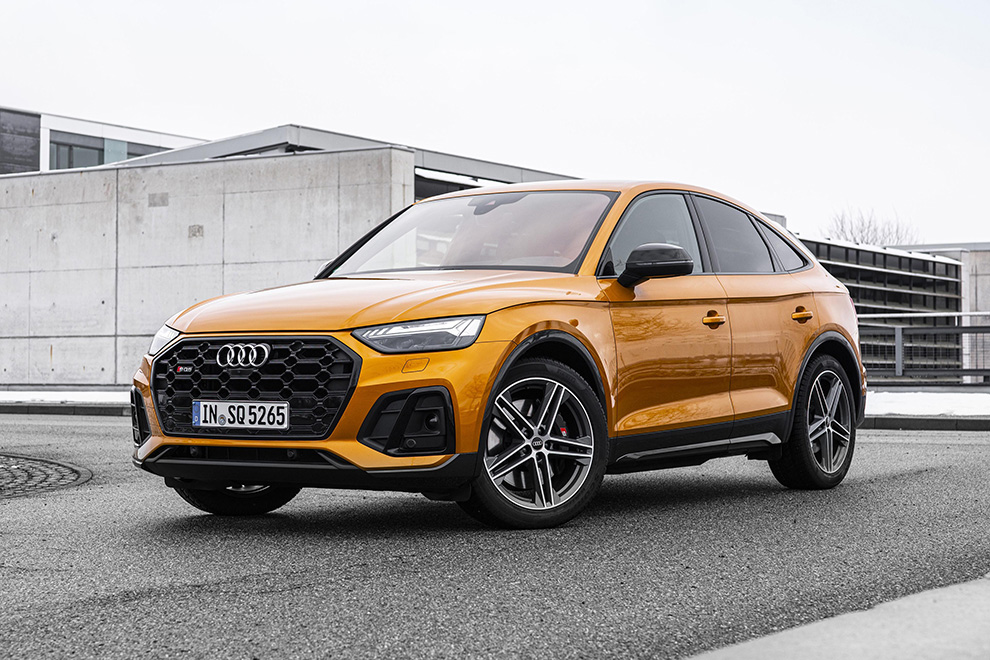
At a glance
- The Audi Sq5 combines premium SUV packaging, turbocharged petrol power and quattro all-wheel drive for overseas buyers.
- Export-focused listings center on 3.0 TFSI quattro vehicles, while Sportback and SQ5 labels require careful identification.
- A new vehicle prioritizes predictable condition, whereas a used unit can offer more equipment for less acquisition outlay but demands stronger inspection.
- Live export pricing changes with the exact vehicle, condition, exchange rate, freight, destination and Incoterm.
- A single-unit pilot can reduce risk, while container consolidation may improve logistics economics but increases inventory exposure.
Why the Audi Sq5 matters for export markets
The Audi Sq5 sits in the premium compact-SUV segment, combining usability with a more sporting character than a family crossover. For overseas buyers looking to buy an Audi Sq5 from China, its appeal is not simply the Audi badge: quattro all-wheel drive, a turbocharged petrol powertrain, a raised driving position and luggage capacity suit markets where weather, towing or fleet presentation justify a premium DUV. It remains more manageable than a full-size luxury SUV. That middle position is the export proposition: buyers gain a premium vehicle without moving to a larger, harder-to-serve class.
Export demand follows a pattern: buyers want a premium name, visible road presence, all-weather traction and a vehicle serving both private customers and company fleets. The Sq5 answers that pattern with a performance-oriented SUV format and a drivetrain suited to markets where wet roads, snow or regional travel make AWD useful. Its Sportback version adds a coupe-like profile for buyers seeking design differentiation, while the standard SUV form is easier to load and more practical for luggage. Interest therefore spans premium private demand and fleet use rather than one customer type.
The model is strongest where the importing country has an established Audi service network and buyers value German-badged comfort, performance and resale credentials. It is less compelling where price sensitivity dominates, fuel cost matters, or parts and technician support are thin. Buyers should also separate the Sq5 from the more performance-focused SQ5: marketplace badges are easy to misread, so the exact vehicle name, VIN and equipment list should be checked before treating either as a bargain. Used examples can suit cost-conscious buyers, but condition and provenance become decisive in the transaction.
- Confirm exact Sq5 or SQ5 badge.
- Compare landed cost, not quote.
- Check local Audi service coverage.
Model range, trims and powertrain variants: how the lineup is structured and how to choose
In the export-focused material for this model, the recurring description is 3.0 TFSI with quattro, while some listings carry the SQ5 3.0 TFSI quattro designation. A Sportback body name also appears. These labels narrow the search, but they do not replace the build sheet. Confirm whether the unit is a regular Sq5, an SQ5-branded performance derivative, or a seller’s mixed naming, and whether the body is the conventional SUV or Sportback. That distinction affects appearance, equipment, performance expectations and eventual market positioning for the importing dealer and eventual end customer.
The 3.0 TFSI is a turbocharged petrol powertrain, so this is an internal-combustion vehicle rather than an EV or plug-in hybrid. In the versions described, quattro means the car should be evaluated as an all-wheel-drive vehicle, not as a front-drive model with an option badge. Audi’s automatic transmission is the expected export configuration, but its calibration and market specification should be checked in the listing. Because petrol engines have no battery capacity or electric range, assess fuel consumption, service intervals, emissions, tax treatment and fuel availability instead of using EV range figures.
Choose the regular Sq5 when the priority is a premium SUV with strong traction, flexible load space and a less aggressive character than the performance-badged SQ5. Choose the SQ5 label when a buyer wants the more sporting character, additional equipment or the badge’s appeal, and is prepared to verify the exact specification. Options, wheels, brakes, interior materials and driver-assistance packages can materially affect a vehicle’s value. Compare those items on listings rather than assuming every 3.0 TFSI quattro car is equivalent; live inventory is the place to confirm variants and per-unit availability.
- Confirm 3.0 TFSI quattro specification.
- Verify automatic transmission and AWD.
- Compare SUV and Sportback bodies.
New vs used Audi Sq5: how export inventory is structured and how buyers choose
Export inventory is not a homogeneous pool. Depending on the seller and route, a marketplace can offer factory-new vehicles, parallel-imported stock, demonstration units or cars already registered in China. A model year does not prove condition, and polished photographs do not establish clean history. For every candidate, request the VIN, production or registration dates, odometer disclosure, ownership status, title or release documents, damage history and relevant recalls. Before paying a deposit or signing terms, ask whether the unit is sold directly for export or has already completed an import process.
A new vehicle generally offers the most predictable condition and the simplest history narrative, which can reduce inspection uncertainty for a dealer building a launch fleet. It may provide a newer generation of equipment and factory support, although buyers should verify production date, factory-delivery status, pre-delivery inspection, warranty start date and whether advertised options are fitted. New does not mean compliant in the destination: local emissions, safety, lighting, language and type-approval requirements can remain. Account for the possibility that the vehicle depreciates while in transit or between purchase and registration.
Used units can make sense for a dealer seeking an older generation, a higher specification for the same acquisition budget, or a vehicle for immediate testing. The trade-off is uncertainty: mileage may be unverified, wear can be disguised, and an accident, flood exposure, deferred servicing or electronic fault may not be visible. Ask for service records, an independent inspection, diagnostic reports and recall closure. Compare used and new options on total landed cost, downtime, warranty and residual value rather than purchase price alone; live listings show the current condition label.
- Request VIN, title and history.
- Compare condition consistently.
- Inspect every used candidate independently.
How export pricing works: the factors behind a live listing price, and how to read one
There is no defensible single export price for an Audi Sq5 because the headline figure represents one vehicle under commercial terms. The amount can move with production year, exact Sq5 or SQ5 trim, Sportback or SUV body, mileage and condition, factory options, seller, exchange rate and included service. Destination, port, insurance and payment terms also affect the quote. Since these are petrol vehicles, engine version and fuel configuration matter more than battery size or charging equipment. Compare offers only after confirming that each describes the same physical vehicle and commercial scope.
Price comparisons are easiest when the Incoterm is explicit. An ex-works price may exclude everything after the vehicle leaves the seller, while FOB, CIF and delivered terms include different combinations of inland transport, export handling, ocean freight, insurance and destination charges. Duties, VAT or sales tax, customs brokerage, port fees, inspection, storage and demurrage can then change the final budget. Request a written breakdown separating vehicle cost from logistics and taxes, stating currency, chargeable party and quote validity. Do not treat a lower headline quote as cheaper until exclusions are matched.
Read each live listing as a starting point, not a final invoice. Confirm the VIN, model year, exact trim badge, body style, odometer, condition, equipment, payment terms and whether the displayed amount is vehicle-only. Then ask for a destination-specific wholesale quotation naming the port, delivery point and Incoterm. Check whether the vehicle remains available when the quote is issued and whether a document package is included. ChinaCarDirect’s live Sq5 results should be used for the current per-unit price, MOQ and availability; exchange rates, freight bookings and inventory changes can make a saved figure obsolete.
- Confirm destination and Incoterm.
- Separate vehicle and landed costs.
- Use the live quote.
MOQ, ordering and payment: single units vs consolidating a container
Minimum order quantity is a commercial term, not a permanent characteristic of the model. Some sellers will entertain a single vehicle for a test or demonstration purchase, while others may set a batch requirement for an import route or allocation. Do not assume either position from the model name. State the required quantity, destination, preferred body and trim, and whether the purchase is for resale, fleet use or evaluation, then ask for the seller’s minimum and its conditions. Live listing terms and the RFQ response should govern, not a catalogue rule.
A single-unit order is useful for validating demand, checking a vehicle’s fit and learning the import process before committing capital. Consolidating several vehicles can reduce freight and handling cost per unit and may improve negotiation leverage, but it also locks up more cash and increases exposure to slow sell-through, changing regulations, storage charges and model-year depreciation. Mixed body styles, trims or conditions complicate a container plan and matching paperwork. Model the landed cost and selling period for each unit, and confirm whether port savings exceed the carrying cost of the inventory.
The wholesale ordering sequence should be explicit: submit an RFQ, receive a written specification and price breakdown, reserve the unit, complete the agreed payment stages, inspect the vehicle, approve release and receive export documents. Ask what happens if inspection fails, shipping cannot be booked, or the destination authority rejects the vehicle. Clarify ownership transfer, refunds, cancellation terms, warranty commencement, original documents and the party responsible for customs clearance. For a consolidated order, require a unit-by-unit list rather than assuming every vehicle has the same trim, condition or delivery status.
- Ask if one unit is accepted.
- Model consolidation before commitment.
- Clarify payment and release milestones.
Shipping, homologation and market compliance caveats: LHD/RHD and import rules by country
Export logistics begin with documentation and end with local registration, so transit time is only part of the timeline. Container or roll-on/roll-off transport, port handling, transshipment, weather, congestion, customs clearance and inland delivery influence schedule. Freight cost is similarly variable: distance, route, vehicle dimensions, booking space, fuel surcharges, insurance, terminal fees and destination charges matter more than a headline quote. Chinese export vehicles commonly appear in left-hand-drive form, but confirm the steering position for the actual car. Right-hand-drive availability should never be assumed without explicit written confirmation from the seller before deposit.
Import rules are country-specific and can be stricter than a marketplace listing suggests. Emissions standards, type approval, VIN checks, lighting, local-language materials, duties, VAT, and rules on age or prior registration may affect whether a Chinese-market vehicle can be used normally. An importer or local compliance specialist should check the destination authority’s current requirements before a non-refundable payment. A vehicle can be mechanically excellent yet require changes, additional documents or a different conformity route. The question is not only whether it ships, but whether it can be registered and supported legally.
Before paying, confirm the VIN, title and import history, steering side, instrument and lighting specification, emissions equipment, and the exact documents required by the destination broker. Ask the seller to photograph the vehicle before loading, arrange pre-shipment inspection, and specify whether the quotation includes lashing, marine insurance, export declaration and destination fees. If a right-hand-drive conversion is proposed, obtain written confirmation of what changes, who approves it, whether the manufacturer’s warranty survives, and whether local inspection accepts the modified vehicle. These checks reduce the risk that compliance work makes a vehicle unsaleable.
- Verify steering side before deposit.
- Check local approval early.
- Budget beyond freight and tax.
Who should buy the Sq5 — and who should pick a different vehicle
The Sq5 is a strong fit for an overseas dealer serving customers who want a premium badge, raised SUV format, all-weather traction and a sportier drive than a conventional luxury crossover. It also works for a fleet used for client transport, regional travel or demonstrations, provided the importing market can support fuel and servicing. A used example may suit a buyer entering the segment with limited capital or seeking equipment. The best case is a market where its brand, driving character and cargo practicality create a position local alternatives cannot match.
It is a weaker choice when the priority is the lowest purchase cost, minimal running expense or high-volume fleet uptime. A premium performance SUV carries more acquisition and operating cost than a mainstream compact SUV, and a turbocharged powertrain can make parts planning and downtime more demanding. Buyers subject to zero-emission mandates, stringent urban taxes or low fuel availability should assess electrified alternatives. A dealer with limited workshop capacity may prefer a model with a simpler service network. Choice depends on local taxes, infrastructure and the need for performance versus economy.
Decide on total cost over the holding period, not just the export invoice: include fuel, insurance, tax, maintenance, tyres, repairs, compliance, shipping and residual value. For a dealer, pilot with a selected batch, measure enquiries and sell-through, and confirm parts lead times before scaling. A fleet buyer should compare utilisation, downtime and replacement policy with a mainstream SUV. If the Sq5 cannot earn its premium through customer demand or a defined use case, a Q5, Q8 or rival may be rational; if it can, the badge, AWD and performance justify the complexity.
- Best for premium AWD buyers.
- Weak fit for lowest-cost fleets.
- Pilot before scaling orders.
Main rivals and how the Sq5 compares
The closest functional comparison is the BMW X3, particularly an X3 M40i when the buyer wants a more overtly sporting version. Both names sit in the premium SUV segment, offer all-wheel-drive configurations and compete for drivers who want usable load space with an engaging chassis. Audi’s quattro identity and the Sq5’s powertrain focus give one flavor of that proposition, while BMW provides a different design, equipment and dealer-network experience. Compare the exact engine, drivetrain, body and equipment packages available for export, not just badges on a class chart for importers.
Mercedes-AMG’s GLC 43 is a relevant performance-oriented rival for buyers who want a premium SUV with a distinctive character. It can compete directly with the SQ5 on road presence and acceleration expectations, but ownership, fuel use, insurance and service requirements may differ by market. The regular GLC range provides a less extreme alternative for customers who mainly need the premium SUV format. A dealer should compare real landed quotes, local homologation and parts support rather than assuming the AMG badge automatically creates a better or cheaper ownership proposition in that country.
Genesis GV70 3.5T is another alternative for buyers who prioritise a distinctive cabin, performance and visual identity. It competes for the same audience, but specification, service availability, residual expectations and import treatment can vary by destination, making local verification essential. Against all three rivals, the Sq5’s case rests on quattro traction, a well-known brand, a practical SUV/Sportback choice and Audi’s established identity. The decisive comparison is total ownership cost and local support: obtain a like-for-like quotation, verify the specification, and test the vehicle before committing a fleet budget.
- Match powertrain, not badge.
- Compare service and parts.
- Check residual value and compliance.
Live Audi Sq5 export inventory
View all listings →Real units currently on ChinaCarDirect with per-unit asking prices and MOQ. Availability updates live from the catalogue.
How to buy a Audi Sq5 from China
-
1
Define the use case and shortlist
Specify destination, quantity, body style, regular Sq5 or SQ5 preference, condition and service expectations. Use the live Audi Sq5 listings and Audi brand hub to build a shortlist, but do not treat a model name as proof of the exact specification.
-
2
Verify vehicle identity and specification
Request the VIN, model year, exact badge, body, odometer, engine and transmission, drivetrain, options, ownership and condition evidence. Compare the request against photographs and the seller’s build information before discussing payment.
-
3
Request a destination-specific quote
Ask for vehicle price, freight, insurance, export handling, documentation, destination charges, taxes and duties, currency and Incoterm in one written breakdown. Treat the live listing as the current reference, not a substitute for the final quotation.
-
4
Confirm MOQ and payment terms
Ask whether a single vehicle is accepted or a batch is required, and obtain the seller’s minimum in writing. Record reservation terms, payment stages, refund or cancellation rights, warranty commencement, title transfer and inspection-based release conditions.
-
5
Inspect before release
For a new unit, verify production, delivery, pre-delivery inspection and option fit; for a used unit, use an independent inspection, service records and diagnostics. Resolve discrepancies in writing before authorising release or the next payment stage.
-
6
Clear destination compliance first
Have the destination broker or compliance specialist confirm emissions, type approval, VIN, safety equipment, steering side, duties, taxes and registration route. Do not fund a non-refundable balance while compliance remains uncertain.
-
7
Book, insure and track shipping
Agree the loading date, transport mode, marine insurance, lashing, document handover and destination charges before dispatch. Require pre-load photographs and a pre-shipment inspection, then track customs clearance, arrival inspection and registration.
Sq5 vs rivals
| BMW X3 M40i | The X3 M40i is a close sporting German alternative, combining comparable all-wheel-drive utility with a different chassis and brand character. The Sq5 may suit buyers who prioritise quattro and Audi identity; compare like-for-like equipment, service access and landed cost. |
|---|---|
| Mercedes-AMG GLC 43 | The GLC 43 is the closest AMG alternative for buyers seeking premium-SUV performance and a more assertive character. It can compete with the SQ5 on road presence, but fuel use, insurance, servicing and import treatment may suit different buyers. |
| Genesis GV70 3.5T | The GV70 3.5T competes for buyers wanting a distinctive cabin, strong performance and a different visual identity. It is worth considering when local support and residual expectations are acceptable, while the Sq5’s established Audi identity and quattro may be the deciding factors. |
Frequently asked questions
How is Audi Sq5 export pricing determined?
An export price is calculated for the individual vehicle and may move with year, trim, body style, condition, mileage, options, seller, exchange rate and freight. Incoterm choice determines which logistics and charges are included, while duties and taxes can change the landed cost. Check the live Audi Sq5 listings for the current per-unit price, then request a destination-specific written quote.
What engine and powertrain does the Audi Sq5 use?
The export-focused vehicles are centred on a 3.0 TFSI turbocharged petrol engine, automatic transmission and quattro all-wheel drive. Some listings carry SQ5 3.0 TFSI quattro naming, so confirm the exact badge and build sheet. Because this is a combustion vehicle, there is no battery range or charging specification to compare.
Should an overseas buyer choose a new or used Audi Sq5?
New vehicles generally offer more predictable condition and history, but they still require checks on production date, warranty, options and destination-market compliance. Used vehicles may offer a higher specification for the budget, while mileage, wear, service history and hidden damage become the main risks. Compare total landed cost, inspection evidence and residual value.
What is the MOQ when buying an Audi Sq5 from China?
There is no universal catalogue MOQ for the model; a seller may accept one vehicle, set a batch requirement or attach conditions to a particular import route. State the intended quantity and ask for the minimum in the listing terms or RFQ response. Do not assume a container discount applies unless the seller confirms it.
How long does shipping take and what determines the cost?
Shipping time depends on booking, port handling, route, weather, congestion, customs clearance and inland delivery. Cost depends on transport mode, route, vehicle size, insurance, terminal charges, destination fees and the Incoterm. Ask for freight and destination charges separately from the vehicle price.
How should overseas buyers plan Audi Sq5 spare parts?
Spare-parts planning starts with the VIN, exact trim and model year because related vehicles can differ in specification. Check whether Audi or an importer can supply genuine parts locally or from China, expected lead times and who handles warranty claims. For fast-moving service parts, consider holding critical items only after assessing actual demand and storage cost.
Is right-hand-drive Audi Sq5 availability available from China?
Chinese export vehicles are commonly offered in left-hand-drive form, but right-hand-drive availability must be confirmed for the specific car and route. Do not assume a conversion is compliant, warranted or accepted by local inspection; obtain broker and authority confirmation before paying. A dealer needing a confirmed RHD market should place that requirement at the start of the RFQ.
How should I order an Audi Sq5 for export?
Start by shortlisting a vehicle in the live Audi Sq5 inventory, then submit an RFQ with destination, quantity, body style, trim and condition preference. Request a written quote with Incoterm, payment stages, inspection rights, document list and delivery terms. After verification and payment approval, book compliant shipping and use the contact process for the final transaction details.
Ready to source the Audi Sq5?
Submit an RFQ for a current Audi Sq5 quotation including destination, quantity, preferred body and trim, condition, and target Incoterm.
Request a quote