
Audi Tt Export Buying Guide for Overseas Dealers
Audi Tt export guide for dealers and importers, covering trims, engines, new versus used risk, pricing factors, MOQ, shipping and compliance checks.
At a glance
- The Audi Tt combines a compact footprint, four-seat 2+2 layout and distinctive petrol powertrains in a premium performance coupe.
- 45 TFSI, 55 TFSI and 4.0 TFSI names help buyers identify engine character, but the VIN-linked specification must still be verified.
- New inventory offers lower age-related risk, while used cars require detailed inspection, service-history review and repair-risk allowance.
- Export pricing should be read as a vehicle quote plus a separate landed-cost calculation covering freight, tax, insurance and Incoterms.
- Factory RHD status, destination-market homologation and aftersales support are decisive checks before committing to stock.
Why the Audi Tt matters for export markets
The Audi Tt occupies a useful middle ground in the premium sports-car market: a compact, four-seat 2+2 coupe with a liftback-style rear, petrol engines and a design-led identity. It is more practical and less specialized than many two-seat performance cars, yet more characterful than a conventional family hatchback. For overseas dealers, that combination supports a focused niche: customers who want Audi branding and visual appeal without moving into a large flagship saloon or SUV. Its compact shipping footprint can also simplify comparison with other premium coupés, although homologation and parts planning remain essential before treating it as a mainstream stock line.
Global export appeal for the Tt rests on buyers recognising Audi and on premium-car buyers still valuing a compact footprint. It appeals to design-conscious private customers, performance-oriented company-car programs and specialist dealers serving an urban market. Unlike a full-size imported luxury saloon, the Tt can be introduced without committing the buyer to a very large vehicle footprint. That makes it relevant to export planning, but demand remains enthusiast-led rather than universal, so local customer interviews and realistic lead times are more useful than broad market-size assumptions for the target city.
The commercial case is not simply that the badge is desirable. A Tt programme works best when the dealer can source a defined powertrain, understand regional equipment differences and support a distinctive body style over several model years. Listings can include 45 TFSI, 55 TFSI and 4.0 TFSI nomenclature, with S line, Premium and related equipment tiers appearing across the range. Those names affect buyer expectations and residual value, so the correct approach is to shortlist by complete specification rather than order generic coupe inventory without verifying each chassis number and condition.
- Compact four-seat premium coupe
- Distinctive niche between hatchbacks and sports cars
- Specification discipline supports residual value
Model range, trims and powertrain variants: how the lineup is structured and how to choose
The Tt is structured around two broad hardware generations, commonly identified as the 8J and 8S. The earlier 8J covers first-generation-era cars, while the 8S introduced the more modern design and updated drivetrains. Across both, the model remains a two-door 2+2 liftback-style coupe, but dimensions, electronics, engine choices and equipment can differ. A buyer should therefore treat generation as a fundamental specification check, especially when comparing body condition, luggage capacity, parts compatibility or the availability of LHD and RHD cars. Confirming this information early avoids expensive mismatches later in the import process.
Engine nomenclature gives a useful starting point. The 45 TFSI is normally associated with a turbocharged 2.0-litre four-cylinder, the 55 TFSI with a 3.0-litre V6, and the 4.0 TFSI with a naturally aspirated 4.0-litre V8 in the generations where it was offered. These pairings help identify the performance character, but they are not a substitute for the vehicle description. Quattro availability, gearbox type, package, market equipment and original specification can materially change suitability. Do not assume every named engine or trim is present in every export country, because homologation and model-year changes affect what was manufactured.
Choose by use case rather than badge hierarchy alone. The 45 TFSI is generally the easier proposition for buyers focused on lower capacity, efficient packaging and everyday running, while the 55 TFSI and 4.0 TFSI serve buyers seeking greater performance and a more specialized character. S line cars emphasize sportier presentation, whereas Premium, Elegance or special-edition equipment changes cabin and exterior content. A sound decision also accounts for the 2+2 rear seats, luggage access, service capability and whether the destination market can support the selected variant before the vehicle is imported or sold.
- 45 TFSI: turbocharged four-cylinder
- 55 TFSI: six-cylinder alternative
- 4.0 TFSI: specialist V8
New vs used Audi Tt: how export inventory is structured and how buyers choose
Export inventory may be presented as a mixture of new, parallel-imported, demonstration and previously registered cars, so condition labels must be interpreted carefully. A vehicle described as new should still be checked for production date, delivery preparation, odometer status, paint condition and factory accessories. A used Tt may offer a lower entry requirement and immediate availability, but its value depends much more heavily on service history, accident-repair disclosure and the remaining life of major components. Ask whether the unit is unregistered, dealer-prepared, demonstrator or previously road registered, and obtain supporting records.
For a new or nearly new car, the buying focus is specification completeness and handover readiness. Ask for the VIN or chassis number, matching build plate, equipment list, fuel type, drive system and evidence of pre-delivery inspection. Confirm whether the selling price includes VAT or export taxes in China, local registration status and any dealer preparation. A new-looking car can still be unsuitable if its steering position, emissions specification or software package does not match the destination. Treat the documents and physical car as a matched set that must agree exactly before commitment.
For used Audi Tt purchases, inspection should be more forensic. Review cold-start behaviour, fluid leaks, brake condition, tyre age, suspension and subframe areas, accident evidence, paint depth and the condition of the 12-volt battery. For cars with the S tronic dual-clutch, seek maintenance evidence and a diagnostic report; for older vehicles, request oil-service history and clarification of any warning lights. Treat an unresolved defect as a repair-cost and resale issue, not merely a negotiation point. Also verify that the software, instruments and installed options match the stated market before payment.
- Confirm condition label and history
- Match VIN to engine and trim
- Budget defects into landed cost
How export pricing works: the factors behind a live listing price, and how to read one
An Audi Tt export price is assembled from the vehicle’s own attributes and the transaction around it. Year, exact trim, engine, gearbox, quattro or front-wheel drive, options, mileage, condition, ownership history and market demand all affect the seller’s asking price. New and used cars must be compared only after confirming like-for-like equipment. A vehicle with the same model year and Tt badge may still be materially different, so the complete description should take priority over a generic category or an old price sheet. The quotation should state which of those attributes are included.
The landed total can move in a different direction from the vehicle line price. Exchange rates, origin charges, freight method, insurance, port handling, customs duty, VAT or other taxes, registration fees and the chosen Incoterm all affect the amount payable by the importer. Finished Tt vehicles may move by roll-on/roll-off service or in containers, with route, handling and consolidation affecting cost. Always ask what is included and whether the seller, forwarder or importer bears each charge. A quoted vehicle price without a named Incoterm and destination is not a landed-cost comparison.
To read a live listing properly, start with the model year and VIN or chassis identity, then verify trim, powertrain, drivetrain, gearbox, mileage, condition, equipment and exterior details in the photographs. Note the vehicle’s location, seller terms, documentation and any repair or repaint disclosure. Then request a written quotation for the same unit, including payment milestones, shipping method, Incoterm and validity period. Current per-unit price, availability and commercial terms should always be taken from the ChinaCarDirect live inventory rather than historical summaries, and verified again before comparing vehicles or releasing any payment.
- Compare complete, matching vehicles
- Separate vehicle price from landed cost
- Request a unit-specific written quotation
MOQ, ordering and payment: single units vs consolidating a container
Minimum order quantity is a seller and quotation issue, not a substitute for checking what a particular listing permits. Some export offers are open to a single vehicle; others may impose a lot minimum or require several units of the same configuration. A pilot purchase can therefore be viable when the chosen seller supports it, but the buyer should not assume that every catalogue page carries the same rule. Confirm the minimum, mixed-model permission and unit allocation directly on the quotation before arranging payment for that seller, rather than relying on a catalogue-wide promise.
A disciplined unit order follows a clear sequence: submit an RFQ with the required year range and specification, receive a vehicle-specific offer, verify the VIN and condition, approve a pro forma invoice, pay the agreed deposit, complete the balance, and release the vehicle against verified export documents. The invoice should state the currency, unit price, quantity, Incoterm, deposit and balance schedule, refund or cancellation terms, document list and bank charges. Any change in trim, condition or shipping terms should trigger a revised offer rather than an informal side agreement made without approval.
Container consolidation can improve freight efficiency when several suitable cars are ordered together, but it introduces coordination risk. The forwarder must confirm dimensions and weight, vehicle securing, container or roll-on/roll-off capacity, customs descriptions and insurance. Each car still requires its own VIN-linked commercial and export documentation. Grouping dissimilar trims or steering configurations can complicate customer allocation and destination compliance, so the benefit should be measured against slower consolidation, extra handling and less flexibility if one unit is unavailable. Confirm capacity in advance with the forwarder and avoid leaving the final vehicle unidentified.
- Confirm MOQ on each quotation
- Single-unit orders suit pilot stock
- Consolidation improves freight efficiency
Shipping, homologation and market compliance caveats: LHD/RHD and import rules by country
Do not assume that a China-sourced Audi Tt is right-hand drive. TTs were sold in different steering configurations by market and generation, but a vehicle originating in China may be left-hand drive, and a listing can also describe an RHD car sourced elsewhere. Confirm the steering-wheel side, instrument and infotainment layout, lighting, radio and market equipment before contracting. A physical steering conversion is not automatically equivalent to a factory RHD car and can affect approvals, safety, reliability and resale value. The same checks apply to imported, locally converted or partner-supplied units.
Local homologation is importer-led and cannot be inferred from the badge. Depending on the destination, authorities may require a Certificate of Conformity or other type approval, emissions evidence, VIN and engine-number checks, safety-equipment compliance, radio approval and proof of age or roadworthiness for used imports. European, United States, Gulf, Canadian, Australian and other markets each apply their own rules and procedures. A local importer or compliance specialist should confirm what the Chinese documents prove and what additional testing or inspection is required before the vehicle is released for local registration.
Operational shipping and registration costs should be planned separately from the vehicle purchase. Finished cars need suitable transport, export customs clearance, insurance, a condition report, port handling and secure loading; the receiving team should inspect for transit damage before acceptance. Duties, VAT, emissions or age restrictions, temporary plates and final registration can all affect cash flow and delivery timing. Ask the freight forwarder for a door-to-door cost breakdown and make the pre-shipment inspection, document correction and import-clearance responsibilities explicit in writing so responsibility is not left ambiguous and tracked clearly.
- Verify factory RHD, not conversion
- Confirm destination approval before payment
- Assign inspection and customs duties
Who should buy the Tt — and who should pick a different vehicle
The Audi Tt suits a specialist premium dealer, importer or company-car customer who values design, a usable four-seat layout and a clear performance identity. It can work particularly well for an established brand that already has workshop capability, parts access and technicians familiar with Audi drivetrains. A small hospitality or premium rental fleet may also find the Tt’s image useful. In all cases, the business case should include realistic servicing intervals, insurance classification, parts lead times and a buyer profile that accepts a coupe’s less versatile load space in daily use.
It is a weaker choice as a high-volume family fleet vehicle or an all-purpose company car. The 2+2 cabin, low roofline, limited rear access and smaller luggage area can be disadvantages when carrying passengers, equipment or daily cargo. Operating in markets moving toward stricter emissions policy may also reduce the appeal of a petrol performance coupe for corporate buyers, even when private enthusiast demand remains healthy. Buyers focused on towing, ground clearance, seven-seat flexibility or minimal whole-life cost should choose a more purpose-built model for their operating market and duty cycle.
Within Audi’s own range, a dealer may substitute an A3 sedan for a more conventional premium compact, an A4 Avant for luggage and family flexibility, or a Q3 for a higher seating position and easier loading. These alternatives serve broader buyers and can support steadier parts demand. The Tt should be retained where it creates differentiation and attracts a defined niche. Before stocking it, compare the intended customer against those models, then use the live Audi Tt inventory to identify a specification that can be supported through registration, service and resale.
- Best for design-led premium buyers
- Useful for specialist rental fleets
- Poor substitute for a utility vehicle
Main rivals and how the Tt compares
The Porsche 718 Cayman is the closest performance-oriented alternative for a buyer focused on dynamic involvement. It offers a different rear-engined layout and a more focused sports-car proposition, while the Audi Tt provides a more practical 2+2 cabin, a liftback-style luggage opening and the option of quattro on selected variants. The Porsche generally carries a higher ownership burden in the destination market, so the decision is about priorities and support rather than only specification. A dealer should compare expected customer fit and total ownership assumptions, not just acceleration figures or marketing claims.
The BMW Z4 competes in the compact premium roadster segment but takes a different body and driving proposition. Its convertible-focused format, rear-wheel-drive character and two-seat emphasis appeal to buyers who prioritize open-air use and handling. The Tt offers a fixed roof, quattro availability in many configurations, and a more usable rear-seat package. If the local market rewards visual variety and roadster appeal, the Z4 may sell more readily; if buyers need year-round coupe usability and luggage access, the Tt can be more versatile for year-round private and business use.
The Toyota GR Supra is a credible coupe rival for buyers seeking a two-seat, rear-drive performance experience with a strong manufacturer identity. It offers less rear-seat utility than the Tt and creates a different parts, servicing and resale proposition in many export markets. The Audi therefore competes less on being the only performance coupé and more on combining quattro availability, a four-seat layout and established premium-brand recognition. The final choice should reflect local customer preferences, homologation effort, workshop capability and the servicing ecosystem already available for each marque in the destination.
- Porsche 718 Cayman: driver-focused alternative
- BMW Z4: roadster-focused alternative
- Toyota GR Supra: two-seat coupe alternative
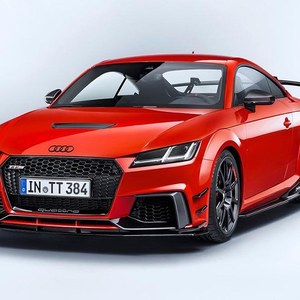
Live Audi Tt export inventory
View all listings →Real units currently on ChinaCarDirect with per-unit asking prices and MOQ. Availability updates live from the catalogue.

How to buy a Audi Tt from China
-
1
Define the target specification
Set the destination, model-year range, 45 TFSI, 55 TFSI or 4.0 TFSI preference, drivetrain, gearbox, condition and required equipment before shortlisting vehicles.
-
2
Search the live inventory
Review current Audi Tt listings and compare complete vehicles rather than relying on model-year or trim names alone. Confirm that each listing identifies a specific chassis or VIN.
-
3
Request the vehicle dossier
Ask for the VIN, build plate, equipment list, ownership and service history, condition photographs and known defect disclosures. The physical car and documents should match.
-
4
Verify market compliance
Confirm factory LHD or RHD configuration and consult a destination-market importer or compliance specialist about homologation, emissions, safety and registration requirements before paying.
-
5
Request a written quotation
Ask for a unit-specific pro forma invoice showing the vehicle price, currency, Incoterm, freight method, taxes, payment milestones, document list and quotation validity.
-
6
Complete payment securely
Verify the seller details and receiving account, pay only under the agreed schedule and obtain a receipt for each payment. Do not release the balance before the required inspection and export documents are confirmed.
-
7
Inspect, document and ship
Arrange an independent pre-shipment inspection, record condition, secure insurance and complete export customs clearance. Track the vehicle through loading, arrival, import clearance and final registration.
Tt vs rivals
| Porsche 718 Cayman | The Cayman is the more driver-focused, rear-engined alternative and generally demands a higher ownership commitment. The Tt offers a more usable 2+2 cabin, liftback-style luggage access and quattro availability on selected variants. |
|---|---|
| BMW Z4 | The Z4 is a two-seat, rear-wheel-drive roadster for buyers prioritizing open-air use and a different handling character. The Tt provides a fixed roof, additional rear-seat utility and a broader choice of front-wheel-drive and quattro configurations. |
| Toyota GR Supra | The GR Supra competes as a two-seat, rear-drive performance coupe with a distinct identity and servicing proposition. The Tt provides greater rear-seat utility, quattro options and an established premium-brand image that may suit different export customers. |
Frequently asked questions
How is the export price of an Audi Tt determined?
The live price reflects vehicle attributes such as year, exact trim, engine, gearbox, drivetrain, mileage, condition, options and ownership history. The landed cost can also change with exchange rates, freight, insurance, port charges, duties, taxes and Incoterm. Check the current per-unit price in the ChinaCarDirect live Audi Tt listings and request a written, destination-specific quotation for the exact chassis number.
Which Audi Tt engine and powertrain options should I look for?
The range can include a 45 TFSI turbocharged 2.0-litre four-cylinder, a 55 TFSI 3.0-litre V6 and a 4.0 TFSI 4.0-litre V8, depending on generation and market. These are petrol cars without a traction battery or electric driving range. Confirm the engine, gearbox and drivetrain in the VIN-linked listing rather than inferring them from the body style.
Is a new or used Audi Tt better for export?
A new car generally carries less age-related repair risk and may include seller warranty support, but production date, delivery preparation and destination-market equipment still need verification. A used car can offer a lower entry requirement and broader model-year availability, yet condition, service history and unresolved defects must be priced into the decision.
How does MOQ work for an Audi Tt order?
MOQ is a commercial term set by the seller and confirmed in the quotation; it is not a universal catalogue condition. Some offers may accept one vehicle, while others impose a lot minimum or configuration requirement. Ask for the minimum quantity, mixed-model permission and unit allocation before arranging any deposit.
What determines Audi Tt shipping time and cost?
Shipping time and cost depend on the route, transport method, vehicle or container capacity, season, port handling, customs clearance and document readiness. Finished Tt vehicles may travel by roll-on/roll-off service or in containers. Ask the freight forwarder for a destination-specific, door-to-door estimate rather than inferring logistics from the vehicle listing.
Can spare parts be supplied for an exported Audi Tt?
Parts can generally be ordered, but the buyer should confirm generation, market equipment and local Audi support before stocking the vehicle. Mechanical, electronic, trim and regional specification differences may affect availability, while import logistics can extend lead times. Build an aftersales parts plan into the initial vehicle selection and landed-cost assessment.
Is a right-hand-drive Audi Tt available from China?
Availability depends on the generation, original market and individual vehicle, so it must be checked rather than assumed from the Audi badge. Some Tt versions were factory-built for RHD markets, while a China-sourced car may be LHD or a conversion. Confirm the actual configuration and its homologation status with the destination-market importer.
How do I order an Audi Tt from China?
Start with the live Audi Tt inventory, select a specific vehicle and send an RFQ for its VIN, condition, documentation and destination-specific landed quotation. After verifying compliance and the pro forma invoice, follow the agreed deposit and balance schedule, arrange inspection and insurance, and release the balance only against verified export documents and shipping arrangements.
Ready to source the Audi Tt?
Send an Audi Tt RFQ with your destination, preferred configuration and quantity to request a current unit-specific export quotation.
Request a quote