
BAIC ORV Bj30 Export Buying Guide for Dealers
Buy a BAIC ORV Bj30 from China with practical guidance on trims, powertrains, export pricing, MOQ, shipping, compliance and rival vehicles for dealers.
At a glance
- The Bj30 spans regular, seven-seat Traveller and off-road-labelled configurations.
- Named 1.5T, hybrid and electric-drive options broaden buyer choice.
- Electric-drive labelling does not establish battery-only architecture or certified range.
- New and used sourcing require different inspection, documentation and warranty checks.
- Exact price, MOQ and availability depend on current unit-level listings.
Why the BAIC ORV Bj30 matters for export markets
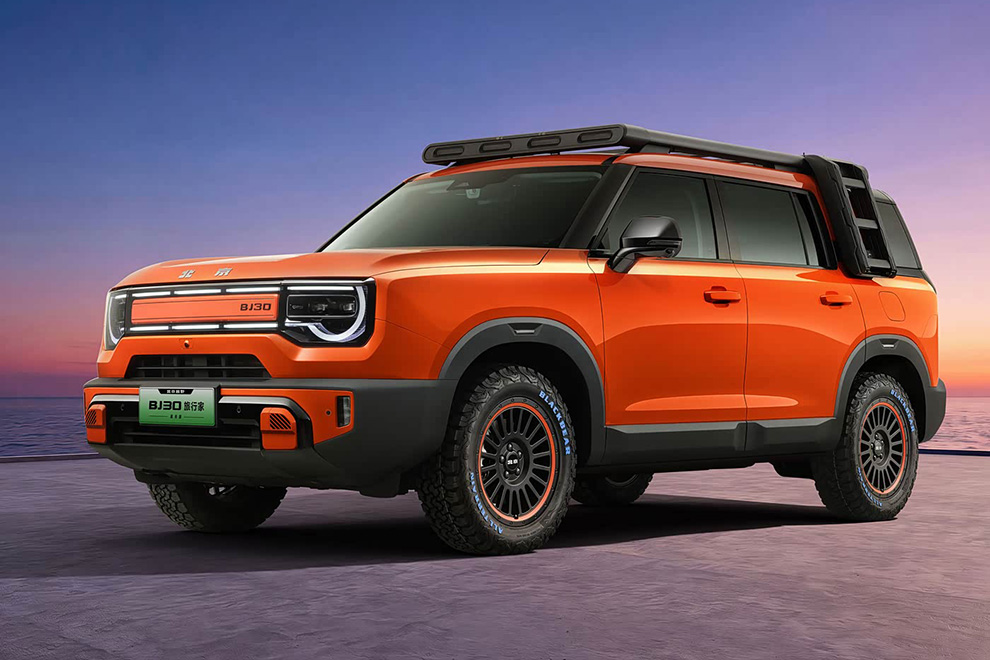
The BAIC ORV Bj30 is a compact SUV positioned between ordinary urban crossovers and more rugged-looking models. Its export proposition combines a road-oriented body, multiple 1.5T-based powertrain paths and a choice of standard, Traveller and light off-road-labelled editions. That mix gives importers a way to offer visually distinctive utility without moving into a full-size, highly specialized off-roader. It is particularly relevant where buyers want a second model in a dealer portfolio rather than another conventional family crossover. Buyers should still distinguish visual off-road cues from verified capability, because equipment and homologation can differ by trim and market.
Interest in Chinese export SUVs is driven by equipment content, design variety and the availability of combustion, hybrid and electric-drive options within one model family. The Bj30 adds a useful three-way proposition: a 1.5T Magic Core range, a Traveller line with a seven-seat version, and off-road-oriented Light and Wolf editions. For destination-country dealers, this creates merchandising options for urban customers, family buyers and buyers seeking a leisure-oriented SUV. It also lets a distributor test one nameplate across several price and equipment positions. Check each live listing to confirm which configuration is actually available and what the seller can document.
For an overseas buyer, the Bj30 matters most as a flexible sourcing candidate rather than as a guaranteed homologated product. Chinese-market trims may use unfamiliar names, and visual equipment does not establish local emissions approval, safety certification or warranty coverage. A sensible buying process therefore starts with the destination market, confirms the exact powertrain and equipment on the selected vehicle, and compares the landed cost with locally sold rivals. Current per-unit details, asking prices and seller terms should be taken from the live Bj30 inventory, not from generic market assumptions.
- Road, Traveller and off-road-labelled branches.
- Multiple 1.5T, hybrid and electric-drive configurations.
- Seven-seat option for family and fleet use.
Model range, trims and powertrain variants: how the lineup is structured and how to choose
The lineup is easier to understand as three families rather than one flat list. Magic Core editions use 1.5T naming and include Electric Drive and E-Drive Standard versions; Traveller editions include DCT 2WD, seven-seat and hybrid variants; and the Light Off-Road, Light Wild, Wolf Run and Wolf Wild names form the rugged-styled side. Some export titles also use Beijing Off-Road BJ30 naming. Export-market labels can change, so translate the listing title into a standard equipment checklist rather than assuming that Advanced or Max adds a feature in the destination country.
Powertrain selection is the first technical filter. The named 1.5T combustion and hybrid versions should be compared on fuel type, transmission, output and approved drive layout. Electric Drive and E-Drive labels do not, by themselves, prove that a vehicle is a battery-only model or disclose battery capacity, electric range or charging hardware. Obtain the homologation file, battery specification and applicable range certificate for each candidate. If local charging infrastructure, tax treatment or fleet emissions rules are decisive, rely on the signed vehicle documents rather than brochure shorthand. Where those documents are unavailable, treat the configuration as unverified.
Use case should then determine the branch. A Traveller buyer may prioritize the available seven-seat layout, luggage flexibility and a two-wheel-drive DCT version, while a Light Off-Road or Light Wild buyer may want distinctive exterior hardware and a higher-riding visual theme. Those labels still require inspection of tires, suspension, underbody protection and equipment. An importer mixing road, family and leisure variants should verify parts commonality, software support and resale positioning, because different drivetrains can create separate training and service requirements. Seven-seat demand should also be checked against local luggage and tax-class rules.
- Magic Core, Traveller, Light and Wolf groupings.
- Electric-drive labels do not prove battery-only architecture.
- Verify range, battery and equipment documents.
New vs used BAIC ORV Bj30: how export inventory is structured and how buyers choose
New and used Bj30 vehicles should be evaluated as different risk profiles. A new example can offer clearer ownership history, current model-year specification and a more straightforward warranty conversation, provided it is homologated for the destination. A used example may be a Chinese-market registration or an ex-fleet vehicle imported for another market, so its condition and history need more intensive verification. Neither status is automatically cheaper after freight, tax, inspection and rectification. Compare total cost of ownership rather than treating new or used as a complete product description for buyers.
For a used vehicle, request the VIN, registration history, service records, accident and flood checks, roadworthiness inspection, and photographs of the underbody, tires, engine bay and cargo area. For hybrid or electric-drive versions, ask for battery state-of-health information, charging or hybrid-system diagnostics, and confirmation that high-voltage components have not been modified. Inspect cold starts, fluid leaks, suspension noise, brake condition and software screens. Original equipment can still differ across production years, so compare the exact car rather than extrapolating from the current model range. Also verify that the VIN matches every document.
Dealers reselling to consumers generally favor documented new inventory because warranty transfer, customer confidence and predictable presentation matter. Fleet and off-road operators may accept an older unit when acquisition cost and uptime outweigh resale polish, but should build a maintenance reserve into the purchase. A used Bj30 can also be unsuitable for markets with strict emissions or connectivity rules, regardless of mechanical condition. The correct choice therefore depends on the buyer’s sales channel, local certification requirements and ability to support parts, not merely whether the odometer is lower or the purchase date.
- New units simplify history and warranty discussions.
- Used units require VIN, service and condition evidence.
- Match sales channel to local approval rules.
How export pricing works: the factors behind a live listing price, and how to read one
A live export price is the result of a vehicle’s specification and the commercial terms attached to it. Model year, trim, powertrain and battery version, factory options, mileage, condition, paint or accident repair history, and the seller’s margin all affect the starting figure. Currency movements can change the quoted amount before a transaction closes. Beyond the vehicle, freight, insurance, port handling, documentation, destination charges and import taxes may sit outside the listed figure. The Incoterm decides where responsibility transfers, so a lower asking price is not automatically a cheaper delivered vehicle.
When reading a Bj30 listing, first confirm that the year and edition match your specification, then read the photos and option list as carefully as the headline. Check whether the price is ex-works, FOB or another basis, whether freight and export documentation are included, and whether the displayed amount can change after inspection. The SKU helps identify the precise unit or listing package, while the seller should confirm stock status, production details and any defects. Ask for the quotation to state currency, validity period and payment milestones in writing rather than inferring commercial terms from the page.
A sound price comparison uses the same basis for every vehicle. Place the purchase price, inland transport, origin charges, ocean or specialist-carrier freight, insurance, destination port charges, customs duties, taxes and dealer preparation on one worksheet. Then compare the resulting landed cost with the locally homologated alternative. A single live listing is not a market average, and promotional or asking prices may not be the final invoice amount. Use the live Bj30 search for current binding figures, then request a written, destination-specific quote before committing funds or booking shipping capacity.
- Compare equivalent years, editions and specifications.
- Confirm freight, tax and port-charge treatment.
- Use a written destination-specific quote.
MOQ, ordering and payment: single units vs consolidating a container
MOQ is a seller’s commercial term, not a permanent property of the Bj30 model. Some listings may welcome a single-unit inquiry, while others may set a minimum for export orders or reserve vehicles for larger shipments; the figure displayed for one seller should never be generalized across the catalogue. Confirm the MOQ on the exact SKU, ask whether mixed years or editions are permitted, and obtain the minimum order value if one applies. A trial unit can be commercially possible without guaranteeing the same terms for a containerized repeat order.
The ordering sequence should be controlled and documented. Select the unit or production specification, request a formal quotation and pro forma invoice, verify the seller’s payment instructions, and agree the deposit and balance milestones. Before final payment, link release of funds to inspection results, correct VIN and model-year checks, and receipt of agreed export documents. Payment methods, bank charges, refund conditions and title-transfer timing vary by seller and market, so none should be inferred from the listing page. Written terms are particularly important when a shipment crosses several intermediaries or agents.
Wholesale buyers can use container consolidation to reduce freight cost per vehicle when several buyers or compatible units share a load, but it adds planning and risk. The exporter must disclose every vehicle consistently, keep VIN-to-sku records, and confirm that mixed trims will not be presented as identical. Cargo insurance should reflect the agreed Incoterm and replacement value, while port deadlines, demurrage and customs-document accuracy affect the total cost. Consolidating a mixed batch may be useful for a distributor, but a single retail vehicle followed by a larger order should be tested through a written pilot process rather than assumed to repeat.
- Confirm MOQ on the selected SKU.
- Document deposits, balance and release conditions.
- Control VIN-to-sku records during consolidation.
Shipping, homologation and market compliance caveats: LHD/RHD and import rules by country
Shipping begins with choosing the Incoterm and delivery architecture. Depending on the vehicle and destination, an exporter may use a vehicle carrier or a containerized shipment, with port-to-port, port-to-door or door-to-door responsibility allocated differently. Freight cost depends on route, transport mode, vehicle dimensions and weight, insurance, fuel surcharges, port congestion, handling charges and the delivery radius. Ask whether loading, securing, export clearance, destination terminal charges and delivery are included. The vehicle’s condition should be documented again before loading, with photographs taken after it is secured and matched to the inspection report.
Import eligibility must be checked before payment, not after arrival. Required approvals can cover vehicle type approval, emissions, safety, cybersecurity or software updates, VIN identification, local-language materials and technical conformity. Customs classification, duty, value-added tax or sales tax, and the treatment of parts and accessories also affect the landed cost. A Chinese-market certificate does not establish approval in the destination country, and homologation may require substantial importer-led work. Obtain the model’s documents for the exact configuration and confirm the route with a customs broker familiar with Chinese vehicle exports and the importing country.
Steering configuration is a separate sourcing check. Left-hand-drive and right-hand-drive availability can differ by factory, production batch and export program, and the live listing should state which configuration is offered. A conversion is not automatically a routine option: it can affect safety approvals, warranty, wiring, parts supply and residual value. Buyers should verify the VIN, steering position, pedal and control arrangement, lighting equipment and local type approval before shipping. Where the required configuration is not factory-supported, compare the cost of conversion with sourcing a locally approved alternative instead of assuming the conversion will be accepted.
- Agree the Incoterm before comparing freight.
- Verify local type approval and customs treatment.
- Confirm factory LHD or RHD configuration.
Who should buy the Bj30 — and who should pick a different vehicle
The Bj30 can suit an importer seeking a compact SUV with distinctive styling, several powertrain paths and a seven-seat Traveller option. It may work for a dealer building a value-oriented family range, a leisure-vehicle retailer using the off-road-labelled editions, or a fleet buyer testing a hybrid or electric-drive model in a market with appropriate approvals and charging policy. The strongest case is a business that can explain the model’s positioning, maintain a parts plan and price the full landed package. Visual appeal and flexible sourcing are genuine advantages when local homologation is achievable.
It is a weaker fit for buyers who require a factory-certified battery-only vehicle for zero-emission incentives, because the available E-Drive labels alone do not establish that architecture. It may also disappoint those who prioritize established residual values, a mature nationwide parts network, premium-brand service or certified towing limits. Urban buyers with very tight parking requirements should obtain exact dimensions before ordering, and serious off-road users should not treat the Light or Wolf names as proof of heavy-duty capability. For these needs, a locally homologated mainstream SUV may carry less operational risk.
The decision should be made as a matrix rather than a single ranking: purchase price, expected running costs, passenger and luggage needs, homologation effort, parts support, warranty, resale prospects and delivery certainty all matter. A dealer can mitigate risk by checking one representative vehicle, creating a costed parts list and confirming the warranty route before ordering the remaining units. A fleet operator should add utilization, charging or fuel infrastructure, residual assumptions and whole-life maintenance to the case. If several criteria remain uncertain, the live supplier conversation is more valuable than a generic specification sheet.
- Suits differentiated dealer and leisure portfolios.
- Useful where seven-seat or hybrid options matter.
- Unsuitable where certified battery-only status is required.
Main rivals and how the Bj30 compares
The Chery Tiggo 7 is a relevant compact-SUV benchmark for buyers who want a mainstream family format and may already have familiarity with Chery’s local network. It competes for the same value-conscious crossover consideration, although its exact powertrain and equipment depend on the destination market. The Bj30’s distinguishing case is its combination of off-road-oriented visual editions, the Traveller seven-seat option and its stated E-Drive and hybrid choices. Neither brand should be selected from Chinese trim names alone; compare the homologated local specification, warranty and parts support in the destination market.
The Haval H6 is another practical benchmark because it competes as a mainstream compact family SUV with powertrain choice and an emphasis on everyday usability. Where Haval has a stronger local dealer and service footprint, that may outweigh the Bj30’s more adventurous presentation. The Changan CS35 Plus is closer to a value-focused urban compact SUV and can suit buyers prioritizing equipment and daily running costs over off-road imagery. For all three alternatives, verify current local certification and equipment because the versions sold in China, export markets and third countries are not interchangeable.
A fair Bj30 comparison should use the same destination-market assumptions and the same cost worksheet. Put the exact vehicle, warranty, taxes, freight, servicing and expected resale assumptions against the locally approved rival, then test the Bj30 against the intended customer’s use case. The model is most defensible when its design, powertrain selection or seven-seat Traveller format solves a portfolio gap. It is less compelling when the buyer values a long-established service network, conservative residual values or the lowest possible compliance effort above visual differentiation. Review live Bj30 inventory alongside locally sourced quotations before making the final award.
- Tiggo 7 offers a mainstream family-SUV benchmark.
- Haval H6 emphasizes practicality and local support.
- CS35 Plus targets value-focused urban buyers.
Live BAIC ORV Bj30 export inventory
View all listings →Real units currently on ChinaCarDirect with per-unit asking prices and MOQ. Availability updates live from the catalogue.
BAIC ORV Beijing Off-Road BJ30 2024 1.5T Magic Core Electric Drive Advanced Edition
BAIC ORV Beijing Off-Road BJ30 2024 1.5T Magic Core Electric Drive Advanced Edition
BAIC ORV Beijing Off-Road BJ30 2024 1.5T Magic Core Electric Drive Advanced Edition
How to buy a BAIC ORV Bj30 from China
-
1
Define the destination and operating requirement
Set the country, steering configuration, passenger count, route, charging or fuel access and intended use before selecting a trim. This prevents a visually suitable version from becoming an expensive compliance mismatch.
-
2
Shortlist equivalent live vehicles
Compare vehicles of the same year, edition, powertrain and equipment level in the live inventory. Treat each listing as an individual commercial offer rather than assuming one price or specification represents every Bj30.
-
3
Verify the technical documents
Request the VIN, specification sheet, homologation records and, where relevant, battery, range, charging and high-voltage information. Confirm that the documents describe the selected vehicle rather than another trim in the range.
-
4
Request an itemized destination quote
Ask the seller to state the vehicle price, currency, Incoterm, freight method, insurance, documentation and payment schedule. Separate origin costs from destination customs duties, taxes and dealer preparation.
-
5
Confirm MOQ and payment terms
Confirm the MOQ, permitted production-year or trim mix, deposit, balance milestone and refund conditions on the exact SKU. Use a formal pro forma invoice and verified payment instructions.
-
6
Inspect before releasing funds
Define the inspection standard in the purchase documents and tie final payment to the agreed report. Check VIN, exterior condition, tires, underbody, fluids, warning lights and optional equipment before shipment.
-
7
Arrange transport and destination clearance
Book the carrier, verify cargo insurance and prepare export and customs documents against the agreed Incoterm. Complete destination homologation before the vehicle arrives and inspect it again after handling.
Bj30 vs rivals
| Chery Tiggo 7 | The Tiggo 7 is a mainstream compact-SUV alternative that may benefit from stronger local brand recognition in some markets. The Bj30 differentiates through its off-road-labelled editions, Traveller seven-seat option and E-Drive or hybrid choices. |
|---|---|
| Haval H6 | The Haval H6 is a practical family-SUV benchmark focused on everyday use, with local dealer support an important consideration. The Bj30 offers a more distinctive leisure-oriented image for buyers seeking that differentiation. |
| Changan CS35 Plus | The CS35 Plus targets value-focused urban buyers and competes more directly on compact dimensions and everyday running costs. The Bj30 is more relevant when off-road styling, broader trim presentation or the seven-seat Traveller format is commercially useful. |
Frequently asked questions
How is the export price of a BAIC ORV Bj30 determined?
The live price reflects the year, trim, powertrain or battery version, options, mileage, condition and the seller’s commercial terms. Freight, insurance, port charges, duties and taxes may be excluded depending on the Incoterm. Check the current unit-specific figure in the live listings and request a written landed-cost quote.
Which Bj30 powertrains are available, and what range should I expect?
The named line-up covers 1.5T combustion and hybrid versions, Traveller 1.5T DCT 2WD models, and Magic Core Electric Drive or E-Drive editions. Electric-drive naming alone does not establish a battery-only architecture, battery capacity, charging standard or range. Obtain the exact battery, fuel-system, certified-range and homologation documents for the selected vehicle.
Should an overseas buyer choose a new or used BAIC ORV Bj30?
New vehicles generally offer clearer ownership history and a simpler warranty conversation, subject to destination-market approval. Used vehicles can suit cost-conscious fleet buyers but require comprehensive VIN, service, accident, condition and high-voltage checks. Compare the complete landed and ownership cost rather than using price or model year alone.
How does the MOQ work when ordering a Bj30?
MOQ is set by the seller and may differ between a retail unit, a mixed wholesale batch and a production order. Confirm the requirement for the exact SKU rather than assuming that one listing’s terms apply across the model. A single-unit inquiry may be possible, but it should be agreed in writing before payment.
What determines shipping time and cost for a Bj30?
The main factors are the route, transport mode, vehicle dimensions and weight, insurance, fuel surcharges, port congestion, handling charges and the final delivery distance. Lead time also depends on inspection, documentation, payment clearance and available vessel or carrier capacity. Ask for an itemized quote under a defined Incoterm.
How are spare parts ordered and supported?
Before ordering, request a parts list, catalogue numbers, indicative lead times and the seller’s recommended shipping route. Confirm whether diagnostic software, technical literature and warranty claims are available for the destination market. For a distributor, plan regional stock and a service-parts budget rather than relying on emergency orders from China.
Is right-hand-drive availability guaranteed for the BAIC ORV Bj30?
No. Steering configuration can vary by production batch, export program and seller, so check every live listing and written quotation. A steering conversion may affect safety approval, warranty, parts, software and residual value. Where factory RHD is unavailable, obtain local approval advice and compare the conversion cost with a locally approved alternative.
How do I order a BAIC ORV Bj30 from China?
Select a vehicle from the live Bj30 inventory, request a destination-specific quotation and pro forma invoice, and confirm the SKU, MOQ, deposit and balance terms. Complete a pre-shipment inspection and link final payment to the agreed condition and documents. Then arrange the agreed Incoterm, transport, insurance, export clearance and destination import process.
Ready to source the BAIC ORV Bj30?
Request a destination-specific BAIC ORV Bj30 quotation and verify the best-fit live unit with ChinaCarDirect.
Request a quote