
BAIC ORV Off-road BJ40 Range Extender Export Buying Guide
Plan BAIC ORV Off-road Bj40 Range Extender import with trim advice, live pricing methodology, MOQ guidance, shipping checks and compliance notes for dealers.
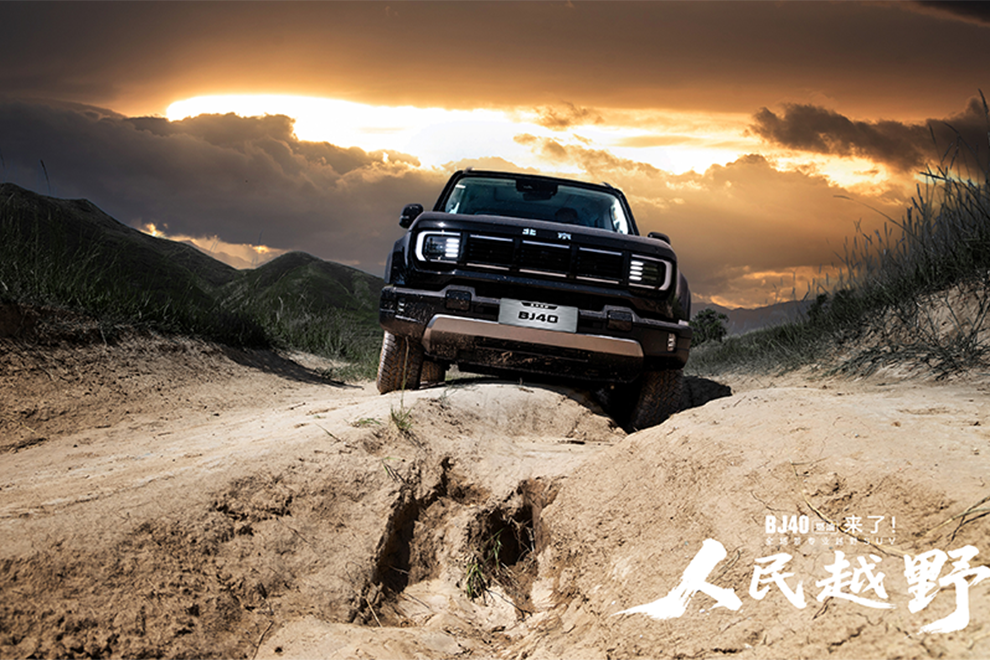
At a glance
- The range-extender BJ40 combines an off-road SUV format with a combustion-engine generator and electric drivetrain.
- The best export choice depends on confirmed trim hardware, tyres, protection, towing provision and destination approval.
- New units reduce configuration uncertainty, while used units require deeper VIN, mileage, damage and high-voltage history checks.
- Live prices and MOQs vary by unit, specification and seller terms, making written quotations essential.
- LHD/RHD availability, type approval, customs classification, freight and aftersales support must be settled before dispatch.
Why the BAIC ORV Off-road Bj40 Range Extender matters for export markets
The BAIC ORV Off-road Bj40 Range Extender is relevant to export buyers because it combines a rugged SUV format with a range-extender drivetrain. That addresses a problem in off-road markets: drivers may need electric-assisted traction and low-speed drivability without depending on dense public charging. Its appeal is strongest for dealers serving outdoor, utility, expedition and mixed-road customers, provided the selected vehicle has the axle, tyre, recovery and protection equipment required. It is not automatically a work-ready truck, so payload, towing and durability claims must be verified rather than inferred from off-road styling.
For overseas demand, the proposition is clearest where routes extend beyond convenient charging and buyers value a new-looking vehicle with a differentiated powertrain. This makes the model relevant to markets in Africa, the Middle East, Central Asia and parts of Latin America, subject to local rules. European and other developed markets require a more formal emissions, safety and type-approval review. Importers should assess the use case before the trim: a recreational buyer may prioritise recovery gear and chassis travel, while a fleet or distributor may need easier maintenance, stable parts supply and simpler ownership.
The export case is not based on novelty alone. Dealers must compare expected fuel use, service intervals, parts stocking, insurance classification and residual value against conventional off-road SUVs and plug-in or range-extender alternatives. Range-extender vehicles add system complexity, so a buyer should confirm the battery warranty, generator service route, diagnostic access and roadside-assistance network in the destination market. Use the live ChinaCarDirect inventory as the factual source for current configurations and availability, then build a business case around the exact unit rather than around a generic model description on the platform.
- Uneven charging-access routes
- Trim matched to operating duty
- Service support in total-cost analysis
Model range, trims and powertrain variants: how the lineup is structured and how to choose
Live export listings for the Off-road Bj40 Range Extender use edition labels including Standard Edition, Standard Edition I, Advanced Edition and Meta Realm Intelligent Edition. These identify the seller's advertised tier, but are not a substitute for a full option sheet. Feature naming and market equipment can differ from the Chinese domestic catalogue, and a listing may omit accessories. Ask for a VIN-linked specification sheet, paint and trim confirmation, standard-equipment list, axle and differential details, tyre specification and complete images before treating listings as equivalent. Recovery or protection equipment should also be itemised.
The range-extender designation means the vehicle should be evaluated differently from a battery-electric SUV. An engine acts as a generator, while electric propulsion supports the road wheels; the exact battery, motor, generator output, drive layout and published range figures need confirmation for the unit being bought. Buyers should ask whether range claims are electric-only or combined, which test cycle they use, and whether charging is supported. A CLTC figure from the source market should not be presented as an overseas real-world figure without local validation, because weather, speed, load and terrain materially change usable range.
A sensible choice starts with the application. Compare the Standard trims with Advanced and Meta Realm Intelligent versions only after confirming equipment differences, not by assuming the highest-sounding label is best. For fleet sale, prioritise the simplest configuration that meets local needs, manageable option content and serviceability. For an off-road-focused buyer, inspect tyre clearance, axle articulation, underbody protection, recovery points and towing provision. For family use, check cabin equipment, luggage capacity and emissions rules. The live listing should be treated as the starting point, then converted into a written, destination-compliant specification.
- Written VIN-level trim confirmation
- Range test and charging method
- Axle, tyre and protection fit
New vs used BAIC ORV Off-road Bj40 Range Extender: how export inventory is structured and how buyers choose
Export inventory is structured by condition, model year, edition, factory options and seller terms. New vehicles are easier to align with a current catalogue and may carry a factory warranty, while used examples can offer a lower acquisition entry point but require more extensive history and condition checks. Neither condition is guaranteed by the model name alone, and availability changes. Buyers should use the live ChinaCarDirect listings to see whether a new or used example is offered, then review the seller's description, images, mileage statement and condition grade rather than relying on the listing title.
For a new Off-road Bj40 Range Extender, inspection should prove that the delivered configuration matches the invoice. Match the VIN to production and option records, confirm model year and edition, record odometer reading and fuel/charging state, inspect paint and body panels, and check that tyres, tools and accessories are present. Because a range extender combines an engine, generator, battery and electric drive components, ask how battery condition is documented and whether the factory warranty starts at export, registration or a defined delivery date. Establish that no undisclosed repair, repaint or market conversion has occurred.
A used vehicle needs a different risk framework. Obtain the VIN, registration history where available, service records, accident and flood evidence, inspection photographs, and confirmation of whether the on-board charger, high-voltage battery and engine-generator system have been serviced or repaired. Require a cold inspection where practical and verify that displayed mileage is consistent with wear, service history and diagnostic reports. Compare the condition discount with likely battery warranty transfer, parts availability and resale risk. For a dealer or fleet buyer, one unsupported used unit can be a poor basis for a multi-vehicle programme.
How export pricing works: the factors behind a live listing price, and how to read one
An export price is not determined by the model badge alone. The vehicle's year, edition, range-extender or battery version, factory options, mileage and condition influence its value. Currency movements can change the buyer's total between quotation and payment, while freight, insurance, port handling, documentation and taxes may sit outside the listed vehicle price. The Incoterm also changes responsibility: a factory or port price cannot be compared directly with a delivered, duty-paid quotation. When reviewing BAIC ORV Off-road Bj40 Range Extender listings, first identify whether the displayed figure is the seller's vehicle price or an all-in export proposal.
Read each live listing as a set of commercial terms, not as a standalone bargain. Check the stated year, trim and options against the photos and written specification; ask whether the price assumes a particular drive side, destination or shipping method; and confirm what is excluded from shipping, customs clearance, duties, taxes and registration. Compare equivalent vehicles only after normalising those fields. The same edition name can cover materially different hardware if factory options differ. A lower displayed price may reflect a different specification, not a better-equipped vehicle or a cheaper landed cost.
Buyers should request a written quotation that fixes the vehicle, Incoterm, payment currency, validity period, freight assumptions and the documents required for registration. Ask how the seller will handle an exchange-rate movement between deposit and balance, and whether the deposit is refundable if inspection or shipping documents fail. A live listing is the correct place to check the current per-unit price and MOQ, but it is not a substitute for a binding pro forma invoice. Reconfirm stock and price immediately before payment because both are time-sensitive for the chosen VIN.
- Equivalent specifications and Incoterms
- Destination-specific written quotation
- Price and MOQ recheck before payment
MOQ, ordering and payment: single units vs consolidating a container
Minimum order quantity is a seller and transaction term, not a permanent property of the vehicle. A marketplace listing may permit a single-unit purchase, while a factory package or seller may require a batch, a mixed-model allocation or a larger order. Ask what the quoted MOQ applies to: one SKU, one production batch, one colour, one specification or the total container. Buyers who only need a demonstration vehicle should compare the total freight and compliance cost of a single unit with the cost of consolidating several units. Current MOQ and unit availability must be checked on the live listing and confirmed in the quotation.
A typical order moves from specification to commercial lock, then inspection and shipping. The buyer selects a listing or sends an RFQ, confirms VIN-level equipment and destination requirements, receives a pro forma invoice, pays according to the agreed schedule, and authorizes a pre-shipment inspection. The balance is normally linked to satisfactory inspection and document release, although the exact sequence must be negotiated. Before paying, identify the legal seller, the payment beneficiary, refund terms, title-transfer process and every document required for customs and registration. A dealer should preserve the signed specification, invoice, inspection report and production correspondence in the vehicle file.
Container consolidation can improve freight efficiency but changes risk. Combining SKUs or years may complicate customs records, warranty administration, spare-parts planning and customer allocation; securing the same specification across several units may take longer. Freight quotations should state transport method, route, carrier, cargo space, insurance, port charges, delivery scope and estimated sailing and handling windows rather than a guaranteed arrival date. Payment terms should account for exchange-rate exposure and the time between deposit and final billing. For mixed fleet demand, a trial unit may be prudent before committing a full container.
- MOQ basis defined in writing
- Signed invoice and inspection file
- Customs-ready consolidation records
Shipping, homologation and market compliance caveats: LHD/RHD and import rules by country
Shipping begins with the destination port or inland terminal, but a quotation can include separate legs: origin handling, vehicle-carrier or container transport, ocean freight, destination port charges, customs clearance, inland delivery and insurance. Vehicle-carrier and container methods have different handling patterns, so ask the forwarder which is available for the BJ40 and how it will be secured. Weight, dimensions and ground clearance can affect booking and cost. Secure packaging, lashing, keys, battery instructions and document handover in writing; do not treat a general sailing estimate as a guaranteed delivery date.
Import compliance should be settled before the vehicle is committed. The importer must confirm the destination's vehicle type approval, emissions and safety requirements, customs classification, VIN and plate format, insurance, age restrictions, taxes and any local incentives or restrictions for range-extender vehicles. The same drivetrain may be recorded differently under EREV, plug-in hybrid or another customs category, and that classification affects duties and documentation. Certification or modifications must be handled by an approved local process. A homologation specialist or experienced customs broker should review the exact model year and factory configuration rather than relying on another country's approval.
Drive-side availability is a separate sourcing question. Left-hand-drive production may be easier to obtain for some export routes, while right-hand-drive examples depend on factory allocation and the seller's market. Ask for the steering position in the written specification and do not assume a conversion is acceptable: changes to steering, lighting, restraint or electrical systems can affect approval, safety and resale. Buyers should also confirm local parts support, workshop training and warranty coverage. The safest sequence is to identify the LHD/RHD requirement, approve a compliant unit, then calculate taxes, registration, freight and insurance on that basis.
- Early type-approval and tax review
- Factory LHD/RHD confirmation
- Route-specific freight scope
Who should buy the Off-road Bj40 Range Extender — and who should pick a different vehicle
The Off-road Bj40 Range Extender is a strong candidate for dealers and fleet operators that need an off-road-oriented SUV with a range-extender architecture, especially where charging access is uneven and the customer values electric-assisted driving. It may suit rental, tour-service, utility, regional government or outdoor-equipment fleets when towing, payload, recovery equipment and local service support are properly specified. It is also attractive to private buyers who want a distinctive new vehicle and can maintain a more complex powertrain. The purchase should still pass a total-cost review covering fuel, insurance, tyres, inspections and eventual resale.
It is a weaker choice for buyers whose core requirement is a fully electric vehicle, a simple long-distance work truck, or the lowest operating cost without charging or generator servicing. Do not choose it solely for an off-road image if your business needs published towing limits, commercial payload ratings, fleet uptime guarantees, broad global parts coverage or a proven fuel-only operating model. Those requirements may be better met by a conventional diesel or gasoline SUV, a self-charging hybrid, or a purpose-built commercial vehicle. Before ordering, obtain the exact figures and approvals your use case requires, then compare total cost over the ownership period.
A different vehicle is also wiser where the destination has restrictive emissions or type-approval rules that do not cover the selected configuration, or where local dealers cannot diagnose the range-extender system. Buyers needing guaranteed all-electric road operation should assess a battery-electric SUV and charging plan. Those wanting lower complexity should compare established combustion or hybrid rivals. For fleet procurement, test one unit where permitted, compare utilization and uptime, and verify warranty transfer and service arrangements before scaling. The right choice is the powertrain and equipment package that survives the route, the regulations and the aftersales network, not simply the most novel listing.
Main rivals and how the Off-road BJ40 Range Extender compares
Comparisons should be based on the same mission: usable range, off-road hardware, towing and payload evidence, cabin equipment, safety approval, service network and delivered cost. The BJ40's range-extender format is one part of its proposition, not a substitute for verified mechanical capability. Compare each rival on the destination-compliant specification rather than on headline range or trim names. In particular, check whether the alternative uses a range extender, plug-in hybrid, self-charging hybrid or combustion powertrain, because charging dependence, fuel logistics and maintenance differ. The closest Chinese alternatives below are relevant reference points, not automatic conclusions.
The Deepal G318 range extender and Jetour Traveller, also known in some markets as the T2, are the closest conceptual comparisons: each combines an off-road SUV format with an engine generator and electric drive in a comparable Chinese export ecosystem. Against the BAIC ORV, the deciding evidence will be quoted axle, tyre, protection, recovery and towing equipment, not the range-extender label alone. Compare destination approvals, dealer support and spare-parts channels. The BJ40 may appeal where its trim and factory hardware meet the requirement, but no comparative advantage should be assumed without inspecting the competing vehicle.
The GWM Tank 300 HEV is a useful alternative for a buyer focused on rugged SUV character but not seeking the BJ40's range-extender architecture. Its self-charging hybrid operating concept can appeal where drivers want electrified assistance without adding a vehicle-charging routine, although exact market availability and equipment vary. The Tank 300 offers a different comparison for dealer familiarity, parts planning and off-road feature assessment; the BJ40 instead leads with its range-extender positioning. Whichever is selected, test ride control, boot use, fuel logistics, warranty coverage and delivered cost under real duty cycles before placing a fleet order.
- Mission-based rival comparison
- Hardware, approvals and support
- Shared-duty-cycle cost comparison
Live BAIC ORV Off-road Bj40 Range Extender export inventory
View all listings →Real units currently on ChinaCarDirect with per-unit asking prices and MOQ. Availability updates live from the catalogue.
BAIC ORV Beijing Off-Road BJ40 Range Extender 2026 Meta Realm Intelligent Edition
BAIC ORV Beijing Off-Road BJ40 Range Extender 2025 Advanced Edition
BAIC ORV Beijing Off-Road BJ40 Range Extender 2025 Standard Edition
BAIC ORV Beijing Off-Road BJ40 Range Extender 2025 Advanced Edition
How to buy a BAIC ORV Off-road Bj40 Range Extender from China
-
1
Define the destination and duty cycle
Identify the destination country, required steering side, customer use, route conditions, towing and payload needs, charging or fuel access, and applicable emissions and safety rules before selecting a vehicle.
-
2
Review the live vehicle listings
Use the ChinaCarDirect inventory to identify available Off-road Bj40 Range Extender examples. Compare equivalent year, edition, options, condition, drive side and seller terms rather than relying on the listing title alone.
-
3
Request a vehicle-level specification
Ask the seller for a VIN-linked or production-record specification covering powertrain, battery version, range test, drivetrain, tyres, protection, recovery equipment, accessories and warranty coverage.
-
4
Request and compare written quotations
Ask for a quotation that identifies the vehicle, Incoterm, currency, freight scope, taxes, payment schedule and document list. Compare only quotations covering equivalent configurations and services.
-
5
Lock payment and inspection terms
Confirm the legal seller, payment beneficiary, deposit and balance conditions, refund policy, title transfer and pre-shipment inspection requirements in the pro forma invoice.
-
6
Book compliant transport
Give the forwarder the confirmed dimensions, weight, drive side and destination. Agree the transport method, route, securing requirements, insurance, port charges, customs broker and estimated handling windows.
-
7
Verify handover and registration
Before release, reconcile the VIN, invoice, packing list, shipping documents, certificate of origin, warranty documents and inspection report with the purchased specification. Complete destination registration and dealer handover only after verification.
Off-road Bj40 Range Extender vs rivals
| Deepal G318 Range Extender | A direct conceptual competitor for Chinese off-road SUV exports using an engine-generator and electric-drive concept. The better fit depends on confirmed axle, tyre, protection, towing and towing-equipment provisions, destination approval and local service support. |
|---|---|
| Jetour Traveller/T2 Range Extender | A close alternative in the off-road SUV and range-extender segment, with similar market and parts-network considerations. Buyers should compare trim-specific hardware, drivetrain equipment, approval and delivered operating cost rather than assume equivalent capability. |
| GWM Tank 300 HEV | A rugged SUV alternative for buyers seeking electrified assistance through a self-charging hybrid rather than the BJ40's range-extender architecture. It may suit different charging and maintenance expectations, subject to the exact market specification. |
Frequently asked questions
How is the export price determined?
Export pricing is calculated from the selected vehicle's year, trim, powertrain or battery version, options, mileage and condition, then adjusted for currency, freight, insurance, port charges, taxes and the Incoterm. Compare only equivalent configurations because the same trim label can include different hardware. Current per-unit prices, MOQ and availability are shown in the live ChinaCarDirect listings and should be reconfirmed before payment.
What powertrain and range specifications should I expect?
The model is sold as a range extender, combining an engine-generated electrical supply with electric propulsion. Exact generator output, motor, battery capacity, charging arrangement, drivetrain and range figures vary by trim and market, so use the vehicle-level specification rather than a generic online range claim. Treat any CLTC figure as source-market information rather than a guaranteed local range.
Should an overseas buyer choose a new or used Off-road Bj40 Range Extender?
New units usually provide clearer factory configuration and warranty provenance, while used units can be economical if their VIN, service record, damage history and high-voltage condition are fully documented. A used vehicle carries more uncertainty in parts support, battery warranty transfer and resale. Confirm actual condition and availability in the live listings.
What is the MOQ for a wholesale order?
MOQ is set by the seller and transaction and may apply to one SKU, configuration, batch or total container; it is not a permanent model attribute. Ask the seller to state its basis in the quotation and whether mixed models can share a shipment. Current MOQ appears on each live listing and must be confirmed in the pro forma invoice.
How long does shipping take and what drives the cost?
Shipping time depends on origin handling, booking availability, transport mode, carrier schedule, customs clearance, port congestion, inland delivery and documentation. Cost is influenced by the route, vehicle size and weight, securing method, insurance, destination charges, taxes and Incoterm. Request a written breakdown separating the vehicle price from freight and other landed charges.
How are spare parts and warranty support arranged?
Parts support should be agreed before purchase, including engine, generator, high-voltage battery, inverter, on-board charger, tyres, wear items and off-road accessories. Confirm availability, lead times, packaging, diagnostic access and warranty handling with the seller and destination service network. Do not assume a local dealer can diagnose or stock every range-extender component.
Is a right-hand-drive version available?
RHD availability depends on factory allocation, trim and the seller's source market. Ask for the steering side in the written vehicle specification and verify whether a compliant factory RHD example is available. Do not assume a conversion is acceptable because changes to steering, lighting, restraint or electrical systems can affect homologation, safety and resale.
How do I buy a BAIC ORV Off-road Bj40 Range Extender from China?
Start with the live listings, compare equivalent vehicles and send an RFQ for the required specification and destination. Obtain a written pro forma invoice, agree payment and inspection conditions, approve a pre-shipment inspection and then book compliant transport. Verify the VIN, invoice, shipping and warranty documents before authorizing shipment release and destination registration.
Ready to source the BAIC ORV Off-road Bj40 Range Extender?
Request a destination-specific quotation for the BAIC ORV Off-road Bj40 Range Extender through ChinaCarDirect, with trim, MOQ, freight and compliance terms confirmed in writing.
Request a quote