
Baojun 530 Export Guide for Overseas Dealers and Fleets
Buy a Baojun 530 from China with practical export guidance on trims, seating, pricing, MOQ, shipping, compliance, parts and live vehicle listings.
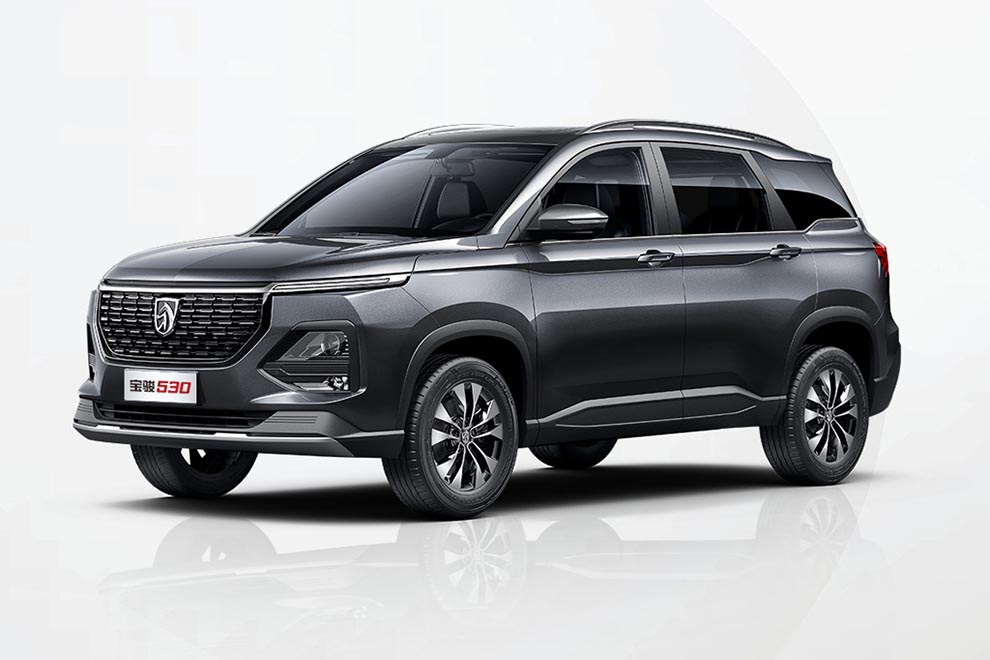
At a glance
- The 530 spans five-, six-, and seven-seat layouts in a compact crossover body.
- Its petrol range spans 1.5T and 1.8L engines with manual, CVT, and DCT choices.
- Trim and gearbox selection should follow passenger load, traffic conditions, and local service capability.
- China V and China VI labels must be checked against destination-market approval requirements.
- Live listings show current per-unit figures, while landed cost also includes freight, duties, tax, and insurance.
Why the Baojun 530 matters for export markets
The Baojun 530 occupies a practical middle ground in the Chinese compact SUV market: it combines a five-door crossover body with unusually broad seating and drivetrain choices. For Baojun 530 export buyers, that means a vehicle that can cover private-car retail, ride-hailing, staff transport, and light fleet use without moving into a larger premium SUV. Its appeal is not based on one headline feature, but on the combination of turbocharged powertrains, practical space, and multiple equipment grades that can be compared within the same model family. Model-year and trim selection drive overall value.
In many destination markets, the 530 competes with mainstream compact crossovers where buyers expect modern styling, useful passenger room, and an affordable purchase pathway from China. Its three-row capability gives it a distinct role for buyers who need occasional seven-seat flexibility rather than a permanently larger vehicle. Export names such as Global Car and connected editions also show how the domestic range has been packaged for broader markets, although an export-oriented trim label does not by itself confirm approval for a particular country. Always verify homologation and parts support locally.
The strongest export case appears when the 530 is matched to a clear operating brief. A dealer can offer a practical family SUV from one model family without forcing every vehicle into one specification for different customer needs. Fleets may prioritize the manual model for straightforward operation, while the CVT or DCT variants suit drivers who prefer easier traffic management. The deciding issue is not merely whether the vehicle looks well equipped; it is whether the selected seating, emissions version, gearbox, and service support make commercial sense after registration and freight are independently verified.
- Flexible seating and gearbox breadth
- Compact-SUV export positioning
- Configuration-led value
Model range, trims and powertrain variants: how the lineup is structured and how to choose
The Baojun 530 range centers on a 1.5-litre turbocharged petrol engine, with manual, CVT, and DCT transmissions across different trims. Manual Comfort and Luxury versions prioritize straightforward operation, while CVT variants add convenience and DCT versions pair the turbo engine with a more automated gearbox. A 1.8-litre automatic Luxury version also appears, giving buyers a naturally aspirated alternative. Listings may describe these as China V or China VI; those labels identify the Chinese emissions version, not destination-market approval or every requirement for importing and registration. Confirm type approval before shipment.
Seating is the clearest way to separate the range. Five-seat versions suit private buyers and fleets where the third row is unnecessary, six-seat layouts can improve access and balance for mixed passenger loads, and seven-seat versions maximize flexibility for group travel or commercial shuttle duty. The available grades range from Comfort through Premium, Prestige, Luxury, and Flagship, with connected and anniversary variants adding equipment or packaging. Buyers should compare actual seat rows rather than infer capacity from the body or trim badge, and request photographs showing the actual cabin layout.
Selection should follow the use case and the destination, not simply the highest trim name. Manual models can suit fleets that value predictable operation and straightforward servicing, while a CVT reduces driver workload and a DCT may better suit buyers wanting rapid automated shifts. The 1.8-litre version may appeal to those who prefer a less turbo-focused character, but engine choice should be checked against towing, load, fuel plans, and local parts availability. For each trim, confirm gearbox type, seat count, emissions label, hand of drive, and equipment before treating it as importable.
- 1.5T with three transmissions
- 1.8L automatic alternative
- Five-, six-, and seven-seat layouts
New vs used Baojun 530: how export inventory is structured and how buyers choose
Export supply can include factory-new vehicles and, where a marketplace or supplier offers them, previously registered or used examples. New vehicles generally provide the cleanest contractual definition, consistent specification, and lower uncertainty about wear, but the buyer should still check production age, factory status, tax treatment, warranty transfer, and whether the China V or China VI version suits local rules. Older factory stock can still be new, yet its age may affect resale positioning and parts-cycle planning. It can also simplify handover preparation for fleet customers, provided documentation remains complete and valid.
Used Baojun 530 vehicles demand a different buying method because the listed condition may conceal how the car was maintained. Check the odometer reading and its unit, service records, accident history, replacement parts, tyre wear, interior condition, fluid leaks, and warning lights. A manual, CVT, or DCT unit should be road-tested for noise, hesitation, or clutch wear, while structural and corrosion checks matter if the vehicle comes from a harsh climate. Ask for dated photographs and an independent inspection rather than relying on a polished sales image or edited marketing footage.
The choice often comes down to consistency versus value. A new vehicle is easier to standardize across a dealer group and may arrive without the mileage burden of an imported used example, whereas a carefully inspected used vehicle can reduce acquisition and depreciation for a price-sensitive buyer. Used imports may also face age limits, emissions restrictions, or difficult certification in the destination country. Treat those regulatory obstacles as part of the purchase price, not as an administrative afterthought, and select new when downtime or documentation risk would outweigh any acquisition saving.
- New: standardized handover
- Used: inspect condition and records
- Compliance affects acquisition value
How export pricing works: the factors behind a live listing price, and how to read one
A Baojun 530 export price is not one fixed number attached to the model name. It changes with model year, trim, seating, engine, transmission, connected equipment, condition, mileage, and the number of units requested. Market exchange rates also affect how a China-based vehicle cost is translated, while freight method, route, insurance, port charges, and the selected Incoterm determine which costs fall inside the quoted amount. For used vehicles, rarity, repair history, and the condition of major components can matter as much as the original trim, and the inspection evidence behind its asking figure.
Read each live listing as a structured quotation rather than a bare headline. Confirm the exact trim name, model year, gearbox, seat count, emissions designation, condition, mileage, and whether multiple units of that specification exist. Check the photographs against the description, ask for the VIN or chassis identification, inspection status, and available documents, and establish whether the displayed amount is a vehicle-only figure. On ChinaCarDirect, the live Baojun 530 listings provide the binding per-vehicle price, but commercial terms must still be confirmed on the seller’s quotation before funds are committed.
Landed cost requires a wider comparison. Build the vehicle figure, inland transport, export handling, sea or roll-on/roll-off freight, insurance, destination charges, import duty, VAT or GST, registration, and homologation into separate lines. Where two listings look similar, the cheaper vehicle may not be cheaper after delivery if one needs a larger freight booking, lacks a required document, or requires local certification. Ask each supplier to quote the same currency, Incoterm, destination port, delivery scope, and payment schedule so that comparisons are like for like and state any exclusions explicitly in writing.
- Vehicle price versus landed cost
- Match Incoterm and destination
- Check live per-vehicle figures
MOQ, ordering and payment: single units vs consolidating a container
A sensible ordering process starts with a written specification, not a deposit. Identify the destination, seat count, engine, transmission, emissions version, hand of drive, condition, and expected quantity, then request a pro forma quotation tied to the selected listing or stock reference. The quotation should state the vehicle price, validity period, production or dispatch timing, payment milestones, Incoterm, and which inspection and transport documents are included. This prevents a showroom-style trim description from becoming a mismatched shipment at the port after documents, inspection, and payment milestones have been agreed in writing.
Retail, testing, and small-fleet buyers may purchase one vehicle, while wholesale shipments or mixed fleet orders combine several units into one container or roll-on/roll-off booking. Consolidation can improve freight efficiency and simplify vehicle handling, but it introduces common risks: one damaged unit, a single missing document, or one non-compliant specification can affect the group. Check the MOQ attached to each quotation rather than assuming any universal retail or bulk requirement. For mixed configurations, separate the allocation sheet by VIN or stock reference before payment, final inspection, and release of the balance.
Payment terms should be negotiated against the shipment plan. A buyer may be asked for a deposit with the balance linked to inspection or dispatch, but the actual milestones, accepted methods, and cancellation treatment must be stated in the contract. Never transfer funds against an informal promise: verify the supplier identity, confirm the beneficiary account belongs to the contracting entity, and reconcile the invoice, listing, and allocation. For a container order, define who arranges customs, freight, insurance, and release of payment in the event that final checks delay loading or cancellation.
- Specification-linked pro forma quote
- Confirm MOQ for each quote
- Verify beneficiary and allocation
Shipping, homologation and market compliance caveats: LHD/RHD and import rules by country
Shipping choice depends on vehicle dimensions, weight, quantity, route, and urgency. A small mixed shipment may use container or groupage options, while a larger group of vehicles can be moved by roll-on/roll-off carrier; the correct method must be confirmed against the actual model configuration. Freight quotes should state origin, destination, vessel or sailing schedule, terminal charges, insurance, and delivery scope. Loose dates are not promises because port congestion, customs inspection, weather, documentation errors, and vehicle preparation can all affect the sequence from factory release to terminal availability at either end.
Import and road legality are country-specific. Before payment, confirm the applicable customs classification, age rules, emissions standard, VIN requirements, safety approval, roadworthiness, insurance, duty, and VAT or GST treatment. A listing marked China V or China VI does not automatically pass local emissions testing, and connected equipment should not be assumed to be approved or functional under the destination’s rules. Local registration may also require evidence that the steering, lighting, restraint, and other systems meet local requirements. Treat homologation as a documented buyer responsibility and seek local professional advice where uncertain.
Most China-built 530 examples are left-hand-drive, but right-hand-drive availability must be verified rather than inferred from the model name. Do not assume a listed Global Car or anniversary edition is RHD; request the steering position, VIN, and homologation evidence for the intended market. A conversion performed after production can affect warranty, wiring, spare-parts ordering, insurance, and type approval, so it should be considered only with qualified advice and local authority confirmation. The safest route is to source an approved configuration or complete homologation before shipment for the intended destination market.
- Confirm LHD or RHD first
- Check destination approval for China V/VI
- Quote freight and insurance separately
Who should buy the 530 — and who should pick a different vehicle
The 530 is a strong candidate for an overseas dealer or fleet buyer that needs a practical petrol SUV and can accommodate the Chinese vehicle’s ongoing ownership model. It offers meaningful configuration flexibility: five seats for standard transport, six for a more balanced passenger cabin, and seven for occasional group demand. Manual, CVT, and DCT choices also allow the buyer to match driver skill, traffic conditions, and maintenance capability. The opportunity is strongest where parts can be ordered reliably and the importer has a clear process for inspections, registration, and warranty handling.
It is less suitable for buyers whose brief prioritizes an electric powertrain, a premium brand image, advanced driver-assistance depth, off-road ability, or a very small urban footprint. Those requirements point toward a battery-electric crossover, a higher-grade international model, or a vehicle with established local after-sales support. The 530 may also be a poor fit where seven seats are never needed and its larger packaging would be paid for without benefit, or where towing limits, payload, fuel standards, and emissions rules make the selected configuration impractical, or where fleet utilization is too low.
Before committing, build a total-cost model rather than comparing purchase price alone. Include freight, insurance, duty, tax, registration, local preparation, servicing, parts consolidation, residual-value assumptions, and the likely effect of resale timing. A fleet operator should also test loading access, seat removal, luggage capacity, fuel consumption under local conditions, and driver suitability across the chosen gearbox. The 530 is the better buy when flexibility and China sourcing outweigh the benefits of a more localized or electrified alternative. Test the chosen vehicle against the duty cycle, legal load limits, and required seating.
- Flexible seats and China sourcing
- Weaker fit for EV briefs
- Assess operating and resale costs
Main rivals and how the 530 compares
The Haval Jolion is a close compact-SUV competitor with a strong international profile and turbocharged powertrains. It may be more familiar to buyers in markets where Haval has an established dealer network, and it is worth comparing for brand recognition, parts access, and warranty arrangements. The Baojun 530’s more visible distinction is seating choice, including six- and seven-seat layouts that Jolion does not mirror. Neither vehicle should be selected on badge recognition alone; compare the exact destination-approved specification and landed cost, including documents, warranty transfer, and support arrangements before ordering.
The Chery Tiggo 7 is another mainstream five-seat alternative with a similar need to satisfy buyers seeking a modern compact SUV at a manageable acquisition cost. Tiggo 7 can be attractive where Chery’s local presence and model familiarity are stronger, while the 530 gains an advantage for buyers who genuinely need three seating rows or a specific transmission. The JAC S3 is a closer functional comparison because it is also marketed with five- and seven-seat layouts; comparing the 530 with it helps test whether the 530’s wider trim and gearbox mix adds enough value.
A fair comparison should use the buyer’s actual duty cycle. Create a matrix covering seating, engine choice, gearbox, fuel economy, safety equipment, homologation, parts lead time, dealer support, expected resale, and delivered cost. The 530 tends to stand out when configuration breadth and occasional maximum capacity matter; a rival may be stronger when local brand awareness, standardized after-sales networks, or a simpler five-seat specification dominates. Verify every feature and certification on the live vehicle record rather than generalizing from the model’s reputation before signing a vehicle-ordering commitment or final import contract.
- Jolion: familiarity, fewer layouts
- Tiggo 7: five-seat simplicity
- JAC S3: multi-seat alternative
Live Baojun 530 export inventory
View all listings →Real units currently on ChinaCarDirect with per-unit asking prices and MOQ. Availability updates live from the catalogue.
Baojun Baojun 530 2021 Global Car Anniversary Edition 1.5T CVT Luxury 5-Seater
Baojun Baojun 530 2021 Global Anniversary Edition 1.5T CVT Luxury 7-seater
How to buy a Baojun 530 from China
-
1
Define the operating requirement
Specify destination, seating, engine, gearbox, hand of drive, and condition before viewing trims. Separate passenger, luggage, towing, and fleet-use requirements so equivalent vehicles can be compared.
-
2
Build a shortlist from live inventory
Review the Baojun 530 listings and record the exact model year, trim, transmission, seat count, emissions label, and stock reference. Ask the supplier to confirm the current vehicle price and availability in writing.
-
3
Check market and document fit
Ask for VIN or chassis details, factory status or service history, hand of drive, and available documents. Confirm local customs, emissions, safety, and registration rules before paying.
-
4
Request a comparable landed quotation
Ask each seller to quote the same currency, Incoterm, destination port, delivery scope, freight method, insurance, and payment milestones. Keep vehicle, freight, duty, tax, and homologation costs on separate lines.
-
5
Confirm MOQ and payment controls
Record the MOQ, allocation method, deposit, balance triggers, cancellation terms, and beneficiary details on the quotation or contract. For mixed configurations, assign each vehicle by VIN or stock reference.
-
6
Inspect before shipment release
Use an independent pre-shipment inspection to verify condition, mileage or production age, trim equipment, documents, and obvious mechanical defects. Resolve discrepancies before authorizing dispatch or final payment.
-
7
Arrange freight, customs and registration
Confirm vessel or carrier booking, insurance, terminal charges, export documents, customs-broker instructions, and delivery responsibility. Complete local approval and registration before putting the vehicle into service.
530 vs rivals
| Haval Jolion | A close compact-SUV rival with turbocharged engines and stronger international brand recognition. Jolion may suit buyers prioritizing local Haval familiarity, while the 530 differentiates through six- and seven-seat options. |
|---|---|
| Chery Tiggo 7 | A mainstream five-seat alternative in the same general market tier. Choose the Tiggo 7 where a conventional two-row layout and local Chery support matter more than the 530’s seating flexibility. |
| JAC S3 | A particularly relevant rival because it is also offered with five- and seven-seat configurations. The 530 may appeal more when its broader trim and transmission mix is useful, but compare live specifications and parts support. |
Frequently asked questions
How is Baojun 530 export pricing determined?
The live vehicle price reflects the specific year, trim, engine, transmission, seating, condition, and other listing attributes. Freight, insurance, terminal handling, import duty, VAT or GST, and the chosen Incoterm may sit outside that figure, so ask for a written landed-cost quotation. Current per-vehicle prices and terms should be checked in the live ChinaCarDirect listings and confirmed before payment.
What engine and transmission options does the Baojun 530 have?
The range is petrol-powered, with 1.5T versions offered with manual, CVT, or DCT transmissions and a 1.8L automatic variant appearing in the line-up. It is not a battery-electric model, so battery capacity, charging, and electric range do not apply. Confirm the exact powertrain in each listing because trim and model year can change the combination.
Should an overseas buyer choose a new or used Baojun 530?
New examples offer a more standardized handover, but still need production-age, tax, and warranty checks. Used examples require mileage, service, accident, wear, and gearbox inspection and may face stricter age or emissions rules. Select whichever configuration offers the better risk-adjusted landed cost for the destination.
What is the MOQ for ordering a Baojun 530?
MOQ is confirmed per listing or quotation, not assumed from the model name. One-unit buying may be possible for test or reseller demand, while container consolidation can improve freight efficiency but concentrates payment and compliance risk. Ask the supplier to state the MOQ, mixed-configuration rules, and allocation process in writing.
What determines Baojun 530 shipping time and cost?
Shipping time and cost depend on factory readiness, origin port, sailings, destination port, vehicle configuration, freight method, insurance, terminal charges, customs clearance, and local registration. Transport mode should match the number and specification of units, and dates remain estimates until booking and documents are confirmed. Request either an all-in delivered quotation or separate vehicle, freight, duty, and tax lines.
Can spare parts be obtained for an exported Baojun 530?
Parts availability depends on the exact engine, gearbox, seat layout, and destination. Before ordering, request VIN-based confirmation for wear items, service items, and electronic components, and ask whether the supplier or local distributor supports warranty claims. A common China configuration does not guarantee local stocking, so include parts planning in the total-cost decision.
Is a right-hand-drive Baojun 530 available for export?
Most China-built examples are left-hand drive, and right-hand-drive availability must be confirmed for the specific vehicle and market. Global Car or anniversary labels do not by themselves prove RHD status or local approval. Do not assume a post-production conversion is acceptable for homologation, insurance, wiring, warranty, or parts supply.
How do I order a Baojun 530 from China?
Start by choosing the required seats, engine, gearbox, emissions version, condition, and destination, then shortlist the live Baojun 530 inventory. Request a specification-linked pro forma quote covering MOQ, payment milestones, Incoterm, inspection, documents, and freight. Verify the supplier and beneficiary details, inspect the assigned vehicle before release, and complete import approval before shipment or registration.
Ready to source the Baojun 530?
Send your destination, seating, powertrain, hand-of-drive, and quantity requirements to request a current Baojun 530 export quotation.
Request a quote