
Baojun Cloud Export Guide for Dealers and Fleet Buyers
Compare Baojun Cloud trims, range versions, pricing factors, MOQ and shipping for overseas dealers and fleet buyers, with a practical RFQ checklist.
At a glance
- The Cloud is a compact battery-electric crossover suited to cost-conscious urban dealers and fleet operators with dependable charging.
- Vehicle selection starts with the 360 and 460 version families, followed by the exact Pro, Plus, Max or special-edition grade.
- Export pricing changes with trim, battery version, condition, exchange rate, freight and Incoterm, so buyers should compare like-for-like quotations.
- New vehicles favor condition consistency, while used units require closer battery, mileage, repair-history and warranty checks.
- Confirm steering configuration, destination homologation, parts support and landed cost before authorizing shipment.
Why the Baojun Cloud matters for export markets
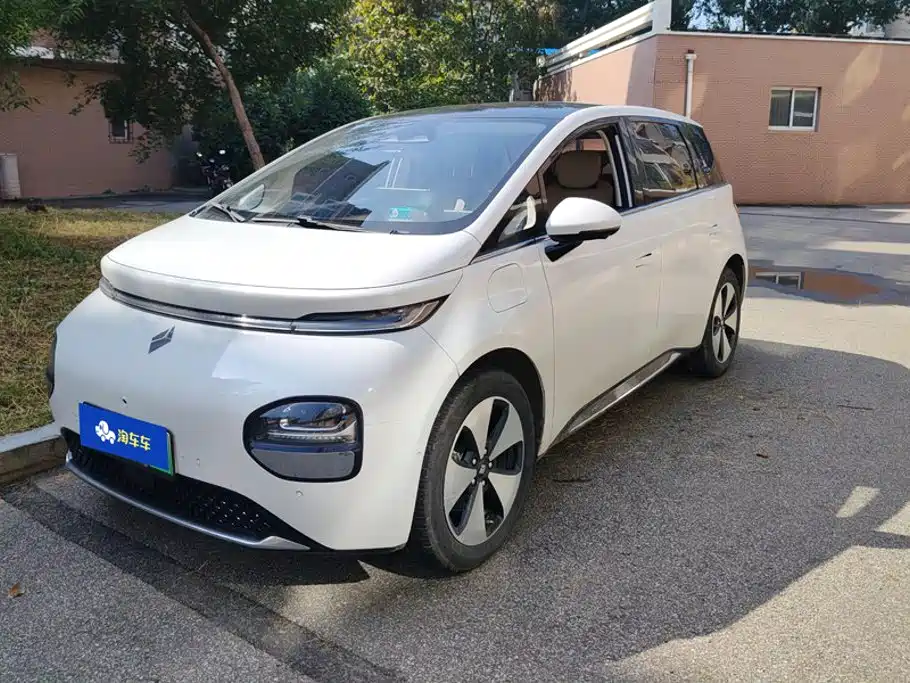
Baojun Cloud is a compact battery-electric crossover from Baojun, a Chinese manufacturer. It sits in the accessible part of the compact electric SUV segment, combining a five-door body with the packaging efficiencies of an EV. For overseas dealers, the model is most relevant where buyers need a practical urban vehicle but remain price-sensitive. That makes it a candidate for city retail programs, company-car packages, ride-hailing fleets and importers seeking a lower-complexity alternative to a large premium EV. Its value proposition is built around everyday usability and acquisition efficiency, not prestige or high-performance credentials.
Cloud’s export relevance also comes from a lineup that can be translated into clear market tiers. The 360- and 460-labelled versions, combined with Pro, Plus, Max and named special editions, give importers a practical way to build a price-and-equipment ladder. However, the names alone do not prove battery capacity, certified range, charging capability or regulatory approval. A serious buyer should treat the trim badge as a starting point and request a signed specification sheet for each candidate vehicle before comparing quotations or promising performance to fleet customers in writing beforehand.
The Cloud is not equally attractive in every destination. Dense cities, campuses, hotel and company fleets, and short-distance ride-hailing operations are the clearest use cases because the vehicle’s compact dimensions suit frequent loading and parking. Markets with extensive fast-charging networks can consider it for broader retail sales. By contrast, long rural routes, severe cold, heavy-duty work, or buyers prioritizing a mature international service network may find a more conventional or better-supported rival more rational. The decision should therefore be based on route length, charger reliability, local repair capability and realistic residual value, rather than on attractive new-EV pricing alone.
- Best for urban and depot fleets
- Compare 360 and 460 versions
- Verify charging and local support
Model range, trims and powertrain variants: how the lineup is structured and how to choose
The model range is organized around two visible version families, 360 and 460, with named grades such as 360 Pro, 360 Plus, 460 Pro and 460 Max. The Cloud is a battery-electric family rather than a combustion-powered range. The export-facing trim structure also includes 460 Max Intuitive Edition and 460 Plus Operation Exclusive Edition. These labels are useful for matching inventory to a buyer brief, but translated edition names can conceal differences in standard equipment. Ask the seller for an itemized Chinese-market equipment list, optional-equipment record and a clear mapping of each grade before deciding that one Max or Pro vehicle is equivalent to another.
Start with the version family rather than the cosmetic trim badge. The 360 and 460 designations generally separate the model’s efficiency and range-oriented offerings, but only a verified data sheet should establish usable range, battery size, motor output and charging. Compare real operating routes, payload, climate and charging intervals against those verified figures. A vehicle with more nominal range may still be the better purchase if the higher version adds equipment a fleet can use; conversely, paying for extra range rarely helps a low-mileage urban fleet where charging access is predictable.
Then compare equipment at trim level. Pro, Plus, Max and special-edition names suggest positioning, but no overseas buyer should infer a standard ADAS package, infotainment functions, passenger comfort or cargo equipment from the words alone. Compare the VIN-linked specification, warranty terms, software functions, charging accessories and service documentation. This matters in fleet sales because a few standard differences—such as instrumentation, thermal management or driver-assistance features—can change suitability more than a minor trim badge does. Request photographs and documents for every feature that affects the purchase decision before contracting.
- Range family precedes trim badge
- Verify battery, motor and charging
- Compare VIN-linked equipment sheets
New vs used Baojun Cloud: how export inventory is structured and how buyers choose
New and used Cloud vehicles should be evaluated as separate procurement channels. A new example normally offers the most predictable condition, mileage and warranty position, which simplifies fleet pricing and customer acceptance. It can also be easier to standardize safety, driver-assistance and charging configurations. The buyer should still verify that the vehicle is genuinely new, has the expected production year, has not been registered or operated, and carries the correct VIN, factory documents and destination-market specification. Do not assume a listing title alone proves all of those points in practice.
A used Cloud can make sense for a dealer seeking a lower acquisition basis, a test vehicle, or a buyer with modest annual mileage. The trade-off is uncertainty around battery state of health, remaining warranty, prior use, accident repair and the consistency of a multi-unit batch. Request battery health evidence where available, service records, inspection photographs and a mechanical and electronic report. A discount should compensate for defined risk; it should not substitute for due diligence, especially where residual values and financing depend on predictable condition. Price every example on the same landed-cost basis.
Availability changes as vehicles are sold, allocated or exported, so buyers should use the live inventory rather than assume that a particular trim or condition is consistently available. Filter for Baojun and the Cloud, then inspect each unit’s year, version, grade, mileage, condition, steering configuration, options and seller terms. The most useful comparison is not new versus used in the abstract; it is whether the selected vehicle’s configuration, documentation and total cost meet the buyer’s resale or fleet-operating plan. For mixed fleets, keep separate acceptance criteria for each group clearly.
- New units prioritize condition consistency
- Used units require condition evidence
- Filter live inventory by configuration
How export pricing works: the factors behind a live listing price, and how to read one
A Cloud export price is the result of several variables rather than a permanent model-level figure. Production year, 360 or 460 version, exact trim, battery and motor specification, mileage, condition and standard equipment all influence the vehicle’s value. Currency movements, supplier margin, inspection or reconditioning work, and the payment or allocation terms also matter. When comparing vehicles, normalize the quote by confirming whether it covers the same specification and the same commercial scope. A lower sticker figure can still produce a higher delivered cost, especially once logistics and duties are included.
The most important distinction is between a vehicle-only listing price and a landed export cost. Freight, marine insurance, export documentation, terminal handling, customs, duties, taxes, inland transport, destination inspection, chargers and dealer margin may sit outside the displayed figure. Incoterms define where responsibility passes, so FOB, CIF and delivered terms are not interchangeable. Ask for each charge separately, including what is excluded, rather than comparing a bare vehicle price with a quote delivered to a warehouse or port. The quote currency and validity period should also be stated in writing.
To read a live listing effectively, match the title to the year, version, grade, mileage, condition, steering side and VIN, then check what the seller says is included. Confirm the quote currency, Incoterm, payment schedule, documentation, warranty and any inspection or video evidence. ChinaCarDirect’s live Baojun Cloud listings are the place to verify the binding per-unit price, applicable MOQ and availability; treat an enquiry as a quotation request, not permission to rely on a remembered or previously shared number. Request written confirmation if a listing changes during negotiation or before any payment is made.
- Compare like-for-like vehicle specifications
- Separate vehicle price from landed cost
- Confirm currency, Incoterm and exclusions
MOQ, ordering and payment: single units vs consolidating a container
MOQ should be treated as a property of the selected transaction, not an assumption based on the model name. A marketplace listing may support a single-unit inquiry, while an individual seller, factory allocation or consolidated shipment can impose its own minimum or mix requirement. Before payment, ask what quantity is available, whether the vehicle is dedicated or shared stock, how units are reserved and whether the MOQ changes with trim or destination. Record the answer on the order confirmation so it has commercial effect. For a trial order, one carefully selected vehicle is often easier to control than an untested mixed batch.
Container consolidation is useful when several Cloud units share the same specification and documentation standard. Group vehicles by version, trim, production period, steering side and destination approval, then confirm dimensions, weight and packing requirements with the freight provider. A mixed container can be commercially attractive, but it increases the work of reconciling VINs, keys, chargers, manuals and condition reports at discharge. Photograph and seal each unit only under the agreed inspection protocol and document any exception before the vehicle leaves the origin process. The freight booking should reflect the verified unit list, not an estimate.
Ordering should proceed through a written sequence: specification approval, live listing validation, seller commercial terms, payment evidence, production or stock confirmation, inspection, release, shipping and destination clearance. Keep every instruction tied to the VIN where possible, especially for battery state, options, paint, charger and repairs. A buyer placing several orders should nominate one contact and one document register so that amendments to any unit are communicated before loading. For a live quotation and transaction mechanics, use the RFQ channel with the destination and required quantity stated. Never let a chat message replace the final pro forma invoice or sales contract.
- Confirm MOQ for each seller
- Consolidate only compatible units
- Keep final terms in writing
Shipping, homologation and market compliance caveats: LHD/RHD and import rules by country
Finished Cloud vehicles may move by container or roll-on/roll-off service, depending on the carrier, origin port, destination facilities and booking availability. The freight quote must reflect the verified vehicle dimensions and weight, loading method, route, port charges, insurance and delivery point. EV-specific handling instructions, permitted battery charge level, charging equipment and any hazardous-goods requirements should come from the carrier and shipper rather than general assumptions. Secure the vehicle for sea transport, protect connector and key locations, and photograph its condition at handover. Retain the bill of lading and condition record as part of the import file.
Steering configuration is a first-order export check. A left-hand-drive Cloud cannot simply be assumed acceptable in a right-hand-drive market, and a right-hand-drive conversion may affect homologation, controls, safety inspection and warranty. Ask whether the live unit is left- or right-hand drive before committing; if the required configuration is not stocked, discuss sourcing and timing rather than relying on an unverified conversion. Buyers should also confirm charging connector, voltage approach, software language, data settings and local interface requirements before shipment. These are configuration questions, not post-arrival minor adjustments for local compliance.
Import obligations are determined country by country and may include customs classification, duty, VAT or equivalent tax, registration, type approval, battery and charging safety, software and cybersecurity rules, insurance, and local subsidy eligibility. A Chinese-market configuration should not be assumed to satisfy those rules. Request the Certificate of Conformity or other applicable approval documents, VIN and invoice records, origin and packing documents, and the importer’s signed compliance plan. Local homologation advice should be obtained before contracting a vehicle for a specific registration market. Local inspections can identify issues that cannot be corrected economically after clearance.
- Confirm LHD or RHD before payment
- Verify destination type approval
- Secure transport and import documents
Who should buy the Cloud — and who should pick a different vehicle
The Cloud fits importers, small-to-mid-sized dealers and fleet buyers who can support a compact EV program and whose operating routes have dependable charging. It is also a sensible candidate for a market launch where acquisition cost and parking efficiency matter more than premium cabin design, long-distance performance or an established global-brand service network. The strongest business case is a clearly defined duty cycle—short urban routes, controlled depots or predictable return-to-base operations—paired with realistic estimates for charging, insurance, tires and maintenance. A pilot order can validate residual demand before a larger rollout.
It is a weaker choice for buyers who require long travel between charging opportunities, severe-weather confidence, heavy towing or commercial-duty capability; those requirements need model-specific evidence and should be tested rather than inferred from crossover styling. It may also suit operators who expect standardized global support, rapid parts fulfillment and strong resale liquidity, because the Baojun brand’s local recognition and service footprint can vary by country. In those markets, a rival with a deeper dealer and service network may cost more initially but reduce downtime and total operating risk over the vehicle’s life.
Before choosing the Cloud, build a total-cost case using energy, charging infrastructure, insurance, maintenance, tires, software support, depreciation, taxation and the likely resale market. Ask the seller to identify any items excluded from warranty and confirm parts support for the exact version. If the vehicle will be sold to consumers, local test drives, charging demonstrations and a clear handover pack can reduce resistance to an unfamiliar Chinese EV. The best buyer is not simply the one with the lowest purchase quote, but the one whose route, compliance position and service model make the vehicle easy to own.
- Strong fit for controlled urban routes
- Weak fit for remote long-distance use
- Compare total ownership and support
Main rivals and how the Cloud compares
The BYD Yuan PLUS, marketed as the ATTO 3 in many countries, is the closest mainstream comparison for a compact electric crossover. It generally benefits from greater international brand recognition and a broader established service presence, making it attractive where buyer confidence and residual-market support outweigh the Cloud’s value proposition. The Cloud can still appeal where its specification and delivered commercial terms are more suitable, but the two should be compared on the same homologated range, warranty, charging and after-sales basis rather than relying on headline figures alone for the intended market.
Dongfeng eπ BOX is a more direct China-market value rival in the compact BEV SUV class. Buyers may find similar packaging logic and a comparable focus on efficient urban use, while differences in version equipment, range certification, local approvals and support can decide the outcome. This comparison requires current destination-specific data rather than brochure assumptions. The eπ BOX may be the logical choice for a distributor already strong in Dongfeng products; otherwise, the Cloud’s trim ladder and availability should be evaluated on their merits using current destination-specific information and verified costs. Use the same cost worksheet and compliance checklist for all candidates.
Chery Omoda E5 offers another relevant compact electric SUV alternative for value-oriented importers. Chery’s broader export presence can help with parts and brand recognition in some markets, although the Omoda E5, Cloud and local competitors still differ in size, equipment and homologation. Treat it as a serious benchmark rather than an automatic choice: compare verified usable range, equipment, local certification, warranty network and landed cost. The Cloud is most persuasive when it delivers the required compact-EV package with clear documentation and a support plan. The final decision should be made from current quotes and test documents.
- Yuan PLUS offers wider brand familiarity
- eπ BOX is a close value alternative
- Omoda E5 merits a support comparison
Live Baojun Cloud export inventory
View all listings →Real units currently on ChinaCarDirect with per-unit asking prices and MOQ. Availability updates live from the catalogue.



How to buy a Baojun Cloud from China
-
1
Define the destination and duty cycle
State the destination country, required steering side, expected annual mileage, route profile, charging access and whether the vehicles are for resale or fleet use.
-
2
Shortlist live Cloud inventory
Use the live Baojun Cloud listings to identify suitable 360 or 460 versions, trims, production years, condition and steering configurations.
-
3
Request a VIN-linked specification
Ask for battery capacity, motor output, certified range, charging specification, equipment list, warranty terms and available homologation documents for the exact vehicle.
-
4
Obtain a written landed quotation
Request the unit price, currency, Incoterm, payment schedule, freight scope, insurance, documentation and every excluded charge.
-
5
Confirm MOQ and allocation
Clarify the minimum order, whether stock is dedicated, required trim mixes, reservation period and any seller-specific conditions in the final order.
-
6
Inspect and authorize shipment
Approve the vehicle identity, condition evidence, VIN, options, charger and export documents before payment or release to the carrier.
-
7
Complete destination clearance
Work with the importer and freight provider on customs, type approval, insurance, taxes, registration, charging setup and local delivery.
Cloud vs rivals
| BYD Yuan PLUS / ATTO 3 | The Yuan PLUS is a compact electric SUV with broader international recognition and typically a deeper established support network, so it is often the safer choice where residual confidence matters. The Cloud may offer a more attractive commercial fit for value-led importers, but both should be compared using verified range, equipment, warranty and local support. |
|---|---|
| Dongfeng eπ BOX | The eπ BOX is a close China-market compact BEV SUV rival with similar value-led positioning. Its practical fit depends on verified equipment, destination certification, range data and local aftersales support, while a distributor already established with Dongfeng may gain additional commercial advantages. |
| Chery Omoda E5 | The Omoda E5 is a relevant compact electric SUV alternative, and Chery’s wider export presence can improve recognition and parts access in some markets. The Cloud should be preferred only when its verified configuration, landed terms, documentation and support plan better fit the destination. |
Frequently asked questions
How is Baojun Cloud export pricing determined?
The price is influenced by production year, trim, 360 or 460 version, battery and motor specification, mileage, condition, options, exchange rate, freight, insurance, customs and the selected Incoterm. Compare each vehicle on the same commercial scope rather than treating a vehicle-only figure as a delivered cost. Check the live listings for the binding per-unit price, then request written confirmation through an RFQ.
Is the Baojun Cloud electric, and what do 360 and 460 mean?
The Cloud is a battery-electric compact SUV. Its 360 and 460 labels distinguish version families, but they should not be treated as a guaranteed range figure for every destination. Ask for the battery capacity, motor output, destination test-cycle range, charging specification and VIN-linked data sheet before selecting a vehicle.
Should an overseas buyer choose a new or used Baojun Cloud?
A new vehicle generally offers more consistent condition, mileage, configuration and warranty terms, which can simplify fleet standardization. A used vehicle may suit a lower acquisition budget or test fleet, but battery condition, accident history, remaining warranty and mechanical condition require evidence. Inspect each live listing and apply separate acceptance criteria to new and used units.
How does MOQ work for Baojun Cloud orders?
MOQ is transaction-specific and depends on the seller, stock allocation, trim mix and shipment plan. A listing may support a single-unit inquiry, while another seller or consolidated order may impose different requirements. Confirm the applicable MOQ, permitted specification mix, reservation process and any batch conditions in the written quotation.
What determines Cloud shipping time and cost?
Shipping cost and timing depend on the origin and destination, carrier schedule, vessel or roll-on/roll-off availability, verified vehicle dimensions and weight, port charges, insurance, customs and the delivery term. Because routes and freight markets change, request a shipment-specific quotation rather than relying on a general schedule or historical cost.
How are spare parts and service support handled?
Ask the supplier for the parts catalogue covering the exact version, high-voltage components, charger, software support and warranty exclusions. Parts availability and workshop capability vary by country, so a local parts plan should be established before scaling sales. The seller should also explain how diagnostic issues and warranty claims will be handled after import.
Can the Baojun Cloud be supplied in right-hand drive?
Availability depends on the specific live vehicle and the supplier’s sourcing arrangements. Confirm the steering configuration before payment rather than assuming that a left-hand-drive Chinese-market vehicle can be converted and registered without consequences. The destination’s type-approval and inspection requirements should be checked for the chosen configuration.
How do I order a Baojun Cloud from China?
Define the destination, quantity, trim, steering side and intended use, then review the live Cloud listings. Request a VIN-linked specification and written quote, confirm MOQ and payment terms, complete inspection and document export before authorizing freight. Destination clearance and registration should be planned with the importer before shipment.
Ready to source the Baojun Cloud?
Send your destination, required trim, quantity and preferred Incoterm to the ChinaCarDirect RFQ team for a unit-specific Baojun Cloud quotation.
Request a quote