
Baojun E100 Export Buying Guide for Dealers and Fleets
Compare Baojun E100 trims, range variants, export pricing, MOQ and shipping considerations, then review live listings for current unit-level quotes.
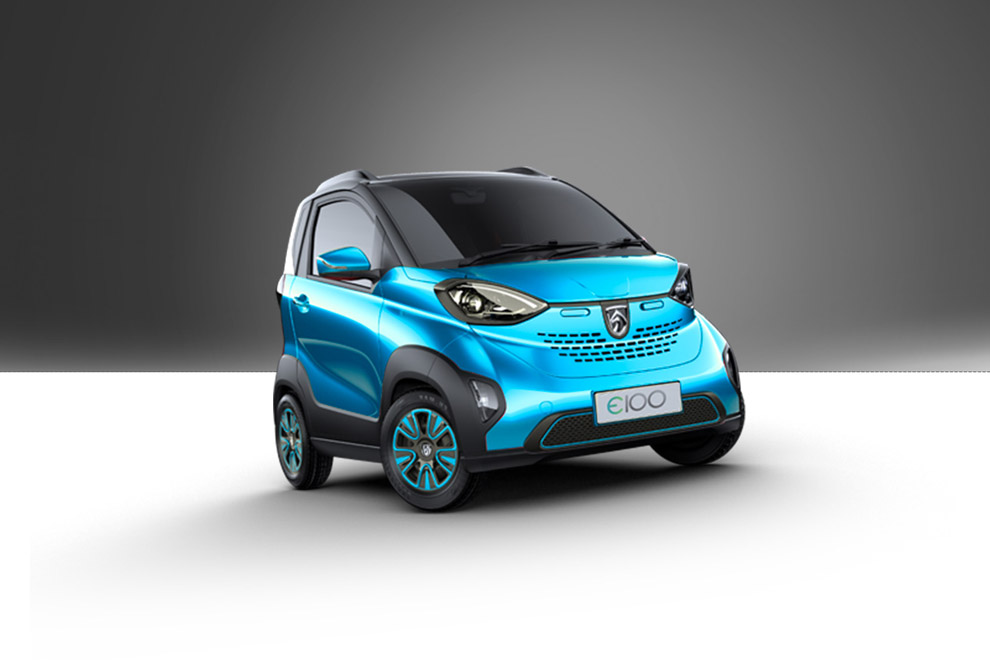
At a glance
- The Baojun E100 is a compact battery-electric city car suited to dense urban operations, short commuting routes and price-sensitive city fleets.
- The identified export editions are the 250KM Smart Edition and 305KM Intelligent Edition, but buyers should verify the underlying range test cycle.
- New vehicles reduce wear uncertainty, while used E100s require battery-health testing, charging checks, service-history review and a detailed condition inspection.
- Vehicle price, freight, insurance, port charges, taxes and the selected Incoterm should be separated to establish the true landed cost.
- MOQ is determined by the individual listing and seller; single-unit purchasing and multi-vehicle container consolidation offer different commercial models.
- RHD availability, local road legality, charging compatibility and destination-market homologation should be confirmed before shipment.
Why the Baojun E100 matters for export markets
The Baojun E100 occupies the practical low-cost end of the compact battery-electric city-car segment. Its appeal is not premium performance; it is the combination of a small footprint, electric running costs and a vehicle size that can be handled in congested cities and on limited urban parking. For overseas dealers, that places it closer to a low-cost mobility solution than a general-purpose family car. It can suit short commuting routes, last-mile fleets and buyers who need zero tailpipe emissions while driving rather than long-distance mobility. The trade-off is range and equipment rather than badge appeal.
The model is most relevant in markets where traffic congestion, short average trips and dense commercial operations make a small EV easier to deploy than a larger crossover. An urban delivery business can use predictable low-speed range for daily rounds, while a municipal or corporate buyer may value straightforward charging and a compact parking footprint. Demand should nevertheless be assessed against local weather, road gradients, motorway access and charging availability; a vehicle that fits one city's duty cycle may be unsuitable for another country's broad regional routes. That is particularly important where routes extend beyond daily city boundaries.
For importers, the E100 should be assessed as a value proposition with clear operational boundaries, not as a low-priced version of every mainstream EV. The two export-facing editions provide a practical choice between a shorter-range Smart configuration and a longer-range Intelligent configuration, but the correct choice depends on daily mileage and charging downtime. A low purchase commitment can be offset by limited aftersales support, unavailable trim parts, certification effort or unsuitable warranty terms. Buyers should therefore model the whole ownership case before treating the vehicle as a wholesale opportunity for their destination market and channel.
- Best suited to dense cities, short routes, campuses and last-mile fleet operations.
- The Smart and Intelligent editions should be selected around certified range and equipment needs.
- Low acquisition cost does not remove homologation, charging or aftersales obligations.
- A whole-life operating case is more reliable than badge appeal or headline range alone.
Model range, trims and powertrain variants: how the lineup is structured and how to choose
The E100 lineup identified for export is structured around two named editions: the 250KM Smart Edition and the 305KM Intelligent Edition. The range designation in each name is the clearest initial distinction, while Smart and Intelligent signal different equipment positioning that must be verified on the exact vehicle. Because the listing may not establish the test cycle behind every KM figure, overseas buyers should ask whether it is CLTC, WLTP or another rating and request the corresponding homologation information for the destination market rather than relying on the badge alone or a seller description.
Choose the 250KM Smart Edition when routes are consistently short, charging points are easy to reach and minimizing the acquisition and operating burden matters most. The 305KM Intelligent Edition is the more logical candidate when the vehicle must cover a larger daily radius, carry more equipment or reduce range anxiety. Intelligent may also indicate a higher equipment level, but that does not automatically mean better battery condition, charging capability or regulatory approval. Compare the exact option list, usable range, charging specification and local running-cost assumptions for each candidate before ordering in that market.
Do not infer battery capacity, motor output, charging times or dimensions from the trim names. Those figures vary by production specification and should be checked in the live listing and then matched to the vehicle identification document. As a battery-electric model, the E100 uses an electric motor and single-speed reduction gearing rather than a conventional multi-speed gearbox, but output, battery capacity, connector, thermal-management arrangement and axle configuration still require confirmation. A pre-purchase specification sheet is essential if the unit will enter a regulated fleet program or a public resale channel.
- The 250KM Smart Edition is the shorter-range, lower-complexity starting point.
- The 305KM Intelligent Edition is the more logical choice for larger daily operating radii.
- Confirm whether each range figure uses CLTC, WLTP or another test cycle.
- Verify battery capacity, motor output, charging details and dimensions on the exact vehicle.
New vs used Baojun E100: how export inventory is structured and how buyers choose
Export inventory for the E100 may be organized by condition, production year, edition and listing status rather than as one uniform product pool. A new vehicle is generally described as unused or new export stock, while a used vehicle should disclose mileage, ownership history and known damage. The safest approach is to treat the status shown on each live listing as the starting point and obtain written confirmation in the sales contract. Never assume that an attractive headline condition label replaces inspection evidence for cross-border resale or homologation in your market.
For a new E100, focus on manufacturing date, VIN consistency, factory warranty coverage, delivery mileage and the included charging equipment. Confirm whether the car has local type approval or will require inspection, and compare the exact Smart or Intelligent equipment list with the intended resale specification. Dealers should also verify battery warranty scope, service intervals and parts support in the destination country. A new status reduces wear uncertainty, but it does not eliminate transport damage, documentation or compliance risk before committing funds to a multi-vehicle order at all is prudent.
A used E100 can make sense for a buyer with a short duty cycle and a firm understanding of battery degradation, but it demands stricter inspection. Request a charge-capacity report, verify high-voltage isolation and warning systems, test charging, inspect accident repair and underbody condition, and review tire age. Also check software updates, recall completion, key count and evidence of service history. For fleet use, an open-data diagnostic report is more valuable than seller photographs. If the battery warranty has expired or test results are unavailable, price the residual risk rather than relying on the nominal trim range.
- New units require checks for manufacturing date, VIN, warranty and delivery mileage.
- Used units require battery, charging, high-voltage, accident and service-history evidence.
- Make the condition classification and included accessories binding in the sales contract.
- An independent inspection is particularly important for used fleet purchases.
How export pricing works: the factors behind a live listing price, and how to read one
Read a Baojun E100 export price as the starting point for one specific unit, not a permanent model-level price. The displayed amount may represent the vehicle sale only, while the amount payable after export can also depend on freight, marine insurance, port handling, documentation, inspection, taxes and the selected Incoterm. Confirm in writing whether the listing price includes domestic transport, export clearance and any charger or accessories. The live ChinaCarDirect inventory should be used for the current vehicle price because configuration and condition can make otherwise similar listings differ materially for buyers.
The main price drivers are production year, Smart versus Intelligent trim, rated-range version, new or used condition, mileage, battery health, cosmetic condition, options and whether the vehicle is LHD or RHD. Currency movements also affect the quoted amount. Dealers should separate controllable product differences from external logistics costs, then compare the landed cost per vehicle with local registration charges and expected resale economics. A lower sticker figure may be a better wholesale purchase only if the required certificate, charger, repair or warranty package is not missing locally in that market.
To compare live quotes consistently, open the Baojun E100 listings, open each relevant unit, and record the year, edition, condition, steering side and visible equipment. Then ask for a written pro forma invoice that identifies the Incoterm, payment method, production date, VIN, validity period and every freight or handling charge. Confirm whether sale price, vehicle price and final payable amount are separate fields, and clarify what happens after inspection. This method makes supplier quotations comparable and prevents a low domestic price from being mistaken for a low delivered cost abroad.
- Treat every listing price as unit-specific rather than as a permanent model-level price.
- Separate vehicle acquisition cost from freight, insurance, handling, tax and compliance charges.
- Compare editions, condition, battery health, options and steering side in writing.
- Use the live listings for current prices and request a pro forma invoice for binding delivered terms.
MOQ, ordering and payment: single units vs consolidating a container
MOQ is a transaction condition, not a fixed promise about the model. ChinaCarDirect listings may permit a single-unit purchase, while some sellers or containerized quotations may require more than one vehicle or a full cargo unit. Read the MOQ field on the specific live listing and repeat it in the quotation and pro forma invoice. If you are an importer testing demand, ask about one-unit pricing and mixed-edition allocations before negotiating volume terms. A single-unit order can lower entry risk, but it often provides less freight consolidation than a multi-vehicle purchase.
Consolidating several E100 units can improve freight efficiency, but it also concentrates risk. Buyers should compare FCL and LCL options using the vehicles' securement needs, destination port, discharge time and local haulage—not simply the rate per vehicle. Mixed years or trims may complicate parts, resale positioning and warranty administration. Confirm that each unit has a matching VIN, title or ownership document and stated condition. For a dealer pilot, a modest mixed allocation can test both editions while limiting unsold exposure; for a fleet buyer, standardization may simplify training and charging deployment.
A safe ordering process begins with a written specification, ends with a vehicle inspection and places payment milestones around verifiable events. Typical steps are quotation approval, refundable deposit, production or stock confirmation, final inspection, balance payment, export booking and document handover. Define who arranges customs clearance, who bears demurrage, and what evidence is required for release. Use a recognized escrow or equivalent protected-payment route where available, verify the beneficiary matches the contracting seller, and avoid sending funds to an unverified new bank account. Ask for the RFQ form when the inventory record does not answer a material question.
- Check the MOQ on each live listing and repeat it in the pro forma invoice.
- Single-unit orders reduce market exposure but offer less freight consolidation.
- Mixed allocations can test demand, while standardized fleets simplify operations.
- Tie payment milestones to stock confirmation, inspection and document handover.
Shipping, homologation and market compliance caveats: LHD/RHD and import rules by country
Shipping an E100 requires planning for both the vehicle and its high-voltage battery. Road transport from the factory or warehouse to the export port, export packing, vessel space and discharge all affect schedule and cost. Safe, weather-protected loading, lashing and inspection reduce damage risk, while port congestion, blank sailing schedules, customs holds and destination congestion can extend lead time. Obtain a freight quotation that states the Incoterm, route, container or LCL method, insurance, validity and charge inclusions. Transit time should be treated as an estimate until the carrier or freight forwarder confirms the booking.
Homologation is destination-specific. Before contracting, ask the importer or local compliance specialist to confirm applicable vehicle type approval, VIN and identification documents, safety requirements, electromagnetic compatibility, battery transport documentation, charging-system compatibility and any software or cybersecurity obligations. For a battery-electric vehicle there are no tailpipe emissions during operation, but that does not remove roadworthiness, component or local registration requirements. Do not assume a Chinese-market E100 is automatically approved for road use elsewhere. The vehicle presented, the declared configuration and the documents must all match the application filed in the destination country.
Steering configuration is a critical sourcing choice. Left-hand-drive and right-hand-drive availability must be confirmed for the exact unit; it should never be assumed from the model name or the seller's location. Some importers source an LHD vehicle and convert it locally, but conversion adds cost, labor and residual-value risk and may be restricted by local rules. Where the market expects RHD, prioritize a factory-compatible vehicle when available and confirm the local homologation route before shipment. Also confirm charging-cable compatibility, local charger availability and whether owner manuals, warning labels and equipment meet destination requirements.
- Confirm LHD or RHD availability for the exact unit before placing the order.
- Local conversion is possible in some markets but adds cost and compliance risk.
- Vehicle type approval, identification documents and charging compatibility are destination-specific.
- Obtain a freight quote that clearly states the Incoterm, route, insurance and charge inclusions.
Who should buy the E100 — and who should pick a different vehicle
The Baojun E100 is a strong candidate for overseas dealers serving dense urban micro-markets, short-distance delivery fleets, campuses, car-sharing operators and price-sensitive city commuters. It is especially relevant where compact dimensions make parking and dispatch easier, electricity is dependable, and buyers can charge between shifts. The 250KM Smart Edition may suit tightly defined routes, while the 305KM Intelligent Edition offers more operating margin. The business case should include route mapping, charger utilization and a reserve for weather-related range loss rather than relying only on the headline range in daily operation.
It is a weaker fit for family buyers needing a large boot, five conventional seats, long highway capability, all-weather assurance or extensive dealer service. It may also be unsuitable where charging infrastructure is sparse, routes include steep gradients, local rules classify the car differently from a normal passenger vehicle, or battery parts cannot be imported economically. Drivers frequently exceed urban limits or carry bulky goods; those users should prioritize a more capable vehicle. Likewise, a used unit without battery-health evidence should be rejected when dependable range is central to the business case or when uptime is essential.
The decision should be framed around total operating suitability rather than badge prestige. E100 buyers typically gain a straightforward electric city vehicle with a manageable acquisition route and visible trim choice. They accept trade-offs in cabin volume, highway refinement, equipment coverage and potentially narrower aftersales networks. A test drive, charge test, document review and destination-compliance opinion are more valuable than assuming that the longest stated range is automatically the best wholesale variant. For fleet tenders, build the business case around actual route data and local support obligations for the importing country.
- Strong fit for dense-city commuters, short-route delivery fleets and shared mobility.
- Weak fit for long-distance travel, large loads, heavy highway use and remote charging locations.
- Reject a used E100 when battery-health evidence and charging tests are unavailable.
- Base fleet selection on route data, charging access and local service capability.
Main rivals and how the E100 compares
The Wuling Air EV is the closest conceptual rival: both occupy the inexpensive, compact electric hatchback niche and can appeal to urban buyers seeking low operating complexity. Wuling benefits from broader badge recognition in some markets and may offer a more familiar parts channel, while the Baojun E100 may be easier to source through its own brand network. Compare the actual editions rather than the logos; body packaging, rated range, seating, charger inclusion, local certification and aftersales can determine which model is more practical for the destination market and buyer.
The Dongfeng Box is a useful alternative when cargo utility matters more than minimizing purchase exposure. It is generally configured as a more practical small hatchback, giving fleets more flexibility for daily deliveries than a city-focused micro-EV. Its trade-off may be a higher acquisition commitment or less aggressive low-cost positioning. The E100 can still win for a buyer whose duty cycle is short and whose main priority is a simple urban electric platform, but a route and load audit should be done before dismissing the longer, more versatile alternative available locally.
The Chery QQ Ice Cream is another small-EV alternative aimed at urban users and short journeys. It can suit buyers focused on compact packaging and simple mobility, while the E100's Smart and Intelligent editions provide a clearer choice point for buyers who need different range and equipment positioning. There is no universal winner: compare certified range, usable load, seat layout, charging access, safety equipment, parts support and landed cost in the destination. Select the E100 when its verified configuration and support plan fit the route better than each rival's rather than choosing on badge alone.
- Wuling Air EV: the closest direct rival for compact, low-cost urban EV buyers.
- Dongfeng Box: a more practical alternative when payload and cargo flexibility matter.
- Chery QQ Ice Cream: a small-EV option focused on simple urban mobility.
- Compare certified specifications, support and landed cost rather than choosing on brand alone.
Live Baojun E100 export inventory
View all listings →Real units currently on ChinaCarDirect with per-unit asking prices and MOQ. Availability updates live from the catalogue.
How to buy a Baojun E100 from China
-
1
Define the operating requirement
Map daily routes, payloads, charging windows and local road conditions. Use that information to decide between the 250KM Smart Edition and 305KM Intelligent Edition.
-
2
Shortlist live inventory
Review the Baojun E100 live listings for the current vehicle price, MOQ, production year, condition, range edition and visible equipment of each unit.
-
3
Request a written quotation
Ask for a pro forma invoice stating the Incoterm, payment terms, freight method, insurance, port charges, documentation, production date and quotation validity.
-
4
Confirm destination compliance
Have the local importer or compliance specialist verify type approval, road legality, charging compatibility, software requirements and LHD or RHD suitability before shipment.
-
5
Inspect and secure payment
Verify the VIN, production date, condition and battery information against the contract. Use protected payment and tie the balance to satisfactory pre-shipment inspection.
-
6
Book shipping and vehicle release
Compare FCL and LCL options with a freight forwarder, confirm securement and insurance, and align the final payment with export booking and document handover.
E100 vs rivals
| Wuling Air EV | The closest conceptual competitor occupies the same inexpensive compact-EV space and may benefit from stronger badge recognition or a more familiar parts network in some markets. Choose between them using the verified edition, certified range, seating, charger inclusion, local approval and aftersales support. |
|---|---|
| Dongfeng Box | The Box offers a more practical hatchback format and greater potential for cargo-led fleet use, but it may require a higher acquisition commitment. The E100 is better suited to buyers prioritizing a low-cost, short-range urban platform and simple dispatch operations. |
| Chery QQ Ice Cream | The QQ Ice Cream is another compact EV aimed at urban users and short journeys, making it a credible alternative for simple mobility. The E100 is more compelling when its verified Smart or Intelligent configuration provides a better match for range, equipment, support and the intended resale market. |
Frequently asked questions
How is Baojun E100 export pricing determined?
The vehicle amount is specific to each unit, with production year, trim, range version, condition, mileage, battery health, options and steering configuration influencing the ask. The delivered total can also change with exchange rates, freight, insurance, port charges, taxes, documentation and the selected Incoterm. Review the Baojun E100 live listings on ChinaCarDirect for the current per-unit price and MOQ, then request a pro forma invoice for binding delivered terms.
What powertrain and range options does the Baojun E100 have?
The E100 is a battery-electric vehicle identified in two export editions: the 250KM Smart Edition and 305KM Intelligent Edition. Buyers should confirm whether the displayed range uses CLTC, WLTP or another test cycle. Battery capacity, motor output, charging times and other technical details should be checked on the exact live listing rather than inferred from the trim names.
Should an overseas buyer choose a new or used Baojun E100?
A new E100 reduces uncertainty around wear, mileage and battery degradation, while a used unit can suit a buyer with a low acquisition budget and short operating radius. Used vehicles should have a battery-health report, charging test, diagnostic review and documented service and ownership history. New vehicles still require VIN, warranty, production-date and compliance checks.
How does MOQ work when buying a Baojun E100 from China?
MOQ is set by the individual seller or listing rather than being a permanent model-wide rule. The exact requirement should be checked in the live inventory and repeated in the quotation and pro forma invoice. A single-unit order can support market testing, while multi-vehicle consolidation may improve freight efficiency but increases inventory exposure.
What determines Baojun E100 shipping time and cost?
Shipping time and cost depend on the origin and destination ports, FCL or LCL method, vessel availability, port congestion, customs clearance, road transport and discharge arrangements. Insurance, securement, documentation and destination charges may also be separate from the vehicle price. Request a freight-forwarder quotation stating the Incoterm, route, inclusions and estimated schedule.
Are spare parts available for the Baojun E100?
Parts availability depends on the destination, the exact edition and the supplier's local support network. Buyers should check whether common wear items, charging accessories, body panels and high-voltage service parts can be supplied or imported before ordering. VIN-specific ordering and distributor support are particularly important for a fleet requiring vehicle uptime.
Is a right-hand-drive Baojun E100 available for export?
RHD availability must be confirmed for the individual unit and destination market; it should not be assumed from the model name or seller location. A factory RHD vehicle is generally preferable where local homologation and residual-value expectations favor that configuration. Local conversion from LHD may be possible in some countries, but it adds cost, labor and regulatory risk.
How do I order a Baojun E100 through ChinaCarDirect?
Start by defining the trim, condition, budget, compliance requirements and delivery terms, then review the relevant live listings. Request a unit-specific quotation and pro forma invoice, complete the required inspection and compliance review, and protect the payment against verifiable milestones. Confirm shipping, export documents and customs responsibilities before the balance is released.
Ready to source the Baojun E100?
Request a current Baojun E100 quotation with unit details, Incoterm, compliance requirements and live pricing through ChinaCarDirect.
Request a quote