
Baojun Kiwi Ev Export Buying Guide for Overseas Buyers
Plan a Baojun Kiwi Ev export purchase with practical guidance on trims, battery options, live pricing, MOQ, shipping, compliance and rival EV alternatives.
At a glance
- A compact battery-electric city car designed for short, predictable urban routes.
- Artist, Designer, Smart Trend and DJI labels create a broad trim structure.
- NMC and LFP options reflect different priorities around energy density and durability.
- Range, battery capacity and charging details require item-level verification.
- Export cost depends on specification, condition, destination, Incoterms and freight plan.
Why the Baojun Kiwi Ev matters for export markets
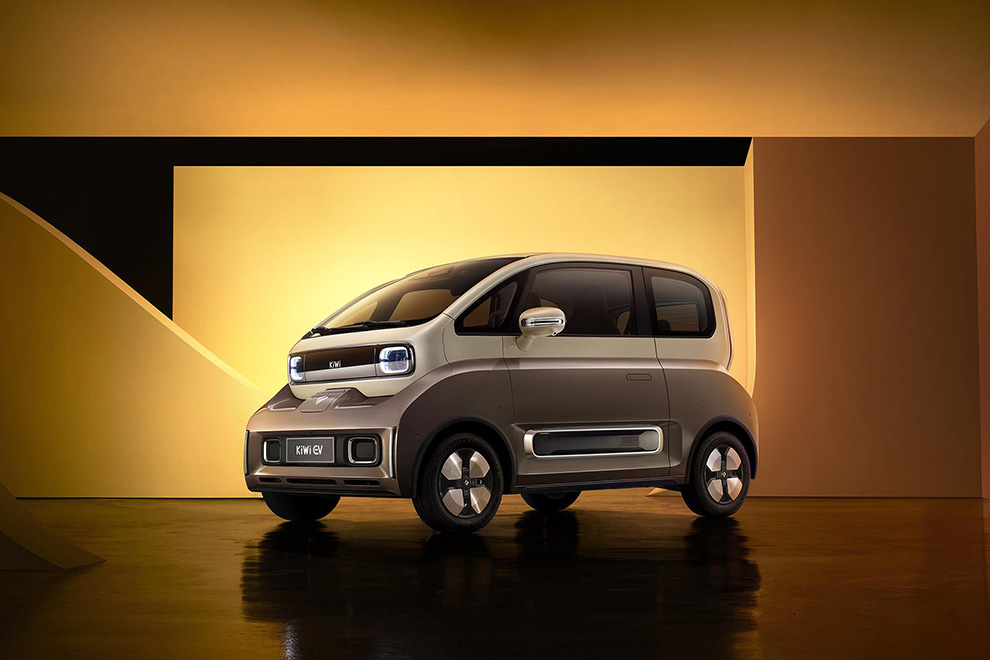
The Baojun Kiwi Ev occupies a distinctive corner of the urban electric-vehicle market: a compact, three-door battery-electric car designed around short journeys rather than family transport or long-distance travel. Its small footprint makes it easier to place in dense city fleets, while its expressive styling gives dealers a more memorable showroom option than a conventional mini hatchback. For overseas buyers, the relevant question is not whether it is the cheapest EV, but whether its size, equipment and local operating costs suit a clearly defined urban duty cycle and charging reality.
Demand for this type of vehicle is strongest where operators can keep daily mileage predictable and return the car to dependable charging points. It may suit last-mile staff, hotel or resort shuttles, campus operations, municipal pilots, and small dealer programmes aimed at city customers. The business case normally rests on lower energy use, compact parking demand and simpler fleet deployment—not on premium capability. Buyers should model the actual route, dwell time and driver pattern, because a small battery can be convenient in one city yet operationally weak in another.
The Kiwi Ev also carries an important export caveat: a subcompact EV is not automatically a low-risk international purchase. Local crash-safety expectations, charging connectors, road rules, battery logistics and after-sales support can narrow its usable market. A distinctive design can generate attention, but dealers still need a serviceable parts plan and a transparent handover process. Review the live Baojun Kiwi Ev inventory for the current configuration, then carefully validate the vehicle against destination-country rules and real operating needs before treating it as a scalable export product in your destination market.
- Short urban routes
- Distinctive dealer appeal
- Confirm local compliance early
Model range, trims and powertrain variants: how the lineup is structured and how to choose
The available Baojun Kiwi Ev naming is broad rather than a simple ladder. Listings can carry Artist, Designer, Smart Trend Edition or DJI Edition labels, often combined with Lite or Edition wording. These names identify a vehicle family, but they should not be treated as a worldwide equipment guarantee. Export versions, production periods and market revisions can differ, and a visually similar car may carry different cameras, infotainment, paint or comfort equipment. Compare the item-level description, photographs and identification numbers rather than infer features from the badge or description alone.
Battery chemistry is the other critical branch in the range. The catalogue naming encountered for this model includes NMC, LFP and ternary-lithium versions. NMC generally supports greater energy density, while LFP is generally associated with stronger thermal stability and long cycle life; ternary lithium is another lithium-ion family label and should be handled according to the battery documentation supplied with the vehicle. Chemistry should not be judged from trim name alone. Ask for the pack type, capacity, warranty terms, charging limits and any thermal-management information before making a fleet decision.
Choose the version by matching the duty cycle to the evidence. NMC may suit operators prioritising energy density and the shortest charging stops, whereas LFP may appeal where durability, thermal confidence and frequent charging dominate. DJI, Smart Trend, Designer and Artist labels can signal different positioning packages, but their content must be verified for each listing. Test the daily distance against certified range, allow for weather and payload, then check whether the destination’s connector and charging system are compatible. That sequence prevents an attractive trim from creating an unsuitable fleet.
- Artist and Designer core names
- Verify each trim item-by-item
- NMC prioritises energy density
- LFP prioritises durability
New vs used Baojun Kiwi Ev: how export inventory is structured and how buyers choose
Export supply for the Baojun Kiwi Ev should be read as condition categories rather than one undifferentiated pool. New units may be current production, dealer stock or parallel-import vehicles; ex-demonstration cars can appear with low mileage; and used imports may come from another market with a different service history. ChinaCarDirect’s live listings are the controlling source for current availability. For each vehicle, confirm whether it is new or used, whether it has been registered, its stated mileage, and whether the seller can provide a clear, consistent ownership and export-document trail.
A new Kiwi Ev is generally easier to compare because condition, mileage and handover history tie directly to the seller’s records. It also avoids inheriting unknown battery wear, repair quality or damage history. Due diligence still matters: inspect panel condition, tyre wear, cabin condition, production or registration dates, accessories and warranty scope. For business buyers, check whether the warranty is valid in the destination and supported by a parts operation. A lower acquisition price is not a saving if claims become difficult to enforce after export and local repair support is limited.
A used Baojun Kiwi Ev can make sense for a buyer who understands the battery and accepts variable presentation. Urban mileage may be modest, but battery state of health affects usable range and replacement planning. Ask for a health report, charging history where available, accident and flood checks, service records, title documents and underbody photographs. An independent inspection is valuable for imported used vehicles. Compare that evidence with the remaining support package; without reliable parts and diagnostic access, the purchase advantage may be offset by maintenance uncertainty over time.
- New units simplify comparison
- Used units need battery evidence
- Verify title and warranty transfer
How export pricing works: the factors behind a live listing price, and how to read one
The price shown for a Baojun Kiwi Ev is an export quotation built from variables, not a permanent model price. Production year, trim, battery chemistry, mileage, condition, options and seller location influence the price. Currency movements can alter a comparison, while transport, handling, insurance and costs sit outside the vehicle price unless expressly included. Compare like-for-like: the same body, edition, battery version, condition and document status. A cheaper headline figure can mislead if one vehicle is used or less complete. Origin and export-document readiness can also affect execution and risk.
Incoterms determine where responsibility and cost transfer, so read the live listing as a commercial document rather than an advertisement. Under an EXW-style arrangement, the buyer may arrange collection, export handling and onward carriage; under FOB or CIF-style terms, responsibilities differ around the named port or shipment point. The quotation should state marine insurance, terminal charges, documentation, inland haulage and destination fees. Ask whether the displayed amount is a unit price, deposit or landed estimate. Local taxes and registration charges should be calculated separately unless expressly quoted by the supplier.
Read live listings line by line and record variables that can change the delivered outcome. Confirm model year, edition, battery version, mileage, condition, equipment, origin, document readiness and any repair or repaint disclosure. Review photographs for panel consistency and request a walk-around video when a unit cannot be inspected. Then obtain a destination-specific quotation with a validity period and a breakdown of vehicle, freight, insurance and charges. ChinaCarDirect displays per-unit figures in its Kiwi Ev inventory, so use that listing as the binding starting point rather than an old article.
- Compare equivalent configurations
- Clarify Incoterms and freight
- Use current live quotes
MOQ, ordering and payment: single units vs consolidating a container
Minimum order quantity is a seller-level term, not a fixed characteristic of the Baojun Kiwi Ev. Some channels allow single-unit purchases, while other export programmes may impose a lot, case or container minimum. The MOQ on each live unit controls that transaction unless the supplier agrees otherwise in writing. Check the live inventory for the stated requirement, ask whether mixed editions are accepted in one shipment, and obtain the MOQ again in the pro forma invoice. A nominally low unit requirement can still carry fixed inspection, documentation and freight costs.
Consolidating vehicles can improve freight economics, but it should follow—not precede—configuration discipline. Group only units with agreed trim, battery chemistry, condition and handover requirements, and separate any market-specific preparation. Shared loading reduces some fixed logistics costs per unit, yet mixed expectations can cause delay if one vehicle is missing an accessory or document. Ask the consolidator for the loading plan, cargo description, insurance coverage and responsibility for damage. Confirm how many units are required to release a shipment; do not infer a container quantity from a current marketplace catalogue.
A controlled payment sequence protects both sides. The usual structure is a pro forma invoice, deposit, verification or inspection, balance, release of original documents and freight booking; percentages and accepted methods should be agreed rather than assumed. Verify the seller’s identity and ownership before paying, and ensure the invoice matches the selected vehicle, service, Incoterm and remedy for non-conformity. For agent or bank transfers, obtain written proof of the beneficiary and transaction documents. Never treat a generic message or low deposit as a substitute for a contract with clear obligations.
- Check each listing’s MOQ
- Align specifications before consolidation
- Link payments to inspection milestones
Shipping, homologation and market compliance caveats: LHD/RHD and import rules by country
Steering configuration is the first destination check. China-built vehicles are commonly supplied left-hand drive, but the Kiwi Ev should not be assumed available right-hand drive merely because a market imports Chinese EVs. Confirm the steering side, control arrangement, lighting, wipers and dashboard presentation in the actual listing. A right-hand-drive conversion may require changes to steering, safety systems, wiring, software and type approval, and may affect warranty cover. Treat RHD availability as a separate sourcing question; do not pay for an imported LHD car before checking local registration rules in advance.
Importing a Chinese electric car is not the same as simply clearing customs. The importer may need to address vehicle type approval, local safety and EMC requirements, battery and charging rules, software, lighting, noise, roadworthiness and registration documentation. Requirements differ by country and can change, so the importer or compliance specialist should provide a written checklist before shipment. Zero tailpipe emissions do not remove safety or charging obligations. Used vehicles may face extra age, inspection or emissions provisions. Defer payment and loading until approvals and the document route are understood.
Battery transport adds a distinct logistics layer. The supplier or carrier should confirm required battery test documentation, packaging, labelling and dangerous-goods handling, plus whether the vehicle can ship assembled or needs special battery procedures. Freight quotations can change with port, sailing schedule, terminal, container availability, insurance, broker fees and destination road transport. Build these variables into the delivery schedule rather than treating departure as delivery. Obtain the commercial invoice, export declaration, transport document, conformity files and insurance evidence, then map each one to the importer’s clearance checklist before final release.
- Confirm steering configuration early
- Obtain a compliance checklist
- Use battery-qualified logistics
Who should buy the Kiwi Ev — and who should pick a different vehicle
The Kiwi Ev is persuasive for an overseas buyer with a narrow urban brief. It can suit commuter routes, delivery and reception fleets, hotel or campus shuttles, resort operations, and fleets that value compact dimensions and distinctive appearance. A dealer may use it as an accessible entry point for customers seeking an electric car without moving to a large family vehicle. The strongest case is a predictable route, reliable overnight charging and a local market comfortable with the car’s size and safety positioning. These conditions make the business case easier to operate.
It is a poor fit for buyers needing five-seat family flexibility, substantial luggage capacity, motorway performance, long-distance range or year-round operation in severe climates without robust charging. A small vehicle can feel exposed in collision scenarios, even if well equipped, so safety expectations should be checked honestly rather than through marketing language. Fleet managers with large orders must consider parts availability, diagnostic capability, technician training and residual-value support. If those requirements dominate, a larger electric hatchback or plug-in hybrid may deliver a more dependable business proposition than the Kiwi Ev.
The decision is best made through an operational pilot before wholesale commitment. Measure route distance, energy use, charging time, downtime and driver feedback, then price maintenance, compliance, insurance and parts support. Ask for exact battery, range and charging data for each candidate rather than generalising across trims. Compare total cost per kilometre with a larger alternative’s utilisation and resale assumptions. If the pilot leaves little margin for weather, detours and battery degradation, select a more capable vehicle; otherwise, the Kiwi Ev can become an economical urban fleet asset over time.
- Best for predictable short routes
- Unsuitable for family or motorway use
- Pilot before fleet scaling
Main rivals and how the Kiwi Ev compares
The BYD Seagull is a close mainland-China alternative for buyers wanting a more conventional small hatchback and greater practical flexibility. It generally provides a different door and luggage proposition from the Kiwi Ev’s compact three-door concept, while competing in the affordable electric-city segment. Choose the Seagull when conventional access, a familiar family silhouette or broader charging and range choice matters more than the Kiwi Ev’s expressive design. Compare the exact export specification, because equipment, battery chemistry, certified range and destination certification can vary by market, trim and production version.
The Changan Lumin is another Chinese battery-electric hatchback with a more conventional, upright shape. It can attract operators who prioritise straightforward packaging and a lower-format city-car proposition over the Kiwi Ev’s design-led character. Buyers should compare usable cabin and luggage space, seating configuration, battery choice, charging capability and local service support rather than assuming one small EV is mechanically or commercially equivalent to another. For a fleet buyer, the Lumin may be easier to position against mainstream compact EVs; for a dealer seeking differentiation, the Kiwi Ev remains more distinctive.
The Dongfeng Nano Box occupies the five-door hatchback segment and serves buyers who value a practical, boxy cabin over the Kiwi Ev’s sculptural two-door appearance. It can be a fleet choice where daily loading, rear access and packaging are priorities, but it is not like-for-like until motor output, battery, certified range, charging, safety equipment and homologation are compared. Across all three rivals, the Kiwi Ev wins attention through styling and a curated trim image; it must win the business case through route fit, verified battery performance and affordable ownership abroad.
- Seagull: conventional hatchback flexibility
- Lumin: upright city-car alternative
- Nano Box: practical five-door format
Live Baojun Kiwi Ev export inventory
View all listings →Real units currently on ChinaCarDirect with per-unit asking prices and MOQ. Availability updates live from the catalogue.
How to buy a Baojun Kiwi Ev from China
-
1
Define the operating case
Map daily routes, expected mileage, charging windows, passenger needs and luggage requirements. Short, predictable urban use is the model’s strongest fit.
-
2
Shortlist chemistry and trim
Compare NMC and LFP priorities against climate, charging frequency and duty cycle. Verify the exact battery and equipment for every candidate trim.
-
3
Compare live unit records
Review the live Kiwi Ev inventory for model year, edition, battery version, mileage, condition, documents and current per-unit pricing. Do not rely on cached articles or general trim assumptions.
-
4
Request a written quotation
Send the destination, quantity, preferred configuration and required Incoterm. Request a validity period and a breakdown of vehicle, freight, insurance, documentation and destination charges.
-
5
Confirm destination compliance
Ask the importer or local compliance specialist to verify type approval, safety, EMC, battery, charging and registration requirements. Settle any RHD requirement before payment or loading.
-
6
Inspect and secure payment
Review ownership, service and condition records, and arrange an independent inspection where needed. Use a pro forma invoice and milestone payments linked to inspection and document release.
-
7
Consolidate, book and track
Align specifications before consolidating cargo, then obtain the loading plan and battery-qualified freight booking. Track export, transport, customs and inland delivery separately.
Kiwi Ev vs rivals
| BYD Seagull | A more conventional small hatchback for buyers prioritising familiar styling, door access and luggage flexibility. The Kiwi Ev is the more design-led choice for urban showcase and demonstration fleets. |
|---|---|
| Changan Lumin | An upright city-electric alternative that may appeal to operators focused on straightforward packaging and mainstream fleet positioning. The Kiwi Ev offers a more distinctive character and trim-focused presentation. |
| Dongfeng Nano Box | A practical five-door hatchback for buyers who prioritise rear access, daily loading and boxy usability. The Kiwi Ev is better suited to buyers whose priority is expressive design and compact urban character. |
Frequently asked questions
How is Baojun Kiwi Ev export pricing determined?
A live price is built from the vehicle’s year, trim, battery version, mileage, condition, options, currency movements, freight, insurance and Incoterm allocation. Compare equivalent vehicles rather than unlike trims or conditions. The current binding figure for each vehicle appears in the live ChinaCarDirect Kiwi Ev inventory.
What powertrain and range should I expect?
The Kiwi Ev is a pure battery-electric vehicle, with NMC, LFP and ternary-lithium versions appearing in the range. Battery capacity, motor output, certified range and charging specifications depend on the exact version, so buyers should review the item-level data and test cycle shown in each live listing.
Should an overseas buyer choose a new or used Baojun Kiwi Ev?
A new vehicle provides a clearer condition and ownership history, although its warranty still needs to be valid in the destination. A used vehicle can offer a different acquisition profile, but buyers should obtain battery-health evidence, service records, accident checks and title documents. An independent inspection is especially valuable when importing used vehicles.
How does MOQ work for the Baojun Kiwi Ev?
MOQ is a seller and listing term rather than a permanent model rule. Some export channels may accept one unit, while others require a lot or consolidated shipment. Read the requirement on the live listing and have the agreed MOQ repeated in the pro forma invoice.
What determines shipping time and cost?
Shipping time and cost depend on origin, destination, battery handling, port and terminal procedures, sailing schedules, container availability, insurance, documentation and inland delivery. A battery-electric vehicle also requires the carrier to confirm the applicable battery transport and dangerous-goods procedures.
How are spare parts handled after export?
Order parts using the exact vehicle identification, trim and battery or chassis details, because visually similar versions may not share every component. Confirm supplier stock, lead time, shipping restrictions and warranty coverage before listing a part as available. For ongoing fleets, agree a local stocking and diagnostic plan.
Is right-hand-drive availability guaranteed?
No. Buyers should not assume that a Chinese-built Kiwi Ev is available in right-hand drive and should verify the steering configuration on the actual listing. Any conversion must be assessed for local type approval, safety, electrical, software and warranty implications before shipment.
How do I order a Baojun Kiwi Ev from China?
Start with the live inventory, compare equivalent vehicles and send the preferred specification, quantity, destination and Incoterm in an RFQ. Review the written quotation and pro forma invoice, complete any required inspection, follow the agreed payment milestones and release freight only after the export documents are verified.
Ready to source the Baojun Kiwi Ev?
Request a live Baojun Kiwi Ev quotation with your destination, preferred trim, battery version, quantity and Incoterm.
Request a quote