
Baojun Rs-3 Export Buying Guide for Overseas Buyers
Plan a China export purchase with a clear view of Baojun Rs-3 trims, 1.5L engine options, pricing factors, ordering, shipping, compliance and rival choices.
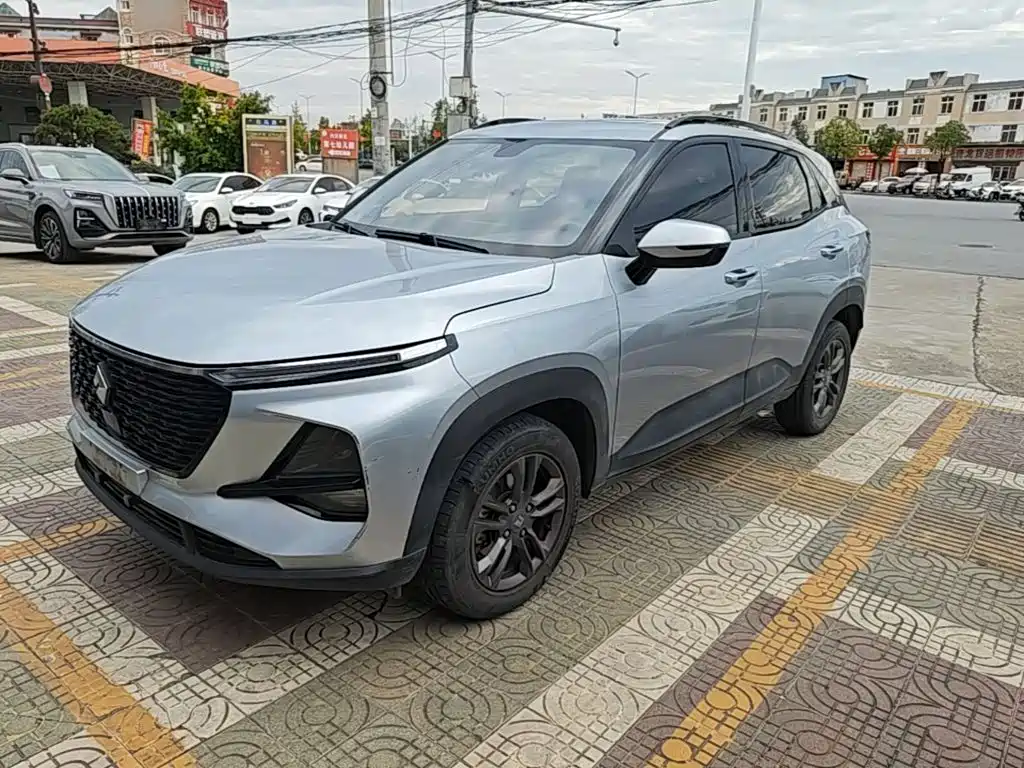
At a glance
- The Rs-3 is a compact, five-door petrol crossover positioned for value-focused dealer and fleet programs.
- The confirmed core powertrain is a 1.5-litre engine, with manual and CVT choices available across the model range.
- Buyers should match the transmission, trim equipment and vehicle condition to their duty cycle rather than rely on the badge alone.
- Live export prices must be assessed alongside vehicle factors, freight, exchange-rate movements, taxes, insurance and Incoterms.
- Road legality, RHD requirements, homologation, parts support and destination import rules should be confirmed before dispatch.
Why the Baojun Rs-3 matters for export markets
The Baojun Rs-3 sits in the compact crossover segment, combining a five-door SUV format with a relatively simple 1.5-litre petrol powertrain. That positioning makes it relevant to overseas dealers seeking a practical, lower-complexity vehicle for urban sales, company fleets or mixed-use programs. Its appeal is strongest where buyers prioritize usable space, straightforward equipment and landed operating cost rather than premium branding, sports performance or all-terrain capability. Export interest, however, is market-specific rather than automatic. A buyer should assess local fuel quality, service coverage, tax treatment and the availability of parts before committing.
The Rs-3 can broaden a dealer’s entry offer without moving into the cost and size of larger family SUVs. Its compact dimensions should make urban maneuvering and transport planning easier, although exact measurements must be confirmed from the individual vehicle listing. For fleet buyers, the combination of a petrol engine, manual and CVT choices, and a five-seat layout can support several operating profiles. The strongest use case is a market where affordable replacement vehicles are more valuable than advanced driver-assistance features or a battery-electric drivetrain, with confidence, subject to local road approval.
Value does not end at the vehicle gate. Import duties, taxes, freight, insurance, port charges and adaptation costs can materially change the commercial equation, while weak aftersales support can raise maintenance downtime. Baojun’s domestic scale and the availability of the Rs-3 on the export marketplace make it worth evaluating, but they do not replace destination-market due diligence. Overseas buyers should compare the Rs-3 with locally supported rivals on parts access, technician familiarity, warranty handling and realistic resale prospects before fixing their sourcing strategy for the target market and channels involved.
- Value-focused compact-SUV positioning
- Local parts and service support
- Compare landed operating costs
Model range, trims and powertrain variants: how the lineup is structured and how to choose
For Baojun Rs-3 specs, the confirmed core is a 1.5-litre petrol engine, with manual and CVT transmissions appearing across different named trims. The marketplace naming also separates Smart Elite, Smart Luxury and 24-hour Online Elite or Luxury versions. Because translated Chinese trim labels do not always map neatly to familiar export grades, buyers should treat the names as identifiers, not as proof of a standardized equipment list. Confirm the vehicle year, exact trim, transmission and installed options on the live unit before comparing quotations or placing a deposit against a documented specification sheet.
A manual Rs-3 suits buyers whose drivers are comfortable with a conventional gear lever and who want a direct, uncomplicated driving arrangement. It can also be easier to match to lower-mileage work vehicles where cost control matters. A CVT may be preferable for frequent urban traffic, longer highway days or drivers who prefer fewer manual shifts. Neither gearbox should be selected from the model name alone: axle ratio, software calibration, condition and maintenance history influence real-world behavior and should be checked during inspection and in the seller’s service records where available.
Smart and Luxury labels may indicate different feature emphasis, but overseas buyers should avoid assuming that a higher-sounding grade receives every option associated with that word in another market. Exterior appearance, infotainment, safety equipment, upholstery and convenience features can vary by model year and production batch. The most defensible choice is therefore not the longest trim name, but the specification that meets the buyer’s duty cycle, resale market and budget. Request photographs, an equipment list and any available inspection report with the quote so options can be verified before dispatch.
- 1.5L petrol core
- Manual versus CVT
- Unit-level equipment verification
New vs used Baojun Rs-3: how export inventory is structured and how buyers choose
Export inventory may contain new vehicles, used vehicles, or both, depending on seller type, vehicle age and the sourcing route. A marketplace search should therefore be treated as a live catalogue rather than a fixed representation of the model. Buyers should read the condition field, model year, odometer disclosure, seller category and photographs for every candidate. A vehicle described as new may still be an older production unit, so production age should be considered separately from registration and usage history, especially for long-term fleet or resale planning without making assumptions.
New-inventory wording can be attractive because it removes uncertainty about wear, accident repair history and accumulated mileage. It does not remove age-related issues such as seal deterioration, battery condition in electronic systems, tyre aging or warranty limitations. Conversely, a used Rs-3 may deliver better value if its service history is complete, mileage is appropriate and the inspection is clean. Dealers should calculate ownership costs over the intended holding period rather than judging only the acquisition line, and should request documentary evidence supporting any claim that a vehicle is unused before paying the balance.
Used vehicles demand a stricter evidence package: inspect the engine and transmission, verify odometer consistency, review service invoices, check paint and panel alignment, and test every electrical function. A pre-purchase inspection by an independent specialist can reduce uncertainty, especially when the vehicle will be sold abroad. Fleet buyers may accept higher mileage when it lowers acquisition cost, but they should document wear items and replacement timing. The best new-versus-used decision is the vehicle whose verified condition, warranty position and total cost match the channel rather than the lowest listed amount.
- Read condition disclosures
- Require service evidence
- Compare holding-period costs
How export pricing works: the factors behind a live listing price, and how to read one
A Baojun Rs-3 export price is not one fixed factory figure. It is built from the specific vehicle’s year, trim, engine and transmission choice, mileage, condition, visible options and the seller’s commercial position. Currency movements can alter the quoted amount, while freight method, destination, insurance, port charges and the selected Incoterm can change the landed total. A vehicle-only figure and a delivered-to-door figure are therefore not directly comparable. Buyers should ask which costs are included, when the quote expires and what event would trigger a repricing before payment or dispatch.
Trim and transmission can materially affect comparability within the same model name. A manual example and a CVT example may carry different equipment, production details and market positioning, while condition differences can be just as important as the badge. Mileage should only be considered for used units, and low mileage alone does not guarantee mechanical condition. Review the photographs for replacement parts, accident repair, tyre wear and interior condition, then reconcile those observations with the unit’s stated history. The unique SKU and trim description matter because they identify what the seller is actually offering.
Use each live listing as the starting point, not the end of the purchase process. Confirm the vehicle identity, production details, equipment, condition, documents and supply terms in writing; then request a separate estimate for freight, insurance, customs, taxes and destination charges. Clarify whether the seller handles export documents, who owns the vehicle during transit, and which party arranges terminal or port handling. ChinaCarDirect’s current listings are the place to verify per-unit price, availability and binding commercial terms, while a formal quotation should capture the full calculation for the intended destination.
- Match trim and transmission
- Separate vehicle and landed costs
- Check quote inclusions
MOQ, ordering and payment: single units vs consolidating a container
MOQ is a transaction term, not a fixed characteristic of the Baojun Rs-3. It depends on the seller, listing, market channel and whether the transaction is retail, wholesale or project-based. Some vehicle offers are available unit by unit, while larger programs or mixed consignments may have different purchasing conditions. Do not assume that one catalogue rule applies everywhere, and do not infer a blanket MOQ from a marketplace snapshot. For a single vehicle, obtain written confirmation of the minimum purchase, who pays each charge and the consequences if inspection or shipping terms cannot be met.
Consolidating several Rs-3 units can improve freight planning, but it also concentrates risk and working capital. Mixed trims or transmission types complicate parts planning and may make loading and resale slower, while a poorly verified batch can lead to disputes over condition. Container space, weight limits, securing requirements and vehicle dimensions must all be checked with the forwarder. For fleet buyers, a phased order may offer a better balance than filling one shipment immediately. Any saving should be compared with demurrage, storage, financing and unsold-stock exposure rather than freight cost alone.
The ordering sequence should be controlled rather than improvised. Start with a live unit or shortlist, ask for the full specification and commercial terms, reserve the vehicle only after identity and payment conditions are clear, and use milestone-based payments tied to inspection and export documentation. The sales contract should identify the exact vehicle, Incoterm, delivery scope, inspection standard, document list, shipment deadline and dispute process. Keep correspondence and the final invoice consistent, especially when a broker or freight forwarder is involved, because the vehicle description and payment instructions must remain traceable.
- Confirm listing-specific MOQ
- Phase orders against risk
- Use milestone payments
Shipping, homologation and market compliance caveats: LHD/RHD and import rules by country
Shipping starts only after vehicle identity, release documents, payment and inspection responsibilities are clear. Roll-on/roll-off vessels, container transport and specialist vehicle carriers each have different capacity, handling and cost structures. The relevant quote should state the origin and destination terminals, loading method, vessel or trailer assignment, transit route, insurance coverage and all origin or destination charges. Transit time is only one variable: port congestion, customs clearance, weather, vessel space, terminal handling and documentation delays can each extend the schedule for both containerized and specialist-carrier movements where those services are available.
Most Chinese-market vehicles are configured for left-hand drive, but the destination requirement must be checked for every order. A right-hand-drive market may require a suitable conversion or sourcing from an already compliant vehicle; both routes affect price, lead time, parts planning and approval. Steering, lighting, visibility and safety requirements should not be treated as cosmetic changes. Ask the seller for the original configuration and written evidence of any conversion, then confirm with the importer and local authority what the destination will accept before payment or shipment is authorized in that market.
Import eligibility is determined by the destination country, not by the fact that a vehicle is listed for export. Regulators may require type approval, emissions compliance, a VIN or chassis identification, customs documentation, roadworthiness checks, insurance or evidence of age restrictions. Local taxes, emissions rules and inspection schemes can also affect whether a particular unit can be registered. The importer should confirm the rules before the vehicle moves, because rejected paperwork or an ineligible vehicle can leave the buyer responsible for storage, return transport and rework at the destination port.
- Verify LHD or RHD
- Check destination import rules
- Allow for clearance delays
Who should buy the Rs-3 — and who should pick a different vehicle
The Rs-3 is most logical for a distributor that needs an affordable compact crossover, a fleet operator replacing urban cars, or a dealer serving price-sensitive private buyers. It is especially attractive where a petrol vehicle is easier to support than an electric model and where a manual or CVT can be matched to the fleet. Buyers should still confirm payload, luggage capacity, fuel availability, braking performance and local safety expectations against their actual duty cycle. A low purchase price cannot compensate for unsuitable dimensions or inadequate support in the target market.
Choose the manual if drivers value direct control and the operating environment suits frequent shifting; choose the CVT if ease of use and consistent traffic flow matter more. For commercial use, uptime, fuel economy, tire availability and scheduled maintenance often matter more than trim cosmetic details. A manual vehicle may also have a simpler purchasing profile, but exact equipment and condition still determine value. Sample every unit, because condition variance within the same named trim can exceed the difference between some adjacent grades before placing a fleet order with confidence.
A different vehicle is usually wiser when the buyer needs a larger seven-seat cabin, a premium safety specification, stronger performance, proven towing capacity, a battery-electric range proposition or a model already established with strong local servicing. European, Japanese and Korean alternatives may offer more familiar residual values even when their acquisition cost is higher. The decision should compare total cost, compliance, parts and expected resale over several years. A market-led shortlist with a supplier willing to support the vehicle is usually more valuable than the lowest headline quote for the market.
- Best for urban fleets
- Alternative for premium or EV needs
- Confirm local support
Main rivals and how the Rs-3 compares
The closest Chinese-brand alternatives for a value-led compact-SUV buyer include the Chery Tiggo 4, Changan CS35 Plus and JAC JS3. Each offers a similar broad proposition: a five-door crossover, petrol-focused powertrains and an emphasis on practicality rather than premium status. However, model names alone do not establish equivalence. Buyers should compare the exact derivative, transmission, equipment, dimensions, safety provisions and local service arrangements. A direct rival on paper may still be a poor commercial match if parts or registration support is weak in the destination market or homologation becomes difficult.
The Chery Tiggo 4 is a useful benchmark for buyers focused on a compact, mainstream Chinese crossover and should be assessed on the precise market derivative rather than the badge. Changan CS35 Plus is relevant where its local price, equipment and dealer support create a better ownership proposition. The JAC JS3 can be compared for urban practicality, but buyers should scrutinize parts continuity and resale expectations. Against each, the Rs-3’s strongest potential advantages are value simplicity and export availability; its main risks are weaker brand familiarity and variable after-sales recognition.
Rivals should be judged on landed cost and support, not only brochure features. Compare the same transmission concept, similar age and condition, comparable warranty assumptions, realistic fuel use, parts lead time, technician access and local registration requirements. A hybrid or electrified rival may reduce operating fuel demand but add purchase and support complexity; a larger conventional SUV may improve space but consume more fuel. The Rs-3 should win only when its total ownership economics and supply reliability remain stronger after those differences are priced for the buyer’s specific market and duty cycle.
- Chery Tiggo 4 benchmark
- Changan CS35 Plus alternative
- JAC JS3 urban rival
Live Baojun Rs-3 export inventory
View all listings →Real units currently on ChinaCarDirect with per-unit asking prices and MOQ. Availability updates live from the catalogue.

How to buy a Baojun Rs-3 from China
-
1
Shortlist the right unit
Review the live Baojun Rs-3 listings and compare model year, trim, transmission, condition, photographs and seller terms. A broad model page is less useful than a documented individual vehicle.
-
2
Confirm the specification
Request the chassis or VIN details, engine and transmission confirmation, equipment list, dimensions and available inspection or service records. Ensure that translated trim names have been converted into the actual vehicle description.
-
3
Build a landed-cost quotation
Ask for an itemized breakdown of vehicle cost, freight, insurance, customs, taxes, port charges, delivery and applicable Incoterms. Confirm the quotation’s validity period and what would cause a price revision.
-
4
Check MOQ and payment terms
Confirm the minimum purchase for the chosen offer, deposit requirements, milestone payments, and cancellation or refund conditions. For consolidated orders, document the allocation of vehicles and charges.
-
5
Complete inspection and documentation
Use an agreed pre-shipment inspection standard and verify that the vehicle identity, condition report and export documents all match the contract. Resolve discrepancies before releasing the final balance.
-
6
Confirm compliance and steering configuration
Check LHD or RHD requirements, type approval, emissions rules, roadworthiness, customs treatment and registration conditions with the destination importer and relevant authority. Complete any required conversion only after confirming acceptance.
-
7
Book freight and authorize release
Give the named forwarder the verified vehicle details, shipping instructions, insurance requirements and release documents. Track loading, transit, customs and final delivery against the agreed delivery scope.
Rs-3 vs rivals
| Chery Tiggo 4 | A close Chinese-brand compact crossover benchmark for buyers comparing mainstream equipment and dealer support. The exact derivative must be checked, but the Tiggo 4 may appeal where its local network is stronger than Baojun’s. |
|---|---|
| Changan CS35 Plus | A similar value-oriented compact SUV alternative for buyers who prioritize an established local service presence. Compare its exact engine, transmission, dimensions, safety equipment and landed cost against the selected Rs-3. |
| JAC JS3 | A practical urban crossover rival for price-sensitive dealers and fleets. The Rs-3 may be preferable where its particular engine and transmission choices are preferred, while parts continuity and resale support deserve scrutiny. |
Frequently asked questions
How is the Baojun Rs-3 export price determined?
The live price for a specific Rs-3 reflects its year, trim, manual or CVT selection, condition, mileage where relevant, options and seller terms. Currency movements, freight, insurance, customs, taxes and the selected Incoterm affect the landed total but may not all be included in the vehicle listing. Check current ChinaCarDirect listings for the per-unit amount, then request a written quotation showing inclusions and validity.
What engine and transmission options does the Rs-3 have?
The confirmed core is a 1.5-litre petrol engine, with manual and CVT transmissions offered depending on trim. Exact calibration, output figures, drivetrain details and equipment should be confirmed on the selected vehicle rather than inferred from the model name. A live listing and inspection should align with the seller’s written specification.
Is a new Rs-3 always better than a used one?
A vehicle described as new removes wear uncertainty, but an older production unit can still have age-related maintenance and limited warranty considerations. A used Rs-3 can offer better value when mileage, service records, inspection results and repair history are documented. Compare the verified condition, warranty position and total holding-period cost.
What is the minimum order quantity for an Rs-3?
MOQ is set by the seller and transaction, so it can differ between a single-vehicle offer, a wholesale program and a consolidated shipment. It is not a fixed model-wide rule. Confirm the minimum, per-unit terms and any container-consolidation conditions on the chosen live listing and in the written quotation.
How long does shipping take and what will it cost?
Shipping time and cost depend on origin and destination terminals, transport mode, vessel or trailer space, cargo dimensions, insurance, customs clearance, documentation, congestion and terminal charges. The forwarder should quote the route, charges and expected schedule after receiving the vehicle details. Allow for both normal transit and possible customs or port delays.
Are spare parts available for the Rs-3?
Spare-parts availability depends on the destination, model year, trim, engine and transmission, and the strength of local Baojun or dealer support. Buyers should request a critical-parts list, indicative lead times, packaging details and a channel for warranty claims before ordering. Long-term fleet programs may need more complete stocking than a one-off retail purchase.
Can I buy a right-hand-drive Rs-3 for export?
Most Chinese-market Rs-3 vehicles are left-hand drive, while some destinations require right-hand drive. A suitable conversion or an already compliant unit may be possible, but availability changes and the result must meet local safety, lighting, visibility and registration rules. Ask the seller and destination importer to confirm the configuration before committing.
How do I buy a Baojun Rs-3 from China?
To buy a Baojun Rs-3 from China, shortlist a live unit, verify its specification and condition, request an itemized quote, and agree the MOQ, Incoterm, inspection standard and payment milestones. Complete any required inspection and export documentation, confirm destination compliance, then release the vehicle to the named forwarder against written instructions. ChinaCarDirect’s contact page can be used to submit the destination and vehicle requirements.
Ready to source the Baojun Rs-3?
Send ChinaCarDirect your destination, preferred transmission and required quantity for a current Baojun Rs-3 quotation.
Request a quote