
Baojun Yueye Export Guide for Overseas Buyers
Plan a Baojun Yueye export purchase with clear guidance on range, trims, live pricing, ordering, shipping, compliance and rivals for dealers and importers.
At a glance
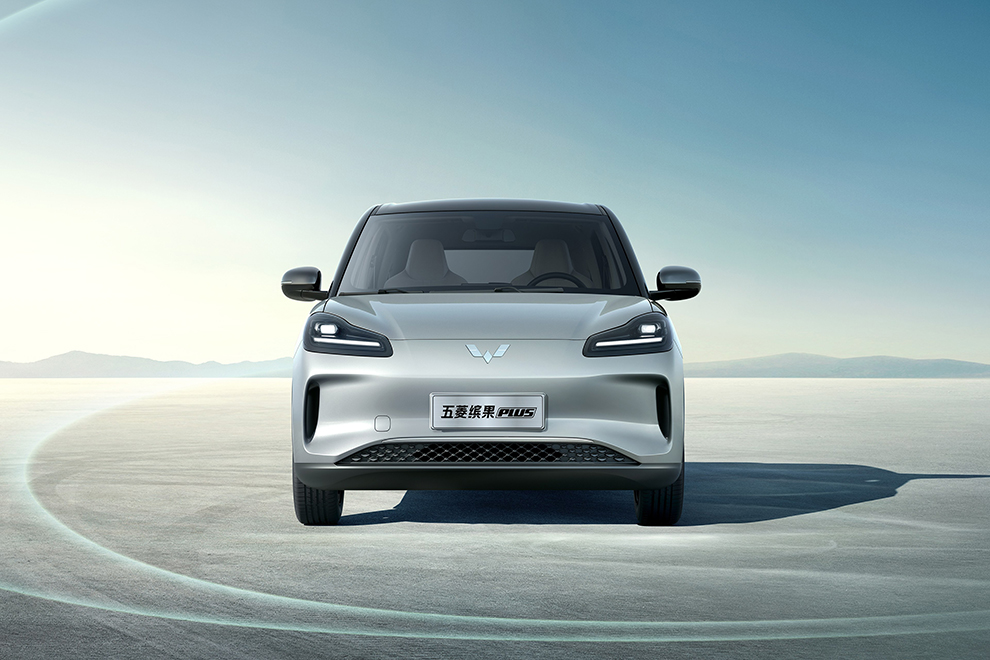
- The Yueye is a compact, battery-electric crossover with distinctive upright styling for urban and light-fleet use.
- A 301 km CLTC-labelled Flagship variant provides a defined range starting point; real-world and local homologated figures will differ.
- Four-seat and five-seat-labelled derivatives are represented, so seating and equipment should be verified on each listing.
- New and used choices involve different warranty, battery-health, history and inspection risks that should be evaluated separately.
- Current per-unit export pricing, availability and order terms should be confirmed in live Yueye listings or a written quote.
Why the Baojun Yueye matters for export markets
For export, the Baojun Yueye occupies an unusual position in Chinese vehicle exports: it is a compact, battery-electric crossover with a deliberately upright, design-led shape rather than the look of a conventional family SUV. This gives dealers something memorable in the small-EV segment while retaining the ride height and practical body expected by urban buyers. It is particularly relevant where compact dimensions, electric running costs and showroom presence matter more than long-distance touring capability. For fleet managers, its appeal can be assessed through cabin utility, cargo needs and ease of parking rather than style alone.
Export demand for the Yueye is most plausible in dense cities, university and hospitality campuses, short-distance commercial routes, and fleet programmes seeking an approachable electric vehicle without a larger footprint. Its visual identity helps it stand out in marketplaces and showrooms, while compact size can simplify parking and delivery logistics. Demand still depends on charging access, electricity tariffs, import treatment and after-sales confidence; design alone does not remove those constraints. Overseas buyers should test the business case against actual duty cycles and local operating costs, not launch impressions alone or online list prices.
For importers, the Yueye can be positioned as an accessible design-led BEV, but only after the total operating proposition is checked. Confirm the local homologated range rating, charging hardware, battery warranty coverage, spare-parts pathway and residual-value prospects before committing to volume. A vehicle that is easy to sell visually may still require careful pricing if local incentives, servicing capability or used-vehicle expectations differ from China. Build the export case around a specific customer and operating scenario, not acquisition cost alone or unsupported assumptions about international demand in the destination market.
- Compact electric crossover with distinctive styling.
- Compare operating and ownership costs.
- Verify charging, compliance and support.
Model range, trims and powertrain variants: how the lineup is structured and how to choose
The Yueye range is organized around electric powertrains and several named editions rather than a simple base-and-top hierarchy. Visible variants include Flagship Edition, Intelligent Premium Edition, a range-labelled 301 km Flagship, 4-seat and 5-seat derivatives, and special model or anniversary labels. Those names help identify positioning, equipment and seating, but they should not be treated as proof of identical motor output, battery capacity or charging equipment. Ask for the complete vehicle specification behind the exact listing. Because trim names can change between model years, compare the VIN-level specification rather than relying on badge wording alone.
Power is supplied by a battery-electric drivetrain; the Yueye is not an engine-and-transmission SUV. The 301 km designation identifies one range class and should be read as a Chinese CLTC laboratory figure, not a guaranteed real-world distance. Weather, speed, load, terrain, tyre choice and air-conditioning use can reduce observed range, while regulatory testing in the destination country may produce a different official number. The live listing should be checked for battery capacity, motor output and charging connection. Also confirm whether the quoted range belongs to the selected trim or a related derivative.
Start with the 301 km Flagship only if its rating matches the buyer's duty cycle, then review Intelligent Premium and seating-specific versions for added equipment. A premium label may improve convenience or cabin technology without increasing range, so it does not automatically solve charging anxiety. For a fleet, prioritize usable cargo space, seat count, expected payload and serviceability; for private buyers, equipment, styling and local charging convenience may matter more than the smallest possible acquisition cost. Record the trade-offs before requesting a quote. A written specification sheet prevents trim-name assumptions.
- Verify battery, motor and charging details.
- Treat 301 km as CLTC-labelled.
- Match seats and equipment to use.
New vs used Baojun Yueye: how export inventory is structured and how buyers choose
Export inventory should be read as individual vehicle records rather than a fixed sales package. New examples are normally organized by model year and named trim, making it easier to compare factory specification and expected condition. Used vehicles, when offered, require an additional assessment of mileage, battery health, service history, accident repair and cosmetic condition. Because the condition label changes the risk profile, never infer that a lower-priced used listing offers the same value as a new one. For an EV, battery condition and charging history deserve particular technical and documentary attention.
For a new Yueye, the main advantage is predictable specification and a clearer warranty path, assuming the warranty follows the vehicle into the destination market. The buyer should still inspect production date, tyre date, exterior finish, option fit and delivery documents. For a used unit, a lower entry cost may be offset by shorter remaining life in batteries and high-voltage components, deferred maintenance or uncertain history. A private buyer may accept that risk; a fleet manager should normally demand stronger inspection evidence. Ask for a battery state-of-health report, where available, and verify service records.
The safest purchasing decision starts with the condition field on the live Yueye inventory, then moves to the photographs, VIN, production details and inspection evidence. Do not treat model-year differences alone as a proxy for condition: a newer unit may still have more mileage, while an older unit may have been carefully maintained. Compare total ownership cost rather than purchase price alone, including expected battery replacement risk, insurance, maintenance and repairs. Exact used-unit availability and pricing must be checked on the live listing page. The platform does not replace inspection.
- New units offer predictable specifications.
- Used units need battery and history checks.
- Compare total ownership cost.
How export pricing works: the factors behind a live listing price, and how to read one
A Yueye export listing is a starting reference, not necessarily the amount that will land in the destination warehouse. The vehicle price can move with model year, trim, seat configuration, range or battery version, mileage and condition, production timing and exchange-rate movements. Options, paint, warranty packages and dealer incentives may also change the comparison. For a used vehicle, inspection findings can matter as much as the badge. Buyers should compare like with like and retain a dated copy of every quote they receive. This discipline is especially important across currencies.
The landed-cost calculation can include ocean or air freight, insurance, export documentation, terminal handling, port charges, inland transport, import duty, value-added tax and other local government fees. Which items are included depends on the Incoterm and the seller-exporter arrangement. A quote based on an ex-China port price is not comparable with one delivered to a dealer yard. Request an itemised statement naming the currency, tax status, delivery point, validity period, exclusions and the party responsible for each charge. Ask whether local registration and pre-delivery inspection are included in that quote.
To read a live Yueye listing, first record the vehicle identity, model year, trim, range label, seat count, condition and VIN where visible. Then check what the stated price covers and whether it is a firm offer, a starting figure or subject to dealer confirmation. Separate vehicle value from logistics and taxes, and compare the same Incoterm across candidates. On ChinaCarDirect, the current amount should be confirmed against the relevant live inventory record or a written quotation; an old enquiry, search result or remembered catalogue figure is not a commitment to the seller.
- Compare like-for-like trims and terms.
- Separate vehicle, freight and tax costs.
- Check live listings for current amounts.
MOQ, ordering and payment: single units vs consolidating a container
A wholesale minimum order quantity should be treated as a transaction term, not a permanent model attribute. A live marketplace listing may be offered on a one-vehicle basis, while a factory programme or container consolidation may impose different conditions for higher volume. Buyers should ask the supplier what quantity is actually required for the quoted configuration and whether the quoted lead time, warranty and freight rate apply at that quantity. Never assume that one unit displayed online can be purchased without a deposit, export release or minimum batch. Get the answer in writing.
Ordering one unit is useful for a pilot, test-drive programme or dealer trying a new brand, but it can leave the buyer paying more in freight, documentation and handling than a consolidated shipment. A container plan can reduce unit logistics cost and provide spare stock, yet it increases capital exposure, storage needs and the risk of choosing the wrong trim for local demand. Compare the all-in cost per vehicle under both scenarios, including warehousing and slow-moving inventory. A larger order is not automatically more economical once financing, tax timing and dealer cash flow are included.
A sound payment sequence is to verify the vehicle and seller, agree the specification and landed-cost basis, place a clearly documented deposit, complete the balance against agreed milestones, and release payment only after the required inspection and shipping documents are satisfactory. The contract should name the exact vehicle or acceptable production specification, Incoterm, payment currency, deposit terms, cancellation rules, warranty start and delivery documents. For a container order, specify how production, damage, shortage, delay and title issues are resolved before vehicles are shipped. Use a contract route appropriate to the destination jurisdiction.
- Confirm whether single-unit purchase is possible.
- Compare consolidation against cost per vehicle.
- Document deposit and release milestones.
Shipping, homologation and market compliance caveats: LHD/RHD and import rules by country
The Yueye must be matched to the destination's road rules before payment. Left-hand-drive and right-hand-drive versions differ in steering position, lighting, mirrors and sometimes equipment or homologation details; a Chinese-market listing should not be assumed to be export-ready in either configuration. Confirm the VIN, steering position, factory build specification and any stated export approval. The importer of record remains responsible for local type approval, registration and technical compliance, even when a seller or logistics partner assists with paperwork. Requirements can also cover noise, safety equipment and software-controlled features by market.
Charging compatibility is equally important. Verify the connector, voltage, alternating-current charging provision, onboard charger rating and any included portable cable rather than assuming one format fits the destination. Fleet buyers should confirm charging access, load management and whether duty profiles support the battery's usable capacity. For electric vehicles, local safety and battery-transport documentation can affect both shipment timing and import acceptance. Request the documents appropriate to the route and destination instead of relying on a generic certificate photographed for another market. Confirm that the exporter can provide valid originals promptly.
Before dispatch, agree who handles customs clearance, terminal charges, inland delivery, registration support, pre-delivery inspection, damage claims and warranty servicing. Photograph the VIN, odometer, tyres, bodywork, glass, interior and charging equipment, and retain inspection reports with the transport record. Local requirements may cover emissions-related approvals even for EVs, cybersecurity or connected-vehicle data, radio equipment, battery warranty, software updates and language labels. These issues are destination-specific, so the importer should obtain written local advice rather than assume Chinese compliance is sufficient. A pre-shipment compliance review can prevent costly storage or rejection.
- Confirm LHD or RHD configuration.
- Validate charging and transport documents.
- Assign customs, insurance and claims roles.
Who should buy the Yueye — and who should pick a different vehicle
The Yueye is a strong candidate for urban dealers, short-route fleets and buyers who want a compact EV with a distinctive exterior and usable 4- or 5-seat derivatives. It can fit a compact-SUV brief where parking and running costs matter, while the range-labelled 301 km version provides a defined starting point for comparison. It is less suitable for operators whose routes regularly exceed the usable range, require substantial payload or depend on dense nationwide after-sales coverage. The right question is whether a local charging network and service partner can support the vehicle commercially.
Choose a different vehicle if the Yueye's styling will not generate enough demand in a conservative retail market, or if its charging arrangement, battery warranty and software support do not meet local expectations. Dealers may prefer a mainstream model with a larger established parts catalogue and more familiar resale channels. Fleets should also consider a purpose-built van when cargo volume, loading access and duty-cycle uptime outweigh passenger comfort. Comparing expected total cost and support capability is more reliable than assuming a newer Chinese model will automatically undercut an established local alternative.
Before placing an order, run a fit check against at least three alternatives: one lower-cost city EV, one mainstream compact EV and one vehicle with greater range or cargo capability. Use the same route, load, charging and resale assumptions for all three. The Yueye should win on the combined package of design, compact packaging, seating choice and electric operation, not on a single promotional claim. If it cannot meet the required safety, charging or service standard after local homologation, stop and select another model rather than trying to solve those issues with modifications after shipment.
- Best for compact urban and fleet use.
- Test routes against usable range.
- Choose larger vehicles for heavier duties.
Main rivals and how the Yueye compares
The closest visual and price-tier alternative is the Dongfeng Nano Box, a small battery-electric city car that competes for the same urban, low-mileage and budget-conscious buyer. The Yueye differentiates through its more upright crossover-like shape and 4- or 5-seat-labelled derivatives, whereas the Box is more conventionally hatchback-like. Choose the Dongfeng where simplicity and city efficiency dominate; choose the Yueye where visual appeal, seating flexibility and SUV presence support the local retail proposition. Both still require the same destination-specific range, charging and compliance checks before either can be imported or sold.
Wuling's Bingo EV is another practical rival for buyers seeking a compact Chinese electric city car, often attractive where affordability, manoeuvrability and simple urban transport are priorities. The Yueye offers a stronger SUV-style visual proposition and documented seating variants, while the Bingo's appeal is its very focused small-car format. A distributor should compare cargo usability, ride comfort, charger compatibility, parts support and dealer margins rather than assuming one badge has broader appeal. The better choice depends on the buyer segment and the ability to service each model locally with care.
A stronger mainstream comparison is the BYD Dolphin, which competes with the Yueye for private buyers and company-car evaluations where brand familiarity, electrified drivetrain acceptance and more established international service recognition matter. The Dolphin may offer a more conventional premium compact-EV proposition, while the Yueye stands out through its distinctive design and SUV-inspired presentation. However, a higher specification is not automatically cheaper to operate, and the Yueye's design-led proposition may not offset weaker residual-value assumptions. Compare certified range, service reach, warranty and actual landed cost in the destination market.
- Dongfeng Nano Box: closest small-EV rival.
- Wuling Bingo EV: focused city car.
- BYD Dolphin: mainstream compact-EV comparison.
Live Baojun Yueye export inventory
View all listings →Real units currently on ChinaCarDirect with per-unit asking prices and MOQ. Availability updates live from the catalogue.
How to buy a Baojun Yueye from China
-
1
Define the destination and duty profile
Record the destination country, steering-side requirement, typical route length, annual mileage, passenger count, payload and available charging arrangements. These inputs determine which Yueye derivatives and charging arrangements are commercially suitable.
-
2
Filter the live Yueye inventory
Use the live listings to narrow the selection by model year, trim, range label, seat configuration and condition. Open each relevant record rather than comparing only similar-looking advertisements.
-
3
Verify the exact vehicle
Request the VIN or build sheet and confirm battery capacity, motor output, drivetrain, charging connector, dimensions, equipment, warranty and steering position. Record whether the vehicle is configured for the intended market.
-
4
Request an itemized landed quote
Ask for the vehicle price, freight, insurance, documentation, handling, inland transport, duties, taxes, Incoterm, currency and quote-validity period. Separate manufacturer or dealer charges from destination costs.
-
5
Agree order and payment mechanics
Confirm the required quantity, exact vehicle or production specification, deposit, balance milestones, cancellation rules, warranty commencement and required documents. Use written terms that identify who owns the vehicle at each stage.
-
6
Complete destination compliance checks
Assign the importer of record and confirm local type approval, registration, charging compatibility, safety requirements, battery-transport documents and any software or language requirements. Resolve issues before the vehicle is released for shipment.
-
7
Inspect, approve and dispatch
Approve the pre-shipment inspection report, exterior photographs, VIN, odometer, tyres and interior condition. Settle the agreed balance against satisfactory documents, then confirm the transport booking, insurance and delivery plan.
Yueye vs rivals
| Dongfeng Nano Box | The Nano Box is the closest small-EV format rival, emphasizing conventional city-car packaging and efficiency. The Yueye offers a more upright crossover appearance and seating-specific derivatives, making it better suited to buyers who prioritize design and SUV-style presence. |
|---|---|
| Wuling Bingo EV | The Bingo EV is a highly focused urban alternative for drivers seeking straightforward, manoeuvrable transportation. The Yueye has the stronger crossover-style proposition and broader seating choice, although both require local charging and aftersales support. |
| BYD Dolphin | The Dolphin is a broader mainstream benchmark with stronger international brand recognition and a more conventional compact-EV presentation. The Yueye competes through distinctive styling and compact SUV-inspired packaging, so the better choice depends on local brand awareness, service reach and landed cost. |
Frequently asked questions
How is Baojun Yueye export pricing determined?
Export pricing is determined by the selected vehicle's year, trim, range or battery version, seat configuration, condition and mileage, then adjusted for currency movement, freight, insurance, Incoterms, port handling, duties and local taxes. A listing price may therefore differ from the landed cost. Review the current amount on the live Yueye listings and request a written, itemised quote for the destination; only the current unit record or confirmed quotation should be treated as the reference.
What powertrain and range does the Baojun Yueye have?
The Yueye is a battery-electric vehicle. The lineup includes a 301 km CLTC-labelled Flagship variant, but that laboratory figure is not a guarantee of destination-market range. Check the live listing for battery capacity, motor output, drivetrain, charging connector and the locally homologated range rating.
Should an overseas buyer choose a new or used Yueye?
A new Yueye generally offers a clearer factory specification and warranty starting point, provided warranty coverage transfers to the destination. A used vehicle may cost less to acquire but can carry more risk from battery health, mileage, repair history and limited aftersales support. Compare condition reports, total ownership cost and destination warranty terms rather than assuming either condition is automatically better.
What is the MOQ for a Baojun Yueye order?
There is no universal Yueye MOQ that should be assumed from a model name or catalogue. A single-unit listing may be directly orderable, while factory production or container consolidation can have different minimums and terms. Ask the supplier to confirm the required quantity, configuration, production lead time, freight basis and payment schedule in writing; current unit-level terms are shown on the live listings.
How long does Yueye shipping take and what affects its cost?
Shipping time and cost depend on origin and destination ports, sea or air routing, vessel schedules, port congestion, customs clearance, documentation, vehicle quantity, insurance and fuel or handling surcharges. Consolidation can change unit freight economics, while a single vehicle may require a different transport arrangement. Ask for a dated freight quote with the Incoterm, route, transit-time estimate, charge inclusions and validity period.
How are Baojun Yueye spare parts supplied?
Spare-parts support should be confirmed before importing, using the VIN and original equipment list to identify serviceable components. Ask where parts are stocked, who handles orders, expected fulfilment routes, warranty labour and alternatives for electronic or high-voltage items. The Yueye may suit a distributor with direct Baojun parts access better than a buyer relying on infrequent emergency repairs.
Is a right-hand-drive Baojun Yueye available?
Right-hand-drive availability cannot be inferred from a general Yueye listing or from Chinese-market photos. Ask for the steering configuration and export approval for each VIN, and confirm that any RHD example has the correct local type approval, lighting, mirrors and equipment. A steering conversion after shipment is not a substitute for homologation and may affect safety, warranty and registration.
How do I buy a Baojun Yueye from China?
Select a specific live listing, verify its VIN-level specification, and request a written quote stating the Incoterm, price basis, lead time and payment milestones. After agreeing the order and compliance plan, pay the documented deposit, complete pre-shipment inspection, settle the balance against agreed documents, and release the vehicle for shipping. ChinaCarDirect can receive the request through its RFQ page, but supplier confirmation and destination approvals remain essential.
Ready to source the Baojun Yueye?
Request a live Yueye quotation with your destination, seat-count requirement and estimated annual mileage.
Request a quote