
BMW 2 Series (import) Export Buying Guide
Buy a BMW 2 Series (import) from China with guidance on trims, petrol powertrains, export pricing, MOQ, shipping, compliance and rivals for overseas dealers.
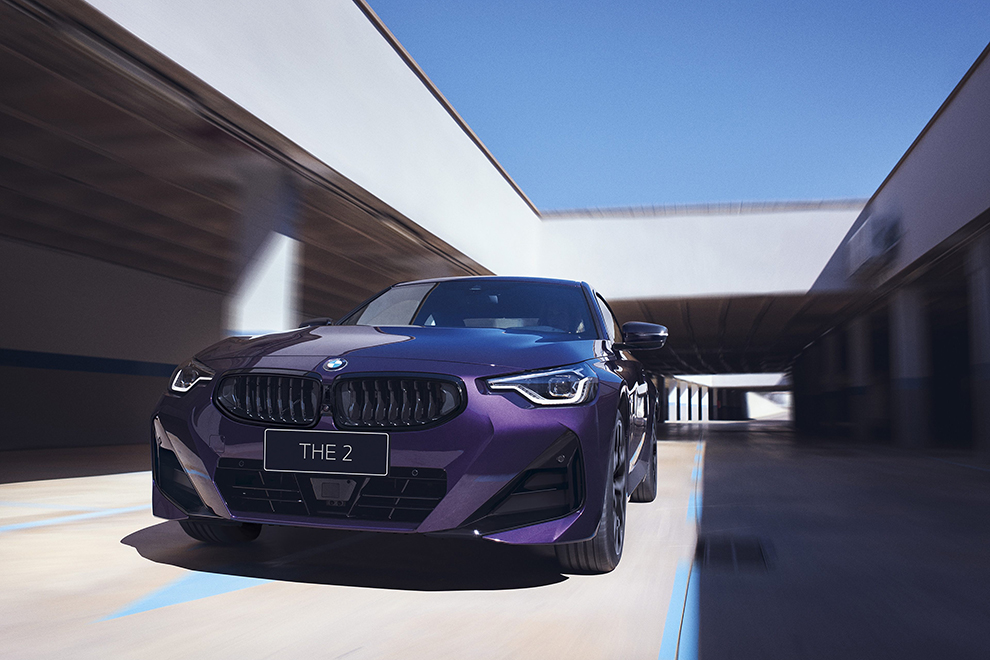
At a glance
- The range spans two-door Coupé, two-door Convertible and four-door Gran Coupe bodies.
- The hierarchy runs from 218i through 220i and 225i to the higher-output M240i.
- It suits style-led dealers and company-car buyers seeking premium compact character without SUV bulk.
- Export pricing depends on the exact unit, specification, condition, currency, freight and Incoterm.
- Current per-unit price, condition and availability are shown in the live BMW 2 Series (import) listings.
- LHD/RHD, homologation, customs and serviceability must be cleared for the destination country.
Why the BMW 2 Series (import) matters for export markets
The BMW 2 Series (import) sits in the compact premium segment, combining BMW badges, handling-oriented dynamics and a driver-focused shape with dimensions that are easier to manage than larger executive cars. Its appeal to overseas dealers is strong where buyers want a premium compact that feels distinctive without moving into luxury costs. Coupe, Convertible and four-door Gran Coupe versions widen the commercial audience. For importers, the model offers aspirational branding and recognizable design at a logistics size. That combination can support sales, fleet allocations and test-drive programmes where image matters.
Unlike a conventional entry-level sedan, the 2 Series presents a more emotional proposition. The two-door Coupé prioritizes appearance and engaged handling; the Convertible adds open-air appeal for leisure and hospitality use; and the Gran Coupe introduces a more practical four-door format for buyers who dislike conventional sedans. This breadth matters in export markets because body style can be matched to local tax bands, fuel preferences and dealer showroom space. A dealer ordering one body style may be commercially narrow, so a mixed allocation can test demand more effectively before scaling.
Export demand also depends on whether the destination can support a premium badge. Buyers should assess local BMW service coverage, technician availability, parts routing and residual-value expectations before treating the model as a volume product. Parallel-import channels may help in smaller markets, but factory warranty transfer can differ from official-channel support. That makes transparent provenance especially important. For buyers seeking a BMW 2 Series (import) for export, the right proposition is not simply a low acquisition cost, but a vehicle whose specification, service pathway and landed compliance case can be defended.
- Multiple body styles.
- Premium compact positioning.
- Service access matters.
Model range, trims and powertrain variants: how the lineup is structured and how to choose
The lineup should first be read by body architecture. The two-door Coupé is the classic 2 Series form, with two doors and a cargo opening shaped around sporty packaging. The two-door Convertible uses a folding roof and adds seasonal appeal, but buyers should inspect roof operation, sealing and condition. The four-door Gran Coupe adds a separate rear door and more practical access. These are not cosmetic variants: door count, roof layout, luggage capacity and visibility affect fleet use, insurance and customer expectations in overseas markets with different road and climate conditions.
Engine choice follows a clear hierarchy: 218i, 220i and 225i denote progressively positioned four-cylinder petrol versions, while M240i is the higher-output performance derivative. Most cars in this family use BMW’s eight-speed Steptronic automatic, but transmission details can change by generation and market, so the VIN-level listing should control. Most 218i, 220i and 225i examples are front-wheel drive, whereas an M240i xDrive Coupe European Version also appears in the range. Confirm the actual motor, output, gearbox and drive layout rather than inferring them from the body name or exterior package designation.
BMW’s package names help with appearance and equipment, but they should not be treated as powertrain specifications. Sport Design, M Sport, Shadowline, Shadow Edition, Exclusive and Black Night packages can change wheels, bodywork, trim and options; they do not automatically make a car an M240i. For a fleet buyer, standard equipment and repairability may matter more than visual upgrades. For an enthusiast, the M240i designation and drivetrain are the relevant starting points. BMW 2 Series (import) specs should be matched to the customer, not simply to the elaborate name on a listing.
- Body style changes use.
- Packages may not change powertrain.
- Verify VIN-level specifications.
New vs used BMW 2 Series (import): how export inventory is structured and how buyers choose
A new BMW 2 Series (import) is best understood as a complete, saleable vehicle rather than merely a car with zero mileage. Production year, factory specification, paint, options, market of origin and delivery status all affect how it presents and how it may be compared with official-channel stock. Dealer buyers should ask whether the vehicle is road-ready, where its warranty begins and whether any factory or transport damage is disclosed. New status can simplify initial presentation, but it does not remove the need for inspection or thorough local compliance work.
Used examples can make a different economic case, especially for a buyer targeting a known body style without absorbing factory-new depreciation. The trade-off is uncertainty: mileage, service history, accident repair, paintwork, tyre age, cabin wear and electronic/software condition may be imperfectly disclosed in a listing. A used BMW 2 Series (import) should therefore be evaluated unit by unit, preferably with a VIN, service records, inspection photographs and an independent report. Low purchase cost can be offset by near-term maintenance, which is why condition evidence matters more than a broad used-market assumption.
Export inventory structure should be treated as unit-specific. New vehicles may represent parallel imports, stock or other sourcing channels, while used vehicles may carry an ownership and service history. Neither label reveals whether a car is suitable for a particular destination. On ChinaCarDirect, use the live BMW 2 Series (import) inventory to check the production year, condition, trim, VIN availability and asking price for each vehicle. A BMW 2 Series (import) wholesale brief should define the acceptable mix before contacting sellers so that a conversation about quality, documentation and transport can proceed efficiently.
- New cars need condition checks.
- Used cars need history checks.
- Assess each live unit.
How export pricing works: the factors behind a live listing price, and how to read one
An export price is not one fixed market value. The live asking price for a specific BMW 2 Series (import) can move with production year, body style, trim, engine, drivetrain, factory options, mileage, condition, ownership history and the seller’s sourcing position. Currency movements also affect how an overseas buyer interprets the quote, while scarcity or demand for a particular configuration can influence the seller’s terms. Compare like with like: a later Gran Coupe, an older Convertible and an M240i are different products even when all carry the same model name.
Freight and trade terms can be equally important as the vehicle line. Depending on the Incoterm, the displayed amount may exclude ocean or air freight, insurance, export handling, origin charges, destination terminal fees, customs duties, taxes and last-mile delivery. A quoted price can become either a vehicle-only acquisition cost or a much broader landed estimate depending on the seller’s definitions. Ask for a quotation that identifies the port, transport mode, Incoterm, documentation fees and every excluded cost. Use this BMW 2 Series (import) export price guide method rather than comparing headline totals built on different cost boundaries.
Read each live listing as a configuration document, not as evidence of the market’s average value. Confirm the exact vehicle name, VIN or chassis information, model year, body style, trim, engine, gearbox, drivetrain, steering side, mileage or delivery status, options, condition and availability. Review the displayed price together with the seller’s quotation terms and ask for evidence when any field is absent. Export price is binding only after the parties agree on the same vehicle, condition, logistics and payment conditions. Use live listings for current numbers rather than relying on an old article or a remembered figure.
- Compare matching configurations.
- Separate vehicle and landed costs.
- List all exclusions.
MOQ, ordering and payment: single units vs consolidating a container
There is no universal MOQ for the BMW 2 Series (import), so buyers should not assume that one vehicle is automatically available to order or that a catalogue quantity can be reserved. Some sellers may accept a single-unit purchase, while others may set a lot requirement for a particular sourcing arrangement. The minimum, allocation method and payment schedule must be confirmed for the exact listing. A single-unit request is practical for a test fleet, dealer sample or one customer order, provided the seller can release that vehicle from its intended lot.
A buyer who wants to buy a BMW 2 Series (import) from China starts with a precise vehicle brief: body style, target model year, trim, engine, drivetrain, steering side, condition and destination. The seller then checks the unit, confirms identity and availability, and issues a pro forma invoice or quotation. Payment terms commonly separate an initial deposit from the balance due before release or shipment, but the actual milestones, refund conditions and transfer method must be written down. Never treat a catalogue image or verbal assurance as a substitute for a VIN-level commitment, serial-numbered invoice and clear release procedure.
Consolidating several units can improve control over vehicle mix, documentation and transport, but it also concentrates capital and raises the cost of one error. If a container includes several trims, insist on VIN-to-trim and VIN-to-option sheets, pre-delivery inspection criteria and clear responsibility for missing or damaged items. Avoid relying on a generic photo set to identify every car. For a first transaction, a smaller mixed lot or individual releases may offer better learning. For experienced buyers, consolidation becomes attractive once the specification, inspection standard, payment milestones and destination requirements have been proven.
- MOQ is seller- and unit-specific.
- Single units support testing.
- Consolidation raises risk.
Shipping, homologation and market compliance caveats: LHD/RHD and import rules by country
Steering configuration is one of the earliest filters for an export purchase. Vehicles sourced for China are commonly left-hand drive, while some European-market cars may be right-hand drive; the range also includes a specifically described European M240i xDrive Coupe version. Never infer the steering side from a trim label, photo background or seller location. Confirm it from the VIN, dashboard layout and vehicle documents. Selling a left-hand-drive car in a right-hand-drive market may require conversion, while even a right-hand-drive car can still face local registration, safety and taxation requirements.
Import and homologation rules are destination-specific. Before placing a deposit, check whether the destination accepts the vehicle’s age, engine, emissions standard, safety equipment and electronic features, and whether a local type approval, emissions certificate or other conversion is needed. Import rules may also distinguish the vehicle’s manufacturing period, original market and category. A European-version car is not automatically compliant elsewhere. The importer should obtain a written local customs or conformity assessment and confirm that any inspection, registration or modification can be completed for that specific vehicle before committing to transport.
Customs value, duty, tax and brokerage can differ from the vehicle’s advertised price, while fuel or emissions-based charges may apply depending on local policy. The importer should check whether spare parts, repair data and diagnostic software can be obtained for the exact European, Chinese or other source-market specification. Documentation should match the VIN and include the ownership, customs and maintenance records. If modified, describe the work in the compliance plan and retain invoices and approvals. These checks are not paperwork after-sales; they protect the vehicle’s legal saleability and residual value.
- Verify steering side early.
- Check local homologation.
- Match documents to VIN.
Who should buy the 2 Series (import) — and who should pick a different vehicle
The BMW 2 Series (import) is a genuinely strong fit for dealers serving design-conscious private buyers who want a premium badge, compact exterior dimensions and a more engaging image than a mass-market hatchback. The Coupé and Convertible suit style-led retail, while the Gran Coupe can appeal to company-car customers and drivers who want four-door access without a conventional family saloon. An M240i can anchor a performance-oriented sub-range. The strongest wholesale case is therefore a clearly defined customer segment, supported by local servicing and realistic residual-value assumptions in the destination market.
It is a poor match for buyers whose priority is rear-seat room, cargo volume, high ground clearance or a low-maintenance electric powertrain. A sports coupé’s sloping roof and limited luggage opening can be restrictive for family duty, while a premium fuel vehicle may face operating costs than a smaller non-premium model. EV-focused fleets should compare charging access, range requirements and local incentives rather than choosing a combustion car for image alone. Buyers needing a van, seven seats, heavy towing or commercial payload should choose a vehicle designed around those duties.
For fleet buyers, the decision should extend beyond sticker appeal. Calculate total cost of ownership over the intended holding period, including fuel, insurance, tyres, scheduled service, downtime and likely remarketing. For a dealer test fleet, mix body styles only where service teams can support them and where local demand is demonstrable. For a direct importer, a narrowly defined brief can reduce risk, but the sourcing specification should still include acceptable alternatives. The right question is not whether the 2 Series is fashionable, but whether its operating, compliance and resale case remains attractive after every landed cost.
- Strong for style-led buyers.
- Weak for cargo and EV fleets.
- Assess total operating cost.
Main rivals and how the 2 Series (import) compares
The Mercedes-Benz A-Class is the closest conceptual rival because it also combines a premium badge with compact dimensions, and some body styles provide a more practical alternative to the 2 Series Coupé. Its positioning tends to emphasize comfort, refinement and everyday usability. The BMW is generally the more style-led and driver-focused proposition, with the Convertible and performance variants giving it a clearer emotional hook. For a buyer whose market values rear-seat comfort and an upscale compact family car more strongly than road engagement, the A-Class may be the more rational choice.
The Audi A3 is another direct premium-compact competitor, particularly against the four-door Gran Coupe, and the S3 can be considered by buyers focused on higher-output performance rather than the base 2 Series range. Audi typically presents a more restrained design and technology-led cabin, while the BMW places greater visual emphasis on driving character and body variety. Availability varies by country, and engine, drivetrain and tax treatment can shift the value proposition. A side-by-side landed comparison should therefore use precisely equivalent body style, output class, warranty assumptions and local running costs.
The Toyota GR86 is another alternative for buyers who prioritize a rear-drive two-door coupé, a naturally aspirated engine and a focused enthusiast image over BMW premium branding, refinement and body-style choice. It offers fewer practical benefits and usually a different ownership proposition, but it can be persuasive where coupe driving dynamics dominate. The strongest comparison depends on the customer: the GR86 for accessible rear-drive enjoyment, the A-Class or A3 for compact premium practicality, and the BMW 2 Series (import) for distinctive design, multiple bodies and a broader mix of M240i-led performance.
- A-Class prioritizes compact practicality.
- A3 offers restraint and technology.
- GR86 focuses on rear-drive fun.
Live BMW 2 Series (import) export inventory
View all listings →Real units currently on ChinaCarDirect with per-unit asking prices and MOQ. Availability updates live from the catalogue.
BMW BMW 2 Series (Import) 2019 225i Convertible Coupe Sport Design Package
BMW BMW 2 Series (Import) 2023 225i 4-Door Coupe M Sport Shadowline Package
BMW BMW 2 Series (Import) 2018 220i Convertible Coupe Sport Design Package
How to buy a BMW 2 Series (import) from China
-
1
Define the target configuration
Write a brief covering body style, model-year band, trim, engine, drivetrain, steering side, condition and destination. This keeps supplier quotations comparable and prevents an attractive but unsuitable unit from entering the shortlist.
-
2
Review live unit listings
Open the live BMW 2 Series (import) listings and compare current per-unit price, year, trim, condition and seller information. Treat each listing as the starting point, not proof of export compliance or final landed cost.
-
3
Verify identity and condition
Request VIN or chassis details, photographs, the option list, service records and any damage or inspection report. Confirm the engine, gearbox, drive layout and steering side against the documents before placing a deposit.
-
4
Clear destination-market compliance
Check local import age and emissions rules, type approval, safety requirements, taxes and any required inspection or modification. Obtain a destination-specific conformity or customs assessment for the exact vehicle.
-
5
Request a complete landed quotation
Ask for a unit-level quote stating the Incoterm, origin and destination ports, transport mode, insurance, documentation, customs, tax and last-mile exclusions. This lets you compare vehicle acquisition cost separately from logistics.
-
6
Confirm order and payment milestones
Have the selected VIN or SKU, condition, price, quantity, deposit, balance, inspection rights, refund terms and release trigger recorded in the pro forma invoice or contract. Pay only through the agreed channel and retain every receipt.
-
7
Consolidate, inspect and ship
If ordering multiple vehicles, create a VIN-level packing and option list, apply a pre-shipment inspection standard and confirm container or vehicle release. Use the RFQ for current availability and a shipment plan, then track handover and export documents.
2 Series (import) vs rivals
| Mercedes-Benz A-Class | It is the closest conceptual premium-compact rival, with a stronger emphasis on comfort, refinement and practical hatchback or sedan use. Choose it when understated daily usability outweighs the 2 Series’ driver-focused styling and Convertible appeal. |
|---|---|
| Audi A3 | The A3 competes directly with the 2 Series Gran Coupe, while the S3 is relevant to M240i-focused buyers, and generally presents a more restrained, technology-led character. It is a strong alternative for buyers prioritizing cabin technology and brand presentation over multiple body styles. |
| Toyota GR86 | The GR86 is a credible alternative for rear-drive coupe enthusiasts who value a naturally aspirated engine and focused handling more than BMW refinement or Gran Coupe practicality. It is less suitable for buyers seeking a premium convertible, four-door option or broader model range. |
Frequently asked questions
How is the BMW 2 Series (import) export price determined?
Export pricing is determined by the exact vehicle and its commercial terms, not by a permanent model-wide rate. Production year, body style, trim, engine, drivetrain, options, mileage, condition, exchange rates, freight, insurance, duties and the chosen Incoterm can all change the amount. Current binding figures should be read on each live BMW 2 Series (import) listing, with shipping and other exclusions confirmed by the seller.
What engine and powertrain options are available?
The range is petrol-powered rather than electric, with 218i, 220i and 225i four-cylinder versions and the higher-output M240i. Most examples are front-wheel drive, while the lineup also includes an M240i xDrive Coupe European Version; transmission is generally an eight-speed automatic. Exact displacement, output, fuel consumption and dimensions vary, so confirm the VIN-level specification in the live listing.
Are new or used examples better for export?
New vehicles generally offer the cleanest presentation and the most straightforward ownership narrative, but parallel-import status and warranty coverage still need verification. Used BMW 2 Series (import) units may cost less to acquire yet carry more uncertainty around mileage, repairs, paint, service history and future maintenance. Choose based on the target customer and total cost, not on the new-versus-used label alone, and inspect the individual unit before paying.
What is the MOQ for a BMW 2 Series (import)?
There is no universal MOQ for this model; the minimum is set by the seller, sourcing arrangement and exact unit. A single-vehicle purchase may suit a test fleet or one customer, while a larger lot may be offered for consolidation. Confirm the quantity, allocation method, deposit, balance and release terms in writing before treating any stock as reserved.
How long does shipping take and what affects the cost?
Shipping time and cost depend on origin and destination ports, sea, rail, air or road routing, carrier space, season, documentation, insurance, fuel surcharges and terminal handling. Transit time should not be promised from a catalogue entry alone. Ask the seller for the transport mode, route, Incoterm, charge inclusions, expected schedule and destination charges so that the vehicle price and logistics cost remain separate.
Are spare parts and service support available?
Parts availability depends on the vehicle’s exact source market, engine and specification, not simply on its BMW badge. A buyer should confirm that common service parts, body panels, electronics and diagnostic software can be obtained in reasonable lead times. Local BMW service coverage or an alternative specialist should also be assessed before import, especially for less common M Sport or European-market configurations.
Can I buy a right-hand-drive model for an RHD market?
Right-hand-drive availability cannot be inferred from the model name because China-sourced examples may be left-hand drive, while European-market cars can differ. Confirm the steering side from the VIN, dashboard and documents before ordering. If the destination requires right-hand drive, either source an eligible example or budget for inspection and a lawful conversion before local registration.
How do I order a BMW 2 Series (import) from China?
Start with the live BMW 2 Series (import) listings, shortlist a body style and trim, and request a written unit-level quotation for the destination. Verify identity, condition, service history, steering side and export documents, then obtain a local compliance assessment before paying. The RFQ should state the required quantity, destination, Incoterm and inspection standard so the seller can return current price, availability and a complete order plan.
Ready to source the BMW 2 Series (import)?
Send your preferred body style, trim, destination and Incoterm to request a current unit-level export quote and order plan.
Request a quote