
BMW 5 Series Export Guide for Overseas Buyers
Compare BMW 5 Series trims, powertrains, export pricing, MOQ, shipping and compliance before ordering a China-built sedan for your overseas market.
At a glance
- The BMW 5 Series is a premium midsize executive sedan suited to long-distance business and chauffeur use.
- Li long-wheelbase derivatives prioritize rear-seat space, but wheelbase and destination fit still drive the decision.
- Trim names help narrow style and equipment; the VIN-linked build record confirms the actual engine and equipment.
- New cars can provide cleaner provenance, while used cars may reduce acquisition cost but require deeper history checks.
- Export pricing and MOQ are unit- and seller-specific; compare live listing prices with a written landed-cost quotation.
- LHD/RHD, homologation, taxes, parts access and local service determine whether an imported 5 Series is commercially viable.
Why the BMW 5 Series matters for export markets
The BMW 5 Series sits in the premium midsize executive-sedan class, between ordinary family saloons and larger luxury models. Its export appeal comes from a familiar combination of long-distance refinement, rear-passenger space, restrained styling and a broad range of equipment. For overseas dealers, the model can fill a gap where buyers want a prestigious business car without moving to a full-size flagship. It also suits chauffeur-led executive fleets and company-car programs that value cabin comfort and highway stability more than the lowest possible operating cost over a full ownership cycle.
Chinese-market model names make wheelbase a central buying decision. The “Li” designation generally identifies an extended-wheelbase derivative, and many 5 Series listings use designations such as 520Li, 525Li, 528Li, 530Li and 540Li. Longer wheelbases can make the car more suitable for executive rear seating, airport transfers and markets where passengers prioritize legroom. That does not make every Li car preferable: a shorter wheelbase may be easier to park, less costly to ship and more consistent with the versions already known in the destination country. The same designation can vary across model years, so VIN-level confirmation is essential.
Demand is therefore strongest where the 5 Series can be positioned as an attainable executive saloon rather than an imported niche novelty. Buyers should compare the local brand hierarchy, tax treatment, fuel costs and after-sales expectations before assuming a China-built car will resonate. A live [BMW 5 Series inventory](https://chinacardirect.com/products?q=5%20Series&brands%5B%5D=11) lets dealers test demand by trim, but first confirm that the destination market recognizes the model, accepts its specification and can support parts and servicing. This turns the 5 Series from a prestige-led purchase into a manageable distribution decision.
Model range, trims and powertrain variants: how the lineup is structured and how to choose
The visible lineup uses numerical designations to separate the 5 Series hierarchy, while package names explain equipment and styling. A 520Li, 525Li, 528Li, 530Li or 540Li is not a standardized configuration: generation, market and model year can change mechanical and equipment details. Use the designation to establish the broad class, then confirm engine, transmission, drivetrain, dimensions and standard equipment on the exact vehicle. A model code is only a starting filter, not a substitute for the build sheet, especially when comparing a domestic-market car with an imported parallel version.
Two recurring trim themes are Luxury and M Sport. Luxury-oriented cars generally emphasize a formal appearance, comfort equipment and a calmer specification, while M Sport versions usually present a sportier exterior treatment and a more driver-focused equipment mix. Labels such as Leading, Premium, Exclusive and individual Design Packages add another layer. Facelift or Second Facelift wording in a listing identifies a design generation, not a guarantee of identical equipment across countries. Package names are therefore useful filters, but the VIN-linked specification and photographs remain the final authority. Package labels are not performance data.
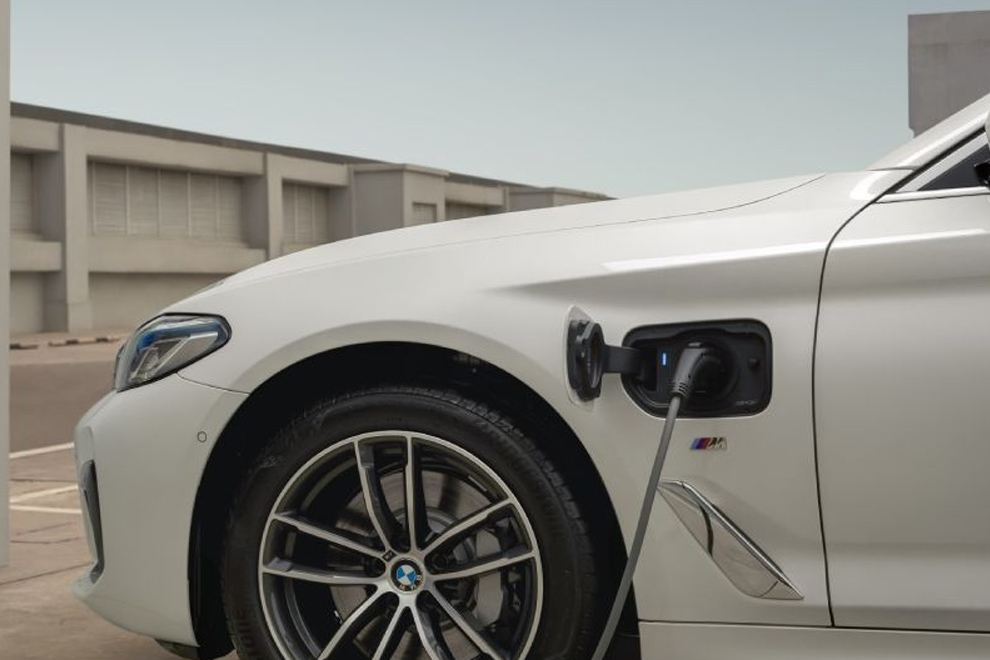
Engine choice is the next filter. Depending on generation and market, the 5 Series has used turbocharged 2.0-litre four-cylinder and 3.0-litre six-cylinder petrol engines, with rear-wheel drive common and xDrive all-wheel drive available on selected variants. Plug-in hybrid editions have also been offered in certain markets, but their battery capacity, electric range and charging details cannot be inferred from “Li” or “M Sport.” Ask for the complete VIN-linked powertrain specification and confirm in writing whether a car is conventional petrol or plug-in hybrid before calculating tax, running costs or charging infrastructure.
- Check VIN-linked powertrain.
- Compare Luxury and M Sport.
- Read facelift as generation.
New vs used BMW 5 Series: how export inventory is structured and how buyers choose
Export inventory should be read as a set of condition channels rather than one undifferentiated pool. New cars may be factory stock, dealer-owned vehicles, parallel imports or units sold through a channel that labels them new according to local registration rules; used inventory can include ex-fleet, ex-rental or private-sale cars. The exact mix changes over time, so a buyer must confirm the status of each unit rather than infer it from a portal label. Ask whether the vehicle has been registered, displayed, driven, repaired or prepared for export before placing any order.
A factory-new vehicle generally offers the cleanest ownership history and the most predictable initial condition. It can also simplify invoice and warranty documentation when the seller is authorized to handle those matters, although warranty coverage may be regional and depend on the importer. The trade-off is rapid depreciation and potentially higher acquisition cost. Used cars may deliver better value for a fleet that accepts normal wear, but the buyer takes on more uncertainty about service history, cosmetic condition, accident repair and the useful life of components and consumables in local service and supply conditions.
For a used BMW 5 Series, due diligence must extend beyond appearance. Request the VIN, registration and renewal documents, service records, accident and inspection information, title documents, underside photographs and any Chinese-market plate or tax documentation. Confirm that the odometer reading is consistent and that the engine starts cold. A pre-shipment inspection is a condition record, not a substitute for local mechanical assurance. A lower purchase price can still be a poor saving if repair, compliance or resale costs are unclear.
- Confirm ownership status.
- Inspect service records.
- Record condition before shipment.
How export pricing works: the factors behind a live listing price, and how to read one
A live export price is a composite commercial offer, not a fixed market value for the nameplate. The starting point reflects model year, exact trim and package, wheelbase, engine and drivetrain, mileage and condition, major options and vehicle history. It may also move with the seller’s cost base, exchange rates and the logistics included. Two 530Li cars should not be compared by badge alone if one is a different generation, specification or condition. Exact price, MOQ and availability are shown per unit in the live inventory on ChinaCarDirect.
Read the listing’s commercial terms before using its displayed amount in a budget. Determine whether it is a vehicle-only price, an export-dealer price or a delivered price, and identify the named Incoterm and destination. Freight, marine insurance, port charges, inland transport, customs duty, VAT or GST, registration and local inspection may sit outside the number. A landed-cost worksheet should separate the vehicle amount, international logistics, taxes, compliance work and contingency. This prevents a cheaper listing from becoming more expensive after mandatory destination charges are added later.
Wholesale assessment should also separate vehicle economics from transaction mechanics. A dealer buying several similar units can ask whether the seller supports consolidation, inspection, payment milestones and release documentation as one order, but each unit still needs its own VIN and condition confirmation. Conversely, a single-unit buyer should request the same written inclusions and exclusions rather than assume advertised benefits apply. Use the live listing to establish the current asking basis, then obtain a written binding quotation tied to the unit, destination, delivery term and payment method before transferring any funds.
- Separate vehicle and freight costs.
- Name Incoterm and destination.
- Secure each unit’s quote.
MOQ, ordering and payment: single units vs consolidating a container
Minimum order quantity is a seller and listing condition, not a universal property of the BMW 5 Series. Some export sellers accept single-unit purchases, which can be sensible for a dealer test, executive fleet or replacement vehicle; others may offer more attractive terms for a consolidated order. Because freight and handling can be charged per shipment rather than per car, a one-car buyer should request an all-in delivered quote and compare that total with the marginal cost of adding units. Container buyers should not consolidate until every vehicle’s trim, condition and documents have been approved.
A sound ordering sequence is to select the configuration, request a unit-specific quotation, place the agreed deposit, complete document and pre-shipment inspection, pay the balance under the contract, and authorize release only after final checks. Payment stages, accepted methods and refund conditions must be written into the pro forma invoice and sale contract. The buyer should know who holds title, which party signs export documents, what evidence covers the VIN and condition, and what happens if inspection, shipping or customs documentation fails. Never treat a chat message as a substitute for those terms.
Before handover, agree the document pack: VIN and model designation, invoice or sales contract, export declaration or proof of eligibility, registration or cancellation documents where relevant, keys, manuals, maintenance records, warranty information, tools and any included spare wheel or repair kit. Check that the payment beneficiary matches the contracting seller and that bank details are independently verified. If a third-party logistics provider or local agent acts for the buyer, define its authority and liability for inspection, loading, customs and release. Clear handover rules reduce the risk of a completed payment being followed by a documentation dispute.
- Check listing-level MOQ.
- Define inspection and refund terms.
- Align documents with contract.
Shipping, homologation and market compliance caveats: LHD/RHD and import rules by country
Steering configuration is the first physical compatibility check. Cars built for the Chinese market are commonly left-hand drive, but every listing must be verified. A right-hand-drive requirement may be met by sourcing an RHD-market example or undertaking a professional conversion. A conversion can affect parts supply, safety certification, warranty, insurance and resale value, and some jurisdictions regulate it strictly. Never treat a steering-wheel swap as a complete RHD conversion; the buyer needs the correct dashboard, controls, lighting, safety systems and proper homologation work.
Import permission is separate from ownership. The destination country may impose type-approval, emissions, noise, safety, cybersecurity or VIN requirements, as well as age restrictions, tariff classifications and local taxes. Plug-in hybrid cars deserve particular care because charging claims, battery declarations and tax treatment often differ from those of combustion vehicles. Confirm that the exact power unit and emissions configuration can be registered before committing funds. The importer should also establish whether the Chinese registration or tax status must be formally cancelled or documented for export and retained in the vehicle file.
Shipping decisions affect landed cost and compliance timing. Ro-ro and container handling, secure lashing, port congestion, weather, route distance and destination charges can change transit time and cost; photograph condition at each handover point. Local registration, emissions testing, insurance and import VAT or GST can follow shipment, so delivery is not the same as being road-ready. Use a broker experienced with completed vehicles on the specific route, and have the local authority or specialist confirm the rules before loading rather than after arrival.
- Verify steering configuration.
- Confirm local type approval.
- Plan post-arrival registration.
Who should buy the 5 Series — and who should pick a different vehicle
The 5 Series is a strong candidate for an overseas premium-sedan dealer, an executive chauffeur programme, hotel or corporate fleet, and an importer serving customers who want a long-distance business car with established badge recognition. Extended-wheelbase derivatives can be especially useful when rear-seat comfort and passenger space are the priority. A regional distributor may also use a disciplined mix of newer cars for corporate accounts and selected used examples for price-sensitive customers, provided the condition and provenance of each vehicle are transparent. This approach separates brand-building inventory from value-led sales without diluting service standards locally.
It is less suitable when the core requirement is minimum acquisition cost, minimal maintenance, compact urban dimensions, strong off-road capability or a fully electrified fleet. The car’s size and equipment can make it less efficient than smaller executive models, while imported parts, specialist service and software support can raise ownership friction. The driver appeal of an M Sport car does not remove the need for region-appropriate tyres, servicing or insurance in the destination market. A fleet buyer should model total cost per kilometre, downtime and residual value rather than focusing on the purchase quote.
Buyers should choose a different vehicle when they need a RHD factory build without conversion, a charging strategy their customers cannot support, a simpler homologation path, or more cargo flexibility than a saloon provides. An electric sedan may be a better commercial fit in markets with strong charging access and favourable operating economics, while a compact premium saloon may fit urban budgets better. Before switching, compare the same period, tax environment, insurance category and service expectations. The best vehicle is the one whose compliance and ownership case remains strong after it reaches the destination.
- Strong for executive fleets.
- Weak for minimalist EV fleets.
- Compare total ownership cost.
Main rivals and how the 5 Series compares
The Mercedes-Benz E-Class is the most direct benchmark for many buyers because it occupies the same premium executive-sedan role and is widely known in fleet and chauffeur applications. The choice often comes down to local brand preference, dealer support, available derivative and the buyer’s comfort with each model’s design and controls. The 5 Series can be attractive where a long-wheelbase configuration and the particular imported specification fit the customer, but the E-Class may be easier to source locally. Neither is automatically cheaper after duty, tax, shipping and service are counted in the destination market.
The Audi A6 is another close rival, with a restrained executive-car format and an established position in corporate fleets. It may suit buyers who prioritize a different cabin atmosphere, technology package or local Audi network, while the BMW 5 Series package hierarchy gives some customers a clearer choice between formal Luxury and M Sport presentation. The Genesis G80 is also relevant: it competes for executive and chauffeur buyers seeking a rear-drive-oriented saloon, but its availability, powertrain choices and service footprint vary more by country. These are market-specific decisions, not a universal specification ranking.
A structured comparison should score the shortlist on the factors that survive export: exact derivative, rear-seat space, engine and drivetrain, safety and driver-assistance content, homologation path, parts and service access, expected residual demand and delivered cost. A spreadsheet can normalize these variables, but each destination’s tax and registration rules must be applied consistently. A 5 Series purchase is strongest when its configuration and commercial terms match a defined customer segment. If the local alternatives offer easier service or clearer compliance, choose the rival for that segment rather than forcing an imported premium badge into the market.
Live BMW 5 Series export inventory
View all listings →Real units currently on ChinaCarDirect with per-unit asking prices and MOQ. Availability updates live from the catalogue.
How to buy a BMW 5 Series from China
-
1
Define the destination and use case
Identify the import country, required steering configuration, fleet or private use, passenger priorities and local tax constraints. Include plug-in hybrid charging requirements if that powertrain is being considered.
-
2
Search and shortlist live inventory
Review BMW 5 Series listings by year, trim, wheelbase and condition. Use each live unit page for the current price, MOQ, photographs and seller information rather than relying on a general price guide.
-
3
Request the VIN-linked specification
Ask for the engine, transmission, drivetrain, dimensions, equipment list, production details and battery or range data where applicable. VIN-linked documents should take precedence over trim-name assumptions.
-
4
Build a landed-cost quotation
Request separate vehicle, freight, marine insurance, port, inland, duty, tax, registration and compliance costs. State the destination and intended Incoterm so the seller and freight provider quote the same scope.
-
5
Verify condition and ownership
For a used car, review registration, renewal, service, accident, title and inspection records as well as Chinese-market plate or tax status. For any vehicle, document its physical condition before shipment.
-
6
Contract payment and release terms
Record the MOQ, deposit, inspection standard, balance, refund conditions, document pack and handover process in the sale contract. Independently verify the beneficiary and payment instructions before transferring funds.
-
7
Ship and complete homologation
Use an experienced vehicle-export broker for secure loading, customs and destination clearance. Confirm local type approval, insurance and registration requirements before shipment, including the lawful scope of any RHD conversion.
5 Series vs rivals
| Mercedes-Benz E-Class | The E-Class is the closest global benchmark for premium executive and chauffeur buyers. The 5 Series can be attractive where a Li configuration or specific package fits the brief; the E-Class often has broader local familiarity, so compare delivered cost and service access rather than assuming either badge wins. |
|---|---|
| Audi A6 | The A6 competes in the same premium executive saloon segment and may appeal through its cabin technology and local Audi network. Choose between it and the 5 Series by exact derivative, rear-seat layout, equipment, homologation and landed cost; a parallel-imported BMW is not automatically better value. |
| Genesis G80 | The G80 targets rear-drive-oriented executive and chauffeur buyers and can be a credible alternative. Its availability and service footprint vary more by country, while the 5 Series offers a broader visible numerical and package hierarchy; the local specialist should determine which model has the stronger residual-demand case. |
Frequently asked questions
How is BMW 5 Series export pricing determined?
Export pricing reflects the unit’s model year, trim, wheelbase, engine and options, condition and mileage, then adjusts for currency, freight, insurance, destination charges and the chosen Incoterm. It is not a fixed wholesale tariff for the 5 Series. Compare the unit-specific asking amount in ChinaCarDirect’s live listings, then request a written quote stating what is included.
What engine or powertrain options should I expect?
Depending on generation and market, the range has included turbocharged 2.0-litre four-cylinder and 3.0-litre six-cylinder petrol engines, with rear-wheel drive or xDrive on selected cars. Plug-in hybrid versions exist in some markets, but battery, range and charging data vary and cannot be inferred from a trim badge. Confirm all figures from the VIN-linked listing.
Is a new BMW 5 Series better than a used one?
New cars generally provide cleaner history and the most predictable starting condition; used cars may reduce acquisition cost but transfer more wear and documentation risk. For either, request registration, service, title and inspection evidence. Choose the condition that matches your fleet’s downtime tolerance and local rules rather than treating “new” as automatically cheaper after landed costs.
How does MOQ work for a China purchase?
MOQ is set by the seller and listing, not by the BMW 5 Series name itself. A buyer can sometimes purchase one unit, while a container order may qualify for different commercial and freight treatment. Check the MOQ displayed for each live unit, confirm it in the quotation, and consolidate only after approving every vehicle’s specification and condition.
What determines shipping time and cost?
Transit time and cost depend on origin and destination ports, carrier availability, container or ro-ro handling, route, congestion, weather, insurance, customs and inland delivery. A vehicle’s delivery date is not necessarily its registration-ready date. Ask the freight provider for a route-specific schedule and a written breakdown of all charges, including destination charges.
Can I obtain spare parts and maintenance support?
Parts support varies by destination and model year. Chinese-built cars may require regional sourcing for body, electronics or software-related parts, and a local BMW service network may not hold every imported part. Before ordering, confirm service-manual access, common wear-item availability, diagnostic compatibility and realistic lead times.
Are right-hand-drive BMW 5 Series cars available?
RHD availability depends on whether a suitable factory-built example can be sourced or whether a lawful conversion is practical for the destination. Chinese-market cars are commonly LHD, so do not assume steering configuration from a listing photograph alone. Verify the VIN, conversion scope, safety approval, warranty impact and local registration before paying.
How do I order a BMW 5 Series from China?
Start with the live BMW 5 Series inventory, shortlist the trim and condition, then send a specification request through ChinaCarDirect. Obtain a unit-specific quote covering MOQ, Incoterm, payment stages, inspection, document pack, shipping and refund conditions. Pay only against a written contract after ownership and condition checks, then use an experienced vehicle-export broker for loading and destination clearance.
Ready to source the BMW 5 Series?
Request a unit-specific BMW 5 Series export quote with trim, landed-cost assumptions, MOQ, payment milestones and shipping options.
Request a quote