
BMW M240i Export Buying Guide for Dealers and Fleets
Compare BMW M240i trims, powertrains, export pricing factors, ordering mechanics and shipping needs before sourcing a coupe for dealers and fleets.
At a glance
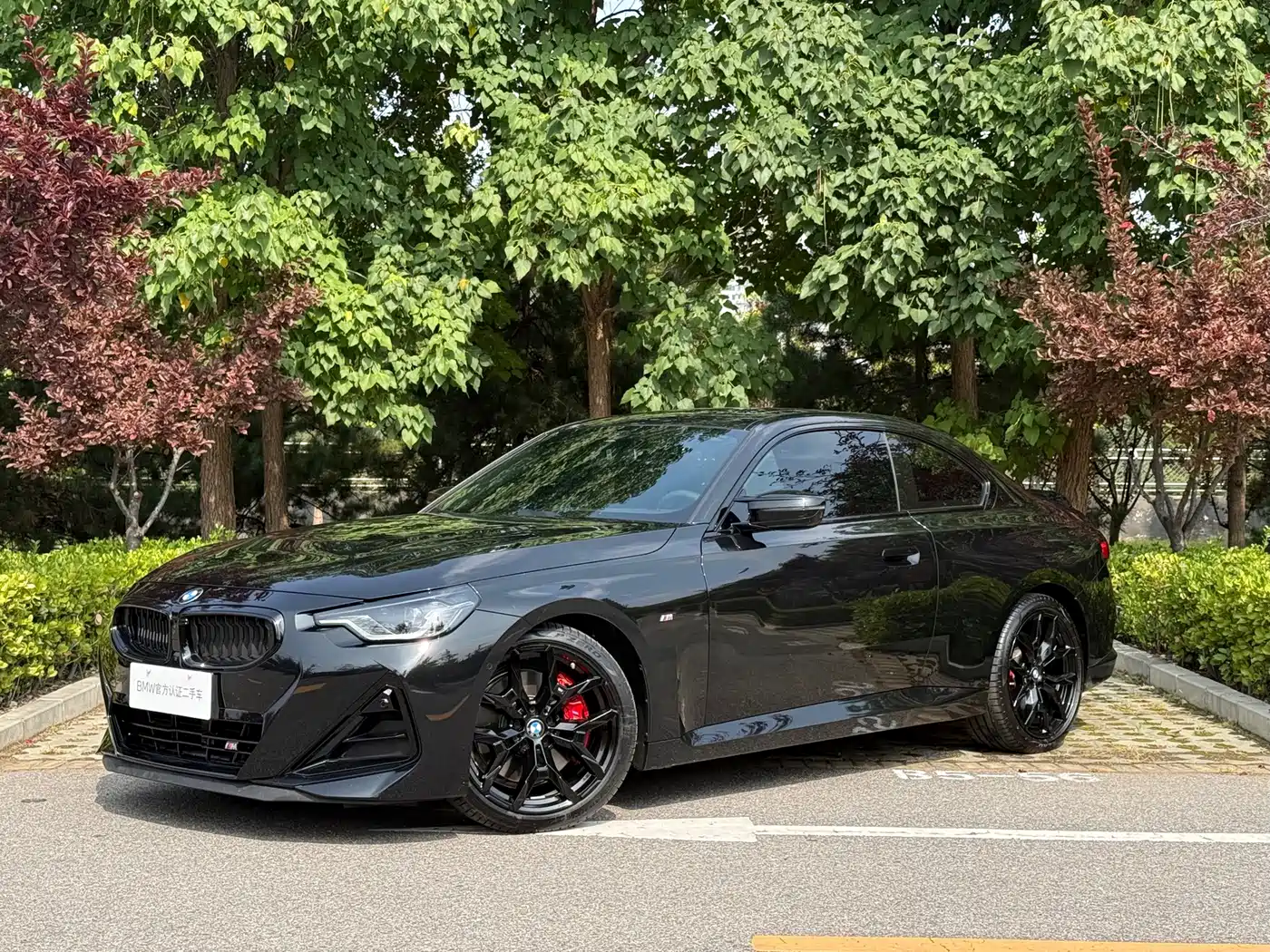
- The M240i is a two-door compact performance coupe built around a turbocharged inline-six engine.
- Rear-wheel drive and xDrive serve different markets, climates and driving environments.
- New cars simplify ownership history, while used cars require rigorous identity and condition checks.
- Export pricing is live and destination-specific because freight, taxes, currency and Incoterms all matter.
- Confirm RHD suitability, homologation, landed cost and local service support before ordering.
Why the BMW M240i matters for export markets
The BMW M240i occupies a useful middle ground in the compact performance coupe market: it combines BMW 2 Series proportions with a six-cylinder powertrain, all-wheel-drive availability and a more manageable alternative to many larger sports coupes. That positioning gives overseas dealers a premium performance model for buyers who want driver appeal and brand prestige without moving to a full-size sports car. Its strongest fit is where style and performance matter, but the car must still work on ordinary roads and in dense urban markets. It remains a coupe, however, not a family utility vehicle.
BMW M240i export demand is necessarily fragmented by local taste, taxation and driving conditions. The two-door format generally appeals to buyers who value styling and performance over maximum luggage space or easy rear-seat access. In markets with stringent emissions, safety or luxury-car taxes, however, a smaller-engined model may be easier to justify, so dealers should treat the M240i as a premium niche model rather than assume that general interest in performance cars creates volume for this body shape. Validate the proposition with local registrations, tax bands and comparable inventory before committing to a wholesale programme.
From an importer’s perspective, the M240i can meet buyers who understand premium badges but do not need a large-capacity performance flagship. A more basic 2 Series may be more economical, while an M2 or a higher-output BMW may suit a more track-focused customer. The M240i occupies the middle: its inline-six character, compact footprint and available xDrive system can make it credible as a dealer product, provided fuel costs, insurance bands, workshop capability and resale expectations all support the proposition. The buyer should also consider whether local driving patterns reward rear-wheel drive or require all-wheel drive.
- Two-door 2 Series proportions with a premium performance focus.
- Inline-six character supports both enthusiast and xDrive buyers.
- Validate coupe demand against local tax, insurance and resale conditions.
Model range, trims and powertrain variants: how the lineup is structured and how to choose
The core M240i structure is relatively simple. BMW positions the model as a two-door 2 Series coupe with a turbocharged 3.0-litre inline-six petrol engine and 48-volt mild-hybrid assistance. The familiar eight-speed Steptronic automatic sends power to the rear wheels in the standard M240i, while M240i xDrive adds an all-wheel-drive system. It is a combustion-powered performance car, not a plug-in hybrid or battery-electric model, and therefore has no traction-battery range or charging specification to assess. Outputs and equipment can change by model year and homologation market, so the live listing and build sheet should control.
Rear-wheel drive versus xDrive is the central powertrain choice for an export buyer. The rear-drive M240i usually makes the most sense for enthusiasts and drivers who value a clear rear-drive layout, predictable handling and the established feel of a rear-driven BMW coupe. The xDrive variant adds traction where rain, snow, gravel or poor road surfaces are common, but brings additional system weight, complexity and cost. Because rates, taxes and equipment differ by country, compare the complete versions rather than selecting on drivetrain alone. Test both against local usage before final approval.
BMW M240i specs should be read with model-year and destination-market context. Some M240i versions received changes in output, chassis equipment, software, cooling or exterior detailing during the production run, and Chinese-market cars may not match the equipment list of a European-badged example. A listing marked “European Version” describes its stated origin or specification; it does not automatically prove that the vehicle is approved for your destination. Ask for the VIN, build sheet, engine output, emissions equipment and complete option list before treating any version as equivalent for homologation purposes abroad.
- M240i: rear-wheel-drive turbocharged inline-six coupe.
- M240i xDrive: adds all-wheel drive for variable-surface markets.
- 48-volt assistance supports petrol operation; it is not a plug-in drivetrain.
- Confirm year-specific output, options and emissions equipment.
New vs used BMW M240i: how export inventory is structured and how buyers choose
Export BMW M240i inventory can be structured as factory-new cars, demonstrator vehicles, ex-fleet cars and previously registered used examples, although the exact mix changes over time. A new vehicle generally offers the cleanest ownership history and the least uncertainty about wear, but its price can reflect more depreciation once it enters the market. A used example may reduce acquisition cost and offer immediate specification availability, yet it transfers maintenance history, residual risk and possible warranty limitations with it. Always confirm the category in the unit record rather than inferring it from age.
When evaluating a used BMW M240i, prioritize identity and condition over cosmetic appeal. Request the VIN, production or build plate, title documents, service records, odometer evidence and a recent independent inspection. Check for accident repairs, chassis damage, suspension wear, engine oil leaks, charging or electrical faults, and evidence that the infotainment and driver-assistance systems work correctly. Older model-year entries carrying an M240i badge deserve extra scrutiny because the displayed year, generation and trim wording may not describe the car’s original specification. Match every detail to the physical vehicle before contracting.
The new-versus-used decision should follow the buyer’s risk tolerance and commercial plan. Dealers building a launch programme may prefer a new car for warranty administration, consistent presentation and simpler buyer financing, while a specialist importer may target a carefully inspected used car to reduce depreciation. Used BMW M240i wholesale candidates can be attractive when the model is known locally, but unexplained service gaps or an unclear import history can erase the apparent saving. Compare expected holding cost, repair allowance and certification work—not merely the advertised purchase price for your market.
- New vehicles simplify history, warranty handling and buyer presentation.
- Used vehicles require VIN, title, service and condition verification.
- Older model-year labels deserve reconciliation with the physical car.
- Compare total ownership cost after inspection and compliance work.
How export pricing works: the factors behind a live listing price, and how to read one
BMW M240i export pricing starts with the vehicle’s source-market value and then adds the cost of carrying it to the buyer. Year, M240i or xDrive trim, factory options, mileage, condition and documentation affect the base quote. Currency movements, payment terms, freight charges, marine insurance, port handling, inland transport, taxes, duties and the selected Incoterm then change the landed calculation. Because all of these variables can move, treat any price as a live transaction rather than a permanent model-level figure. The same trim can therefore produce different economics by destination alone.
Read a live listing as a quotation with missing commercial context, not as a guaranteed delivered price. Confirm whether the displayed figure covers the vehicle only, documentation, export handling, inland movement or freight to a named port. Also establish the currency, validity period, deposit requirement, payment schedule and whether the seller is quoting ex works, FOB, CIF or another Incoterm. Open the current ChinaCarDirect M240i inventory for the binding unit details, then request a written quotation that states every included and excluded charge before reserving any funds or signing any order.
For an importer, the useful comparison is total landed cost and expected risk, not the smallest visible asking figure. Build a worksheet that separates vehicle price, transport, insurance, customs value, duty, tax, port charges, inland delivery, inspection and compliance work. Check whether homologation or steering conversion is required and who bears that cost. If the vehicle is rare or the buyer plans to keep it for several years, factor in parts availability and workshop support; a nominally cheaper unit can become expensive if it cannot be supported locally after arrival.
- Vehicle year, trim, options, mileage and condition set the base.
- Freight, insurance, tax, duty, FX and Incoterm change landed cost.
- Live unit quotes control current price, terms and availability.
- Request an itemized written quotation before paying.
MOQ, ordering and payment: single units vs consolidating a container
A BMW M240i purchase can often be structured around one vehicle, but the minimum order quantity is a supplier-level commercial term rather than a universal property of the model. Ask the seller to state the MOQ for the exact trim, specification and destination in writing. A single-unit order suits a dealer testing demand or a fleet buyer needing one demonstrator; it minimizes tied-up capital but may not secure the best unit allocation. A multi-unit order can improve commercial terms, yet it increases exposure if demand is slower than forecast assumed.
Consolidating a container means combining several vehicle purchases into one organised consignment, not necessarily putting complete cars inside a standard shipping container. Finished BMWs are commonly moved on vehicle carriers using roll-on/roll-off handling, while damaged vehicles or loose parts may travel differently. For BMW M240i wholesale orders, group shipment planning can reduce repeated handling and may improve freight negotiation, but it adds consolidation, storage, demurrage and discharge coordination. Compare those costs against the benefit of securing several specified units at once rather than buying opportunistically one car at a time.
Ordering mechanics should be divided into selection, reservation, verification, payment and release. After choosing a unit, record the VIN or SKU, agreed specification, price basis, Incoterm, delivery point and expected dates in the purchase contract. A deposit may reserve the vehicle, while the balance is normally linked to inspection, documentation or shipment milestones; the exact sequence must be agreed rather than assumed. Verify title and export documents before release, and use a payment route that provides receipts, traceability and a clear refund or dispute process for the buyer in writing.
- MOQ is set by the seller, trim and destination, not by the badge.
- Single-unit buying lowers inventory risk and capital exposure.
- Consolidated vehicle shipments need freight, storage and discharge planning.
- Define inspection, document and refund milestones in the contract.
Shipping, homologation and market compliance caveats: LHD/RHD and import rules by country
Steering configuration is the first destination-specific check. A left-hand-drive car cannot simply be assumed suitable for a right-hand-drive country, and a conversion adds cost, work and residual-value uncertainty. Ask for the VIN, steering position, manufacture and import history, plus photographs of the steering area and build plate. The phrase “European Version” in a listing is not proof of destination-market certification. Confirm that the car’s specification can be registered under your national rules and that any required modification is completed by a competent workshop before shipment or arrival as required.
Import rules can change the economics even when the vehicle itself is mechanically sound. Depending on the destination, authorities may require emissions compliance, safety equipment, VIN verification, customs documentation, customs-value calculation, duties, taxes, age restrictions and local type approval. Some markets also apply tests or modifications for vehicles arriving outside a manufacturer’s official distribution channel. Because rules differ by country and can change, obtain a written assessment from a local customs broker or vehicle-homologation specialist before paying the balance or booking freight. This protects both budget and compliance at launch.
Shipping should be planned around the fact that complete cars normally travel by RoRo vessel rather than standard-container stuffing. Compare port pairs, sailing schedules, transit time, discharge charges, inland haulage, marine insurance and the cost of delay. Weather, congestion, customs inspections and terminal handling can move the effective delivery date, so build contingency into launch plans. Inspect and photograph the M240i before loading, confirm lashing and export clearance, and define the responsible party for damage, missing documents or storage if the vessel rolls or the unit is held at destination.
- Verify LHD or RHD configuration from the VIN and photographs.
- European Version wording does not equal local type approval.
- Use a RoRo vessel plan for complete finished vehicles.
- Have a local broker check duties, taxes, emissions and registration.
Who should buy the M240i — and who should pick a different vehicle
The M240i suits buyers who want a compact BMW with strong straight-six character, a premium coupe image and the option of rear-wheel drive or xDrive. It is particularly relevant to performance-oriented dealers, specialist fleet programmes and individual company-car buyers who value driving dynamics over practicality. For an enthusiast, the balance of size, acceleration, rear-drive handling and daily usability can be compelling. For a fleet, however, the coupe body, limited luggage capacity, running costs and image requirements should be tested against employees’ actual travel needs before fleet approval is granted internally.
It is a poor match for buyers whose priorities are maximum cargo space, frequent family transport, very low operating costs or zero-emission compliance. The narrow rear seating and two-door access can make the M240i inconvenient for children, clients or equipment. Business users may also find insurance, fuel and service costs harder to justify than an economical saloon, compact SUV or electrified fleet car. Anyone in a market with restrictive internal-combustion policy should assess whether a future resale pathway is credible before importing a performance coupe with a long ownership horizon.
Choose a different BMW M240i specification when the operating environment drives the decision. Rear-wheel drive is generally the enthusiast-led choice, while xDrive is the more rational option for regions with wet winters, variable surfaces or a need for stronger launch traction. A buyer focused on lower purchase outlay may be better served by a base 2 Series or a carefully selected used M240i; a buyer focused on maximum performance should compare the M2. The decisive question is not which badge looks best, but which powertrain, body and ownership cost fit the buyer’s driving pattern and resale market.
- Best for performance-focused dealers, enthusiasts and selective fleets.
- Rear-wheel drive favours engagement; xDrive favours traction.
- Avoid if cargo, rear access, running cost or emissions are priorities.
- Choose an M2 for greater specialization or a practical car for utility.
Main rivals and how the M240i compares
The closest competition depends on whether the buyer wants a BMW, all-weather performance or a pure two-seat-style coupe. The BMW M2 is the most direct rival because it is a compact, high-performance BMW coupe with a driver-focused rear-wheel-drive tradition. The Audi S3 competes with the M240i’s premium compact performance positioning, commonly pairing a turbocharged four-cylinder with quattro all-wheel drive and a more practical body. The Toyota GR Supra is another credible alternative for buyers drawn to a turbocharged inline-six and rear-drive-focused sports character in the same broad premium niche segment.
Against the M2, the M240i is generally the more usable compact BMW for a buyer who wants a two-door coupe but values a six-cylinder engine and optional xDrive. The M2 is the specialist choice for a more focused performance identity, while availability and specification vary by market. Against the S3, the M240i offers inline-six character and a coupe profile, whereas the Audi may appeal to buyers wanting quattro traction, a four-cylinder engine and a more practical hatchback or saloon shape. Service access and local resale history should decide close cases.
The GR Supra provides a more sculptural, dedicated sports-car proposition and a strong inline-six character, but its boot, seating and equipment can be less accommodating for everyday duties. It is most relevant to buyers who prioritize styling and driving engagement over the M240i’s all-wheel-drive option and compact-coupe versatility. In practice, the M240i is the stronger all-rounder when road conditions vary, while the Supra and M2 better suit committed enthusiasts. Verify local parts support, insurance, tax treatment and homologation for whichever model enters your shortlist before you sign a purchase agreement.
- BMW M2: closest BMW specialist alternative.
- Audi S3: four-cylinder, quattro and more practical body options.
- Toyota GR Supra: rear-drive-oriented coupe with inline-six character.
Live BMW M240i export inventory
View all listings →Real units currently on ChinaCarDirect with per-unit asking prices and MOQ. Availability updates live from the catalogue.
How to buy a BMW M240i from China
-
1
Define the destination-market brief
Set the required steering configuration, drivetrain, budget, intended use and compliance market before selecting a vehicle. This prevents a visually attractive but commercially unsuitable M240i from entering the buying process.
-
2
Search the live M240i inventory
Review current ChinaCarDirect listings and compare the displayed specifications, year, trim and unit-level commercial terms. Use the live listing as the source for current price and availability.
-
3
Verify identity and specification
Request the VIN, build sheet, title documents, factory option list, emissions equipment and photographs. Reconcile every stated detail with the physical vehicle before committing funds.
-
4
Build the landed-cost comparison
Separate vehicle price, freight, insurance, port charges, duty, tax, inland transport, inspection and compliance work. Confirm whether the quotation is vehicle-only or based on a named Incoterm and delivery point.
-
5
Agree the order terms
Record the MOQ, deposit, balance milestone, validity period, inspection standard, refund process and cancellation terms in writing. The contract should identify the exact VIN or SKU being purchased.
-
6
Inspect before release
Arrange an independent pre-shipment inspection covering bodywork, chassis, engine, transmission, mileage, electronics and documentation. Resolve discrepancies before the final payment milestone.
-
7
Ship, clear and register
Book insured RoRo transport or another suitable method, then coordinate customs clearance, duties, taxes and destination registration. Use a local broker for market-specific homologation and import requirements.
M240i vs rivals
| BMW M2 | The M2 is BMW’s more specialist performance coupe and the closest direct alternative for rear-wheel-drive enthusiasts. The M240i is generally the more versatile compact option, combining its inline-six character with available xDrive and everyday usability. |
|---|---|
| Audi S3 | The S3 typically uses a turbocharged four-cylinder and quattro all-wheel drive, with hatchback or saloon body options depending on market. It is a practical choice for buyers prioritising traction and everyday flexibility, while the M240i delivers a six-cylinder engine and coupe profile. |
| Toyota GR Supra | The GR Supra is a rear-drive-focused sports coupe with a turbocharged inline-six and strong styling appeal. It is more focused for enthusiasts, whereas the M240i offers greater everyday versatility and the option of all-wheel drive. |
Frequently asked questions
How is BMW M240i export pricing determined?
A BMW M240i export price is built from source-market vehicle value plus year, trim, options, mileage, condition, currency movement, freight, insurance, duties, taxes and the chosen Incoterm. Because these inputs change, use the current ChinaCarDirect M240i listings for the unit price and request an itemized quote stating the delivery basis and exclusions.
What engine and powertrain does the BMW M240i use, and does it have electric range?
The M240i uses a turbocharged 3.0-litre inline-six petrol engine with 48-volt mild-hybrid assistance, paired with an eight-speed automatic. Output and equipment can differ by year and market; drivetrain choices include rear-wheel drive and xDrive all-wheel drive. It has no traction battery, electric driving range or plug-in charging function.
Should I buy a new or used BMW M240i?
A new M240i generally offers the cleanest history and simpler warranty administration, while a used example can reduce depreciation if it is properly documented and inspected. For a used BMW M240i, verify the VIN and build plate, title, mileage, service records, accident history and physical condition before relying on its advertised specification.
What is the MOQ for BMW M240i wholesale orders?
MOQ is agreed for a particular seller, trim, specification and destination rather than being a universal BMW M240i rule. Some sellers may quote a single unit, while wholesale programmes can impose batch quantities; check the live unit terms and obtain the binding MOQ in the written quotation before reserving vehicles.
How long does shipping take and what affects the cost?
Shipping time and cost depend on origin and destination ports, carrier sailing schedules, congestion, weather, insurance, RoRo handling, customs clearance and inland delivery. Complete cars generally travel by RoRo vessel, so ask for a route-based estimate with dates and a landed-cost breakdown rather than relying on a generic transit time.
Can spare parts be sourced for an exported BMW M240i?
Spare parts can be ordered by VIN or build date, but the buyer should confirm engine, chassis, electronics and regional compatibility before committing. Genuine BMW parts, quality aftermarket alternatives and locally sourced service items have different price and lead-time trade-offs, so include parts planning in the ownership assessment.
Is a right-hand-drive BMW M240i available for export?
Right-hand-drive availability varies by source vehicle and destination. A listing described as European Version does not automatically establish RHD suitability or local approval, so verify the steering configuration and VIN, and obtain advice on any required conversion or modification before shipment.
How do I buy a BMW M240i from China?
To buy a BMW M240i from China, review the live listings, select a unit, request the VIN and build sheet with an itemized quotation, agree the MOQ and payment milestones, complete inspection and document checks, then arrange insured shipping and local customs clearance. A written RFQ should specify the vehicle, Incoterm, delivery point and responsibilities.
Ready to source the BMW M240i?
Request a unit-specific BMW M240i quotation with VIN, specification, landed-cost basis, Incoterm and shipping options.
Request a quote