
BMW X4 M Export Buying Guide for Overseas Buyers
Buy a BMW X4 M from China with confidence: compare trims, pricing logic, MOQ, shipping, homologation and rivals before placing an export order.
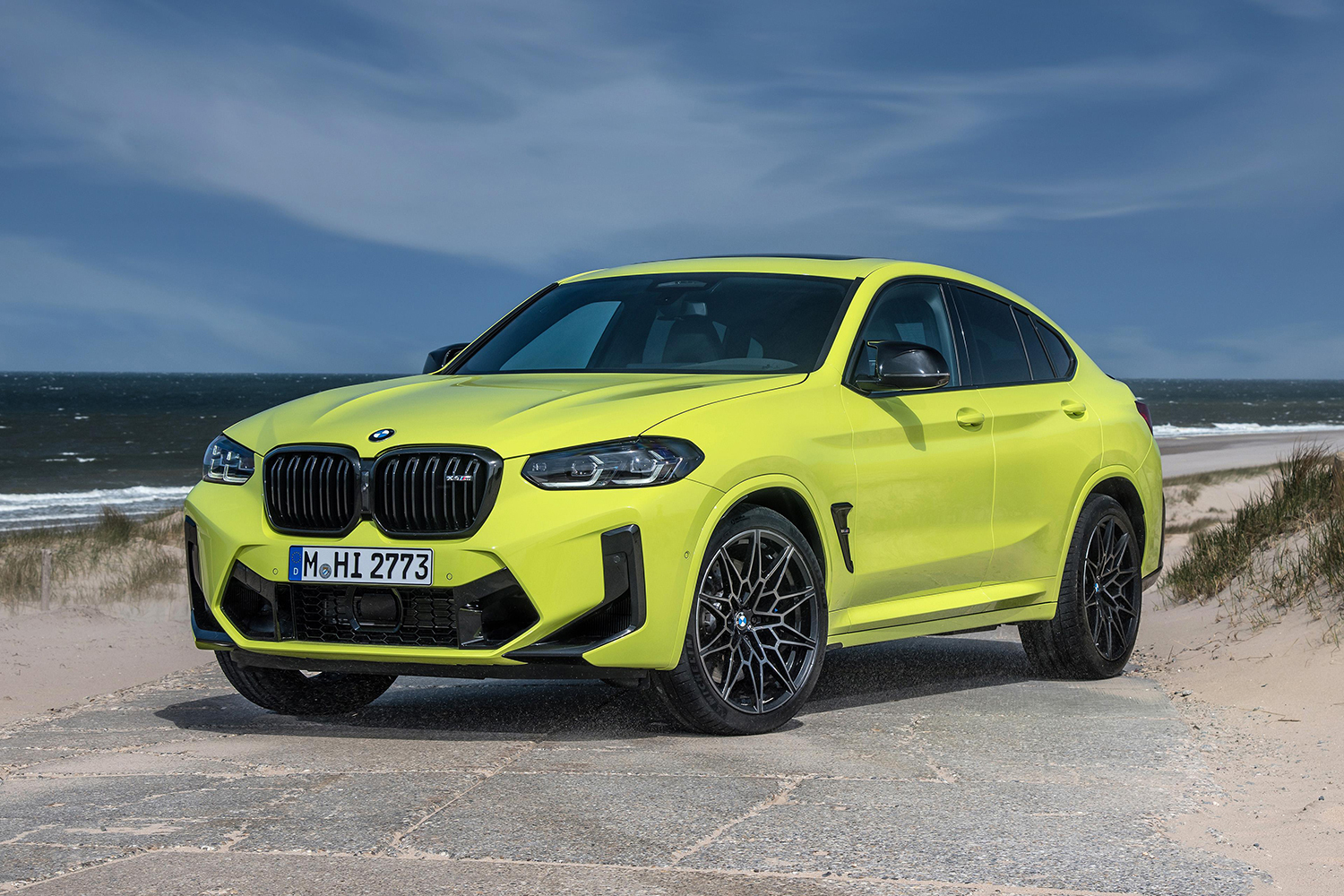
At a glance
- The X4 M combines coupe-SUV styling, four-door access and BMW M road-focused engineering.
- The lineup spans X4 M, Competition and M40i, each with a different performance and cost position.
- New inventory offers cleaner provenance, while used units demand a stricter history and condition review.
- Export pricing depends on specification, condition, Incoterm, freight, currency and destination charges.
- Steering configuration, homologation and import rules must be checked for the destination country.
Why the BMW X4 M matters for export markets
For export markets, the BMW X4 M occupies a useful middle ground between a practical compact luxury SUV and a performance-focused coupe SUV. Its raised body, four-door access and hatchback practicality suit overseas dealers serving buyers who want an M-bred SUV without moving to a larger, less road-focused model. The sloping roofline and M-specific mechanical tuning give it a clearer identity than a standard X4, helping importers position it as a premium performance SUV rather than merely an off-road-capable crossover. Its appeal is strongest where buyers value quick road performance, all-weather traction and a premium badge in one road-focused package.
That positioning explains its export relevance. A dealer can market the X4 M to performance-oriented company-car customers, affluent private buyers and customers replacing a lower-output BMW SUV without moving up to a full-size model. Its BMW M identity carries useful recognition in markets served by the brand, while the four-seat, coupe-SUV format can command attention in showroom conversations. Demand still depends on local fuel costs, taxation, import duties and the availability of credible servicing, so it is rarely a volume-only purchase. A clear customer profile is essential for realistic sales forecasts locally.
For importers, the model is most attractive when the vehicle’s specification, condition and documents can be matched precisely to the destination market. That means checking whether the car is left- or right-hand drive, whether the engine and emissions version suits local registration, and whether spare-parts support is realistic. The X4 M is not a low-complexity fleet product: its performance hardware, large brake system and specialised components raise the importance of inspection, maintenance history and after-sales planning. Correctly presented, it fills a premium niche that a conventional X4 cannot for local customers after delivery.
- Coupe-SUV body with four-door access
- M-specific road-performance positioning
- Premium buyers value the M identity
Model range, trims and powertrain variants: how the lineup is structured and how to choose
The searchable BMW X4 M range includes three important labels: X4 M, X4 M Competition and M40i. The standard X4 M is the core M derivative, combining the X4 body with BMW M engineering. The Competition is the more focused, higher-output version and is normally distinguished by additional chassis and exterior equipment. M40i occupies a different position: it delivers strong performance and turbocharged inline-six character without being the full performance flagship. Buyers should read the exact badge, not rely on “X4 M” as a catch-all. The distinction changes cost and driving character.
Across the generations commonly encountered in export channels, the X4 M uses a turbocharged 3.0-litre inline-six petrol engine, an eight-speed M automatic transmission and BMW’s xDrive all-wheel-drive system. The Competition is typically tuned for greater output and more aggressive chassis behavior, while the M40i uses a different calibration and less aggressive M hardware. Exact output, gearbox calibration, differential, exhaust and standard equipment can differ by market and model year, so the vehicle description and build sheet must be checked rather than inferred from the trim name alone. Treat the listing as a starting point, not final proof.
Choose according to use case rather than output alone. For an importer seeking the clearest performance identity, Competition is usually the priority; for a buyer wanting M-sourced powertrain with lower running costs and less aggressive ride characteristics, M40i may be more rational. The standard X4 M remains relevant when the buyer wants a full M package without Competition-specific equipment. Compare engine output, drivetrain calibration, suspension, brakes, exhaust, wheels, infotainment and options on the actual unit, then request the VIN, production date and equipment list. For fleet or corporate use, tax treatment and driver comfort may matter more than the last layer of acceleration.
- X4 M: core M derivative
- Competition: more focused specification
- M40i: distinct performance and cost balance
- Verify VIN, build sheet and market version
New vs used BMW X4 M: how export inventory is structured and how buyers choose
Chinese export supply can include factory-new vehicles, dealer-stock cars, parallel imports and used vehicles entering the market through different channels. New units generally offer the cleanest ownership history, current-model availability and easier warranty coordination, but they may carry showroom mileage or sit for a period before shipment. Used cars can offer a more accessible route to the M badge, yet their value depends heavily on mileage, service history, accident repair, prior market, modification status and whether documentation is complete. The label “used” alone therefore says very little about commercial quality in that sales channel.
For a dealer or wholesale buyer, new inventory is usually easier to market consistently because the buyer can compare specification and condition without reconstructing the vehicle’s past. It also reduces uncertainty around replaced wear parts. A used BMW X4 M can still make sense for a buyer who values the model more than factory-new condition, but it should be bought as an inspected individual asset rather than a generic used-SUV package. Request maintenance invoices, diagnostic records, title and registration documents, and evidence that the odometer and manufacturing history reconcile before any deposit is paid and service history.
The safest comparison is total cost of ownership, not just acquisition value. For a new car, include delivery preparation, import charges, early depreciation, finance and expected service costs. For a used car, add likely reconditioning, tyres, brakes, fluids and warranty uncertainty, then subtract only verifiable remaining factory coverage. Because exact condition changes value sharply, live unit descriptions, photographs and inspection reports should drive the decision. The live X4 M inventory should be used for current availability, with a specific vehicle selected before committing funds. Exact prices and MOQ are confirmed on that unit.
- New: cleaner history and simpler coordination
- Used: condition and history require verification
- Compare ownership costs, not headline value
How export pricing works: the factors behind a live listing price, and how to read one
A BMW X4 M export price is not one fixed national-market number. It moves with model year, trim, Competition or M40i specification, engine output, options, paint, wheel and interior specification, mileage, condition, ownership history, and the seller’s commercial terms. Currency movements and the cost of freight, insurance, port handling, export documentation and destination charges also affect what a buyer ultimately pays. A listing price should therefore be read as the seller’s asking position for that unit, not as the guaranteed landed cost. Freight and tax can move independently of the vehicle at contracting.
First identify the Incoterm and what the quoted figure includes. An EXW-style quote may place more responsibility on the buyer, while FOB or CIF arrangements cover different portions of transport and insurance; a delivered quotation may include more destination charges but still exclude local import duties or taxes. Ask whether the displayed price includes export clearance, inland transport, vehicle protection, port fees and documentation. On ChinaCarDirect, compare equivalent units and ask for a written quotation that separates vehicle price from logistics and any other payable charges at the stated destination.
The second check is comparable specification. A Competition unit with a full options list should not be benchmarked against a base M40i merely because both appear in the same search. Review the VIN-linked photos, production year, trim, mileage, condition, included equipment and seller location, then request the quote on the exact SKU. Exchange rates, freight capacity and port conditions can change between enquiry and contract, so any approval should carry a validity period. Current per-unit prices and terms are shown in the live listings and should be reconfirmed before payment or contract.
- Compare like trim, year and equipment
- Confirm the Incoterm and included charges
- Treat the listing price as an asking position
- Reconfirm the unit-specific quote before payment
MOQ, ordering and payment: single units vs consolidating a container
A BMW X4 M purchase can be planned around an individual unit or a consolidated shipment. Whether a particular vehicle can be ordered alone is shown through the MOQ attached to its live listing, and that requirement should be checked before reserving it. A one-unit order suits a dealer testing demand, a customer-order importer or an executive fleet purchase. It reduces inventory exposure but normally gives less freight leverage than several units moving together, so the buying and logistics strategy should be decided separately. A binding quotation should follow in writing.
Container consolidation can improve freight planning and may broaden the mix available to a buyer, but it adds coordination. Vehicles must be grouped within payload, axle and deck-height limits, while port routing, release dates and delivery schedules remain compatible. Mixed trims or model years can share a vessel only if every unit has a clear buyer, VIN, invoice and destination document. Do not let attractive grouping obscure mismatched specifications, different payment terms or one delayed vehicle holding up the balance of the shipment. Owners should also agree on who bears delay, storage and demurrage risk.
Ordering normally begins with a unit inquiry or RFQ, followed by specification confirmation, a written commercial quote and agreed payment milestones. Before paying, match the seller’s legal entity, the VIN or SKU, the stated condition, the export documents and the delivery term. The balance should not be released merely because a deposit receipt exists; it should follow the agreed documentary or inspection milestone. Payment methods, fees, refund conditions and title-transfer mechanics vary by transaction, so they must be agreed in writing rather than inferred from platform conventions for that specific order.
- Read the MOQ on each live unit
- Consolidate only compatible shipments
- Tie final payment to agreed milestones
Shipping, homologation and market compliance caveats: LHD/RHD and import rules by country
The first export check is steering configuration. Vehicles prepared for the Chinese market are commonly left-hand drive, but the exact source market must be verified rather than assumed. Right-hand-drive availability depends on the unit’s origin and specification. Converting steering from left to right is not a simple swap: it can involve the column, pedals, electrical systems, instruments and safety components, and it may affect homologation, warranty and parts support. Prefer a factory right-hand-drive vehicle when the destination requires one. Converting an unsuitable car can also complicate local registration and insurance before shipment.
Import compliance is country-specific. Buyers should verify VIN and title documents, customs classification, emissions standards, safety requirements, local inspection, registration, insurance, quotas or restrictions, and the treatment of taxes and duties. A vehicle can be mechanically attractive yet require individual approval, modifications or a certificate of conformity before it can enter service. Confirm requirements with the destination’s customs authority or a licensed local importer before paying. Do not assume a car sold from China automatically satisfies EU, UK, Gulf, African or Asia-Pacific registration rules for the specific model year and destination under local rules.
Shipping method affects both cost and risk. Enclosed vehicle carriers are common, while roll-on/roll-off or container options may suit certain routes and unit sizes; the actual dimensions and port requirements must be checked before booking. Confirm whether the vehicle is secured, sealed against weather, inspected at loading and covered by cargo insurance. On arrival, allow time for customs clearance, port charges, inspection, repairs or registration. A total landed-cost worksheet should separately show freight, insurance, handling, storage, duties, taxes, compliance work and inland delivery for each vehicle, not just the shipment, before vehicle release.
- Verify the factory steering configuration
- Check destination rules before payment
- Inspect loading and secure the transport
- Model clearance, duties and inland delivery separately
Who should buy the X4 M — and who should pick a different vehicle
The X4 M suits buyers and dealers that prioritize road performance, a distinctive BMW M identity and all-weather traction over minimal purchase cost or maximum cabin space. It is a credible choice for premium importers, performance-focused company-car programs and affluent customers who want an SUV-shaped alternative to a sport sedan. The format also appeals to buyers who need four doors and a hatchback but prefer sharper dynamics than a conventional luxury SUV. Strong local servicing and realistic residual-value assumptions remain important to protect long-term ownership economics and dealer profitability after all operating costs.
It is a weaker match for budget-driven fleet procurement, large-family transport or buyers whose priorities are fuel economy, low running costs and straightforward homologation. The sloping roof and rear-quarter design reduce headroom and cargo flexibility compared with a boxier SUV, while performance tyres, brakes and specialized components can increase ownership costs. An EV-only or electrified mandate may also make an internal-combustion performance SUV commercially awkward. In those cases, a smaller premium crossover, a plug-in hybrid or a combustion model with lower running costs may serve the buyer better in practice under local rules.
Before committing, run the vehicle against the actual use case. For a dealer, compare expected customer profiles, service capability, parts stocking and the length of time stock remains unsold. For a fleet, examine taxation, insurance, residual values, driver training and the ratio of drivers who genuinely value the M character. For an individual, confirm garage access, local emissions rules, road coverage and the practical cost of tyres and scheduled performance maintenance. The right vehicle is the one whose benefits remain valuable after logistics and ownership costs are included in full in every scenario.
- Strong for premium, performance-led buyers
- Less suitable for cost-first fleet use
- Check space, parts and service burden
Main rivals and how the X4 M compares
The Audi SQ5 is one of the closest conceptual rivals: it combines a premium compact SUV body with a performance powertrain, four-door practicality and all-weather traction. Its broader, more upright packaging may appeal to families and buyers who want a conventional SUV profile, while the X4 M offers a more coupe-like silhouette and a sharper BMW M presentation. Neither model should be selected from badge alone; compare the exact engine, chassis, brakes, load rating, tax treatment and local after-sales support for the proposed market version before placing a binding order and warranty terms.
The Mercedes-AMG GLC 43 Coupe is another direct alternative for buyers attracted to sloping-roof performance SUVs. Its brand appeal, dealer network and high-performance character make it a natural benchmark, but cabin packaging, boot practicality, option pricing and ownership costs need direct comparison with the X4 M. A Porsche Macan GTS sits closer to the driver-focused end of the same class and may better satisfy buyers focused on steering response and compact dimensions, although availability, equipment and relative practicality vary by market. Ask for a like-for-like written comparison before finally deciding on delivered pricing.
For the X4 M, the case rests on the combination of BMW M engineering, coupe-SUV design, xDrive and the familiarity of the M badge. It is not automatically the cheapest, most practical or most comfortable option. The SQ5 may serve a broader premium-SUV audience, the AMG GLC 43 Coupe offers a comparable performance brief, and the Macan GTS may be more focused for certain drivers. Dealers should test the proposition with real customers and compare delivered, compliant versions rather than relying on generic trim names or showroom impressions alone or assumptions in each market.
- Audi SQ5: more upright premium-SUV alternative
- Mercedes-AMG GLC 43 Coupe: direct performance-coupe rival
- Porsche Macan GTS: driver-focused premium alternative
Live BMW X4 M export inventory
View all listings →Real units currently on ChinaCarDirect with per-unit asking prices and MOQ. Availability updates live from the catalogue.

How to buy a BMW X4 M from China
-
1
Define the destination and use case
Identify the destination country, required steering configuration, buyer type, budget framework and preferred trim before searching.
-
2
Search the live X4 M inventory
Compare the available X4 M, Competition and M40i units by specification, condition, equipment and current per-unit terms.
-
3
Request unit-level evidence
Ask for the VIN, production details, photographs, equipment list, service history, ownership documents and an export-condition report.
-
4
Run the compliance review
Check local customs, emissions, safety, inspection, tax and registration requirements with the destination authority or a licensed importer.
-
5
Request a written export quotation
Specify the exact SKU, destination and preferred Incoterm, with vehicle price, freight, insurance, documentation and destination charges separated.
-
6
Confirm payment and shipping instructions
Record the agreed deposit and balance milestones, title-transfer process, cancellation terms, loading inspection and insurance arrangements in writing.
-
7
Complete pre-shipment and import checks
Verify the vehicle against the contract, approve transport arrangements, track customs clearance and complete destination registration before release to customers.
X4 M vs rivals
| Audi SQ5 | The SQ5 is a close premium-performance-SUV rival with more upright packaging, making it relevant to buyers prioritizing cabin and cargo practicality. The X4 M offers a more coupe-like profile and a distinct BMW M identity. |
|---|---|
| Mercedes-AMG GLC 43 Coupe | The GLC 43 Coupe competes directly with the X4 M for buyers seeking a sloping-roof performance SUV and established luxury-brand appeal. A decision should compare equipment, tax treatment, servicing and delivered ownership costs. |
| Porsche Macan GTS | The Macan GTS is a driver-focused premium alternative for customers prioritizing compact dimensions and steering response. It may appeal to enthusiasts more than buyers who need the X4 M’s SUV-shaped utility and broader M-badged context. |
Frequently asked questions
Where can I see the current BMW X4 M export price?
The current per-unit price is shown in ChinaCarDirect’s live X4 M inventory and should be checked for the exact vehicle. A seller may also provide a written quotation based on the chosen SKU, Incoterm and destination; that quote is the appropriate basis for approval.
What engine and powertrain does the BMW X4 M use?
The X4 M family uses a turbocharged 3.0-litre inline-six petrol engine, an eight-speed automatic and BMW xDrive all-wheel drive. Output, calibration, differential and equipment vary by trim and generation, so buyers should check the live listing for the exact vehicle. Battery-electric range is not applicable to this combustion-powered model.
Is a used BMW X4 M better value than a new one?
A used unit may cost less initially, but its true value depends on mileage, service history, accident repair, modifications and warranty status. A new vehicle generally offers cleaner provenance and easier coordination, so buyers should compare the same vehicle’s total ownership cost rather than relying on a broad new-versus-used label.
What is the MOQ for a BMW X4 M order?
The applicable minimum order requirement is shown against each live unit and should be confirmed before reservation. Some purchases may proceed individually, while container consolidation depends on the seller’s terms, vehicle availability and compatible delivery schedules.
What determines shipping time and cost from China?
Shipping time and cost depend on the vehicle’s dimensions, selected carrier or container option, origin and destination ports, vessel availability, route conditions, fuel surcharges, insurance and handling requirements. Customs clearance, inspections and port congestion can also extend the overall delivery timeline.
Are spare parts available for the BMW X4 M?
Parts support varies by model year, market and trim, so the importer should verify regional BMW or M-parts coverage before purchasing. Using the VIN to confirm wear items, brake components, tyres, filters and software requirements helps prevent incorrect orders. Service capability and parts lead times should also be included in the ownership plan.
Is right-hand-drive BMW X4 M availability possible?
Right-hand-drive availability depends on the source market and the exact vehicle offered, so it must be confirmed in the live listing rather than assumed. Converting a left-hand-drive car can affect compliance, warranty and parts support; a factory right-hand-drive example is generally the cleaner choice.
How do I order a BMW X4 M from China?
Start with the live X4 M listings, select a suitable unit and submit an RFQ with the destination and preferred Incoterm. Confirm the specification, documents, compliance pathway, written price and payment milestones before paying. The final process should include pre-shipment verification, insured transport, customs clearance and destination registration.
Ready to source the BMW X4 M?
Send an RFQ with your target BMW X4 M configuration, destination and Incoterm to request a unit-specific export quotation.
Request a quote