
BMW X5 Export Buying Guide for Overseas Buyers
Plan a BMW X5 import from China with clear guidance on trims, new and used vehicles, export pricing, MOQ, shipping, compliance and competing models.
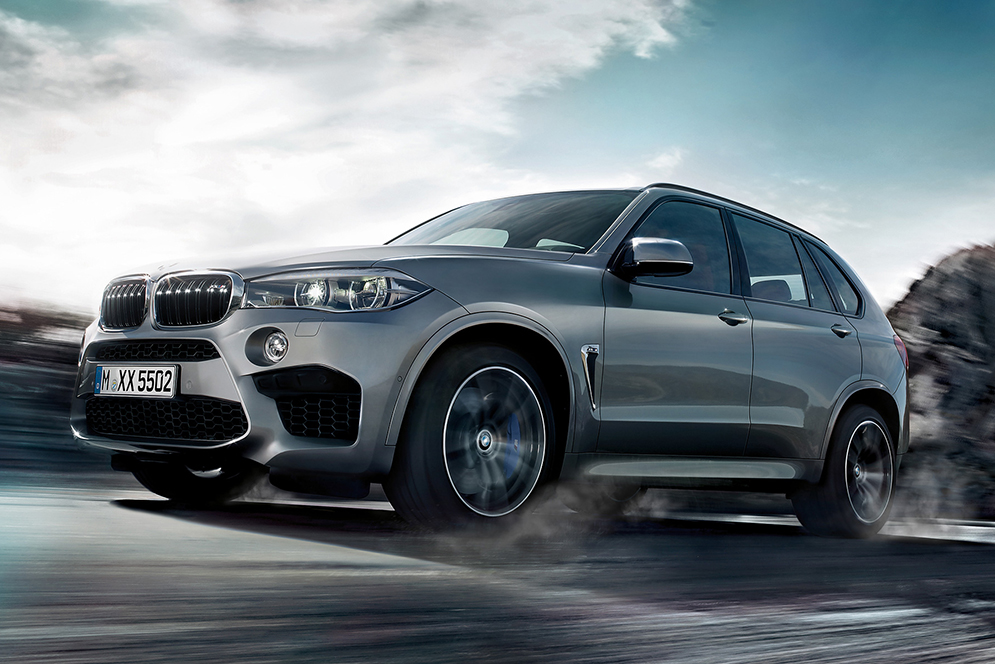
At a glance
- The X5 is BMW's midsize luxury SUV, positioned for overseas dealers, executive fleets and premium family transport.
- xDrive all-wheel drive, automatic transmissions and petrol engines are central, while outputs vary by badge, model year and market.
- The sourcing choice includes new, imported and used vehicles, with standard-wheelbase and extended-wheelbase Li versions represented.
- xDrive28i, xDrive30i, xDrive35i, xDrive40i and X5 M should be compared by VIN, specification and condition rather than badge alone.
- Live ChinaCarDirect listings provide current per-unit quotes, seller terms and availability, while landed costs require separate confirmation.
Why the BMW X5 matters for export markets
The BMW X5 sits in the premium midsize SUV segment, combining a high-rising five-door body with a luxury-car cabin, all-wheel drive and a road-focused driving character. For overseas dealers, it suits executive transport, company-car programmes, premium fleets and families that want both status and practical carrying space. Its architecture can support five-seat use or seven-seat configurations, depending on the exact body and market version, giving importers a flexible platform without moving into a full-size luxury SUV. That balance explains why the model remains commercially relevant across very different dealer and fleet requirements.
Export appeal is not based on one specification. ChinaCarDirect BMW X5 listings cover standard-wheelbase cars, extended-wheelbase Li variants, entry and upper xDrive grades, and the X5 M. M Sport and similar names mainly signal styling and equipment combinations, while X5 M is the high-performance branch. This breadth lets a buyer build a ladder of vehicles for different budgets and customer needs, but it also makes careful VIN-level comparison essential before assuming two similarly named X5s are equivalent. A badge is a starting point, not a complete specification or evidence of condition.
Demand also depends on the destination's luxury-SUV customer base, fuel policy, road conditions and after-sales network. Petrol X5 versions are straightforward to compare for fleet use, but fuel costs, insurance, tax bands and parts support can alter the business case. The strongest export candidates are therefore not automatically the newest or most expensive cars. They are the units whose specification, documentation and service requirements can be supported credibly in the importing market. That is particularly important for parallel imports, where the vehicle's origin and prior market use may not match the buyer's destination.
- Premium midsize SUV positioning.
- Flexible five- or seven-seat use.
- xDrive, Li and M Sport breadth.
Model range, trims and powertrain variants: how the lineup is structured and how to choose
The range shown in the export market starts with xDrive28i, xDrive30i, xDrive35i and xDrive40i designations, then extends to 30Li and 40Li extended-wheelbase versions and the X5 M. Equipment grades such as Premium, Exclusive, Elegance, Leading and M Sport describe trim presentation and content. Because model-year updates and market-specific tuning can change engines, transmissions, suspension, infotainment and driver assistance, buyers should match the exact VIN to the seller’s build sheet rather than ordering from the badge alone. A listing photograph should support, not replace, that document check for every funded purchase.
The 28i, 30i, 35i and 40i labels are best treated as powertrain and market families, not a simple ladder of equipment or performance. The export examples include 3.0-litre petrol and 3.0-litre turbo petrol descriptions, but displacement and output need confirmation for each year and specification. Buyers should ask for engine designation, output, fuel type, gearbox, mileage and emissions details in writing, especially if they intend to match the unit against another vehicle in their fleet. Do not infer emissions compliance from displacement alone or from the model badge on the listing.
Engine choice should be matched to duty cycle: the 30i and 40i address different power and cost expectations, the 35i sits higher in the performance hierarchy, and the 28i may suit buyers prioritising efficiency over outright output. The Li versions add body length and commonly serve family or executive buyers who value rear-seat room and a larger cargo area. The X5 M is the separate performance choice for customers who accept higher running costs and firmer dynamics in exchange for its engine and chassis focus. Verify every engine by VIN.
- Distinct 28i, 30i, 35i and 40i families.
- 30Li and 40Li are extended-wheelbase.
- X5 M is a performance derivative.
New vs used BMW X5: how export inventory is structured and how buyers choose
New inventory is not a single condition category. A vehicle sold as new offers newer model-year hardware, newer interfaces and a simpler ownership history, although its actual condition and warranty must still be verified on every listing before purchase. An imported new vehicle may be built for another market and already carry that market’s equipment, tax treatment or software. A used vehicle may arrive through a normal import or parallel-import channel, so provenance can be more complex. Check the papers before valuing the discount against the vehicle’s stated history in detail.
For used X5s, the discount against a new example must be weighed against condition, mileage, service history, tyres, paintwork and the age of infotainment, safety systems and vehicle software. A low purchase price can be offset by repairs, missing equipment, software configuration work or the need to source parts in a different specification. U.S.-specification and parallel-import labels make the VIN and build sheet especially valuable; buyers should verify that the engine, gearbox, steering side and options match the listing description. Never equate an import label with a complete service record.
A dealer’s choice depends on its sales model. A new-car specialist may prefer newer xDrive30i or xDrive40i cars for documented warranty and model-year consistency, while a used-car reseller can turn service history and known specification into a commercial advantage. Fleet buyers should total residual-value assumptions, downtime and likely fuel or maintenance costs. In every channel, the prudent decision links price to a verified vehicle condition report, an evidence-based service history and a realistic import plan. That avoids buying a seemingly cheap car with an expensive compliance problem or unsupported service promise.
- New units still require condition verification.
- Condition evidence drives used value.
- Origin affects configuration and parts.
How export pricing works: the factors behind a live listing price, and how to read one
An export listing price is a starting commercial quote, not automatically a landed cost. The model year, xDrive grade, extended-wheelbase body, engine, M Sport or other equipment package, mileage and condition all affect the value of a particular unit. Origin and market specification can matter too, especially when an imported or parallel-import vehicle carries history that a local buyer must assess. A used X5 with incomplete records should not be valued on its model year alone. The same badge can therefore produce materially different quotes for otherwise similar vehicles across markets.
Currency movements, domestic Chinese pricing, seller margin, inspection, storage and transport can also influence the displayed figure. Freight may be priced separately or included according to the agreed Incoterm. Under an EXW-style arrangement, the buyer assumes more of the transaction and transport chain; under a delivered or CIF-style arrangement, more cost and risk may sit with the seller until a defined point. Buyers should confirm exactly what is included rather than comparing headline figures alone. Ask for the named port or place, the transport mode and the point at which risk transfers.
To read a live listing, check the year and trim line, engine description, mileage, condition wording, images, seller location, and whether the quote is vehicle-only. Then request a written pro forma invoice showing vehicle price, inland transport, export handling, freight basis, insurance, the applicable Incoterm and any known exclusions. Add destination taxes, duties, registration, port charges, compliance work and inland delivery to build a landed-cost comparison. ChinaCarDirect’s live X5 listings are the source for the current per-unit quote and availability. Confirm the quoted figure again before sending any payment instructions.
- Compare equivalent vehicles.
- Confirm Incoterm and exclusions.
- Calculate landed cost.
MOQ, ordering and payment: single units vs consolidating a container
MOQ is a seller term rather than a universal property of the X5, so it must be checked for each listing. A retail importer or dealer testing demand may be able to order a single unit where the seller accepts it; a factory-style channel may instead require a batch. The platform’s catalogue presentation should not be interpreted as a blanket promise about every seller’s order policy. Ask for the minimum order quantity, whether mixed trims or colours are allowed, and whether the quoted unit remains available after inspection and document checks.
Consolidating several X5s into one container can improve freight efficiency, but it is not simply a larger version of a single-car purchase. Capacity depends on the actual dimensions and packaging, while each vehicle may need different trim, colour, documentation or destination treatment. A shared shipment also creates allocation and payment risks if only some units pass inspection. Dealers should agree the allocation method, acceptable substitutions and who bears the cost of a rejected or damaged vehicle before committing the balance. Sequential loading and robust securing are especially important for high-value SUVs.
The ordering sequence should be controlled: submit an RFQ, obtain a written specification and pro forma invoice, verify payment instructions and the seller entity, complete the agreed payment stages, and then release cargo against verified transport documents. For a multi-unit order, use a unit schedule listing VIN, trim, colour and agreed price so that substitutions cannot occur silently. ChinaCarDirect’s contact channel can be used to request this pack and to confirm whether the seller supports one unit or a consolidated consignment. Do not release funds merely because a vehicle photograph looks correct.
- Confirm each seller’s MOQ.
- Use a VIN-level unit schedule.
- Link final payment to documents.
Shipping, homologation and market compliance caveats: LHD/RHD and import rules by country
Shipping begins with destination rules, not the vehicle itself. The importer must confirm whether a China-market X5 is permitted, what emissions, safety, VIN, noise and type-approval evidence is required, and whether local standards differ from the build specification. Petrol vehicles avoid battery-transport rules, but they still face customs valuation, duty, tax and used-vehicle restrictions. A local homologation specialist or customs broker should review the exact model before the vehicle is loaded. Country rules can also restrict age, emissions class or left-hand-drive imports. Confirm the rules before making a non-refundable commitment.
Steering configuration is a frequent export mistake. Vehicles assembled for China are commonly left-hand drive, while some X5 units originate from right-hand-drive markets; neither condition should be assumed from a listing title. For LHD/RHD requirements, ask for a clear steering-side photograph, the VIN and the original build specification. Changing a steering system or wiring can be costly and may affect approval, so source the correct market version where possible rather than treating conversion as the default. The same principle applies to ADAS and lighting equipment that local rules may also examine.
Documents should agree from end to end: VIN and model plate, engine number, bill of sale, export declaration, import declaration, customs value, insurance and any inspection certificate. Freight method also matters: roll-on/roll-off or container transport suits complete vehicles, while flat-rack handling can suit units that cannot roll safely. Secure the X5 correctly, protect vulnerable body and electronic components, and insure the shipment against agreed risks. Local registration should be treated as a separate, uncertain step until authorities accept the vehicle. Do not treat shipping documents as automatic market approval for the vehicle.
- Verify steering side early.
- Check approval before loading.
- Reconcile identity documents.
Who should buy the X5 — and who should pick a different vehicle
The X5 is a strong choice for buyers who need a premium badge, a usable passenger cabin, all-wheel drive and the flexibility of five- or seven-seat layouts. It suits executive fleets, regional dealerships and families balancing urban comfort with long-distance capability. The trade-off is size, weight and running cost: it is generally less parking-friendly and less economical than a smaller premium SUV. Dealers should compare these disadvantages with the customer value created by comfort, prestige and cargo flexibility. A clear use-case brief prevents an attractive badge from masking operating costs.
It is less suitable for buyers whose priority is minimum operating cost in dense cities, a very small footprint or zero-emission operation. A compact luxury SUV will usually be easier to run and park, while a battery-electric model changes the energy, charging and residual-value calculation. The petrol X5 covered here should not be chosen as a substitute for a commercial van, heavy-duty work vehicle or extreme off-roader; its strength is refined road use, not maximum payload or trail capability. Buyers needing maximum ground clearance should assess purpose-built alternatives for their duty cycle.
Within the X5 family, buyers should also avoid overbuying. An X5 M may be inappropriate for a comfort-focused fleet where fuel use, tyre cost and rear-seat utility matter more. Conversely, a used X5 can make sense for an organisation that values a familiar premium platform but accepts an older infotainment and assistance system, provided it has a validated service history. The right decision depends on passenger load, annual distance, regulatory rules and the total cost of ownership, not merely the badge and list price. A correctly configured standard X5 may serve better.
- Strong for premium fleets.
- Weak for minimal-cost city use.
- Not a heavy-duty off-roader.
Main rivals and how the X5 compares
The Mercedes-Benz GLE is the closest conventional rival: it occupies the same premium midsize SUV class and competes directly for family, executive and fleet buyers. The X5’s appeal is its BMW-specific chassis character, driver-oriented cabin design and broad xDrive hierarchy, while the GLE often attracts buyers focused on a different brand identity and its own packaging. Because equipment, powertrains and local pricing change by market, a fair comparison should use equivalent year, seating, drivetrain and destination cost. Neither should be selected from a generic brand hierarchy or a badge alone.
The Audi Q7 is another credible alternative for buyers prioritising a spacious, technology-led cabin and a more formal premium-SUV presentation. It is particularly relevant to clients who view infotainment, interface design and interior ambience as decisive. The X5 tends to offer a more driver-focused proposition and a wide choice of xDrive labels, equipment grades, Li body and M derivative. An importer should compare actual seat layouts, assist systems, boot usability and service support rather than relying on brand reputation. That avoids paying for features the target customer will never use.
The Porsche Cayenne is a sharper alternative for performance-oriented customers, particularly when comparing the X5 M. Its road-focused positioning can appeal to enthusiasts, but some family and seven-seat needs may fit the X5 or GLE better. Across all three rivals, the decisive issues are the buyer’s passenger requirement, engine choice, safety and assistance specification, running cost, homologation and aftersales access. The X5 is strongest when its combination of space, xDrive and configurable equipment serves the customer better than those alternatives. That is a fit decision, not a universal winner in practice.
- GLE: closest conventional rival.
- Q7: cabin-led alternative.
- Cayenne: performance-led alternative.
Live BMW X5 export inventory
View all listings →Real units currently on ChinaCarDirect with per-unit asking prices and MOQ. Availability updates live from the catalogue.
How to buy a BMW X5 from China
-
1
Define the destination and use case
State the destination country, required steering side, seat count, engine preference and annual mileage. Include local fuel, tax and registration rules when defining the total-cost target.
-
2
Shortlist exact live units
Review the live BMW X5 listings and compare matching year, trim, body, mileage, condition and market origin. Treat each listing’s current price and availability as the binding unit-level information.
-
3
Verify identity and specification
Request the VIN, build sheet, engine designation, gearbox, steering-side photographs, equipment list, service history and condition report. Confirm that the documents and listing describe the same vehicle.
-
4
Validate market compliance
Have a local customs broker or homologation specialist check import eligibility, emissions, safety requirements, VIN rules, age restrictions and parts support before committing funds.
-
5
Agree MOQ, Incoterm and payment
Obtain a written pro forma invoice stating the vehicle price, MOQ, allocation rules, Incoterm, freight basis, payment stages and cancellation terms. Verify the seller entity and payment instructions independently.
-
6
Inspect before shipment
Use an agreed pre-shipment inspection to verify condition, VIN, mileage, options and visible damage. Match the inspection report to the contracted vehicle and document any discrepancy before final payment.
-
7
Ship, clear and register
Book suitable vehicle transport, confirm secure loading and insurance, then reconcile export and import documents. Complete customs clearance, duties, registration and delivery through the appointed local partners.
X5 vs rivals
| Mercedes-Benz GLE | The GLE is the X5’s closest conventional competitor for family, executive and fleet buyers. Choose the GLE when its packaging and brand proposition suit the customer better, and compare equivalent configurations and landed costs. |
|---|---|
| Audi Q7 | The Q7 is a strong alternative for buyers prioritising a spacious, technology-led premium-SUV cabin. The X5 may fit drivers better, but the decision should follow seat, assistance-system, boot and aftersales requirements rather than brand preference alone. |
| Porsche Cayenne | The Cayenne is the sharper performance-led alternative, particularly against the X5 M. It can suit enthusiast buyers, while the X5 can better serve selected family and seven-seat requirements. |
Frequently asked questions
How is BMW X5 export pricing determined?
ChinaCarDirect’s live listing shows the current seller quote for each unit. The amount moves with year, trim, engine, condition, mileage, market origin, exchange rates, freight and the Incoterm, and it may exclude destination taxes, duties and compliance costs. Read the listing details and request a written pro forma invoice for the binding vehicle and landed-cost terms.
Which engine and powertrain options are available?
The combustion-powered X5 range represented here includes xDrive28i, xDrive30i, xDrive35i, xDrive40i, extended-wheelbase 30Li and 40Li versions, and the X5 M. No battery-electric range figure applies to these petrol units. Three-litre petrol and 3.0-litre turbo descriptions appear, but the exact engine, output, gearbox and emissions must be confirmed from the VIN and build sheet.
Is a used BMW X5 better value than a new one?
A new X5 generally offers newer model-year hardware and simpler provenance, but imported software, specification and warranty should be checked. A used X5 can reduce acquisition cost and offer established equipment, yet condition, mileage, service history and parts compatibility become more important. Compare total landed cost and residual-value assumptions rather than assuming either category is automatically cheaper.
What is the MOQ for BMW X5 exports?
MOQ is set by the seller and listing, not by the model name. Some offers may accept one vehicle, while a batch or container supplier may set a larger minimum, so check the live listing or ask the seller in writing. ChinaCarDirect can also help determine whether individual units can be consolidated under one shipment.
How long does shipping take and what determines the cost?
Transit time and freight cost depend on origin and destination ports, transport mode, vessel or RoRo schedule, season, cargo handling, dimensions, insurance and terminal charges. Customs clearance and compliance work can extend the total delivery timeline. Ask for the freight basis, Incoterm, named place, route and expected schedule in writing.
Can spare parts be sourced for imported and used X5s?
Parts support depends on the X5’s VIN, model year and original market specification, especially for parallel imports and newer electronics. Obtain the build sheet and part numbers, then confirm availability through the seller or a BMW service network in the destination market. Software activation, diagnostic tools and delivery lead times should be included in the maintenance plan.
Is a right-hand-drive BMW X5 available for export?
RHD availability depends on the vehicle’s original specification and the seller’s stock; a China-market X5 should not be assumed to be RHD. Confirm steering side, VIN, build sheet and destination suitability before paying. If local rules do not accept the configuration, source a matching-market vehicle rather than planning an unapproved conversion.
How do I order a BMW X5 from China?
Start with the live X5 listings, shortlist an exact unit and send an RFQ requesting the build sheet, photographs, condition report, price, MOQ and Incoterm. After checking market compliance and seller identity, agree payment stages and use a pro forma invoice and unit schedule. Release funds only after inspection and document checks, then complete export, freight, customs and local registration.
Ready to source the BMW X5?
Send a ChinaCarDirect RFQ with your destination, preferred X5 trim, seating and quantity to request a current unit quote and export documentation checklist.
Request a quote