
BYD Yuan Plus Export Buying Guide for Dealers and Fleets
Buy a BYD Yuan Plus from China with expert guidance on 430 km and 510 km trims, export pricing, MOQ, shipping, compliance and sourcing for overseas dealers.
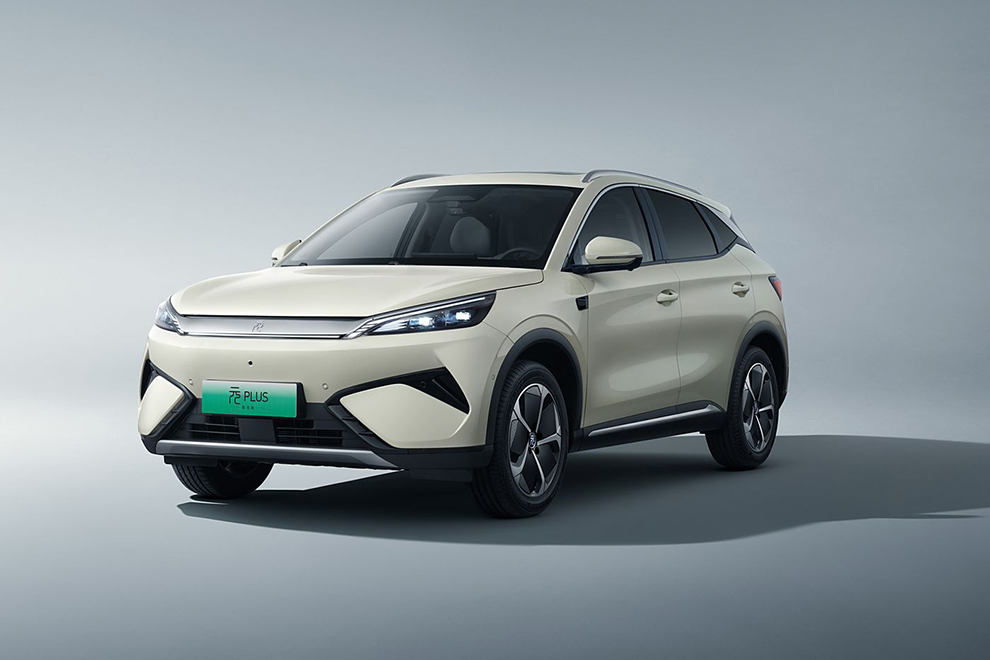
At a glance
- The BYD Yuan Plus and Atto 3 are two names for the same compact battery-electric crossover.
- The Chinese-market lineup centers on 430 km and 510 km CLTC-labelled versions, but destination test cycles can differ.
- New vehicles offer clearer ownership history and warranty pathways, while used examples require detailed battery and condition checks.
- Current price, MOQ and availability must be confirmed on each live ChinaCarDirect listing.
- RHD availability, homologation and after-sales support should be confirmed before an importer commits funds.
- Buyers should submit an RFQ for sourcing when no exact configuration is posted.
Why the BYD Yuan Plus matters for export markets
The BYD Yuan Plus is a compact battery-electric crossover that gives overseas dealers a useful alternative in the EV SUV class. It is sold internationally as the BYD Atto 3; the names identify the same model family, not two separate vehicles. Its appeal comes from combining usability with range-oriented configurations, giving importers a product that can suit customers as well as company-car and fleet programs. For buyers asking how to buy BYD Yuan Plus from China, the key questions are homologation, after-sales coverage and export cost, not only headline range.
Global demand for compact electric crossovers is shaped by a practical brief: enough range for daily commuting, easy charging in normal locations, usable passenger space and a manageable footprint for parking and city streets. The Yuan Plus is relevant to that brief because its 430 km and 510 km CLTC-labelled versions let a buyer match the battery and price band to local duty cycles. Those labels describe a Chinese test cycle, however, and should not be treated as a promise of the same real-world distance in another country or climate.
For an export buyer, the model should also be assessed as an operating asset rather than only a showroom product. Residual-value support, diagnostic access, spare-parts routing, software continuity and the availability of a local warranty network can materially affect fleet economics. A strong wholesale proposition on paper can weaken if the destination cannot support the vehicle efficiently. Conversely, a well-supported importer may achieve better conversion and retention with a familiar EV nameplate and a broad enough specification range for different customer budgets and for different charging conditions in local markets.
- Compare CLTC with local range data.
- Verify charging support.
- Assess lifecycle costs.
Model range, trims and powertrain variants: how the lineup is structured and how to choose
The Chinese-market Yuan Plus range is organised around 430 km and 510 km CLTC range versions, with grade names such as Glory, Champion and Honor appearing alongside Advanced, Leading, Luxury, Premium, Flagship and related translations. Export catalogues and local brochures may use different hierarchies, so a trim title should not be interpreted as a universal global equipment list. The dependable comparison starts with the VIN-linked build sheet, battery version, drive configuration and included options. Treat translated names as labels, then verify whether safety, comfort, infotainment and warranty equipment are standard, optional or market-specific.
Common Chinese-market versions use a single electric motor and front-wheel drive, with nominal battery packs associated with the 430 km and 510 km versions at 49.1 kWh and 60.48 kWh. Output, usable capacity, charging curves and connector details can change by market or production batch, so none should be assumed from the model badge alone. Buyers should separate the CLTC figure from charging time, highway efficiency and range in local weather. Before signing, request the battery type, usable capacity, AC and DC acceptance, and motor rating for that specific unit.
Choosing a trim is therefore a three-way decision: range and charging suitability, equipment that customers genuinely value, and the support package attached to that particular export unit. A buyer whose staff can charge at work may prioritise efficiency and total cost; a family-focused importer may place more weight on rear-seat comfort, luggage capacity and driver-assistance functions. Compare the actual option list rather than relying on prestige-sounding names, and confirm whether advertised services, apps and warranty coverage will operate after import in the destination market with the expected network and data requirements.
- Match range to duty cycle.
- Check battery by VIN.
- Read translated trim labels.
New vs used BYD Yuan Plus: how export inventory is structured and how buyers choose
Export inventory for the Yuan Plus can be factory-new, dealer-demo, ex-display or previously registered. These categories should not be treated as interchangeable: a new vehicle normally offers the clearest history and factory warranty pathway, while a demonstrator may have low mileage but should be checked for fleet use, repainting or replacement components. A used EV can be attractive where acquisition cost matters, yet the discount only makes sense after its battery condition and service history are properly and independently assessed for a planned overseas holding period and target resale date.
For a used BYD Yuan Plus, request a battery-state-of-health report and clarify whether it reflects the high-voltage pack, the vehicle control system or an inferred estimate. Review odometer records, accident and structural repair evidence, tyre age, brake condition, charging faults, software history and the validity of remaining manufacturer or seller warranty. Also ask whether the vehicle was used as a ride-hailing, rental or company vehicle, since intensive use can create costs that ordinary mileage alone does not reveal. Request a road-test result and an inspection report tied to the VIN.
A practical choice starts with the vehicle's planned role. For a company car expected to cover substantial daily mileage, a newer unit with warranty clarity may reduce operational exposure. For a short test fleet or a carefully managed secondary-market purchase, a used example can diversify acquisition channels and reveal real-world condition more economically. Compare residual exposure, downtime risk and transfer-of-warranty terms, not merely the vehicle price. A lower entry figure can be offset by battery repairs, software uncertainty or another replacement vehicle in a high-utilisation commercial operation over the same period.
- New: clearer history and warranty.
- Used: inspect battery history.
- Compare ownership-period risk.
How export pricing works: the factors behind a live listing price, and how to read one
The export price attached to a Yuan Plus is not a fixed market value. It begins with the exact vehicle: production year, trim, 430 km or 510 km battery configuration, new or used status, mileage and physical condition. Seller condition, remaining warranty and the volume of options can also move the figure. Because quotes are prepared in another currency, exchange-rate movements can alter the final comparison for an importer even when the underlying vehicle has not changed. Ask for the quote validity and currency so comparisons remain meaningful over time.
Logistics can be as important as the vehicle line. Depending on the Incoterm, the quoted figure may include inland transport, export handling, ocean freight, insurance and destination charges to different degrees; it may exclude duties, taxes, port fees or final delivery. The same unit can therefore look inexpensive on one screen and expensive after port, registration and dealer preparation. Buyers should establish the destination port, delivery scope and charge responsibilities before treating a listing figure as a landed cost. A dealer or fleet buyer should also budget local adaptation, inspection and pre-delivery work.
To read a live listing correctly, start with the vehicle identifier, then confirm model year, trim, range label, condition, mileage, battery information and equipment. Next, check the stated Incoterm, included documents, payment schedule and lead time. Treat the displayed amount as the current asking position for that unit, not a permanent wholesale benchmark, and verify it when placing an RFQ. Current price, MOQ and availability are shown per unit in ChinaCarDirect's live inventory, because the right configuration may appear, disappear or be superseded as sourcing changes. Confirm the figure for the selected unit before budgeting a purchase or financing plan.
- Read each Incoterm.
- Reconfirm live price.
- Model landed cost.
MOQ, ordering and payment: single units vs consolidating a container
Ordering mechanics depend on the seller's listing terms and the destination's shipment plan. An importer may purchase a single vehicle for testing, while a distributor may consolidate several units into one container to spread freight and compliance costs. Each live unit can carry its minimum-order condition, so there is no universal quantity to assume. Read the per-listing MOQ, ask whether mixed trims can share a shipment, and obtain a written allocation and payment schedule before reserving stock. If no suitable unit is listed, submit a sourcing request with target quantity.
A sound transaction normally follows a clear sequence: specification approval, pro forma invoice, deposit, production or stock confirmation, inspection, balance payment and release against agreed shipping documents. The exact percentages, accepted payment methods, bank charges and refund conditions must be stated in the quotation rather than assumed from an earlier conversation. For a used vehicle, make the inspection and battery report conditions of the final payment. For new stock, verify the production year and delivery sequence before the balance becomes due. Keep every revision, serial number and approval in writing.
Container consolidation introduces a different level of coordination. The importer must align model-year consistency, trim consistency, colour preferences, port dates, customs records and the allocation of charges among buyers. A mixed container may reduce unit freight but create more documentation and handover work; a uniform load may simplify administration but limit commercial flexibility. Confirm who acts as exporter of record, whose names appear on shipping documents, how titles transfer, and when risk passes under the selected Incoterm. It also helps to agree a process for damaged, missing or non-conforming units.
- Read each unit's MOQ.
- Use a pro forma invoice.
- Agree container allocation.
Shipping, homologation and market compliance caveats: LHD/RHD and import rules by country
Shipping time and cost depend on the origin and destination ports, sailing frequency, container availability, handling, consolidation method and the chosen Incoterm. Ro-ro or containerized cargo can require specialist handling, and bookings made close to a sailing or peak export period may carry different capacity conditions. The quotation should state whether it covers first sea freight or the door-to-door chain, and it should identify every charge that the buyer must arrange locally. Customs clearance, inland haulage, terminal handling and insurance can each sit on a different side of the transaction.
RHD availability is a critical sourcing check. Some export programmes include right-hand-drive versions, while others are left-hand drive, depending on production batch and intended destination. A listing that says Atto 3 or Yuan Plus does not prove the steering side. Require photographs of the steering wheel and instrument cluster, confirm the VIN-linked market specification, and state the required side in the purchase contract. Retrofitting the wrong configuration adds cost, delay and compliance risk. If RHD availability is uncertain, provide the destination country during the RFQ rather than assuming a conversion.
Import permission must be checked before money is committed. Depending on the country, requirements can include VIN and title documents, customs valuation, type approval, safety and emissions rules, charging compatibility, software and cybersecurity provisions, local-language materials, taxes and registration. A compliant Chinese-market car is not automatically homologated for another jurisdiction. Buyers should obtain written confirmation from a local agent or authority, and check that the importer, rather than the vehicle seller, remains responsible for destination compliance and local warranty administration. Local parts access and technician training should be assessed too.
- Specify port and scope.
- Confirm LHD or RHD.
- Check homologation early.
Who should buy the Yuan Plus — and who should pick a different vehicle
The Yuan Plus is a strong candidate for overseas dealers serving city-based EV buyers and for fleets with dependable workplace or depot charging. It offers a recognisable export identity as the Atto 3, a practical five-seat crossover format and a choice of range-focused configurations. It can suit buyers seeking a lower-complexity EV than large luxury models while retaining enough range specification for varied customer budgets. The strongest case is where the importer has a charging story, after-sales plan and realistic residual-value assumptions. This is where disciplined fleet procurement pays off.
A different vehicle may be better where daily mileage is long and charging infrastructure is sparse, where maximum cargo volume or towing capability is essential, or where buyers prioritise a premium cabin, performance or a specific service network. Drivers without reliable home or workplace charging may find a plug-in hybrid or conventional hybrid easier to operate. Fleets that require guaranteed residual values in a particular market should also compare local electric incentives, taxation and manufacturer support rather than simply choosing the Yuan Plus from headline specifications alone in that market.
New and used choices should follow the same commercial logic. A new vehicle suits a launch fleet, a warranty-sensitive retail programme or a customer base that values known configuration and condition. A used example suits a buyer able to inspect the battery and history thoroughly, or a business testing demand before scaling. Compare insurance, charging, maintenance, tyre replacement, downtime and resale over the intended holding period. The best model is the one whose evidence, support and operating economics fit the market, not automatically the newest or lowest-entry example in that market.
- Best with reliable charging.
- Consider hybrids without charging.
- Match purchase to fleet risk.
Main rivals and how the Yuan Plus compares
Comparators are the Hyundai Kona Electric, Volkswagen ID.4 and Toyota bZ4X. The Kona Electric is a smaller, more urban-focused alternative and may appeal where parking dimensions matter. The ID.4 is typically positioned above the Yuan Plus for cabin and cargo space, while the bZ4X competes through Toyota's dealer and hybrid-electrified brand experience. Market pricing, equipment and incentives can change any ranking, so compare like-for-like trims rather than badge-level assumptions. Battery range labels are produced under different testing protocols, so real-world efficiency should be compared using the destination market's official figures.
The Yuan Plus's strongest argument is the combination of mainstream crossover packaging, two established range configurations and a broad equipment ladder, provided the importer can support the brand locally. The Kona Electric may win for footprint and simplicity; the ID.4 may win for space and motorway usability; the bZ4X may win for buyers who place greater weight on Toyota's residual-value reputation and service reach. None guarantees lower operating cost: tariffs, insurance, charging access, software, servicing and dealer margins can change the result. Check actual owner reviews and independent safety assessments.
A comparison uses the same route, charging assumptions and ownership period for every candidate. Shortlist the intended range version, confirm boot space with real luggage, review warranty and parts support, and estimate the destination's import and tax treatment. For fleet buyers, include driver downtime and residual risk; for dealers, include demo-conversion time and expected equipment demand. If the Yuan Plus meets the brief and can be supported profitably, shortlist it on the live inventory page; otherwise, use the same criteria to compare the rival models before final approval is made.
- Kona: compact urban focus.
- ID.4: more space emphasis.
- bZ4X: Toyota support emphasis.
Live BYD Yuan Plus export inventory
View all listings →Real units currently on ChinaCarDirect with per-unit asking prices and MOQ. Availability updates live from the catalogue.
How to buy a BYD Yuan Plus from China
-
1
Define the destination and duty cycle
Record the destination country, required steering side, charging arrangements, annual mileage, passenger needs and cargo volume. This prevents an unsuitable market specification from entering the sourcing process.
-
2
Search or source the right unit
Review the Yuan Plus live listings when matching stock returns. If no exact unit is posted, submit an RFQ with the destination, steering side, trim, range version, year and required quantity.
-
3
Verify the vehicle and documents
Request the VIN or build sheet, detailed photographs, equipment list, battery information, mileage, condition record and warranty status. For a used vehicle, obtain an independent inspection and battery-state-of-health report.
-
4
Check destination compliance
Ask a local customs broker or authority to confirm import, type-approval, safety, charging, software, language, tax and registration requirements. State who will handle homologation and destination charges.
-
5
Build the landed-cost quote
Ask for a per-unit price, MOQ, Incoterm, freight, insurance, duties, taxes, local charges, payment stages and quote validity. Treat live listing figures as current procurement positions and request written confirmation for the selected unit.
-
6
Inspect and approve before final payment
Review the actual vehicle against the agreed specification, condition report and accessory list. Tie final payment to satisfactory inspection, correct serial numbers and verified export documents.
-
7
Book shipping and complete import
Book the agreed transport method, track the vehicle, complete customs and registration, then hand over keys, documents and warranty coverage with local service arrangements confirmed.
Yuan Plus vs rivals
| Hyundai Kona Electric | The Kona Electric is generally smaller and more urban-focused, which can reduce parking and operating-space demands. The Yuan Plus offers a larger mainstream footprint and a broader 430 km and 510 km configuration choice, so the better fit depends on local charging, service coverage and equipment. |
|---|---|
| Volkswagen ID.4 | The ID.4 is usually roomier and positioned as a family-oriented electric crossover, often appealing where cargo space and motorway comfort take priority. The Yuan Plus can offer a more value-focused specification ladder, but buyers should compare destination pricing, real-world range, warranty and dealer support directly. |
| Toyota bZ4X | The bZ4X brings Toyota's brand familiarity and service reputation into the same compact electric SUV class. The Yuan Plus competes with distinct 430 km and 510 km range versions and a broad Chinese-market equipment range, while the bZ4X may suit buyers who prioritise established residual-value expectations and Toyota support. |
Frequently asked questions
Is the BYD Yuan Plus the same as the Atto 3?
Yes. Atto 3 is the export name for the BYD Yuan Plus; they are aliases for the same vehicle family rather than separate models. Because trim names, equipment and homologation can change by market, compare the VIN-linked build sheet rather than assuming every Yuan Plus and Atto 3 listing is identical.
What powertrain and range should I expect?
The Yuan Plus is a battery-electric crossover, commonly using a single motor and front-wheel drive, with 430 km and 510 km CLTC-labelled versions in the Chinese-market range. Common battery associations are approximately 49.1 kWh and 60.48 kWh, but usable capacity, motor output, charging rates and destination-rated range must be confirmed for the exact unit.
How is BYD Yuan Plus export pricing determined?
Export pricing is built from the unit's year, trim, battery and range configuration, condition, mileage, warranty and equipment, then affected by exchange rates, freight, insurance, handling and the Incoterm. Read the current per-unit amount and its inclusions on live listings, then request a written quote for the exact configuration and destination. Treat it as a live procurement figure, not a permanent market benchmark.
Is a used BYD Yuan Plus better value than a new one?
New vehicles generally provide the cleanest ownership history, known configuration and the clearest factory warranty route. Used vehicles can lower acquisition exposure, but buyers should obtain a battery-state-of-health report, service history, accident evidence, odometer reading and warranty status before treating the lower entry position as better value.
Can I order one vehicle, and how does MOQ work?
MOQ is set by the individual seller's listing and shipment plan; some offers may accept one unit, while others require a larger allocation or consolidated order. Buyers should read the MOQ on the live listing and request a pro forma invoice covering unit allocation, deposit, balance, documents and Incoterm. If no suitable configuration is posted, submit an RFQ with the required quantity and destination for sourcing.
How long does shipping take, and what affects its cost?
Shipping time and cost depend on origin and destination ports, sailing frequency, container or specialist-carrier capacity, consolidation, customs clearance, inland haulage and the Incoterm. Ask whether the quote covers first sea freight, port-to-port transport or door-to-door delivery, and which duties, taxes and local charges are excluded. Book only after the vehicle allocation and shipping documents are confirmed.
Can I obtain spare parts and technical support?
Parts support depends on the importer's aftersales partner and the supplier's ability to identify the correct VIN-specific components. Before ordering, ask for the initial maintenance schedule, common wear items, diagnostic access, warranty process and a realistic estimate of parts and technician availability. A sourcing RFQ should identify the destination because local stock and delivery routes can differ by market.
Is a right-hand-drive Yuan Plus available, and how should I order?
RHD production can depend on the model batch, destination programme and intended export market, so a generic Yuan Plus or Atto 3 listing does not prove steering configuration. State the required side, country, trim and quantity in the RFQ, and verify the VIN and photographs before approval. Use the Yuan Plus live listings when matching stock returns, and request sourcing when no compliant RHD unit is posted.
Ready to source the BYD Yuan Plus?
Submit an RFQ with your required BYD Yuan Plus or Atto 3 configuration, destination and quantity to receive current sourcing options and a written quote.
Request a quote