
BYD Destroyer 05 Export Buying Guide for Dealers
Export buyer’s guide to BYD Destroyer 05 trims, DM-i range choices, pricing logic, MOQ, shipping, compliance and rivals for overseas dealers and fleet buyers.
At a glance
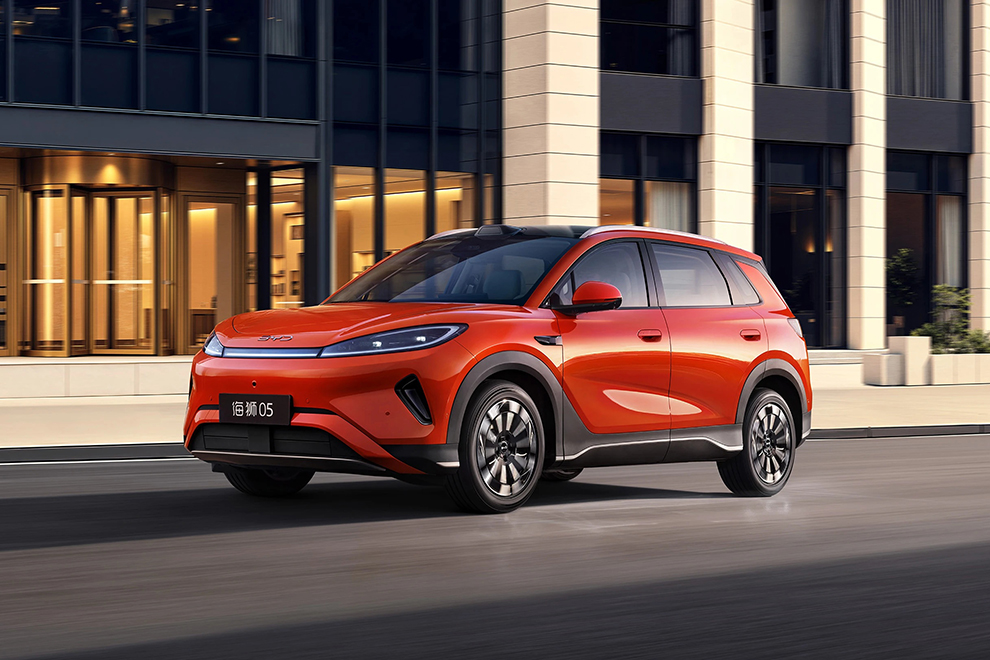
- The BYD Destroyer 05 is a compact crossover using BYD's DM-i plug-in hybrid technology.
- The lineup includes 55 km and 120 km range versions, but buyers should verify what each destination-certified figure measures.
- The 55 km derivative favors urban charging, while the 120 km derivative suits longer electric-only journeys.
- Used units require hybrid-specific inspection, especially for battery condition, service history and accident evidence.
- Current unit prices, MOQ and availability must be confirmed on live inventory before budgeting or contracting.
Why the BYD Destroyer 05 matters for export markets
The BYD Destroyer 05 occupies a practical middle ground between a family hatchback and a larger SUV: a compact crossover with a BYD DM-i plug-in hybrid system. Its appeal in export markets comes from combining petrol-engine range with electric-only capability for routine commuting. That proposition suits importers testing electrified vehicles where public charging coverage is incomplete but urban routes offer regular charging opportunities. For dealers, it can broaden a fleet offer without moving up to a full-size premium SUV, provided the destination market accepts the model, powertrain and local certification documents.
Global demand for compact electrified SUVs is increasingly shaped by operating flexibility rather than one headline number. A buyer may value electric-only journeys, lower tailpipe emissions during normal commuting, familiar petrol refuelling and a manageable footprint for urban use. Fleet managers can also test whether one model covers both daily commuting and longer routes. A model that looks attractive in a catalogue can still be a poor fit, so compare local fuel and electricity costs, duty, insurance, charging access and expected resale before committing to a trial order or any wider volume commitment without independent analysis.
Treat the Destroyer 05 as a market-entry proposition, not a universal export solution. BYD recognition and the DM-i system can reduce buyer education, but a Chinese listing does not itself prove approval in another country. Importers should first establish whether the exact variant is officially homologated for their market, then assess service coverage, diagnostic access and parts supply. For overseas buyers, that sequence prevents an appealing hybrid SUV from becoming an unsupportable compliance project or a costly resale mistake. It also protects fleet budgets from assumptions that cannot be verified locally.
- Compact DM-i plug-in crossover
- Urban electric use plus petrol fallback
- Local homologation precedes import decisions
Model range, trims and powertrain variants: how the lineup is structured and how to choose
The lineup is easiest to understand around two electric-range designations: 55 km and 120 km versions, paired with several luxury, prestige, champion, honor and flagship grade names. These trim labels describe equipment and positioning, while the range number identifies the battery-focused derivative. Because the label is a Chinese-market designation, do not treat it as a destination certification. Ask for the battery capacity, certified electric-only range, test cycle, motor output and standard equipment attached to the exact vehicle being quoted. That documentation prevents an attractive trim name from masking an unsuitable specification.
The shorter-range 55 km derivative is the simpler urban proposition. It suits buyers whose daily mileage can be covered by regular charging and whose priority is a smaller battery, potentially lower weight and better affordability rather than extended electric-only operation. The 120 km version makes more sense where longer commutes, infrequent public charging or a stronger EV-mode preference matter. That extra range normally requires the larger battery derivative, so buyers should compare usable range, charging time, packaging and carrying cost rather than selecting on the badge alone for their actual duty cycle.
Equipment grade should be evaluated as a separate decision from powertrain. Luxury and prestige trims may add comfort and convenience features, while champion, honor, flagship and related labels can move the vehicle up or down in perceived value. Overseas buyers should request a written equipment list because names can translate imperfectly and Chinese-market fitments may differ from export-market expectations. Confirm infotainment language, camera and driver-assistance functions, seat materials, climate controls, spare-wheel arrangement, charging accessories and the warranty position before signing. A feature list tied to the VIN prevents avoidable surprises after delivery.
- 55 km and 120 km designations
- Range version drives equipment and cost
- Verify certified test-cycle range
New vs used BYD Destroyer 05: how export inventory is structured and how buyers choose
Export inventory for the Destroyer 05 can include new vehicles and used examples from different production years and grade combinations. The structure is useful for buyers because it creates several ways to enter the model, but the category label alone tells you very little. A live listing should identify condition, model year, trim, range derivative, mileage, ownership history and seller location. For a mixed fleet, standardization matters: dealers can reduce training and parts complexity by selecting one range version and a consistent equipment grade before consolidating an order for resale.
A new vehicle is generally easier to reconcile with a factory warranty and an expected condition, but age does not guarantee local approval or immediate parts supply. The relevant checks are production date, destination certification, software status, warranty transfer and delivery preparation. Buyers planning a pilot should also confirm that the chosen configuration will still be relevant when the next model-year change arrives. For fleet programs, that avoids purchasing a mix of specifications that complicates training, charging assumptions and eventual resale. Standardized vehicles are easier to compare, maintain and support across depots.
A used Destroyer 05 can make sense where acquisition sensitivity is greater than factory-new consistency, but the hybrid system changes what an ordinary used-car inspection must cover. Ask for service records, registration documents, accident and flood history, battery state-of-health evidence, charging tests and a cold or hot start demonstration. Also inspect the petrol engine, DHT, warning systems, mileage plausibility and software updates. Independent inspection is particularly valuable when the vehicle will be sold onward without a manufacturer history in the destination country. It can reveal issues hidden by polished presentation photographs.
- Condition and ownership require verification
- Used hybrids need battery-specific inspection
- Consistent fleet specifications simplify support
How export pricing works: the factors behind a live listing price, and how to read one
A live export price is the result of several commercial layers, not a fixed manufacturer price. The vehicle's year, trim, range version, condition, mileage and option content establish its base value. Then the quote may add or expose transaction costs such as inland transport, export handling, documentation, inspection, insurance, freight, port charges and destination taxes. Exchange-rate movement and the seller's margin can also change the figure. For this reason, compare like with like and ask whether the displayed amount is an ex-China vehicle price or a delivered estimate before budgeting.
Read each listing from top to bottom rather than focusing on the headline. Confirm the exact vehicle identifier and trim, then look at year, condition, mileage, range derivative, ownership and seller location. Check whether the price explicitly includes export preparation, and whether photos or documents contradict the description. A low asking figure can be offset by repair work, a missing accessory, unsuitable charging equipment or higher freight. These issues affect the landed cost even when the listing price appears competitive. That is why the cheapest headline rarely identifies the cheapest delivered vehicle.
The most reliable comparison is a written, like-for-like quotation using the same Incoterm, destination, currency, tax treatment and inspection scope. Ask whether freight is estimated or fixed, which party handles customs clearance, and when charges become binding. Reconfirm currency and validity before paying a deposit. ChinaCarDirect's live inventory is the source for current unit-level numbers, but the final contract should be the controlling document. A quote for one trim, condition and shipping arrangement should not be treated as a universal export-price guide. It should also identify any repair, replacement or allocation assumption.
- Compare like-for-like vehicle configurations
- Separate vehicle cost from freight
- Confirm Incoterms, taxes and currency
MOQ, ordering and payment: single units vs consolidating a container
Minimum order quantity is a commercial field on the applicable listing or written quotation, not a universal rule that can be assumed from the model name. Some sellers may accept a single vehicle, while container-based sellers may prefer several units to reduce fixed handling costs. Buyers should state whether they are testing one unit, building a mixed fleet or consolidating a full container. The supplier should then confirm unit acceptance, unit-level prices, allocation, payment milestones and the earliest shipment plan in writing before any deposit is requested. This prevents accidental commitments.
Consolidating several vehicles can improve freight efficiency and simplify deployment, but it introduces allocation and specification risk. Mixed range versions, trim grades, model years and conditions may create loading, registration, insurance and resale complications. If a container is the objective, set the destination use case first, then agree on a mix that can be processed and sold together. Ask whether vehicles must share a production period, whether the seller can allocate specific units, and how substitution would be handled if damage or documentation issues arise. Those answers should appear in the final sales contract.
Payment terms should follow the risk profile of the transaction. A deposit may secure a unit, while the balance can be tied to document readiness, inspection and shipping milestones, but the exact sequence must be agreed in the contract. Verify the seller's legal identity and use a traceable business payment channel with a clear invoice. Confirm refund terms, title documents, export declaration responsibilities and who bears charges if inspection or customs documentation does not match the agreed vehicle. A disputed shipment should not depend on informal promises made through a chat message.
- Each quotation defines its own MOQ
- Test orders require unit-level terms
- Agree allocation before consolidating cargo
Shipping, homologation and market compliance caveats: LHD/RHD and import rules by country
Steering configuration is the first physical export check. ChinaCarDirect listings may show left-hand-drive and right-hand-drive examples depending on availability, but the exact unit and market must be confirmed. A factory-built RHD vehicle is preferable to an improvised conversion because conversion can affect homologation, warranty, safety systems and parts supply. Ask the supplier for the steering-side specification, VIN-linked photographs and proof of the vehicle's destination approval. Do not assume a RHD unit is available simply because the model is sold in right-hand-drive markets elsewhere. Availability is unit-specific and should be reconfirmed before contracting.
Local homologation can be more demanding than the export shipment itself. Depending on the country, importers may need type approval for the exact powertrain and steering configuration, emissions compliance, safety-equipment rules, radio approval, cybersecurity or software requirements, VIN records and evidence of roadworthiness. PHEV incentives may also depend on battery capacity, electric range, charging connection and local tax treatment. Treat these as country-specific legal and technical checks with competent local authorities, not as items settled by the vehicle's Chinese factory specification. Obtain professional advice before committing funds to a non-refundable balance.
Shipping and insurance should be planned around the complete vehicle rather than a generic model assumption. Route, transport mode, container loading plan, port charges, customs inspection, cargo cover and delivery distance all affect landed cost and timing. For a PHEV, confirm that fuel and high-voltage battery transport rules, charging equipment and software settings are covered by the shipping documents. If something is not certain, require a written answer from the forwarder and insurer before release, because uncertainty at the port can delay the entire consignment. A complete document pack reduces avoidable port delays.
- Confirm factory steering configuration
- Validate exact-variant local approval
- Price insurance, port and inland charges
Who should buy the Destroyer 05 — and who should pick a different vehicle
The Destroyer 05 fits dealers and fleet buyers who want a compact vehicle with genuine electric-only capability, a petrol fallback and a manageable body size. It is especially relevant where workplace or depot charging can cover much of the mileage but long-distance travel still requires a combustion engine. It can also suit importers beginning with a mixed used fleet while evaluating demand. The purchase should be driven by utilization and infrastructure: a favourable vehicle specification cannot compensate for unsuitable local approval or weak service support. Route fit and support matter more than brochure novelty.
Choose a different vehicle if the business needs guaranteed towing capability, a large cargo bay, seven seats, sustained high-speed motorway performance or operation in areas with minimal charging and unreliable petrol networks. A pure battery vehicle may be better where daily routes are short and charging is dependable, while a conventional petrol SUV may be simpler where electrical infrastructure is weak. Buyers seeking a direct official warranty and mature European or North American service network should also compare locally sold alternatives with established residual-value records. Local proof of support can outweigh novelty.
Before choosing, build a route-by-route energy and cost model, then check the vehicle against legal, safety and service requirements. Include charging time during the working day, expected battery degradation, fuel consumption, insurance, maintenance and resale. For a fleet, pilot one clearly specified configuration and measure utilization before scaling. The right Destroyer 05 variant is the one whose range label, equipment, service plan and compliance route match the operation, rather than simply the version with the most equipment or longest claimed electric range. Charge availability should be verified with real schedules and connectors.
- Best for mixed urban-regional duty cycles
- Requires usable charging and service support
- Alternatives suit very different operating needs
Main rivals and how the Destroyer 05 compares
The closest internal alternatives are not identical in every market, so comparison should begin with architecture and use case. The Chery Tiggo 7 PHEV is a direct compact plug-in-hybrid SUV competitor, while the Geely Galaxy L7 sits in a similar electrified compact-SUV field with a more spacious positioning. The GAC Trumpchi GS3 Emzoom is another regional alternative for buyers already familiar with Chinese plug-in-hybrid products. Model availability, certification and warranty support vary by country, making local homologation as important as the brochure comparison. Availability must be checked at the exact trim level.
Against the Chery Tiggo 7 PHEV, the Destroyer 05 should be judged on the destination-certified electric range, equipment, safety approval, after-sales network and total ownership cost. Against the Geely Galaxy L7, cabin and cargo space become more important for buyers who regularly carry passengers. The GS3 Emzoom may appeal to importers seeking another Chinese PHEV option, but parts, software support and resale should be checked just as carefully. No rival wins on paper unless the exact local variant is legal and supported. A valid local homologation file overrides brochure advantages.
A useful shortlist compares each model on the same basis: usable electric range under the local test cycle, charging compatibility, real-world consumption, warranty, service access, safety equipment, cargo utility and resale prospects. Add the cost of freight, taxes and charging installation to the purchase price. If one rival has an official local network and another is an import-only product, that difference may outweigh a small equipment advantage. The Destroyer 05 makes most sense when its range choice and compliance route support a clear operating plan. Testimonials do not replace local service evidence.
- Tiggo 7 PHEV: closest direct format rival
- Galaxy L7: more spacious electrified option
- GS3 Emzoom: regional Chinese PHEV alternative
Live BYD Destroyer 05 export inventory
View all listings →Real units currently on ChinaCarDirect with per-unit asking prices and MOQ. Availability updates live from the catalogue.
How to buy a BYD Destroyer 05 from China
-
1
Set the destination and operating profile
Name the destination country, urban versus regional mileage, charging locations, load and passenger needs. This determines whether a 55 km or 120 km derivative and which approval route should be pursued.
-
2
Choose the powertrain and equipment
Use the range designation as an electric-only indicator, then select the trim from a written equipment list. Verify battery, motor, engine, dimensions, charging interface and warranty against the exact unit.
-
3
Inspect the live inventory
Filter current listings by condition, model year, trim and range version, then open the relevant unit record. Read the photographs, identifiers and description carefully, but treat only a confirmed quote and supporting documents as binding.
-
4
Request proof and a quotation
Ask the seller for VIN-linked photographs, ownership or service records, production details, specification sheet and export-document availability. Request separate vehicle and freight figures under a named Incoterm.
-
5
Conduct an independent check
For a used unit, validate battery condition, charging, engine, DHT, mileage, accident history and software. For a new unit, confirm production date, destination specification, factory warranty and delivery preparation.
-
6
Agree MOQ, allocation and payment
Confirm whether the quotation accepts one unit or requires consolidation, and secure selected VINs or agreed allocation terms. Put deposit, balance, inspection, refund, damage and substitution conditions in the sales contract.
-
7
Complete export and shipping
After inspection and document approval, use a qualified forwarder to confirm route, insurance, port charges and customs responsibilities. Track the unit through export declaration, loading, arrival clearance and local registration.
Destroyer 05 vs rivals
| Chery Tiggo 7 PHEV | Both are compact plug-in-hybrid SUVs for buyers seeking electrified daily mobility with petrol backup. The better choice depends on the destination-certified specification, local safety approval, warranty coverage, service footprint and total delivered cost. |
|---|---|
| Geely Galaxy L7 | The Galaxy L7 is a room-oriented electrified SUV alternative for buyers who prioritize passenger and cargo space over the Destroyer 05's compact footprint. Its fit depends on destination availability, certified range, charging, after-sales support and landed cost. |
| GAC Trumpchi GS3 Emzoom | The GS3 Emzoom is a regional Chinese plug-in-hybrid option for importers already familiar with that brand's products. Destination certification, certified electric range, warranty coverage, parts access and total delivered cost should decide between it and the Destroyer 05. |
Frequently asked questions
How is the BYD Destroyer 05 export price determined?
Export pricing combines the vehicle's year, trim, range version, condition, mileage and options with exchange rates, freight, export handling, insurance and the selected Incoterm. Destination taxes may sit outside the listing and should be quoted separately. Use current live Destroyer 05 listings for the unit-level asking price, then rely on a written like-for-like quotation for the binding figure.
What powertrain and range specifications does the Destroyer 05 have?
The Destroyer 05 uses BYD's DM-i plug-in hybrid architecture, combining a petrol engine and electric motor through a dedicated hybrid transmission with front-wheel drive. The 55 km and 120 km names identify Chinese-market electric-only range versions, not total driving range. For a particular export unit, confirm the certified test cycle, usable range, battery capacity, engine and motor outputs, charging interface and destination approvals in the live listing.
Should an overseas buyer choose a new or used Destroyer 05?
New units generally offer the cleanest condition record and a clearer factory-warranty position, while used units can widen sourcing options and reduce entry cost. A used PHEV needs extra scrutiny of battery state of health, service history, accident repair, charging, engine and hybrid transmission. Compare like-for-like warranty, remaining coverage and expected resale in the destination market.
How does MOQ work when ordering a BYD Destroyer 05?
MOQ is set by the individual listing or seller quote rather than by the model name. A trial buyer should ask whether that seller accepts a single unit and request unit-level prices, allocation, payment and shipment terms. For a container, agree the configuration mix, inspection, damage policy and substitution process before paying the balance.
What determines shipping time and cost for an exported Destroyer 05?
Shipping time and cost depend on origin and destination ports, transport mode, route, seasonality, container availability, vehicle condition, documentation and customs clearance. PHEV units also need correct handling and paperwork for petrol and high-voltage systems. Request a port-to-port or door-to-door quotation with Incoterm, insurance, charges and estimated milestones clearly stated.
How should buyers assess spare-parts availability?
Parts support should be checked before scaling an order. Ask for the exact model-year and trim parts list, diagnostic procedures, high-voltage safety guidance, consumables and warranty channel in the destination country. An import-only vehicle may require cross-border sourcing and longer lead times even when major mechanical components are widely available. A local supplier commitment is more useful than a generic assurance that parts exist.
Is a right-hand-drive Destroyer 05 available for export?
RHD availability is unit-specific and depends on factory production, the market and current live inventory. Ask for the steering configuration and VIN-linked images, and confirm whether local type approval covers that exact vehicle before paying. Do not treat a steering-wheel conversion as equivalent to a factory RHD model, since homologation, safety systems and warranty can be affected.
How do I order a BYD Destroyer 05 from China?
Start with the live inventory, select the condition, range version and trim, then send a request for a unit-level quotation and document checklist. Ask for VIN-linked photographs, service or production records, specifications and payment milestones before paying a deposit. Finalize the contract, inspection scope, export documents, shipping terms and insurance before the vehicle is released to the carrier.
Ready to source the BYD Destroyer 05?
Send your destination, required configuration and quantity to ChinaCarDirect for a current unit-level quote and export checklist.
Request a quote