
BYD Han L Export Buying Guide for Overseas Dealers
Compare BYD Han L trims, powertrains and export pricing, then learn how overseas dealers verify compliance, order units and plan shipping safely.
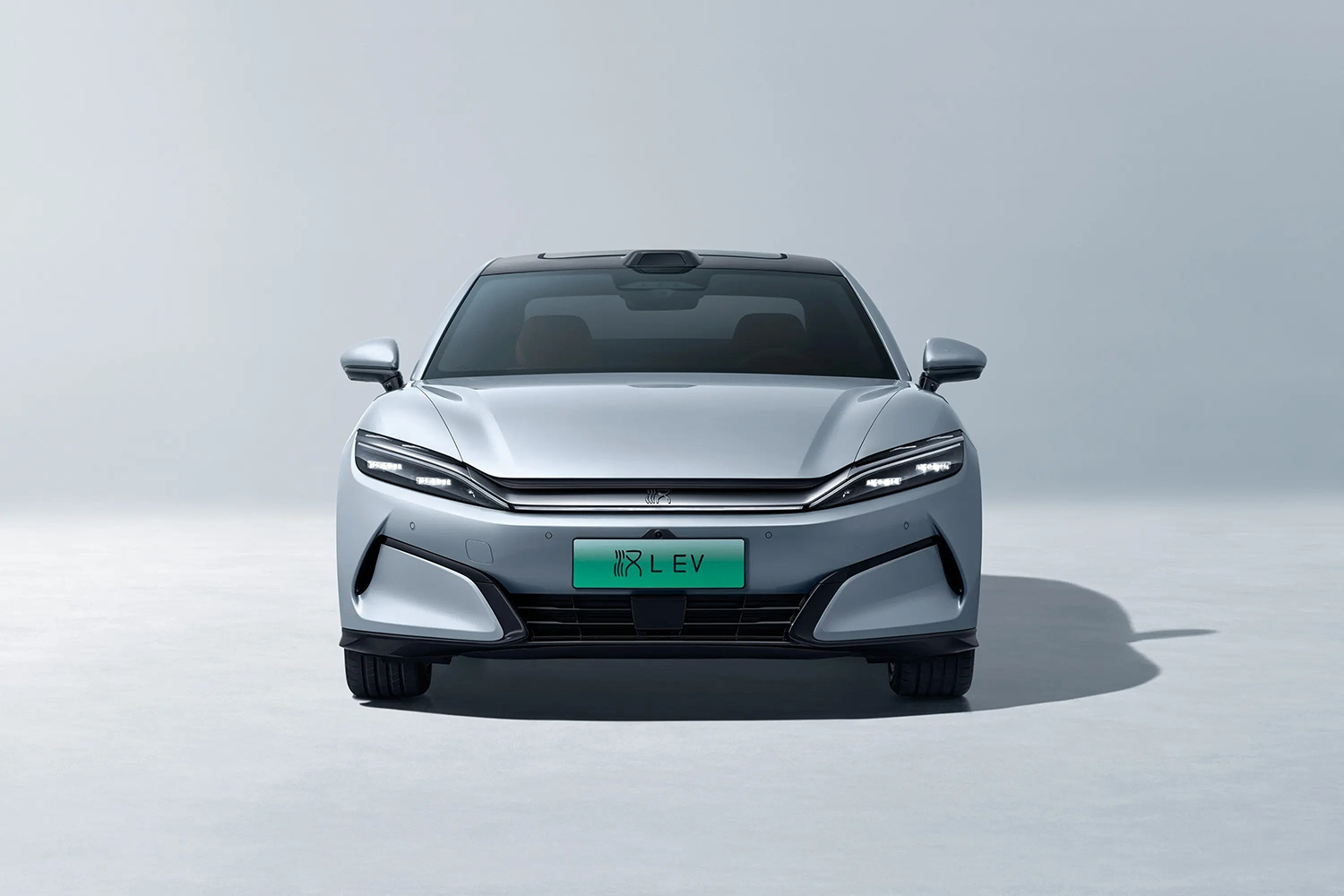
At a glance
- The Han L is a large executive sedan available through DM plug-in hybrid and EV branches.
- Visible trims include DM-i 200KM, DM-p 4WD, EV 701KM and EV AWD configurations.
- LiDAR appears in the names of the Flagship and Premium derivatives represented.
- Export pricing and MOQ must be read from each live unit quotation rather than a fixed model-level figure.
- Homologation, steering configuration, charging access and aftersales support determine whether the fit works abroad.
Why the BYD Han L matters for export markets
The BYD Han L occupies the large executive-sedan end of the Chinese market, combining BYD's electrified drivetrains with a high-appeal body style for business and premium fleet use. For overseas buyers, its interest lies less in being a novelty than in offering familiar sedan packaging with either plug-in hybrid or battery-electric options. The lineup shown for export includes LiDAR-equipped Flagship and Premium derivatives, giving dealers a clearer way to position driver-assistance hardware and higher-grade equipment. That matters where buyers expect space, presence and technology but still need practical fleet economics.
Demand for Chinese vehicles in export markets is shaped by three buyer needs: a recognizable premium badge, operating arrangements they can support, and electrified powertrains that suit fleet policies. The Han L can answer the first two only when local preparation is done properly; brand recognition does not automatically create strong resale value. A dealer should therefore test demand with corporate accounts, chauffeur operators and premium retail customers rather than assume a large, well-equipped sedan will sell quickly in every country. Local service evidence is part of the product proposition.
The strongest export case for the Han L is therefore not a single universal best configuration. A DM-i buyer may prioritize useful electric running with the option to recharge; an EV buyer accepts charging dependence in exchange for zero tailpipe emissions; and the DM-p or EV AWD versions add a performance-oriented proposition. LiDAR can support the premium story, but overseas buyers should separate hardware presence from locally approved, functioning driver-assistance functions. Local homologation, software support, parts availability and realistic charging access remain the decisive value factors. That is where export execution determines commercial value.
- Multiple electrified powertrain branches.
- LiDAR-equipped Flagship and Premium trims.
- Local readiness determines export value.
Model range, trims and powertrain variants: how the lineup is structured and how to choose
BYD organizes the Han L around DM plug-in hybrid and EV branches, with LiDAR appearing in the names of the exported Flagship and Premium versions. Visible choices are DM-i 200KM LiDAR Flagship, Model DM-i 200KM LiDAR Premium, DM-p 4WD LiDAR Flagship, EV 701KM LiDAR Flagship, EV 701KM LiDAR Premium and EV AWD LiDAR Flagship. For a buyer, that hierarchy is more useful than a broad premium label: it identifies the energy route, an advertised range designation where one is present, all-wheel drive where stated, and the equipment grade rather than leaving comparisons to inference.
Within the hybrid branch, DM-i 200KM is positioned around an advertised 200-kilometre electric capability, while DM-p 4WD emphasizes the performance-oriented all-wheel-drive side of BYD's plug-in hybrid family. The 200KM label should not be treated as guaranteed real-world driving range, and the absence of a range suffix on DM-p does not mean it lacks electric capability. For the EV branch, 701KM identifies a long-range-labelled derivative, whereas EV AWD is a separate all-wheel-drive designation. Verify the underlying battery, motor, test cycle and charging data for the exact vehicle before making a fleet purchase or committing funds.
Flagship and Premium should be compared through their actual equipment sheets rather than inferred from badge appeal. Both LiDAR branding and model designation are useful filters, but a buyer still needs the VIN-specific equipment list, warranty terms and local software status. Start with duty cycle: frequent charging and predictable routes can favor an EV, while mixed routes or limited charging access can strengthen the case for a DM variant. For performance or all-wheel-drive requirements, compare the DM-p 4WD and EV AWD names directly, then inspect load limits, towing provisions and any locally restricted functions in the VIN documentation.
- DM-i 200KM plug-in hybrid.
- DM-p 4WD performance derivative.
- EV 701KM long-range label.
- EV AWD battery-electric option.
New vs used BYD Han L: how export inventory is structured and how buyers choose
For the Han L, export inventory is best understood as unit-level records rather than a fixed package. Each record should be checked for condition, model year, exact trim, range or drivetrain designation, mileage where applicable and documented history. Newer vehicles may carry factory warranty and predictable configuration; used vehicles can offer a more efficient entry into the premium-sedan segment. The correct comparison is not simply new versus old, but whether the underlying vehicle matches the buyer's market, budget and after-sales plan for reselling and long-term local support.
A factory-new Han L is usually easier to standardize: the buyer can select a known trim, avoid wear-related uncertainty and document delivery condition before use. It may also simplify warranty handling, although the buyer must confirm which warranty travels with the vehicle after export. A used example can make sense where the goal is a lower entry cost, immediate availability or a specific configuration that is hard to source new. In that case, require an independent inspection covering bodywork, tires, battery or hybrid systems, software, warning lamps and service history before the vehicle is released.
Before accepting either condition, reconcile the VIN across the listing, invoice, export declaration and any prior registration records. For a new vehicle, check that it has not been invoiced as used and that delivery protection, spare tools and documented factory condition match the agreement. For a used vehicle, ask for service invoices, recall completion, battery or engine condition reports where relevant, and evidence of whether the odometer reading is consistent with its history. Export eligibility and local title rules must still be checked independently by the importing entity or its broker in the destination country.
- New means documented factory condition.
- Used requires independent inspection.
- VIN consistency applies to both.
How export pricing works: the factors behind a live listing price, and how to read one
An export price is not a fixed market value attached to the Han L name. It is the seller's live quote for a specific unit and can move with model year, trim, battery or range version, drivetrain, mileage and condition, production timing and exchange-rate movement. The chosen Incoterm also changes what the buyer is paying for: an ex-works price may exclude inland transport, export handling, insurance and ocean freight, while a delivered-port or delivered-destination quote may absorb more of that chain. Always read the commercial terms before comparing two listings.
To read a listing correctly, separate the vehicle amount from the landed cost. Confirm whether the displayed live price includes the exact LiDAR-equipped trim, standard accessories, export documentation, battery or charging equipment appropriate to that powertrain, domestic transport, insurance and port charges. Ask the seller to state the Incoterm, named place, quote-validity period and payment schedule in writing. A lower vehicle figure may still produce a higher landed total if the other terms are narrower; therefore compare like-for-like scopes rather than headline numbers alone for the destination market and buyer risk.
Build a landed-cost worksheet that starts with the live per-unit quote and adds every foreseeable cost: inland haulage, export documentation, terminal and handling fees, freight, insurance, destination charges, taxes or duties, port or inland delivery, charging equipment and local registration. Model the same worksheet for at least two configurations, such as a DM-i and an EV AWD, to see which operating assumptions, not merely which badge, fit the fleet. Volume can improve terms, but it should not justify accepting an unclear scope. Current binding prices, MOQ and availability must be confirmed per unit in ChinaCarDirect's live listings.
- Compare trim and condition.
- Read the stated Incoterm.
- Calculate full landed cost.
MOQ, ordering and payment: single units vs consolidating a container
MOQ is the minimum quantity a seller requires for a particular quotation, not a universal property of the Han L. Some vehicle offers may be available to individual buyers, while factory-backed or container-based programs can impose lot quantities, allocation rules or mix restrictions. On each live record, check the stated MOQ, availability status and whether the seller requires units to share a trim and production batch. Do not infer a blanket MOQ from the model name. If a single unit is acceptable, confirm that in the written quote before arranging payment or transport.
A sound ordering sequence starts with a written specification of the chosen unit, including trim, VIN, options and condition, followed by a pro forma invoice and contract. Confirm the seller's legal identity, independently verify the payment beneficiary and agree when the balance is due. A common structure is a deposit to reserve the unit, inspection against that agreement, payment of the balance against agreed documents, and release to the carrier; terms vary by seller. For larger transactions, ask whether an irrevocable letter of credit or documentary collection is acceptable through the buyer's bank.
Consolidating a container can reduce unit freight cost, but it also creates allocation, loading and documentation complexity. Confirm whether mixed trims are allowed, who selects the units, how production dates and VINs will be reconciled, and which party bears damage during loading and transit. Single-unit buyers should ask the forwarder to compare dedicated roll-on/roll-off handling, shared-space options where available and door-to-door routing. In every case, specify the terminal, Incoterm, insurance responsibility and destination charges before release. Vehicle securing, inspection access, customs paperwork, delivery sequencing and claims contact should also be assigned in writing.
- Confirm MOQ per quote.
- Verify documents and beneficiary.
- Control container allocation.
Shipping, homologation and market compliance caveats: LHD/RHD and import rules by country
Configuration must be settled before payment because it affects usability and market entry. LHD and RHD are not interchangeable: steering position, instrument display, lighting, indicators, control labels and some parking or assistance functions may differ. Do not assume a China-origin Han L is supplied in your required layout, and do not treat a late conversion as an adequate substitute for factory configuration. Request VIN-plate and cockpit photographs, plus a written configuration sheet, then have the seller confirm the steering position and relevant equipment for registration in the destination country before contracting.
Homologation is market-specific, and a Chinese-market approval does not automatically satisfy another country's vehicle registration requirements. Depending on local rules, the importer may need evidence covering roadworthiness, lighting, emissions, noise, braking performance, radio equipment, software and cybersecurity, battery transport, charging access or local language requirements. LiDAR hardware should not be treated as proof that every listed assistance function is approved or operational in the destination market. The importing entity should build a country checklist with its homologation partner and confirm warranty exclusions, update obligations and any recall or modification requirements before release.
Once the vehicle is approved, complete a documented pre-shipment inspection and photograph the body, wheels, glass, interior, underbody and any accessible high-voltage components or battery area under normal safe conditions. Roll-on/roll-off or container handling, route capacity, vessel schedule, port congestion, customs inspection, weather and the chosen Incoterm all influence transit time and cost. Insurance should cover the physical vehicle from the agreed point of sale to the agreed destination, and the parties should document who bears customs delays, storage and damage risk. A pre-shipment survey also creates useful evidence if damage is discovered after loading.
- Verify LHD or RHD.
- Confirm local homologation.
- Define freight and insurance.
- Inspect before loading.
Who should buy the Han L — and who should pick a different vehicle
The Han L is a strong candidate for a dealer building a premium executive-sedan offer for business customers, chauffeurs, hotel groups or corporate fleets. Its large-car format, LiDAR-labelled versions and choice of plug-in hybrid or battery-electric powertrains give buyers room to separate luxury, range strategy and all-wheel-drive requirements. It is especially relevant where the operating mix includes both charging-capable sites and vehicles that must cover longer routes without depending on public charging. The vehicle must, however, be supported by a credible local service and resale plan before committing to imported inventory.
It is a weaker choice for buyers whose priorities are minimum acquisition cost, compact maneuverability, abundant local parts or a proven resale base. A smaller or less complex vehicle may deliver a better fleet business case, especially when charging infrastructure is limited. The Han L also carries a higher expectation for software support, battery or hybrid maintenance and premium service. If a market lacks trained technicians or credible aftersales coverage, importing a feature-rich sedan can turn an attractive purchase into an expensive operating problem in the first year of ownership.
Treat the decision as a total-cost exercise rather than a badge comparison. Estimate acquisition cost under the selected Incoterm, then add registration, duties, insurance, charging installation, servicing, software support and expected depreciation. For a plug-in hybrid, estimate fuel and electricity use alongside charging access; for an EV, estimate electricity and charging time and network reliability. A small pilot can test actual utilization, driver feedback, service costs and local demand before a larger wholesale order is placed. Compare quotations on the same landed-cost basis and document who owns each operational task.
- Suited to premium business fleets.
- Weaker for budget-first buyers.
- Pilot before scaling orders.
Main rivals and how the Han L compares
In China's large new-energy sedan segment, the Han L competes with vehicles that may look similar on paper but serve different buyer priorities. The NIO ET7 is the closest executive BEV comparison, the Xiaomi SU7 is a design-led sporty electric sedan, and the BYD Denza Z9 GT is a premium GT-style alternative with a more expressive format. The Han L's distinguishing combination is a conventional large-sedan use case, DM plug-in hybrid availability, LiDAR-labelled derivatives and stated EV AWD and DM-p 4WD options. Availability and compliance still vary by destination.
Against the NIO ET7, the Han L offers broader powertrain choice including DM plug-in hybrids, while the ET7 remains a battery-only proposition. The ET7 may appeal where charging and brand support are proven locally, whereas the Han L can suit mixed operating routes or buyers unwilling to depend entirely on charging availability. Against the Xiaomi SU7, the Han L places more emphasis on executive utility, LiDAR-equipped trims and drivetrain variety. The SU7 is a stronger fit for buyers prioritizing sporty styling and an EV-only brief and a more driver-focused product image.
The Denza Z9 GT is the more expressive BYD-group alternative for buyers who want dramatic styling and flagship presentation. The Han L is the more conventional three-box executive choice and offers a broader selection of visible Flagship and Premium labels. Across all three rivals, local service, charging support, homologation and resale value matter more than a badge comparison. Decide by the operating brief, then verify the exact vehicle specification because trim equipment, software and market-specific approval can change the proposition materially for the importing dealer and each fleet driver directly.
- NIO ET7: executive BEV alternative.
- Xiaomi SU7: sporty EV alternative.
- Denza Z9 GT: premium GT alternative.
Live BYD Han L export inventory
View all listings →Real units currently on ChinaCarDirect with per-unit asking prices and MOQ. Availability updates live from the catalogue.
How to buy a BYD Han L from China
-
1
Define the operating requirement
Establish the route length, charging access, passenger profile, performance needs and local aftersales capacity before selecting a powertrain.
-
2
Shortlist the correct Han L branch
Compare DM-i 200KM, DM-p 4WD, EV 701KM and EV AWD according to duty cycle, then review the Flagship or Premium equipment sheet.
-
3
Inspect the live unit record
Check the VIN, model year, exact trim, condition, equipment, photos and unit-specific MOQ on the live ChinaCarDirect inventory.
-
4
Request a complete export quote
Ask for the vehicle price, Incoterm, named place, payment schedule, documentation scope, freight assumptions and quote-validity period in writing.
-
5
Confirm destination compliance
Use a local homologation partner to verify LHD or RHD configuration, registration rules, lighting, software, cybersecurity and charging requirements.
-
6
Contract and pay securely
Reconcile the invoice with the selected VIN, verify the seller and beneficiary independently, and use an agreed documentary payment process.
-
7
Inspect, insure and ship
Complete a pre-shipment inspection, record condition, confirm cargo insurance and delivery responsibilities, and track customs clearance through the agreed port.
Han L vs rivals
| NIO ET7 | The ET7 is a BEV-only executive alternative, while the Han L adds DM plug-in hybrid choices and a conventional large-sedan format. Choose the ET7 where charging and local service are proven; consider the Han L where mixed-route flexibility or broader powertrain choice matters. |
|---|---|
| Xiaomi SU7 | The SU7 centers on sporty styling and an EV-only product, whereas the Han L offers PHEV options and LiDAR-labelled flagship derivatives. The SU7 suits image-led EV buyers, while the Han L better fits executive and fleet briefs requiring drivetrain flexibility. |
| BYD Denza Z9 GT | The Denza Z9 GT provides a more expressive GT-style presentation for buyers prioritizing dramatic design and flagship character. The Han L is the more conventional executive sedan and offers several visible LiDAR-equipped Flagship and Premium configurations. |
Frequently asked questions
How is BYD Han L export pricing determined?
ChinaCarDirect shows the current per-unit price on each live listing. The amount is seller-generated and can reflect trim, range or battery version, drivetrain, condition, model year, exchange rates, freight and the selected Incoterm, so it should not be treated as a fixed model-level price.
Which powertrain and range options does the Han L offer?
The visible range includes DM-i 200KM and DM-p 4WD plug-in hybrid derivatives, plus EV 701KM and EV AWD battery-electric versions. The 200KM and 701KM suffixes are advertised range designations, so confirm the applicable test cycle, battery, motor and charging data in the live listing.
Should an overseas buyer choose a new or used BYD Han L?
A new vehicle provides documented factory condition and a known configuration, while a used vehicle can reduce entry cost or provide a specific trim. A used example should be independently inspected and supported by verified service history, VIN documentation and evidence of battery, hybrid or engine condition.
What is the MOQ for buying a BYD Han L from China?
MOQ is specific to the seller and quotation rather than to the model name. Check the MOQ displayed on the chosen live listing and confirm it in writing or through an RFQ; do not assume that a single-unit or container quantity will be accepted without written agreement.
How long does Han L shipping take and what affects the cost?
There is no fixed transit time or freight charge. Vessel schedules, route and handling method, port congestion, customs inspection, insurance, destination charges, taxes and the chosen Incoterm can materially change both the schedule and the landed cost.
How should overseas buyers plan for Han L spare parts?
Confirm BYD parts support, diagnostic access, software procedures and warranty handling in the destination country before importing. The buyer should also identify a service partner and agree on parts lead times, because a premium sedan can become costly to operate without local technical support.
Is a right-hand-drive BYD Han L available for export?
RHD availability depends on the individual source vehicle and the seller's export capability, so it must be confirmed rather than inferred from the model name. Request the VIN, cockpit photographs and written configuration details, and have the importing party verify local approval before payment.
How do I order a BYD Han L through ChinaCarDirect?
Start with the live Han L inventory, select an exact unit and request an RFQ covering price, MOQ, Incoterm, payment and documentation. After verifying the VIN, seller, beneficiary, compliance and inspection arrangements, sign the contract and follow the agreed payment and shipping process.
Ready to source the BYD Han L?
Review the live BYD Han L listings and send an RFQ for a unit-specific export quote covering Incoterm, compliance and shipping options.
Request a quote