
BYD Qin L Export Buying Guide for Overseas Buyers
Compare BYD Qin L trims, range, new vs used condition, export pricing, MOQ, shipping and compliance before checking current listings and requesting a quote.
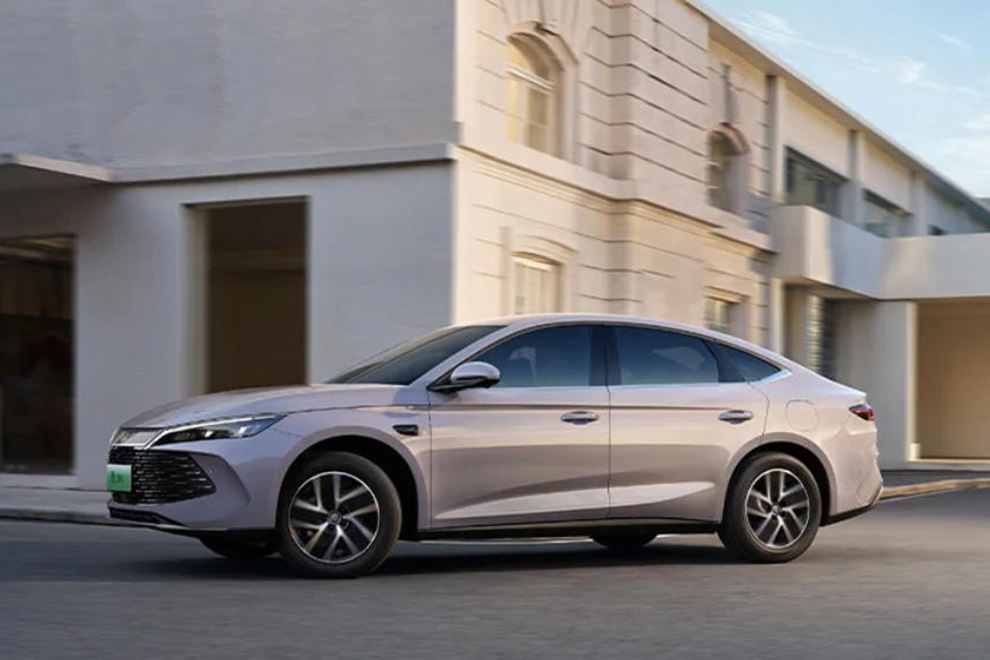
At a glance
- The BYD Qin L is a mid-size sedan offered in DM-i plug-in hybrid and battery-electric forms.
- DM-i trims cover 80 km and 120 km CLTC electric-range ratings, while the EV branch includes a 545 km CLTC version.
- The 80KM and 120KM versions should be chosen around charging access and duty cycle, not headline range alone.
- New Qin L vehicles offer cleaner provenance; used examples require scrutiny of the VIN, mileage, service history and battery condition.
- Export prices move with trim, range, condition, currency, freight, Incoterms and destination charges; live listings carry the current unit terms.
- MOQ, right-hand-drive supply and homologation are deal-specific and must be confirmed before payment.
Why the BYD Qin L matters for export markets
The BYD Qin L is a mid-size sedan whose export proposition combines a familiar body style with electrified powertrains. It sits between smaller compact sedans and premium models, giving importers a practical alternative for company fleets, ride-hailing operations and retail buyers who want equipment without moving into a luxury vehicle. The lineup includes BYD DM-i plug-in hybrid versions and an EV version, allowing the same model name to address markets with different charging access and fuel economics. Its export case is operational: one sedan platform can support electrified procurement across urban and mixed-energy use cases.
Why the Qin L matters in export markets is less about a single universal demand curve than about the way it bridges several buyer needs. A DM-i model can cover substantial daily driving electrically while retaining a petrol engine for longer journeys or incomplete charging access. That makes it relevant where consumers want fewer tailpipe emissions but cannot depend entirely on public chargers. The EV variant offers a simpler fleet proposition for depots that can manage regular charging and have controlled mileage. This distinction is central to fleet procurement because infrastructure and duty cycles often matter more than headline range.
For overseas buyers, the model is best viewed as a value-oriented mid-size sedan with two distinct energy strategies, not as a single specification sold everywhere. Export-market equipment, software interfaces, wheel positions and approvals can differ from the Chinese catalogue, while individual listings may represent different model years and trim labels. A sensible buyer therefore starts with the operating scenario—passenger capacity, daily mileage, charging access and support requirements—then confirms the exact vehicle in the live inventory before calculating landed cost or committing funds, including any destination-market conversion or homologation work.
- Mid-size electrified sedan positioning.
- DM-i mixed-energy flexibility.
- EV fleet charging fit.
Model range, trims and powertrain variants: how the lineup is structured and how to choose
The Qin L range is organized around DM-i and EV branches. Within DM-i, the listings identify 80KM and 120KM electric-range versions, with Leading, Beyond, Excellence, Superior and related grade names used to distinguish equipment levels. Smart Drive editions form another naming layer and should not be treated as a separate energy source. The key selection question is therefore twofold: whether the buyer wants plug-in hybrid or full electric operation, and whether the extra nominal electric range of the 120KM version is justified for the duty cycle and charging access.
For DM-i buyers, the 80KM and 120KM designations represent the nominal electric range associated with the relevant versions, while the petrol-electric system provides the longer-distance fallback. These figures should be read as laboratory-cycle, or CLTC, indications, not a guarantee of daily electric-only distance; weather, speed, load, terrain and driving style can reduce delivered range. A buyer should compare the two versions by charging routine rather than by the label alone, then verify the high-voltage battery capacity and charging specification on the exact listing before assuming equivalent operating costs between otherwise similar fleet vehicles.
The EV branch is represented by a 545KM Superior listing, offering a different procurement logic from DM-i. It is intended for buyers able to charge routinely and should be assessed on usable range, charging curve, connector compatibility and battery condition rather than on the badge alone. Because plug-in hybrid and EV versions carry different energy-storage and charging requirements, they should not be compared as if the same range label meant the same operating model. For a mixed fleet, the split between DM-i and EV is often the most consequential decision.
- 80KM versus 120KM range.
- 545KM EV derivative.
- Smart Drive equipment tier.
New vs used BYD Qin L: how export inventory is structured and how buyers choose
Export inventory for the Qin L can include new vehicles and used examples sourced from the domestic market. New units offer the advantage of a known, unaltered history and the possibility of selecting trim and options before shipment; used units may offer a lower entry cost and can suit buyers who understand depreciation and maintenance history. Availability changes by trim and condition, so the correct approach is to filter the live Qin L listings rather than assume that every factory configuration is immediately available.
For a used Qin L, the inspection should go beyond exterior panels and mileage. Obtain the VIN, registration documents, service records, photographs of the underbody and high-voltage components, and a clear statement of prior accidents, flood exposure or commercial use. On DM-i cars, check that the petrol engine starts cleanly, the hybrid system transitions normally, and the battery state of health is documented where available. On the EV, request a battery health report and evidence of charging performance before shipment.
New and used Qin L vehicles should be evaluated through total cost and operational risk rather than acquisition cost alone. A new example is generally easier to standardize across a fleet, simplify warranty administration and avoid uncertainty over wear, but it may carry a higher capital requirement. A used example can make sense when the buyer has a clear refurbishment and maintenance budget, can verify its history, and plans a shorter ownership horizon. For any used purchase, insist that battery condition and repair history form part of the written acceptance criteria before balance is released.
- New units offer cleaner provenance.
- Used units need documented inspection.
- Battery condition drives residual risk.
How export pricing works: the factors behind a live listing price, and how to read one
A live Qin L export price is the result of several variables, beginning with the vehicle itself. Model year, trim, DM-i electric-range version or EV designation, mileage, condition, ownership history and visible equipment all affect the seller's asking position. Currency movements between the quotation currency and the buyer's currency can also change the final amount. The most important first step is to establish what the displayed figure represents: the vehicle alone, an export transaction at a named Incoterm, or a broader package including documentation, inspection and inland transport, with every inclusion stated in writing.
Landed cost often differs from the live vehicle figure because international freight, marine insurance, port charges, destination clearance and taxes are separate elements. Freight depends on the route, container availability, shipment consolidation, vehicle dimensions and weight, fuel surcharges and the selected port pair. The destination market may also apply duty, value-added tax, registration fees or restrictions based on the exact powertrain and homologation status. Ask for an all-in estimate or a separate schedule so that each controllable and non-controllable charge is visible before the vehicle is loaded or the order is confirmed.
To compare two Qin L listings fairly, normalize them before looking at the headline number. Confirm model year, exact trim, range or battery version, mileage and condition; then confirm whether the quote uses the same Incoterm, destination, payment terms and document package. Review what is included, such as inspection, export declaration, loading, insurance and inland delivery, and what remains payable on arrival. Current per-unit price, minimum order and availability for ChinaCarDirect's live Qin L inventory must be checked there and repeated in a written quotation, because only accepted terms bind the transaction.
- Normalize like-for-like listings.
- Confirm Incoterm and inclusions.
- Check current live unit terms.
MOQ, ordering and payment: single units vs consolidating a container
Minimum order quantity is a commercial term that can vary by seller, vehicle, trim and market arrangement, so it should never be inferred from the existence of a wholesale listing. Some export offers may accept a single vehicle or a mixed shipment, while others may set a model-specific purchasing requirement. Buyers should state the exact quantity they need and ask the supplier to confirm the MOQ, unit allocation and any preference for identical vehicles in one release. The live listing is the place to check the current requirement for that SKU before ordering.
Consolidating several Qin L units into a container can improve freight planning, but the savings depend on how efficiently the vehicles and other compatible cargo fill the available space. A consolidation supplier may combine model-year, trim or condition differences if the buyer accepts that mix, or may require a single specification for fleet standardization. Ask for the loading plan, gross weight and securing method, and clarify who owns the goods during transit. Each unit should still have a separate VIN, sale document, packing reference and condition record for customs and internal fleet control.
A disciplined ordering process should move from specification to confirmation rather than from a headline price to an immediate payment. Send an RFQ stating destination, quantity, preferred model year, trim, powertrain, range version, condition and required Incoterm. The seller should then confirm the matching SKU, price basis, MOQ, availability, inspection scope, document set and payment schedule in a pro forma invoice. Verify the contracting entity and payment beneficiary, use agreed milestones, and make any claim for non-conformity subject to written inspection and document conditions before release of the balance payment.
- Confirm SKU-specific MOQ.
- Consider mixed-container consolidation.
- Use written milestone payments.
Shipping, homologation and market compliance caveats: LHD/RHD and import rules by country
Steering configuration is one of the first checks for an exported Qin L. Vehicles built for China are commonly left-hand drive, while right-hand-drive availability depends on the source vehicle and the export route; it should never be assumed from a generic model listing. A conversion can affect component costs, warranty coverage and approval for the destination market. For fleet procurement, specify the required steering side in the RFQ. For the VIN, verify the original build specification and any conversion record before shipment. This distinction also affects spare-parts planning and any later conversion cost.
Import rules are country-specific and can be more restrictive than a general safety approval. Depending on the destination, authorities may assess vehicle type approval, emissions, occupant protection, battery safety, radio equipment, cybersecurity and software updates. Plug-in hybrid and electric vehicles can also face different tariff, tax, registration or incentive treatment from conventional cars. The importer of record should confirm the exact homologation category, customs classification, charge status and any restrictions before committing. Do not assume that a vehicle approved in its source country is automatically road-registerable elsewhere; confirm destination approval before contracting.
Once the vehicle and approvals are aligned, the shipping workflow still needs defined responsibilities. The seller should complete the agreed pre-delivery inspection, preserve the condition record, load and secure the vehicle, and provide the agreed export documents. The buyer or freight forwarder should confirm the booking, vessel or carrier, insurance, port pair, delivery terms and consignee details. On arrival, customs clearance, duties, taxes, inspection and registration remain separate steps, so the arrival date is not necessarily the date the vehicle can first be operated commercially or delivered to the fleet.
- Verify VIN steering side.
- Check destination-market approvals.
- Define importer and freight roles.
Who should buy the Qin L — and who should pick a different vehicle
The Qin L is best suited to overseas buyers who value a modern mid-size sedan and can match the powertrain to their infrastructure. DM-i fits routes with regular charging plus occasional long-distance travel, while the EV suits fleets with controlled routes, dependable depot charging and predictable mileage. Retail importers may appeal to buyers seeking a roomy, electrified sedan with a higher equipment level than an economy model. In all cases, the strongest case comes from a clear duty cycle and a realistic charging plan rather than a headline range claim alone.
It is less suitable for buyers who have no practical charging option, regularly exceed the available electric range and cannot use the petrol system efficiently. Those needing greater ground clearance, a high-load cargo platform, heavy towing or a proven local parts network should also look elsewhere. Right-hand-drive fleets must treat sourcing and homologation as separate workstreams rather than assuming a simple option choice. Finally, a buyer without access to independent servicing or remote diagnostics should not import a complex electrified sedan without first planning support for the vehicles they intend to operate.
Before finalizing a purchase, build a simple total-cost model rather than comparing only the live asking price. Include acquisition and payment charges, freight, insurance, taxes, registration, charging installation, expected energy or fuel use, maintenance and a realistic residual-value assumption. For a used DM-i or EV, add battery-health risk and potential corrective work. A small pilot release can reveal actual charging, software and service issues before a larger fleet rollout, provided the supplier confirms availability and the buyer has assessed the MOQ for the selected vehicles and the supporting import process.
- Best for managed fleets.
- DM-i suits flexible charging.
- EV suits depot charging.
Main rivals and how the Qin L compares
The closest BYD-family alternative is the Seal U DM-i, which combines BYD's plug-in hybrid concept with an SUV body. It may appeal to importers whose customers prioritize seating height, luggage flexibility and a raised driving position over the Qin L's sedan profile. The trade-off is a different footprint, road holding and loading arrangement, so fleet drivers should compare cargo volume and efficiency rather than assuming the BYD badge makes the economics identical. Qin L buyers seeking a lower, more conventional car should retain the sedan as the logical choice where sedan priorities dominate.
Toyota's Corolla Hybrid is a credible benchmark for buyers who want a sedan with a mature global service proposition and do not require plug-in capability. It provides a different proposition: simpler charging independence and widespread familiarity, but it cannot offer the Qin L DM-i's ability to cover a meaningful portion of daily driving electrically. The Corolla also belongs to a different size and equipment bracket, so buyers should compare safe load capacity, fuel use, tax treatment and aftersales access in their market rather than treating the names as interchangeable alternatives.
The GAC Aion S Plus is a closer alternative for buyers focused on the EV Qin L, because it also targets an electric sedan with charging-dependent operation. It can be relevant where import channels, parts support and local approvals for GAC products are established; otherwise the Qin L combines BYD branding with an available DM-i option. The decisive comparison is a like-for-like landed cost, usable range, charging compatibility, service network and homologation package—not a generic claim that one Chinese EV is cheaper or newer than another.
- Seal U DM-i offers SUV packaging.
- Corolla Hybrid avoids plug-in charging.
- Aion S Plus is an EV sedan option.
Live BYD Qin L export inventory
View all listings →Real units currently on ChinaCarDirect with per-unit asking prices and MOQ. Availability updates live from the catalogue.
How to buy a BYD Qin L from China
-
1
Set the destination and use case
Specify the destination country, daily mileage, charging access, passenger requirements, budget and preferred Incoterm. This defines whether an 80KM DM-i, 120KM DM-i, EV or another vehicle is operationally suitable.
-
2
Filter the live Qin L inventory
Review the current Qin L listings by trim, range version, condition and model year. Use each live unit page for the current price, MOQ, availability and vehicle-level details rather than relying on an old enquiry.
-
3
Verify the exact vehicle
Request the VIN, build sheet, equipment list, registration documents and service history where applicable. For used vehicles, also request battery-health information and evidence of charging performance.
-
4
Request a comparable export quote
Ask for an itemized quotation covering the vehicle, Incoterm, inspection, documentation, loading, freight, insurance and destination charges where applicable. Ensure competing listings use the same specification and trade terms.
-
5
Complete inspection before balance
Approve the condition report, photographs, battery information and vehicle documents before the balance payment. Any repair, cosmetic or performance discrepancy should be resolved in writing.
-
6
Use a written payment schedule
Confirm the contracting seller, beneficiary details, deposit, balance trigger, refund terms and currency with a pro forma invoice. Do not rely on verbal payment or availability promises.
-
7
Book shipping and clear import
Confirm the freight forwarder, carrier, insurance, port pair, loading plan and export documents. Before dispatch, complete destination homologation, customs, duty, tax, registration and charging-installation planning.
Qin L vs rivals
| BYD Seal U DM-i | The closest BYD-brand alternative for markets where it is offered. Its SUV body and raised seating suit buyers prioritizing practicality, while Qin L buyers generally favor the sedan's lower profile and conventional road-car format. |
|---|---|
| Toyota Corolla Hybrid | A credible non-plug-in sedan benchmark with mature global after-sales familiarity. It removes charging dependence but cannot match the Qin L DM-i's electric daily-driving proposition, and its size and equipment should be checked against local fleet needs. |
| GAC Aion S Plus | A direct EV-sedan option for buyers with established GAC import and service arrangements. It is most relevant to charging-dependent fleet buyers who can secure competitive parts support, approvals and a favorable landed cost. |
Frequently asked questions
How is the BYD Qin L export price determined?
The live price reflects the vehicle's year, trim, range or battery version, condition, mileage and currency exposure. Freight, insurance, taxes, destination charges and the chosen Incoterm affect the landed cost. Check the current ChinaCarDirect Qin L listings for each unit's price and request a written quote stating every inclusion.
What powertrain and range options does the Qin L have?
DM-i versions are associated with 80 km or 120 km CLTC electric range, while the EV branch includes a 545 km CLTC 545KM Superior version. CLTC figures are laboratory-cycle indications and should not be treated as guaranteed real-world results. Confirm the battery capacity, motor output and charging specification in the exact listing.
Is a used BYD Qin L suitable for export?
A used Qin L can suit buyers with a clear maintenance budget and a shorter ownership plan. Inspect the VIN, odometer, title, service and accident history, hybrid system, underbody and battery condition before agreeing acceptance terms. Independent pre-shipment inspection is particularly valuable for a used electrified vehicle.
What is the MOQ for a BYD Qin L order?
MOQ can vary by seller, trim, condition and shipment arrangement, so it should be confirmed for the selected SKU. Some offers may accept single vehicles or mixed shipments, while others may apply a model-specific requirement. State the required quantity in the RFQ and check the current live listing before ordering.
How long does Qin L shipping take and what changes the cost?
Transit time depends on the origin and destination, carrier schedule, sailing availability, port congestion, customs clearance and inland delivery. Cost also responds to freight method, consolidation, vehicle size and weight, fuel surcharges, insurance and destination charges. Obtain a freight quotation for the actual route and Incoterm.
Can spare parts for an exported Qin L be ordered?
Parts can be identified by VIN, model year, powertrain and the damaged component, but availability depends on the supplier and BYD's export support arrangements. Confirm whether the seller supports parts ordering, diagnostic software and international delivery. High-voltage components may require specialist handling or regional stock.
Is a right-hand-drive BYD Qin L available?
Right-hand-drive availability depends on the source vehicle and export route; it should not be assumed from a generic Qin L listing. China-built vehicles are commonly left-hand drive, and a conversion may affect warranty, parts planning and destination approval. Request the steering configuration for the VIN before placing an order.
How do I order a BYD Qin L from China?
First identify the required powertrain, trim, range version, condition and destination, then select a matching vehicle from the live listings. Send an RFQ for current price, MOQ, availability, Incoterm, inspection and documents, and review the pro forma invoice before paying. Complete agreed inspection, payment, shipping, customs and registration stages in writing.
Ready to source the BYD Qin L?
Send ChinaCarDirect your destination, quantity, powertrain and trim preferences for a current vehicle-level quote and export plan.
Request a quote