
BYD Qin Plus Export Buying Guide for Overseas Buyers
Compare BYD Qin Plus DM-i and EV trims, export pricing, MOQ, shipping and homologation, with practical guidance for overseas dealers and fleet buyers.
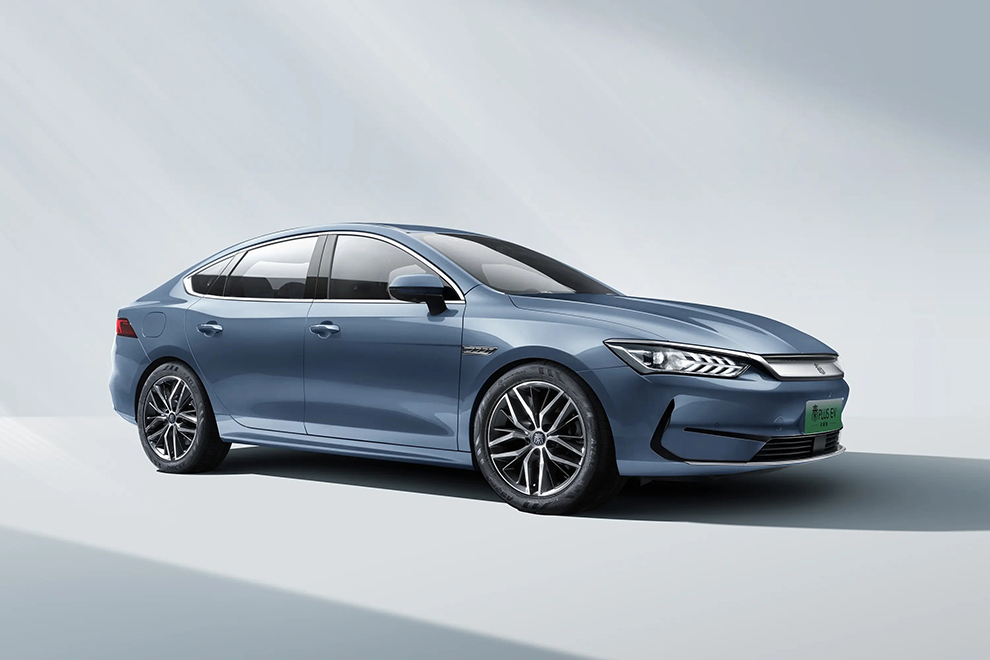
At a glance
- The Qin Plus is a compact sedan offered in DM-i plug-in-hybrid and battery-electric forms.
- DM-i electric range labels include 55 km and 120 km, while EV versions include 400 km and 500 km labels.
- Trim names differ by model year, so buyers should compare the exact year, trim and range version rather than rely on edition labels.
- Used units can reduce acquisition exposure, but battery health, mileage, condition and service history require direct verification.
- Single-unit purchases suit pilot programs, while container consolidation can improve freight efficiency but increases configuration exposure.
- Landed cost must combine the live vehicle quote with freight, insurance, duties, taxes and destination compliance.
Why the BYD Qin Plus matters for export markets
The Qin Plus sits in BYD’s compact sedan family and gives overseas buyers two distinct export propositions: a DM-i plug-in hybrid and a battery-electric version. That flexibility matters in markets where fleet operators need electric daily driving but cannot rely on charging infrastructure alone. Its familiar sedan format can also be easier to position for company fleets, ride-hailing businesses and dealer groups than a niche crossover. The model should therefore be evaluated as a mainstream export product, not simply as a lower-cost Chinese car; affordability alone does not establish overseas demand.
Why does it matter in export markets? BYD combines a globally recognizable marque with a range strategy that can address both fuel-station-dependent and charging-led buyers. A DM-i Qin Plus can cover everyday journeys electrically while retaining a petrol powertrain for longer routes, subject to local rules and actual charging access. The EV versions appeal to buyers prioritizing zero-emission operation, efficient urban use and simple depot charging. For importers, the model’s value is not a single global specification; it is the ability to build separate plug-in-hybrid and battery-electric propositions from one nameplate.
Demand should nevertheless be tested market by market. A Qin Plus that fits urban commuters in one country may not suit a high-mileage fleet in another because of duty cycles, road conditions, charging prices, resale expectations or local emissions policy. Exporters should compare it with locally familiar compact sedans, not assume that Chinese domestic trim names will carry the same value abroad. The strongest case is where the vehicle’s efficiency, electrified operation and equipment justify the additional logistics and homologation work, while spare-parts support and service expectations remain realistic and manageable.
Model range, trims and powertrain variants: how the lineup is structured and how to choose
The Qin Plus range is organized around two powertrain paths. DM-i versions combine a petrol engine with electric propulsion, while EV versions are battery-electric cars with no traction engine. Within DM-i, the visible structure includes 55 km and 120 km electric-only range labels, with a 210 km version represented under 2026 model-year nomenclature. Within the EV family, 400 km and 500 km versions are represented. These labels describe configuration, not guaranteed real-world distance; buyers should also check the test cycle and destination certification before purchase. The homologated destination figure may differ.
Trim names provide a second selection layer, but their meaning changes across model years and export destinations. The range includes labels such as Honor Edition, Champion Edition, Glory Edition and Smart Drive, followed by terms like Leading, Flagship, Prestige or Beyond. These names identify a specific grade, yet they do not create a permanent equipment list for every model year. Compare the exact year, range version and trim rather than assuming that a flagship in one year equals a flagship in another. Request a written equipment comparison for the destination market before placing funds.
For an importer, the best selection method is a three-column worksheet: powertrain, electric range label and trim. DM-i buyers prioritizing frequent electric commuting should focus first on the 55 km or longer range versions, then assess whether local charging habits make that range useful. EV buyers should compare the 400 km and 500 km versions in terms of depot charging, payload, route profile and the homologated range test. Across either path, battery capacity, motor output, charging capability, dimensions and curb weight must be verified for the exact vehicle because they can vary by model year and market.
- Match year, trim and range version.
- Verify test-cycle certification and charging.
- Check battery and dimensions per VIN.
New vs used BYD Qin Plus: how export inventory is structured and how buyers choose
Export inventory includes both new Qin Plus vehicles and used examples available through export channels, but the two channels serve different commercial purposes. A new vehicle is easier to standardise across a dealer group: buyers can compare a defined model year, trim and factory configuration, and warranty terms may be easier to discuss. It may also carry a fresher cabin, newer tyres and a more predictable cosmetic condition. Those benefits still need to be confirmed through photographs, inspection findings and the vehicle agreement, rather than simply inferred from the word new or seller claims.
Used Qin Plus inventory can make more sense where the objective is to place an established model into service quickly or match a proven trim without waiting for a factory allocation. However, a used EV’s battery condition deserves special attention because range and charging performance can change with age and use. For DM-i cars, buyers should examine mileage, service history, hybrid-system warnings, accident repair and the age and condition of high-voltage components. Ask for a battery health report and a road-test result rather than relying on dashboard range alone at handover.
The most reliable structure is a mixed sourcing plan. Dealers building a launch fleet may prioritise newer, consistent vehicles, while independent operators can test demand with selected used units. Whichever route is chosen, create a condition checklist covering VIN, production date, odometer, battery state of health, charging test, tyres, service records, body condition and documents. Compare the total cost of preparing each vehicle for export, because repairs, tyre replacement, software configuration or missing accessories can erase part of the apparent acquisition advantage. Exact availability is visible in the live listings.
How export pricing works: the factors behind a live listing price, and how to read one
A Qin Plus export price is not one fixed factory number. The live listing normally combines the seller’s asking price with vehicle-specific attributes, while the buyer’s final landed cost also depends on exchange rates, international freight, insurance, port charges, customs duties, taxes, local registration and any compliance work. Year, trim, powertrain and range version usually have a larger effect on the asking price than minor cosmetic differences. A used vehicle adds mileage, condition, service history and remaining battery or hybrid-system life to the equation. Always read the unit-specific quote rather than relying on an article-level estimate.
The Incoterm determines where responsibility passes between seller and buyer. Under an EXW-style arrangement, the buyer may need to arrange collection, inland transport, export formalities and every onward service. FOB moves more responsibility and risk to the buyer once the vehicle is loaded at the named port or terminal. CIF can include freight and insurance to a destination port, while DDP may extend the seller’s obligation further, subject to local importability. Compare quotations on the same Incoterm and destination; otherwise the apparent price gap may simply reflect different scopes of supply.
When reviewing a live listing, confirm the model year, exact trim, range or battery version, condition, mileage for used cars, VIN availability, included accessories, warranty, and whether the displayed amount is an asking price, deposit or final payment. Ask whether the seller can provide the relevant inspection, service and ownership documents. Build a landed-cost worksheet with separate lines for inland haulage, export handling, freight, insurance, destination charges, duties, taxes and compliance modifications. Only then compare competing quotes. Current per-unit prices, MOQ and availability are shown on each ChinaCarDirect live listing, and binding terms should be confirmed in writing before payment.
- Compare quotes under one Incoterm.
- Separate asking price from landed cost.
- Confirm documents before payment.
MOQ, ordering and payment: single units vs consolidating a container
The Qin Plus can be sourced for single-unit professional buyers as well as larger consignments, but purchasing mechanics vary by seller and listing. Some vehicles are advertised for individual-unit purchase, allowing an importer, workshop or fleet operator to reserve a specific unit. Other offers may apply a larger batch requirement or negotiate vehicle allocations. Treat the MOQ displayed on each live listing as the starting commercial rule, not a universal assumption about the model. Ask the seller to confirm the quantity, unit-selection process and whether all units in a mixed batch must share the same trim and condition.
Single-unit buying suits market testing, pilot fleets and buyers who need a particular configuration. It reduces inventory exposure and can provide access to a named VIN, but unit-selection risk is higher because buyers cannot easily average away defects or specification differences. A wholesale container or consolidated batch can improve freight efficiency per vehicle and may create stronger commercial terms, yet it also increases exposure to one model year, trim mix or quality level. For mixed trims, ask how vehicles will be grouped, photographed and documented, and whether loading can be supervised to reduce condition disputes.
Payment structure should match control of the transaction. Before any balance is sent, confirm the seller’s legal identity, the vehicle identifier, title and export documents, refund terms, inspection rights and the party responsible for export customs. A staged process commonly reserves the unit, verifies documents and inspection, then pays the balance against agreed shipping evidence. The exact sequence and payment instruments vary by seller and jurisdiction, so do not assume that a deposit is refundable or that ownership has transferred. Put the agreed terms in the purchase contract or order confirmation.
- Check the listing-specific MOQ.
- Reserve a named VIN where possible.
- Use staged payment milestones.
Shipping, homologation and market compliance caveats: LHD/RHD and import rules by country
Shipping starts with deciding whether the vehicle will be exported as a complete car and which route offers the better commercial balance. Ro-Ro vessels are commonly used for finished vehicles, while containerized transport may suit smaller consolidated orders but requires careful securing and space planning. The Qin Plus EV’s high-voltage battery can affect carrier acceptance, isolation and packing requirements; DM-i versions still contain both high-voltage and fuel systems. Freight quotations must therefore use the correct powertrain description and vehicle dimensions, not just the model name. Include origin, destination, insurance and handling requirements when requesting quotes.
Left- and right-hand-drive availability must be established before payment. The Qin Plus is offered in different hand-drive configurations across production markets, but a Chinese export listing may not correspond to the steering position required locally. LHD suits many markets, while RHD is essential in others; the destination’s road layout and registration rules determine the correct choice. Do not assume that steering conversion is acceptable or economical. If the live listing does not state drive side, request the VIN and build-sheet confirmation, then include any conversion in the compliance and quotation plan.
Import rules are destination-specific. A vehicle may need approval against local emissions, safety, type-approval, VIN, lighting, charging, noise, cybersecurity or software-labeling requirements, and plug-in models may face additional rules. Confirm the applicable authority’s current requirements before committing; national rules do not automatically cover every state, province or port. Duties, VAT or sales tax, emissions charges, registration fees and restrictions on used vehicles can materially change the result. The exporter can coordinate shipping, but the importer remains responsible for confirming market compliance and using a properly appointed local broker to clear the vehicle.
- Confirm LHD or RHD before reservation.
- Quote exact powertrain and dimensions.
- Check destination rules with a local broker.
Who should buy the Qin Plus — and who should pick a different vehicle
The Qin Plus is a strong candidate for urban and mixed-route operators that value electrified running, a familiar sedan footprint and broad trim choice. It can suit ride-hailing, company fleets, hotel or tourism operators and dealer demonstration programs where vehicles return to a base with predictable charging. DM-i is generally the more flexible choice when routes occasionally extend beyond charging reach or when a petrol fallback is operationally valuable. The EV version can fit fleets with controlled daily mileage, dependable overnight charging and an obligation to reduce tailpipe emissions, provided the local electricity and maintenance case supports it.
It is less suitable for buyers whose core requirement is maximum cargo volume, heavy towing, severe-duty commercial use or operation on poor roads without frequent servicing support. A compact sedan is not a substitute for a pickup, van or rugged utility vehicle, and the Qin Plus should not be selected only because its purchase quote appears favorable. Buyers needing long, unpredictable routes without reliable charging should test whether the DM-i’s petrol system and fuel availability are acceptable. Organizations with strict zero-tailpipe-emission policies should focus on the EV and verify its local homologation rather than assume every Qin Plus qualifies.
The strongest purchase case combines a defined operating duty cycle, local infrastructure and a realistic residual-value plan. Before ordering, model electricity and fuel consumption, charging time, insurance, tyre wear, servicing and probable downtime. For a dealer, local spare-parts access and technician familiarity may be as important as the headline specification. For a fleet, uptime and driver efficiency often outweigh cosmetic trim differences. A Qin Plus that can be supported locally and charged predictably is likely to deliver better lifecycle value than a more complex vehicle imported without the necessary service infrastructure.
- Best for urban and managed fleets.
- Choose DM-i for mixed routes.
- Choose EV for controlled charging.
- Avoid heavy-duty or unsupported use.
Main rivals and how the Qin Plus compares
The closest alternatives depend on whether the buyer wants the Qin Plus’s DM-i flexibility or its battery-electric format. A Toyota Corolla Hybrid is a familiar global benchmark for fuel-efficient compact-sedan fleets, with mature hybrid technology and no charging requirement; it may be easier to reassure drivers and maintain where Toyota support is strong. The Qin Plus can offer stronger electric participation and more electrified range choices, but buyers should compare local service coverage and total ownership rather than assume Chinese availability translates into better economics. The deciding question is charging access versus operating familiarity.
The MG4 is a relevant battery-electric alternative for buyers focused on a dedicated EV platform and different charging, packaging and software priorities. Depending on destination, its equipment, range homologation and aftersales proposition may be attractive, while the Qin Plus may offer a broader selection of DM-i and EV configurations under one model family. Neither should be chosen from brochure range alone. Compare usable battery capacity, charging curve, payload, software functions, warranty and the real cost of parts. Availability in the destination market is often more decisive than the origin price of the vehicle for fleet procurement.
For buyers considering another Chinese export sedan, the Chery Arrizo 5 is a relevant alternative because it competes in the compact-sedan and plug-in-hybrid space with different styling and local configurations. It can suit importers seeking an alternative badge or a different mix of petrol and electrified versions. Against the Qin Plus, compare the exact powertrain, battery warranty, range test, safety equipment, parts support and whether the dealer can replenish the chosen specification. The right rival is not always the one with the longest headline range; it is the model that fits local demand and can be supported profitably after import.
- Corolla Hybrid: global fleet familiarity.
- MG4: direct battery-electric alternative.
- Arrizo 5: Chinese compact-sedan alternative.
Live BYD Qin Plus export inventory
View all listings →Real units currently on ChinaCarDirect with per-unit asking prices and MOQ. Availability updates live from the catalogue.
How to buy a BYD Qin Plus from China
-
1
Define the market and operating case
Set the destination, drive-side requirement, route profile, charging access and emissions obligations before choosing DM-i or EV.
-
2
Search the live Qin Plus inventory
Filter the live listings by model year, trim, range version and condition, then check the current per-unit quote, MOQ and availability.
-
3
Verify the individual vehicle
Request the VIN, production date, odometer, battery health information, charging test, photographs and relevant service or ownership documents.
-
4
Build a landed-cost comparison
Compare quotations under the same Incoterm and separate vehicle cost from freight, insurance, port charges, duties, taxes and compliance work.
-
5
Confirm MOQ and payment terms
Check the listing-specific MOQ, unit-selection process, deposit and refund rules, title documents, inspection rights and final-payment milestones.
-
6
Arrange homologation and freight
Use a local broker to confirm destination approval and confirm LHD or RHD before booking the appropriate Ro-Ro or containerized transport.
-
7
Inspect before release and import
Complete or commission a pre-shipment inspection, retain condition evidence, then complete customs clearance, registration and local delivery.
Qin Plus vs rivals
| Toyota Corolla Hybrid | The Corolla Hybrid is a non-plug-in fleet alternative with mature global recognition and no charging requirement. The Qin Plus offers more electrified range choices for markets seeking stronger electric participation, but local service coverage may favor the Corolla. |
|---|---|
| MG4 | The MG4 is a direct compact battery-electric competitor with its own platform, charging and software proposition. Compare usable range, payload, warranty and local aftersales support against the specific Qin Plus EV configuration. |
| Chery Arrizo 5 | The Arrizo 5 competes with Chinese compact sedans and offers petrol or plug-in-hybrid alternatives in relevant markets. It may broaden an importer’s sourcing options, but the Qin Plus should be preferred where its range versions, equipment or service proposition align better with local demand. |
Frequently asked questions
How is BYD Qin Plus export pricing determined?
The live price reflects vehicle-specific factors such as model year, trim, DM-i or EV version, range or battery specification, condition, mileage and market demand. Freight, insurance, exchange rates, port charges, duties, taxes, compliance work and the selected Incoterm then affect the landed cost. Check the live Qin Plus listings for the current per-unit quote and have the final Incoterm and payment schedule confirmed in writing.
Which BYD Qin Plus powertrain and range options should I compare?
DM-i plug-in hybrids include 55 km and 120 km electric-only range labels, with a 210 km version represented under 2026 nomenclature. EV versions include 400 km and 500 km configuration labels. These are configuration or test-cycle figures rather than guaranteed real-world range, so verify the battery, certification, charging method and applicable test standard for each vehicle.
Is a used BYD Qin Plus better than a new one for export?
A used unit can suit a quick market test or provide a proven trim at a lower acquisition commitment, but it requires closer inspection. A new vehicle offers more predictable cosmetic condition and configuration, yet should still be verified before shipment. For either channel, compare mileage, battery health, service history, tyres, accident repair and export-document readiness.
What is the MOQ for ordering a Qin Plus?
MOQ depends on the individual seller and live listing, so check the displayed requirement rather than assume a universal model-level rule. A single vehicle may suit an importer or pilot fleet, while a wholesale batch can improve freight efficiency. Confirm whether mixed trims or conditions are allowed and how unit allocation, deposits and refunds will be handled.
How long does Qin Plus shipping take and what affects the cost?
There is no universal transit time because routing, sailing schedules, port congestion, customs clearance and inland delivery all affect the journey. Freight cost also depends on the powertrain, vehicle dimensions, battery handling, origin and destination ports, insurance and Incoterm. Obtain a written freight quote for the exact vehicle and include destination charges in the landed-cost calculation.
Are spare parts available for exported Qin Plus vehicles?
Parts support can vary by destination, model year, trim and seller, so availability should be confirmed before committing to a fleet. Request the correct parts catalogue or vehicle identification details and establish a support channel for high-voltage, hybrid and common wear items. Compare local workshop access and expected parts lead times with the value of keeping vehicles in operation.
Can overseas buyers obtain a right-hand-drive Qin Plus?
RHD availability depends on production configuration and the live inventory, and it should not be assumed from the model name. For an RHD market, confirm the steering side through the VIN or build sheet before reserving the vehicle. If no matching unit is available, evaluate the cost and local approval implications of conversion before proceeding.
How do I order a BYD Qin Plus from China?
Start with the live Qin Plus listings, select the required year, trim, range version, condition and drive side, then request a unit-specific export quote. Before payment, verify the VIN, documents, inspection rights, MOQ, deposit terms and Incoterm in writing. After the balance is released under agreed milestones, arrange export handling, freight, destination clearance and registration.
Ready to source the BYD Qin Plus?
Request a unit-specific Qin Plus export quote through ChinaCarDirect and confirm availability, Incoterm, MOQ and documentation before ordering.
Request a quote