
BYD S7 Export Buying Guide for Dealers and Importers
Buy a BYD S7 from China with clear guidance on engine choices, used-car trade-offs, export pricing, MOQ, shipping, homologation and parts support.
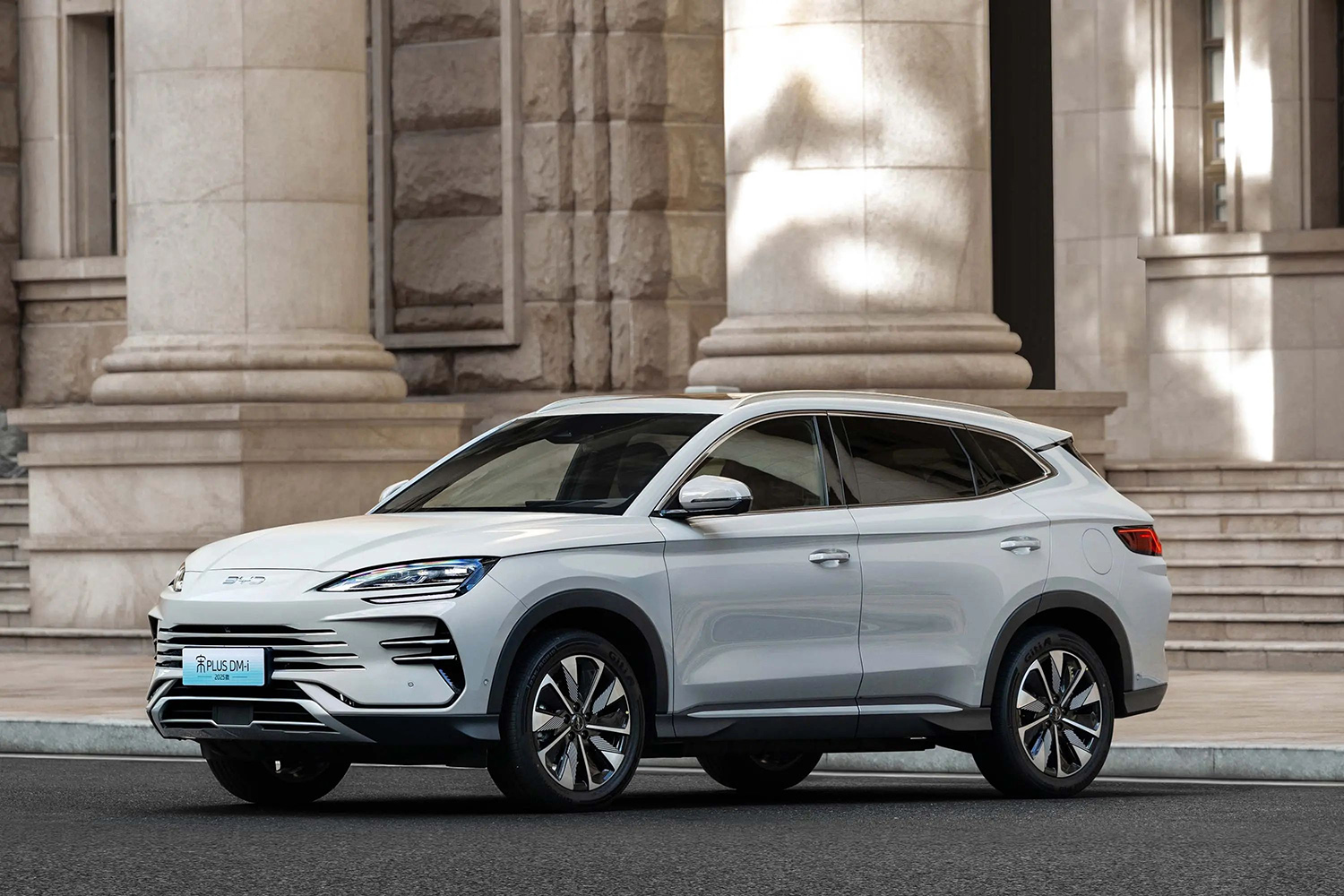
At a glance
- This guide covers the earlier, petrol-powered BYD S7, with 1.5T manual and 2.0T automatic variants.
- Trim labels help locate a vehicle, but the VIN, photographs and an independent inspection remain essential.
- Used examples can lower acquisition cost, while condition, service history and rectification risk require careful pricing.
- A live export quote should separate vehicle cost from freight, insurance, duties, taxes and compliance work.
- MOQ is seller- and lot-specific, allowing a single-unit test or consolidated shipment when commercially available.
- Steering side, homologation and parts support should be confirmed before freight is booked.
Why the BYD S7 matters for export markets
The BYD S7 in this export context is the earlier, combustion-powered mid-size crossover SUV, not a description of BYD’s newer electric S7. Export listings identify it through 1.5T and 2.0T petrol variants with manual or automatic transmissions and trim names such as Luxury, Prestige and Flagship. That distinction matters: a dealer searching by model name alone could otherwise compare an older internal-combustion vehicle with a different, newer product using the same name. For purchasing, the useful first step is to confirm the vehicle generation, model year, engine label and steering configuration on the individual listing before requesting commercial terms.
The S7 is relevant to overseas buyers because it represents the mainstream Chinese SUV formula: a practical body, petrol power and locally familiar service requirements, rather than a niche performance model. Its appeal is strongest in markets where Chinese brands have dealer recognition, used-car channels are active, and buyers prioritize acquisition cost and usable transportation over the latest digital cabin or electric range. For a fleet buyer, the same logic can make a well-maintained example easier to value than a newer model with higher carrying costs. Local fuel quality and parts availability still need checking.
Demand should therefore be tested at the trim and configuration level, not inferred from the BYD badge. A dealer needs to know whether customers prefer manual or automatic vehicles, how they value the Prestige or Flagship specification, and whether spare-part lead times support the intended sales volume. The most defensible export case is a market where those inputs are already understood; otherwise, the S7 should begin as a controlled trial rather than an immediate container commitment. This approach also limits exposure to slow-moving trim variants and preserves budget for pre-delivery rectification.
- Confirm exact S7 generation.
- Match trim to demand.
- Value parts support.
Model range, trims and powertrain variants: how the lineup is structured and how to choose
The export-facing S7 range is built around two turbocharged petrol engines: a 1.5T version paired with a manual gearbox and a 2.0T version paired with an automatic. Across those drivetrains, listing names refer to equipment tiers such as Luxury, Prestige and Flagship, sometimes with Plus, Executive or upgraded wording. Those labels are useful for locating a unit, but they are not a substitute for a VIN-level check of engine, transmission, trim equipment and condition. For overseas procurement, request the vehicle identification number, production date and a clear set of photographs showing the dashboard, controls and body.
The 1.5T manual combination suits buyers who value a straightforward drivetrain and have drivers comfortable with a clutch, especially in fleet settings where manual-transmission familiarity is common. It may also simplify expectations around an older vehicle’s operating character, although no fuel-consumption or performance advantage should be assumed without the individual vehicle’s data. Check service history, clutch operation, gear engagement, engine mounts and evidence of regular maintenance before treating the lower-complexity layout as an advantage. A pre-purchase inspection should also confirm that the listed engine designation matches the physical unit before shipment.
The 2.0T automatic is generally the more convenient choice for mixed-ability drivers, urban stop-start use and customers who do not want to train staff on a manual gearbox. It may appeal more strongly where used-car buyers associate automatic transmission with a higher trim, but buyers should resist equating badge hierarchy with mechanical superiority. Inspect the automatic for harsh shifts, fluid leaks or warning messages, and verify that the gearbox service history is available and credible. Where a market has strong automatic demand, verify that point rather than relying on generic buyer preference.
- 1.5T with manual.
- 2.0T with automatic.
- Verify trim by VIN.
New vs used BYD S7: how export inventory is structured and how buyers choose
Both new and used BYD S7 vehicles can enter the export channel, but their risk profiles differ sharply. A new vehicle may offer a known production history, untouched condition and the original manufacturer’s warranty, subject to the warranty being transferable and valid in the destination country. A used vehicle can offer a lower acquisition cost and a visible operating history, but that history must be verified rather than accepted from the listing title alone. Live inventory is typically organized by condition, production year, trim, powertrain and individual vehicle identity, so the relevant comparison is the exact unit. Because catalogue mix changes, availability should always be checked for the exact configuration rather than inferred from a general category.
For a used S7, the central questions are how the vehicle was used, whether it has been maintained on schedule, and whether wear is consistent with its stated mileage and age. Inspect body structure, paint, glass, interior wear, engine bay, underbody and chassis for evidence of accidents, corrosion or fluid loss. Obtain service records where possible, scan diagnostic systems, and have an independent inspector check the engine, transmission, steering, suspension and braking condition. A clean listing title is not a substitute for that evidence, ideally including a recent third-party inspection report.
New examples make sense when the target market values factory-delivered condition, applicable warranty coverage and low initial repair uncertainty. Their disadvantages can include a higher landed cost, financing exposure, depreciation after registration and difficulty proving suitability for emissions or safety rules that may have changed. Used examples often make more sense for value-conscious dealers or fleet operators with established repair capability, provided the buyer prices in likely rectification work and holds enough margin for maintenance. Choose on total cost and channel fit, not simply on the year shown in the advertisement.
- New: known history.
- Used: condition risk.
- Inspect records and structure.
How export pricing works: the factors behind a live listing price, and how to read one
A BYD S7 export price is a negotiated unit price shaped by several variables, not a fixed market value for the model name. Year, trim, engine and gearbox normally affect comparability, while mileage, exterior condition, interior condition, service history and whether the vehicle is roadworthy can alter the result. Commercial costs also matter: exchange-rate movement, payment terms, inland transport, marine insurance, documentation, freight, destination charges and the selected Incoterm determine the final amount payable. A quote should specify all of these inclusions clearly before any deposit is paid by the buyer.
When reading a live listing, first establish whether the displayed figure covers only the vehicle or also includes agreed export services. Then check the year, exact trim, gearbox, condition notes, mileage and any repair disclosure. Confirm the currency, unit identifiers, payment schedule, validity period and whether the vehicle is sold as-is or after specified preparation. A low headline number can be offset by costly condition work, so the comparison should be made between equivalent vehicles. Never treat an advertised price as a complete landed cost until the seller confirms inclusions in writing.
For a disciplined comparison, ask each seller for a like-for-like quote using the same Incoterm, destination, inspection requirement and documentation package. Build a worksheet that separates vehicle cost, inland handling, freight, insurance, taxes, duties and estimated compliance or repair work. ChinaCarDirect’s live BYD S7 listings are the current source for the per-unit price, availability and MOQ shown for each vehicle; treat earlier market summaries only as background and request a fresh quotation before committing. That method makes quote revisions explainable and prevents a generic asking price from becoming a misleading budget.
- Compare equivalent vehicles.
- Separate landed costs.
- Confirm quote inclusions.
MOQ, ordering and payment: single units vs consolidating a container
The MOQ shown on an individual S7 listing depends on the seller’s commercial setup, not on a universal feature of the model. Some export sellers may accept a single-unit purchase for testing or resale; others may set thresholds, require mixed lots or offer container pricing only. Buyers should therefore treat MOQ as a negotiable transaction term and ask for it in writing for the specific trim, condition and destination. A low MOQ does not remove the need to check freight economics. It simply allows staged market validation before volume exposure.
A practical route for a dealer is to reserve one representative unit, complete a full inspection and calculate its landed cost before considering a larger shipment. For fleet or container orders, the vehicle mix matters because buyers pay to move every unit, so allocating more space to slower-moving trims can erase margin on stronger sellers. The purchase order should identify each vehicle or VIN, agreed condition, documents, inspection standard, payment milestones and the party responsible for loading, customs and freight. This creates a clear audit trail if a unit differs from its description before shipment.
Payment mechanics should follow the risk, not just the advertised convenience. A buyer can use a staged structure that links the deposit to reservation, the balance to satisfactory inspection and release of the vehicle and shipping documents to the agreed handover point. Verify the seller’s legal identity, the invoice terms and the beneficiary account, and understand how foreign-exchange fees affect the amount. For larger consolidations, align payment milestones with actual port and loading progress rather than relying on a generic sales schedule. Ask for confirmation of cancellation, refund and title-document terms before paying.
- MOQ is seller-specific.
- Test before scaling.
- Stage payment to risk.
Shipping, homologation and market compliance caveats: LHD/RHD and import rules by country
Steering configuration is an early sourcing check. Do not assume steering position from the listing; these vehicles are commonly encountered as Chinese-market, left-hand-drive examples, but an overseas buyer should never infer that a particular unit can simply be converted to right-hand drive. Ask the seller for the VIN, steering position and intended export market, and request clear photographs of the dashboard and controls. If right-hand-drive availability is essential, confirm it before payment rather than assuming a conversion is permissible, practical or homologation-compliant. Local conversion rules can affect safety inspection, registration and the value of the finished vehicle.
Homologation is country-specific and cannot be settled by the BYD name or an export invoice alone. The importer must check local type approval, emissions and safety requirements, VIN or customs documentation, roadworthiness testing, tax and duty treatment, and whether the exact engine and configuration are eligible. Left- or right-hand-drive conversion, modified lighting, wheel or tire rules may require inspection or specialist approval. A vehicle that is legal to export from China is not automatically legal for registration in the destination. Engage a local conformity specialist before paying non-refundable transport costs where required.
Shipping choice affects both cost and delivery risk. Depending on vehicle condition and the forwarder’s options, a specialist vehicle carrier or container shipment may be used, and the vehicle’s dimensions determine handling, securing and stowage requirements even though they should be verified per unit. Ask the forwarder for a booking that states the origin and destination terminals, route, transit estimate, insurance, documentation and chargeable-event responsibilities. A pre-shipment inspection should happen early enough to correct safety, fluid or cosmetic issues before loading. Allow contingency for port congestion, customs queries and parts delays after arrival globally.
- Verify steering side.
- Check local homologation.
- Inspect before loading.
Who should buy the S7 — and who should pick a different vehicle
The S7 is a sensible candidate for a dealer seeking an established Chinese mid-size crossover at the mainstream end of the import market, particularly where BYD has recognition and workshop support already exists. It can suit used-vehicle retailers, regional distributors and fleet buyers focused on practical petrol transport and manageable acquisition cost. The strongest case is in a market with clear demand for the 1.5T manual or 2.0T automatic, access to parts and realistic expectations for an older model. Importers should also understand local preferences for left- or right-hand-drive vehicles clearly.
It is a weaker choice for operators who require the latest crash-safety rating, advanced driver assistance, electric efficiency, connected-cabin functions or a long factory warranty in their market. It may also suit buyers poorly if emissions rules are tightening, right-hand-drive supply is uncertain, or spare parts and electronic repairs require specialist support. Those limitations are not automatically disqualifying, but they should be reflected in the target price, insurance assumptions and realistic resale expectation. A strong used-car discount cannot repair a mismatch between the vehicle and local rules or buyer priorities.
The decision should be made through a three-part business case: customer demand, whole-life operating cost and regulatory readiness. Test the selected trim against comparable local vehicles, estimate fuel, maintenance, insurance and likely rectification costs, then verify that registration and parts support are realistic. If the S7 does not clear those checks, a more recent Chinese SUV, a mainstream Japanese or Korean used model, or a current hybrid may deliver a better commercial result even at a higher acquisition level. For a first container, use conservative demand assumptions and preserve the option to adjust the next shipment.
- Best for value-led buyers.
- Parts support is essential.
- Not for latest-tech needs.
Main rivals and how the S7 compares
The Great Wall Haval H6 is one of the closest Chinese-brand alternatives for a mainstream SUV buyer. Depending on the destination and model year, it may offer a different balance of styling, equipment and powertrain choice, so the fair comparison is between locally registered examples rather than the newest catalogue version. The H6 may appeal where an established Great Wall dealer network reduces service anxiety, while an S7 buyer should justify its position through condition, specification and landed cost. Parts support and residual demand remain decisive in either direction for the specific market.
The Chery Tiguan 5x occupies a similar practical family-SUV position and is a relevant alternative for buyers who want to compare BYD’s drivetrain and trim presentation with Chery’s. The model’s market image, equipment mix and availability of automatic or manual versions vary by country and production period, so an importer should compare homologated examples rather than assume a specification advantage. If Chery has stronger local recognition or the planned fleet is familiar with it, that can outweigh a modest difference in the purchase quote. The decision should include actual resale turnover data for that segment.
The Changan CS75 Plus is another relevant Chinese SUV competitor, particularly for shoppers comparing design, cabin presentation and higher-specification powertrains with the S7. Its strongest argument may be a more modern image or a broader equipment proposition, but those advantages must be demonstrated by the exact vehicle because versions differ widely. For the S7, the counterargument is often simpler procurement, a lower acquisition entry point or better fit with demand for an established used configuration. Whichever rival is shortlisted, inspect, homologate and total the landed cost on the same basis.
- Haval H6: compare network support.
- Tiguan 5x: compare market fit.
- CS75 Plus: compare modern features.
Live BYD S7 export inventory
View all listings →Real units currently on ChinaCarDirect with per-unit asking prices and MOQ. Availability updates live from the catalogue.
How to buy a BYD S7 from China
-
1
Define the market and use case
Identify the destination, customer segment, preferred gearbox and expected resale channel. Compare the S7 with locally registered alternatives before committing to a volume assumption.
-
2
Search the exact model generation
Review the live BYD S7 inventory and filter out any newer electric model that does not match the combustion-powered vehicle described here. Shortlist units by 1.5T or 2.0T, gearbox, trim and condition.
-
3
Verify identity and condition
Request the VIN, production date, service records, dashboard photographs, body images and disclosed damage. Confirm that the seller’s description matches the physical unit.
-
4
Compare like-for-like landed quotes
Ask sellers to quote under the same Incoterm, destination and inspection requirement. Separate vehicle cost from freight, insurance, duties, taxes, documentation and likely repairs.
-
5
Commission an independent inspection
Use a qualified inspector to examine structure, paint, engine, transmission, chassis, brakes, steering and diagnostics. Record any required rectification in the purchase agreement.
-
6
Agree MOQ, payment and documents
Confirm the unit or lot quantity, deposit, balance milestones, cancellation terms and required ownership or export documents. Link final payment to inspection and document acceptance.
-
7
Clear compliance and arrange shipping
Confirm steering side, destination conformity, customs treatment and parts availability before booking freight. Align the inspection, payment release and shipment schedule so problems are found before loading.
S7 vs rivals
| Great Wall Haval H6 | A direct Chinese-brand SUV comparison where model year, trim and powertrain choices can overlap. The H6 may be easier to resell where Great Wall recognition or service coverage is stronger; the S7 may be preferable if its exact unit offers better acquisition fit or stronger local demand. |
|---|---|
| Chery Tiguan 5x | A practical family-SUV rival whose local trim, gearbox and equipment mix should be compared using homologated examples. Chery’s stronger local recognition can outweigh a modest S7 price difference in markets where fleet familiarity is important. |
| Changan CS75 Plus | A design- and equipment-oriented alternative for buyers seeking a more modern presentation or broader specification proposition. The S7 remains relevant when the importer values simpler procurement, a lower acquisition entry point or a better-established used configuration. |
Frequently asked questions
How is BYD S7 export pricing determined?
The exact unit’s year, trim, engine, gearbox, mileage, condition, service history, exchange rate, freight, insurance, documentation and Incoterm all influence the price. Compare equivalent vehicles and establish what each quote includes. Current per-unit price, MOQ and availability are shown in the live BYD S7 inventory on ChinaCarDirect, and buyers should request a fresh written quote before paying.
What engine and transmission options does the exported S7 have?
The combustion-powered S7 represented by these listings is available with a 1.5T petrol engine and manual gearbox or a 2.0T petrol engine and automatic gearbox. Exact output, drivetrain and condition vary by vehicle, so buyers should verify the VIN, physical engine label and service history rather than relying on the trim name alone.
Should an overseas buyer choose a new or used BYD S7?
A new example offers factory-delivered condition and potentially applicable warranty coverage, while a used example may offer a lower acquisition cost but carries more condition and maintenance risk. Used vehicles generally require stronger inspection, records and rectification allowances. Neither option is inherently better; the decision depends on local demand, compliance, parts support and total landed cost.
How does MOQ work when ordering a BYD S7 from China?
MOQ is determined by the seller, vehicle condition, trim and proposed lot rather than by a universal S7 rule. Some sellers may accept a single-unit test order, while others may require a larger or mixed shipment. Confirm the applicable MOQ and any container-consolidation conditions on the live listing and in a written quotation.
What determines BYD S7 shipping time and cost?
Shipping cost and transit time depend on the transport mode, route, origin and destination ports, vehicle dimensions, condition, securing requirements, insurance, documentation and customs workload. Congestion, inspections and missing paperwork can extend the schedule. Ask the forwarder for a written booking with all charges, responsibilities and a realistic transit estimate.
Can spare parts for the BYD S7 be sourced from China?
Parts can often be ordered against the vehicle’s VIN and production period, but availability and compatibility should be confirmed before shipment. Do not assume that every Chinese-market component satisfies local safety, emissions or inspection requirements. Include an initial service kit if local stock is limited and avoid repairs that depend on an unverified part.
Is right-hand-drive BYD S7 availability guaranteed?
No. Right-hand-drive availability depends on the individual vehicle, seller and destination market, so it should not be assumed from the model name. Confirm the steering configuration on the live listing and before payment. Any conversion also requires local approval and may affect safety, registration, warranty and resale value.
How do I order a BYD S7 for export?
Begin with the live BYD S7 inventory, identify the exact generation and select a unit that matches the required engine, gearbox, trim and condition. Request a written quote and independent inspection, then agree MOQ, payment milestones, export documents and the Incoterm. Clear destination compliance and freight arrangements before the balance is released and the vehicle ships.
Ready to source the BYD S7?
Request a current BYD S7 quote and unit-level inspection package through ChinaCarDirect.
Request a quote