
BYD Seagull Export Guide for Dealers and Fleet Buyers
Compare BYD Seagull 305km and 405km versions, learn export pricing, MOQ, shipping and compliance, then review current listings for overseas buyers.
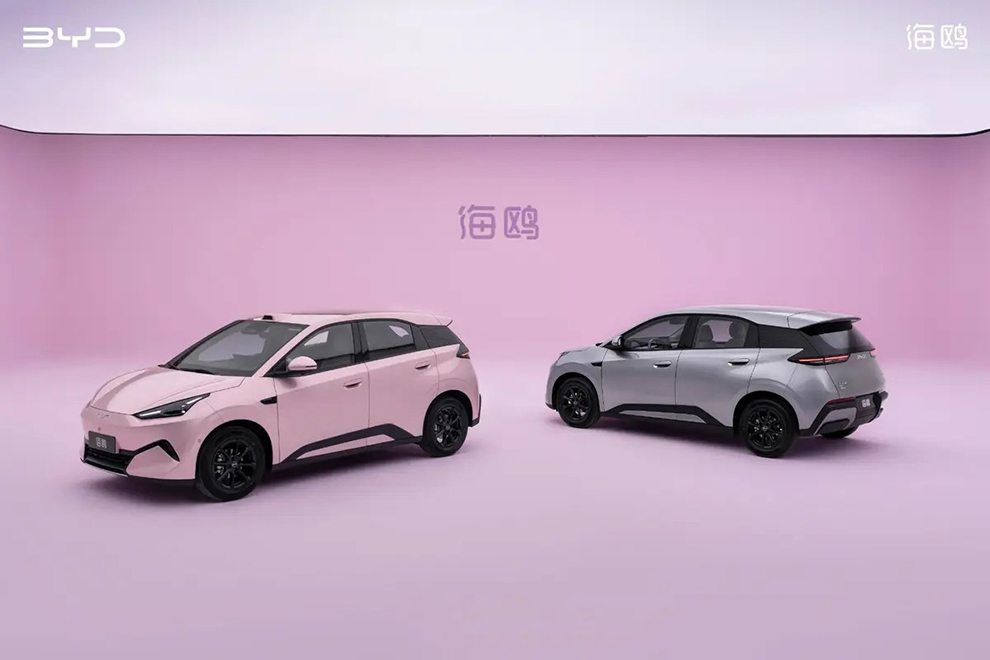
At a glance
- The Seagull is a compact battery-electric hatchback suited to affordable urban mobility and small-fleet use.
- CLTC range choices of 305 km and 405 km let buyers match range to duty cycle instead of over-specifying.
- Live export quotes vary with trim, range version, vehicle age and condition, exchange rates, freight and Incoterm terms.
- New and used Seagull inventory offers different balances between consistency, acquisition cost and inspection risk.
- Destination-market homologation, steering configuration, charging access and parts support should be confirmed before commitment.
Why the BYD Seagull matters for export markets
The BYD Seagull matters for export because it places BYD’s electric-vehicle proposition in the compact urban-car segment. Its five-door hatchback format suits city driving, ride-hailing, hotel and campus fleets, and last-mile operations where a larger vehicle adds energy use and parking difficulty without improving daily productivity. For overseas dealers evaluating the BYD Seagull for export, the attraction is not simply acquisition cost: it is a recognized manufacturer, practical packaging and two CLTC range options that can be matched to different operating profiles. That combination makes the model relevant to importers seeking an affordable, fleet-friendly entry point rather than a large premium electric vehicle.
That positioning is particularly relevant as import markets electrify short-distance fleets. Urban routes can be predictable, daily mileage manageable and depot charging available, making efficiency and compact dimensions more commercially useful than maximum driving range. Yet export buyers should distinguish affordability from total cost of ownership. Electricity tariffs, charger installation, labor, insurance, servicing, residual values and a mature local parts network can influence operating economics as much as the vehicle’s export quote does. A buyer should therefore model the charging plan and service pathway before presenting the Seagull as a low-cost transport solution to customers or fleet managers.
Demand should also be assessed realistically. The Seagull is best treated as a volume urban-EV candidate rather than a universal electric replacement. Climate, road quality, payload, motorway use and local consumer preferences determine how attractive it becomes. A disciplined importer can position it around urban commuters and business fleets, while a distributor seeking broad family appeal may need a larger model. Product-market fit, homologation and after-sales planning are therefore more important than headline range alone. That approach avoids treating one successful urban pilot as proof that every segment will convert.
- Compact urban EV positioning
- 305 km and 405 km CLTC options
- Charging drives operating economics
Range, trim and battery lineup: 305km vs 405km versions and how to choose
Seagull selection begins with two stable CLTC range variants: 305 km and 405 km. The shorter-range version may suit fleets with controlled urban routes, predictable daily mileage and regular depot charging, avoiding the burden of carrying more energy than operations require. The longer-range version is more logical for mixed urban and regional use, longer shifts or buyers wanting additional margin between charges. These are CLTC figures, so local homologated range will not necessarily match them. Compare the homologated figures in each destination instead of using the Chinese test-cycle label as a sales promise.
Trim labels require careful reading rather than assumptions based on translation. The export catalogue includes Active, Free, Freedom, Honor, Flying or Soaring, Vitality, Intelligent Driving and Smart Drive designations, sometimes combined with a range figure and terms such as Dynamic. Names vary across catalogue entries and may not map neatly to a single global hierarchy. Ask the seller for the exact Chinese specification, standard-equipment list and variant code, then check the photographs, fitted options and vehicle documents. Confirm whether any listed assistance functions are actually fitted rather than inferred from the trim badge.
The practical decision is to build a requirement matrix. List route length, charging windows, payload, climate, local charging standard, safety and driver-assistance needs, then compare the 305 km and 405 km cars against those requirements. Do not pay for a more premium-sounding derivative merely because its label sounds higher. Conversely, do not choose the shorter-range version if overnight charging is unreliable. Verify battery capacity, motor output, curb weight, charging times and equipment in the live listing before signing. The exact BYD Seagull specs should be confirmed for every unit, not inferred from the model name.
New vs used BYD Seagull: how export inventory is structured and how buyers choose
A used BYD Seagull and a new unit serve different export strategies. New inventory offers tighter specification control, more consistent condition and the possibility of a clearer warranty pathway, although the warranty’s destination-country validity must be confirmed. Used inventory can reduce acquisition cost and offer a known configuration at a lower initial outlay. The live catalogue separates vehicles through attributes such as model year, trim, range version, mileage, condition and history, so buyers should filter rather than rely on the word “new” alone. That distinction matters to every BYD Seagull wholesale decision.
For a used car, condition should be evidenced, not assumed. Request the VIN, registration and title documents, service history, accident or damage records, and photographs of the battery, interior, exterior, underbody and charging port. Ask for a battery state-of-health report, an on-board diagnostic scan and evidence of charging under both normal and rapid conditions where available. Uneven cell readings, warning messages, altered mileage or incomplete ownership papers should be treated as reasons to pause, not as minor description gaps. Any repair scope should also be costed before the vehicle enters a destination fleet.
The choice should follow operating priorities and holding period. A buyer needing predictable uptime, standardized fleet specification or the longest available planning horizon may prefer a new vehicle, especially when financing and residual-value assumptions are conservative. A used Seagull can suit budget-conscious importers, staff fleets or a controlled pilot when acquisition savings outweigh inspection, maintenance and resale uncertainty. Compare the complete cost of ownership, including local servicing and charger access, instead of using purchase price as the sole decision variable. Live listings remain the authority for each unit’s actual age and condition.
- New units favor standardized specification
- Used units require condition evidence
- Compare full ownership economics
How export pricing works: the factors behind a live listing price, and how to read one
This BYD Seagull export price guide starts with a simple rule: a live listing price is vehicle-specific, not a permanent model-wide tariff. Model year, exact trim, 305 km or 405 km version, new or used status, mileage, condition, equipment, ownership history and exchange-rate assumptions can all affect the ask. Colour or cosmetic differences may matter within a trim, but they should never replace a like-for-like specification comparison. Exact current prices, MOQ and availability are shown per unit in the live ChinaCarDirect inventory and must be reconfirmed before contracting. Treat a displayed figure as a quotation starting point.
The vehicle price is only one layer of export cost. Ocean or air freight, marine insurance, terminal and handling charges, inland delivery, customs brokerage, duties, taxes, inspection, registration and financing can materially change the landed amount. The Incoterm defines where the seller’s obligation ends and the buyer’s begins; EXW, FOB, CIF and DDP place risk and cost at different points. Request the currency, tax treatment, inclusions and quote validity in writing so an apparently cheaper unit is not mistaken for a cheaper delivered vehicle. Do this before comparing offers from different sellers.
Build a landed-cost worksheet for each shortlisted vehicle. Put the live vehicle price, confirmed exchange rate, freight mode, route, Incoterm, insurance, port charges, duty and tax treatment in separate rows, then add expected local registration, charger and service costs. Ask whether the seller offers inspection, document handling, consolidation or export documentation, and whether those services are quoted or included. Payment milestones, deposit terms, refund conditions and the effect of a failed inspection can also make two quotes commercially different even when their visible vehicle prices match. Compare the final obligations, not just the headline ask.
- Trim, range and condition move price
- Separate ask from landed cost
- Verify Incoterm and quote validity
MOQ, ordering and payment: single units vs consolidating a container
There is no universal BYD Seagull MOQ; quantity terms belong to the seller and the selected listing. Some offers may accept one vehicle, while wholesale arrangements may require several units of one specification or a mixed allocation. A dealer testing demand can ask whether a single-unit order is possible, whether a deposit is required, and whether the vehicle can be reserved. A buyer planning container consolidation should ask whether several Seagull variants, and potentially other models, can be grouped under one logistics plan without weakening the inspection or documentation process.
A sound ordering sequence begins with a written specification and commercial offer. Request a pro forma invoice that identifies each vehicle by trim, range version, model year, condition and VIN where assigned, followed by agreed payment milestones. Confirm whether the balance is due before loading, after inspection or on bill-of-lading terms, and align that schedule with the inspection evidence. The document set should be agreed in advance: sales or export invoice, packing list, vehicle handover records, export declaration, transport documents and any market-required certificates. Copies should be checked for consistency before payment.
Payment controls should protect both sides without creating avoidable compliance problems. Pay only to the named seller or authorized exporter, verify beneficiary details against the pro forma invoice, and use a traceable corporate payment method. A deposit should be linked to vehicle allocation and documented refund conditions; the balance should be tied to satisfactory inspection and handover. For used units, check title status, liens, registration and export eligibility before remitting funds. When terms are unclear, request an RFQ with destination, quantity, preferred versions and delivery terms rather than assuming marketplace defaults.
- MOQ varies by seller and listing
- Use a vehicle-level pro forma
- Tie payment to inspection evidence
Shipping, homologation and market compliance caveats
EV shipping has a specific battery and handling component. The traction battery must be transported under applicable dangerous-goods rules, and the supplier should provide the required battery test documentation for the shipment. Sea freight is generally the economical bulk option, while road or rail legs and air service can affect cost, routing and timing. Container space, loading method, port congestion, weather and the final inland destination all influence freight. Obtain the packing list and transport documents before release, and confirm that the carrier or freight forwarder accepts the exact battery configuration.
Steering configuration is a sourcing question, not an assumption. Left-hand-drive and right-hand-drive Seagull production or export availability can differ by batch and destination, so confirm the configuration shown in the exact unit before paying. Import rules also vary: local type approval may cover safety, emissions, electric-vehicle battery, charging, radio, software and vehicle data. A Chinese-market catalogue entry does not itself establish approval in another country. Obtain the VIN and homologation documents, then have the destination importer or approved technical adviser map them to national requirements. Parallel imports may face separate restrictions.
Compliance continues after the vehicle enters the market. Customs classification, tariff treatment, value declarations, local taxes, registration, insurance and eligibility for incentives are destination-specific. Local adaptation may be needed for lighting, charging equipment or software, while some markets require additional inspection. After-sales readiness is equally important: confirm BYD or service-partner coverage, technician access, diagnostic tools, warranty handling and spare-part lead times. A compliant shipment without a realistic maintenance and parts plan can still become an expensive operational liability for a dealer or fleet operator. Plan those services before the first vehicle is advertised.
- Confirm LHD or RHD per unit
- Validate destination-specific homologation
- Budget battery-compliant freight and handling
Who should buy the Seagull (and who should pick a larger EV)
The Seagull is a strong candidate for urban dealers, ride-hailing operators, last-mile delivery fleets, hotel and campus transport, and company-car pilots. These users often value a compact five-door body, manageable energy use, convenient charging and a vehicle that can carry several people or light cargo without moving into a larger fleet segment. It can also serve as a controlled entry product for an importer building an electric-vehicle range. The decisive point is the duty cycle: short, predictable routes and dependable charging make efficiency easier to demonstrate. A small pilot can validate utilization.
A larger EV is usually the better fit when routes extend beyond the city, passengers need more cabin or cargo room, payloads are heavy, or drivers regularly travel on motorways. Buyers in colder regions may also prioritize a model with the thermal-management, range and charging provisions suited to local conditions; those capabilities must be checked rather than inferred. Families should consider rear-seat usability, luggage capacity and safety equipment. A fleet that cannot rely on overnight charging or local servicing should choose a model with greater range, proven support and more flexible deployment.
Use a go-or-no-go operating test rather than a badge-driven decision. Map representative routes, calculate energy and charging requirements, inspect local service options and estimate total cost over the intended holding period. Include residual value, insurance, downtime, battery-health provisions and the cost of replacement or repair parts. For an importer, a small mixed-trim allocation can reduce concentration risk, while fleet buyers may standardize one range version. If the business case depends on uncertain residual values or unproven charging access, begin with a pilot and preserve flexibility. That discipline also clarifies when to pass.
- Strong fit: urban depot-charged fleets
- Conditional fit: mixed regional routes
- Weak fit: heavy-payload or long-distance use
Main rivals and how the Seagull compares
The Wuling Bingo is the closest shopping alternative for buyers focused on a compact city EV. Compare the actual homologated dimensions, range, charging interface, safety equipment, assistance features and aftersales network rather than assuming one brand is automatically cheaper or better. The Seagull offers two documented CLTC range options and a broad translated trim catalogue; the Bingo may appeal to buyers focused on a different size, equipment set or local distribution relationship. For an importer, the deciding evidence is the live specification, landed cost and service plan for the destination market.
The BYD Dolphin is a more conventional compact electric model and generally offers more cabin and luggage space than the Seagull. That makes it a more natural consideration for small families, comfort-oriented company cars and buyers who want greater flexibility on regional trips. The Seagull’s urban-size positioning can be easier to deploy and potentially more efficient in tight routes, but the final comparison should use destination-approved specifications, real cargo requirements, charging plans and total operating cost. Shared BYD branding does not guarantee identical equipment, pricing or local service across the two models.
The Changan Lumin targets an even more minimal urban-car brief. Its appeal can lie in straightforward city mobility and easy maneuverability, while the Seagull offers buyers a broader selection of translated editions and two CLTC range choices. That does not make the Seagull automatically better: a Lumin configuration with the right service network, charging arrangement and purchase terms may fit a specific buyer more closely. Compare crash-safety provisions, charging, luggage, software assistance, battery-related support and residual prospects in the exact market. No rival wins without a destination-specific cost and compliance check.
Live BYD Seagull export inventory
View all listings →Real units currently on ChinaCarDirect with per-unit asking prices and MOQ. Availability updates live from the catalogue.
How to buy a BYD Seagull from China
-
1
Set the destination and duty cycle
Record the destination country, port, route lengths, payload, charging windows, climate and aftersales coverage. These requirements determine whether the compact Seagull is commercially suitable.
-
2
Choose the range and trim
Compare the 305 km and 405 km CLTC versions against homologated local figures, charging needs and route patterns. Verify the exact translated trim, fitted equipment, battery capacity and motor data for each shortlisted vehicle.
-
3
Request and normalize live quotes
Review the current per-unit price in the live inventory and request a written quote covering currency, Incoterm, freight, insurance, port charges and tax treatment. Use the same landed-cost worksheet for every seller.
-
4
Verify vehicle and condition
For a new Seagull, confirm the production specification and warranty pathway. For a used Seagull, review the VIN, title, mileage, service and damage records, battery-health report and diagnostic scan.
-
5
Confirm homologation and logistics
Check LHD or RHD availability, destination type approval, charging requirements and battery transport documentation. Obtain a route-specific freight plan that includes marine or air freight, insurance, handling and inland delivery.
-
6
Agree MOQ, documents and payment
Confirm the seller’s MOQ, vehicle allocation, deposit, balance milestone and refund conditions in a pro forma invoice. Verify the seller, beneficiary, invoice details and export-document responsibilities before remitting funds.
-
7
Inspect, release and track
Complete the agreed inspection and document check before releasing the balance. Follow the handover records, packing list and transport documents through loading, departure, customs clearance and delivery.
Seagull vs rivals
| Wuling Bingo | A close compact city-EV alternative with different dimensions, equipment and local distribution arrangements. The Seagull’s two CLTC range choices may provide useful flexibility, but homologation, parts support and actual landed cost should decide the fit. |
|---|---|
| BYD Dolphin | Generally larger and more conventional than the Seagull, with more space for small families, company cars and regional travel. The Seagull is better suited to urban deployment where compact packaging and operating efficiency are the priority. |
| Changan Lumin | A minimalist, highly compact city option that may appeal where straightforward urban mobility is the main requirement. The Seagull offers more translated editions and two range choices, but a Lumin offer with better local service and terms may suit a particular buyer more closely. |
Frequently asked questions
How is BYD Seagull export pricing determined?
The export price starts with the exact vehicle’s live asking price, which can change with model year, trim, 305 km or 405 km version, mileage, condition, option content and exchange-rate assumptions. Freight, insurance, port handling, customs, duty, tax, registration and the selected Incoterm determine the landed cost. Review current per-unit prices, MOQ and availability on ChinaCarDirect’s live listings, then request a written quote for your destination.
Should I choose the 305 km or 405 km BYD Seagull?
The Seagull is offered with 305 km and 405 km CLTC range variants. Choose based on daily route, charging window, load and local homologated range; the longer-range version is generally more relevant for mixed or regional use. Do not infer exact battery capacity from the range label—check the live specification for kWh, motor output and charging data.
Is a used BYD Seagull better value?
A used BYD Seagull can offer a lower acquisition cost and a known configuration, but condition, battery health, mileage, accident history and ownership documents must be verified. A new unit usually provides greater specification consistency and a clearer warranty pathway, subject to destination-country coverage. Compare total ownership cost and the intended holding period rather than treating the lower entry price as automatically better value.
What is the MOQ when buying BYD Seagull from China?
There is no fixed catalogue-wide MOQ; the seller and individual listing set the quantity and deposit terms. Ask whether one unit is accepted, whether several versions can be consolidated and what mixed-model loading is permitted. The current MOQ for each offer should be checked in the live listing and confirmed in the pro forma invoice.
How long does Seagull shipping take and what does it cost?
Shipping time and cost depend on origin and destination ports, transport mode, route, battery handling, container availability, congestion, insurance, paperwork and inland delivery. A complete quote should state the Incoterm, freight inclusions and quote validity. Timing and freight are best confirmed for the actual vehicle and route before funds are released.
Are spare parts available for exported BYD Seagulls?
Spare-part availability depends on the destination country’s BYD or service-partner network, model-year coverage, parts stocking and diagnostic support. Ask the seller for the parts and warranty process, then obtain confirmation from the local importer or distributor for consumables, high-voltage items and lead times. This is especially important for vehicles without an established local service history.
Is a right-hand-drive BYD Seagull available?
Right-hand-drive availability can vary by production batch, specification and destination, so it must be confirmed for the exact unit rather than inferred from the model name. Check the photographs and VIN-linked documents, and ensure the vehicle is eligible for destination-market homologation and registration. Source the correct steering configuration first rather than planning an expensive late conversion.
How do I order a BYD Seagull from China?
To buy BYD Seagull from China, first shortlist the required range version, trim, condition and steering configuration in the live inventory. Request an RFQ and pro forma invoice covering vehicle identity, price, MOQ, payment milestones, Incoterm, documentation and delivery terms. Verify the seller and beneficiary, complete inspection and document checks, and release the balance only against the agreed handover evidence.
Ready to source the BYD Seagull?
Request a current BYD Seagull quote with your destination, quantity, range version and new or used preference.
Request a quote