
BYD Song Export Buying Guide for Dealers and Fleets
Buy BYD Song from China with practical guidance on DM-i and petrol trims, used-unit checks, export pricing, MOQ, shipping and market compliance.
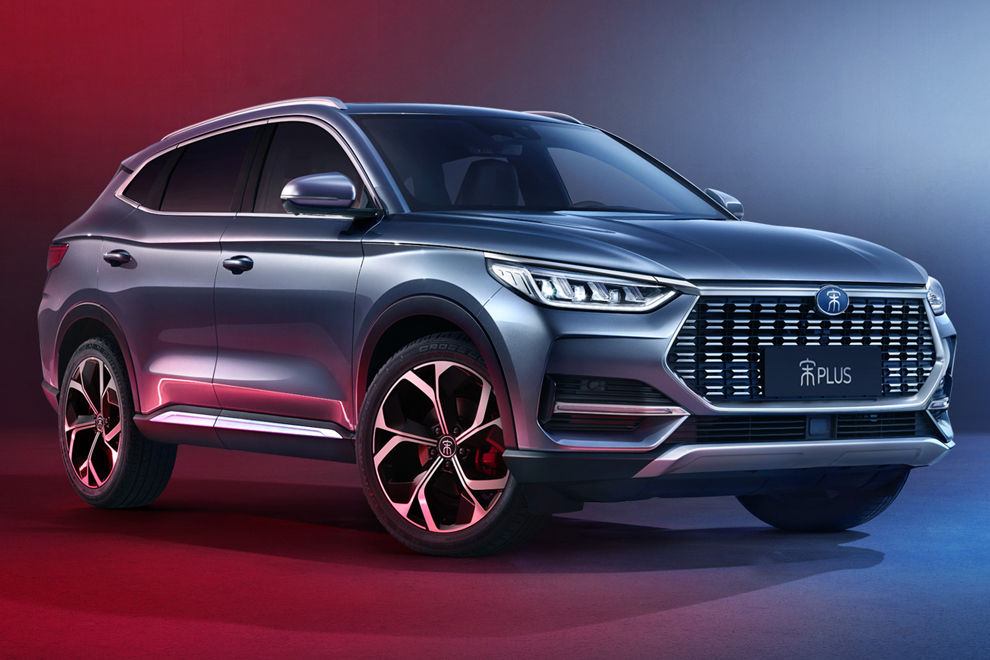
At a glance
- The Song name covers several derivatives, so buyers should match the exact badge, model year, seating and equipment before ordering.
- The export choice is between a 1.5-litre turbo petrol Song and a BYD DM-i plug-in hybrid designed for more efficient daily operation where charging is available.
- Used sourcing can provide access to older trims and body styles, but vehicle condition, title, service history and DM-i battery health require detailed checks.
- A live export quote must be read with its currency, Incoterm and included logistics; duties, registration and compliance can materially change the landed cost.
- MOQ is seller-specific, while shipping method, steering configuration and destination-market approval must be confirmed in writing before payment.
Why the BYD Song matters for export markets
The BYD Song occupies a useful position in the overseas compact-SUV market: it gives importers and fleet buyers a mainstream five-door crossover with a familiar driving proposition, without moving to a premium price tier. The name is broader than a single vehicle, however, and export catalogues can contain Song, Song Pro, Song Plus and Song Max entries with different generations and equipment. Buyers should therefore treat Song as a family search term, confirm the exact derivative on the vehicle identification document, and avoid assuming that specifications transfer between similarly named versions.
The model's export relevance comes from matching common fleet and private-buyer needs with manageable operating complexity. Petrol versions suit markets where fuel reliability matters more than charging access, while DM-i plug-in hybrids can cover daily electric driving when charging is available and retain a petrol-powered option for longer journeys. This flexibility is especially relevant to commercial users, but only if local electricity, fuel and servicing networks support the vehicle. A Song is therefore a strong candidate when its powertrain matches real duty cycles, not simply when the badge and catalogue price appear attractive.
What makes the Song noteworthy for export is the breadth of body styles, seat configurations and powertrains available under one searchable name. That breadth lets a dealer serve several market segments, from compact business use to six- or seven-seat family transport, but it also increases specification risk. Buyers should assess parts support, expected resale positioning, software language, charging compatibility and the availability of competent repair services at the destination. Current BYD Song listings on ChinaCarDirect are the appropriate starting point for identifying a concrete vehicle, while an RFQ should be used to confirm the details that a catalogue entry cannot establish.
- Treat Song, Pro, Plus and Max as distinct derivatives until the VIN confirms the vehicle.
- Match petrol or DM-i operation to local charging and duty-cycle reality.
- Assess local service support before treating catalogue value as landed value.
Model range, trims and powertrain variants: how the lineup is structured and how to choose
Song's conventional petrol line is built around a 1.5-litre turbocharged engine, with manual and automatic transmissions appearing in different trims and model generations. Listings also cover five-, six- and seven-seat layouts, including larger Song Max variants, so seating is a decisive commercial criterion rather than a minor option. Some Song DM versions are offered with all-wheel drive. Trim names may also carry Chinese-market hierarchy labels, so Luxury, Flagship or Prestige should be read as marketing descriptors rather than a complete equipment specification. Confirm every item against the vehicle's production documentation.
For plug-in hybrid buyers, the DM-i family provides the more important choice. Export trim names include electric-only range labels of 51 km, 71 km and 110 km. Song Plus is a major DM-i derivative, while search results may also contain Song L, which is a distinct model and must not be treated as the same vehicle. Ask for the battery rating, measured or declared range, charging connector, charging rate and certified fuel-consumption figures for the exact unit. Ask whether the listed range is a test-cycle figure and whether it remains valid under destination-market homologation.
A disciplined selection process starts with the use case. Choose a petrol Song where routine charging is impractical, an automatic may be preferable for frequent urban traffic, and additional seats are worth the packaging trade-off. Choose DM-i where predictable electric mileage is possible and local rules support plug-in ownership. Then check safety equipment, infotainment compatibility, spare-wheel arrangement, ground clearance and service documentation. If any of these fields are missing, treat the specification as unresolved rather than extrapolating it from another BYD model or trim or the closest visually similar listing.
- Record derivative, model year, engine, transmission and seating first.
- Compare DM-i range only after confirming the applicable test cycle.
- Treat trim labels as incomplete until the VIN-linked equipment list is reviewed.
- Do not substitute dimensions or battery data from another Song generation.
New vs used BYD Song: how export inventory is structured and how buyers choose
ChinaCarDirect's live catalogue contains both new and used BYD Song vehicles, and the two categories serve different sourcing strategies. New units reduce uncertainty around wear and often present a more coherent specification history; used units can make older petrol variants, higher equipment levels or particular body styles available at a lower initial acquisition cost. The relevant comparison is not new versus used in the abstract, but the exact vehicle's condition and specification against the buyer's market, warranty expectations and resale plan. That is especially true when mixing vehicles within one import batch.
For a used Song, condition documentation should be as important as the asking amount. Inspect body geometry, paint, tyres, brakes, suspension, air conditioning and evidence of accident repair; confirm that the VIN matches the service records and that the seller can explain ownership and title history. For DM-i units, request a battery state-of-health report where available, a charging test and evidence of engine, generator, inverter and hybrid-system servicing. A low purchase figure can be offset by near-term battery, electronics or repair risk. For petrol units, verify recent major-service evidence and roadworthiness.
New sourcing is preferable where a buyer values the latest factory configuration, integrated warranty support or a predictable handover process. It is also sensible for fleets that need several examples with consistent equipment. However, a Chinese-market warranty may not transfer automatically to the importing country, and factory accessories may not satisfy local safety or homologation requirements. For either category, include pre-shipment inspection, document verification and a claim process for delivery discrepancies in the purchase agreement rather than relying on photographs alone before the vehicle is released from the supplier's premises.
- Verify VIN, title, service history and accident evidence.
- For used DM-i units, request battery health and charging evidence.
- Confirm warranty territory and local parts support.
How export pricing works: the factors behind a live listing price, and how to read one
A live BYD Song export price is a starting reference, not a complete landed-cost calculation. The vehicle's model year, derivative, trim, engine or DM-i version, range variant, mileage, condition, ownership history and fitted equipment all affect the seller's asking position. Currency movements also matter where a quote is issued in another currency. Most importantly, check the Incoterm: an EXW figure, an FOB figure and a CIF or delivered figure can represent very different obligations for freight, insurance, handling and risk transfer.
The landed worksheet should add everything outside the quoted vehicle price. Depending on the transaction, these items can include domestic transport, export documentation, ocean or RoRo freight, insurance, destination port or terminal charges, customs clearance, duties, taxes and inland delivery. Conversion, registration, inspection and local compliance work may also carry cost. Compare quotations on the same currency, Incoterm and destination basis, because otherwise a lower listed price can create a higher landed cost or leave an unfunded obligation.
To read a live listing properly, start with the exact title and SKU, then check the description, photographs, VIN availability, stated equipment and condition. Confirm what is included—documents, tools, spare wheel, charging cable, mats or accessories—and ask whether the displayed amount is negotiable, time-limited or linked to a specific unit. For wholesale interest, request a separate written quotation for the requested configuration and volume, together with the MOQ, payment schedule, loading window and shipping scope. ChinaCarDirect's live listings carry the current per-unit price, MOQ and availability that should replace any general estimate.
- Compare like-for-like quotes under one Incoterm and currency.
- Separate vehicle cost from freight, tax, insurance and compliance.
- Treat a live listing as indicative until a written quotation is issued.
MOQ, ordering and payment: single units vs consolidating a container
Minimum order quantity is set at the seller or listing level rather than by a universal rule for every BYD Song. The key question is whether the quoted unit can be purchased alone, whether the MOQ changes for a preferred colour, specification or payment route, and whether several units must be taken from one seller. Buyers should record the MOQ, unit price, validity period and any mixed-SKU restrictions in the pro forma invoice. That written record is more dependable than an assumed marketplace norm. Confirm it again before placing the deposit.
Single-unit purchasing suits trial fleets, dealer stock-building and buyers testing demand in a new market. Consolidating compatible vehicles into one container or shared shipment can reduce freight and handling cost per unit, but it requires more careful planning around cargo volume, weight distribution, securing, insurance and customs descriptions. Compare an individual freight quote with a consolidation quote for the actual destination, and ask who arranges export packing and loading. A low vehicle price does not necessarily offset the cost of moving an inefficiently filled shipment or the risk of delayed consolidation.
The ordering and payment sequence should be explicit. After specification and compliance review, request a pro forma invoice showing the seller, vehicle, VIN or production identity, Incoterm, MOQ, deposit, balance, inspection rights, document set, loading period and cancellation terms. Verify the payee and bank details through a second channel, understand how an electronic payment or letter of credit is issued, and link the final payment to satisfactory inspection and required export documents. Inventory can move while these checks are underway, so verbal assurances about a particular vehicle should be formalized promptly.
- Ask for the MOQ attached to the exact listing, not a generic catalogue assumption.
- Compare solo freight with container consolidation using destination-specific quotations.
- Make payment milestones, inspection rights and document delivery explicit in the invoice.
Shipping, homologation and market compliance caveats: LHD/RHD and import rules by country
Shipping method follows the actual vehicle's dimensions, weight and destination handling rules. Suitable full-size units may travel by RoRo vessel or flat rack, while a container or shared-cargo option may be appropriate for other vehicles; the seller or freight forwarder should confirm which method is available at the origin port. The buyer's quotation should show origin charges, freight, insurance, destination terminal fees and responsibility for loading and discharge. Transit time and cost move with sailing frequency, port congestion, season, route and cargo volume, so no universal delivery date should be promised.
Steering configuration is a critical first check. A unit sold for China may be left-hand drive, while some export configurations are right-hand drive, and neither should be assumed from the listing country. State the destination's required side and confirm steering wheel, instrument cluster, lighting, wipers, controls, charging equipment and local-language documentation. A conversion is not automatically a simple parts swap and may affect homologation. If right-hand-drive availability is essential, make that a written condition of the order rather than accepting a promise that one can be sourced.
Import and market compliance are separate from the ability to ship the vehicle. Depending on the country, approval may cover vehicle type, emissions, road safety, radio equipment, software and data governance, charging components, VIN identification, customs classification and periodic inspection. A China VI label does not automatically satisfy a destination regime, and a plug-in hybrid may face incentives or restrictions unrelated to the petrol model. Obtain the documents the buyer will need, use a specialist importer, and have the exact VIN configuration checked before committing funds or paying the balance.
- Confirm LHD or RHD, shipping method and destination charges in writing.
- Treat China VI as a source-market description, not automatic destination approval.
- Use a local compliance specialist before deposit and balance payment.
Who should buy the Song — and who should pick a different vehicle
The Song is a good fit for importers seeking a broadly supported Chinese crossover, fleets able to standardize on one platform, and buyers who value the option between petrol operation and plug-in hybrid efficiency. It is particularly attractive where daily routes can be electrified but long-distance travel still needs a combustion fallback. Six- and seven-seat versions can suit passenger transport and group use, provided the larger body, parking requirements and fuel or charging plan are acceptable. Buyers should also verify realistic cargo volume behind the third row and the availability of the exact seating layout.
It is a weaker choice for buyers who require an already-established local dealer network, highly predictable residual values or guaranteed same-day service across an entire country. Those priorities often justify a rival with deeper aftermarket support even if the initial purchase is higher. The Song may also be unsuitable where charging is unreliable, local fuel quality or cold-weather operation is a concern without local validation, or the fleet cannot support ongoing training for plug-in systems. The deciding evidence should come from local operators, not only from manufacturer or export material.
Before buying, build a total-cost comparison for each shortlisted configuration. Include acquisition, financing, freight, taxes, insurance, registration, expected fuel or electricity use, maintenance, tyres, parts lead time, downtime, residual value and the cost of meeting local compliance. For a fleet, calculate cost per kilometre and cost per seat or task, then stress-test the result with different mileage and energy-price assumptions. The most economical catalogue option is not always the lowest total cost if downtime, residual uncertainty or charging infrastructure is heavy. Confirm those assumptions with depot data before signing a fleet order.
- Best for mixed-use fleets and importers building a Chinese-brand range.
- Consider petrol when charging reliability is weak or the route is consistently long.
- Choose another model when residual values and established service dominate.
Main rivals and how the Song compares
The Mitsubishi Outlander PHEV is the closest conceptual rival for buyers focused on plug-in-hybrid capability and a larger family SUV. It offers a direct alternative to DM-i buyers and may suit buyers who prioritize cabin space or a three-row-oriented use case more than the Song's compact footprint. It will commonly demand a higher acquisition budget and may carry different shipping, tax and homologation consequences. The comparison should therefore be made on delivered cost, equipment, charging capability and local service access rather than on plug-in badges alone.
The Toyota RAV4 Hybrid is a strong benchmark for mainstream hybrid crossover buyers, particularly in markets with a mature Toyota dealer network. Unlike a plug-in hybrid, its hybrid system is designed around self-charging operation and does not depend on the owner finding regular plug-in charging, which can simplify fleet deployment. The trade-off is that it does not offer the Song DM-i's electric-only operating option. Buyers should compare total cost, resale expectations, cabin utility and service access in their destination market, recognizing that local availability can outweigh nominal equipment.
The Geely Atlas, also known in some markets as the Coolray, is a more direct Chinese-brand compact-SUV value rival, particularly against the petrol Song. It may offer a lower entry point and a familiar combustion-only proposition for routes where charging is limited, while the DM-i Song can provide an additional efficiency option where infrastructure supports it. The decision then comes down to safety and equipment, local parts support, tax treatment, software, warranty and residual prospects. Use the same specification, compliance and landed-cost worksheet for both brands, then decide which risk profile suits the fleet.
- Outlander PHEV: larger, usually higher-cost direct plug-in alternative.
- RAV4 Hybrid: mature hybrid alternative with simpler charging needs.
- Geely Atlas: closer Chinese-brand value benchmark for petrol buyers.
Live BYD Song export inventory
View all listings →Real units currently on ChinaCarDirect with per-unit asking prices and MOQ. Availability updates live from the catalogue.
How to buy a BYD Song from China
-
1
Define the exact derivative and use case
Specify Song, Pro, Plus, Max or another derivative, together with model year, petrol or DM-i powertrain, seating, LHD or RHD, and destination. This prevents an attractive but unsuitable vehicle from entering the shortlist.
-
2
Review the live inventory
Compare the exact unit title, photographs, condition, stated equipment and VIN availability in ChinaCarDirect's live listings. Check the current per-unit price, MOQ and availability rather than relying on a general estimate.
-
3
Request a written specification and quote
Ask for battery, motor, range, charging, dimensions, equipment, title, warranty and service details to be confirmed against the selected vehicle. Request a written quotation stating currency, Incoterm, payment schedule, validity and logistics scope.
-
4
Verify destination-market compliance
Have the exact configuration reviewed by an importer or compliance specialist for type approval, emissions, safety, radio, software, charging, customs and registration requirements. Make approval or a documented exemption a condition of the order.
-
5
Complete inspection and secure the agreement
Use an independent pre-shipment inspection, verify VIN and title documents, and record condition in the pro forma invoice. Pay only through verified channels, with the balance linked to satisfactory inspection and required export documentation.
-
6
Arrange shipping and import clearance
Confirm the vessel or cargo method, loading window, insurance, origin and destination charges, and responsibility for each logistics stage. Track customs clearance, port charges, registration and delivery against the agreed Incoterm.
Song vs rivals
| Mitsubishi Outlander PHEV | A direct plug-in-hybrid alternative with a larger and often more family-oriented footprint, usually at a higher acquisition budget. It may appeal to buyers prioritizing cabin space, while Song buyers should compare delivered cost, charging equipment and local service support. |
|---|---|
| Toyota RAV4 Hybrid | A mainstream self-charging hybrid alternative that can simplify deployment where regular plug-in charging is unreliable, and it benefits from an established dealer network in many markets. It does not provide the DM-i model's electric-only operating option, so total operating strategy matters. |
| Geely Atlas | A close Chinese-brand value competitor for compact-SUV buyers, particularly against the petrol Song. It may suit combustion-focused routes with a lower entry point, while the Song DM-i offers an additional efficiency path where charging infrastructure is adequate. |
Frequently asked questions
How is BYD Song export pricing determined?
Export pricing reflects the specific vehicle and transaction: model year, derivative, trim, powertrain or range version, mileage, condition, options, seller terms, currency and logistics. The Incoterm determines which freight, insurance and handling costs are already included. Check the current per-unit price and request a written quote in ChinaCarDirect's live listings for the exact configuration.
What powertrain and range should I expect from the BYD Song?
The export range includes 1.5-litre turbo petrol Song versions and BYD DM-i plug-in hybrids. Depending on the derivative and trim, DM-i listings show 51 km, 71 km or 110 km electric-only range labels; battery, motor, charging and certified range must be confirmed for the exact vehicle. These figures should not be assumed to apply across Song generations or destinations.
Is a used BYD Song better than a new one?
Used vehicles can offer lower acquisition costs and access to older trims, but condition and service history vary. New vehicles reduce wear-related uncertainty and may offer newer equipment, although Chinese warranty coverage may not transfer automatically. Inspect the exact unit, including battery health for a used DM-i, and compare total ownership cost.
What is the MOQ for a BYD Song order?
MOQ is set by the seller, listing and commercial terms rather than by a universal Song rule. The live unit page should show the applicable MOQ, and a pro forma invoice should repeat it with the price, payment milestones and cancellation terms. Ask whether single-unit buying or mixed-SKU consolidation is permitted before paying a deposit.
How long and costly is shipping a BYD Song from China?
Shipping cost and time depend on origin and destination ports, vessel or vehicle-carrier availability, cargo method, season, congestion, insurance, port charges and inland distance. The freight quote should state the Incoterm and every included or excluded charge. Delivery timing should follow the confirmed sailing and customs plan rather than a generic estimate.
Are spare parts available for the BYD Song?
Parts support varies by derivative, year and destination, so use the VIN and exact trim when ordering. Ask the seller to confirm the parts catalogue, warranty channel and expected dispatch route, and price shipping separately. For common wear items, verify local equivalent parts; for electronic or hybrid components, use a technician familiar with BYD systems.
Is a right-hand-drive BYD Song available for export?
Right-hand-drive availability depends on the exact derivative and seller inventory. State left- or right-hand drive in the RFQ and require written confirmation of steering, lighting, controls, instruments and charging equipment for the vehicle being supplied. Do not assume a Chinese-market unit is right-hand drive or that a later conversion will satisfy local homologation.
How do I order a BYD Song from China?
Start with ChinaCarDirect's live BYD Song listings, shortlist the exact derivative and send an RFQ with the destination, steering side, seat count, powertrain, quantity and delivery preference. Ask for a written specification, current unit price, MOQ, Incoterm, payment schedule and compliance-document list. Proceed only after the seller confirms the unit and the importer approves destination-market requirements.
Ready to source the BYD Song?
Send your destination, required derivative, seating, powertrain and quantity to ChinaCarDirect for a current unit-level quote and tailored export plan.
Request a quote