
BYD Song Ultra Export Guide for Overseas Buyers
Export buying guide for the BYD Song Ultra, covering electric powertrain choices, live pricing logic, MOQ, shipping, compliance and rival alternatives.
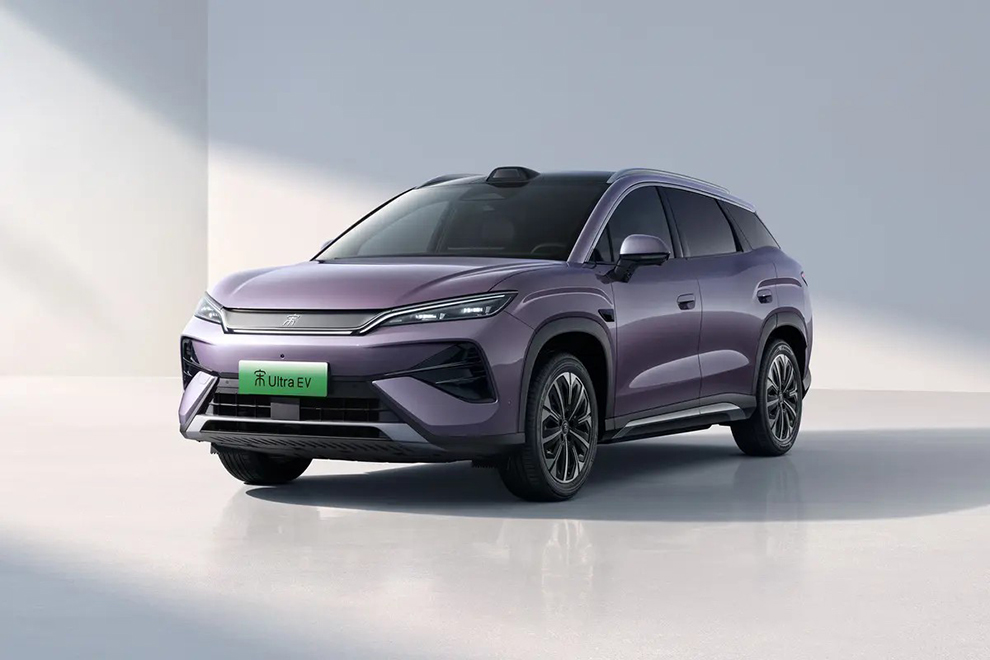
At a glance
- The Song Ultra is a pure-electric SUV with two output versions: 240 kW and 270 kW.
- Battery capacity, certified range, charging details and dimensions must be confirmed for each live unit.
- New and used purchases involve different condition, warranty, inspection and documentation checks.
- Seller-specific MOQ, Incoterms and payment milestones determine how an order is structured.
- Steering configuration, charging compatibility and destination homologation are essential before loading.
Why the BYD Song Ultra matters for export markets
The BYD Song Ultra belongs to the electric SUV category that overseas dealers increasingly use to address fleet, company-car and family demand without internal-combustion operation. Its export relevance is clearer than that of a generic catalogue entry because the model is offered in two pure-electric output versions: 240 kW and 270 kW. For a distributor, that means a straightforward selection ladder based on customer requirements. For a fleet buyer, it provides a way to compare a higher-output derivative with a lower-output derivative rather than treating every Song Ultra as interchangeable.
Market interest is not driven by motor output alone. An importer must decide whether the vehicle’s size, road presence and electric powertrain suit local roads, parking, charging habits and duty cycles. The Song Ultra can be attractive where dealers want a modern SUV backed by an already recognizable manufacturer name, yet the business case still depends on customer acceptance and operating costs. Buyers should therefore separate two questions: whether the product fits the market, and whether the supply, service and compliance arrangements make importing it viable for the intended channel.
For export planning, the Song Ultra also illustrates why catalogue breadth should not be confused with market readiness. A vehicle can have the correct steering configuration, charger and documentation for one destination yet still require adjustments elsewhere. Dealer buyers should ask the supplier to identify the exact production specification behind each unit, then cross-check it against local certification, charging infrastructure and aftersales expectations. That diligence is especially important when importing a pure EV, because an attractive specification sheet cannot compensate for inaccessible parts, incompatible charging equipment or unclear certification documents.
Model range, trims and powertrain variants: how the lineup is structured and how to choose
The Song Ultra range is structured around pure-electric derivatives identified by motor output: a 240 kW version and a 270 kW version. That distinction is useful for catalogue management because output becomes a visible screening criterion, but it is not a complete technical specification. Buyers still need the battery capacity, certified range, drivetrain layout, charging specification, dimensions and equipment for the individual vehicle. Those details can vary by production batch and market, so they should be confirmed from the live unit specification rather than inferred from the model name alone.
The 240 kW derivative is the logical starting point for buyers who want the lower of the two advertised output levels, while the 270 kW derivative offers a higher-output choice for customers who place greater emphasis on acceleration, load-carrying ability or sustained performance. Those priorities should still be tested against the vehicle’s official figures and local road conditions. Motor power is only one part of the ownership proposition: energy consumption, range, tyre costs, insurance and resale prospects may matter more to a fleet operator than the peak output of the drivetrain.
A sound selection process begins with the use case, not the trim badge. A company-car programme focused on efficiency may favor the lower-output version, while a premium fleet or customer mix needing stronger performance may justify the higher-output one. Then compare energy use, usable battery, range-test standard, charging compatibility and onboard equipment for the destination market. If a listing leaves any of those fields unclear, request a written specification sheet and vehicle photograph before treating it as a comparable candidate. This prevents a motor-output label from masking differences that affect operability or resale.
- 240 kW and 270 kW lineup
- Output does not equal range
- Match variant to use case
New vs used BYD Song Ultra: how export inventory is structured and how buyers choose
New and used Song Ultra vehicles should be evaluated as different procurement routes, not simply as different prices. A new vehicle is generally the cleaner choice when consistency, current production specification and the earliest possible warranty process are priorities. A used vehicle can make sense where a buyer deliberately accepts prior registration, measurable mileage and condition risk in exchange for a different acquisition basis. The correct question is whether the vehicle’s condition, history and documentation can support the intended resale or fleet programme in the destination market with transparent supporting records.
For a used unit, inspection should extend beyond paint and interior condition. The battery’s state of health, charging consistency, software status, accident history, tyre condition and evidence of maintenance become central because a clean body can conceal high-use economics. Ask for mileage records, the battery health report where available, diagnostic output and photographs of the underbody and charging port. A new purchase still benefits from a pre-delivery inspection, but its assessment is mainly about confirming the ordered specification, condition and delivery readiness. Documentation should be checked at the same time.
Availability should be checked at the unit level because a used vehicle’s attractiveness depends on condition in a way that a new model does not. Review the current Song Ultra listings, compare the descriptions and supporting images, and ask the seller to confirm whether any listing is new, previously registered or sold as a fleet unit. Dealers should also consider whether local registration, emissions or safety rules restrict a particular used import. Neither category is automatically cheaper after freight, taxes, inspection and rework, so model the total landed cost before deciding.
How export pricing works: the factors behind a live listing price, and how to read one
A live export price is the seller’s current offer for a specific vehicle under a defined set of commercial terms, not a universal Song Ultra price. The amount can move with model year, trim or output version, battery specification, mileage and condition for used units, and the seller’s documentary and preparation costs. Currency movements also matter when the quotation is denominated in a foreign currency. Freight, insurance, terminal charges and the chosen Incoterm determine which costs sit with the buyer and which remain with the seller, so two visible prices may not represent the same landed commitment.
To compare quotations correctly, ask each seller to use the same destination port or city, the same Incoterm, the same quantity, and the same payment schedule. Confirm whether the listed price includes export documentation, vehicle preparation, inland transport to the origin port, ocean or Ro-Ro freight, marine insurance and export handling. Also ask which import charges are excluded. A lower catalogue number can still be more expensive once inland haulage, port handling, destination freight, customs duties, taxes and dealer preparation are added on the same basis to every offer.
Read each live listing as a set of linked claims rather than a headline. Confirm the vehicle name, motor-output version, model year, condition, mileage where applicable, stock or build reference, included documents and any images or inspection records. The current binding amount, quantity requirement and availability must be taken from that unit’s live listing on ChinaCarDirect; an earlier email or remembered figure may be stale. If a seller will not identify the SKU or clarify what the price includes, ask for a written pro forma quotation before placing funds or reserving production.
- Use one destination and Incoterm
- Check live unit pricing
- Normalize all logistics costs
MOQ, ordering and payment: single units vs consolidating a container
For BYD Song Ultra wholesale enquiries, minimum order quantity is a seller and transaction condition, not a permanent attribute of the Song Ultra model. Some vehicle offers may be open to a single-unit purchase, while a seller preparing a shipment, allocating production or applying a container plan may impose a larger quantity. Do not infer permission from the existence of a live listing. Ask the seller to state the MOQ in writing for the exact output version, condition and delivery term, including whether one unit can be reserved independently or must be combined with other SKUs.
Container consolidation can improve freight planning when several compatible vehicles are ordered together, but it should never be treated as a discount promised by the model name. A distributor may mix the 240 kW and 270 kW versions to serve different customers, subject to the seller’s approval, and may reserve one vehicle for demonstration while filling the balance with fleet units. Before consolidation, reconcile steering position, charger, production specification, documents and destination compliance. A vehicle that cannot be registered or charged as intended should not be loaded simply to fill space.
Payment structure should be settled before a reservation is confirmed. A typical export sequence may use a deposit to secure the unit and a balance before release, but the actual milestones, currency, payment method and refund conditions must be agreed with the seller. Buyers should request a pro forma invoice that identifies the vehicle or SKU, MOQ, Incoterm, delivery window, document list and total payable amount. For larger orders, clarify inspection rights, documentary release and remedies if the vehicle differs materially from the agreed specification. Independent verification protects the buyer more effectively than assuming marketplace images are sufficient.
- Confirm seller-specific MOQ
- Consolidate compatible vehicles only
- Define payment milestones in writing
Shipping, homologation and market compliance caveats: LHD/RHD and import rules by country
Shipping begins with confirming the production specification, especially steering position and charging equipment. China-origin vehicles are commonly supplied in left-hand-drive form, while right-hand-drive availability depends on the particular unit, conversion capability and destination approval. A converter must never be assumed: ask whether the vehicle was factory configured, who performs any conversion, what documents are amended and whether safety, warranty and charger requirements remain compliant. For a fleet order, matching steering and charging configurations across the group is more important than choosing units only by trim badge and supplier documentation.
Import requirements are country-specific, so the importer—not merely the vehicle exporter—must confirm the applicable rules. The check normally covers VIN and identity documents, customs classification, duties and taxes, type approval, roadworthiness, charging components, radio equipment and any local cybersecurity or data requirements. EV status does not remove every approval obligation, and a unit prepared for one country may not be accepted elsewhere without changes. Obtain a written compliance checklist from a customs broker or local conformity specialist before committing funds, and tie that review to the exact production specification and intended registration date.
Freight cost and transit time depend on the chosen carriage method, origin and destination ports, vessel or roll-on/roll-off schedules, container availability, port congestion, customs clearance, inspection and document readiness. EVs may move in purpose-built vehicle carriers or suitable containers, subject to battery and dangerous-goods handling rules. Secure transport, immobilization, charger packing and discharge procedures should be agreed in the shipping instructions. For the full landed calculation, add origin handling, freight, insurance, destination charges, customs duties, taxes, registration and any pre-delivery work that the importer may have to pay locally separately.
- Confirm factory steering position
- Check destination conformity rules
- Include freight, duties and taxes
Who should buy the Song Ultra — and who should pick a different vehicle
The Song Ultra is best suited to buyers who want an electric SUV and can support the infrastructure around it. Distributors may use the 240 kW and 270 kW versions to build a simple customer ladder, while company-car, hotel, municipal or premium fleet programmes may value a modern SUV with two output choices. The business case improves when vehicles return to a controlled depot for charging and maintenance. For these operators, predictable energy use, clear vehicle documentation and access to parts are often more valuable than headline power in isolation.
The case weakens where charging is unreliable, vehicles must travel long distances between charging opportunities, or local technicians lack EV diagnostic capability. In those circumstances, a hybrid or combustion alternative may offer lower operational friction. Budget-focused importers should also compare smaller EVs, because the Song Ultra’s SUV format may not deliver the lowest acquisition cost. Buyers prioritizing a mature global service network, established software ecosystem or highly liquid resale market should compare local rivals rather than assuming a new export relationship will provide the same support in the destination market.
Before ordering, score the Song Ultra against the actual fleet brief. Compare the two output versions, usable load, charging process, range requirement, passenger comfort, software features, maintenance capability, parts lead time and expected resale. For a distributor, also assess whether local demand will accept an electric SUV from this brand and whether demonstration vehicles can be supported. A signed-off use-case and compliance plan is more valuable than a broad promise that the model will fit every segment. The right buyer has both the charging environment and the aftersales network to make ownership credible.
- Strong for depot-based fleets
- Two outputs support tiering
- Poor fit without charging support
Main rivals and how the Song Ultra compares
The closest export-market comparison depends on country, fleet size and aftersales coverage, but three families form a useful benchmark. The Tesla Model Y is a direct premium electric-SUV reference with strong brand recognition and an established charging and service proposition in many markets. The Hyundai Ioniq 5 offers a dedicated electric alternative with a different cabin and efficiency emphasis. Volkswagen’s ID.4 and ID.5 provide another mainstream electric-SUV benchmark, often attractive where an existing Volkswagen dealer network can support the vehicle through local sales and service arrangements in the destination country.
The Song Ultra’s counterargument is the combination of BYD’s export identity and a straightforward choice between 240 kW and 270 kW pure-electric versions. That can appeal to distributors seeking a modern SUV with different performance tiers rather than a single derivative. It may also create a stronger value proposition when local incentives favor EV adoption. However, buyers should not assume that two output choices compensate for weaker local parts access or unfamiliar software. Compare service coverage, diagnostic equipment, charging support and residual-value evidence in the destination before finalizing the model decision.
A practical comparison should use the same worksheet for the Song Ultra and each rival: verified range and charging, usable space, motor-output choice, safety and driver-assistance equipment, software updates, parts access, warranty handling, certified resale prospects and landed cost. The Song Ultra may win where output choice, SUV packaging and BYD’s value positioning align with the buyer. A Model Y may fit better where ecosystem maturity dominates, an Ioniq 5 where cabin and charging design lead, or a Volkswagen where dealer familiarity is decisive. Test those claims locally rather than treating a brochure comparison as the final answer.
- Model Y: ecosystem-led comparison
- Ioniq 5: dedicated-EV alternative
- ID.4/ID.5: established-brand support
Live BYD Song Ultra export inventory
View all listings →Real units currently on ChinaCarDirect with per-unit asking prices and MOQ. Availability updates live from the catalogue.
How to buy a BYD Song Ultra from China
-
1
Define the operating brief
Set the destination, steering requirement, charging model, expected range, load, customer segment and aftersales support before selecting a vehicle.
-
2
Shortlist live units
Review the current Song Ultra listings and record the exact output version, condition, model year, SKU and available photographs for each candidate.
-
3
Send a structured RFQ
Provide the destination port, quantity, preferred variant, Incoterm, documentation needs and delivery schedule so the seller can quote the correct configuration.
-
4
Verify configuration and compliance
Confirm steering position, charger, battery and range data, VIN, production specification and destination-specific type-approval requirements with the seller and a local conformity specialist.
-
5
Build the landed cost
Compare itemized quotations using the same Incoterm, including origin handling, freight, insurance, terminal charges, customs duties, taxes, registration and local preparation.
-
6
Lock MOQ and payment terms
Put the unit or container requirement, permitted mix of variants, deposit, balance, inspection rights, refund conditions and document-release process in the pro forma invoice.
-
7
Inspect, release and ship
Complete the agreed pre-delivery or pre-shipment inspection, verify the vehicle identity and condition, approve shipping documents and monitor the handover to the nominated carrier.
Song Ultra vs rivals
| Tesla Model Y | A direct electric-SUV benchmark with strong recognition and established charging and service ecosystems in many markets. The Model Y may suit buyers prioritizing ecosystem maturity, while the Song Ultra offers a broader BYD proposition and distinct 240 kW and 270 kW choices. |
|---|---|
| Hyundai Ioniq 5 | A dedicated electric SUV with a different cabin and charging-design emphasis, potentially attractive to buyers focused on those qualities. The Song Ultra may fit distributors that place more weight on BYD’s export identity and its two output versions. |
| Volkswagen ID.4/ID.5 | A mainstream electric-SUV alternative that can benefit from familiarity with Volkswagen’s dealer and service network. The Song Ultra may be the stronger fit where output choice, SUV packaging and BYD’s value positioning align with the fleet brief. |
Frequently asked questions
How is BYD Song Ultra export pricing determined?
Export pricing is set for each unit and can move with model year, output or battery version, condition and mileage, exchange rates, freight, insurance and Incoterms. The current binding price is shown on the relevant live Song Ultra listing in ChinaCarDirect. Ask for a pro forma quote that states what is included before using it in a landed-cost comparison.
Which powertrain, battery and range should I choose?
The identified export versions are pure-electric derivatives rated at 240 kW and 270 kW. Motor output alone does not establish usable battery capacity, certified range, drivetrain or charging compatibility, so verify those fields in the live listing and request the unit’s specification sheet. Do not infer a range figure from the output label.
Should I buy a new or used BYD Song Ultra?
New vehicles generally offer clearer condition and production consistency; used vehicles can suit buyers who accept prior registration, mileage and wear after inspection. For a used EV, request battery-health information, diagnostic records, accident history and charging evidence where available. Compare the full landed cost and destination eligibility rather than treating condition labels as sufficient proof.
What is the MOQ for Song Ultra wholesale orders?
MOQ is set by the seller and may differ by unit, configuration and transaction; it is not a fixed property of the model. A listing may accept one vehicle while a production or container order may require more, so obtain the requirement in writing. Ask whether vehicles can be reserved individually or consolidated into one shipment.
How long does shipping take and what does it cost?
Transit time and cost vary with origin and destination ports, carrier schedule, container or vehicle-carrier availability, port congestion, customs clearance, inspection and documentation. EV carriage may also be affected by battery and dangerous-goods handling requirements. Get a freight quote against your exact port pair and Incoterm, and include insurance, terminal, destination, duty and tax charges in the landed model.
Can I obtain spare parts for the Song Ultra?
Parts support depends on the supplying seller’s arrangements and the importer’s local aftersales network. Before ordering, request a parts list, recommended service items, diagnostic support and a lead-time estimate for likely failures in your market. If the seller cannot support parts or technical documents, treat that gap as part of the ownership cost and reconsider the purchase.
Is a right-hand-drive BYD Song Ultra available for export?
RHD availability depends on the individual production configuration, seller and destination approval. Some China-origin vehicles are LHD, while RHD may require a factory-built unit or a compliant conversion, with corresponding document and safety implications. State the required steering position in the RFQ and verify it on the actual vehicle before payment and loading.
How do I buy a BYD Song Ultra from China?
Start with the live Song Ultra listings, select the output version and condition that fit the brief, then send an RFQ with destination, quantity, Incoterm and required documents. Confirm the SKU, MOQ, total cost, payment milestones, inspection rights and delivery plan in a pro forma invoice. Release funds only against agreed terms and complete a pre-shipment inspection before dispatch.
Ready to source the BYD Song Ultra?
Send an RFQ with your destination, preferred output version, quantity and Incoterm to request a current BYD Song Ultra quotation.
Request a quote