
Buy BYD Yuan from China: Export Guide for Dealers
Buy a BYD Yuan from China with guidance on trims, pricing, shipping, compliance and the practical checks global dealers should make before shipment.
At a glance
- The Yuan inventory can include petrol and battery-electric compact crossovers, so the exact derivative and trim must be identified before comparison.
- Published electric range labels include EV360, EV401, EV430, EV510 and EV535, but battery and motor data must be confirmed for each vehicle.
- Used vehicles can reduce acquisition cost, yet battery health, mileage, damage history and service records determine their true value.
- Export pricing moves with age, trim, condition, battery version, exchange rates, freight and the selected Incoterm.
- Current unit prices and availability should be checked in the live Yuan listings, with written landed-cost terms required before payment.
Why the BYD Yuan matters for export markets
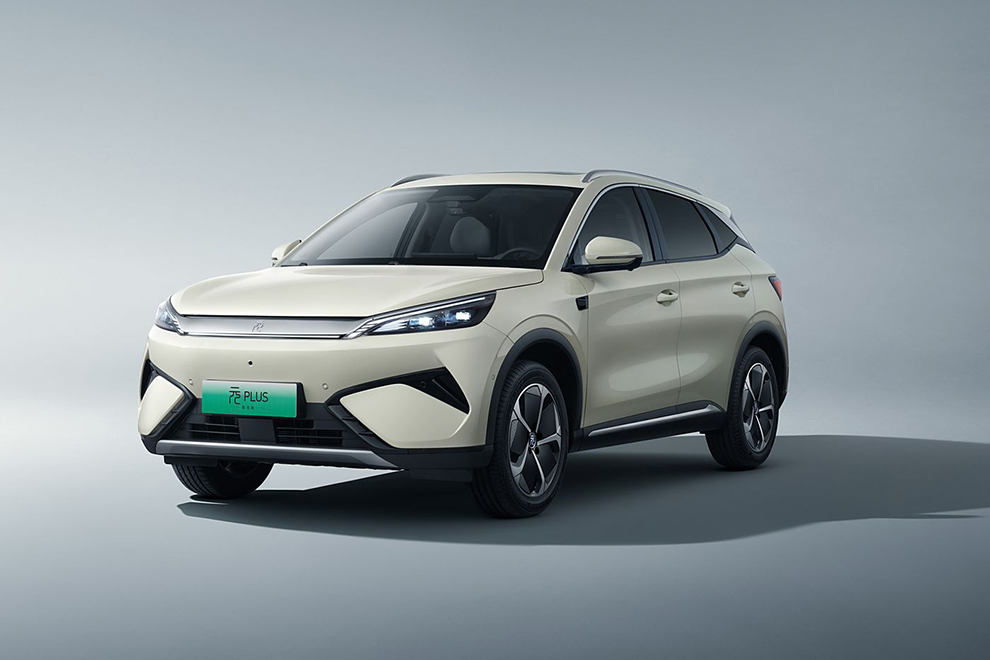
The BYD Yuan matters to overseas buyers because it combines a familiar BYD badge with the footprint and packaging of a compact crossover, a format suited to urban use, ride-hailing, company fleets and dealer resale. The Yuan search can include petrol versions and several battery-electric derivatives, giving importers a broader sourcing pool than a single powertrain would. That variety is commercially useful where demand is mixed, but it also means the name alone is not a sufficient specification. Buyers should separate model name, year, trim and energy type before comparing vehicles or requesting freight.
For export markets, the Yuan’s appeal is strongest where buyers want a compact SUV with recognizable branding and options that can suit different infrastructure and income segments. Electric versions address markets with expanding charging networks, while petrol versions remain relevant where charging access is uneven or customers prefer a conventional powertrain. BYD’s brand familiarity can reduce perceived risk, although importer confidence still depends on local aftersales coverage, parts supply and clear warranty handling. A vehicle that is easy to source can still be difficult to service if diagnostic tools and replacement components are not available locally.
The strongest export case is therefore operational rather than purely price-led. Dealers can use the Yuan family to build a compact-crossover sales program spanning entry petrol cars and electric trims with different published range labels. Fleets can align the powertrain with duty cycles: battery-electric units suit routes with dependable charging, while petrol units may be easier to deploy where uptime must be maintained without predictable charging access. The correct choice starts with the destination market, not the model badge. That sequence reduces the risk of buying an attractive specification that cannot be homologated or supported locally.
- Match powertrain to charging and duty cycles.
- Compare exact derivative, trim and year.
- Confirm local parts and warranty support.
Model range, trims and powertrain variants: how the lineup is structured and how to choose
Search results show several related identities, including Yuan, Yuan Pro, Yuan Plus and Yuan UP, plus China-market special-edition names. The older Yuan listings include 1.5-litre manual and automatic variants, while electric listings use range-led trims such as EV360, EV401, EV430, EV510 and EV535. Some entries also use names such as Luxury, Deluxe, Flagship, Leading or Beyond. These labels describe catalog variants, but their equipment and availability must be checked for the individual vehicle. Do not infer that similarly named trims in different model years have identical motors, batteries, software or charging equipment.
A sensible first filter is the body and energy type. For petrol candidates, confirm the 1.5-litre engine, gearbox, fuel type, mileage and service history. For electric candidates, compare the exact range designation and ask for usable battery capacity, rated battery capacity, motor output, drivetrain, charging connector and on-board charger details. The kilometer figure in a listing title is a version label, not a substitute for those records, and its test cycle should not be assumed to match the destination market’s certification. That distinction is essential when preparing an import quotation or customer proposition.
Choose by use case rather than by the largest advertised range. A city-focused fleet may prioritize usable cabin equipment, turning diameter and charging practicality, while regional buyers may place more weight on the certified range available after local approval. Dealers should ask whether software, climate features and charging functions are intended for the export market or configured for China. The safest shortlist keeps one source vehicle per exact model, year, range version and trim, preventing options from different configurations from being merged into a fictitious specification on a buyer quotation.
- Start with model, year, energy type and range.
- Confirm battery, motor, charging and gearbox.
- Treat trim names as configuration labels.
New vs used BYD Yuan: how export inventory is structured and how buyers choose
A live Yuan inventory can contain both vehicles presented as new and previously registered cars, so importers should identify the status before comparing economics. New examples may offer a more standardized specification, current model-year features and a clearer warranty pathway, subject to the seller’s terms and destination-market validity. Used examples can broaden the choice of body styles, range versions and equipment levels, but condition and remaining useful life become part of the purchase decision rather than assumptions. That is particularly important for batteries, where nominal capacity alone does not reveal present condition.
For a used electric Yuan, request a battery state-of-health report, charging-cycle history if available, evidence of accident repair, and inspection of the high-voltage casing, underbody and charging cable. Ask whether the displayed range or dashboard data has been altered and whether software updates were completed under warranty. For a used petrol Yuan, inspect engine condition, gearbox operation, coolant, oil, tyres, suspension and service records. No seller photograph or range label can replace a documented inspection. For fleet use, maintenance intervals and repairability should carry as much weight as the initial purchase price.
The decision should compare total operating needs, not simply the amount required on day one. A newer vehicle may reduce expected repair uncertainty and simplify fleet standardization, while a well-maintained used unit can suit a smaller budget if its utilization is modest and inspection costs are included. Buyers should calculate a reserve for tires, suspension, brake components, software support or battery work. If the vehicle will be sold onward immediately, disclosed condition and a clean ownership history usually carry more value than a small equipment difference at resale to buyers.
- Verify new or used status on each listing.
- Inspect battery health, damage and service records.
- Budget repairs and downtime, not just price.
How export pricing works: the factors behind a live listing price, and how to read one
An export listing price is the starting commercial value of a particular vehicle, not necessarily the amount that will land in the buyer’s warehouse. The main drivers are model and year, exact trim, range or battery version, mileage and condition, ownership history, production or stock status, and the seller’s commercial terms. Currency movements also matter when a quote is prepared in one currency and settled in another. Because those variables change at vehicle level, a single model-wide price is not a reliable budgeting figure for a properly planned multi-vehicle import programme.
Read each live listing line by line. Confirm the vehicle title, year, trim, range label, gearbox, mileage, condition, VIN or chassis identification, and whether the displayed amount is an asking price, a promotional price or a negotiable figure. Check what is excluded. International freight, marine insurance, port charges, customs duty, VAT or sales tax, registration, inland delivery and inspection fees may all sit outside the listing price. Ask for those items as separate lines so that two quotations can be compared on the same landed-cost basis before any payment is made.
Use live inventory only to select candidates, then request a written quote tied to a specific unit or clearly defined specification. A seller may revise terms when freight, exchange rates, Incoterms or the destination port changes, so an informal message is not a binding landed estimate. Buyers should record the quote validity, payment schedule, inspection right and remedy for mismatch. Current per-unit price, minimum order and availability must be checked on the live Yuan listings and reconfirmed in the RFQ before contracting. This discipline prevents a low headline figure from creating a costly assumption.
- Separate vehicle price from landed costs.
- Confirm currency, validity and Incoterm.
- Tie final terms to the selected unit.
MOQ, ordering and payment: single units vs consolidating a container
Minimum order requirements should be confirmed on the chosen listing rather than assumed from the model family. Some export transactions can proceed as a single vehicle, which suits a dealer testing demand or a fleet buying one demonstrator. A wholesale container programme instead combines several units under one shipment and can improve freight efficiency, but it introduces matching, inspection and allocation risk. Ask the supplier to state the minimum quantity, whether mixed variants are permitted and whether the unit price changes with the consolidated order for the proposed destination and Incoterm.
When consolidating, create a packing list showing model, trim, VIN, colour, options, battery version and allocation bay. Photograph each vehicle before loading, agree the inspection standard for paint, tyres, glass, interior and underbody, and record any pre-existing damage. Avoid mixing electric and petrol units without a clear loading and segregation plan, and ensure each buyer receives the exact unit approved. Consolidation should reduce logistics friction, not remove the need for unit-level evidence at the port of loading. It also makes it harder to delay the whole shipment for one disputed vehicle.
Payment structure should mirror the transaction milestones. A common approach is a deposit to reserve the specified vehicle, inspection and document verification before the balance, and final settlement against agreed shipping terms. The contract should identify the beneficiary account, invoice fields, title and risk transfer, inspection rejection conditions, document list, delivery estimate and dispute process. Use a verifiable business account and written amendments for any specification change. A ChinaCarDirect RFQ is the appropriate route for a unit-specific commercial offer and payment instructions. Keep the same terms with the supplier and buyer.
- Confirm single-unit and container terms.
- Use inspection and payment milestones.
- Record VIN, trim and condition before loading.
Shipping, homologation and market compliance caveats: LHD/RHD and import rules by country
Steering configuration is an early sourcing check. Chinese-market vehicles may be left-hand drive or right-hand drive depending on production batch and intended destination, so a Yuan listing’s country of origin does not prove its configuration. Ask the supplier to provide photographs of the steering wheel, instrument cluster, pedals, lighting and wiper arrangement, and to confirm the VIN. Overseas safety, emissions and type-approval rules can require a specific configuration. Importing a vehicle that is technically sound but configured incorrectly can still delay registration. It can also narrow the pool from which you can reasonably buy.
Every destination has its own combination of customs classification, tariff treatment, emissions standards, safety requirements, homologation documents, age limits, VAT or sales tax, and registration rules. Electric vehicles may also require attention to battery transport documentation, charger compatibility and charging infrastructure assumptions. These rules are not uniform across Europe, the Gulf, Africa, Latin America or Asia, and they can change independently of the vehicle. Buyers should obtain a destination-specific regulatory and landed-cost review before paying, rather than relying on a general export guide for the exact configuration being imported locally.
Shipping should be treated as a controlled handover, not just a final transport step. Confirm the loading method, export documentation, insurance coverage, cargo protection, destination services and the party responsible for damage claims. For electric cars, confirm carrier and port requirements for high-voltage batteries before booking. On arrival, conduct a prompt condition inspection and photograph the VIN, exterior, cabin, underbody and battery area before release. Clear allocation and inspection records are essential when several buyers share one container. They also support insurance, customs and warranty discussions if a later problem emerges.
- Verify steering configuration from VIN and photos.
- Obtain destination-specific homologation advice.
- Document condition before loading and arrival.
Who should buy the Yuan — and who should pick a different vehicle
The Yuan is a strong candidate for overseas dealers and fleet buyers that need a compact crossover, recognizable branding and a choice between petrol and battery-electric sourcing. It also suits buyers who can offer practical aftersales support and who understand that Chinese-market equipment naming may need translation or adaptation. For fleet deployment, match the unit to route length, charging intervals, payload, terrain and residual-value expectations. A broad trim range is useful only when the importer can simplify it into clear customer packages rather than presenting every factory label to customers.
A different vehicle may be better when the duty cycle requires longer certified range, faster charging, greater towing capacity, more passenger or cargo flexibility, or a proven service network in a particular country. Buyers without reliable charging access may favor the Yuan’s petrol versions over an electric derivative. Conversely, operators with short urban routes and managed charging can gain from lower energy use and simpler routine servicing. Fleets with intensive daily mileage should model battery replacement, degradation and downtime before assuming electric ownership costs will remain low throughout ownership cycles.
The sourcing decision can be simplified into three tests: commercial, operational and regulatory. Commercially, the vehicle must support the importer’s target customers and resale plan. Operationally, its powertrain, range, maintenance and parts requirements must fit the duty cycle. Legally, the exact vehicle must be eligible for import and registration under local rules. A Yuan that passes all three tests is usually a more rational purchase than a nominally better-equipped model that fails on charging, paperwork or support. Due diligence should therefore come before narrowing the shortlist or comparing price alone.
- Choose petrol where charging is uncertain.
- Choose EV after duty-cycle analysis.
- Reject configurations that cannot be registered.
Main rivals and how the Yuan compares
The closest alternatives depend on whether the comparison is for an electric Yuan Plus-type model, a smaller EV or a petrol compact crossover. Hyundai Kona Electric is a direct battery-electric rival for buyers focused on a compact footprint, electrified drivetrain and familiar global-brand ownership proposition. The choice turns on verified range, charging, equipment, warranty, software and local support rather than any one brochure metric. Chinese-market Yuan trims may offer a different equipment profile, so direct comparison should use equivalent versions after homologation and with like-for-like ownership-cost assumptions in the destination market.
MG ZS EV is another relevant compact electric crossover competitor, particularly for price-sensitive dealer programmes where battery-electric transport and a practical SUV format matter. It can be attractive where the importer has better familiarity with its aftersales ecosystem, but buyers should compare usable range, charging interface, warranty transfer and parts availability for the exact export version. Toyota C-HR plug-in hybrid serves a different need: buyers seeking compact-crossover flexibility without depending entirely on external charging can compare it with a petrol Yuan. The Yuan’s advantage is broader source availability across energy types.
Against petrol compact crossovers, the original Yuan competes on brand recognition, modern design and a choice of manual or automatic applications rather than on a single globally standardized equipment list. A buyer focused on lower acquisition cost may find the used Yuan market accessible, but should budget for age, condition and parts. A buyer focused on a familiar global aftersales network may prefer a rival with stronger local penetration. The most defensible decision is a scored comparison of certification, total cost, support and residual value using current local quotations.
- Compare EV rivals on certified range and charging.
- Compare petrol options on service support.
- Include duties, warranty and resale value.
Live BYD Yuan export inventory
View all listings →Real units currently on ChinaCarDirect with per-unit asking prices and MOQ. Availability updates live from the catalogue.
How to buy a BYD Yuan from China
-
1
Define the exact variant
Write down the model, model year, energy type, trim, range version or engine, transmission, steering side and preferred options. This prevents a Yuan, Yuan Pro, Yuan Plus and Yuan UP listing from being treated as one interchangeable specification.
-
2
Review the live inventory
Use the live Yuan listings to identify matching units, then check each listing’s year, condition, mileage, range label, seller and commercial basis. Exact price, MOQ and availability are binding only when shown for the current unit and reconfirmed in writing.
-
3
Check destination eligibility
Ask a local customs broker or qualified compliance adviser about homologation, emissions, safety, duty, tax, age limits and charging compatibility. Confirm whether LHD or RHD is required and which documents must accompany the vehicle.
-
4
Request evidence and inspection
For a new vehicle, request the specification sheet, VIN, warranty and delivery documents. For a used vehicle, add an independent inspection, battery state-of-health report for an EV, service history and evidence of accident repair.
-
5
Request an itemized quote
Ask for the vehicle price, freight, marine insurance, port and customs charges, taxes, registration, inland delivery, payment schedule and Incoterm as separate lines. Confirm quote validity and which party bears title and risk at each stage.
-
6
Contract and inspect
Use a written sales contract identifying the VIN or precise specification, inspection right, rejection conditions, document list, beneficiary account and dispute remedy. Pay only against agreed milestones and record every agreed change in writing.
-
7
Book and monitor shipping
Confirm the carrier, route, loading method, insurance and battery-transport requirements, then inspect and photograph the vehicle at loading and arrival. For a consolidated container, maintain unit-level allocation and damage records.
Yuan vs rivals
| Hyundai Kona Electric | A close battery-electric compact-crossover competitor, especially for buyers who value a familiar global-brand ownership proposition. The Yuan may provide a different equipment profile and broader China-market trim choice, so certified range, charging, warranty and local support should decide the fit. |
|---|---|
| MG ZS EV | A direct compact electric crossover competitor for value-focused dealer programmes. Compare usable range, charging, warranty transfer and parts support on the exact export versions; one model name alone does not establish the better vehicle. |
| Toyota C-HR Plug-in Hybrid | A relevant alternative for buyers who want compact SUV packaging with both electric and combustion power. It is not a like-for-like battery-electric Yuan, and its fit depends on charging access, tax treatment, fuel use and dealer support in the destination market. |
Frequently asked questions
How is BYD Yuan export pricing determined?
A live price reflects the specific vehicle’s year, trim, range or battery version, mileage or condition, ownership status, seller terms and currency. Freight, insurance, port charges, duty, tax, registration and inland delivery may be separate, so ask for an itemized landed-cost quote. Check the current amount on the live BYD Yuan listings and obtain a written quote before contracting.
Which BYD Yuan powertrains and range versions are available?
The Yuan inventory includes 1.5-litre petrol versions with manual or automatic transmissions and battery-electric trims labeled EV360, EV401, EV430, EV510 and EV535. Exact battery capacity, motor output, drivetrain and charging equipment are not interchangeable across trims, so confirm them on the selected listing. Also verify the test-cycle basis rather than treating a title’s kilometer figure as the destination-market certified range.
Are used BYD Yuan vehicles a good option for export?
Used Yuan vehicles can offer a lower entry cost and access to older range versions or petrol models, but buyers must price in condition and maintenance. For EVs, obtain a battery state-of-health report, damage history and charging-system inspection; for petrol cars, inspect the engine, gearbox and service record. A documented used vehicle can suit measured demand, while a newer car may be simpler for fleet standardization.
Can I order one BYD Yuan, or is a container required?
No blanket MOQ should be assumed for the model; the chosen listing and seller set the binding requirement. A single-unit purchase may suit a test sale or demonstrator, while a container may improve freight efficiency but adds mixed-specification and allocation risk. State the required quantity in the RFQ and request confirmation in the quotation.
What determines shipping time and cost for a BYD Yuan?
Origin and destination ports, vessel or container availability, booking space, cargo handling, insurance, battery-related procedures, customs clearance and inland delivery all affect the result. Consolidation can change freight efficiency but may add preparation time. The seller or freight forwarder should quote the route, service level and Incoterms; avoid treating an estimate as a fixed schedule.
Can spare parts be ordered for an exported Yuan?
Parts compatibility depends on the exact Yuan, Yuan Pro, Yuan Plus or Yuan UP variant and trim, so buyers should request part numbers and catalogue references before ordering. China-market trim names may not map neatly to another market, and lead time must be confirmed for each component. For fleet purchases, establish local stock, diagnostic access and a realistic parts plan before shipment.
Is right-hand-drive BYD Yuan availability the same as left-hand drive?
No. Steering configuration depends on the source vehicle and production run, and a China-origin listing does not confirm it. Ask for the VIN and clear photographs of the steering wheel, instrument cluster and pedals, then check local type-approval rules. RHD availability changes by unit and configuration, so inspect each candidate rather than relying on a model-level assumption.
How do I buy a BYD Yuan from China?
Begin with the live Yuan listings, identify the exact model, year, trim and powertrain, and compare unit-level condition and commercial terms. Request an RFQ for documentation, inspection, payment milestones, Incoterms and shipping. After verifying compliance in the destination market, use the written contract and inspection record as the basis for payment and release.
Ready to source the BYD Yuan?
Send ChinaCarDirect your exact Yuan variant, destination port, quantity and Incoterm for a unit-specific export quote.
Request a quote