
BYD Yuan Up Export Buying Guide for Dealers and Fleets
Compare 301 km and 401 km BYD Yuan Up versions, trim choice, live export pricing, MOQ, shipping, compliance and rival EVs before ordering from China.
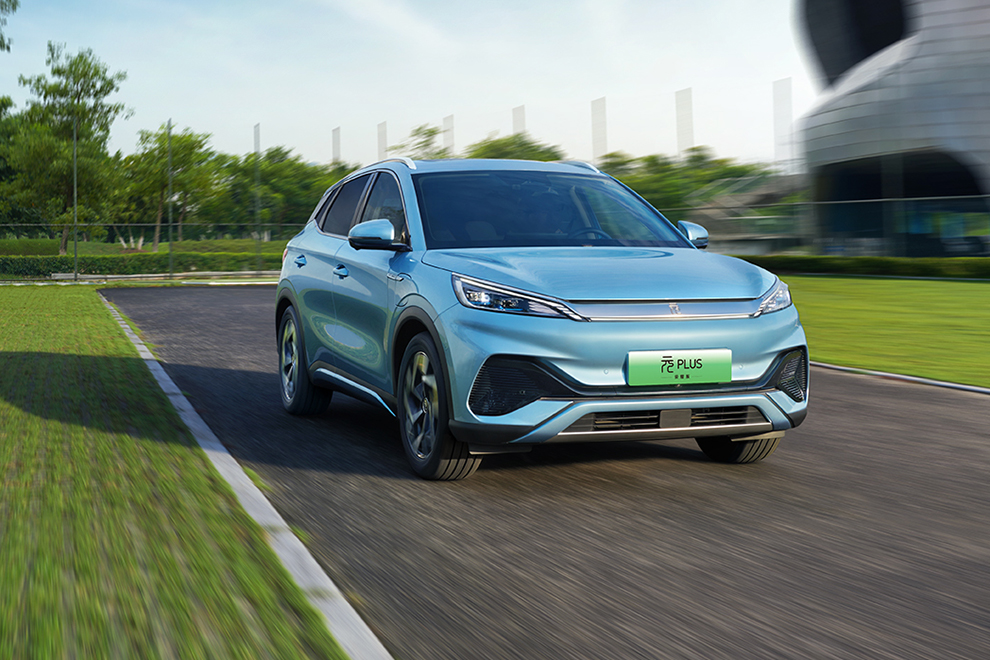
At a glance
- The Yuan Up is a compact battery-electric SUV suited to urban dealers and fleets with dependable charging access.
- The line-up includes 301 km and 401 km range-labelled versions, plus several trim names that require model-year verification.
- New vehicles offer clearer fleet standardisation, while used units demand VIN, history, condition and battery checks.
- Export price depends on specification, condition, exchange rates, freight, Incoterms and destination charges; live listings carry the current terms.
- LHD and RHD availability, together with destination-country homologation, must be confirmed before an order or deposit.
Why the BYD Yuan Up matters for export markets
The BYD Yuan Up matters because it gives overseas buyers a compact, battery-electric SUV from a manufacturer with a broad international footprint. For those looking to buy a BYD Yuan Up from China, the model offers a practical route into EV fleet supply without moving into a large premium crossover. Its appeal is strongest in markets where urban driving dominates and fleet buyers need a manageable vehicle footprint. Dealers can assess it as a wholesale product by comparing range, equipment, logistics, after-sales support and local market fit rather than headline pricing alone.
Global demand for compact EVs is not uniform, so the Yuan Up should be matched to local infrastructure rather than treated as a universal export product. Where charging is reliable and registration incentives favour electric vehicles, it can widen a dealer’s addressable customer base. Where long distances, weak charging networks or high import duties dominate, the same model may be harder to place. Local consumer preferences, taxi and fleet procurement rules, and the availability of after-sales support will determine real demand. That makes market validation and a small pilot order more valuable than large speculative stock.
For importers, the Yuan Up’s export relevance lies in the balance between size, range and operating practicality. A compact body can simplify parking, fleet deployment and urban logistics, while the two range-labelled versions give buyers a way to compare battery and equipment packages. It is not automatically the cheapest vehicle to import once freight, duties, certification and service setup are included. The right question is whether its total ownership proposition fits the destination market after those costs are understood. This makes it a candidate for selective, route-specific expansion rather than blanket container buying.
- Compact BEV; urban focus.
- 301/401 km range versions.
- Charging drives local demand.
Model range, trims and powertrain variants: how the lineup is structured and how to choose
The Yuan Up line-up is organised around two nominal range versions, 301 km and 401 km, as reflected in current model naming. Trims include Leading, Active, Beyond and Surpass labels, with some market records using a “Model” designation before the range and grade. These names help identify a vehicle, but they are not a substitute for a full equipment sheet. Export buyers should request the exact battery version, motor output, charging equipment, dimensions and market-specific standard for each unit. Trim labels may also be translated or reorganised for different sales markets, so verify the VIN-linked configuration.
Buyers choosing between the 301 km and 401 km versions should begin with duty cycles, not the headline figure. A fleet covering short urban routes may prioritize lower acquisition cost and charging efficiency, while regional sales teams or customers needing more reserve may favor the longer-range package. The live listing must establish whether the range refers to a Chinese test cycle or a homologated destination-market figure. Real-world energy use, elevation, climate, speed, load and charging habits can make the approved range materially different from catalogue expectations. Ask for consumption and charging data before signing off.
Within each range version, compare equipment on a like-for-like basis rather than assuming a higher-sounding trim is always better. Leading is a common starting point, while Beyond and Surpass may indicate additional equipment depending on the production period and market. Because equipment can change between model years, the decisive documents are the trim specification, optional-equipment list and vehicle identification record. For fleet procurement, standardisation often matters more than a single premium feature: confirm safety systems, infotainment, air conditioning, wheels and battery warranty terms for every unit for the destination market.
- Two range families.
- Verify trim details.
- Compare charging and warranty.
New vs used BYD Yuan Up: how export inventory is structured and how buyers choose
Live export inventory can include both new and used Yuan Up vehicles, and those two channels should be evaluated differently. A new vehicle offers a clearer chain from factory specification to delivery, which is useful when a fleet must present a uniform product image. A used vehicle may offer a more accessible entry point and preserve an already depreciated asset value. Neither label alone proves suitability: production year, trim, range version, odometer reading, service history and ownership status still need to be checked on the relevant unit listing before contracting.
A used Yuan Up can make sense for a dealer testing demand without committing a full container, or for a fleet willing to accept older production and condition. The key risk is that battery health is not fully described by the dashboard’s remaining-range estimate. Ask for a battery state-of-health report, charging history where available, diagnostic results, accident and flood checks, and evidence of periodic servicing. For electric models, also confirm that the high-voltage system has not been exposed to severe impact or improper repair. Documentation should match the seller and VIN.
New vehicles bring a different risk profile: specification and condition are generally easier to define, but the buyer must confirm that the intended market version is eligible for the destination country. Local homologation may alter equipment, charging arrangements, warranty coverage or software support. Dealers should also avoid assuming that a new vehicle will automatically support every planned fleet use. Check payload, towing needs if relevant, route requirements, charging access and the availability of trained technicians before placing an order. A pre-order specification sheet should resolve these points before funds are committed.
- New favours fleet consistency.
- Used needs battery checks.
- Confirm market eligibility.
How export pricing works: the factors behind a live listing price, and how to read one
A BYD Yuan Up export price is the result of several commercial variables, not a fixed model-level rate. Production year, trim, range and battery version, mileage and condition, dealer margin, exchange-rate movement and the requested Incoterm all influence the live quote. Freight method, port of origin, destination, insurance and documentation can add further cost or define what is included. When comparing vehicles, first confirm that every quote uses the same basis; otherwise a higher displayed number may simply include more transport and compliance work. Ask for the price basis in writing.
Buyers should distinguish the vehicle price from the landed operating cost. The transaction may use an Incoterm such as FOB or CIF, but local charges such as import duty, VAT or sales tax, registration, port handling and inland delivery may still fall to the importer. Exchange rates can also move between quotation and settlement. A useful comparison sheet should separate the unit price, transport terms, expected charges and the validity period of the quotation, then identify which party bears each cost and risk. These distinctions prevent false comparisons across markets and currencies.
On ChinaCarDirect, use the live Yuan Up inventory as the binding source for the current per-unit price, stated minimum order and availability. Open the specific vehicle rather than relying on a search result summary, and review the description, production year, trim name, condition, mileage where relevant, supplier location and shipping options. Save the quote or request a formal RFQ if the commercial terms need to be documented. Treat the displayed amount as a starting point until payment instructions, inspection conditions and delivery terms are confirmed before a purchase order is issued.
- Compare like-for-like units.
- Separate freight and taxes.
- Use live binding terms.
MOQ, ordering and payment: single units vs consolidating a container
The minimum order quantity is a transaction-specific commercial term and should be read from the live listing or confirmed in the RFQ rather than assumed from the model name. Some vehicle offers are structured for individual-unit procurement, while a dealer may negotiate a larger allocation for stock or fleet delivery. If a full container is required, ask the supplier how units would be consolidated, whether configurations may differ, and who bears the risk of a damaged or non-conforming vehicle. Consolidation can improve freight efficiency, but mixed specifications can complicate fleet standardisation.
A small pilot order can be the sensible way to test local demand, validate charging compatibility and measure dealer service requirements before scaling. The importer should confirm how the deposit, balance payment and title-transfer documents are handled for the selected vehicle, and whether payment is linked to inspection or shipment milestones. For a used unit, ownership and export documents are as important as the vehicle itself. Put every condition, repair allowance, delivery event and cancellation term into the pro forma invoice and sales contract so expectations are enforceable across borders.
For larger fleet purchases, the buying plan should show how many units of each trim and range version are required, how they will be allocated, and which costs change as volume changes. Request a written production and delivery schedule, inspection standard, spare-parts commitment and remedy for delay. Avoid relying on verbal assurances that every unit will look identical. A clear bill of quantities, keyed to VINs or accepted production standards, gives the importer control and creates an auditable record for customs, fleet handover and warranty registration in the destination market.
- Check per-listing MOQ.
- Pilot before volume buying.
- Document money and inspection.
Shipping, homologation and market compliance caveats: LHD/RHD and import rules by country
Import planning starts with the exact vehicle configuration, including left-hand-drive or right-hand-drive steering, charging interface and destination-market specification. Availability of a right-hand-drive Yuan Up varies by production source and market, so buyers should identify that requirement before selecting inventory rather than after shipment. A steering conversion is not a simple swap: wiring, control software, safety systems and local type approval may be affected. For fleet use, sourcing the correct factory configuration is generally more predictable than modifying vehicles after import. Confirm all of these points on the VIN-linked record first.
Each destination country may apply its own vehicle type approval, safety, cybersecurity, software, language, charging and environmental-data requirements. Importers should confirm whether the exact variant can be registered and whether the seller can provide the supporting technical files, conformity documents and ownership records required for customs clearance. Duties and taxes can depend on origin, vehicle category, age, power and local policy, so obtain current advice rather than relying on a generic EV rule. Certification responsibility should be assigned in writing before payment. Do not assume Chinese-market approval guarantees local registration.
Freight planning should begin only after configuration and compliance are settled. Container availability, carrier booking, port congestion, inland haulage, insurance, battery-related handling requirements and document readiness all influence transit time and cost. The Incoterm determines where responsibility transfers, but it does not eliminate the importer’s need to track milestones and prepare for customs inspection. Ask for the expected route, loading plan, document set and charge breakdown. The same vehicle can therefore produce different landed outcomes depending on the origin port, destination services and the chosen trade term.
- Specify LHD or RHD.
- Confirm local approval.
- Budget all landed charges.
Who should buy the Yuan Up — and who should pick a different vehicle
The Yuan Up is best suited to buyers who can charge the vehicle regularly and operate it mainly within a predictable urban or regional network. It can be a practical choice for urban dealers, ride-hailing or company fleets, and private buyers seeking a compact EV SUV with two published range choices. Its appeal increases when charging access is reliable and the vehicle is intended to remain in one climate and operating region. For buyers, the important qualification is infrastructure: a longer advertised range does not remove the need for dependable charging.
It is a weaker fit for drivers who routinely cover long distances between charging opportunities, carry heavy loads continuously, or require substantial towing capability. Buyers needing a larger family cabin, more cargo volume, three-row seating or a higher-riding vehicle should compare larger compact SUVs and family EVs. Those requiring rugged suspension, off-road certification or work-equipment integration may also need a purpose-built platform. The Yuan Up should not be selected on badge alone; match payload, route, climate and duty to the manufacturer’s limits and the destination use case before contracting.
Used buyers should also be more demanding about evidence and after-sales support than a buyer who can rely on a new-car warranty. A lower purchase price can be offset by battery degradation, near-term tyre replacement, deferred servicing or missing documentation. Conversely, a well-maintained used unit may suit a budget-conscious fleet that can manage inspection and maintenance centrally. Decide whether the buying entity has the diagnostic capability to assess the high-voltage system and access to parts. If it does not, include a pre-purchase inspection and post-delivery support plan in the budget.
- Best for urban fleets.
- Weak for long-distance loads.
- Used needs documented proof.
Main rivals and how the Yuan Up compares
The closest comparison depends on whether the buyer prioritises cabin space, brand familiarity, design or local support. BYD’s Atto 2 sits a step above the Yuan Up in the compact electric SUV segment and can suit buyers wanting more passenger or cargo flexibility. The Yuan Up’s advantage is a smaller, more fleet-focused proposition. Kia EV3 competes in the mainstream compact-EV bracket with a different dealer, software and ownership proposition. Compare the exact local variants rather than assuming badges alone establish the better fit. Availability and support often decide the outcome.
Renault 5 E-Tech is another relevant urban EV crossover, with an emphasis on compact packaging and expressive design that can appeal to younger or city-focused customers. It may be considered when a buyer wants a different manufacturer’s brand equity, software environment and local service proposition. Its appeal is strongest for private buyers who prioritise design, but it also creates a useful benchmark for a mainstream fleet offer. Against this rival, the Yuan Up should win on value only if its complete landed quote, equipment, warranty route and parts support are competitive; a low vehicle figure alone is not enough.
Rather than declaring a universal winner, use a structured comparison: rated and usable range, charging compatibility, cabin and cargo needs, unit cost, expected residual value, warranty coverage and service access. The most relevant rival can differ by country because local versions, taxes and dealer networks differ. Request comparable specification sheets and landed quotations for the Yuan Up and shortlisted rivals. That reveals whether the apparent saving from one model is offset by higher freight, less equipment or a more difficult parts and warranty arrangement in the destination market where relevant.
- Atto 2 offers more space.
- Kia EV3 offers brand choice.
- Renault 5 is design-led.
Live BYD Yuan Up export inventory
View all listings →Real units currently on ChinaCarDirect with per-unit asking prices and MOQ. Availability updates live from the catalogue.
How to buy a BYD Yuan Up from China
-
1
Set the destination-market brief
Record the country, LHD or RHD requirement, charging setup, route profile and fleet size. Use those constraints to choose 301 km or 401 km versions and identify unsuitable listings before discussing price.
-
2
Shortlist the live inventory
Open the Yuan Up search results and review each unit’s year, trim, condition, mileage where stated, range version and available documents. Treat the specific listing and its current terms as the source of truth for price, MOQ and availability.
-
3
Verify the exact vehicle
Request VIN-linked trim, battery, motor, charging, dimensions and equipment sheets. For used vehicles, add battery state-of-health, diagnostic, ownership, accident, flood and service-history checks.
-
4
Complete the compliance review
Confirm local type approval, registration rules, import duty and tax treatment, charging compatibility, software and data requirements, and whether LHD or RHD is required. Assign responsibility for missing technical or conformity documents in writing.
-
5
Request comparable landed quotations
Ask for a per-unit quotation with the Incoterm, freight route, insurance, payment milestones, inspection standard and delivery schedule. Separate vehicle cost from duty, VAT or sales tax, customs, registration and inland transport.
-
6
Confirm the order document
Record the agreed MOQ, vehicle allocation, deposit and balance mechanics, title-transfer documents, warranty, spare-parts support and remedies for delay or non-conformity. Have the pro forma invoice and sales contract agreed before payment.
-
7
Complete inspection and shipping
Use the agreed inspection standard before release, retain vehicle identification and customs documents, and track loading and shipment milestones. After arrival, complete local registration and handover while logging any delivery issue promptly.
Yuan Up vs rivals
| BYD Atto 2 | The Atto 2 is positioned for buyers wanting more passenger or cargo flexibility within a BYD compact-EV package. The Yuan Up may be easier to standardise for smaller fleets and prioritises a more compact operating footprint. |
|---|---|
| Kia EV3 | The EV3 is a direct compact-EV alternative with a comparable broad use case. It may be stronger where Kia’s local dealer network and ownership proposition matter, while the Yuan Up should be judged on its landed specification, warranty route and parts support. |
| Renault 5 E-Tech | The Renault 5 is a design-led urban EV crossover that can appeal strongly to private buyers. The Yuan Up may be more practical for fleet standardisation, so compare charging, usable range, service access and complete landed cost. |
Frequently asked questions
How is BYD Yuan Up export pricing determined?
The live price reflects the vehicle’s year, trim, range and battery version, condition and mileage, plus exchange-rate, freight, insurance and Incoterm effects. Compare like-for-like units and check what each quote includes. ChinaCarDirect’s live Yuan Up inventory shows the current per-unit amount and terms; use an RFQ for a written, shipment-specific quote.
What powertrain and range versions does the Yuan Up use?
The Yuan Up is a battery-electric compact SUV. The range-named versions in the line-up are 301 km and 401 km, while trims include Leading, Active, Beyond and Surpass labels. Confirm whether a displayed range is a Chinese test-cycle or local homologated figure, and verify battery, motor and charging data on the unit listing.
Should I buy a new or used BYD Yuan Up?
New units provide a clearer specification and fleet image, while used units can reduce acquisition cost but carry more condition uncertainty. For a used vehicle, verify the VIN, ownership, service and accident history, battery state of health, diagnostics, tyres and high-voltage repairs. The better choice depends on budget, vehicle consistency and local service capability.
How does MOQ work for Yuan Up orders?
MOQ is set per listing or negotiated transaction, not guaranteed for the model name. Some offers may support individual-unit buying, while larger container orders need consolidation and allocation terms confirmed. Read the current MOQ on the live listing and include it in the RFQ and pro forma invoice.
What factors affect shipping time and cost?
Shipping time and cost depend on the origin port, destination, carrier availability, container space, congestion, inland haulage, insurance, Incoterms and documentation readiness. Compliance and configuration should be settled before booking because changing the route, specification or documents can affect both. Request a milestone plan and a complete charge breakdown.
How is spare-parts support handled for an exported Yuan Up?
Before ordering, confirm that the seller can support the exact model year and trim with parts, diagnostics, manuals and warranty processing. Ask how commonly needed items will be supplied, how long they should take to arrive, and whether local technicians can access technical information. For used units, include a recent inspection and known wear-part list in the purchase agreement.
Is a right-hand-drive Yuan Up available for my market?
Right-hand-drive availability depends on the production source, model year and destination. State LHD or RHD in the RFQ and obtain the VIN-linked configuration before ordering; do not assume a left-hand-drive listing can be converted economically or legally. The chosen unit must also match the destination’s charging, type-approval and registration rules.
How do I order a BYD Yuan Up from China?
Start in the live Yuan Up inventory, select the vehicle and request a written quote showing the unit price, Incoterm, MOQ, payment milestones, inspection standard and delivery schedule. Confirm compliance documents and a pro forma invoice, then complete the agreed payment and inspection process before freight release. Keep the signed contract, vehicle identification records and shipping documents together for customs and registration.
Ready to source the BYD Yuan Up?
Request a current Yuan Up quotation and verify the correct market configuration through the ChinaCarDirect RFQ team.
Request a quote