
BYD Song Plus Export Buying Guide for Dealers
Plan a BYD Song Plus import with clear guidance on powertrains, live export pricing, MOQ, shipping, compliance, rivals and selection for overseas buyers.
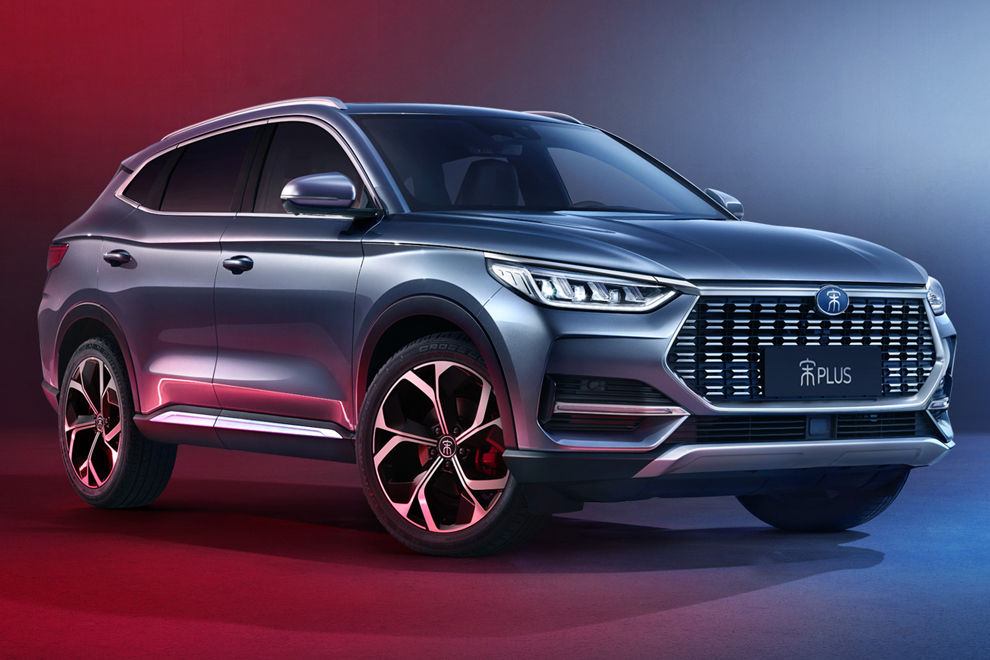
At a glance
- The Song Plus spans petrol automatic, DM-i plug-in hybrid and battery-electric configurations for market-specific fleet needs.
- DM-i trim labels include 51, 100, 110, 150 and 160 km range designations, but the test cycle and usable figure must be verified.
- New units favor consistency, while used units can widen sourcing but require VIN-level condition and high-voltage checks.
- Export pricing combines vehicle configuration, condition, freight, insurance, duties, taxes and the agreed Incoterm.
- LHD or RHD, homologation, charging access and local parts support must be confirmed before an order is finalized.
Why the BYD Song Plus matters for export markets
The BYD Song Plus occupies a practical middle ground in the compact SUV segment: large enough for family and fleet duty yet easier to manage than a full-size off-roader. Its export appeal comes from several energy paths, including a 1.5T automatic petrol version, DM-i plug-in hybrid derivatives and a battery-electric variant. That choice lets distributors address markets with different charging infrastructure, fuel availability and taxation policies. For overseas buyers, the opportunity is not simply a low acquisition quote, but a flexible platform that can be matched carefully to local duty patterns, infrastructure and customer needs.
Global demand for the Song Plus is driven less by one specification than by its ability to cover several operating cases. Dealers with reliable charging may favor the EV or DM-i, while buyers farther from infrastructure may prioritize the petrol automatic. Fleet importers value predictable fuel use, cargo practicality and serviceability over the lowest trim. The same family name can produce different economics after taxes, insurance and residual values. A sound export decision begins with charging coverage, mileage, depot access and resale profile. Those facts should drive the powertrain shortlist before badges or equipment.
For an exporter, the Song Plus is useful because one model family can support an electrified fleet option, a longer-range PHEV or a conventional automatic SUV. Not every destination will suit it. Buyers should test whether the vehicle can be registered under local emissions, safety and charging rules, and whether parts and diagnostics can be reliably supported nearby. The right decision combines product fit with after-sales reality. Confirm the exact variant, VIN, documents and market eligibility in the live listing before treating the model family as a complete import package.
Model range, trims and powertrain variants: how the lineup is structured and how to choose
The lineup is easier to understand as three powertrain families rather than one long trim ladder. The 1.5T Automatic versions are conventional petrol SUVs for buyers prioritizing simplicity and established fuel infrastructure. DM-i versions pair a petrol engine with a rechargeable hybrid system and are sold under numerous Prestige, Flagship, Honor, Glory, Executive and PLUS labels. A battery-electric version also appears in the range. These names describe market-specific grades, not a universal equipment hierarchy, so Prestige or Flagship should not be assumed to guarantee the same cameras, upholstery or driver aids in every export country.
Among the DM-i variants, Chinese trim names carry 51, 100, 110, 150 and 160 km electric-range designations. These labels help separate configurations, but buyers should ask which test cycle produced the figure, whether it is a pure-electric claim, and how much capacity is usable in local conditions. For a high-mileage fleet, the shorter-range version may be sufficient for daily depot charging, while a higher-range derivative can reduce dependence on plugging in. That choice should be tested against real route length, charging reliability and the vehicle's operating pattern, not against headline range alone.
A practical selection sequence starts with energy source: petrol for simplicity, DM-i for mixed charging access, and EV for routes with dependable charging and favorable operating economics. Next, match the drivetrain and range designation to the mission. Then confirm equipment, dimensions, warranty and homologation in the specific listing. A flagship DM-i with an all-wheel-drive-labelled designation may suit buyers needing traction, but the exact drive layout and equipment still need verification. The live listing and manufacturer documents should resolve mechanical configuration, standard equipment and destination-market legality before any binding payment is made.
- Confirm the exact powertrain and drivetrain
- Treat range labels as configuration identifiers
- Verify equipment on the specific listing
New vs used BYD Song Plus: how export inventory is structured and how buyers choose
A Song Plus export listing may represent a factory-new vehicle, a nearly new demonstrator or a used vehicle transferred from another owner. These categories affect more than the headline purchase price. New units normally offer more predictable condition, current specification and a clearer warranty path, while used units widen sourcing options and may suit buyers comfortable with established wear. Vehicle age alone does not prove whether it is new or used, and registration date is not a substitute for production date. Read condition, mileage, ownership and VIN together before comparing offers.
For a used Song Plus, inspection should differ by powertrain. On the petrol automatic, check service records, fluid condition, mounts, cooling, brakes and evidence of accident repair. On DM-i and EV cars, add a battery-state-of-health report, charging tests, warning-light inspection and confirmation that the high-voltage warranty has not expired. A low odometer reading does not reveal heavy towing, commercial use or improper charging. Ask for cold starts, service invoices, diagnostic results and underbody, battery-area and VIN-plate photographs. Use an inspector acceptable to both parties before authorizing payment or shipment in the destination market.
The best choice follows the buyer's risk budget. Dealers building a first container or launch fleet often favor consistency and easier customer education; experienced importers may select used cars for a price-sensitive segment or a specific model year. A mixed purchase is sensible only if each unit has its own VIN-level inspection, title documents and condition report. Do not accept a model-year label as proof of originality: compare the build plate, registered VIN, option list and physical condition. Treat live inventory as individual vehicles rather than an undifferentiated batch before contracting.
- Read condition, mileage and VIN together
- Inspect high-voltage systems on electrified cars
- Document each used vehicle individually
How export pricing works: the factors behind a live listing price, and how to read one
A Song Plus export price is the outcome of several variables, not a fixed market-wide figure. Model year and trim affect the base vehicle, while DM-i range, EV battery version, drivetrain and major factory options influence configuration value. On used vehicles, mileage, service history, accident repair, paint condition and warranty status can move the value materially. External variables also matter: the exchange rate, supplier terms, inland transport, export handling, freight, insurance, destination duties and taxes all affect the final landed cost. Comparing only the vehicle line on a listing risks understating the real commitment.
When opening a live listing, capture the SKU, model year, exact trim name, energy type, range designation, battery version if stated, odometer reading, condition, seller location, MOQ and quoted Incoterm. Then ask what is physically included: charger, spare wheel, tools, second-row configuration, paint, warranty and export documents. A displayed price may be an FOB, CIF or another basis; the terms must be confirmed rather than inferred from the vehicle description. Request a written quotation tied to the VIN or SKU, including validity, payment milestones, inspection rights, freight assumptions and any repair or documentation condition.
For budgeting, build the landed cost in layers: vehicle price, inland movement and export charges, international freight and insurance, customs clearance, destination taxes, port handling, delivery and a contingency for inspection or minor rectification. Keep recurring and one-time costs separate, and compare them against expected annual mileage, duty savings and residual value rather than against another vehicle's price alone. Current per-unit prices and availability must be checked in the [live Song Plus listings](https://chinacardirect.com/products?q=Song%20Plus&brands%5B%5D=1) on ChinaCarDirect; only the supplier's confirmed quote and the destination authorities' calculations should be treated as binding.
- Verify trim, condition and powertrain
- Confirm Incoterm and included equipment
- Request a VIN- or SKU-specific quotation
MOQ, ordering and payment: single units vs consolidating a container
MOQ on ChinaCarDirect is a property of the supplier's offer, not a permanent Song Plus rule. A listing may permit one vehicle, a small batch or another lot size, and that requirement can change with production, allocation and seller policy. The live inventory is therefore the place to verify the current minimum for a specific vehicle. If the objective is a test vehicle or pilot fleet, explicitly request a single-unit quotation and confirm whether the supplier still requires a mixed-model container. Never infer acceptance of one unit from the model name or another seller's terms.
A one-unit order should still follow a controlled sequence: select the listing, request the VIN-level specification, negotiate price and Incoterm, review the pro forma invoice and payment party, pay through the agreed verified channel, inspect, approve documents and authorize shipment. Deposit and balance terms should be linked to clear milestones. Ask how long the vehicle will be stored, who bears storage or repaint charges, and what happens if inspection reveals a defect. This matters at low volume because a seller's attention to one vehicle may be less structured and less standardized.
Container consolidation can improve freight planning, but it adds configuration, documentation and allocation risk. Group vehicles with compatible destination homologation, invoice ownership and delivery deadlines, while retaining a unit-level condition file for every VIN. A mixed container may be possible when the seller permits it, yet it should never hide differences in trim, range, steering position or documents behind one model name. Agree packing locations, inspection access, separator plans and responsibility for damaged equipment before dispatch. Consolidation can reduce freight per vehicle only when the commercial and compliance mix is controlled.
- Check the live listing's MOQ
- Request written single-unit terms
- Link payment to inspection milestones
Shipping, homologation and market compliance caveats: LHD/RHD and import rules by country
Handedness is a first-order sourcing issue because China's domestic Song Plus production is principally left-hand drive, while some destination markets require or strongly favor right-hand drive. Do not assume a vehicle can simply be converted without affecting registration, safety documentation or parts planning. Ask the seller to confirm steering position, VIN consistency, local-market certification and whether any conversion is declared. The overseas importer should also check whether the chosen model year and powertrain were ever offered for that destination. A familiar left-hand-drive SUV is not automatically exportable to a right-hand-drive market.
Import requirements vary by country and can include type approval, emissions compliance, roadworthiness, VIN and ownership checks, customs classification, duty or exemption treatment, charging-equipment rules and local registration taxes. Plug-in hybrid and battery-electric vehicles may face separate energy, battery or environmental scrutiny from conventional petrol cars. Treat any claim of export readiness as the start of verification, not proof of compliance. Provide the destination country, use case and vehicle configuration to a customs broker or local vehicle specialist early, then compare their written requirements with the seller's documents and the importer's intended registration pathway.
Freight method affects cost, lead time and risk. Enclosed-container transport generally offers greater vehicle protection, while roll-on/roll-off can suit rolling stock but still requires securing and discharge arrangements. Battery-equipped vehicles also require correct dangerous-goods and charging-equipment handling. Fix the Incoterm and risk-transfer point, select a carrier familiar with the vehicle and route, and decide whether port handling, inspection, storage and inland delivery sit with the seller or buyer. Before loading and release, verify the VIN, condition report, invoice, packing list, conformity documents, export authorization and market-specific certificates against one another.
- Confirm steering position before contracting
- Check local type-approval requirements
- Reconcile VIN, invoice and documents
Who should buy the Song Plus — and who should pick a different vehicle
The Song Plus fits dealers and fleet operators that need one recognizable vehicle family with several energy choices. A fleet with controlled overnight charging can assess the EV or a DM-i model for urban and interurban duty, while operations with limited charging access may favor the petrol automatic for simplicity. Importers can also use different trim levels to address price-sensitive and higher-specification customers without moving to unrelated nameplates. That breadth is particularly valuable where customer preferences vary by city, duty cycle and infrastructure rather than following a single national pattern.
It is also a sensible candidate for buyers who value a usable compact SUV, electrified range options and China's export manufacturing ecosystem, but who can support the vehicle locally. Before scaling, confirm that spare parts, diagnostic software and high-voltage service can be obtained for the exact generation and trim. Resale is easier when the powertrain is familiar to local technicians and charging or fuel expectations match the market. For fleets, compare total operating cost, utilization, downtime and residual demand rather than selecting solely on acquisition cost or a range headline.
Choose a different vehicle if you need more passenger space, commercial payload, a proven seven-seat layout, specialist off-road equipment, heavy towing, a specific factory right-hand-drive version or a brand with stronger local support. Pure-EV buyers without dependable charging should reconsider an EV Song Plus, while fleets without economical fuel access should rethink the petrol option. Where PHEV taxation, incentives or charging rules reduce the advantage of dual-energy operation, a conventional hybrid or ICE rival may be simpler. Choose the vehicle whose compliance, operating and residual-value case survives local review and buyer priorities.
- Strong fit for mixed-energy portfolios
- Useful for fleets with planned charging
- Check local service and residual demand
Main rivals and how the Song Plus compares
The closest export-market alternatives should be judged by homologated powertrain, size, duty and after-sales support, not badge alone. For a DM-i Song Plus, the Jaecoo 7 PHEV is a direct Chinese-brand rival: it targets the same modern plug-in hybrid compact-SUV proposition, so buyers should compare range methodology, charging, equipment, warranty and delivered cost for the exact destination. The Jaecoo may appeal to buyers seeking a newer alternative, while established Song Plus familiarity and parts planning can favor BYD. Neither should win without a market-specific total-cost review and service audit before ordering.
The Toyota RAV4 Plug-in Hybrid is a mainstream alternative for importers who value an established name and may find stronger local recognition or easier service access. It generally competes from a more premium positioning, so the comparison must include acquisition, taxation, fuel use, equipment and expected residual value rather than sticker labels alone. Toyota's familiarity does not remove homologation needs, and service strength varies by country. A Song Plus can be commercially stronger where Chinese supply relationships and specification value are priorities; the RAV4 can be safer where brand familiarity dominates resale.
The Hyundai Tucson Plug-in Hybrid competes in the same family-SUV and electrified-drivetrain space, offering buyers another established alternative with market-dependent dealer coverage. It may suit drivers who prioritize a familiar global brand and a different design or cabin environment, but the final choice turns on range claims, drivetrain, safety equipment, warranty and local support. For importers, the Song Plus stands out through its combination of petrol, DM-i and EV routes within one family. That variety is valuable only if the selected configuration has clear homologation and sustainable aftersales support in the chosen market.
Live BYD Song Plus export inventory
View all listings →Real units currently on ChinaCarDirect with per-unit asking prices and MOQ. Availability updates live from the catalogue.
How to buy a BYD Song Plus from China
-
1
Define the destination use case
Map daily mileage, route type, depot charging, local fuel availability and expected resale demand before choosing a powertrain.
-
2
Shortlist the live inventory
Review the live Song Plus listings for exact trim, condition, mileage, powertrain, range designation and current unit-level MOQ.
-
3
Verify the VIN-level specification
Confirm the build date, engine or battery version, drivetrain, equipment, steering position, warranty and export documents for the selected vehicle.
-
4
Request an itemized export quotation
Ask for the vehicle basis, Incoterm, freight assumptions, insurance, handling, duties, tax assumptions, payment milestones and quote validity.
-
5
Complete inspection and payment
Review the pro forma invoice and payment party, authorize payment through the agreed verified channel and make the balance conditional on an acceptable inspection.
-
6
Confirm compliance before dispatch
Use a local customs broker or vehicle specialist to check type approval, customs classification, taxation, LHD or RHD suitability and registration requirements.
-
7
Book shipping and handover
Select the carrier and transport method, assign costs under the Incoterm, verify packing and securing arrangements, and reconcile all documents before release.
Song Plus vs rivals
| Jaecoo 7 PHEV | A direct Chinese-brand PHEV SUV competitor for buyers prioritizing comparable modern electrified positioning. Compare destination-homologated range, charging, equipment, warranty, parts support and delivered cost, since badges alone do not establish the better import. |
|---|---|
| Toyota RAV4 Plug-in Hybrid | A mainstream PHEV alternative with stronger global brand recognition in many markets, often relevant where dealer familiarity supports resale. It may carry a more premium commercial positioning, so compare total cost, tax treatment, equipment and local service rather than assuming the Song Plus is cheaper. |
| Hyundai Tucson Plug-in Hybrid | A family-SUV PHEV option for buyers who prefer a different design and an established-brand route. Its market-specific range, equipment, warranty and dealer coverage may change the decision; verify local homologation and after-sales support against the Song Plus. |
Frequently asked questions
How is the BYD Song Plus export price determined?
Export pricing reflects the selected vehicle's year, trim, powertrain and condition, then accounts for the exchange rate, freight, insurance, duties, taxes, handling and Incoterm. Treat a live listing as the vehicle's current commercial reference, not necessarily the landed cost. Review the live Song Plus listings and request a written, VIN- or SKU-specific quotation for binding figures.
Which powertrain and range should an overseas buyer choose?
The range includes 1.5T automatic petrol, DM-i plug-in hybrid and battery-electric versions. DM-i listings use 51, 100, 110, 150 and 160 km range designations, but buyers should confirm the applicable test cycle, usable battery capacity and locally homologated figure. EV battery, motor, range and charging details must be checked on the selected live listing.
Are used BYD Song Plus vehicles suitable for export?
Used vehicles can be suitable when their VIN-level condition, ownership history and service record support the buyer's use case. Inspect petrol vehicles for mechanical condition and electrified vehicles for battery state of health, charging performance and warranty status. A model-year label alone does not prove originality, condition or remaining service life.
What is the MOQ, and can I order a single Song Plus?
MOQ is set by the individual supplier or live listing rather than by the model name. Some offers may accommodate a single vehicle, while others require a batch or container. Check the current requirement on the selected listing and request written single-unit terms before paying a deposit or arranging freight.
What affects export shipping time and cost?
Key factors include the transport method, origin and destination ports, route, carrier availability, vehicle dimensions, battery handling, customs clearance, documentation, port congestion and inland delivery. The Incoterm determines which party bears freight, insurance, duties, handling and risk at each stage. Obtain an itemized freight quotation rather than relying on a generic shipping estimate.
How are Song Plus spare parts ordered?
Use the VIN and build information to identify the correct generation, powertrain and trim before ordering parts from the seller or an approved distributor. Confirm catalogue availability, part numbers, lead time, shipping restrictions and warranty coverage before placing an order. High-voltage components may require specialist handling and compliant transport.
Can I buy a right-hand-drive BYD Song Plus?
Availability depends on the model year, market and supplier because Chinese domestic production is principally left-hand drive. Ask the seller to confirm the steering position, VIN consistency, factory-market certification and whether any conversion has been declared. Do not assume a conversion will satisfy local registration or safety requirements.
How do I order a BYD Song Plus from China?
Select a live listing, verify its specification and documents, request an itemized quotation, and confirm the MOQ and Incoterm in writing. Complete inspection, payment and compliance checks before authorizing shipment. The RFQ team can help structure the vehicle brief, destination requirements and shipment request, but the confirmed supplier quote remains the binding commercial offer.
Ready to source the BYD Song Plus?
Send ChinaCarDirect your destination, required powertrain, preferred configuration and shipment volume for a current unit-level export quotation.
Request a quote