
BYD Yuan Plus Export Buying Guide for Dealers
Buy BYD Yuan Plus from China: compare 430 km and 510 km trims, pricing logic, MOQ, shipping, compliance and used-vehicle options for overseas buyers.
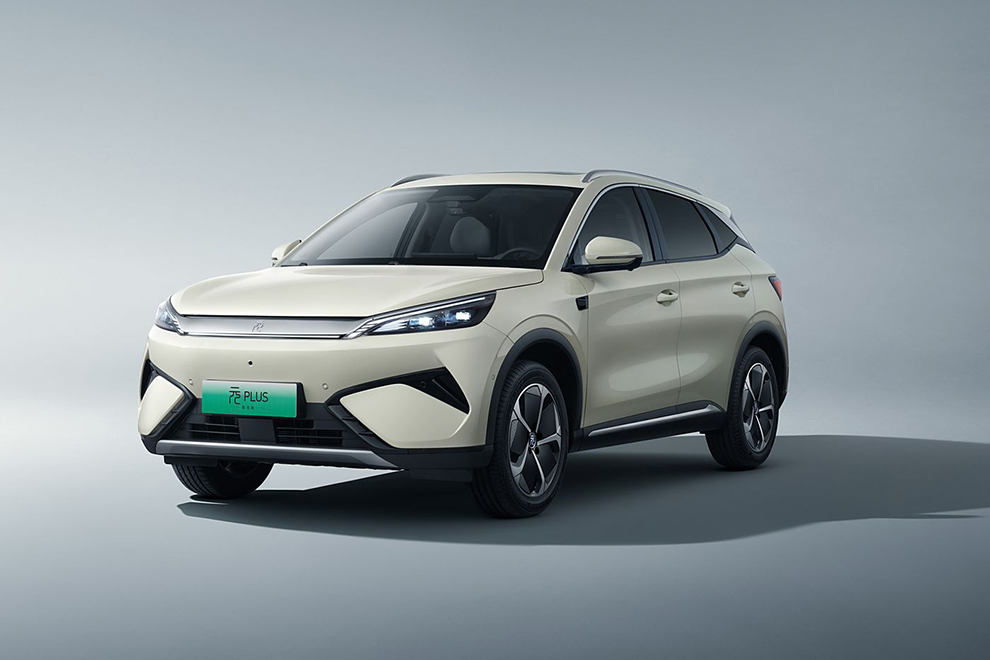
At a glance
- A compact all-electric crossover with a practical five-door body.
- The 430 km and 510 km choices reflect Chinese-market CLTC testing, not destination guarantees.
- New vehicles provide a cleaner history; used vehicles require battery and condition evidence.
- Single-unit and consolidated purchasing can work, subject to each live listing’s terms.
- Landed cost depends on trim, condition, freight, tax, compliance and Incoterm.
Why the BYD Yuan Plus matters for export markets
The BYD Yuan Plus is a compact battery-electric crossover built for markets that want EV practicality without moving into a large, premium SUV. Its useful footprint, five-door layout and two established range families make it relevant to city drivers, company fleets and importers seeking a vehicle that is easier to deploy and manage than many larger electric models. For export buyers, that combination creates a clearer use case than headline specification alone: a vehicle sized for dense roads, yet capable of regional travel where charging is reasonably planned between destinations and daily operations.
The model matters in export discussions because it combines Chinese manufacturing scale with a design aimed at mainstream EV buyers. Demand is strongest where compact crossovers are popular, fuel costs improve EV operating economics, and charging networks extend beyond major cities. Dealer interest also benefits from a straightforward proposition: a familiar SUV format, a choice of shorter- or longer-range batteries, and equipment tiers addressing comfort, convenience and driver assistance. None guarantees quick sales, however; local taxation, electricity prices, insurance and residual-value expectations determine whether the proposition works commercially for the importer.
For overseas buyers, the Yuan Plus is less a lifestyle statement than a fleet and retail decision. Before committing, compare the destination-certified range, charging connector, software, service network and parts support against the routes and operating duty of the customer. A listing that looks inexpensive on paper can become expensive if its specification cannot be registered, if replacement components are difficult to source, or if the battery and vehicle do not match the advertised trim. That makes document checks and a destination-specific landed-cost calculation more important than choosing the longest advertised range by default.
- Compact urban format.
- Destination-certified range matters.
- Serviceability drives fleet economics.
Model range, trims and powertrain variants: how the lineup is structured and how to choose
The Yuan Plus lineup is organized around a consistent battery-electric, front-wheel-drive architecture, with different battery capacities and market-specific equipment tiers rather than multiple engine choices. Export-facing names can include Glory, Champion and Honor editions, together with labels such as Advanced, Leading, Luxury, Premium and Flagship. These names reflect domestic product hierarchies and may not translate neatly into one global trim chart. Buyers should therefore treat the complete model-year feature matrix as the controlling document, not assume that a similarly named trim in another country has identical software, safety equipment or charging equipment.
The two key range families are the 430 km and 510 km versions. In common Chinese-market pairings, the smaller 49.1 kWh battery is associated with the 430 km listing and the larger 60.48 kWh pack with the 510 km listing, though production changes can alter this. The displayed figure is a CLTC laboratory value, not a promise under European, UK or another destination cycle, and not an indication of real-world highway range. Select by the homologated destination rating and real route profile, not by the largest Chinese cycle number alone.
Within a range family, trim decisions should focus on equipment that affects daily use, safety, resale and operating cost. Common Yuan Plus versions use a roughly 150 kW front-mounted electric motor, but buyers should confirm output and drive configuration for the exact vehicle. ADAS, cameras, parking systems, upholstery, infotainment and warranty support can differ more than the headline range does. Compare the exact VIN’s equipment list, local-language software and charging compatibility before placing a bulk order, because two vehicles carrying similar trim names may not be interchangeable for fleet resale.
- 430 km and 510 km CLTC.
- Trim labels vary by run.
- Verify VIN-level equipment.
New vs used BYD Yuan Plus: how export inventory is structured and how buyers choose
Export inventory can include new vehicles from different production runs and used examples that entered the resale market after registration in China or elsewhere. The useful distinction is not simply the label on the listing but how the vehicle’s history affects compliance, warranty and customer acceptance. New examples generally offer the cleanest documented ownership chain, applicable factory warranty coverage and more predictable specification, while used examples can make a narrower budget possible. Neither category automatically guarantees a better commercial outcome, especially when a dealer needs several similar vehicles for resale programs.
For a used Yuan Plus, mileage alone is a weak proxy for value. Ask for a battery state-of-health report, documented service and repair history, accident and flood inspection, confirmation of the VIN and ownership status, and evidence that charging and high-voltage systems work as expected. Inspect tire condition, suspension, underbody and cabin wear, and check whether the advertised trim and range match the vehicle. Ask whether the battery warranty remains transferable to an overseas owner; a Chinese warranty or software entitlement may not provide the same protection as local aftersales coverage.
New inventory also requires verification. Check the manufacturing date, whether the car has been registered, production configuration, factory warranty terms and whether software or market settings remain restricted. A vehicle advertised as new should have a coherent delivery history and matching documents; parallel-import or demonstration status must be disclosed. A prudent importer can use a pilot purchase to validate registration, charging and customer acceptance before scaling, while a used vehicle may suit a buyer accepting known mileage in exchange for lower acquisition commitment and an established service history within the target market.
- New vehicles need history checks.
- Used vehicles need battery evidence.
- Pilot before scaling.
How export pricing works: the factors behind a live listing price, and how to read one
An export listing price is not simply a domestic retail tag transferred into another currency. The vehicle’s production year, trim, battery and range family, mileage and condition, ownership history and seller terms all influence the asking figure. Currency movements, available volume and transaction funding can also change a quote. More importantly, the displayed amount may stop at the vehicle boundary: freight, marine insurance, port handling, customs, duty, tax, registration and inland delivery may sit outside it. Always confirm the Incoterm and what the quote includes before comparing one listing with another.
To read a live listing correctly, start with vehicle identity: exact trim, production year, battery or range version, mileage and condition. Then check the seller location, quantity available for this configuration, stated MOQ, included documents and whether the price is negotiable. Use the same worksheet for every candidate, adding destination freight, insurance, taxes, duties and dealer preparation to the ex-vehicle amount where excluded. Current per-unit price, MOQ and availability must be verified in the live Yuan Plus inventory, not an old article, and buyers should ask whether the displayed price remains valid after inspection and payment.
Price comparison is only meaningful when the scope is identical. Compare like trims and condition under the same delivery term, separating vehicle cost from logistics and regulatory charges. A higher figure that includes documentation, inspection and delivery may reduce procurement risk; a lower vehicle-only figure may leave more work and contingency. Request a written quotation naming the VIN or SKU, listing included charges, stating payment milestones, setting a validity period and explaining what happens if the vehicle fails pre-shipment inspection. That written scope is more useful than a headline number on a listing page.
- Compare under one Incoterm.
- Separate vehicle and landed costs.
- Use written valid quotations.
MOQ, ordering and payment: single units vs consolidating a container
MOQ in a vehicle export listing is the minimum quantity the seller will commit to for the stated configuration and terms; it is not permanent for the Yuan Plus model. A live listing may allow a single-unit purchase, while a seller may require a larger minimum for a container, mixed batch or special request. Treat the displayed MOQ as a starting point and confirm it in the quotation, because availability and negotiated terms can change. Single-unit purchasing limits financial exposure and supports market testing; consolidation can improve freight efficiency but concentrates capital and inventory risk.
For wholesale programs, container consolidation should optimize commercial and technical comparability, not simply fill available cubic space. Vehicles intended for the same dealer should have compatible specifications, document sets and condition standards, while buyers may deliberately mix trims for a broader retail range. Every unit still needs an individual VIN, condition report and inspection record. Consolidating many vehicles magnifies the consequence of one mistake: an incorrectly described trim, missing document or undisclosed damage can affect a whole batch. Agree the selection criteria, reject rules and inspection evidence before paying the balance.
Payment should be tied to milestones the importer can verify. Ask how the seller defines a deposit, inspection period, documentary-payment stage, balance trigger and treatment of a failed inspection. The parties may use a bank transfer, letter of credit or another agreed instrument, but that does not replace due diligence on the seller, vehicle title and beneficiary identity. The pro forma invoice should reconcile SKU, VIN, trim, quantity, Incoterm and total cost with the live listing and negotiated quote. Keep records of approvals and payments, and never rely on chat shorthand when a formal document can resolve a discrepancy.
- MOQ is per listing.
- Match units before consolidation.
- Tie payment to inspection.
Shipping, homologation and market compliance caveats: LHD/RHD and import rules by country
The Yuan Plus should be treated as a market-specific conversion rather than a globally interchangeable commodity. Chinese-market examples are commonly left-hand drive, while right-hand-drive availability depends on factory production, export program and the source vehicle. Do not infer steering side from a listing title or photograph alone; confirm the VIN, steering-wheel position, driver controls and homologation label. A conversion can add cost, affect warranty and require parts, so buyers needing RHD should request a matching vehicle rather than plan around a last-minute conversion unless the seller explicitly supports that route.
Import rules vary by country and can determine whether a Chinese-market Yuan Plus is eligible without modification. Verify VIN and Certificate of Conformity requirements, customs classification, duty and taxes, EV incentives, charging voltage and connector rules, electromagnetic approvals and connected-vehicle data obligations. Software language, driver-assistance functions and lighting equipment may also need local type approval. A vehicle that performs well in China is not automatically homologated for Europe, the UK, the Gulf, Africa, Latin America or Australia, so regulatory work must be scoped before the vehicle enters the price calculation.
Transport planning for an electric vehicle is not identical to that for a combustion model. The battery must be handled under the carrier’s dangerous-goods and maritime rules, with charging equipment, vehicle documents and declared power arranged for the route. Container versus roll-on/roll-off space, sailing frequency, port congestion, customs holds and inland transport all affect schedule and cost. Build inspection time into the plan, retain pre-shipment evidence, and confirm that insurance covers the agreed Incoterm and the period through delivery. Transit time is not fixed: it changes with consolidation, port pairs, weather, documentation readiness and clearance.
- Confirm steering side by VIN.
- Homologate before freight booking.
- Budget customs and inspection time.
Who should buy the Yuan Plus — and who should pick a different vehicle
The Yuan Plus is a strong candidate for importers serving urban and regional EV buyers who want a compact crossover, practical five-door cabin and choice of range families without moving into a large premium model. It can suit company fleets, ride-hailing operations and retail programs where charging is available at depots or overnight and payload needs are moderate. Its strongest case is where the size simplifies parking and distribution while the battery-electric architecture supports local emissions or operating-cost objectives. These benefits matter only when the destination’s charging network, taxation and service assumptions support them.
It is less suitable for buyers whose core duty is uninterrupted long-distance travel, off-road use, heavy towing or high-load commercial work without reliable charging en route. It may also be a weak fit for a market with limited EV servicing, few high-voltage-trained technicians or uncertain battery-warranty coverage. A compact EV does not eliminate range planning: extreme temperature, high speed, roof load and repeated fast charging can reduce real-world distance materially. Model the duty cycle and total cost of ownership first, then consider a larger battery, hybrid or combustion model if the operating evidence points that way.
Use four gates before naming a preferred trim: the vehicle must be legally importable, practically chargeable, maintainable and financially supportable. Compare energy and insurance assumptions with realistic utilization, residual values and warranty gaps, not only the purchase invoice. For a new importer, a small trial can reveal charging-system compatibility, software familiarity and customer objections that a specification sheet cannot. If the pilot exposes a structural weakness—such as inadequate charger coverage or unsupported replacement parts—the correct decision may be a rival model or another powertrain, rather than a deeper discount on the same Yuan Plus.
Main rivals and how the Yuan Plus compares
The Hyundai Kona Electric is a close compact-EV alternative, especially where Hyundai’s dealer and service network is established. Buyers may favor it for local brand familiarity, established spare-parts channels or a different cabin and charging strategy, depending on the market. The Yuan Plus competes through its mainstream crossover format and a 510 km range option, while the Kona’s final homologated range and equipment should be checked for the destination. Neither is automatically cheaper after tax, insurance, charging adaptation and resale assumptions enter the same tender. Service coverage, charger compatibility and warranty terms can reverse that conclusion.
The Volkswagen ID.4 targets similar mainstream EV-crossover buyers and may have stronger local brand recognition in certain markets. It is generally larger, so buyers should compare cargo space, rear-seat comfort and charging provision rather than assume equivalent size. The Yuan Plus offers a more compact footprint and a high-range option that may suit cost-conscious importers. Against the ID.4, local warranty, software support, parts lead times and residual-value confidence can be as decisive as the specification in the destination country. Charging network access and fleet-delivery economics should also be compared before either model is selected.
The Tesla Model Y is a direct EV-SUV competitor with a more performance-focused position, greater space in many markets and a destination-dependent charging ecosystem. The Yuan Plus is more compact and aimed at fleet and retail buyers seeking a lower acquisition commitment. For a serious export comparison, check the Model Y’s destination price, taxes, charging access, service coverage and resale case as well as its range; a premium rival may still fit a large fleet, but it changes the capital requirement and target customer needs accordingly in that destination market.
Live BYD Yuan Plus export inventory
View all listings →Real units currently on ChinaCarDirect with per-unit asking prices and MOQ. Availability updates live from the catalogue.
How to buy a BYD Yuan Plus from China
-
1
Define the destination market
Identify the destination country, arrival port, LHD or RHD requirement, applicable taxes and incentives, and charger standards. Complete an initial homologation review before selecting a vehicle.
-
2
Choose the range and operating trim
Use the CLTC figure only as a starting point; compare destination-certified range, charging, payload, equipment and warranty coverage. Select the least costly configuration that satisfies the duty cycle.
-
3
Shortlist and verify live vehicles
Use the live Yuan Plus listings when buying from China, then check the exact SKU, VIN, production year, trim, range version, condition and documents. Reject any vehicle whose description does not reconcile across those fields.
-
4
Request an itemized export quotation
Ask for the vehicle price, freight, insurance, port charges, taxes or duties, Incoterm, delivery scope and quotation validity. Apply the same worksheet to every shortlisted vehicle.
-
5
Inspect and structure payment
Review the VIN, ownership documents, service history, battery report for a used vehicle, physical condition and equipment list. Tie deposits and balances to written inspection and documentation milestones.
-
6
Arrange shipping and destination clearance
Confirm the transport method, battery handling, marine insurance, export documents, customs requirements and destination registration. Ensure that charging equipment and local vehicle standards are addressed before departure.
Yuan Plus vs rivals
| Hyundai Kona Electric | The Kona Electric is a close compact-EV alternative where Hyundai has an established local service network. The Yuan Plus offers a different range and equipment proposition, so compare homologated range, charging, warranty and landed cost in the destination market. |
|---|---|
| Volkswagen ID.4 | The ID.4 targets similar mainstream electric-crossover buyers but is generally larger. The Yuan Plus may suit importers prioritizing a compact footprint, while local brand support, software, cargo space and parts availability should determine the final choice. |
| Tesla Model Y | The Model Y is a more performance-focused and spacious competitor, with charging access that varies by destination. The Yuan Plus is the more compact fleet-oriented option, but buyers should compare taxes, charging, service, resale and capital requirements. |
Frequently asked questions
How is the BYD Yuan Plus export price determined?
The live price reflects variables such as production year, trim, battery and range version, mileage, condition, ownership history, currency movements and the seller’s terms. It may exclude freight, insurance, customs, taxes, registration and inland delivery, so the Incoterm must be checked. Current per-unit prices and availability should be verified in the live Yuan Plus listings and confirmed in a written landed quotation.
What powertrain and range options does the Yuan Plus have?
The Yuan Plus is a battery-electric crossover with a single front-mounted motor and front-wheel drive in common versions. Chinese-market configurations are associated with 430 km or 510 km CLTC range, commonly using 49.1 kWh or 60.48 kWh batteries, but exact pairings change by production year. Destination homologation can produce different rated figures, so the VIN and destination certificate should be checked.
Is a used BYD Yuan Plus better value than a new one?
New vehicles generally provide the cleanest ownership record, applicable factory warranty and most predictable specification, while used vehicles can suit buyers seeking a lower acquisition commitment and known mileage. A used EV needs stronger checks for battery state of health, accident history, charging performance, title, service records and transferable warranty. Select on total lifecycle risk and destination compliance, not the used or new label alone.
What is the MOQ for a Yuan Plus export order?
MOQ is set for the individual seller’s listing and commercial terms, not permanently for the model. A live listing may permit one vehicle, while container orders or special configurations can require more. Confirm the quantity, price and production window in a written quotation rather than assuming either single-unit or bulk availability.
What affects shipping time and cost?
Shipping time and cost depend on origin and destination ports, container or roll-on/roll-off method, consolidation, sailings, port congestion, customs, insurance and inland haulage. Battery shipping must follow dangerous-goods rules, and charges vary with the Incoterm. Request a door-to-door schedule and itemized freight quote rather than relying on a generic transit estimate.
How are spare parts and warranty support handled?
Spare parts are matched to the exact vehicle, model and often the VIN; availability for electronics, thermal-management parts and high-voltage components varies by market. Before importing, ask whether parts can be ordered through the seller, whether diagnostic software and warranty claims are supported locally, and what lead times should be expected. A Chinese factory warranty may not provide the same coverage as a dealer-backed local warranty.
Is a right-hand-drive Yuan Plus available for export?
Right-hand-drive availability depends on factory production and the export source, so it must be checked for each live vehicle. Confirm the steering side, VIN and destination homologation before ordering. Do not assume a late conversion will preserve the original warranty or automatically meet local rules.
How do I order a BYD Yuan Plus from China?
Start with the live Yuan Plus listings, create a shortlist and send the exact SKU or VIN with your destination, quantity and Incoterm requirement. Request an itemized quote, complete a document and condition review, agree payment milestones, then arrange inspection, shipping, customs and destination registration. ChinaCarDirect’s contact page can be used to request the export quotation.
Ready to source the BYD Yuan Plus?
Send ChinaCarDirect your destination, trim, quantity and Incoterm requirement for a current Yuan Plus export quotation.
Request a quote