
Cadillac Escalade Export Guide for Overseas Buyers
Compare Cadillac Escalade specs, trims, pricing factors and export compliance for overseas dealers, importers and fleet buyers buying from China.
At a glance
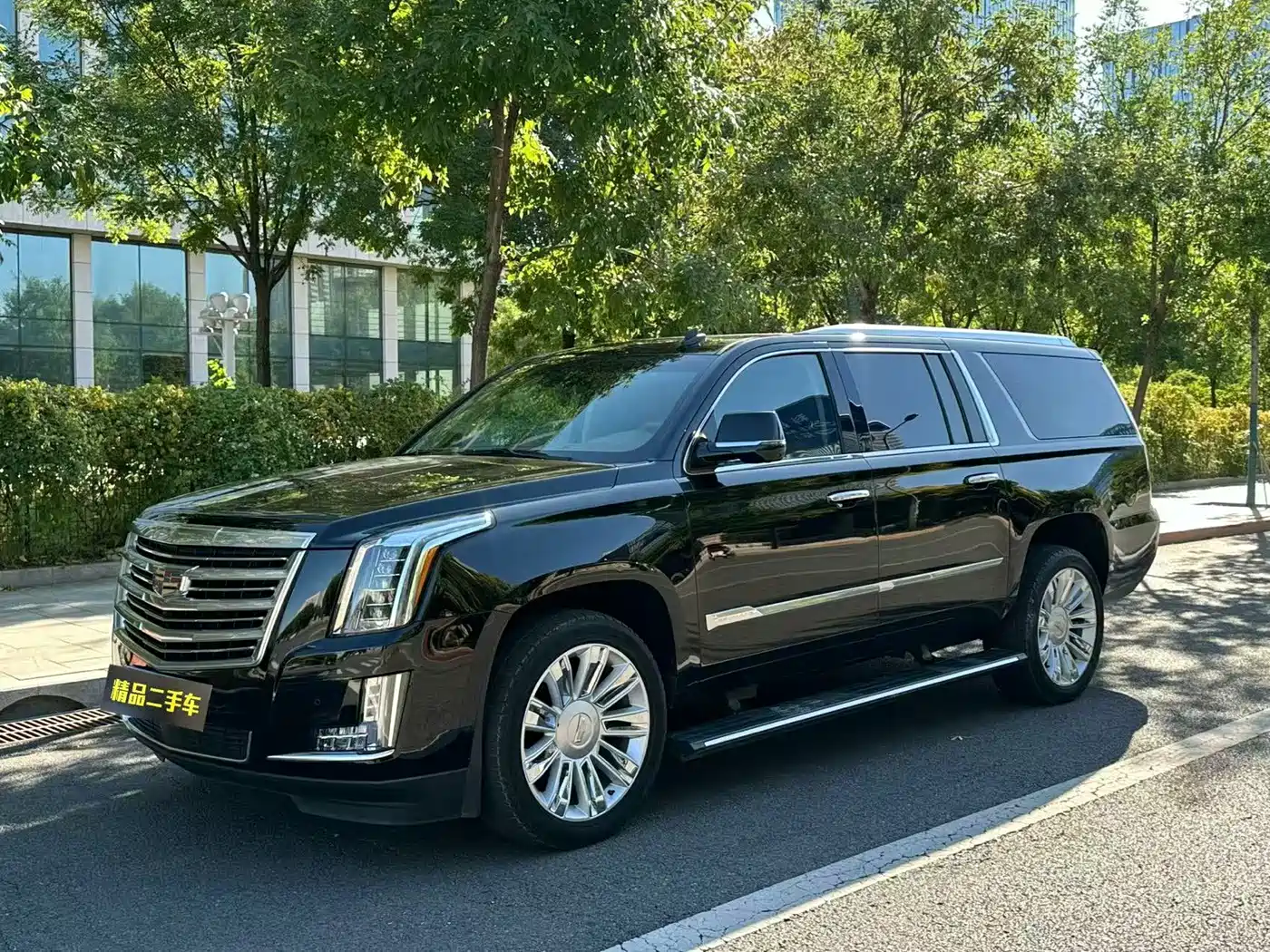
- The Escalade is a full-size, three-row luxury SUV with standard-wheelbase and ESV extended-body options.
- The configurations represented for export use a 6.2-liter V8 gasoline engine, automatic transmission and all-wheel drive.
- Choose wheelbase and trim around passenger access, cargo needs, parking constraints and serviceability.
- New and used purchases should be judged by VIN-level condition, documentation, warranty transfer and parts support.
- Confirm destination homologation, steering side, landed cost and the binding live listing before ordering.
Why the Cadillac Escalade matters for export markets
The Cadillac Escalade sits in the full-size luxury SUV segment, combining a premium badge with the space and road presence sought by executive, hospitality and fleet buyers. Its three-row architecture can serve passengers, luggage and work equipment in one vehicle, while the long-wheelbase ESV is especially relevant when cargo volume matters as much as seat count. For overseas dealers, the model offers an alternative to premium large SUVs built around comfort, towing capability and an established North American design identity. This makes it easier to position for duty cycles that do not suit compact crossovers.
Global demand is strongest where large vehicles are practical and accepted, including North American-style business travel, VIP transport, premium rental and hospitality use. It is weaker where urban access, parking rules, fuel taxation or emissions policy penalize heavy gasoline vehicles. The Escalade’s size and V8 character can be an asset on long routes and in regions where buyers expect a commanding SUV, yet they can be a liability for mileage, crowded ports and high operating costs. Export strategy should therefore match the model to local use, not simply to badge appeal.
Dealers sourcing through China should also distinguish the vehicle’s physical location from its manufacturing origin and market specification. A listing can represent a China-market vehicle prepared for export, not necessarily a vehicle built for the buyer’s destination. Ask for the VIN, build plate, steering side, factory equipment and original sales market. That information determines whether the SUV is suitable for local registration and whether parts, software or service procedures will align. Clear documentation is more valuable than an attractive catalogue description before freight, payment and homologation commitments are formally made.
- Match capacity to fleet use.
- Check access, fuel and policy.
- Verify origin, VIN and steering.
Model range, trims and powertrain variants: how the lineup is structured and how to choose
The export-relevant range is organized around two body choices and different equipment levels. The standard-wheelbase Escalade is easier to maneuver and park but gives up some behind-seat cargo length. The ESV extended version prioritizes third-row space and luggage capacity, making it the more logical choice for airport transfers, executive hotels, mobile support teams and long-distance road operations. A high roof and long body improve utility, but buyers should test loading height, garage access and turning conditions before choosing ESV over the shorter configuration at their destinations for real-world fleet use.
Configurations represented in the available listings use a 6.2-liter V8 gasoline engine with all-wheel drive and an automatic transmission. This is an internal-combustion powertrain: battery capacity, electric range and charging figures do not apply. The V8 provides the towing-oriented intent associated with the Escalade, while drivetrain and condition remain important checks for cross-border use. Output and towing claims should be verified for the model year and VIN on the listing.
Trim choice is less about a single global hierarchy and more about the equipment package attached to each vehicle. The listings include a 6.2 AWD Escalade and a 6.2L ESV Platinum Extended designation, but the precise content of “Platinum Extended” should be confirmed for the model year and market. Review comfort, infotainment, safety, seating and exterior options from VIN-level photographs and documents. Avoid paying for prestige names alone: select the package that reduces operational friction for the buyer’s passengers or fleet policy or resale positioning specifically in the destination country.
- Short body eases maneuvering.
- ESV adds cargo and third-row space.
- Confirm trim equipment by VIN.
New vs used Cadillac Escalade: how export inventory is structured and how buyers choose
An export inventory can mix factory-new vehicles, demonstrator units, parallel imports and used stock from different model years, so condition labels should be examined rather than accepted at face value. For the Escalade, age and specification differences can be substantial: an earlier SUV may offer a lower acquisition entry point but carry more wear, while a newer vehicle may include revised equipment and newer styling. Buyers should classify each option by odometer evidence, service history, title status and the seller’s description of prior use. These checks matter more than the wording of a condition tag.
New Escalades are easier to compare when documentation, delivery status and factory specification are clear. They can reduce uncertainty around accumulated wear and may align better with a buyer’s brand standards, but the overseas buyer should ask whether any manufacturer warranty remains valid after export and whether software, service instructions or regional support differ. A vehicle described as new can still be a former demonstrator or parallel import, so request delivery records and confirm that the odometer and condition support the stated classification before including it in a formal tender.
Used Cadillac Escalade purchases can make sense for buyers with a firm need for the body style and a disciplined maintenance budget. The trade-off is not simply lower purchase cost: age can mean more wear on suspension, brakes, tyres and electrical components, while parts availability and inspection depth may vary. Ask for service invoices, diagnostic evidence, accident records where available, title documents and a pre-shipment inspection. Independent verification is particularly valuable when the seller or market is unfamiliar to an overseas wholesale or fleet procurement buyer responsible for the decision.
- Labels need supporting evidence.
- Verify mileage, service and title.
- Confirm warranty and parts support.
How export pricing works: the factors behind a live listing price, and how to read one
Live Cadillac Escalade export pricing is shaped by the specific vehicle, not by a price attached to the model name. Model year, trim, standard versus ESV body, mileage, condition, ownership history, optional equipment and production specification all influence the ask. Market movements also matter: exchange rates, freight capacity, insurance and destination-side charges can alter a landed quote. The defensible approach is to compare equivalent configurations and similar condition, not to compare the newest SUV with the oldest or least documented vehicle in the results. A clean listing should make these distinctions visible.
A vehicle price and a landed cost are different numbers, even when a listing uses an export-ready description. Depending on the agreed Incoterm, the displayed amount may exclude ocean or RoRo freight, marine insurance, origin handling, destination charges, customs duty, VAT or GST, port fees, registration and local delivery. Ask for a written quotation that separates vehicle payment from each logistics and government charge. This prevents a favourable-looking unit price from being offset by unpriced obligations and allows fleet budgets to compare offers on the same basis across different Incoterms.
When reading a live Escalade listing, check the year and body first, then confirm the trim, VIN, mileage, condition, equipment, seller location and availability status. Look for inconsistencies between the title, photographs, option labels and documents, because an ESV and a standard-wheelbase model can be confused in abbreviated listings. Review the stated MOQ, payment terms and Incoterm, and ask what is excluded from the price. Current per-unit prices and available configurations should always be confirmed in the live inventory rather than carried over from an old quotation or enquiry document.
- Compare like-for-like vehicles.
- Separate price from landed charges.
- Use live listings for current prices.
MOQ, ordering and payment: single units vs consolidating a container
MOQ is listing-specific, so a buyer should not assume that every Escalade offer carries the same purchasing commitment. Some sellers may accept a single-unit order, while others may set a larger minimum or require consolidated units; the figure must be checked on the live listing and confirmed in the quotation. For a test-market importer, one vehicle can be operationally sensible but economically inefficient because transport, compliance and fixed handling costs are spread across fewer units. For a dealer network, that trade-off must be modelled before ordering and making any deposit payment.
Ordering should follow a documented sequence: select the exact unit, obtain a written sales invoice, verify ownership and export eligibility, agree payment milestones and delivery terms, and then authorize release for shipment. Payment methods, deposit requirements and the point at which the balance becomes due can vary by seller and transaction, so no universal schedule should be assumed. The buyer should also confirm the seller’s legal identity, the vehicle description on the invoice, cancellation terms and the party responsible for export documentation before funds are committed to a protected payment process.
Consolidating a container can reduce the freight burden per vehicle, but it turns a product decision into a mixed inventory commitment. Standard-wheelbase and ESV units have different lengths, while trims, model years, colours and documentation needs may differ. Mixing equipment can complicate local registration, spare-parts planning and residual-value analysis. Secure the units, insurance and customs treatment in the shipping plan, and obtain individual sale records before deciding which specifications should be grouped together under the chosen Incoterm and destination rules, especially if the buyer plans to retail each vehicle separately.
- Check MOQ on each listing.
- Record VIN, milestones and Incoterm.
- Verify specifications before consolidation.
Shipping, homologation and market compliance caveats: LHD/RHD and import rules by country
Shipping begins with the vehicle’s dimensions, condition and destination, not merely the port of departure. A full-size Escalade may move by RoRo or container depending on available equipment, carrier schedules and handling capability; the ESV requires clearance and securement planning. Transit time and cost respond to sailing frequency, port congestion, weather, insurance, fuel surcharges, crane or terminal handling and customs inspections. Ask the forwarder for a route plan, securement method, estimated milestones and a schedule of charges rather than relying on a generic transit promise for the specific vehicle.
Steering-side compatibility is a critical early check. Escalades sourced in China are commonly associated with left-hand-drive configurations, but an overseas buyer must verify the individual vehicle rather than assume it. Some destinations require right-hand drive, and a conversion may involve substantial mechanical, electrical and safety work; it is not automatically equivalent to a factory right-hand-drive vehicle. Conversion can affect conformity, insurance, warranty and resale. If a buyer requires RHD, state that requirement before selecting a unit and obtain documentary proof or a qualified conversion plan from an experienced conversion specialist.
Export clearance in China does not replace import approval in the destination country. The importer may need to address vehicle age restrictions for used units, emissions and noise rules, safety and equipment standards, VIN or type approval, customs valuation, duty, VAT or GST, insurance, registration and local inspections. Requirements can vary by powertrain, engine variant and steering side. Obtain a written destination-market compliance checklist from an experienced broker or regulator contact, and do not pay for a vehicle until the intended homologation route is credible and documented for that vehicle.
- Confirm steering side and securement.
- Review destination compliance rules.
- Separate export from import approval.
Who should buy the Escalade — and who should pick a different vehicle
The Escalade is strongest for buyers who regularly carry several adult occupants, substantial luggage or equipment and still require a premium SUV image. Executive transport, hotel and airport services, diplomatic or VIP hosting, premium rental and regional fleet operations can all justify its size when roads and parking can accommodate it. The ESV is particularly relevant where passengers need frequent third-row access or rear cargo must be loaded without folding seats. Towing-oriented users should verify the VIN-specific rating and equipment rather than relying on model-wide expectations for each model year.
It is a weaker choice for buyers focused on urban efficiency, low operating cost or easy parking. A large V8 SUV can be expensive to fuel and maintain, difficult to manoeuvre in dense cities and exposed to access restrictions or emissions charges. It also makes little sense when a compact or midsize crossover can meet the route, payload and passenger brief at lower total cost. For importers with mixed demand, the Escalade should occupy a defined premium niche rather than be treated as a universal replacement for smaller business SUVs.
The decision should be tested against total operating cost rather than purchase price alone. Model local fuel consumption, likely idling in VIP service, insurance classification, tyre and brake replacement, scheduled servicing and the effect of a large parking footprint on utilization. A fleet that can keep the Escalade moving will spread fixed logistics and acquisition costs over more billable distance; one held in reserve may not. Conversely, organizations prioritizing prestige, quietness, passenger capacity and a recognizable flagship may accept a higher cost per kilometre for reasons that are commercially rational.
- Strong for premium passenger operations.
- ESV prioritizes third-row usability.
- Small SUVs suit urban efficiency.
Main rivals and how the Escalade compares
The Chevrolet Suburban is the closest value-oriented comparison because it delivers similar full-size passenger and cargo architecture without positioning itself as a luxury flagship. It can appeal to fleet customers whose priority is carrying capacity, uptime and operating cost, while an Escalade carries premium-brand and visual-presence appeal. Buyers should compare the ESV-length alternative, powertrain, loading access, service arrangements and destination resale profile. Badge value can influence demand, but it should not replace a calculation of acquisition, fuel, insurance and maintenance exposure over the vehicle’s working life cycle in practice.
The Lincoln Navigator L is a closer luxury-segment rival, competing on premium cabin comfort, technology, space and flagship presence. Depending on the destination, buyer preference may split between Cadillac’s established identity and Lincoln’s model range, so local dealer support and resale evidence matter. An Escalade ESV should be compared with the long-wheelbase Navigator on cargo usability, third-row comfort and equipment, not on size alone. The strongest choice is the package buyers can service, insure and resell most successfully in the intended market. Do not assume shared corporate ownership means identical products.
The Ford Expedition EL is a direct full-size alternative for family transport, executive fleets and mixed equipment use. It offers a comparable long-body concept but with a different powertrain, technology ecosystem, service network and resale profile, so it should not be dismissed as a generic substitute. For a buyer evaluating regional fleets, compare fuel use, uptime, parts access, safety equipment and driver acceptance alongside purchase terms. The GMC Yukon XL Denali is another useful benchmark because it combines full-size V8 capability with a more premium-focused position in the destination market.
- Suburban: value and capacity.
- Navigator L: luxury benchmark.
- Expedition EL: fleet alternative.
Live Cadillac Escalade export inventory
View all listings →Real units currently on ChinaCarDirect with per-unit asking prices and MOQ. Availability updates live from the catalogue.
How to buy a Cadillac Escalade from China
-
1
Set the destination and use case
Specify the destination country, steering-side requirement, typical routes, parking conditions, passenger capacity, cargo profile and fuel needs. This determines whether a standard Escalade or ESV is commercially practical.
-
2
Choose the body and specification
Compare the standard-wheelbase and ESV layouts, then select the trim and options that support the intended duty cycle. Verify the exact equipment list for the model year and market.
-
3
Inspect the live listing
Review the year, body, VIN, trim, mileage, condition, photographs, equipment, MOQ and current per-unit price on the live listing. Check for inconsistencies before requesting terms.
-
4
Request a landed-cost quotation
Provide the destination port, preferred Incoterm and required delivery scope. Ask for vehicle cost, freight, insurance, handling, duty, tax and other destination charges itemized separately.
-
5
Validate export and import compliance
Confirm ownership, export eligibility, VIN, build plate, steering side and destination approval requirements. Obtain a destination-specific compliance checklist from a qualified broker or authority.
-
6
Confirm the order and payment
Ensure the invoice identifies the exact vehicle, price, MOQ, payment milestones, cancellation terms, Incoterm and responsible parties. Verify seller identity and retain written copies of all commitments.
-
7
Arrange inspection and shipment
Complete the agreed pre-shipment inspection, securement, insurance and export documentation before release. Track the agreed milestones and retain records needed for destination registration and handover.
Escalade vs rivals
| Chevrolet Suburban | The Suburban is the closest value-oriented full-size comparison, prioritizing capacity and operating economics over Cadillac’s luxury positioning. It is particularly relevant for fleet buyers that do not need a premium flagship image. |
|---|---|
| Lincoln Navigator L | The Navigator L is the closest luxury-oriented rival, competing on flagship comfort, space and technology. Choose between them using local service access, resale evidence and the suitability of each long-wheelbase package. |
| Ford Expedition EL | The Expedition EL is a credible alternative for family, executive and mixed-equipment fleets. Its different powertrain and service ecosystem should be compared on fuel use, uptime, parts access and destination resale rather than treated as an equivalent by size alone. |
Frequently asked questions
How is Cadillac Escalade export price determined?
Export price is set for each vehicle and changes with model year, trim, ESV body choice, mileage, condition, equipment, market conditions and the agreed trade terms. Freight, insurance, exchange rates, destination duties and taxes affect landed cost but may not be included in the displayed vehicle price. Check the live Cadillac Escalade listings for the current per-unit quote and request a written landed-cost breakdown.
What engine and powertrain does the Escalade use?
The Escalade configurations represented for export use a 6.2-liter V8 gasoline engine, automatic transmission and all-wheel drive. This is an internal-combustion model, so electric range, battery capacity and charging time do not apply to these examples. Verify model-year output, towing limits and market specifications on the specific VIN listing rather than relying on another year’s figures.
Should I buy a new or used Cadillac Escalade?
A new Escalade can simplify condition and specification matching, but “new” status may include demonstrator or parallel-import history, and warranty coverage may not transfer. A used Cadillac Escalade can suit a budget-led buyer, yet age increases wear, inspection and parts uncertainty. Compare mileage evidence, service history, title status, condition reports, warranty and local support.
What is the MOQ for a Cadillac Escalade order?
MOQ is set by the seller for each listing and may allow a single-unit purchase or require consolidation. Read the MOQ field on the live unit and have it repeated in the quotation and invoice. If multiple vehicles are needed, ask how they will be grouped, documented, insured and separated for onward sale.
How long does Escalade shipping take and what does it cost?
Shipping time and cost depend on the origin and destination ports, RoRo or container routing, vessel and terminal schedules, congestion, weather, vehicle dimensions, securement, insurance, customs inspections and local charges. An ESV requires more space and handling than the standard body. Request a written route plan and charge schedule for the specific VIN and destination.
Are spare parts available for an exported Escalade?
Parts support must be checked for the model year, engine, trim and destination because parts catalogues and dealer coverage vary. Before shipment, inspect wear items and confirm that common service parts can be obtained locally or through an approved supplier. Do not assume that a China-market or international vehicle carries the same warranty support as a vehicle sold in the buyer’s home country.
Is right-hand-drive Escalade availability guaranteed?
Right-hand-drive availability cannot be inferred from the model name. Chinese-market examples are commonly left-hand drive, so confirm the steering side of the individual vehicle and whether factory RHD is required. A professional conversion may be possible, but it can affect safety conformity, insurance, warranty and resale and should be evaluated before purchase.
How do I order a Cadillac Escalade from China?
Start with the live Escalade inventory, select a suitable unit and submit an RFQ with the destination, Incoterm and required documentation. Review the VIN, price, MOQ, payment milestones, cancellation terms and export responsibilities in writing before paying. After inspection and compliance approval, authorize shipment and retain the vehicle, customs and handover records for registration.
Ready to source the Cadillac Escalade?
Send the Cadillac Escalade live listing, destination port and required Incoterm to ChinaCarDirect for an itemized export quotation.
Request a quote